
Big Ten Football: Ranking the Job Security of Big Ten Coaches
Each season we see the college coaching carousel spin at varying speeds. Some years, it lazily rotates with a retirement or a coach moving on to a bigger program. Other years, it whizzes around in a vomit-inducing tear worthy of NASA training. It looks as if 2014 could end up being more like the latter.
The Big Ten has been home to some coaching legends, like Woody Hayes, Bo Schembechler and Duffy Daugherty. Even Nick Saban once called the Big Ten home. But not every coach is a resounding success. For every Saban, there's a John L. Smith. For every Schembechler, there's a Frank Waters.
And don't even get Michigan fans started on Rich Rodriguez.
Here, we'll prognosticate the future as we rank the job security of all 14 Big Ten head coaches.
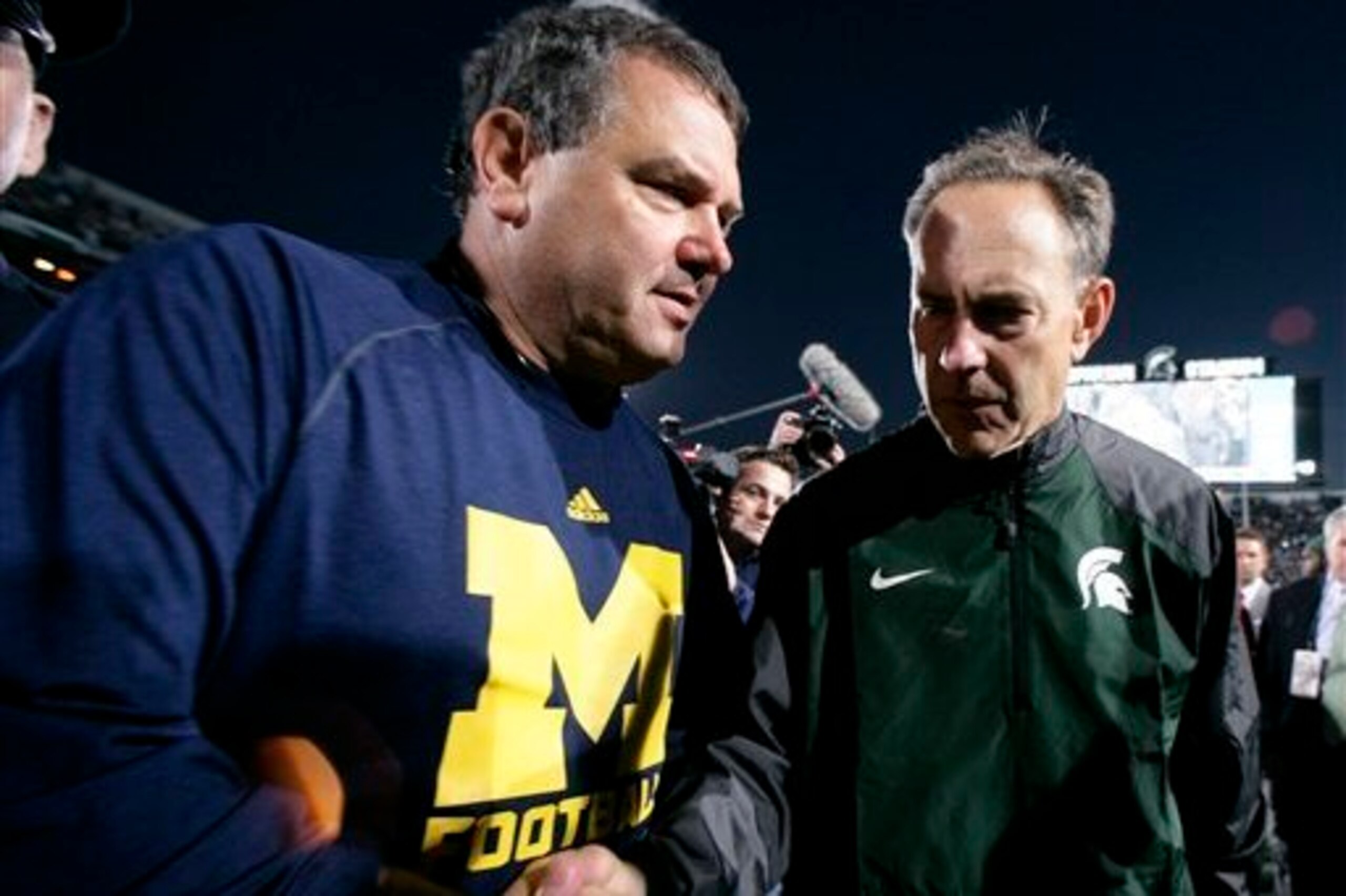
Mark Dantonio, Michigan State
1 of 14
We're going to start at the "secure" end of the spectrum with Michigan State's Mark Dantonio. Fresh off of yet another win over Michigan (Dantonio is now 6-2 against the Wolverines, giving him the best win percentage against Michigan of any MSU coach in history) and with a pair of Big Ten titles and a Rose Bowl Game championship on his resume, there's little chance Dantonio would be ousted from East Lansing in the near future.
The fact that Michigan State gave Dantonio a sizable raise on the eve of the Spartans' Rose Bowl Game victory to make him one of the highest paid coaches not only in the Big Ten, but also in the nation speaks volumes about how the MSU powers-that-be feel about him.
And the feeling is mutual. Mark Dantonio was a name that popped up during the search for a new head coach at Texas (a job that eventually went to Charlie Strong). When asked about the potential move to a "bigger" job at Texas, Dantonio simply told reporters, "I see Michigan State as a destination, not a stop."
With MSU reaching poll ranking levels not seen since its national championship days of the 1950s and 60s, Dantonio isn't wrong: MSU is becoming a college football destination, for both players and coaches.
Job Security: Most Secure
Urban Meyer, Ohio State
2 of 14
Urban Meyer might be the most hated man in college football.
Why? Think about it for a second. When he was the coach at Florida, he was despised by nearly everyone outside of Gainesville. Florida State, Miami and Georgia fans already disliked his success, but knocking off teams with their own national title aspirations, like Alabama, Auburn and LSU along the way certainly didn't win him any friends around the SEC.
Before his days at Florida, Meyer had been the head coach at Utah—so you can bet every BYU and Utah State fan in the nation has his own version on just how evil he thinks the coach is. And we can't forget about Utah's BCS-busting 2004 season when the Utes finished No. 6 in the final BCS rankings, meaning No. 5 Cal, No. 7 Georgia and No. 9 Boise State (one of which would have earned a spot in the BCS instead) had to play in a "lesser" bowl.
Now, put Meyer in charge of Ohio State and you instantly have 13 new fan bases to despise the guy. The trouble for them is that Urban Meyer is one heckuva coach who just wins.
Since arriving in Columbus, Meyer is an eye-popping 30-3, including a perfect 19-0 in regular season conference games. The Buckeyes are still chasing down a long-awaited Big Ten title (the last legitimate one came in 2009), but with the way things are headed, it's probably a safe bet to assume Meyer will be adding more hardware to the trophy case in Columbus in short order.
But even without trophy after trophy, a .909 win percentage at Ohio State and a career record of 134-26 should keep Meyer employed as long as he wants to remain employed.
This is, of course, provided he doesn't lie to the NCAA in the midst of a cover-up (Jim Tressel, we're looking in your direction).
Job Security: Very Secure
James Franklin, Penn State
3 of 14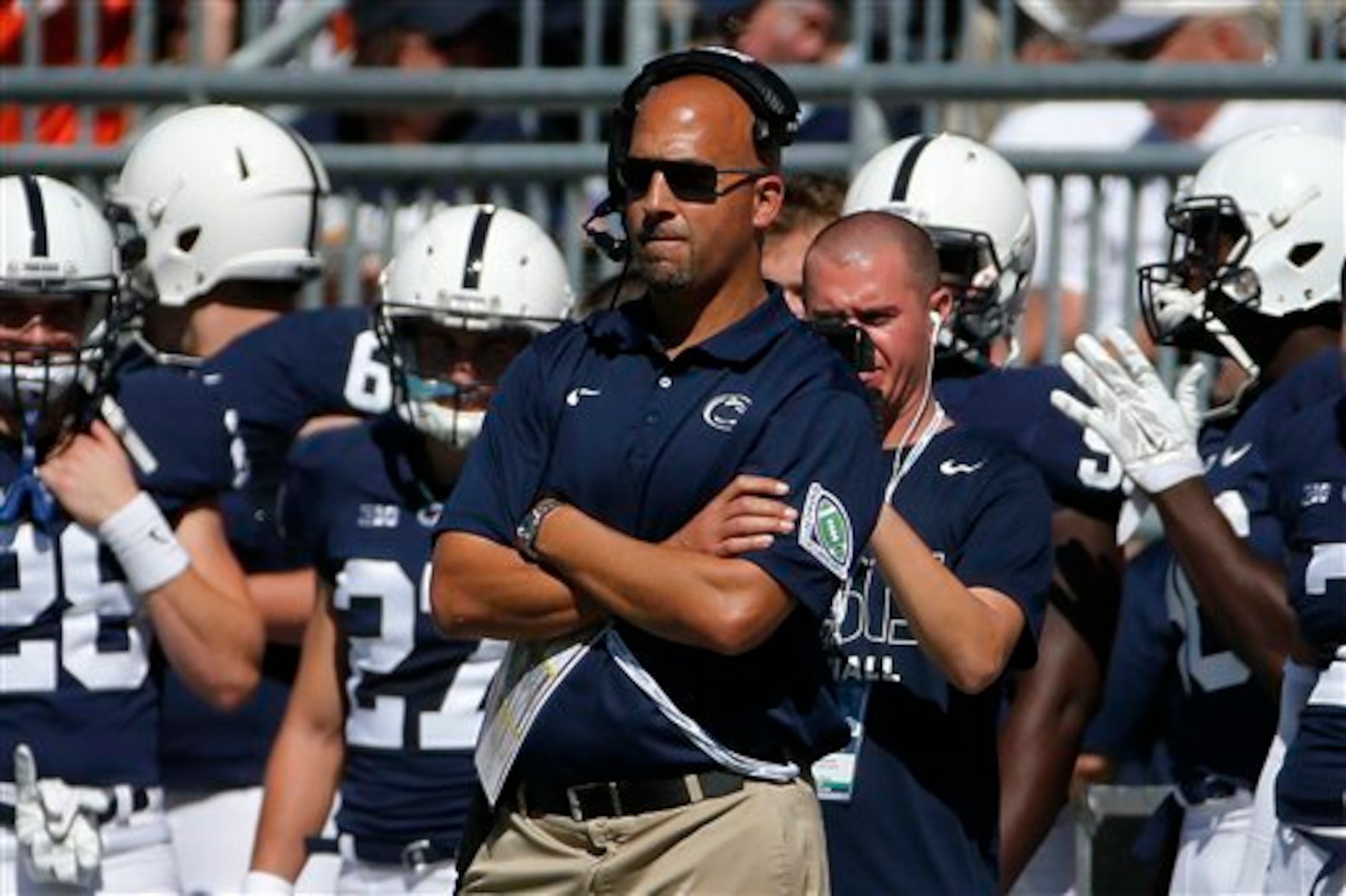
This one is short and sweet. Well, sweet if you're a Penn State fan, anyhow.
The past troubles at Penn State have been widely reported, and there's no need to rehash all of the horrific story lines here. The abortive Bill O'Brien mini-era is now in the rear-view mirror, and despite some moderate successes (especially with the deck stacked against PSU), most Nittany Lions fans have moved on.
Enter James Franklin. A guy who built a football resource-deficient Vanderbilt into an occasional contender in the rough-and-tumble SEC was offered a whale of a task in rebuilding Penn State's troubled and sanction-ridden program. Without flinching, Franklin jumped at the opportunity and has propelled Penn State to a 4-3 record so far this season.
If the Nittany Lions can pull off just two more wins, Penn State may do something it hasn't done since 2011: play in a bowl game.
Even if that doesn't happen, though, Franklin is in no danger of losing his job at Penn State. The Nittany Lions look to have a bright future. PSU is currently sitting atop the recruiting rankings in the Big Ten according to 247Sports.com—and unlike some other coaches around the conference (who we will talk about shortly), Franklin has a proven track record of developing that potential into proven talent on the field.
Job Security: Very Secure
.jpg?w=2560)
Gary Andersen, Wisconsin
4 of 14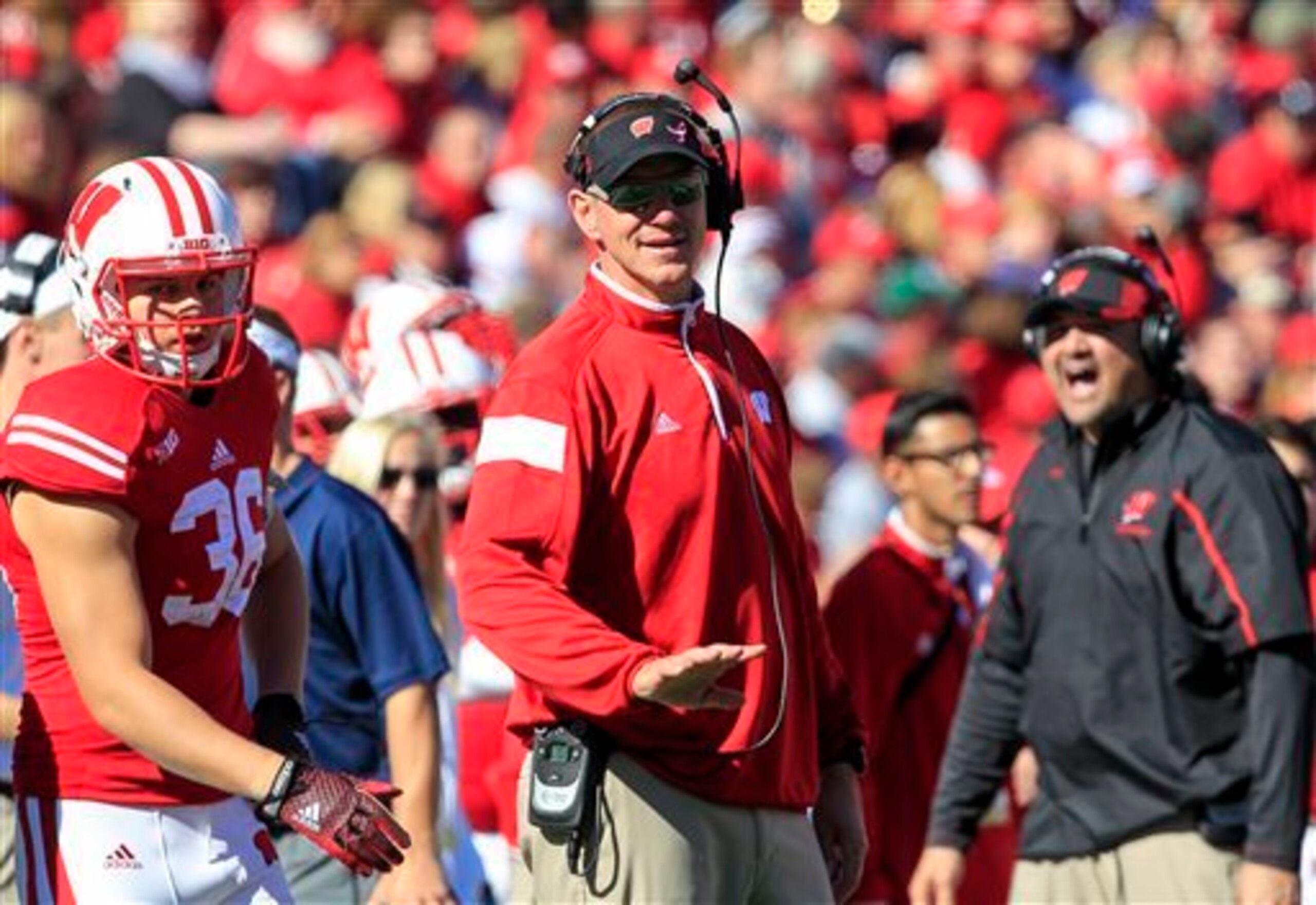
Wisconsin's Gary Andersen is another relative new-comer to the Big Ten who is likely to stick around for awhile. Andersen took over a program many Badgers fans believed had been abandoned at its peak by Bret Bielema when he bailed for (still) struggling Arkansas. While Wisconsin isn't quite on the same pace for conference championships it was under Bielema, it really wasn't realistic to expect anyone to continue that pace—even Bielema himself.
Andersen is a solid 14-6 in Madison thus far, including a 9-4 record in his first season that ended with a second-place finish in the Leaders Division and a narrow loss to South Carolina in the Capital One Bowl.
If Andersen can continue to stoke Wisconsin's proud heritage of dominating running games (as he is currently doing with Heisman contender Melvin Gordon), his tenure at Wisconsin should be long and fruitful.
Job Security: Secure
Kirk Ferentz, Iowa
5 of 14
Good old Kirk Ferentz appears on our list as the No. 5 most secure head coach in the Big Ten, and it's for two pretty good reasons.
First, Ferentz isn't a bad coach by any stretch. He's 113-81 at Iowa (125-102 including three seasons at FCS Maine in the early 1990s) and has two Big Ten titles (both shared) to his credit.
Unfortunately, those titles came way back in 2002 and 2004, and Iowa has finished better than fourth in the conference or divisional standings just three times since (2005, 2009 and 2013).
The second reason Ferentz isn't likely to lose his job anytime soon is his massive contract buyout. Ferentz's agent must be one amazing negotiator, as Iowa would need to cough up so much money as to make it financially prohibitive to fire the guy.
According to Adam Jacobi of CBS Sports, Ferentz's current contract runs through 2020, and at $3.9 million per year, he's among the nation's elite (in terms of paycheck size). Additionally, like many coaches, Ferentz has a contract littered with bonuses for winning championships or finishing with a ranked team. Ferentz's contract, however, doesn't require Iowa to even finish the season ranked. Simply appearing in the rankings at least once during the season is enough to trigger his bonuses.
Let's put it another way: Iowa was the preseason No. 5 team in the country. The Hawkeyes then completely fall apart and finish 4-8 and, obviously, unranked. Ferentz still receives his "Top Five team" bonus at the end of the season.
Seriously, who at Iowa thought this was a good contract? Just wait. It gets better.
Should Iowa want to buy out his contract, the university would be required to pay Ferentz $3 million for every remaining year on his contract. As of the end of this season, that would amount to $18 million—to not coach.
For that kind of money, Iowa might as well keep its .582 win percentage under Ferentz as is.
Job Security: Secure
Kevin Wilson, Indiana
6 of 14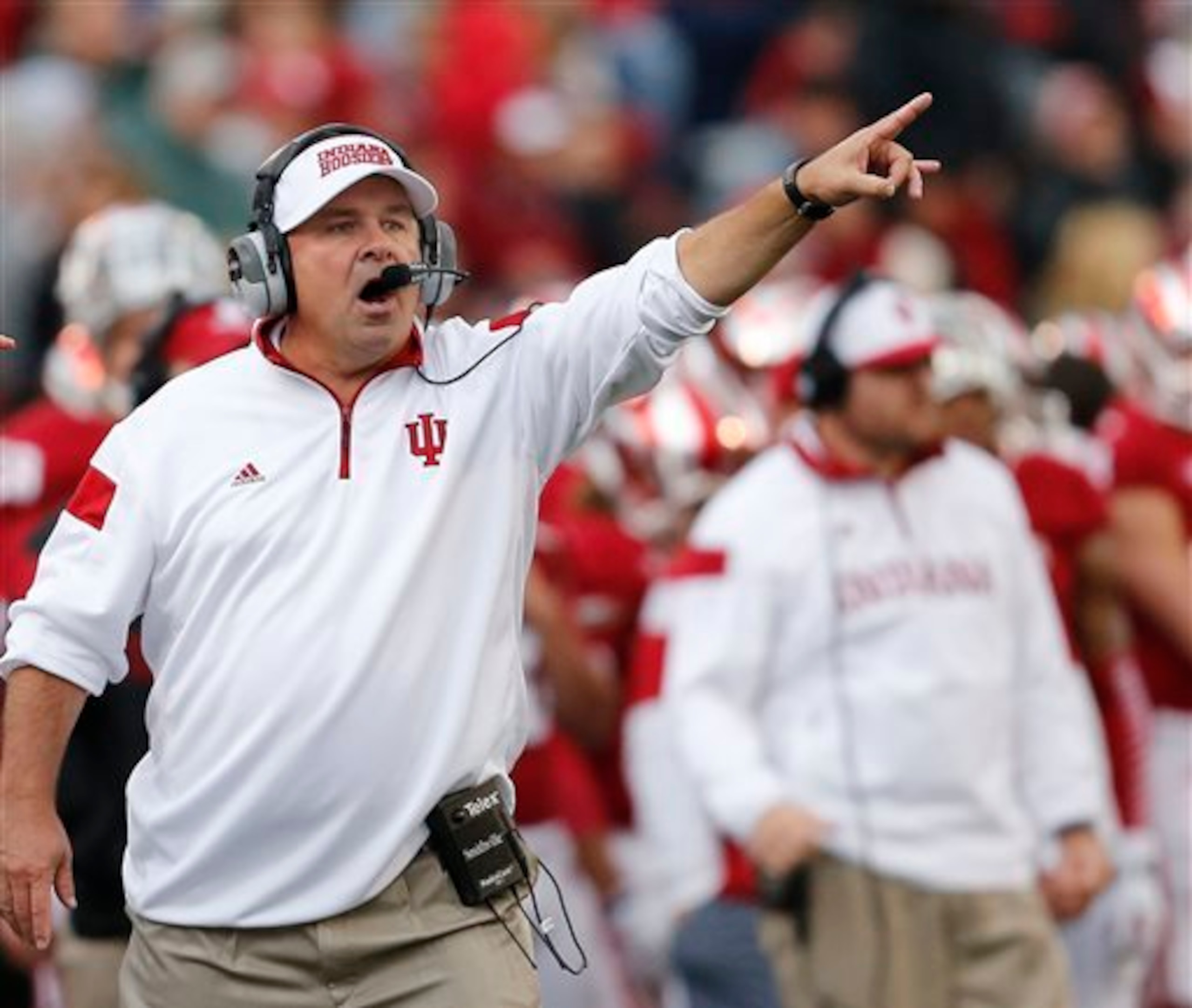
With Indiana's Kevin Wilson, we have our first bowl-less coach and first coach with a losing record, both overall and in conference play. So why is Wilson sitting with the sixth most secure job in the Big Ten?
At 13-30 overall and 5-22 in Big Ten play, you'd think patience would be wearing thin in Bloomington. But if you stop and take a look at the teams Wilson is putting on the field these days, you'd realize there's something a little different about the Hoosiers.
Current injuries aside, Indiana is one of the nation's most entertaining offenses. Last season, Indiana finished ninth in the nation in total offense with an average of 508.5 yards per game. This year, despite an injury to starting quarterback Nate Sudfeld, the Hoosiers are still among the top 25 percent of offenses in the nation, also ranking fifth in the Big Ten.
The problem has been on defense. As many points as Indiana has been able to score (38.4 points per game last season), the Hoosiers give up more points than nearly any other team in the FBS (38.8 in 2013, tied for 115th).
Wilson knows the defense needs work, and you can be sure that he's putting a focus on recruiting on that side of the football. It remains to be seen, though, whether or not the Hoosiers will improve.
But in the end, the biggest thing keeping Wilson in place at Indiana is likely the relative lack of expectation. Indiana is, after all, still a "basketball school." The athletic calendar in Bloomington doesn't really get shoved into high gear until November's tipoff and there's never really been too much excitement generated by the football team.
For an Indiana coach, all that really needs to happen is a bowl trip every once in a great while and an ability to occasionally beat teams like Illinois, Purdue or Northwestern. Beyond that, no one is expecting anything miraculous, like racing to the top of the East Division standings.
If the unexpected doesn't happen, does anyone really notice? Probably not. But Wilson does have one major thing fans like about him: he's bought into Indiana football, lock, stock and barrel. That should buy him enough cred with the fan base to keep him around for at least a few more seasons.
Job Security: Secure (for now)
Pat Fitzgerald, Northwestern
7 of 14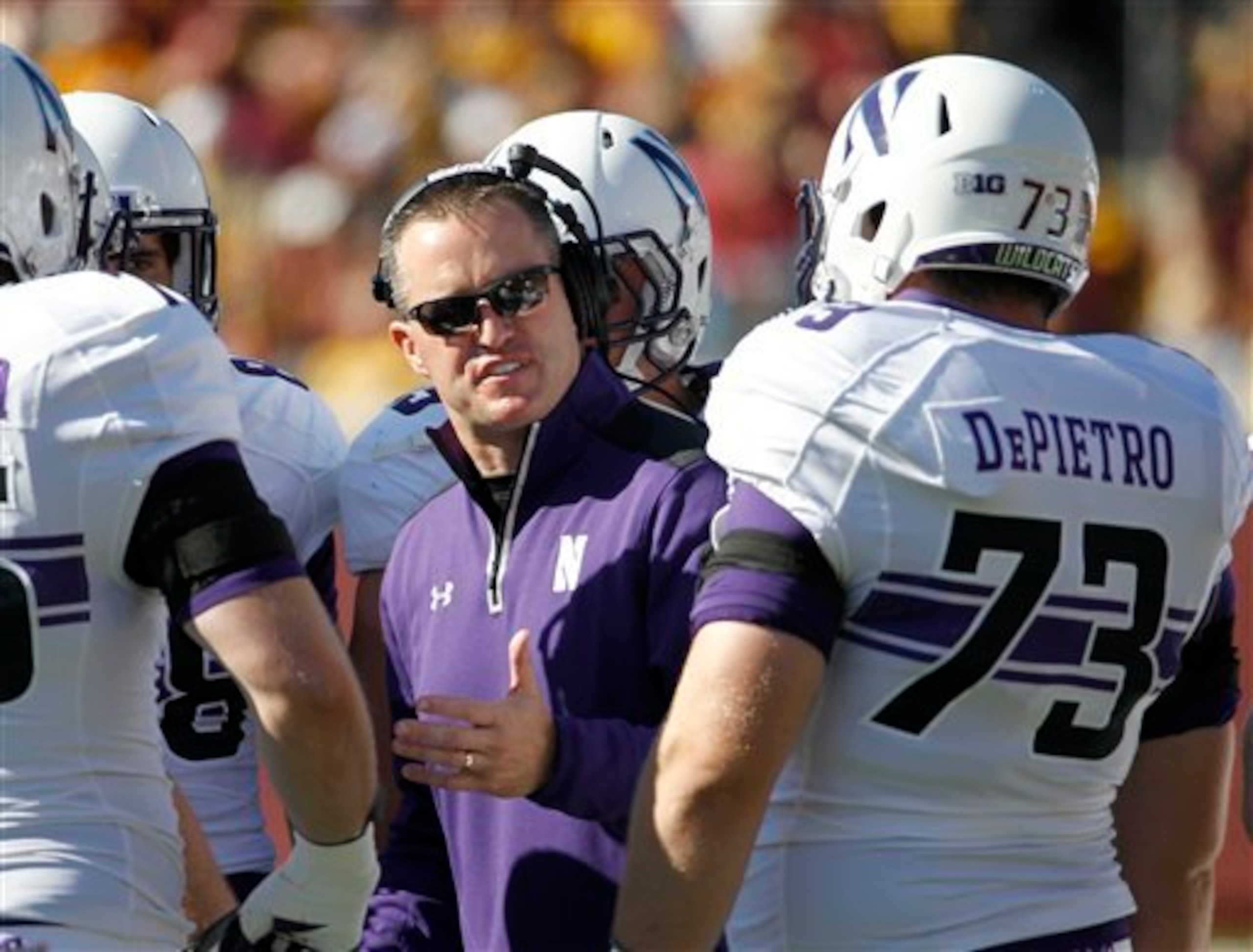
We've come upon the middle of the pack, and at the No. 7 most secure spot is Northwestern's Pat Fitzgerald. That's not to say Fitzgerald is in any serious jeopardy of losing his job, mind you. We don't foresee any immediate problems for Fitzgerald's job security for a number of reasons (and all of them are pretty good reasons, too).
First, there's the whole thing about Northwestern being Fitzgerald's alma mater, where Fitz was a standout All-American linebacker on the 1995 team that earned a trip to the Rose Bowl (Northwestern's second-ever bowl berth). That's enough to earn a legacy in a program like Northwestern's.
Now, add in his coaching career. He was hired as the then-youngest head coach in the FBS at just 31 years old. After a 4-8 start in 2006, Northwestern finished 6-6 in 2007, but was left out of the bowl selections. In 2008, the Wildcats earned a berth in the Alamo Bowl with a 9-3 regular season record. That bowl trip was the first of five consecutive trips—far and away a program record.
Add a few more legacy points.
In 2012, Northwestern finished the regular season 9-3 and earned a trip to the 2013 Gator Bowl to face the SEC's Mississippi State. The Wildcats defeated the Bulldogs, earning the program's second-ever bowl victory (along with the 1949 Rose Bowl Game).
Legacy etched in stone.
While the Wildcats have fallen off the pace a bit, finishing 5-7 in 2013 and struggling to a 3-4 record thus far in 2014, there's little doubt that Fitzgerald is one of the most successful coaches in Northwestern's not-so-storied football history.
He isn't going to be fired anytime soon, but he may eventually feel the pull of larger programs somewhere down the line (although it's a long shot for him to leave a "dream job" at his alma mater). There's also the impending unionization of college football players centered at Northwestern, which has the potential to upset the fragile apple cart of college athletics at private universities like Northwestern.
Don't think a school like Northwestern could ever see its football program disappear? The University of Chicago—once a power both in the Big Ten and nationally—cancelled its program once it became clear it was becoming a massive drain on the academic reputation of the university.
Sure, there's a ton of money rolled up in FBS football these days (particularly in the Big Ten), but if that financial impact is lessened due to any future unionization or "profit sharing" with athletes, it could suddenly become far less unappealing to follow Chicago's path.
Job Security: Secure (for now)
Jerry Kill, Minnesota
8 of 14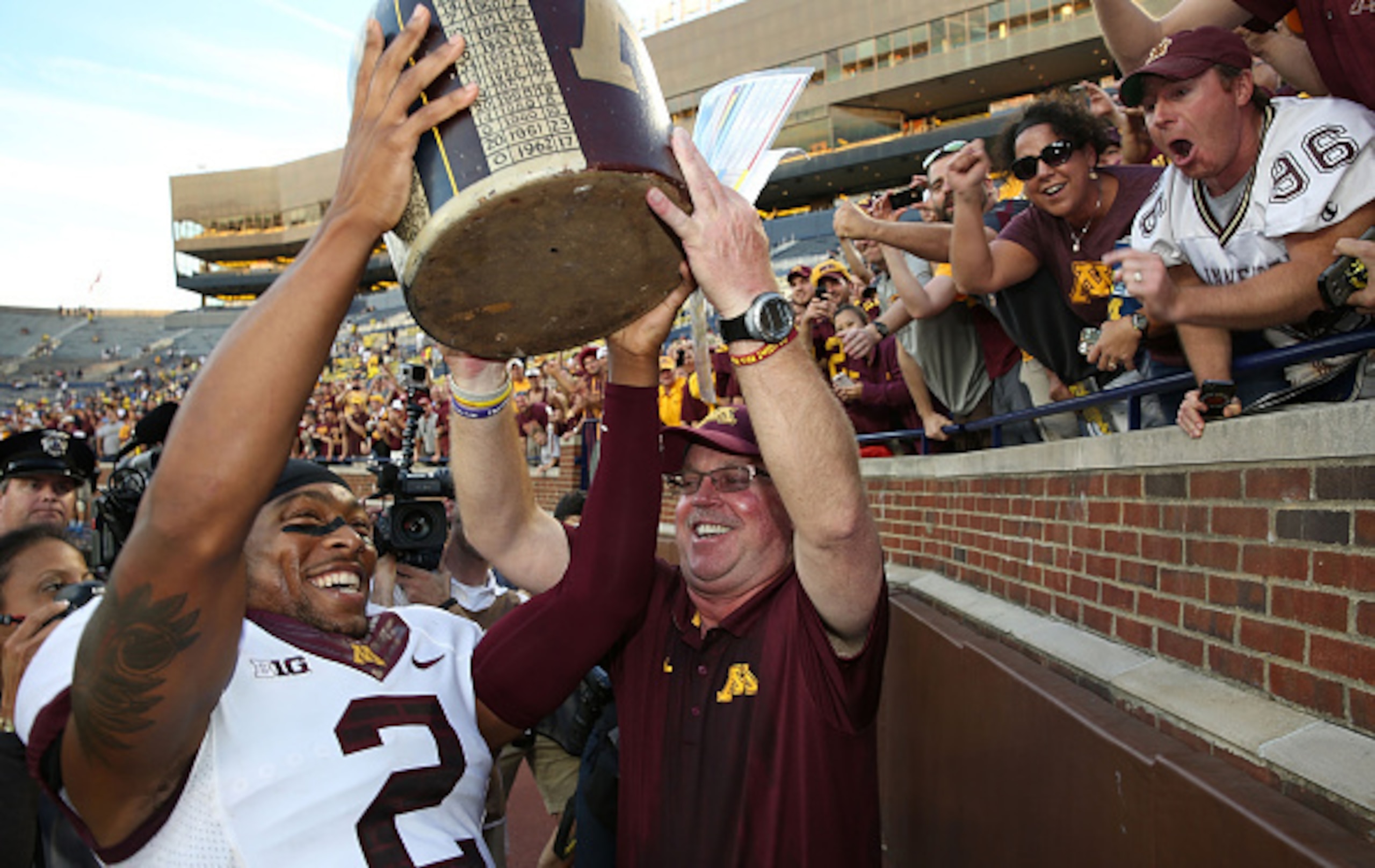
Jerry Kill is next on our list, and he's placed in the middle of the job security list (which you can take as neither overly secure nor insecure) for two reasons.
First, Kill is likely about to experience coaching with a fan base that is now starting to expect wins.
Over his now 21-year head coaching career, Kill has rarely been in a position where competing for championships has become the norm year after year. His first seven years as a head coach were spent at Division II programs in Michigan and Kansas where his programs never won a conference title nor reached the playoffs.
His next seven seasons were spent at FCS Southern Illinois, where he compiled a record of 56-32. His Salukis won three Gateway Football Conference titles (two shared) and reached the FCS playoffs each of his last five seasons. However, by the time SIU got out of the second round and reached the national semifinal in 2007, Kill was hired away by Northern Illinois for the 2008 season.
Again, Kill improve the program, this time from 6-7 in his first season to 10-3 in 2010, winning the MAC-West crown. He was again hired away, this time by Minnesota, before expectations even had a chance to catch up with him.
Now, Kill is in a job he's not likely to leave, and he'll have to deal with those expectations head on. If he's successful, then Minnesota will want to keep him around for as long as they possibly can. If not...
There's also the question of Kill's lingering health issues. The University of Minnesota, and really college football as a whole, has been amazingly supportive of Kill. Minnesota has rightfully made it clear that Kill's health isn't an issue until he says it is.
But that begs the question: will there ever come a time when Kill is forced to say his health has become an issue?
We all hope not—but it's there, nonetheless.
Job Security: Secure (for now)
Kyle Flood, Rutgers
9 of 14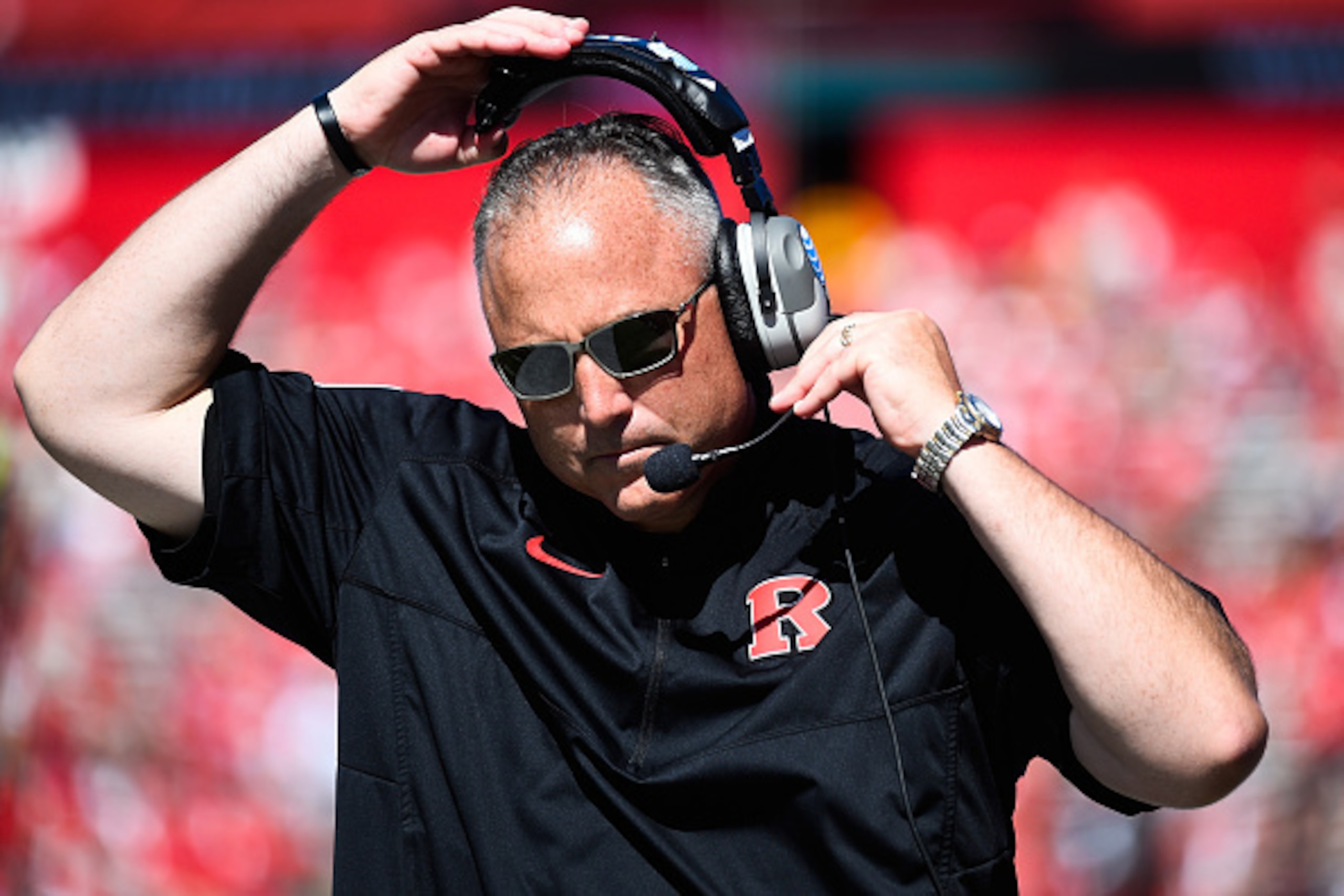
We don't know yet what to make of Kyle Flood. That could work in his favor at Rutgers, but it could also work against him.
Also working in his favor: Rutgers, for the third time in Flood's three seasons, is in a new conference. OK, the move from the Big East to the American Athletic Conference wasn't exactly a wholesale change for the Scarlet Knights, but the crossover did involve a bit of membership reshuffling.
Whether or not you consider the Big East and AAC changing conferences, there's no denying that Rutgers is now, for the first time in the Flood era, faced with a stable conference membership. No more new teams nearly every year. No more guessing about future schedules. The Scarlet Knights are locked in.
Now, for the other side of that coin. We'll know in fairly short order how well Flood is able to prepare his Knights for battle in the Big Ten. Despite what folks down south or out west may say, the Big Ten is a massive step up in class from the Big East/AAC. Also, despite a 4-0 record against teams from outside of the Big Ten, the Scarlet Knights are just 1-3 against conference foes this season.
That's not a rousing start.
There's little to no chance Flood will be ushered out in the near term, but folks at Rutgers will expect to see some forward progress in their new conference home before long. For that reason, we're putting Kyle Flood in the "no man's land" between secure and insecure.
Job Security: Neither Secure nor Insecure
Randy Edsall, Maryland
10 of 14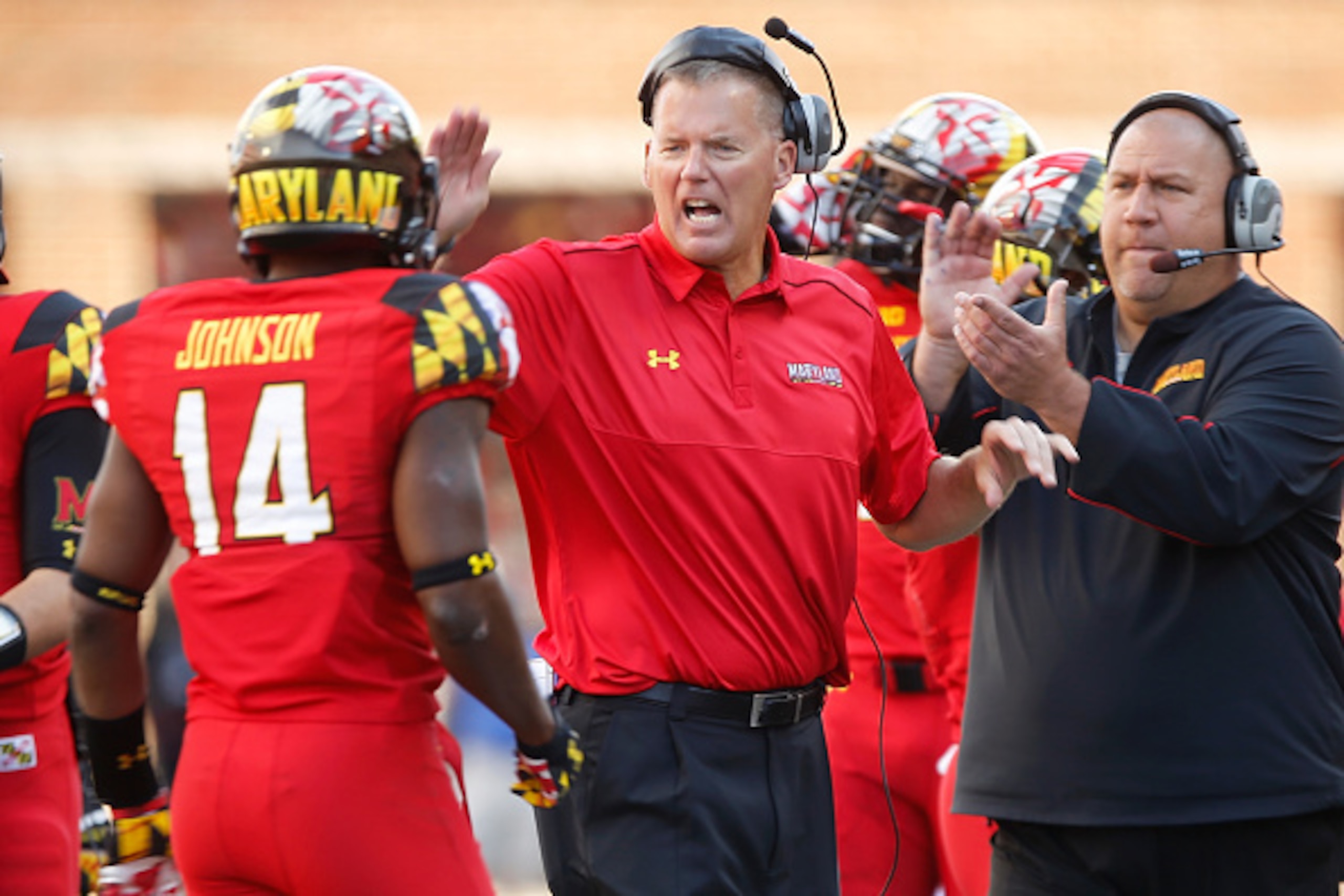
We're giving Randy Edsall a very similar ranking to Kyle Flood's for a very similar reason: The Big Ten is new to the Terrapins.
In his tenure at Maryland, the Terps have improved every season under Edsall, from 2-10 in 2011 to 7-6 last season. At 5-3 so far in 2014, there's a fair chance the Terrapins can continue that upward climb, although they'll have to do it against the likes of Penn State and Michigan State (with East Division cellar-dwellers Michigan and Rutgers thrown in for good measure).
But with three winnable games remaining, an 8-4 Maryland finish to its first Big Ten season would certainly help Edsall's stock in College Park.
The reason Edsall isn't in our dangerous "insecure" category just yet is the aforementioned newness of the Big Ten. Everyone expects a little adjustment time, so if Maryland doesn't go gangbusters right away, there's a legitimate excuse, right?
If, however, Maryland can't get closer to teams like Ohio State (a 52-24 loss) over the next couple of seasons, don't expect Maryland to be content with mediocrity.
Job Security: Neither Secure nor Insecure
Bo Pelini, Nebraska
11 of 14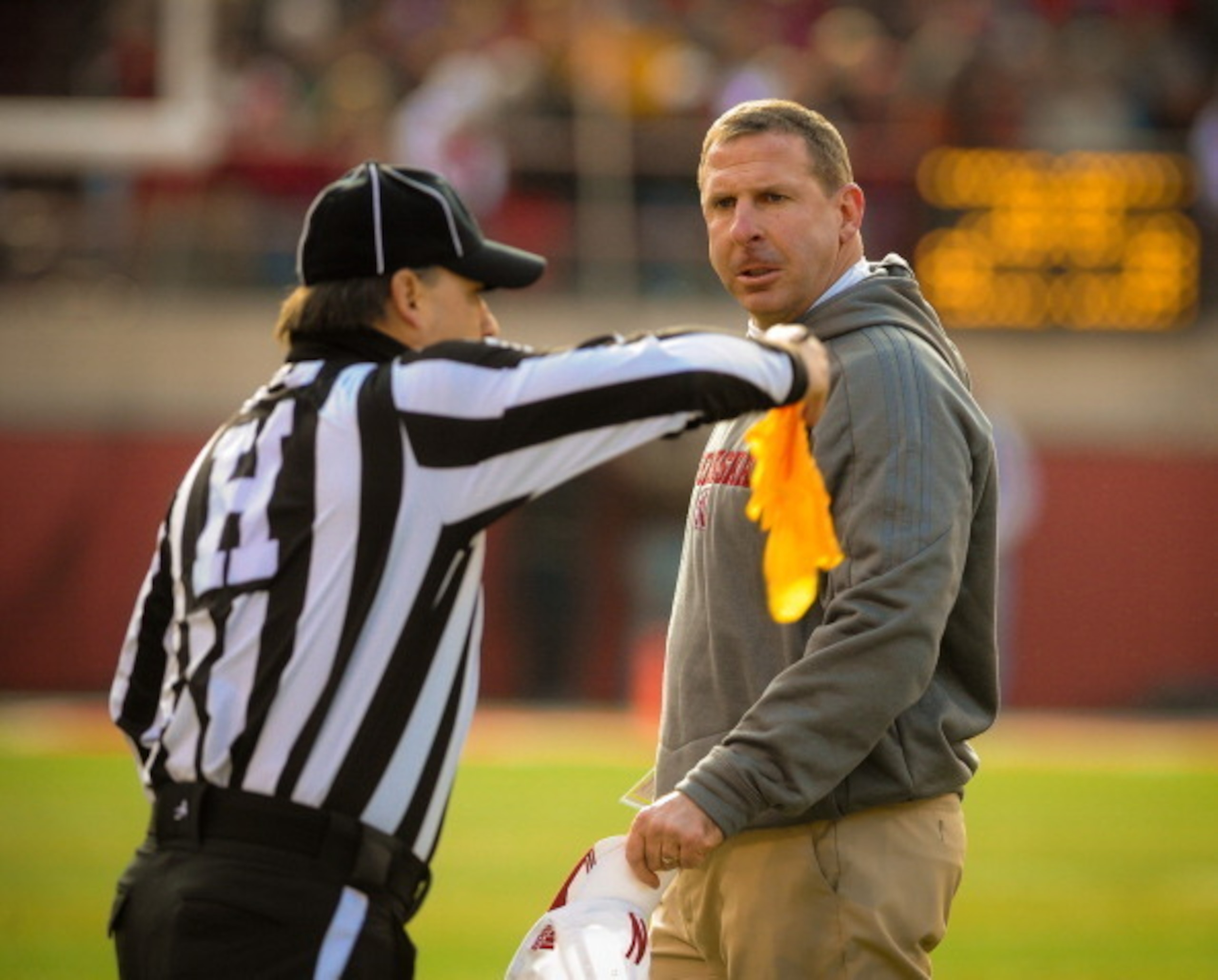
Bo Pelini's job security at Nebraska was unquestionably the most difficult to judge. Over the past 12 months, Pelini has gone from grumpy to pariah to contrite to endearing to beloved.
In the wake of a leaked audio recording of a Pelini tirade directed at Nebraska fans, Pelini's days in Lincoln were believed to be numbered. However, Pelini righted the ship (sort of) to guide the Huskers to yet another four-loss season (their sixth in Pelini's six years at Nebraska).
If it were just Nebraska's penchant for losing exactly four games each and every stinking year, Pelini might be middling somewhere between secure and insecure—at least that's where he should be. Nebraska is a proud program with rich tradition and a national championship pedigree. How Huskers fans can stomach year after year of four losses is anyone's guess.
But Nebraska is off to a 7-1 start in 2014 (although the real meat of the Huskers' West Division schedule all lies in November). If Nebraska can manage to make a run at the Big Ten title this season and manage to do away with that streak of four-loss seasons in the process, Pelini's job security will get a healthy boost.
If not, however, don't expect his new softer, cuddly cat-loving image to placate the Cornhuskers faithful forever.
Job Security: Neither Secure nor Insecure
Tim Beckman, Illinois
12 of 14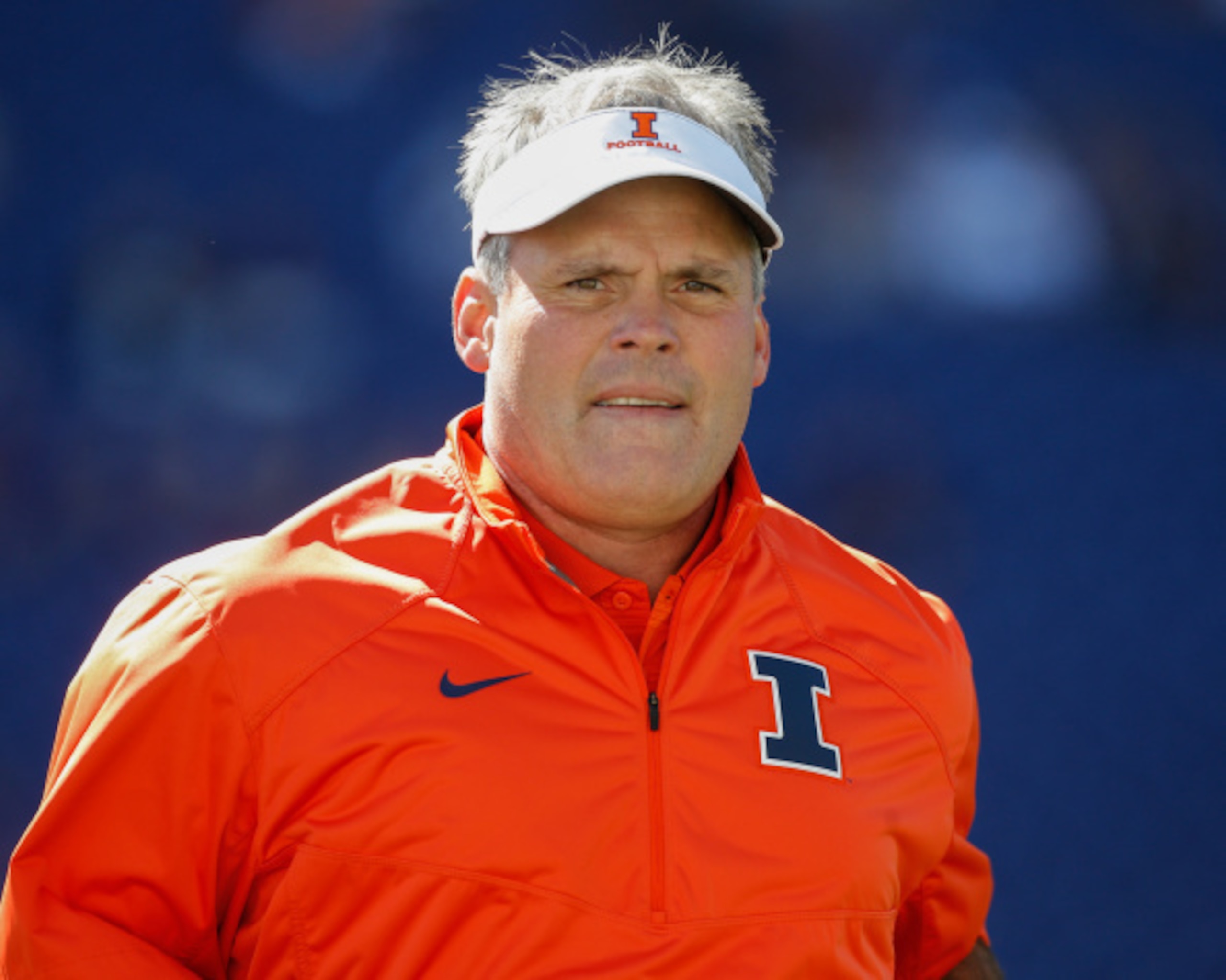
If you had asked us at the start of the 2014 season which Big Ten coach was at greatest risk of losing his job by season's end, we would have said Illinois' Tim Beckman. We wouldn't have even hesitated, either.
In his first 24 games as head coach, Beckman guided the Illini to an abysmal 6-18 record. Worse, those two seasons included a combined record of 1-15 in Big Ten play. That's just plain awful, and bad enough to get any guy fired.
If things didn't turn around—and quickly—in the 2014 season, there was no one who believed Beckman would still be employed at Illinois come December.
Well, a turnaround of sorts is in the works.
Eight games into the 2014 season, Illinois has already matched last season's totals in overall wins and conference wins. The Illini still need to face Ohio State, Iowa, Penn State and Northwestern before the end of the season—and they'll need to win at least one of those games to actually improve on last season—but it's at least within reach.
Still, the best thing for Beckman's future would be to actually win two of those games—something that is at least possible—to give Illinois a decent shot at a bowl berth.
As it stands right now, however, we're still not ready to improve Beckman's job outlook. He'll need more than potential wins and theoretical bowl games under his belt for that.
Job Security: Insecure
Darrell Hazell, Purdue
13 of 14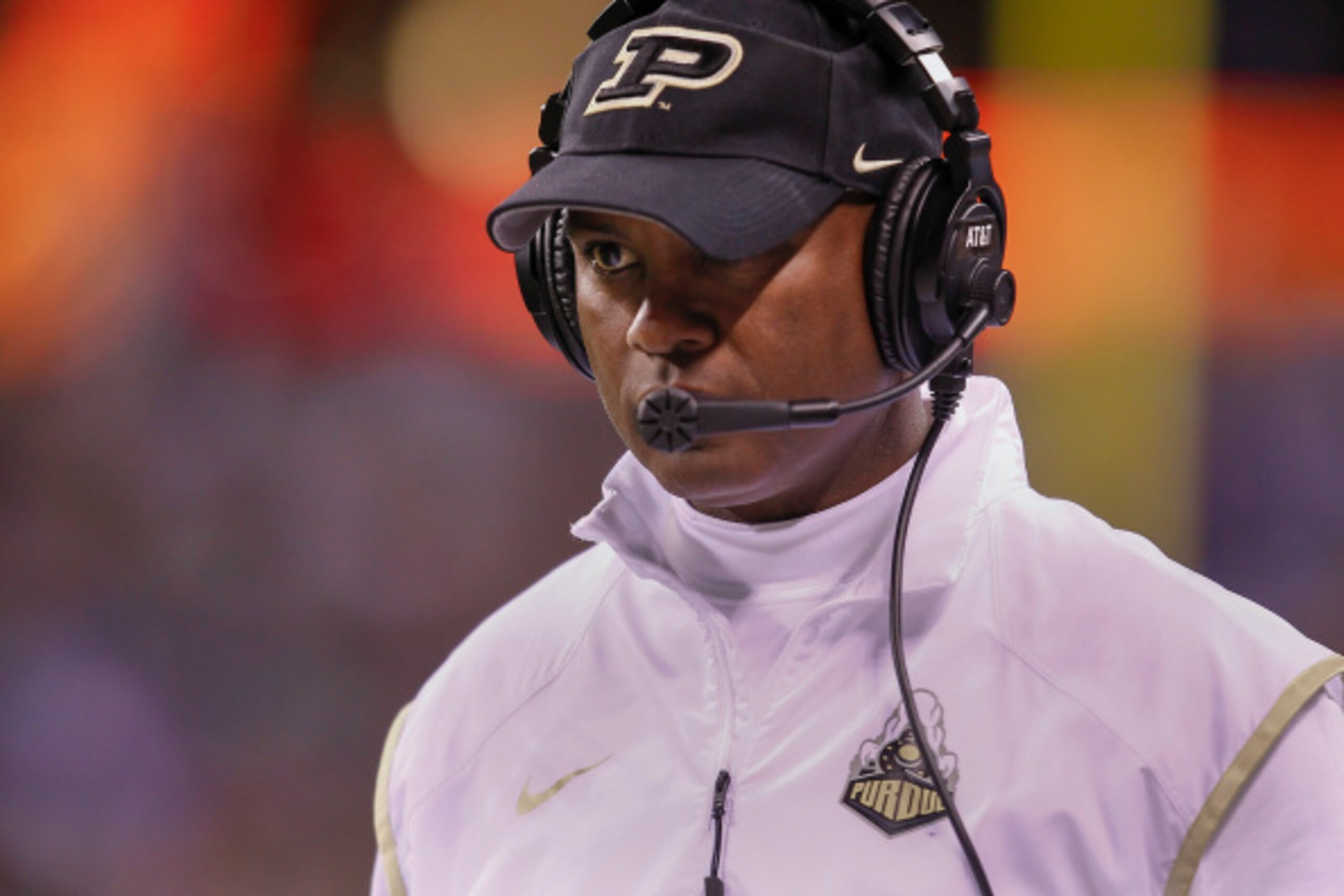
Darrell Hazell's start to his tenure at Purdue is very similar to that of Tim Beckman's at Illinois. Only worse.
Hazell is now 4-16 through his first 20 games, and three remaining West Division foes this season for the Boilermakers have a combined conference record of 7-4 (Nebraska, Wisconsin and Northwestern) and will be favored over the Boilers.
Sure, it's only his second season, but folks are already beginning to label Hazell's seat as hot.
Is it really that surprising? After all, Hazell set high standards for himself with an expectation of winning—something he had done at Kent State in the season before accepting the gig in West Lafayette.
In hindsight, maybe hiring a guy with just two seasons of head coaching experience wasn't that great of an idea. Including his two seasons at Kent State (where he was 16-10), Hazell is now 20-26 as a head coach.
It's probably too soon to brand Hazell as a failure at Purdue, especially considering there has been some improvement in the Boilers' play this season. Still, after a 1-11 start to his tenure, Hazell has handicapped himself.
And a 3-5 record eight games into 2014 isn't helping much.
Job Security: Very Insecure
Brady Hoke, Michigan
14 of 14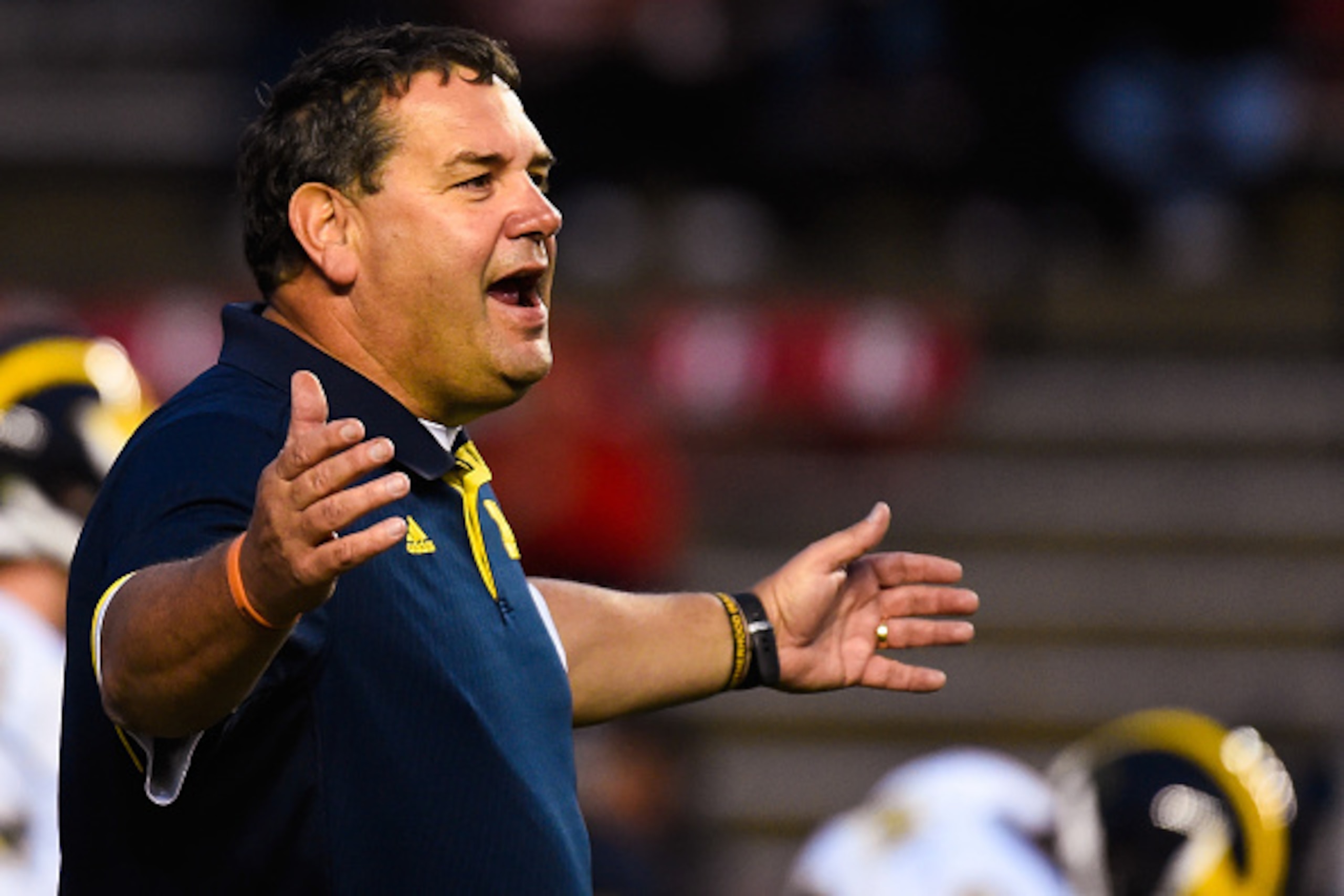
The question at this point for most Michigan fans probably isn't whether or not Brady Hoke will get fired—it's when.
If you want our guess, it'll be January 2, 2015. We'll explain in a second. But first, let's take a glance at what got us to this point.
First, we need to go all the way back to when Lloyd Carr was the heaven-sent head coach at Michigan. Carr, a Bo Schembechler disciple, hired Brady Hoke. Hoke's previous collegiate coaching experience included Division II Grand Valley State, Western Michigan, Toledo and Oregon State before he joined Carr's staff in Ann Arbor, where he eventually rose to "associate head coach" before taking over his own program at Ball State.
After success at both Ball State and San Diego State, Hoke was rewarded with his dream job, replacing ousted Rich Rodriguez (despite the fact that Michigan had improved every season under Rodriguez after his first, devastating 3-9 season).
Michigan finally had a "Michigan Man" back in the head coach's office. But was Hoke the man for Michigan?
In direct contrast to Rodriguez, the Wolverines have gotten worse every season under Hoke, and despite winning the Sugar Bowl and finishing 11-2 in his first season (with a roster full of Rodriguez recruits, mind you), U of M is now just 3-5 through eight games in 2014.
Blowout losses to Notre Dame, Minnesota and Michigan State are not what Michigan fans want to see in rivalry games (or any games at Michigan). Beyond the scoreboard, Hoke's program is tripping up in other areas, too. From mishandling a concussion to "stakegate" to a general athletic department malaise, Michigan just can't seem to shake a bad news cycle that seemingly never ends.
With all of that, it shouldn't surprise anyone that The Detroit News' Terry Foster and both Christine Brennan and George Schroeder of USA Today have all called for Brady Hoke to be fired.
Still, winning cures all ills, and Michigan has ample opportunity to win in the month of November. The Wolverines host Indiana in what should be a very interesting homecoming on November 1, followed by a trip to Evanston to take on Northwestern the following week.
Michigan then has a bye week before finishing up at home against Maryland and on the road at Ohio State. Michigan must win at least three of those games to earn a bowl bid this season, but Hoke will probably need all four to save his job—and even then, there's no guarantee.
Remember how we predicted a January 2 firing date for Hoke? That's the day after his contract's buyout drops from the low, low price of $3 million to a bargain basement clearance sale price of $2 million.
Why is the buyout so low? Hoke probably wanted the job so badly, his agent couldn't or wouldn't talk him out of it.
Of course, if Michigan doesn't go at least 3-1 over its last four games, the program may begin to think the extra million dollars is worth it to fire Hoke a few weeks earlier.
We'll just have to wait and see. For Michigan fans, it'll be excruciating. For fans in East Lansing, Ohio State, and, well, almost anywhere else, it's the most entertaining Greek tragedy to be written since Euripides.
Job Security: Most Insecure

.jpg?w=2560 "NFL House in Paris Closes for Protests")

.jpg?w=2560 "Trevon Diggs Cut by Seahawks")