KC Royals vs. SF Giants: Keys for Each Team to Win World Series Game 3
Two games in, the 2014 World Series looks like a heavyweight bout.
The San Francisco Giants landed the first blow in Game 1, delivering a 7-1 haymaker behind ace Madison Bumgarner.
The Kansas City Royals responded with an uppercut of their own, pounding the San Francisco bullpen en route to a 7-2 Game 2 victory.
Now, with the series knotted and the scene shifting to the Bay Area, each squad will try to take control of what promises to be a spirited, protracted fight.
By splitting a pair in Kansas City, the Giants wrestled away home-field advantage. But the Royals, fresh off a resounding win in front of the raucous Kauffman Stadium faithful, appear to have momentum, fleeting as it may be.
As we gear up for Game 3 at AT&T Park, here are three keys for each club that will help decide who lands the next punch—and who hits the ropes.
The Royals Need to Get the Running Game Going
1 of 6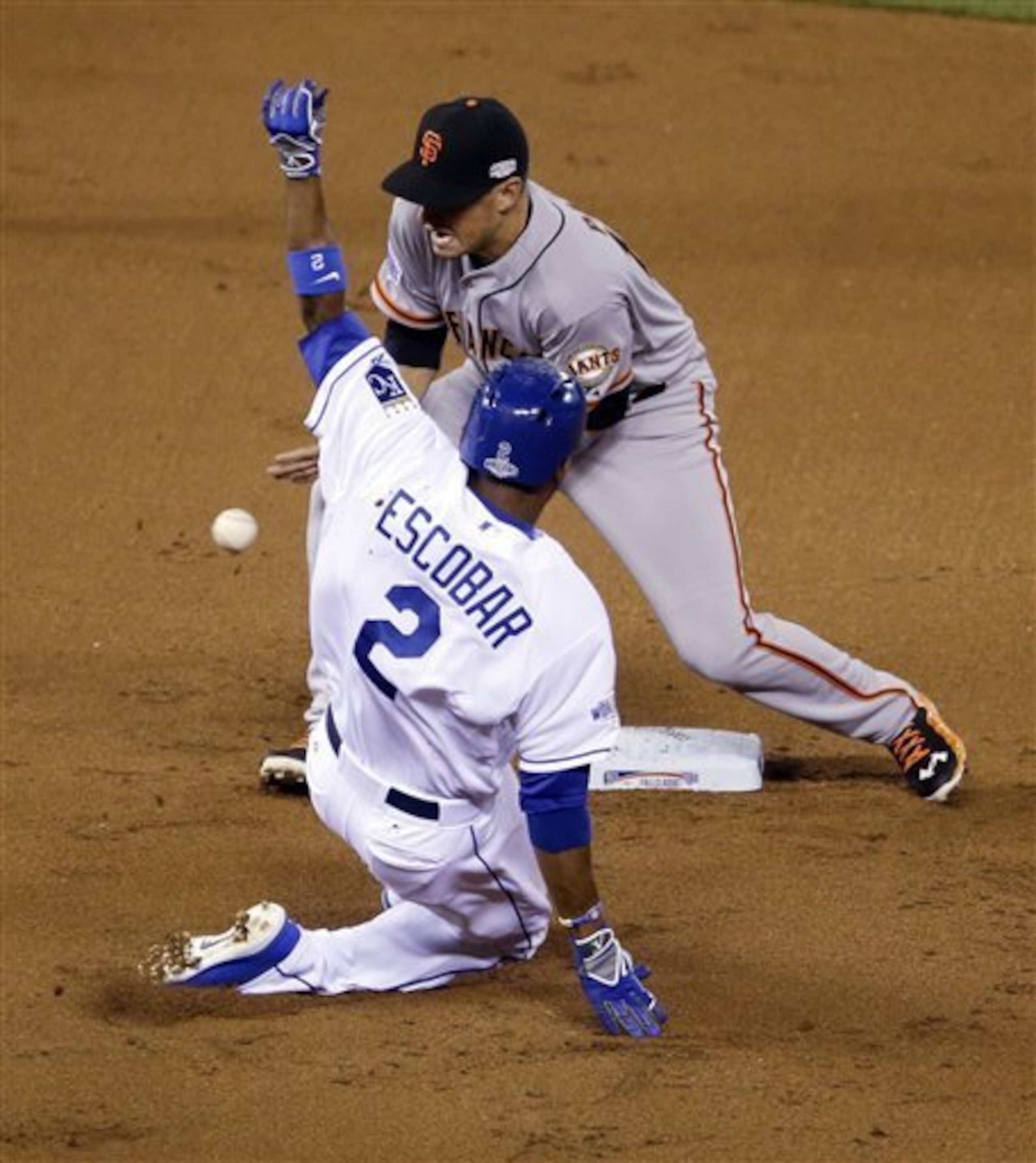
The Royals ran wild, literally, through the postseason, stealing 13 bases in the first three rounds, including seven in the Wild Card Game alone.
So far, they've gone theft-less in the Fall Classic.
Partly, that's a result of how Games 1 and 2 played out; each was a lopsided affair, which partially negated the need to gain 90 feet.
Kansas City did attempt a steal in the first inning of Game 2 with San Francisco leading, 1-0. But leadoff man Alcides Escobar was gunned down by Giants catcher Buster Posey.
Playing at pitcher-friendly AT&T Park, where runs could come at a premium, the Royals need to get back to their free-stealing ways—not just to advance runners and set up scoring chances but to get into the heads of the Giants pitchers.
Royals skipper Ned Yost spelled this strategy out to USA Today's Ted Berg. Yost was specifically discussing super-pinch runner Terrance Gore, but he could have been talking about any number of fleet-footed Royals: "As soon as he [gets] into the game, the pitchers [take] focus off of getting the hitter out and [are] focusing on him. That’s what you want."
The Giants Need at Least 6 Innings from Tim Hudson
2 of 6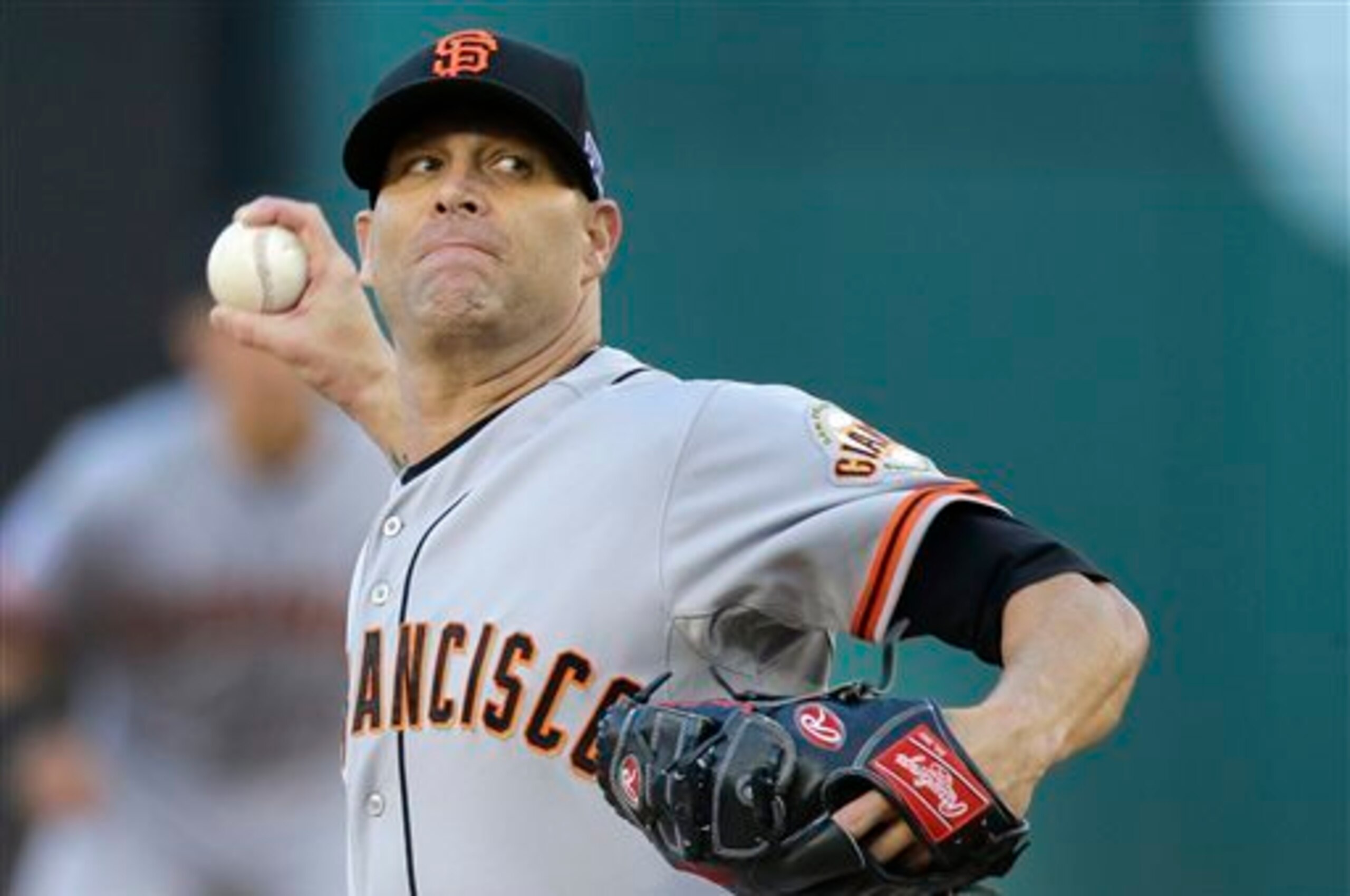
Much of the emphasis has been on the Kansas City starters and how they need to survive long enough to hand a lead to the Royals' shutdown, late-inning relievers.
It's the Giants, though, who saw their middle relief exposed in Game 2. With two on and nobody out in the sixth inning, San Francisco skipper Bruce Bochy pulled starter Jake Peavy. Kansas City proceeded to plate five runs against right-handers Jean Machi and Hunter Strickland, busting open a 2-2 tie.
The back end of the Giants bullpen, which features slider-slinging setup man Sergio Romo and closer Santiago Casilla, who hasn't yielded a run in October, is nails. The challenge is getting the ball to those guys without the game slipping out of reach.
The best answer is for San Francisco's starters to go deep, and Tim Hudson, who gets the call in Game 3, is certainly capable.
The 39-year-old sinkerballer wore down toward the end of the regular season but has enjoyed more rest in the playoffs and regained his form, lasting past the sixth inning in each of his postseason turns.
When he's right, Hudson—who will be making the first World Series appearance of his exemplary 16-year career—pitches to contact, inducing ground balls and keeping his pitch count low.
For an ailing Giants bullpen, a vintage Hudson outing could be exactly what the doctor ordered.
The Royals Need to Score Early
3 of 6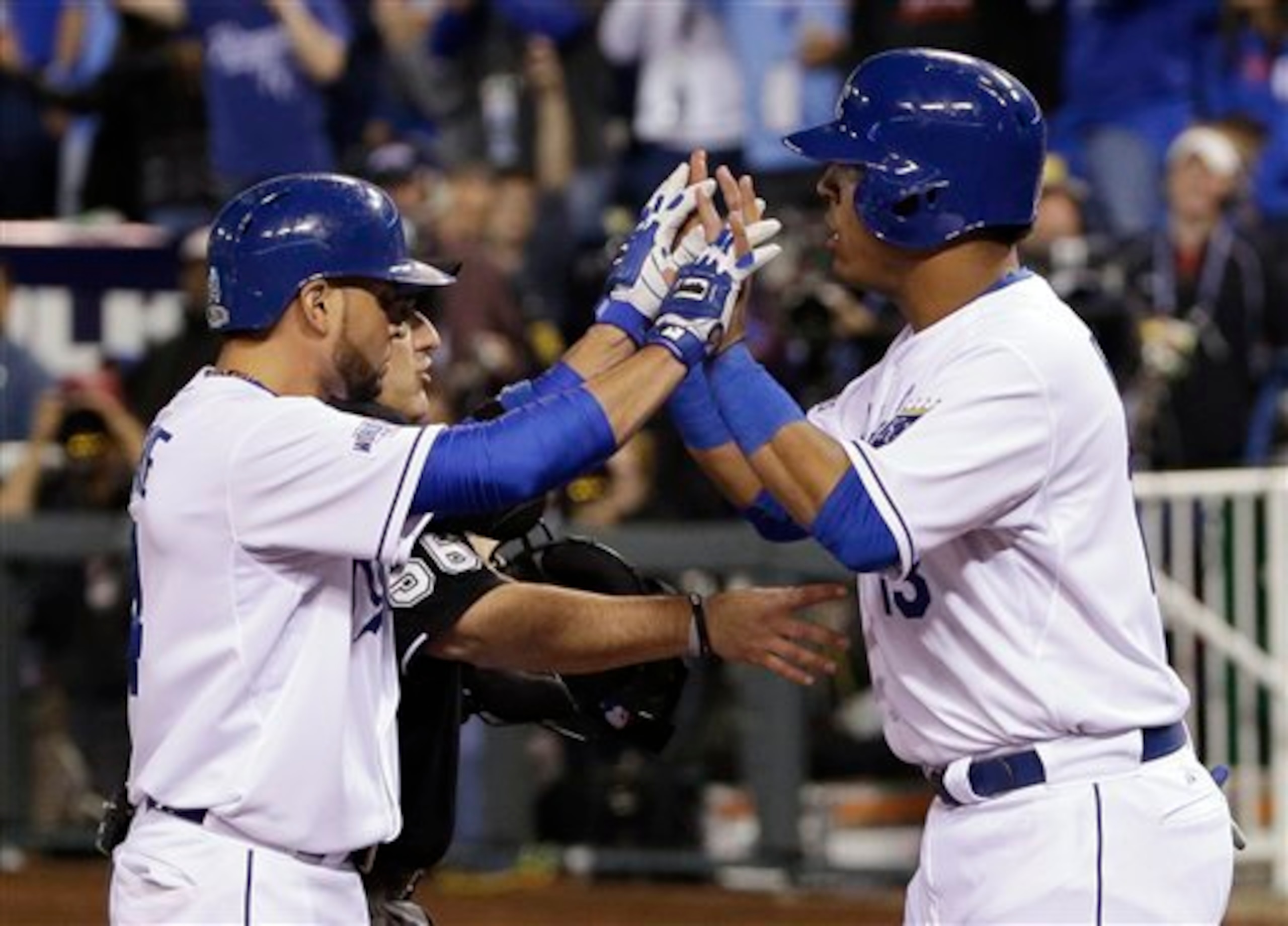
The Giants drew first blood in each game in Kansas City. The Royals never recovered in Game 1 but bounced back in Game 2.
So it's not like being the first to score is some magic formula.
For what it's worth, though, the Royals scored first in three of the four road games they played in the American League Division Series and American League Championship Series. And they won them all as part of a historic 8-0 postseason start.
Overall, Kansas City was an excellent road team this year, going 47-34 away from Kauffman Stadium.
If the Royals want to maintain whatever momentum they gained in Game 2, they'd do well to plate one (or more) early in order to quiet an AT&T Park crowd that's gotten used to watching the hometown nine steamroll through October.
Count Royals first baseman Eric Hosmer among the unfazed. "I've heard nothing but good things about [AT&T], the atmosphere and the energy the crowd brings. I've always wanted to play there,'' he told The Associated Press, via FoxSports.com. "I'm sure going for the first time for a World Series game, it should be fun."

The Giants Need a Big Game from Buster Posey
4 of 6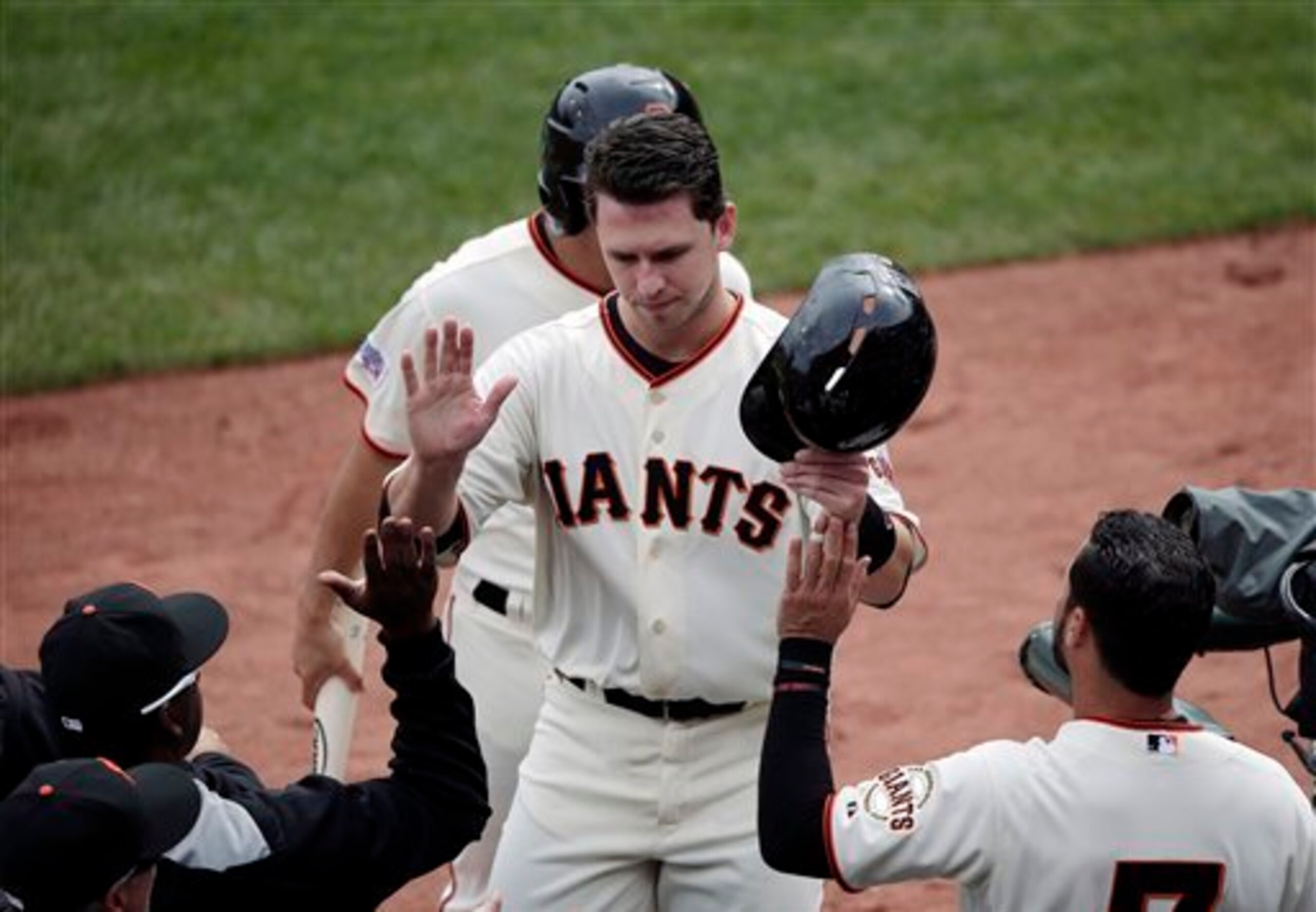
It's not that Buster Posey isn't producing. He's hitting .288 with five RBI in the postseason and has caught every inning.
But the Giants are still waiting for that transcendent game from their unassuming, undisputed leader—the kind of performance that will be talked about for years, even decades.
Game 3 would be as good a moment as any.
Posey has a thin history against Royals starter Jeremy Guthrie, going hitless in two regular-season at-bats against the right-hander, per ESPN.com. Normally, that favors the pitcher.
And though he's rapped out 15 hits in October, including some big ones, Posey has yet to collect an extra-base knock. As Mike Axisa of CBSSports.com notes: "Win Probability Added, or WPA, which measures how much a player improves his team's chances of winning based on historical data, says Posey has been the Giants' second-worst position player this postseason, better than only No. 8 hitter Brandon Crawford."
Maybe his legs are tired. Maybe opposing pitchers are working hard to neutralize the Giants' former MVP and No. 3 hitter. Or maybe, as the Giants are surely hoping, it's just a small-sample anomaly—and Buster is about to bust out.
The Royals Need to Replace Billy Butler's Production
5 of 6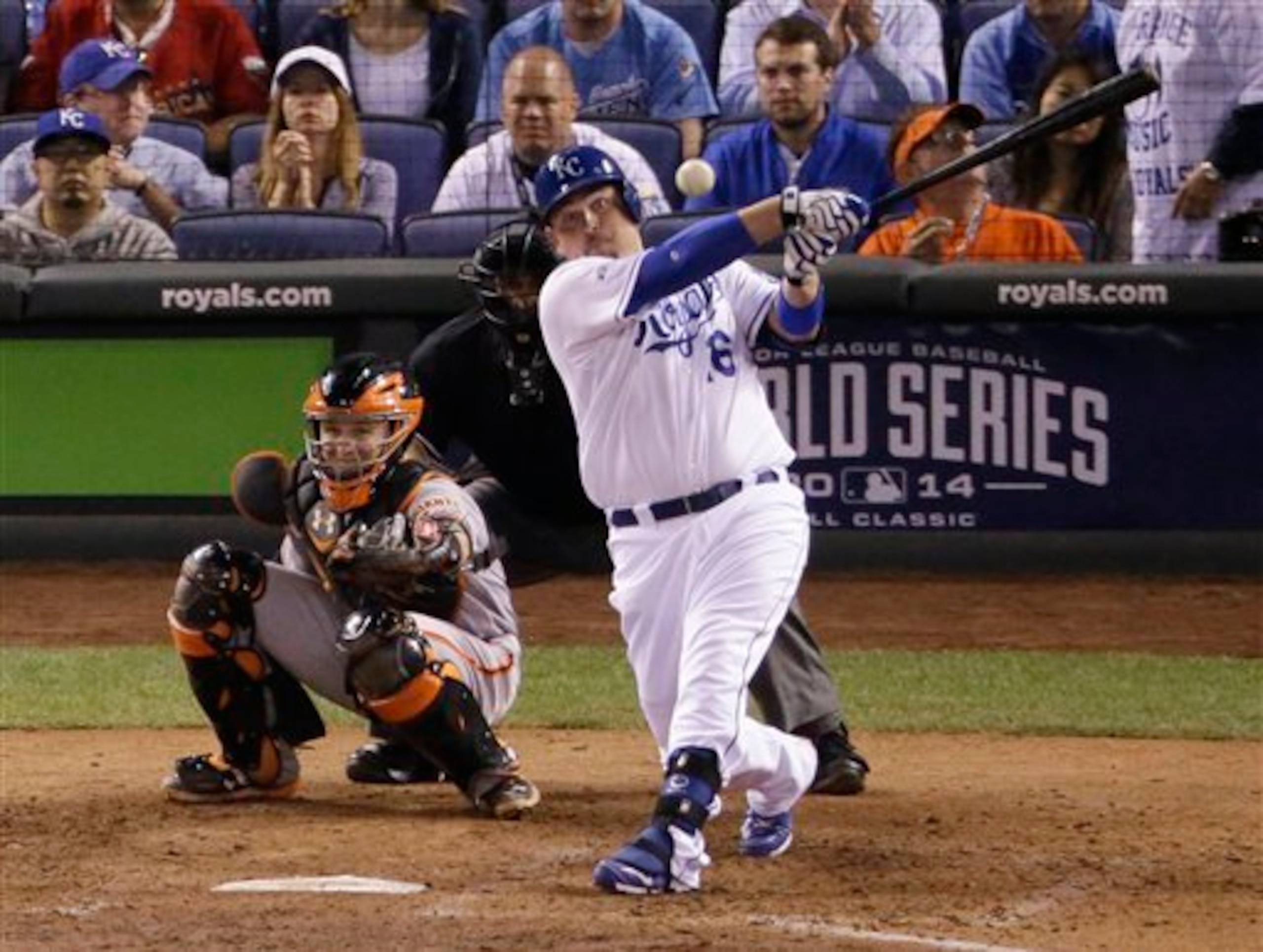
Transitioning to the National League park means changes for both teams, but none looms larger than the absence of Billy Butler in the Kansas City starting lineup.
Butler has gone 3-for-6 in the series so far and knocked in a pair of runs in the Royals' Game 2 win.
And he's a leader in the clubhouse, a big, plodding anchor on a team full of speedsters. "He’s woven into the fabric of the team," veteran Raul Ibanez told Tyler Kepner of the The New York Times. "Guys enjoy having him around."
Butler will be around at AT&T Park, but with no designated hitter, he'll have a diminished role. That means others, like Hosmer and Alex Gordon—both hitless through two games—will have to step up.
The silver lining is that Butler instantly becomes a potent weapon off the bench. As Yost put it, per Kepner, "You don't have to start a game to win a game."
The Giants Need to Get Cold—Blooded, That Is
6 of 6
Before Game 1, Giants slugger Michael Morse described what makes this team so transcendent in October. "Yesterday, these guys had ice in their veins," said Morse, per Al Saracevic of the San Francisco Chronicle. "They’re so professional."
That professionalism cracked a bit in Game 2 when Hunter Strickland, the fireballing rookie reliever, lost his cool after allowing a home run to Omar Infante. Visibly agitated and yelling at himself, Strickland got into a shouting match with Salvador Perez as the Royals catcher crossed home plate.
“My emotions got the best of me," Strickland told the San Francisco Chronicle's Ann Killion. "And I’m not too proud of that."
Pride and composure have guided the Giants to two championships in five seasons and now to the brink of a third. This is no time to start melting down, antagonizing the opposition and losing sight of the ultimate goal.
"He’s still learning," said veteran left-hander Jeremy Affeldt of his young bullpen mate, per Killion. "He was in Double-A, and now he’s in the big leagues pitching in the World Series. He’s going to mature. This helped his maturation process. Failure is part of it."
Maybe so. In the postseason, though, every failure is magnified. For Strickland and the Giants, it's time to chill those veins back to ice.
All statistics courtesy of Baseball-Reference.com except where noted.
.png?w=2560)

.jpg?w=2560 "NFL House in Paris Closes for Protests")

.jpg?w=2560 "Trevon Diggs Cut by Seahawks")