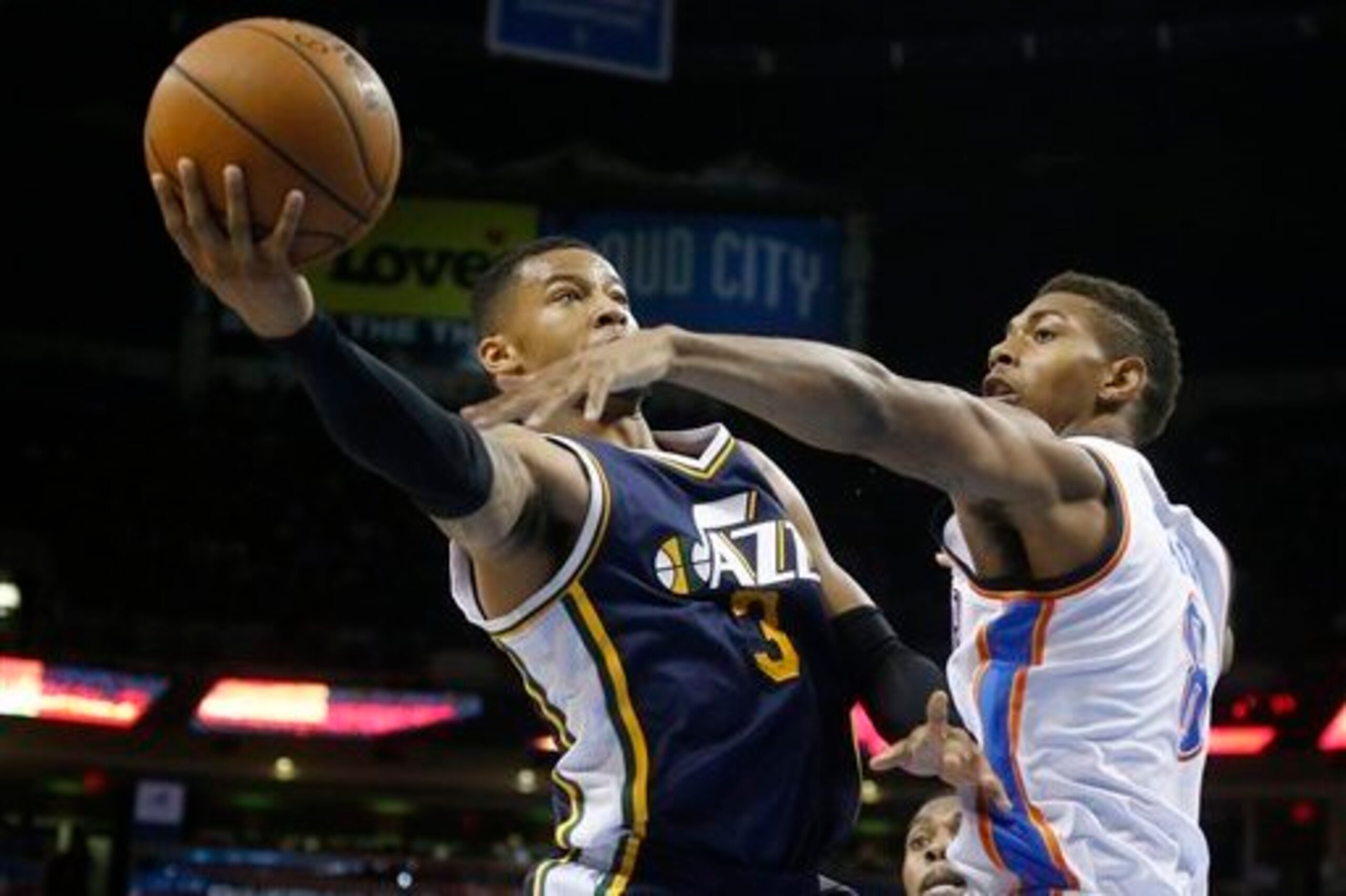
Trey Burke isn't a point guard who incites national zeal, or talk of the Utah Jazz's long-awaited resurgence, or far-flung debates that aim to understand where he ranks among the NBA's bottomless stable of floor generals.
Yet.
Point guard is a difficult position to play. Not only are point guards basketball's quarterbacks, responsible for the livelihood of their team's offense, but they play a position packed with All-Stars and should-be All-Stars and would-be All-Stars and could-be All-Stars.


Competition is fierce and unrelenting, making it unfathomably hard to gain distinction worthy of something more than a hat tip or footnote. National recognition becomes an even more trying endeavor when playing for a team light-years away from the playoffs and struggling to chart direction.
That was Burke and the Jazz last year.
Utah won 25 games, finished dead last in the contender-crammed Western Conference, ranked 25th in offensive efficiency and 30th in defensive efficiency. Burke himself struggled within then-head coach Tyrone Corbin's improperly paced system. He seldom looked comfortable, and it showed.
In 70 appearances—68 of them starts—he averaged 12.8 points, 5.7 assists and three rebounds on 38 percent shooting, registering a below-average 12.7 player efficiency rating. He also matched the worst defensive rating (115) in league history for qualified rookies who played at least 32 minutes per game.
Directing an offensive bottom-feeder while failing to record spittle-spawning stats in 2013-14 would seem to put a breakout 2014-15 campaign out of reach. But not even the most individually productive novices have profound impacts right away.
Michael Carter-Williams' Philadelphia 76ers had the league's worst offense during his rookie campaign. The Portland Trail Blazers ranked in the bottom half of offensive efficiency during Damian Lillard's rookie year. Team standings aren't always reflective of player potential early in careers.
Individual performances themselves aren't either. Russell Westbrook is a perfect example. The Oklahoma City Thunder won 23 games and ranked second to last in offensive efficiency during his rookie crusade. While he was productive, it wasn't always pretty:
| Trey Burke | 38.0 | 33.0 | 12.7 | 3.0 | 5.7 | 101 | 115 | 12.7 | 0.9 |
| Russell Westbrook | 39.8 | 27.1 | 15.3 | 4.9 | 5.3 | 99 | 111 | 15.2 | 1.9 |
A sudden leap wasn't ruled out for Westbrook, and it shouldn't be any different for Burke because of the league's point guard depth or because he plays with Gordon Hayward instead of Kevin Durant.
To be sure, Burke isn't Westbrook. He's smaller and less explosive. But he isn't not Westbrook. The rookie version of each is similar in that quickly discovered athleticism alone wouldn't get the job done. Both would have to adapt and adjust.
Westbrook did.
Burke will.
He already is.

"Burke’s task is to oversee that rise by making marginal improvements as a shooter, finisher and decision-maker while taking real strides as a defender," Sports Illustrated's Ben Golliver wrote. "A lack of pressure to make the postseason should help his cause."
Mission(s) accomplished.
Preseason contests have been Burke's stomping grounds. Through six games, he's averaging 16.5 points, six assists and 3.2 rebounds on 48.1 percent shooting overall and 53.3 percent shooting from deep.
The improved three-point clip is of serious note. Burke struggled to find his touch from beyond the arc as a rookie, draining just 33 percent of his long balls after connecting on 38.4 percent during his final season at Michigan.
Exhibition efforts are accompanied with asterisks, but Burke's long-range comfort tracks toward convincing. He's not capitalizing off infrequent attempts. The 30 three-pointers he's hoisted in 176 minutes are the equivalent of 6.1 per 36 minutes. That's higher than his rookie average of 5.3.
"Oh hey, looks like Trey Burke can shoot again. That's probably a good sign for the Jazz.
— Sam Vecenie (@Sam_Vecenie) October 22, 2014"
Slowly, surely, he's putting valuable distance between himself and the inefficient scorer SLC Dunk blogger AllThatAmar described back in March:
"He does appear to be a player that needs to take a lot of shots to get his points though, which makes that three point shooting all the more important. If he can consistently hit the open jumper (and he should) then it would be fine. Instead he has to rely on pick and roll jumpers and dribble hand-off pull-ups. I don't know if that's what I want to see him doing, particularly when he's automatic from the free throw line. Drive man! Get to the line! Why can't you be Tony Parker? Well, he could. And then he would be a legit first option.
"
Right now, he looks like that legitimate first option.
It helps that the Jazz are enjoying weapons they didn't have last year. Rudy Gobert has been a monster. Enes Kanter is—and this is not a drill—shooting threes. Hayward isn't drowning under an inefficient shot selection and the discomfort that comes with drawing the ire of opposing defenses. Alec Burks continues to shred nets. Dante Exum is fast, long, fast, pesky and fast. (Did I mention fast?)
Having a better supporting cast around him does make life easier for Burke. Floor spacing is an actual part of the team's offense now, which paves way for better shot selection, both inside and out.
But it's more than personnel changes and development. His aggression has increased tenfold from last year. He was never wholly passive, yet he, the primary ball-handler, would remove himself from the offense for sets at a time.
This side of his rookie year, Burke has never dropped out of attack mode.
Attack mode is good by the way. The Jazz need a constantly aggressive Burke—not the one who pulls up for contested 20-footers but the one who drives and shoots and scores.
That Burke made the Jazz better. They were 10-14 last season when he attempted at least 15 shots. Winning 41.7 percent of the time doesn't normally constitute success, but the Jazz won under 31 percent of their games overall.
Consistently slicing through the heart of defenses has Burke playing like an offensive stud. More looks at the rim have helped with his efficiency and opened up his perimeter game.
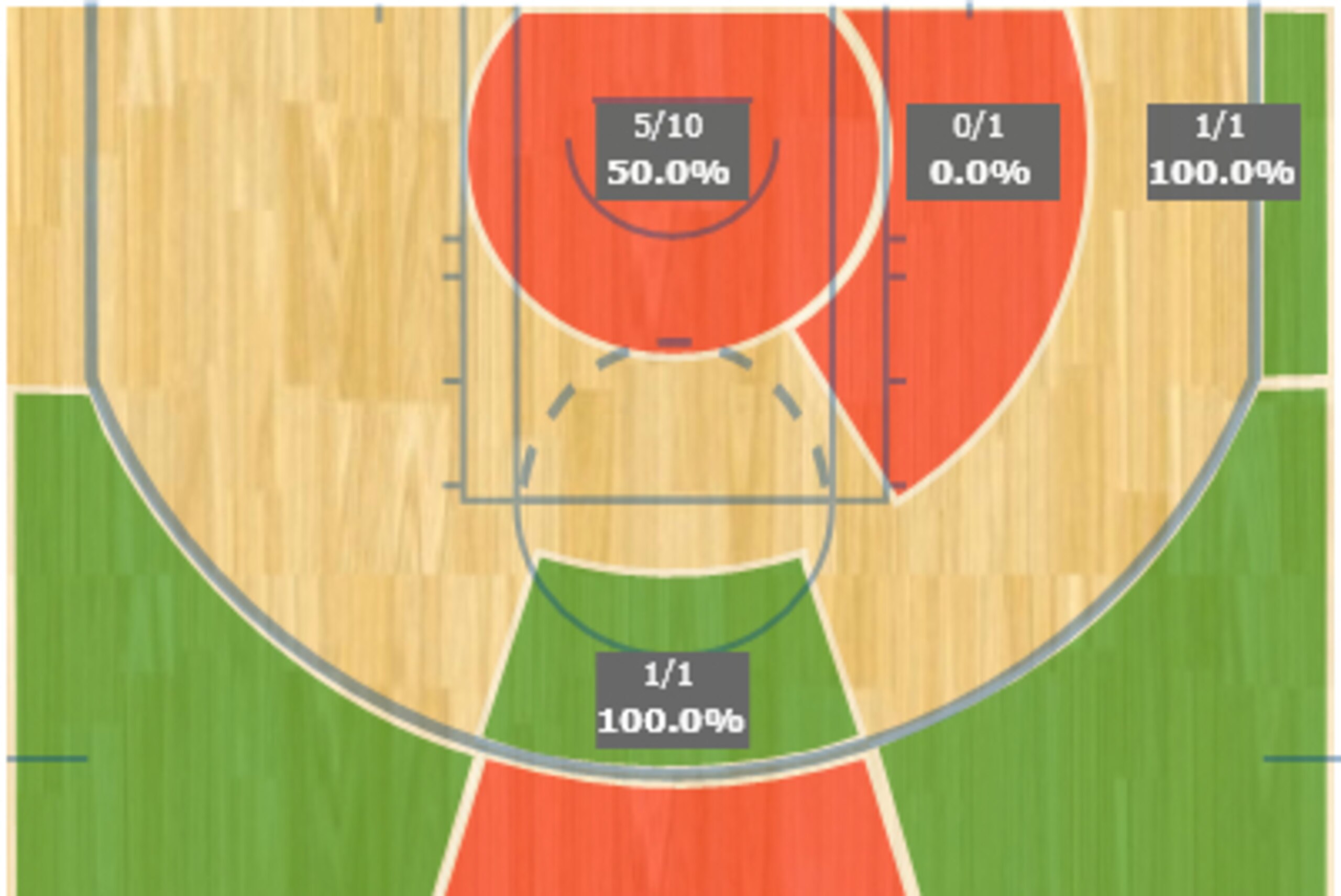
Those same shots were few and far between when Burke was a rookie. Just over 17 percent of his field-goal attempts came within the restricted area, of which he hit only 49 percent. Reaching the rim was tough, and converting point-blank opportunities wasn't any easier.
Interior assaults are now part of Burke's offensive routine. In the Jazz's most recent victory, a 105-91 romping of Oklahoma City, he went for 23 points on 9-of-16 shooting. Ten of those shot attempts (62.5 percent) came around the basket.
Now, with his offensive game polished, all that's needed to complete his transformation is some good ol' fashion defense.
Check.
“The thing that was really good about his game today, in my opinion, was…he defended, which he’s starting to do,” Jazz coach Quin Snyder said, per the Deseret News' Jody Genessy. “It’s starting to become who he is.”
Calling Burke's first-year defense a struggle would be too kind. Undersized at 6'0", he was exploited frequently. He wasn't using his long arms to adequately contest shots, and he was liable to be swallowed whole by well-placed screens. Opposing point men notched an above-average PER against him without much resistance, per 82games.com.
Pretty much all of that has changed. There's a Chris Paul scrappiness to the way Burke defends. He's more aware of what's going on around him—a requirement for smaller players who don't want to get beat off the dribble or humiliated off screens—and he's played with end-to-end diligence that didn't previously exist.
Snyder's system is to thank, no doubt. The heightened pace allows Burke to utilize his speed and incision, while there's more structure to how the Jazz defend. Help defense—an elusive, mythical unicorn in Utah last season—has been spotted and everything.
"woooo RT @Tjonessltrib: Trey Burke plus/minus tonight: Plus 33
— Hardwood Paroxysm (@HPbasketball) October 22, 2014"
All of which has put Burke in the right situation, playing beside the right teammates, operating under the right coach, basking in the right opportunity. Because as crowded as the Association's elite point guard corps remains, there's still room for one more.
And if the preseason is any indication of where Burke is headed in 2014-15, he'll be the one the Pauls and Westbrooks and Lillards and Stephen Currys and John Walls are welcoming onto the starry stage they, along with many others, call home.
*Preseason stats courtesy of RealGM. Remaining stats via Basketball-Reference and NBA.com unless otherwise cited.


.jpg?w=2560 "NFL House in Paris Closes for Protests")
.jpg?w=2560 "Trevon Diggs Cut by Seahawks")