How Good Are the New York Giants After Roller-Coaster Start to 2014 Season?
So just who is this New York Giants team, and what can we expect moving forward after their embarrassing and lackluster 27-0 loss to the Philadelphia Eagles?
As the old saying goes, things aren’t always as bad as they seem, as was the case in their three losses so far, games in which they have been outscored the first two weeks of the season, when New York was outscored 87-28.
On the other hand, things certainly aren’t as good as they appeared in the three-game winning streak in which the Giants crushed their opponents 105-51.
TOP NEWS
.jpg?w=2560 "NFL Paris Football")
NFL House in Paris Closes for Protests
.jpg?w=2560 "Seahawks Chiefs Football")
Trevon Diggs Cut by Seahawks
.jpg?w=2560)
B/R's Expert Week 7 NFL Picks 🔮
The truth, as it always is, is somewhere in the middle. The fear is that because these trends continue, the Giants could end up on the outside looking in for the playoffs at the end of the season.
Here, then, is a look at some trends that haven’t really changed for the better from last season, despite the changes made in the offseason.
The Past is in the Past…Or Is it?
Whenever a question concerning the 2013 season comes up, head coach Tom Coughlin and his players are very quick to point out that the past is the past and that 2014 is a brand-new team trying to make its way in a brand-new season.
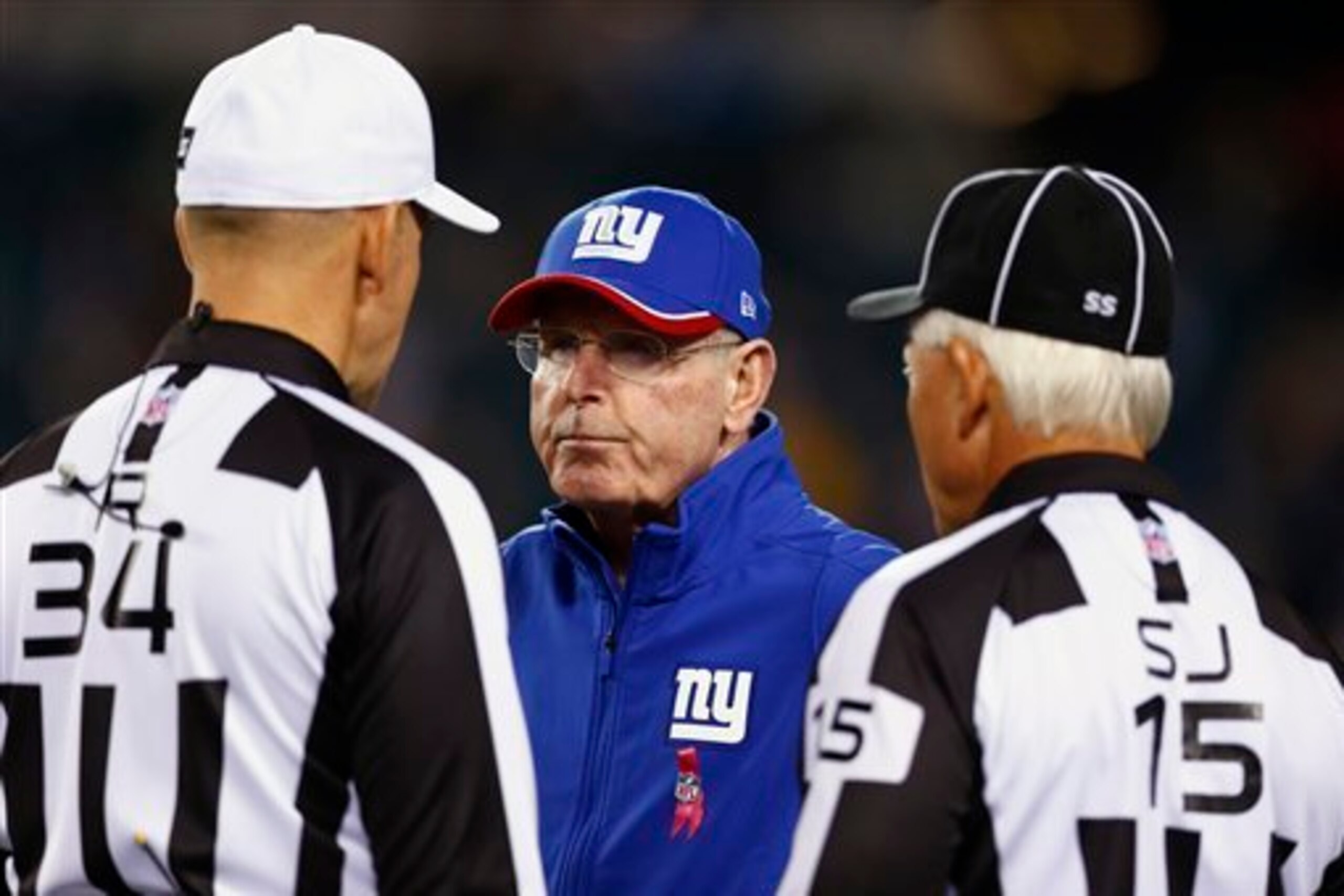
However, those who ignore the past are doomed to repeat it, and that seems to be exactly where the Giants are right now.
Let’s look at some trends that, despite the changeover in personnel, despite the installation of a new offense and despite a so-called renewed attitude, seem to keep popping up and have made for a roller-coaster start to the Giants’ 2014 season.
Strength of the Competition
In 2013, the Giants finished 7-9, their first losing season under Coughlin since 2004 when they finished 6-10.
| Dallas | 8-8 | No | No, No |
| Denver | 13-3 | Yes | No |
| Carolina | 12-4 | Yes | No |
| Kansas City | 11-5 | Yes | No |
| Philadelphia | 10-6 | Yes | No, Yes |
| Chicago | 8-8 | No | No |
| Minnesota | 5-10 | No | Yes |
| Oakland | 4-12 | No | Yes |
| Green Bay | 8-7-1 | Yes | Yes |
| Washington | 3-13 | No | Yes, Yes |
| San Diego | 9-7 | Yes | No |
| Seattle | 13-3 | Yes | No |
| Detroit | 7-9 | No | Yes |
With the exception of the game against the Green Bay Packers and one game against the Eagles, the Giants were unable to beat teams with winning records.
Unfortunately, for New York, history seems to be repeating itself this season. Look at what has happened in the first six games of this season.
| Detroit | 8-8 | No |
| Arizona | 10-6 | No |
| Houston | 2-14 | Yes |
| Washington | 3-13 | Yes |
| Atlanta | 4-12 | Yes |
| Philadelphia | 10-6 | No |
The Giants’ three wins this season have come against teams that last year had a combined 9-39 won-loss record. Also all three opponents that lost to the Giants so far held the top-three slots in the 2014 NFL draft.
One final note regarding what the Giants have done against their competition. Tom Rock of Newsday notes that the Giants have failed to score in a regular-season game four times in their last 36 regular-season contests, a rate of one shutout per every 6.5 games.
The Sack Attack
In 2013, quarterback Eli Manning absorbed a career-high 39 sacks through 16 games. That total included 16 sacks given up by the offensive line in the team’s first six games.

The Giants' front office, determined to protect its franchise quarterback, promptly went out and renovated every position along the line, save for the two tackle positions.
The new West Coast offense, by the way, was supposed to help reduce the sacks because in theory, with the ball coming out quicker, that meant the offensive linemen had to hold their pass blocks for less time than they did in the old vertical-style offense.
So where are we now? Through six games, the offensive line has allowed 13 sacks against Manning. Throw in the two sacks the offensive line gave up when Ryan Nassib was in the game this past weekend in mop-up duty, and the offensive line is just one sack behind last year’s pace.
The Not-So-Special Special Teams
Raise your hand if every time the Giants' special teams units comes on the field of late, you hold your breath.

It’s OK; you’re probably not alone. Per Pro Football Focus (subscription required), the 2013 Giants special teams finished 19th in the NFL—good but not great.
This year, after six games, the Giants' special teams unit is currently ranked as PFF’s 24th-best group, this despite the addition of new return specialists and a supposed upgrade in talent to the core teams, such as Zack Bowman, Quintin Demps, rookie Nat Berhe, Stevie Brown and Peyton Hillis, just to name a few.
Why have special teams fallen? Per the individual player grades of PFF, some key special teams performers from 2013 have seen their respective performances decline.
| Mark Herzlich | 3.5 | -1.5 |
| Peyton Hillis | n/a | -2.0 |
| Trumaine McBride | -2.1 | -2.5 |
| Spencer Paysinger | -4.5 | 3.0 |
In addition to the drop-off in Mark Herzlich’s performance, the Giants no longer have top special teams performers from 2013 such as fullback John Conner or safety Will Hill, as outlined by PFF.
Here are two more reasons for the struggles of special teams.
PFF has New York as having missed 10 tackles through six games so far this season. Last year, the unit missed 27 tackles in 16 games.
PFF also has the Giants special teams as having recorded seven penalties, a little more than one per game. Last year, the Giants finished with 20 special teams penalties.
Let’s zoom in on the punt-coverage unit in particular, which has had its hiccups this season. Last year, the top coverage performers were, in order, Damontre Moore, Will Hill, Larry Donnell, Herzlich and Ryan Mundy, all of whom had grades from a high of 2.5 to a low of 1.5, per PFF.
This year, the only coverage players to have high grades are Rashad Jennings (1.5) and Zack Bowman (1.0), according to PFF.
The Big Play

In 2013 during their forgettable six-game losing streak, the frustration on defense bubbled over to where the players went to defensive coordinator Perry Fewell with a simple request to simplify the defense.
“We just didn’t have an identity on defense,” former cornerback Terrell Thomas told Paul Schwartz of the New York Post.
“We were adjusting too much, and we were not playing fast. I think we were trying to do too much at times, as a coaching staff and as players. Once we got to a stage where we could simplify things and play a lot faster play with our eyes and our speed and our talent, you could see the results on the field.”

The plan worked for the Giants for a bit, but unfortunately it sounds as though the disconnect between Fewell and his players has popped up again in 2014.
I asked defensive end Mathias Kiwanuka during Monday’s conference call if the problems on defense—which gave up a staggering 448 total net yards to the Eagles—had a common theme or if the issues were random.
“On the defensive side, there were mistakes that were made multiple times,” Kiwanuka said.
“It wasn’t always people not understanding what they were asked to do. Some of it was people trying to do too much—people trying to go outside of the defense and make a play. When you start doing that, there are multiple breakdowns that happen, and you end up with the outcome we had [Sunday] night.”
While Kiwanuka didn’t say it, usually when players go outside of the scheme, it’s typically to compensate for something that either a teammate missed or something that wasn’t expected, the latter of which might have been the case Sunday night based on what linebacker Jon Beason said in his postgame press conference with reporters:
"[The Eagles] did a great job of breaking tendencies. Anytime you get ready for a game, it’s usually a four-game breakdown. We had some 100 percent tips, and they did a great job of completely throwing those out the window and hitting us with a couple of new wrinkles they were successful with.
"
Because of some of the issues on defense this season—and execution is certainly part of it—the Giants and their made-over defensive secondary have surrendered 23 big-pass plays of 20 or more yards (fifth-most in the NFL) after allowing just 41 big-pass plays in 2013.
Things haven’t been that much better against the run. The Giants defense is tied with Jacksonville and Pittsburgh for fourth place in the most big-play runs (20 or more yards) allowed (six). That’s one less big-play run of 20 or more yards allowed all of last season in 16 games, per NFL.com.
Looking Ahead
The Giants have faced their fair share of adversity as a team, but they have historically managed to overcome significant setbacks.
That is until recently, or so it seems.
If we go back to 2012 when New York started that year 6-2, things started to go downhill for them after Hurricane Sandy affected several players’ home lives, turning their work place into a refuge.
“It definitely can be a distraction from what's going on in the outside world just to get in here, watch some film and get ready,” safety Stevie Brown told Kristie Ackert of the New York Daily News.
The Giants finished that season winning just three more games, suffering two consecutive blowout losses to Atlanta (34-0) and Baltimore (33-14).
Last season, there was the mysterious 0-6 start, an occurrence from which the Giants never recovered as they fell to the 7-9 year-end mark leading to the wide-scale offseason changes that included a significant roster and assistant coaching turnover.
This year, the Giants not only have been left reeling from the loss to the Eagles, they will also have to go on without receiver Victor Cruz, who suffered a serious knee injury and who is out for the season.
Whenever a player is lost for the season because of injury, it generally affects his teammates.
When that player is part of the franchise’s core—the face of the team, as Cruz is—the loss can sometimes be insurmountable.
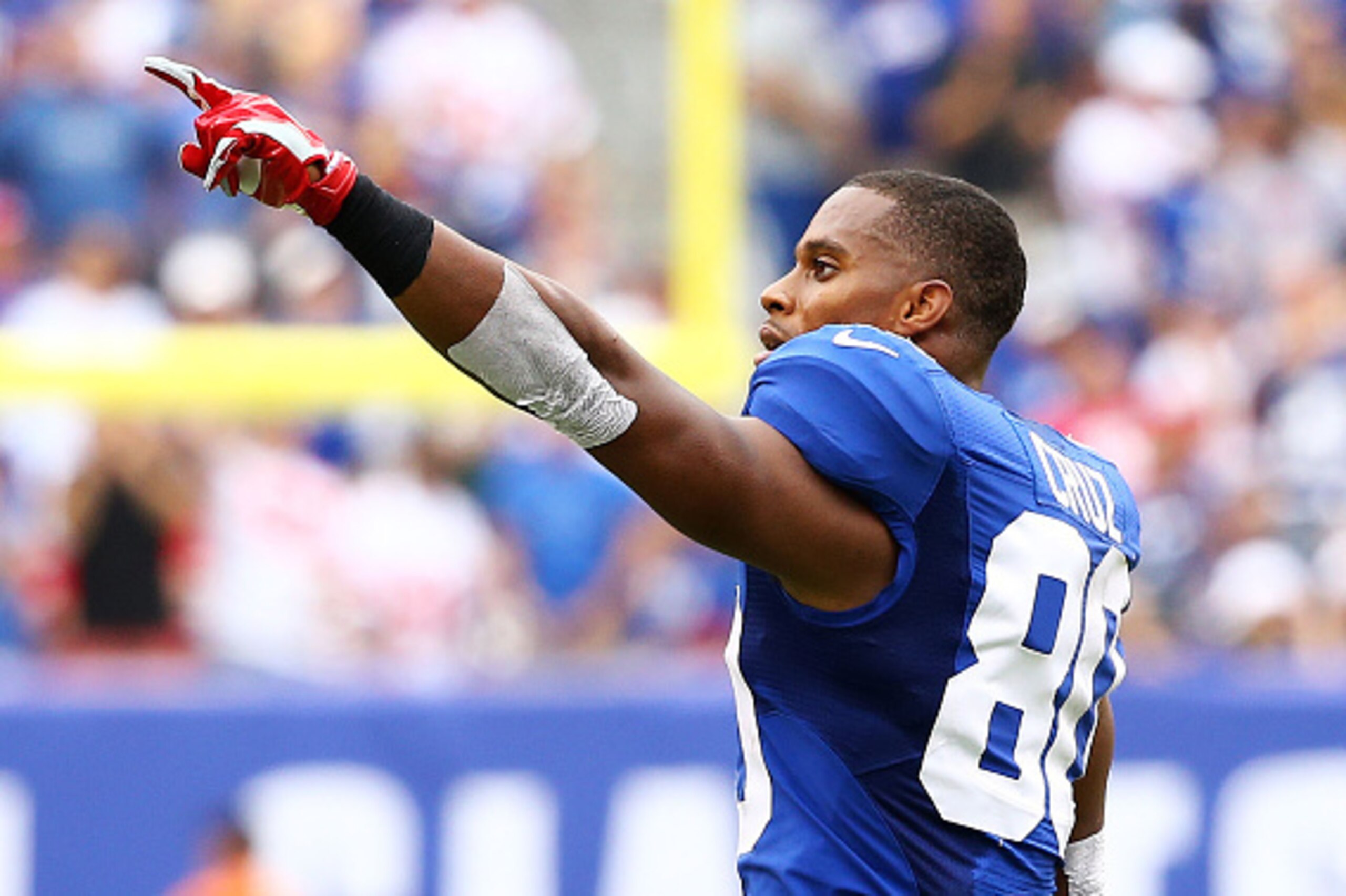
“Victor Cruz is a very, very positive and popular young man who has meant an awful lot to this franchise just by virtue of his work ethic and the fact that he is a Pro Bowl playmaker,” head coach Tom Coughlin told reporters during a conference call on Monday.
“It is another test for the team. I was going to say the offensive side of the ball but really for our team,” he added.
“Leaders have to continue to come forward, and this is an opportunity for someone else to get themselves into a position of leadership on this team, to be respected as Victor Cruz always has been by his teammates.”
It’s also a test for Coughlin, the leader of the ship who after these horrific losses stands before the media and points the finger at himself.
With his focus squarely on the next opponent, that being the Dallas Cowboys, Coughlin knows what he wants to see from his team from this week onward.
“The ability to continue to rise and to improve as a football team is my concern,” he said.
Advanced statistics courtesy of Pro Football Focus (subscription required) unless otherwise noted.
All quotes and information obtained firsthand unless otherwise sourced. Follow me on Twitter @Patricia_Traina.
.jpg?w=2560 "Colts Football")