

Complete Offseason Guide, Predictions for the Washington Nationals
For the second time in three years, the Washington Nationals can call themselves division champions and nothing more, having been knocked out in the division series once again.
It's a disappointing end for a team that looked like one of the favorites to represent the National League in the World Series. Changes are certainly going to be made between now and Opening Day 2015, though to what extent won't be known for at least another few months.
What follows is an overview of some of the decisions that the team is going to have to make—and some of the players they may look to in order to bolster the roster.
Payroll Breakdown
1 of 5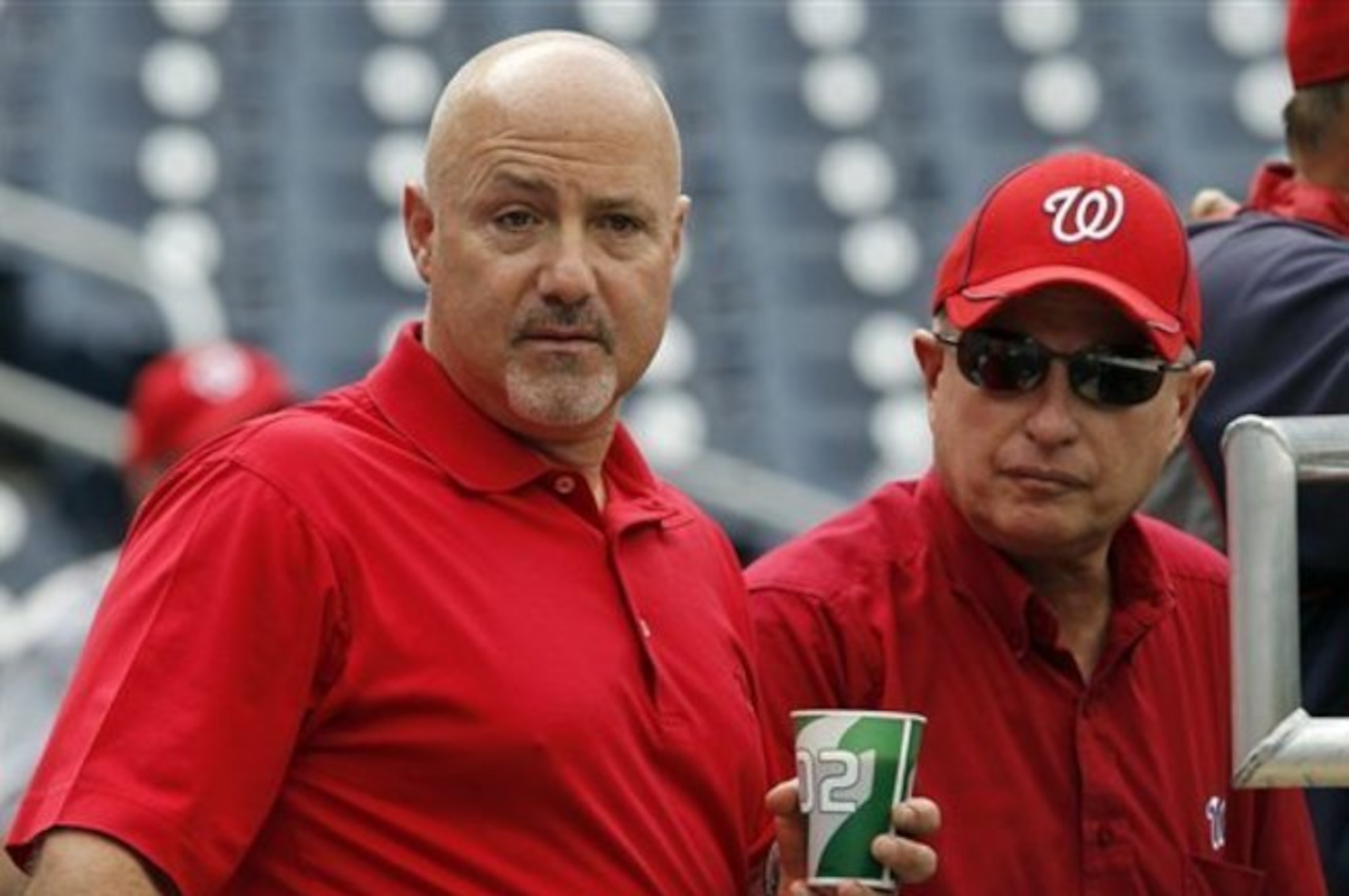
With an Opening Day payroll of more than $136 million—an $18 million jump from 2013—Washington owner Mark Lerner openly admitted that the team was topped out financially.
“We’re beyond topped out,” Lerner told Adam Kilgore of The Washington Post shortly after the season began. “Our payroll has skyrocketed to like $140 million. It’s in the papers. I don’t think we can go much further with the revenue streams that we have.”
Those revenue streams continue to be negatively impacted by the ongoing litigation between Washington and Baltimore over tens of millions of dollars in television rights fees from MASN (Mid-Atlantic Sports Network) that currently go to the Orioles.
The question is, will he sign off on spending more—in the $150 million to $160 million range—to help get his club over the hump and into the National League Championship Series without a resolution to the team's ongoing legal issues?
Washington has a number of key players due significant raises through the arbitration process, and working out long-term deals with some of its young talent is surely going to be something that general manager Mike Rizzo would like to explore.
Without any real indication as to whether ownership has softened its stance on the payroll, it's tough to predict exactly what the Nationals are going to do. But we'll give it a shot anyway.
Arbitration-Eligible Players
2 of 5
Players Headed for Arbitration (2014 salary)
- LHP Jerry Blevins ($1.675 million)
- RHP Tyler Clippard ($5.875 million)
- LHP Ross Detwiler ($3 million)
- IF Danny Espinosa ($540,850)
- RHP Doug Fister ($7.2 million)
- IF/OF Kevin Frandsen ($900,000)
- C Jose Lobaton ($950,000)
- RHP Ross Ohlendorf ($1.25 million)
- C Wilson Ramos ($2.095 million)
- RHP Craig Stammen ($1.375 million)
- RHP Drew Storen ($3.45 million)
- RHP Stephen Strasburg ($3.975 million)
Ideally, the Nationals would be able to lock both Doug Fister and Stephen Strasburg up to long-term deals.
But both are likely to be seeking more than $100 million, making such a scenario extremely unlikely. Another one-year deal for each awaits, with Fister coming in around $10 million and Strasburg in the $7 million to $8 million range.
Tyler Clippard and Drew Storen are quickly becoming an expensive bullpen pair, but can the Nationals really afford not to keep either one after Rafael Soriano's second-half implosion?
The answer, of course, is no, and both will be back, despite Storen's shaky postseason performance. Clippard will be pulling in close to $7 million, with Storen in the neighborhood of $5 million.
While Wilson Ramos has never become the offensive force that he was touted as, he's been a steadying force behind the plate for one of baseball's most talented pitching staffs—when he plays.
It's been three years since Ramos was on the field for more than 90 regular-season games, making a long-term deal for the 27-year-old backstop a bit of a risk. A one-year deal around $4 million sounds about right.
Danny Espinosa had another disappointing season, but he remains relatively affordable with a salary around $1 million.
Teams are sure to call and check on his availability over the winter, but with a mediocre crop of second basemen available as free agents, Espinosa could factor into Washington’s plans at the position in 2015.
Washington's Own Free Agents and Players with Options
3 of 5
Potential Free Agents
- 2B/SS Asdrubal Cabrera
- OF Scott Hairston
- 1B Adam LaRoche ($15 million mutual option, $2 million buyout)
- 2B/3B Anthony Rendon (team option*)
- OF Nate Schierholtz
- RP Rafael Soriano ($14 million team option)
- CF Denard Span ($9 million team option)
There's a case to be made for the Nationals to re-sign Asdrubal Cabrera to play second base, despite his limited range, but it's an unlikely scenario. There's a team out there willing to bet that it can get Cabrera's bat back on track, and it'll offer more than the Nationals are comfortable with.
Adam LaRoche is going to wind up an unfortunate casualty of Ryan Zimmerman's inability to play the hot corner anymore, something that LaRoche recently told Mark Zuckerman of Comcast SportsNet and NatsInsider.com that he's resigned to:
“If you had to ask me now, I would assume that I would have to move on, unfortunately.”
Despite hitting .259 with an .817 OPS and leading the team in home runs (26) and RBI (92), the Nationals have to find a new home for the injury-prone Zimmerman, and first base is the most logical landing spot.
Exercising the option on Anthony Rendon's contract, for whatever the amount may be, is an easy decision for the Nationals. Though in a perfect world, the club would get his signature on a long-term deal as quickly as possible.
Bringing back Denard Span on a $9 million option and declining the $14 million option on former closer Rafael Soriano are also easy decisions for GM Mike Rizzo to make.
The two veteran outfielders remaining on the list, Scott Hairston and Nate Schierholtz, are both expendable with the emergence of Steven Souza and, to a lesser extent, Michael Taylor.
*Cot's Contracts does not have the details of Rendon's 2015 option, but NatsInsider.com confirms it is a team option. How much the option is for is unknown at this time.


Potential Free-Agent Targets
4 of 5
Assuming that Asdrubal Cabrera departs as a free agent, the Nationals are going to be in the market for a new starting second baseman.
While there are a handful of veteran options available via free agency, none of them are overly exciting. Still, someone has to play the position, and Danny Espinosa can't do it alone.
Expect the Nationals to look to bolster the bullpen in free agency as well, specifically when it comes to adding a second left-handed reliever to complement Matt Thornton.
Jerry Blevins was mediocre at best for Washington, and there's little chance the team will bring him back.
Here are some of the names the Nationals could be linked to once free agency begins:
- Emilio Bonifacio, 2B/OF: He's limited offensively, but Bonifacio can hold his own defensively at second base. His base-stealing acumen could be useful toward the bottom of the Nationals lineup. Won't cost an exorbitant amount to sign and has the versatility to play multiple positions.
- Sean Burnett, LHP: Probably a big stretch here, but Burnett, who has seen his career derailed by back-to-back season-ending elbow injuries, did have his best years in Washington (a 2.81 ERA from 2009-12). A huge risk, but on an incentive-laden deal, could reap huge rewards.
- Andrew Miller, LHP: Miller will be costly—something around the three-year, $16.5 million deal that Boone Logan got from Colorado—but he's the best left-handed reliever, and arguably the best middle reliever, available.
- Ramon Santiago, 2B/SS: Santiago doesn't hit for average—a lifetime .227 hitter—but he showed an uncanny knack for getting on base with Cincinnati in 2014 (.343 on-base percentage) and plays above-average defense at second and short.
Potential Trade Targets
5 of 5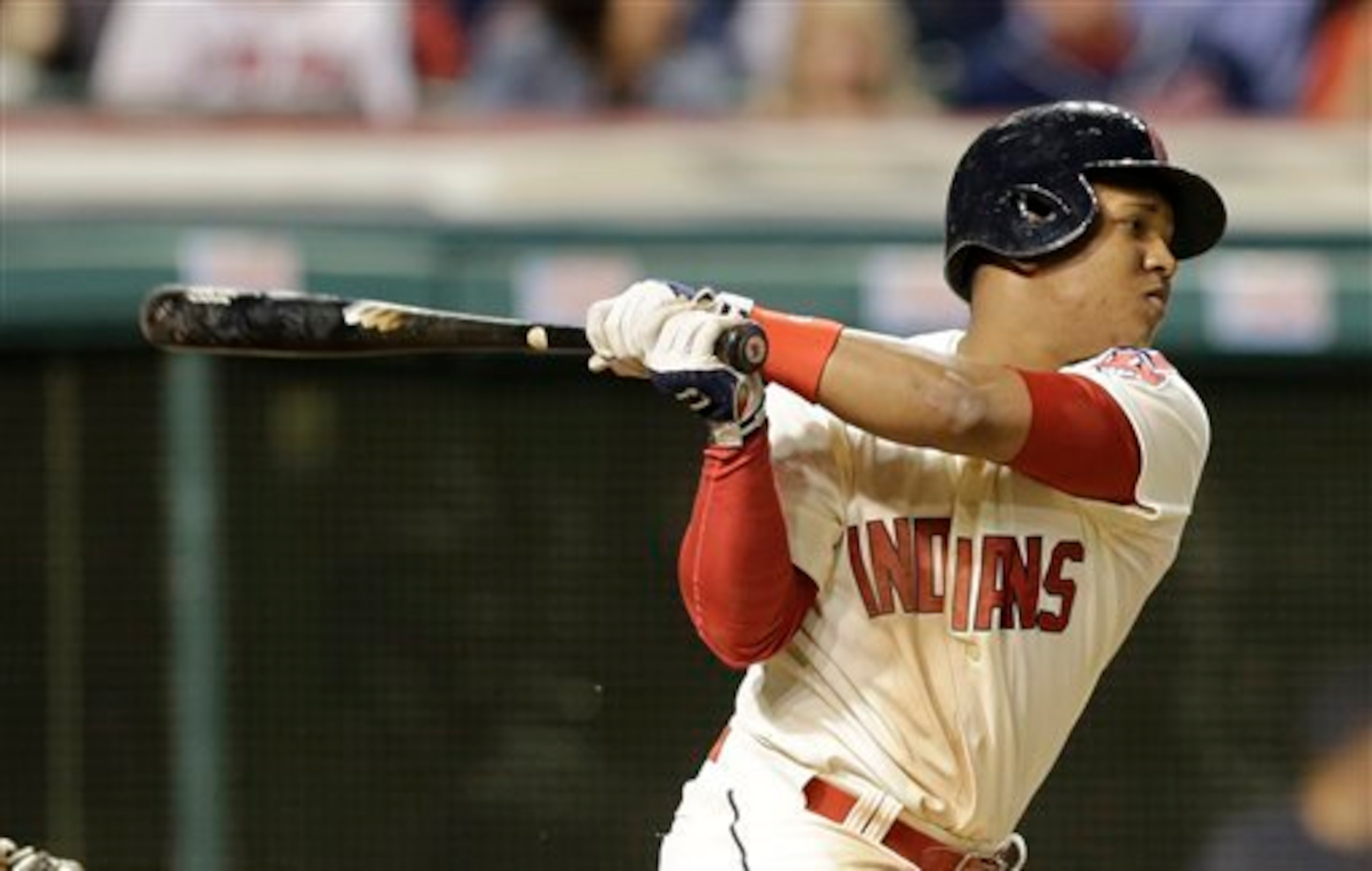
It's easier for any team to improve itself via free agency than by trades for one simple reason: You need someone else to trade with.
Yet Washington GM Mike Rizzo isn't afraid to make a deal when one needs to be made. You can be sure he'll be working the phones this winter, especially when it comes to finding a solution at second base. You saw some of the names on the free-agent market. It's ugly out there.
Now keep in mind, there's no indication that any of the players listed below are readily available...yet. But once the playoffs are over and the offseason kicks into high gear, they could be.
- Didi Gregorius, 2B/SS, Arizona Diamondbacks: He had a rough 2014 campaign at the plate and in the field, but the 24-year-old is widely regarded as a superb defender at shortstop, someone who should be able to handle second base. Questions about his bat remain, however.
- Jose Ramirez, 2B/SS, Cleveland Indians: Top prospect Francisco Lindor will take over as the team's everyday shortstop, while Jason Kipnis is entrenched at second base, leaving Ramirez a man without a position. He's held his own at the plate (.262 BA, 85 wRC+) and offers above-average defense at both middle infield positions.
- Ben Zobrist, 2B/OF, Tampa Bay Rays: Zobrist enters the final year of his contract with the Rays, and like nearly every All-Star-caliber player who has called Tampa Bay home, he's going to be too expensive for the Rays to keep past this season. He's got some pop in his bat, can play second and either of the corner outfield spots and knows how to get on base consistently.
Unless otherwise noted/linked, all statistics courtesy of Baseball-Reference.com and FanGraphs; all payroll and salary information courtesy of Cot's Contracts.
Want to talk Nationals' offseason plans or anything baseball related? Hit me up on Twitter: @RickWeinerBR
.png?w=2560)

.jpg?w=2560 "NFL House in Paris Closes for Protests")

.jpg?w=2560 "Trevon Diggs Cut by Seahawks")




