
5 Potential Problems with Boston Celtics' Rebuild
In case you haven't heard, the Boston Celtics are in the process of rebuilding their ballclub. Of course, rebuilding is not everyone's favorite decision, especially for a franchise that has won 17 NBA championships, but sometimes, circumstances make it absolutely unavoidable.
Thus far, the makeover has gone smoothly. General manager Danny Ainge has been able to cut ties with Paul Pierce and Kevin Garnett, accumulate a wealth of draft picks and make good use of them and hire a head coach in Brad Stevens who seems like a perfect fit for the current situation.
That being said, nothing is ever 100 percent flawless, meaning that, somewhere along the line, something could go awry for Boston. Perhaps not enough to derail the rebuild completely, but at least enough to cause some bumps along the way.
Ainge has probably envisioned these potential issues already and has prepared appropriately for them, but sometimes, even the most thorough preparations cannot remedy problems right away.
Hopefully for the C's, they don't come across any of these hiccups.
Injuries
1 of 5
This may seem pretty self-explanatory and could pertain to any team, but there are specific players on the Celtics—key players—who have injury histories and could throw a significant wrench into things if those issues persist.
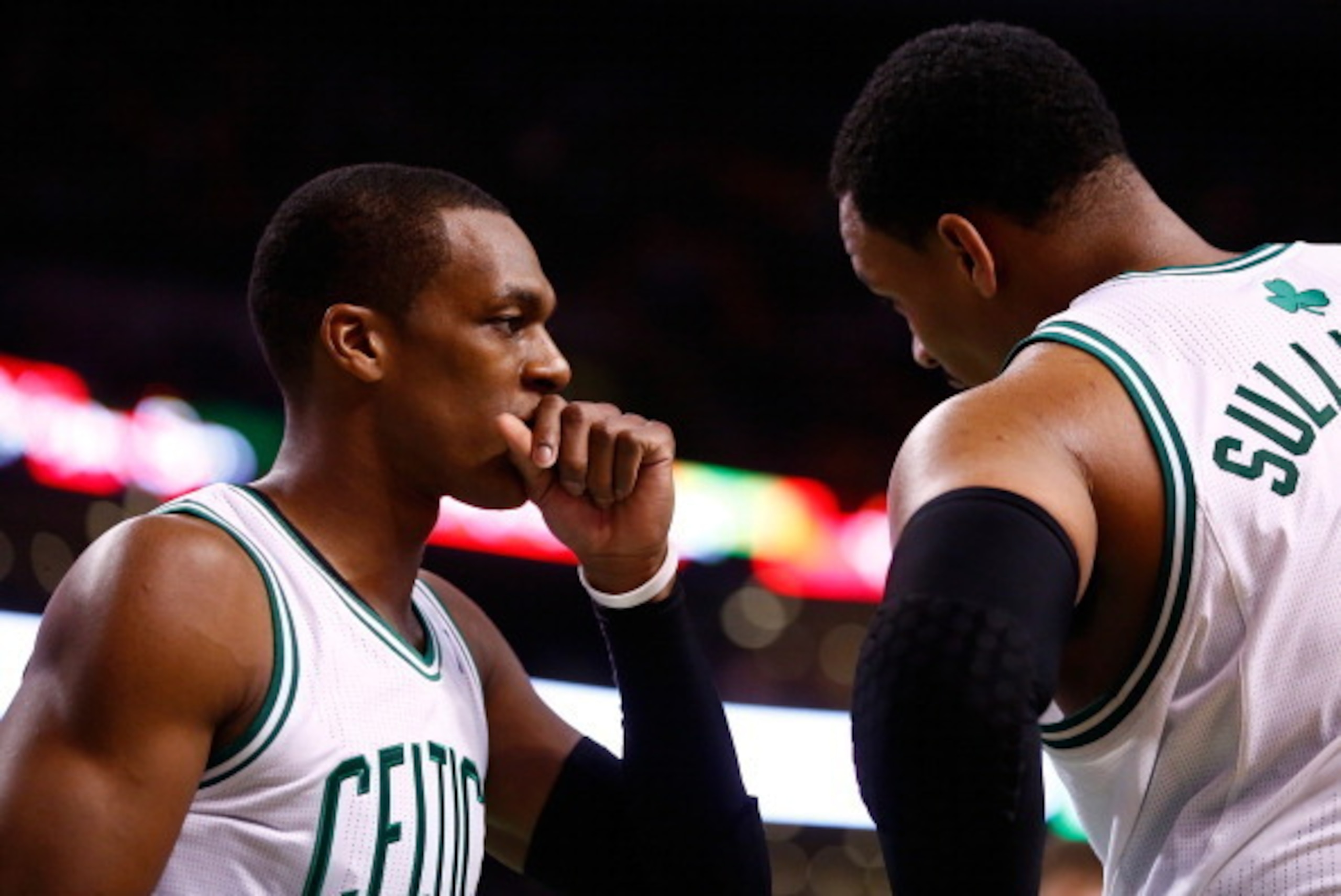
Let's start with Jared Sullinger, one of the integral cogs in Boston's rebuild.
The big man dropped to the C's at No. 21 overall in the 2012 draft due to back problems. Sure enough, midway through his rookie campaign, Sullinger succumbed to a back injury that would require season-ending surgery.
Then, in his sophomore season, Sullinger dealt with a hand injury that plagued him throughout most of the year. It played a rather prominent role in his drop in offensive efficiency, and while the injury was merely the result of Sullinger landing hard, it doesn't do much to calm the nerves of those who are concerned about his durability.
Plus, he has had some issues with conditioning, which might continue rearing its ugly head going forward and make injuries more probable. The 22-year-old hinted at losing weight this summer, telling CBS Boston's Brian Robb that he may have shed some pounds since 2013-14 ended.
"Maybe," Sullinger coyly said when asked about it. "I can't tell you everything."
Judging from his first couple of preseason games, Sullinger doesn't look all that different, but it is entirely possible that he did, indeed, lose some weight.
The Ohio State product isn't the only Celtic who has had injury problems, though.
Avery Bradley, who signed a four-year deal to stay with Boston this offseason, has had his run-ins with poor health as well.
The 6'2" guard has only played one "full" season, and that came during the lockout-shortened campaign in 2011-12. But remember: His postseason that year was cut short due to persistent shoulder problems that would require surgery.
Bradley has missed a combined 54 games over the past two seasons, and for someone who just inked a multiyear contract, that has to be a bit perturbing.
For everyone's sake, let's hope Sullinger and Bradley are able to stay on the floor in the coming years.
Overpaying
2 of 5
One thing that frequently destroys franchises is signing bad contracts. Look no further than the New York Knicks prior to the Carmelo Anthony era to see that.
While Ainge does not have a history of handing out albatross deals, he still has to remain vigilant and identify any potential contracts that could stunt the growth of his ballclub.
One such situation may arise next summer when Rajon Rondo hits the open market.
Rondo feels he is worth max money, and Ainge recently agreed, per Scott Souza of the MetroWest Daily News.
Now, if Rondo has a big year and is able to remain healthy, there is nothing wrong with paying him what he deserves. However, if his surgically repaired knee gives him any issues at all, Ainge should do what's best for everyone and let Rondo walk.
There is much debate going on in terms of whether or not Rondo is worth a max deal. Let's just settle this right now: If he is healthy, he is. People seem to forget just how dominant Rondo really is when he is 100 percent.
But that's the question. Will Rondo ever truly be the same after tearing his ACL during the 2012-13 campaign?
"The fans, the people here, make me want to stay," said Rondo, via Gary Washburn of the Boston Globe. "These people here know the game, and they care for it. They know when you’re not playing as hard as you can. The love I get is kind of overwhelming in Boston. Why wouldn’t I want to stay here?"
As much as Rondo may want to remain in green, the decision is ultimately in the hands of Ainge. If the 28-year-old floor general shows any signs of slowing down this season, Ainge must bite the bullet and bid Rondo farewell. Unless, of course, No. 9 decides to give a discount.
Unbalanced Roster
3 of 5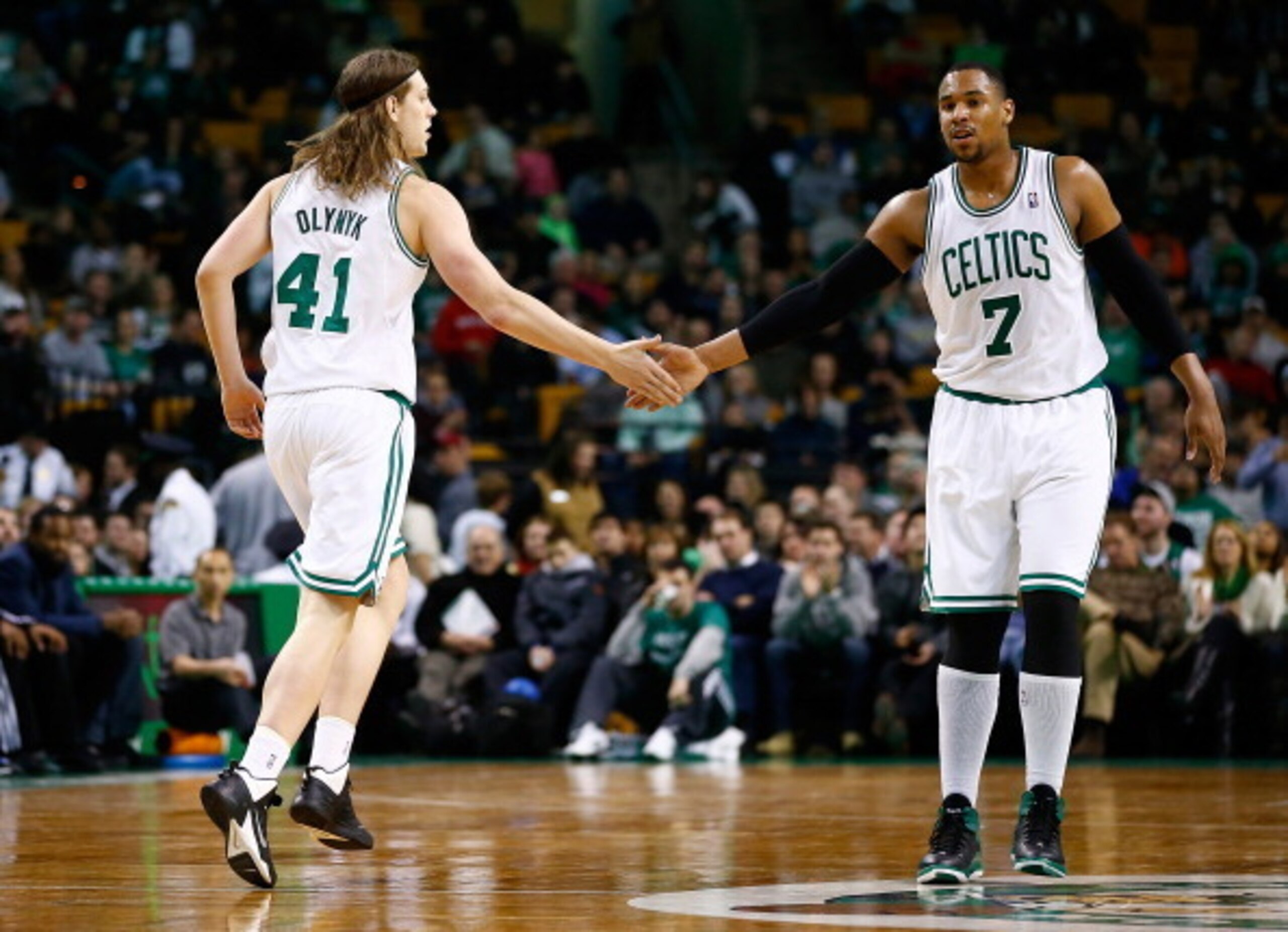
At the current point in time, the Celtics have a slew of power forwards but don't really have a true center for the future.
Sure, Sullinger and Kelly Olynyk can spell the 5, but that is not the position where either of them is most effective. Tyler Zeller? He is a 7-footer who can move well, but he is nothing more than a rotational big man.
What Boston lacks is a rim-protector, someone who can consistently contest shots at the cup and clog up the lane.
Of course, those types of players don't grow on trees, so finding one is not going to be an easy task. However, it is almost necessary for any ballclub that wants to eventually contend.
Fortunately, the C's still have a bounty of draft picks at their disposal to try and fill that need. They can also dip into the free-agent pool, although that is obviously more difficult to accomplish due to the fact that bigs with that type of ability generally command hefty contracts.
Getting a real center would also complement the games of Sullinger and Olynyk and allow them to flourish in more defined roles. They would no longer have to worry about defending the rack while also trying to be a go-to guy on the other end.
Right now, though, the Celtics don't have that. Instead, they have a glut at the power forward position. There is still time to clear that up, but it's better to do it sooner rather than later.


Failing to Cash in on Assets
4 of 5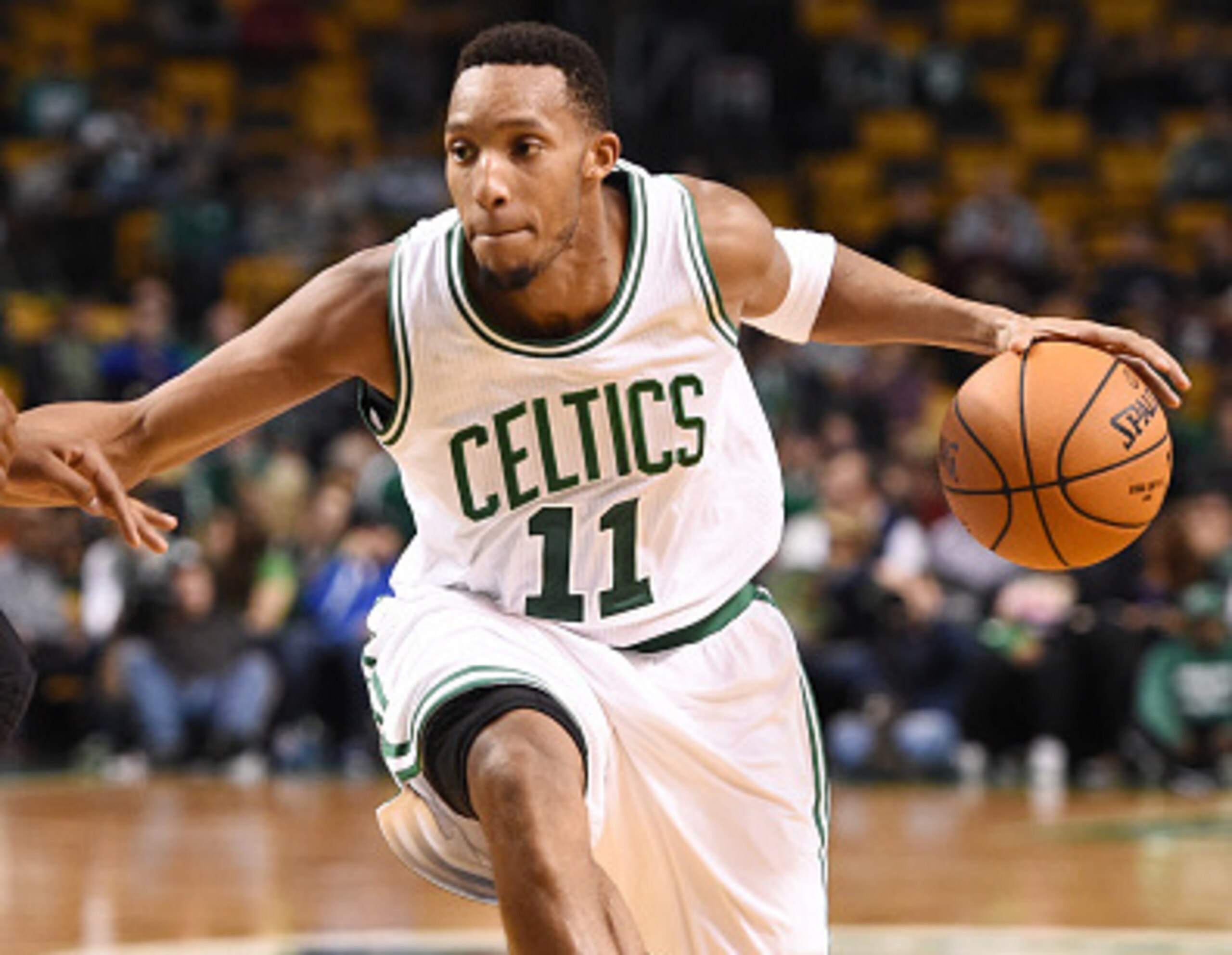
One of the main things Ainge has done very well thus far in the Celtics' rebuild is selling off his players to either clear cap space or acquire draft picks. That is something he will have to continue being successful at, and that starts this year.
Ainge should have quite a few opportunities to cash in again during the 2014-15 campaign, as he has at least four players on the roster (Brandon Bass, Jeff Green, Evan Turner and Marcus Thornton) who could represent good trade bait around the deadline.
Boston has tried to unload Bass before with no luck, but this time around, things should be a bit easier. Bass is in the final season of his contract, so he could pose a viable one-year rental to a contending team looking to add a big man who can stretch the floor and play some defense.
Green is in a similar situation. He has a player option for 2015-16, so there is a chance he opts out of his deal to become a free agent this summer. That makes the forward a bit more movable, and ballclubs in need of a scoring wing should indeed come knocking if the C's put the 28-year-old on the block.
Turner's case is similar to Jordan Crawford's. Well, somewhat.
While Crawford was an expiring contract when the Celtics dealt him to the Golden State Warriors last season, Turner has two years on his deal. Still, it's at an affordable price, as Turner makes just over $3 million per year.
If the former Philadelphia 76er and Indiana Pacer plays well enough to turn himself into an asset by the end of February, you can bet that Ainge will be placing calls around the league to gauge interest like he did with Crawford.
Finally, Thornton is an expiring deal who could draw some interest from contenders midseason. Remember: He played a rather pivotal role for the Brooklyn Nets in the first round of the playoffs last year. The 2-guard is a microwave-type player who can light it up off the bench, so barring an injury or a flat-out miserable performance, he is sure to be a tradeable piece.
Again, Ainge has been very effective at this in the past, so there is no reason to believe he won't continue that tradition. If he doesn't, though, it could set Boston back a bit.
Becoming a Treadmill Team
5 of 5
There isn't a more dreaded word in the NBA than "treadmill." You would rather finish at the bottom of the league record-wise and at least earn a top-three draft pick than win 35 games, just miss the playoffs and get the 12th pick year after year or consistently make the playoffs and get bounced in the first round regularly.
Unfortunately, that happens quite a bit. Numerous teams fit that description, and a perfect example is the Denver Nuggets.
Up until last year, the Nuggets were a playoff regular in the Western Conference. Since the Carmelo Anthony trade in 2010-11, Denver has been loaded with depth but has had no stars, and you need stars to win in this league.
The Celtics need to be careful they do not go in that direction. There is a lot of young talent on this ballclub, but it remains questionable whether or not any of their players outside of Rondo will develop into stars.
Of course, it is still very early, and guys like Marcus Smart and Sullinger seem to have that type of potential, but you also don't want to get caught waiting around. That means Ainge should still be scouring the market for trades.
No one on Boston's roster should be untouchable. If a deal for an established star comes along, everyone should be in play. That's not to say that Ainge should sell the farm, but that he should not be too careful. After all, if he had been too careful back in 2007, he would not have landed Kevin Garnett.
Sometimes, you need to take risks to become a winner, and Ainge should keep that fresh in his mind. It's better to swing for the fences than turn into a perennial No. 5 seed.

.jpg?w=2560 "NFL House in Paris Closes for Protests")
.jpg?w=2560 "Trevon Diggs Cut by Seahawks")