
Can Dwight Howard Still Return to Dominant Superstar Form?
In April of 2012, when Dwight Howard was finishing out what would be his final season as the centerpiece of the Orlando Magic, he was a top-five player in the league.
After a season struggling with the Los Angeles Lakers and an improved but underwhelming first try as a Houston Rocket, Howard has clearly regressed.
Injuries certainly factored in, with his back and right shoulder becoming especially problematic for a player that relies on explosive movements. Reduced involvement in the offense due to ball-dominating teammates such as Kobe Bryant and James Harden played a part as well.

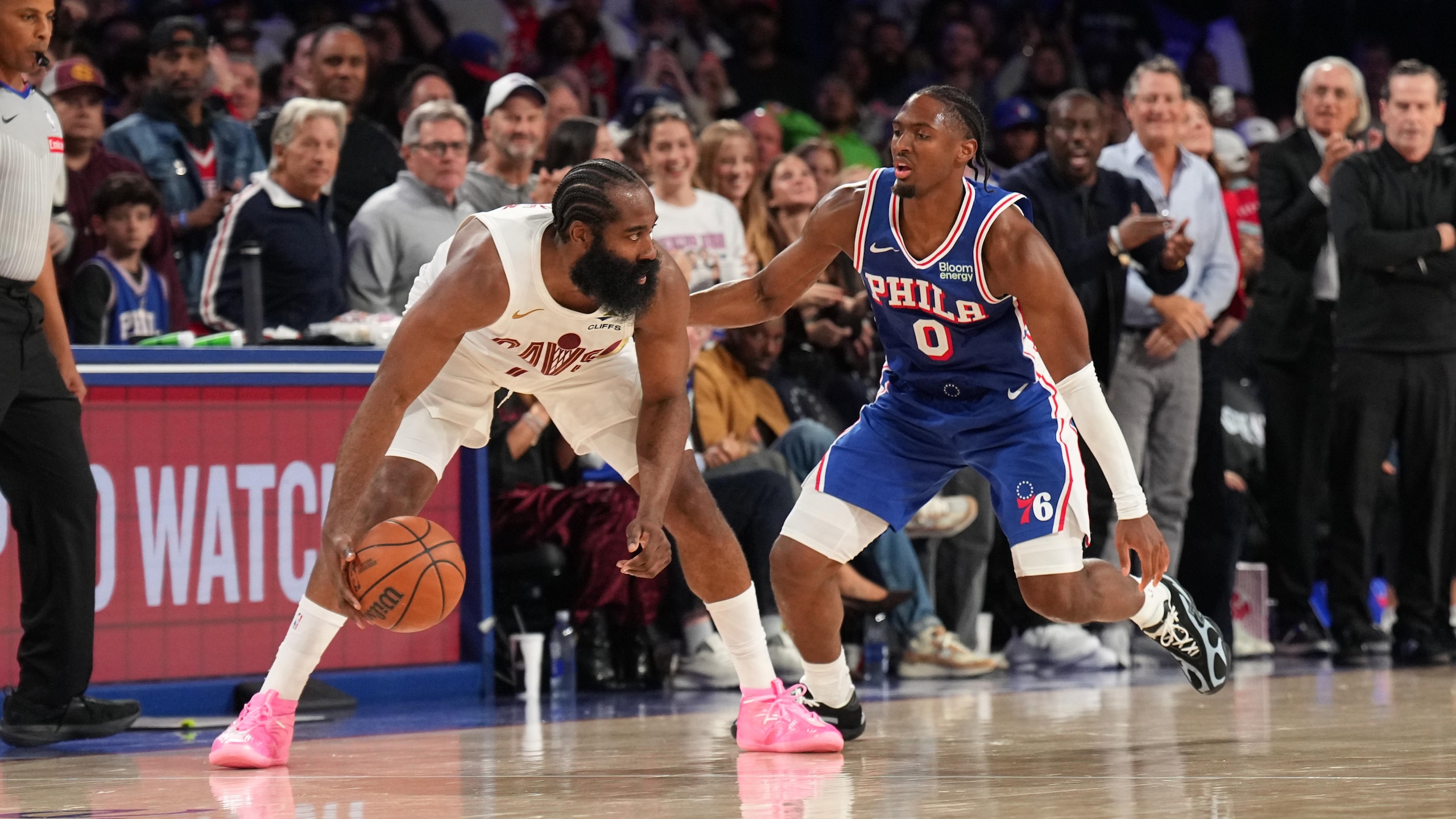
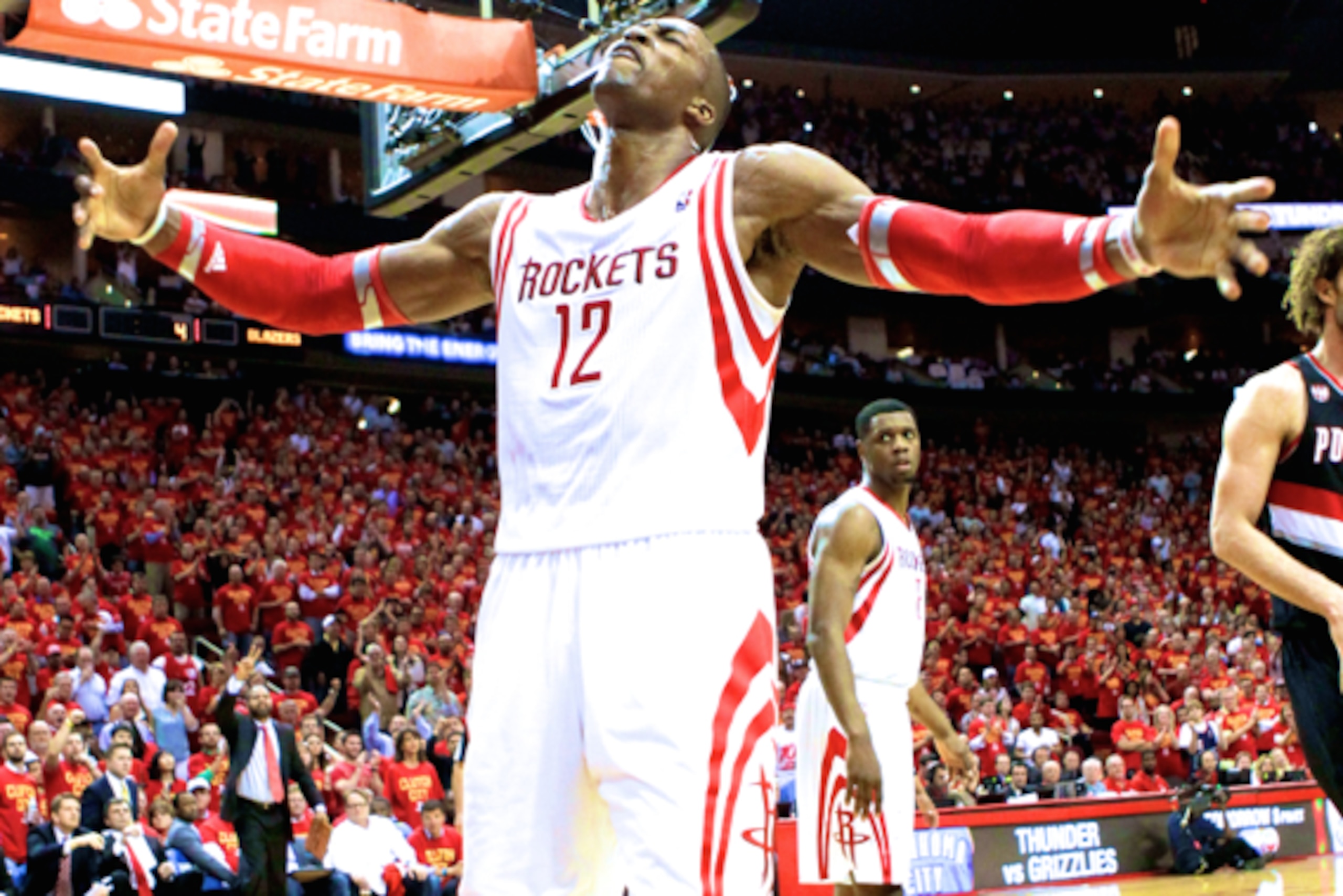
But Howard is only 28 years old and in his athletic prime. Can he regain his dominance as the league's best big man?
The question, in part, is clouded by circumstance. In his Orlando days, Howard was a featured post player with a handful of good, but not great, perimeter threats firing threes to spread the defense and punish double-teams.
Defensively, the wing players funneled opponents baseline and into the mid-range, with Howard looming as a weak-side shot-blocking threat.
In Houston, his team is stylistically the same. The Rockets led the league with 26.6 three-point field-goal attempts per game last year, according to NBA.com. On defense, their guards prevented triples in favor of drives to the basket—even if that meant players were getting beaten off the dribble a bit too often.
However, there was one main deviation: The offenses were initiated differently. Houston, in its effort to point shooters toward the three-point line and restricted area, relied on pick-and-roll play.
Every once in a while they appeased Howard by dumping it in the post, but contested shots from six to eight feet aren't analytically sound.
That's why Howard's 60.1 touches per game, according to NBA.com's player tracking data, ranked a mere 72nd in the league and fourth on his own team behind Patrick Beverley (60.4 touches, 70th in the league), Chandler Parsons (61.1, 67th) and James Harden (73.2, 36th).
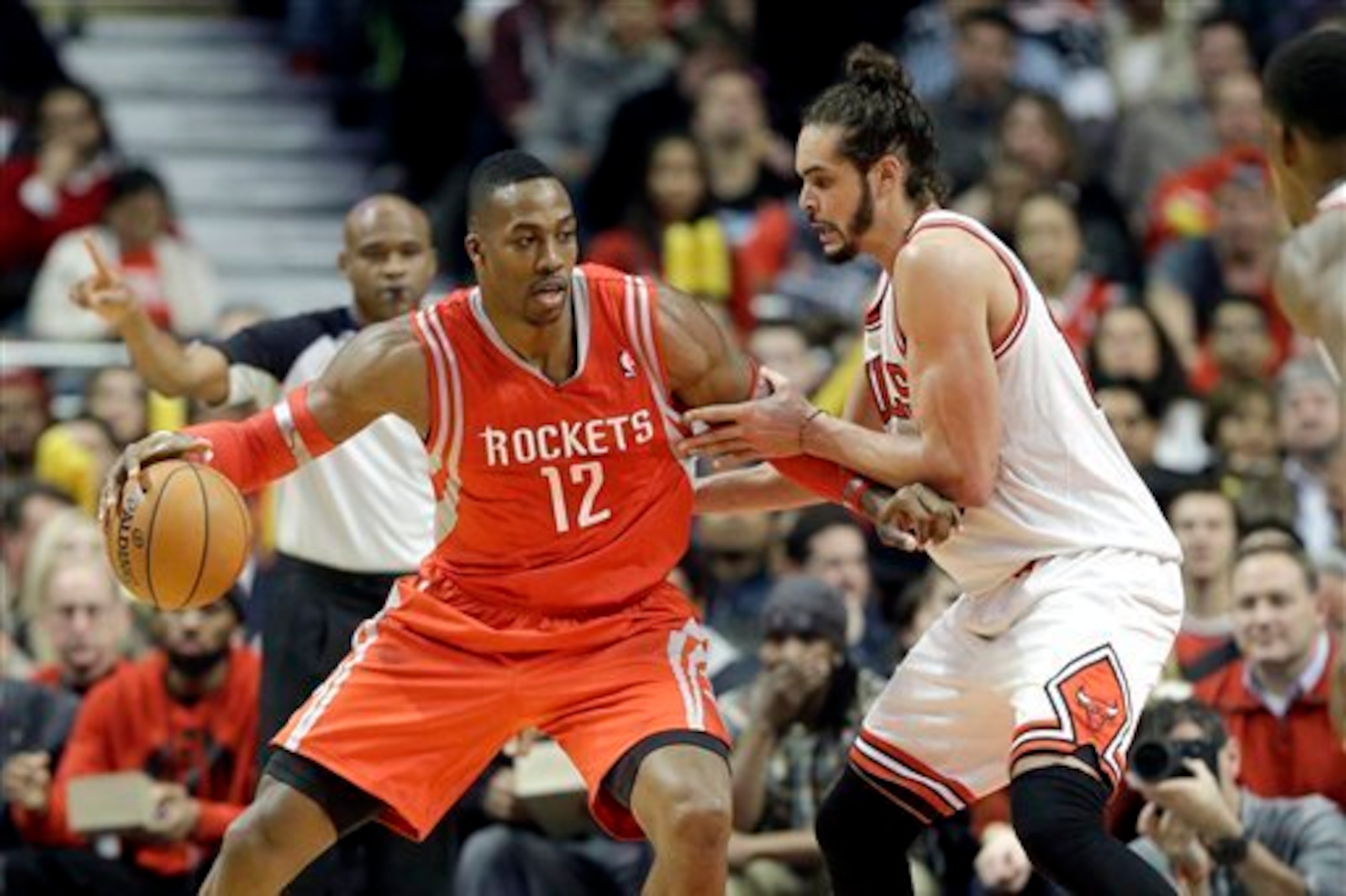
Big men touch the ball less, but the likes of Josh McRoberts, Spencer Hawes, Nikola Vucevic and Paul Millsap—clearly inferior players—were fed more often last year.
In the post, the decline was also apparent: 51.9 percent of Howard's shot attempts last season came in the post, according to Synergy Sports (subscription required), compared to 57.5 percent during 2011-12, his last season in Orlando.
So what does this say about Howard? He's certainly been deemphasized as a post-up threat, but his efficiency in limited opportunities last year was dreadful. He only shot 45.6 percent with his back to the basket, according to Synergy, good for 98th in the league. For some perspective, that put him on par with Gorgui Dieng, Kosta Koufos and DeAndre Jordan—none of whom count the post as areas of strength.
The dynamic was cyclical. Howard's minimal impact on the block probably hurt his efficiency, and his subsequent struggles meant fewer looks.
Opportunities Howard did have were scripted and uncomfortable breaks from Houston's read-and-react offense. For the majority of the game, guards relied on pick-and-roll and drive-and-kicks to generate movement. When the ball was dumped inside, everyone stood still.
Throw in Howard's somewhat limited court vision, and the Rockets were set up for disaster. There were too many outlier possessions thrown into games like this one, in which Howard predetermined that he was going to shoot because it might be his only chance to explore his own offensive game.
Here he throws up an errant left hook to avoid a double-team against the New Orleans Pelicans. None of his teammates are moving whatsoever, and Howard has never been a great passer anyway. He doesn't read the double properly and forces up a bad shot.
Grabbing the ball eight feet from the rim and going to work has never been his real strength down low; it's his physicality and ease at imposing his will on his defender. In practical terms, that means his ability to establish position before the catch, making the finish a dunk or layup with power.
Look at what he does here to Miles Plumlee of the Phoenix Suns. After setting a pick at the top of the key, he rolls Plumlee down to the restricted area, turns, seals and pins him beneath the rim. Plumlee can only flail at the ball as he's completely overpowered.
But this type of post action was few and far between last year, with only 29 shot attempts from Howard in such instances (according to Synergy). The majority came from traditional back-to-the-basket areas, somewhere in that eight-foot range from which he struggles.
Luckily, Howard is still a pick-and-roll monster. Rolling down the lane for pocket passes, finishing lobs and bending a defense to account for his dives have always been his greatest strengths. With three-point shooters dotting the arc everywhere for the Rockets, he was able to dominate at a rate to which he's been accustomed.
But Howard has always tried to shed the label of "athlete," consistently working on his post moves and refining his skill level. His desire to improve is admirable, but his lack of understanding of his own limitations can be detrimental to his team's offense.
When he went on a rant a few years ago about wanting the ball in the fourth quarter, it was really a more specific demand: Give me the ball on the block (Fox Sports Wisconsin, via ProBasketballTalk): "I do want the ball more in the fourth quarter. ...I want to become a closer. The only way you get there is by getting the ball and have coach have the confidence in giving me the ball."
Defense is another story, and one much more dictated by health. Though Howard is one of the most physically impressive players in the league and plays like a giant, he's not actually that tall. Rockets GM Daryl Morey admitted as much to Grantland, stating that he's really 6'10".
Why is that significant? Because it's not as easy for him to stay vertical and contest shots at the rim. Whereas 7-footers such as Roy Hibbert can throw their hands up and alter shots with minimal jumping, Howard has to rely more on timing and athleticism to swat balls away.
In Los Angeles, he was timid and careful in his defensive tenacity because of the back problems he couldn't seem to shake. Less willing to venture away from the basket, he tended to patrol the restricted area and not much else.
That left a lot of real estate wide open on pick-and-rolls, which was especially costly on a Lakers team that could not defend on the perimeter or fight through screens with any consistency. As soon as ball-handlers turned the corner on picks, there were miles of space to make plays or pull-up for an easy jumper.
A healthier Howard in 2013-14 was much more active. That scheme in which the big man drops in pick-and-rolls is common throughout the NBA, but its effectiveness is tied to the big's ability to jump out and hold his own against guards for a second or two.
Joakim Noah and Anthony Davis are two of the best at this in the league, but Howard was its first true champion among modern bigs.
Howard's mobility problems as a Laker hamstrung what was once his greatest defensive strength. Last year he was still a bit tentative, but he unleashed his otherworldly athleticism when it counted. Especially in the playoffs against the Portland Trail Blazers, Howard did a great job containing Damian Lillard.
When he pulled up, Howard was there. When he drove, Howard was quick enough to get a piece of his shot from behind.
Notice how he flies out on the pick-and-roll here, setting his feet wide and getting into a stance. By taking those extra steps forward, he's cut off any room for the Portland star to shoot.
Though Lillard is quick enough to slip by, Howard's amazing recovery speed forces Lillard to attempt a difficult up-and-under layup which Howard rejects easily.
That's the true genius of Howard's defensive prowess: He gives up nothing to anyone. Bigs can't finish through him because he's too strong. Guards can't finish around him because he's too long and quick.
But health and circumstance will determine whether Howard can recover his former MVP-caliber form.
Defense has always been his backbone, and his steady progress toward complete freedom from injury will return him to his usual self.
Offensively, Howard's future is a little more bleak. He's already been in the league 10 years and still hasn't developed a reliable set of post moves, so we can't expect that to change much.
Harden is also locked in as the Rockets' megastar of the present and future, and Houston's analytically based approach to shot locations doesn't favor any kind of Howard-revolved offense. He'll have to find his points in the pick-and-roll as just a cog in the wheel.
Ultimately what he's looking at is the possibility of great but not MVP-level play.
He'll always be there defensively, but it's the offense that will hold him back.

.jpg?w=2560 "NFL House in Paris Closes for Protests")
.jpg?w=2560 "Trevon Diggs Cut by Seahawks")