

What Can We Expect from Andrew Wiggins' Rookie Season?
When it comes to Andrew Wiggins, it's easy to get carried away.
He was widely viewed as a once-in-a-generation prospect when he was coming out of high school, though his time at Kansas put a slight damper on those expectations. Then he was made the No. 1 pick in a stacked 2014 draft class, which renewed the hype all over again.
But the Cleveland Cavaliers didn't hold onto him, instead trading him to the Minnesota Timberwolves as the centerpiece in a deal for Kevin Love. Think about what that means. After the long, drawn-out Love saga, he was the player tempting enough to sway the Timberwolves and get them to part with their perennial All-Star.
TOP NEWS

LeBron's Special Helicopter Deal

MJ Makes Record-Setting Donation 🙌
Shams: KAT, Hart Could Be Trade Names
Now, he's in a location where he'll be given plenty of opportunities to thrive. That ability to get carried away is back in full force.
But what should we actually expect? What are the reasonable hopes for Wiggins' rookie season?
His Role
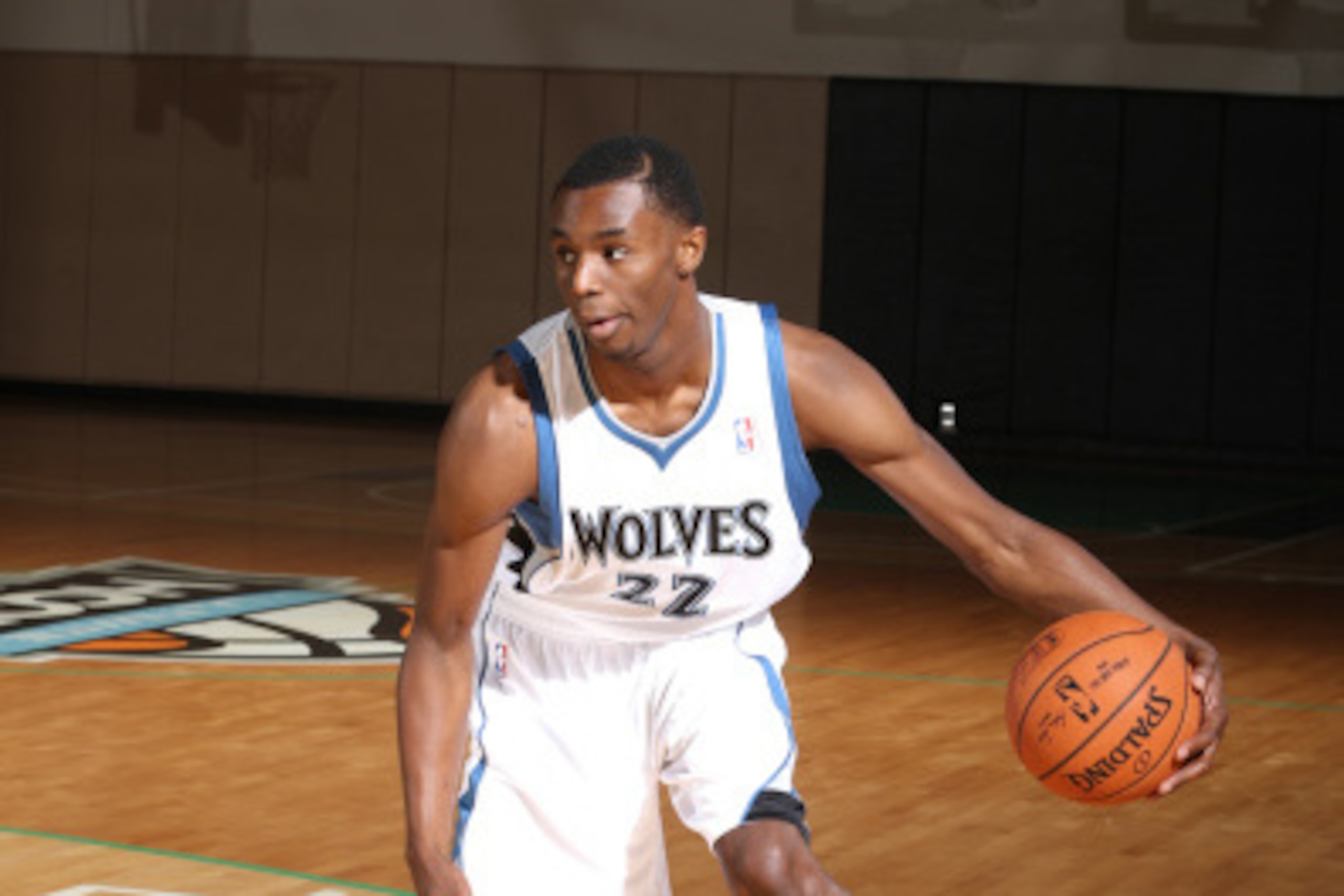
As of now, there's no telling whether Wiggins will be in the starting lineup when the Timberwolves break camp and begin gearing up for the regular-season festivities. He's not a lock for the bench either, as the front office has been rather noncommittal about his role thus far.
But does that really matter?
It's not as though Wiggins is going to be kept on the bench in a reserve role, even if he's not on the floor for the opening tip. He'll likely play crunch-time minutes whenever Minnesota can keep things close for the first three quarters, and he's probably going to work his way into the starting lineup rather quickly, regardless of whether he's there from day one.
"It's important to make Wiggins both comfortable and confident, and putting him in areas where he excels should allow that to happen," writes Bleacher Report's Zach Buckley. "Add in the fact he jumped from a pressure-packed championship race to a more relaxed environment where development trumps win totals, and this might be the ideal setting..."
That's the key. Don't force him into the starting lineup if he isn't going to be comfortable, but put him there as soon as he's ready, both physically and mentally. It's not as though that should take long, and he can play big minutes all the while.
It's also worth noting that Wiggins seems happy just to be in a city that wants him.
"It's a great situation," the No. 1 draft pick recently said, via KSTP TV. "It gives me more freedom. I'm surrounded by young guys that have the same intentions and determination as me to win, get better every day."
So long as he does get better every day—or even every other day, given how much potential he's working with—there really aren't many players on the roster who should stand in his way. After all, here's the current Minnesota depth chart, as given by Rotoworld:
- Point guard: Ricky Rubio, J.J. Barea, Mo Williams
- Shooting guard: Kevin Martin, Chase Budinger, Zach LaVine
- Small forward: Andrew Wiggins, Corey Brewer, Shabazz Muhammad, Robbie Hummel, Glenn Robinson III
- Power forward: Thaddeus Young, Anthony Bennett
- Center: Nikola Pekovic, Ronny Turiaf, Gorgui Dieng
Only shooting guard and small forward are particularly relevant here, as those are the two positions at which he'll be spending the vast majority of his time. And who's really going to be competing with him for those minutes?
At small forward, the options are extremely limited. Corey Brewer is a known commodity, one who's not going to look as good this season without easy transition buckets that result from Kevin Love's Unseldian outlet passing. He's entirely replaceable as an athletic slashing threat and defensive ace, seeing as those will be Wiggins' primary skills as well.
Shabazz Muhammad, Robbie Hummel and Glenn Robinson III are just about as established as Wiggins, even if Robinson is the only rookie of that troika. Thaddeus Young and Anthony Bennett may dabble at small forward, but both are better suited for minutes at the 4.
But what about at shooting guard?
Zach LaVine is filled with upside, as is Chase Budinger, though to a lesser extent after injuries have derailed the early portion of his career. But neither has the combination of immediate production potential and upside that Wiggins boasts.
Realistically, Kevin Martin is the only player who should stand in his way. The veteran 2-guard is coming off a season in which he averaged 19.1 points, 3.0 rebounds and 1.8 assists per game, shooting at a 43 percent clip from the field and knocking down 38.7 percent of his shots from beyond the arc.
However, the 31-year-old is a huge defensive liability, and his regression from his peak performance prevents him from being viewed as a big part of the future.
Even if Wiggins doesn't start the season on the court when an official tosses the ball up at half court, he's still going to be a crucial piece. He has to be, especially if the Timberwolves are interested in upping their attendance figures and jersey-sale revenue.
Over the course of the past two seasons, we've seen five rookies—Damian Lillard, Michael Carter-Williams, Trey Burke, Bradley Beal and Victor Oladipo—average at least 30 minutes per game. Another seven have been on the court for at least 26 minutes during the average contest, though they failed to hit 30.
That's the range Wiggins should be in due to the NBA-ready nature of his game and the dearth of options who deserve minutes ahead of him. Conservatively, we'll predict that he finishes right at 30.
His Numbers
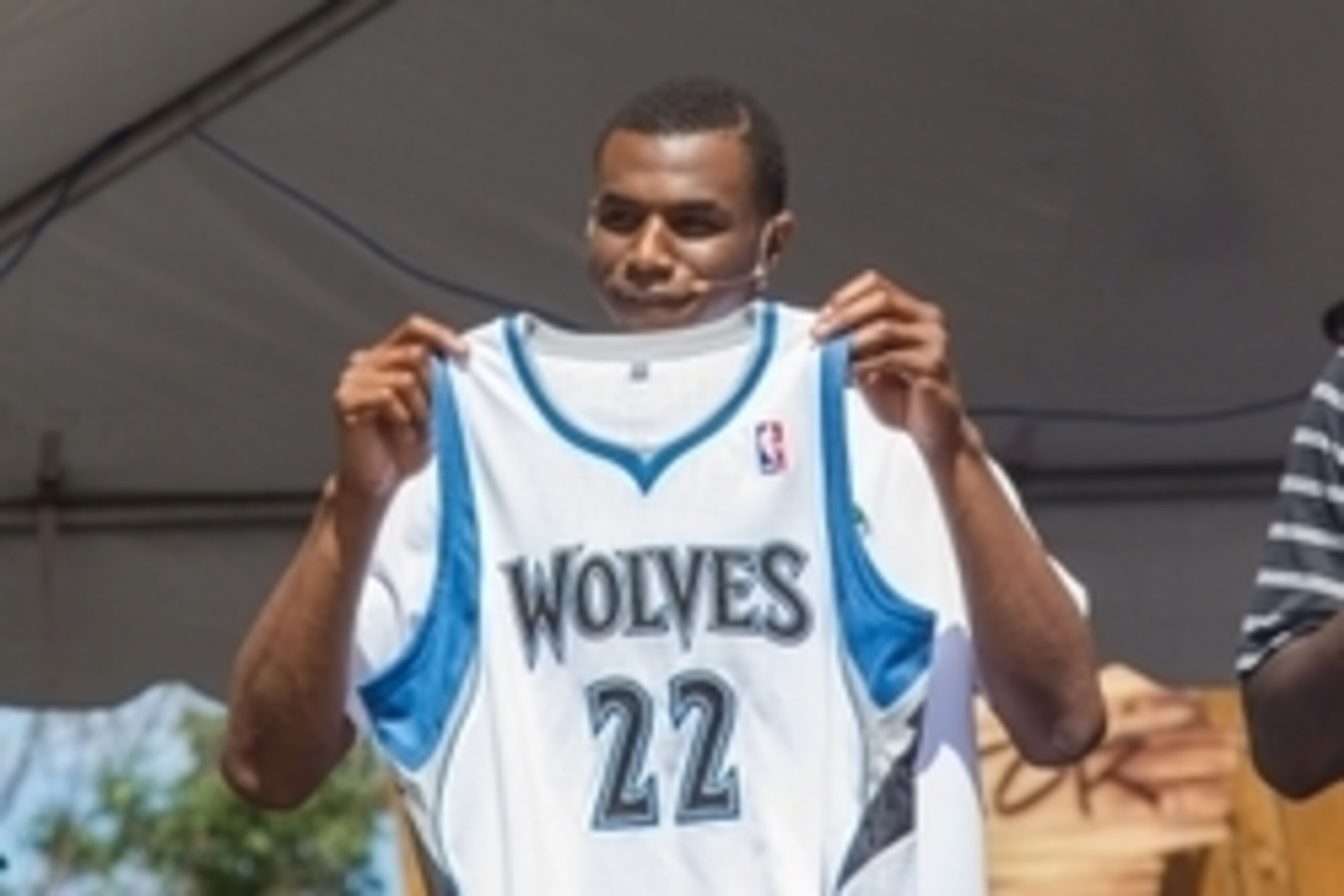
Unfortunately, we're working with a pretty limited sample of games here, as Wiggins played only a single season with the Kansas Jayhawks before declaring for the NBA draft. Obviously, the decision has worked out quite nicely for him, but it's also made it rather difficult to project exactly how he'll fare during his rookie season.
While playing at Lawrence (and wherever Kansas visited this past season), the young swingman averaged 17.1 points, 5.9 rebounds and 1.5 assists per game while spending 32.8 minutes on the court during the typical outing. He shot 44.8 percent from the field and 34.1 percent from beyond the arc, which, it's worth noting, is shorter than the NBA's three-point marker.
To be fair, it did take Wiggins a while to get accustomed to the collegiate game. He excelled at first, but the middle portion of his season was lackluster at best. Then he exploded at the end of the season.
Over the last 14 outings of his freshman go-round, including a two-game stint in the NCAA tournament that ended with a disappointing loss to Stanford, he averaged 18.6 points, 5.6 rebounds and 1.6 dimes per contest while coming close to maintaining his percentages.
The highlight was a remarkable performance against West Virginia, one in which he exploded for 41 points while recording eight rebounds, two assists, five steals and four blocks. Every tool was on display during that game, even if his team lost by six points.
It's difficult to prorate collegiate stats to the NBA, though it's typically safe to assume that he won't be exceeding those numbers while playing a bit less during the average game. Rebounding is the stat that translates best, but anything could happen to his scoring and distributing.
It also helps that Minnesota will likely be an uptempo squad, as Bleacher Report's Jim Cavan notes below. After all, more possessions tend to result in higher per-game numbers, which are—for better or for worse but mostly for worse—the basis of so much analysis.
"Looking at Minnesota's likely rotation, a few hallmarks in particular stick out: speed, length and quickness (Nikola Pekovic's beastly brawn notwithstanding). Wiggins, [Thaddeus] Young, Ricky Rubio, Kevin Martin, J.J. Barea, Corey Brewer, Gorgui Dieng: These are guys tailor-made for pushing the tempo.
"
Based on watching Wiggins' style of play, thinking about his role on the Timberwolves and analyzing those stats, a line like 15 points, five rebounds and slightly more than one assist per game seems like a reasonable assumption.
Given the strength of NBA defenders, it's also tough to see him shooting anything more than 45 percent at first, especially since many of his shots will come from the perimeter, as he's one of the few players on the Minnesota roster capable of connecting from downtown.
But wait! We have one more tool at our disposal!
These must be taken with a major grain of salt, as Wiggins was playing for the Cleveland Cavaliers in summer league, both factors making it tougher to draw a correlation between his play then and how he'll fare during the regular season in Minnesota. Nonetheless, we soldier on.
According to NBA.com's statistical databases, Wiggins suited up four times, averaging 30 minutes per contest. During those outings, he produced 15.5 points, 3.5 rebounds and 0.3 assists per game, shooting 40.5 percent from the field and 15.4 percent from downtown.
Again, those are pretty much in line with those original expectations, especially since summer league tends to produce lower shooting percentages and a dearth of assists. The games are practically of the pickup variety, and chemistry is virtually nonexistent.
So again, 15 points, five rebounds and about 1.2 assists per game seems like a reasonable assumption, all while shooting about 45 percent from the field and 35 percent from beyond the arc. Though that last number is higher than anything we've seen previously from Wiggins, it's also a glaring flaw that he knows he needs to work on.
Will that be enough to win Rookie of the Year? That's debatable, as guys like Jabari Parker, Doug McDermott, Nerlens Noel, Nikola Mirotic, Elfrid Payton, Marcus Smart and Julius Randle all figure to be used in impact roles of varying sizes.

But let's turn to the last two years once more.
As shown by Basketball-Reference.com's Play Finder, Lillard and Carter-Williams are the only rookies to average 15 points per game, and they did so during successful ROY campaigns. Nine players have averaged at least five rebounds during the average contest, though Carter-Williams and Michael Kidd-Gilchrist were the only non-big men to do so.
The assists per game don't help Wiggins stand out whatsoever, but he makes up for that with his defense.
Should Wiggins be considered a heavy favorite for Rookie of the Year? Absolutely not, but he's certainly going to be in contention for the award.
This season is going to be filled with adjustments, both by the opposition and Wiggins himself. He's too reliant on his spin move right now, for example, and defenses will capitalize on that until he makes the proper adjustments.
And if he has the upside he's supposed to, he will.
Expecting Wiggins to take the league by storm as a first-year player is setting yourself up for disappointment. It's worth noting that even Kevin Durant struggled during his initial go-round in the NBA, though some of the blame rests with the coaching staff for trying to force him into playing the 2.
Being realistic is the best course of action, but that doesn't mean Wiggins' rookie season is going to be anything less than special while making his future development look quite promising. Whether or not he earns himself some hardware at the end of the year, everything points toward initial success.



.jpg?w=2560 "Grading WWE Raw 🔠")
.jpg?w=2560 "Viral Rams Coach Vid 🖕")
.jpg?w=2560 "Injury-stricken Seahawks signing veteran RB")
.jpg?w=2560 "Bijan's INSANE 1st Half 🤩")
.jpg?w=2560 "2 NFL Officials Suspended")
