

Boston Celtics Can't Rebuild Without Making Rajon Rondo Trade
After eight seasons with the Boston Celtics, Rajon Rondo's days are numbered—or at least they should be.
While the organization has indicated otherwise, its first priority should be parting with the four-time All-Star on its own terms, ideally terms that entail trading for up-and-coming assets.
It's hard to know what to make of the comments that have emerged from Boston's front office and others with a stake in Rondo's relationship with the franchise. Public appearances can be deceiving, particularly when the Celtics may indeed hold out some hope that Rondo will remain a centerpiece and potentially attract premier talent.
TOP NEWS

Buzz: Bron Chopper Part of Deal 🚁

MJ Makes Record-Setting Donation 🙌
Buzz: Knicks' KAT Offer Revealed
By now, however, those hopes should be measured—if not dismissed altogether.
Speculation about Rondo's future with the team was renewed in August thanks to an online segment from ESPN's Around the Horn (h/t CBSSports.com's James Herbert) in which Boston-based scribe Jackie MacMullan disclosed Rondo's disaffection, saying, "He's told them [the Celtics] he wants out. And no one believes me, but that's the truth."
That suggestion was subsequently refuted in multiple corners.
The Boston Herald's Mark Murphy tweeted, "Spokeswoman for Rajon Rondo's agent, Bill Duffy, said both men deny that Celtics guard has demanded a trade."
And while CSNNE.com's A. Sherrod Blakely rejected the notion of an imminent split, he did report, "Multiple league and team sources agree the most likely scenario has Rondo beginning the season in Boston. Then, depending on how the team does, both sides will mutually agree to either ride it out or part ways sooner rather than later."
Unsurprisingly, team president Danny Ainge has been confronted with a steady dose of questions about his star point guard's fate.
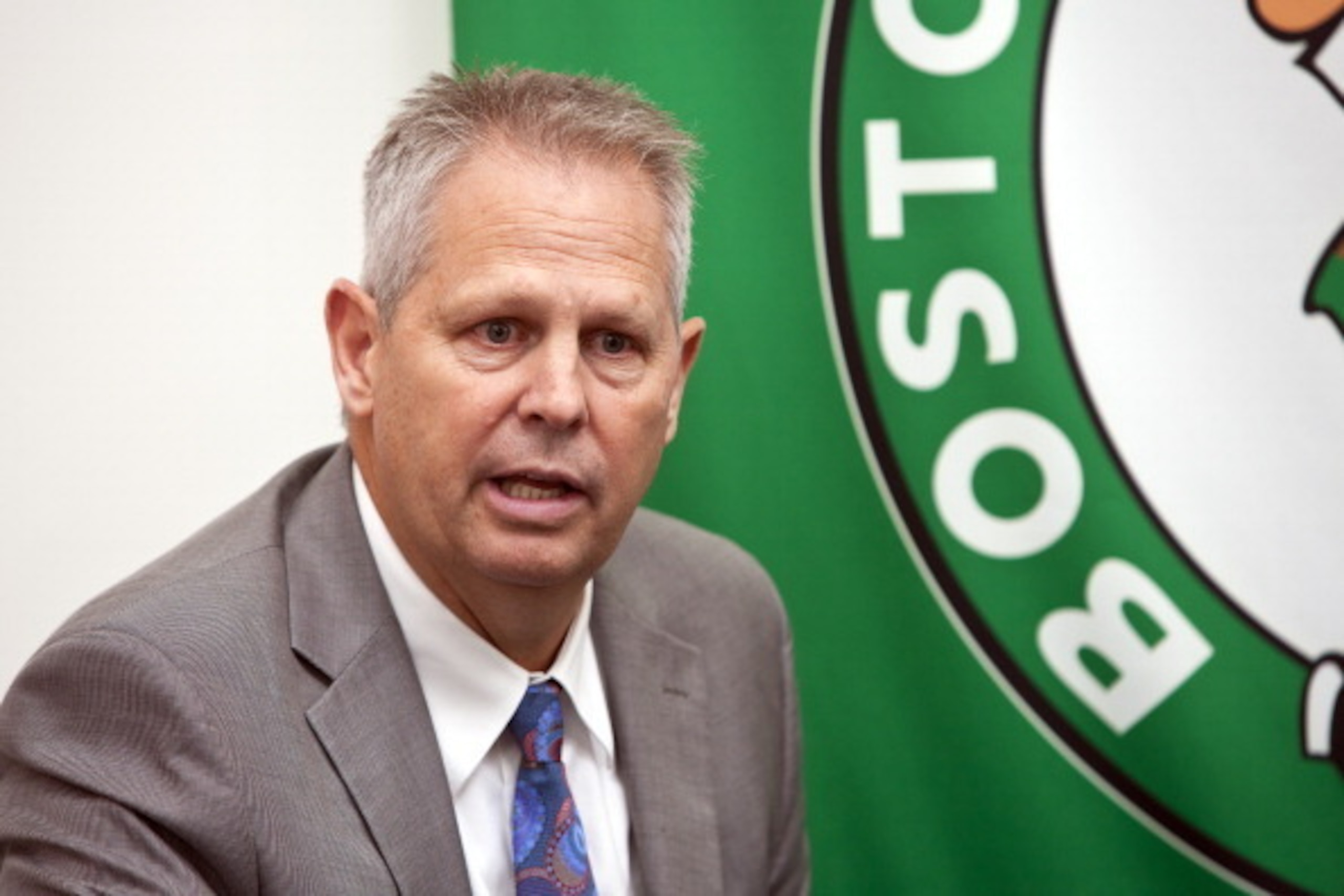
Most recently, he told the media, "We expect Rajon to be in Boston for the long term."
Just days earlier, he offered a more pensive response that at least theoretically left the door open to trading the 28-year-old.
"The truthful answer is I really don't know," Ainge told reporters when asked about the possibility of dealing Rondo. "I have no intention. I'm not trying to trade Rondo, but because he's a free agent this summer, he assured me that he wants to stay in Boston. We'd love to keep him in Boston."
"The possibility of a trade is not out of the question," Ainge added. "Nobody is untradeable, but I don't see that happening."
Owner Wyc Grousbeck sounded similar in tone.
"Absolutely it's my goal to keep Rondo here," Grousbeck said to the press. "We all want that, and I actually honestly think—he should speak for himself—I think Rajon wants to stay and would be very happy to stay. We'll see how the season goes and how the negotiations go, but he's proud to be a Celtic, I know that, and he's proud to win that ring, and he deserved it."
So it's not clear to what extent the organization has entertained the notion of dealing Rondo, and it's even less clear whether he wants to stick around.
But as Herbert put it, "Regardless of what Rondo has or hasn't expressed to Celtics management, trade rumors are bound to persist throughout this coming season if he's not moved beforehand."
If Celtics fans are lucky, there will be something to those rumors.
The worst-case scenario would be losing Rondo for nothing next summer when he's due to become an unrestricted free agent. Were there particularly good reason to believe the eight-year veteran was intent on remaining in Boston, one could argue Ainge and Co. should roll the dice and maintain the status quo.
Unfortunately, there have been few indications Rondo is committed to staying.
It's true that the Celtics can offer him more money than alternative suitors, and it's also true Rondo himself has grown accustomed to life in Boston.
"I'm pretty comfortable," Rondo told reporters in June. "I have a beautiful home here. I love it here. I have a great neighbor, the best neighbor in the world. I don't want to leave. It's just part of the process that I'll talk about once the season's over. As of now I'm a Celtic."
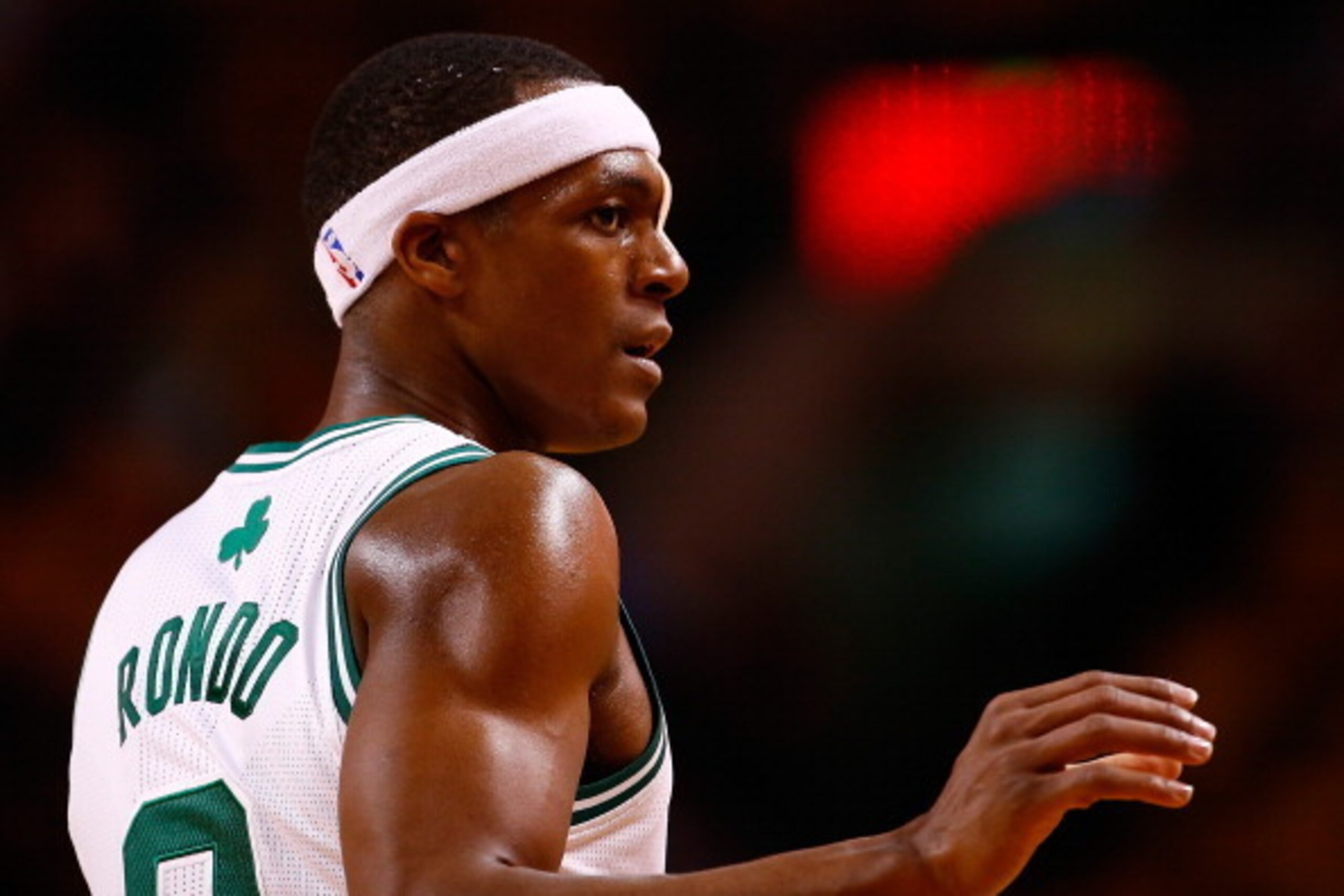
That said, even "the best neighbor in the world" won't change the fact this franchise is nowhere close to reclaiming its championship form. If Rondo's principally interested in winning, that may weigh more heavily on him than any interest in comfort, loyalty and money alike.
Back in January, ESPN Insider Chris Broussard (subscription required) suggested that while Rondo wasn't yet committed to leaving Boston, he had no interest in discussing an extension with Ainge.
"It didn't even get to the numbers stage," Broussard wrote. "Rondo is looking forward to becoming an unrestricted free agent for the first time in his career in the summer of 2015."
That's not necessarily a bad sign for the Celtics. Rondo can earn more money by re-signing as a free agent than he would via extension. Simple economics dictate that he wait this out and cash in when the time is right.
But nor is there any guarantee Rondo will elect to take the money when potentially faced with the allure of pastures even greener than his jersey—and the cash that could come with them.
Losing Rondo via free agency would deal a serious blow to the organization's attempts to extricate itself from a rebuilding process it's undergone since the departures of Paul Pierce and Kevin Garnett in 2013.

On paper, rookie point guard Marcus Smart—taken with the No. 6 overall pick this summer—is poised to replace Rondo and potentially become a star in his own right given time. The problem is that Rondo is the only Celtic with the kind of pedigree that might convince other elite free agents to join the program.
Boston's only acceptable outcomes are either keeping Rondo around long-term or trading him for assets that would further the rebuilding process.
Given the risk he'll leave during free agency, the trade route increasingly appears to be the only option that makes viable sense.
It might even be for the best.
At best, the current mix of talent could make a run at a No. 8 seed in a relatively weak Eastern Conference. That kind of middling ceiling would come at the expense of prime draft position and undermine the organization's ability to build upon its stockpile of solid prospects.
Take a close look at the Celtics' roster.
Outside of Jeff Green (age 28), Brandon Bass (29) and Marcus Thornton (27), the rest of the rotation is primarily 25 and under. The youth movement includes Smart, fellow rookie James Young, Avery Bradley, Jared Sullinger, Kelly Olynyk, Tyler Zeller and most recently Evan Turner.
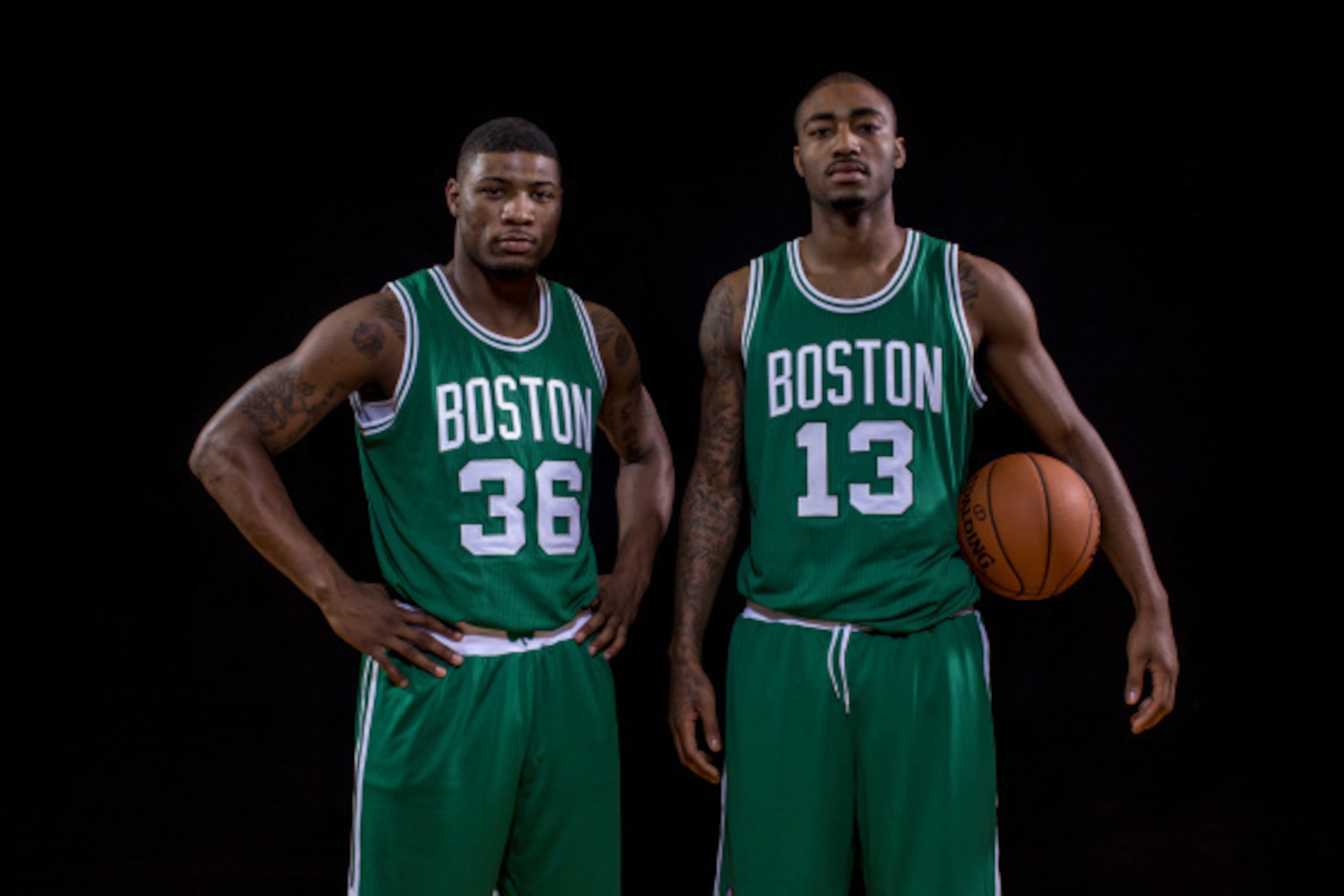
That creates something of a timing issue for Ainge. By the time younger assets reach their prime years, Rondo may be well past his. The smart move seems to be going all in on the future, adding as many assets as possible to an already impressive list.
Assets that very well might be acquired in exchange for Rondo.
What kind of haul could the organization expect? Probably one that's more modest than those sought thus far.
ESPN.com's Marc Stein reported back in February that pre-deadline talks between the Celtics and Houston Rockets fell apart because of Boston's insistence that Chandler Parsons be included in a deal for Rondo.
Stein similarly indicated during the summer of 2013 that discussions between the Celtics and Dallas Mavericks were something of a nonstarter on account of Boston's demands for franchise face Dirk Nowitzki.
It's unlikely that Ainge will get his hands on an established star—or even someone on the verge of becoming one.
That doesn't make the trade route any less essential, though. The opportunity to land any assets—including draft picks—remains far more attractive than the prospect of Rondo walking out the door as a free agent.
While the Celtics are undoubtedly well aware of all this, reasons for patience abound.
Pushing a decision closer to February's trade deadline may allow for the development of a more robust trade market. Would-be buyers often become more desperate as a season goes on. As needs become clearer (or, perhaps, exacerbated on account of injuries), willingness to sacrifice up-and-coming talent typically increases.
More importantly, the Celtics could use another couple of months to audition a healthier Rondo.
He only played in 30 games last season after recovering from surgery on his right knee. While his subsequent production—11.7 points and 9.8 assists per contest—was solid, Rondo made a career-low 40.3 percent of his field-goal attempts.
Though most onlookers probably understand that result to be a consequence of rust, seeing Rondo regain his rhythm would likely alleviate any lingering concerns—thereby increasing his value and Boston's chances of coming away with some legitimate talent (or the draft rights thereto).
This isn't a question of whether the Celtics should keep Rondo. It's a question of whether they can afford to lose him without getting anything in return.
In turn, the coming months are no time to get sentimental. The Boston Celtics' long-term future demands otherwise.


.jpg?w=2560 "2 NFL Officials Suspended")
.jpg?w=2560 "Mahomes' Wife Trolls Kubiak 💀")

.jpg?w=2560 "Love's Body Already 'Tired'")