

Vikings vs. Saints: Breaking Down Minnesota's Game Plan
The Minnesota Vikings return to action in Week 3, taking on the 0-2 New Orleans Saints. This is the home opener for the Saints. The Vikings haven’t had the best of luck in recent years at the Mercedes-Benz Superdome, losing a heartbreaker there in the 2009 NFL Championship Game. Minnesota last beat the Saints in 2008 during the short-lived Gus Frerotte era.
These are certainly different times in Minnesota, where circumstances seem to change daily. Sunday’s game will be the first since star running back Adrian Peterson was placed on the NFL’s exempt list, as reported by ESPN, which likely removes him from the team for the remainder of the 2014 season.

.jpg?w=2560 "Steelers Saints Football")
.jpg?w=2560 "Rams Raiders Football")
Head coach Mike Zimmer was quick to deflect inquiries about the effect the Peterson controversy had on his team in its loss to New England, as quoted by Brian Murphy of the Pioneer Press: "'I don't think Adrian being out had anything to do with it,' Zimmer said before being pressed on the topic. 'Well, if you took the best player off of every team, it would have an impact, yes. Of course.'"
Whether or not Zimmer’s answer is misleading, the Vikings will have to put the unfortunate situation behind them. Another poor performance in all facets of the game will start putting veterans on notice in terms of keeping their starting spots.
The offensive line, especially the left side of tackle Matt Kalil and guard Charlie Johnson, was frequently victimized by New England's pass rush. Improvement up front is the rightful place to begin as the Vikings game-plan for a Saints defense that has struggled but possesses impactful players.
Put Bodies on Cameron Jordan
New Orleans defensive end Cameron Jordan is the one player on the Saints defense who can wreck a game plan if not properly accounted for. The thick, 6’4”, 287-pounder utilizes immense strength and uncommon agility for a man of his size. Those tools make him a potent pass-rusher and a disruptive force.
The versatility Jordan brings to the table makes game-planning to stop him that much more difficult too. As defensive coordinator Rob Ryan and the Saints vary their defensive fronts, Jordan gets snaps at numerous positions.
Jordan plays each of these three positions within the first quarter of last week’s game against Cleveland.
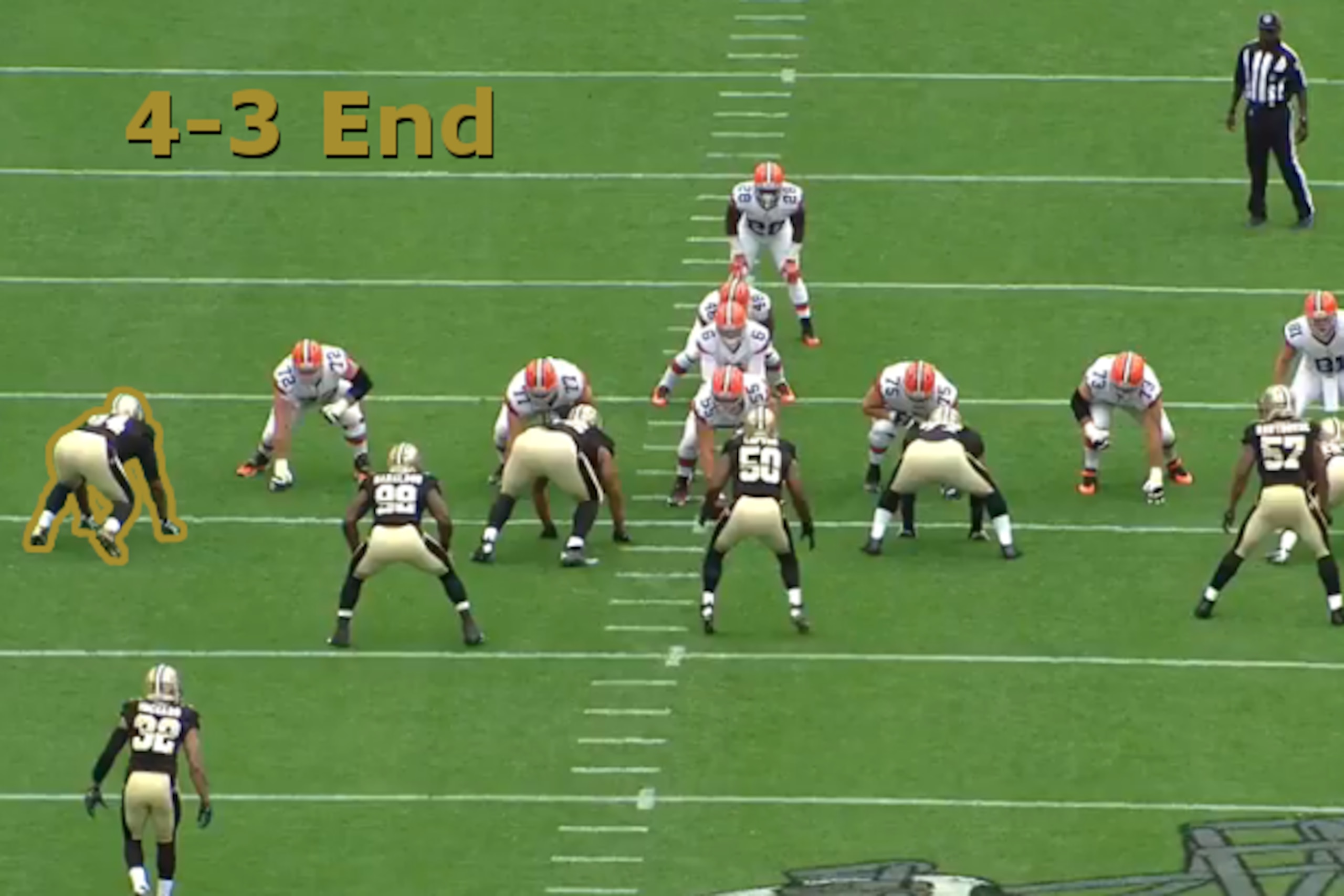
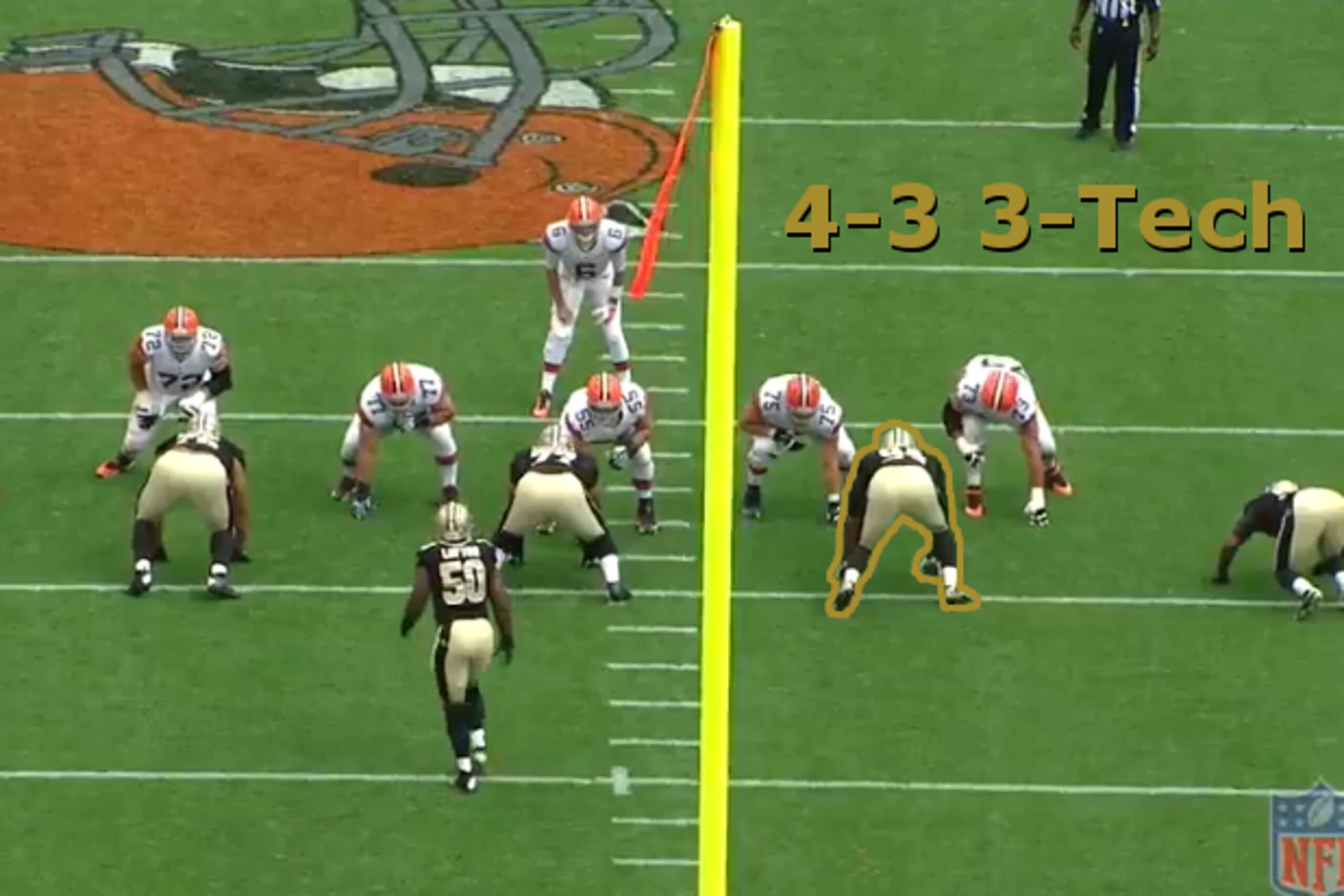
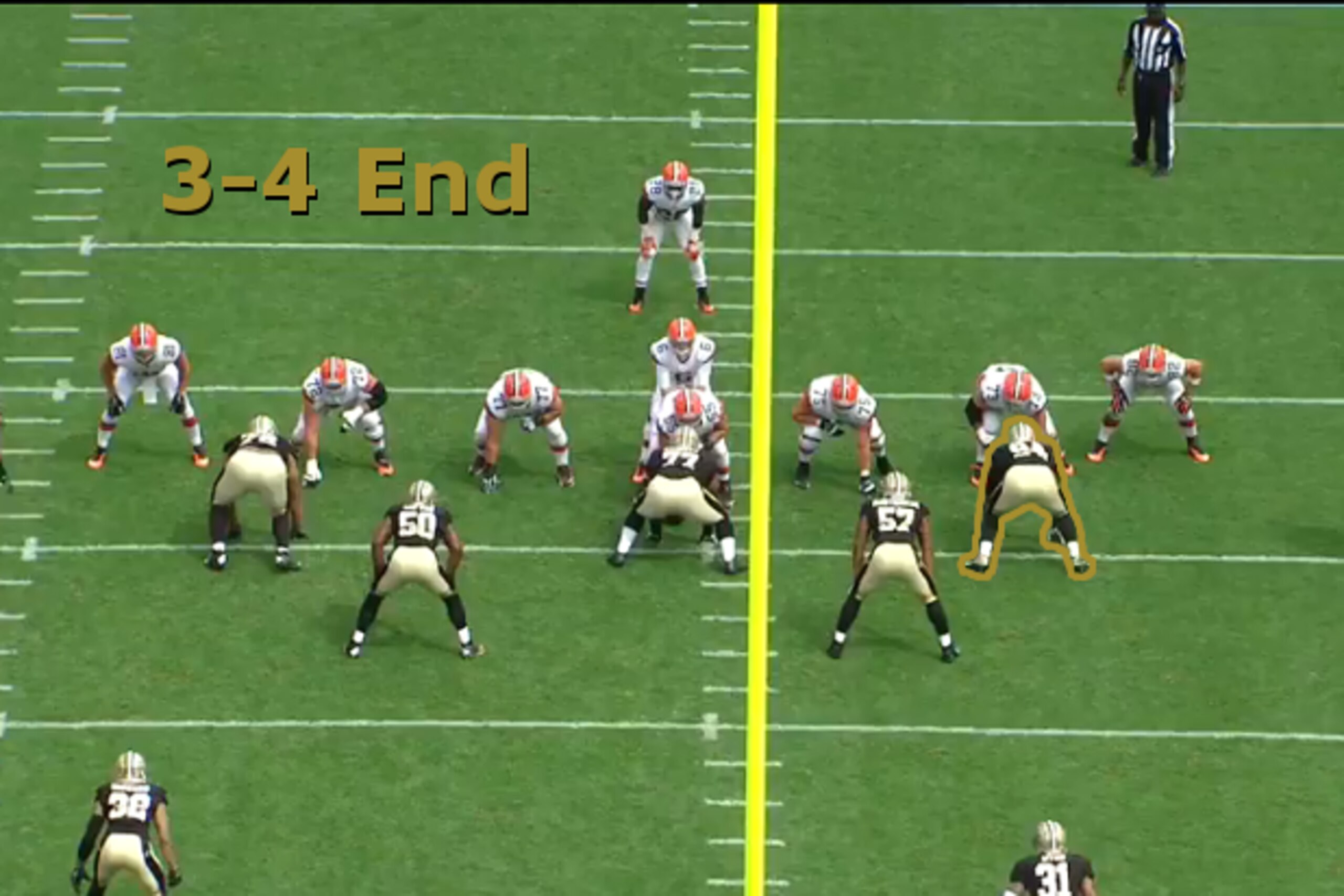
As Ryan moves his chess piece around the defensive front, communication within Minnesota’s offensive line will become paramount. The New England Patriots' defense switched to a 4-3 last Sunday, an adjustment that helped stifle the Vikings running game. Vikings right guard Brandon Fusco admitted as such, as reported by Andrew Krammer of 1500ESPN.com.
Handling stunts and picking up blitzes along the offensive line were also big issues last week. Fusco and center John Sullivan had their share of troubles with blitzes coming up the middle. Kalil and Johnson had similar issues on the left side, especially when it came to simple twists between the end and tackle.
New Orleans will also throw a variety of blitzes at the Vikings. Ryan is especially partial to zone blitzes and has no qualms about sending two linebackers through the A-gaps.
Without making immediate and significant strides, the Vikings offensive line will be toyed with again in Week 3. Its struggles have big ramifications on the offense, which leads to the next key.
Calm Cassel
This objective falls on the shoulders of both the offensive line and the quarterback himself. Matt Cassel’s disastrous Week 2 performance was due in part to his discomfort in the pocket. Minnesota’s offensive line leaked pressure in the early going, and Cassel never settled in.
A missed play from Cassel on 3rd-and-short in the second quarter of last week’s game paints this picture perfectly.

The route combo from Kyle Rudolph and Greg Jennings is where Cassel’s eyes go immediately. Rudolph’s crossing route at the sticks is the one to watch.

Despite a perfectly clean pocket, Cassel senses pressure and starts to bolt. He locks onto his checkdown, Matt Asiata, as soon as he begins moving. Rudolph would have had an easy first-down reception had Cassel stayed patient in the pocket. Instead, the Vikings came up short and were forced to punt.
Plays like this fall on Cassel’s shoulders, but the poor offensive line play has its effect on him too. Protection has to be a joint effort between the line and the quarterback.
One way for offensive coordinator Norv Turner to lessen the burden on both the offensive line and Cassel is to utilize more play-action passes. Statistics show that Cassel is more efficient in play action as well, at least thus far in 2014.
| Attempts | Comp. % | YPA | QB Rating | |
| PA | 12 | 66.7% | 8.2 | 96.5 |
| Non-PA | 49 | 57.1% | 5.6 | 47.5 |
The idea that play-action passing will be ineffective without Peterson is overblown. If properly sold, the defense still has to respect the threat of the run. Utilizing more play action can slow down the rush and give Cassel easier reads.
Take Vertical Shots
Cassel’s first-quarter interception from last week should not dissuade him from throwing the ball over the top against New Orleans, even with Saints star safety Jairus Byrd lurking.
Instead, the veteran quarterback must recognize coverages more effectively and pick his spots. The idea isn’t to throw deep for the sake of it. If Cassel does a better job recognizing mismatches and opportune situations, he can give the offense the chance to pick up yardage in bigger chunks.
One example from the Patriots game stands out.
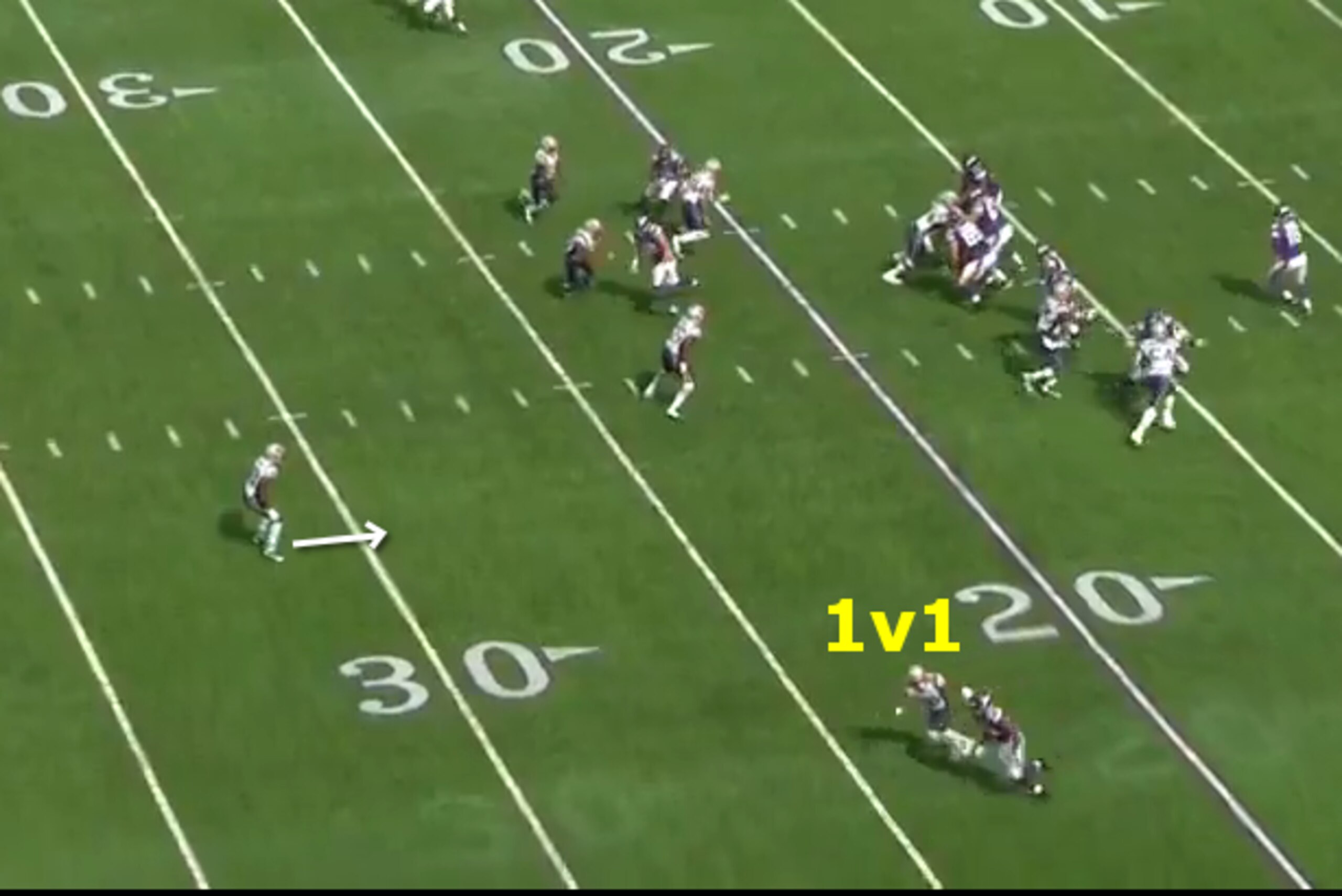
The Vikings have 3rd-and-10. As Cassel plants his back foot, he should notice the strong safety stepping forward. That leaves Cordarrelle Patterson singled up on a vertical route. He hasn’t been willing to pull the trigger on throws like this, though.
These leap-of-faith opportunities can give a talented receiver like Patterson a chance to make a big play. Downfield throws also put defensive backs in a tough position with the increased emphasis this year on illegal-contact calls.
Week 3’s matchup will provide Cassel opportunities to take these shots too, as long as he correctly diagnoses coverages.
For example, the Saints play a 5’11” cornerback in Patrick Robinson on the right side of their defense. Turner should be able to manufacture matchups between the bigger Patterson and Robinson. From there, Cassel needs to be willing to throw into tight windows down the field, even if receivers are covered. Talents like Patterson and Jennings need to be relied upon to make those contested catches.
No Turnovers
Minnesota’s final offensive key is simple. The Vikings cannot afford to turn the ball over. Even turning it over once is asking for trouble. They have little margin for error when Drew Brees and the Saints offense is waiting to take the field. The Vikings offense certainly paid for their misdeeds last week, as Krammer tweets:
"On 7 drives that #Vikings didn't hand ball over on turnover: Allowed just 6 points and forced 5 punts. Patriots: 24 points off 5 turnovers
— Andrew Krammer (@Andrew_Krammer) September 14, 2014"
Get Back to Aggressive Ways
In an effort to establish better matchups with the Patriots, specifically tight end Rob Gronkowski, Minnesota utilized a more passive game plan in Week 2 and blitzed less. The strategy made sense on paper, but it didn’t work when implemented on the field.
Rookie linebacker Anthony Barr was infrequently used as a rusher, so Brady and the Patriots picked on him in coverage. Gronkowski often had the attention of at least two, sometimes even three Viking defenders on a single play.

This shot shows defensive end Brian Robison delaying his rush to disrupt Gronkowski’s release. Barr and Harrison Smith are also fully dialed in on the tight end. While Minnesota was able to slow down Gronkowski’s production, the defense as a whole suffered.
The Vikings will be put in a similar situation this week as they try to cope with Saints tight end Jimmy Graham. Adjustments have to be made to the game plan. Look for Minnesota to return to more of its aggressive blitz looks, even if that’s just bluffing. Bending its entire scheme to slow down one player and not properly utilizing Barr was a mistake.
Slight tweaks can do the job, which takes us to the next key.
More Zone Coverage
Zone coverage, especially zone blitzes, can give Minnesota’s defense the best of both worlds. It can still be aggressive with Barr’s usage. It can also still give plenty of attention to Graham if the second and third levels of the defense are in sync.
Zone looks such as Cover 3 or "Quarters" can also help the Vikings match up with New Orleans without leaving linebackers on an island. The Saints and Sean Payton will utilize motion out of the backfield along with unpredictable alignments featuring Graham and Marques Colston to pinpoint mismatches.

The Saints have three tight ends, one receiver and one back on the field in this example from last week. When they motion Khiry Robinson to the numbers, a defense playing man would reveal its coverage and expose its positions, especially if a linebacker has to track the back to the outside. That’s where an experienced quarterback like Drew Brees finds his mismatches.
With zone coverage, the cornerback just bumps outside. The responsibilities don’t change a whole lot. A tight end like Graham in the slot can still be effectively bracketed.
Zimmer will undoubtedly mix both zone and man coverage, often within the same defensive call. Utilizing more zone blitzes and finding better ways to attend to the threat of the tight end and let Anthony Barr get his rushes must be a goal.
Prepare for Screen Passes
The Saints since Sean Payton's arrival in 2006 have been notorious for using screen passes. Both Robinson and Pierre Thomas can gash a defense when they catch the ball in space and turn upfield behind a wall of blockers.
Recognition is the first step. Defensive linemen must be on the look out if an offensive lineman suspiciously lets them penetrate. Instincts have to take over. Then if they follow the offensive lineman, they’ll be led right to the play.
Open-field tackling is the second step. Minnesota defenders had a few issues with this last week, so New Orleans will be looking to take advantage. Defensive backs and linebackers must disengage from blocks quickly and make fundamentally sound tackles in space.
New Orleans is going to rack up its yards as the game wears on. Its offense will probably put crooked numbers on the scoreboard too. Limiting the big plays with effective coverage schemes and open-field tackling gives the defense a shot at keeping things close. One or two opportunistic plays, whether that’s a break on an errant throw or a fumble recovery, would go a long way as well.
Minnesota’s Week 2 showdown with the Saints may prove a pivotal point in the season. Falling to 1-2 with a schedule that doesn’t let up is a recipe for a long losing streak. For the Vikings to pull off another road win and extend the Saints’ losing streak, a complete game on both sides of the ball is a must.
Fans and analysts are about to find out a lot more about Zimmer’s head-coaching merits and the talent level of this team.
.jpg?w=2560 "Chiefs Giants Football")

.jpg?w=2560 "🚨 Week 8 AP Top 25 Poll")

.jpg?w=2560 "Lamar Being Out Shocked Ravens")
.jpg?w=2560 "Lions Outlast Packers")