

Breaking Down Kirk Cousins Running Jay Gruden's Offense
Kirk Cousins' ability to run Jay Gruden's offense is going to make or break the Washington Redskins season. The early signs are positive, at least based on the way Cousins directed an offense that scored 41 points in Week 2.
Take a look at Cousins under center, and you'll see a quarterback comfortable making and progressing through reads. You'll see a confident quarterback, with his assurance taken from his in-depth knowledge of the scheme.
Head coach Jay Gruden has endorsed how quickly Cousins made throws against the Jags, according to Mike Jones of The Washington Post:
TOP NEWS

Geno Explains Wilson Exchange
.jpg?w=2560 "Chiefs Giants Football")
Mahomes Told Teammate to Leave Meeting
.jpg?w=2560 "Steelers Saints Football")
Rodgers Iced Out on Plane 💎
Let's take a look at some examples of Cousins putting the theory of Gruden's scheme into practice. We'll begin first with one of the core plays of this offense: the bootleg pass off play action.
In this particular example, tight end Niles Paul would be the target. He would work underneath the linebacker level:
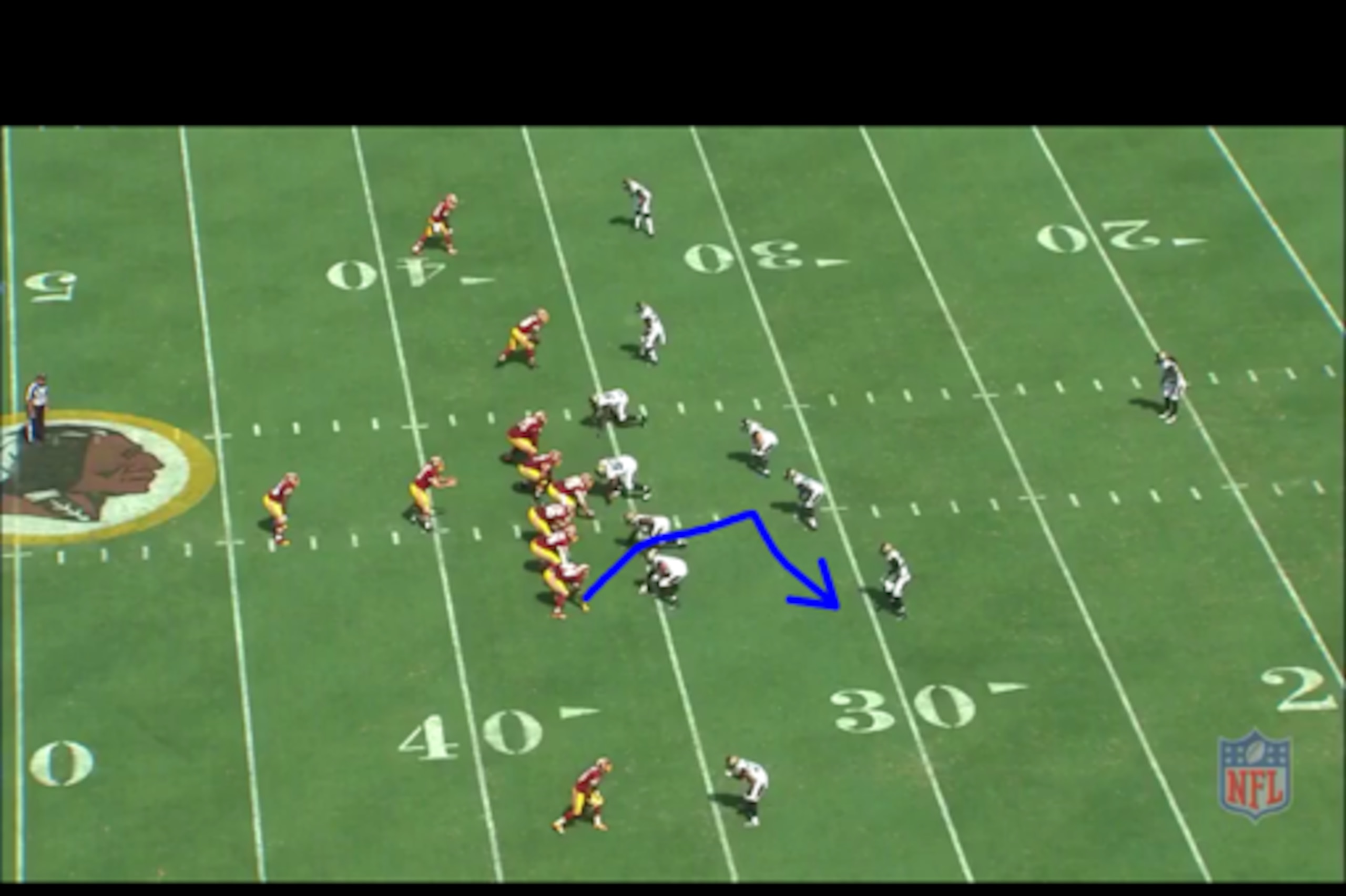
Cousins executed a decent fake to running back Alfred Morris before rolling out the other way:

Morris sold the team's trademark outside zone stretch play to the left. He had already been running well, so the Jags had to respect his threat.
Once Cousins moved the pocket, he had three receivers to aim for. Pierre Garcon was working deep, while Andre Roberts went over the middle. Paul was his underneath read, shown in the white circle:
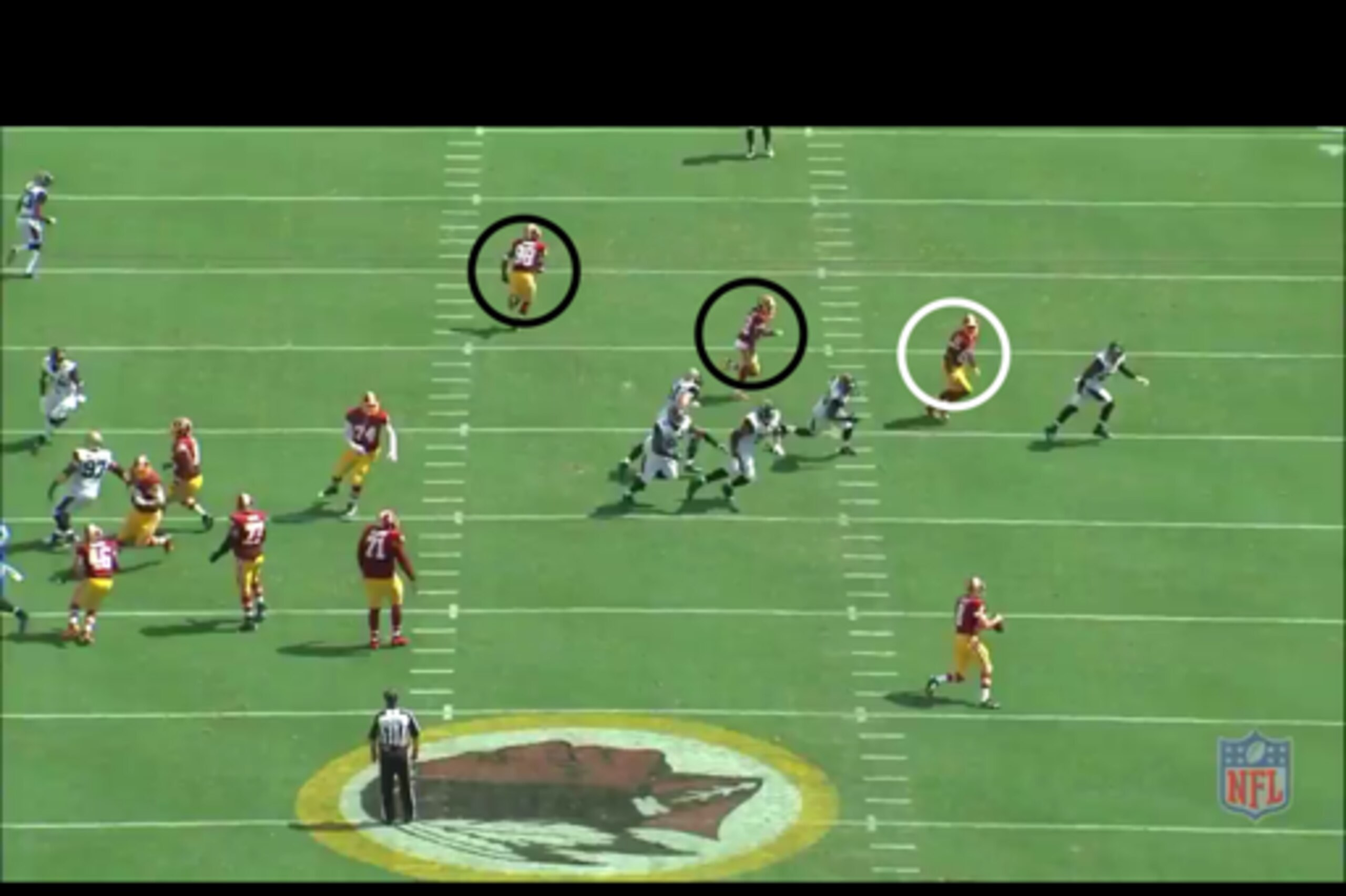
Cousins wisely shunned Roberts and Garcon. Hitting Roberts would have meant throwing over linebackers who were clogging the middle zones. It was a viable throw, but not one without risk.
Meanwhile, going deep to Garcon would have required throwing into the two-deep safety shell, the strength of the coverage:
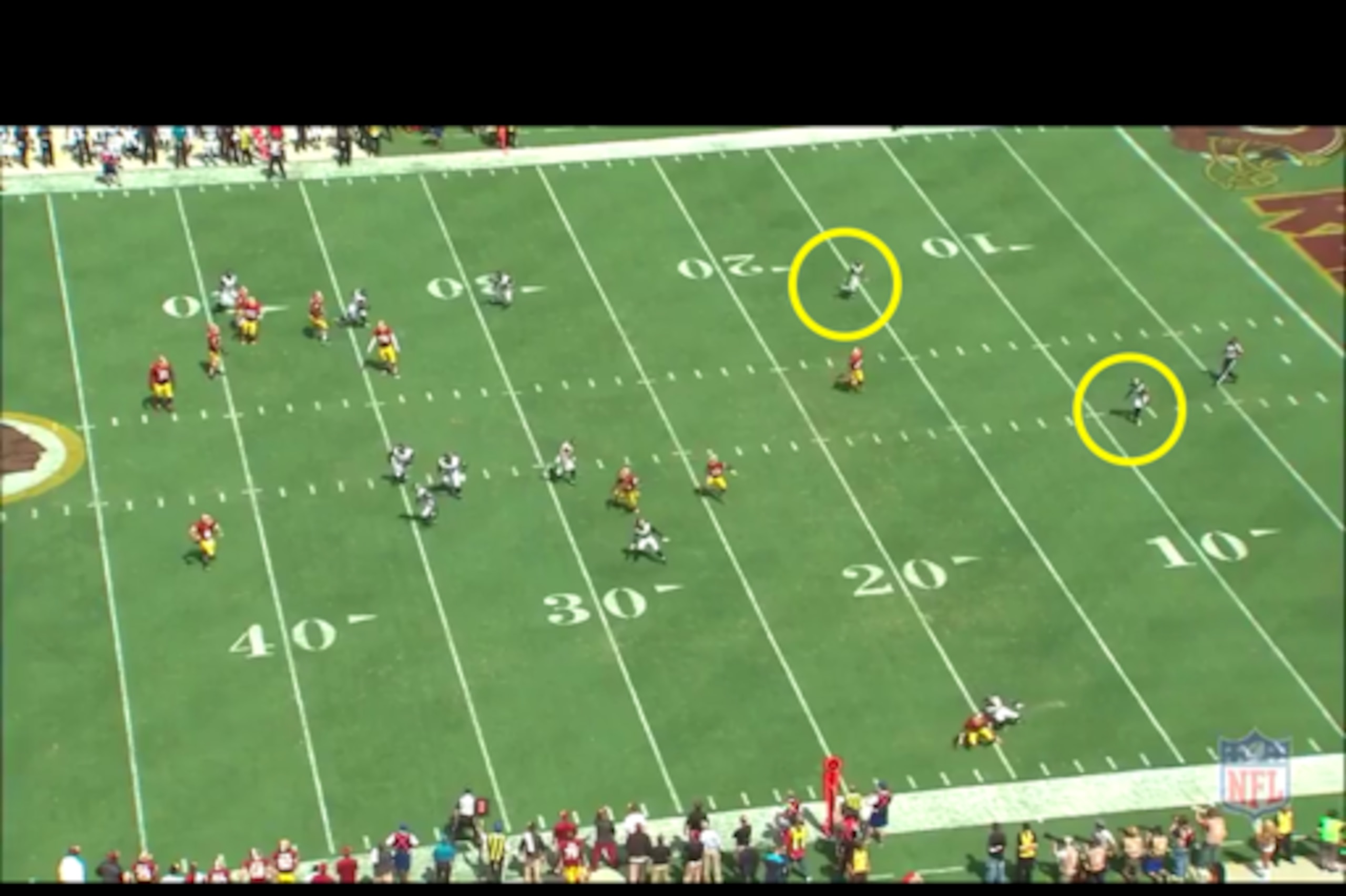
Even though the safer throw to Paul only gained nine yards, it was good for a first down and kept the drive alive. Significantly, this rollout pass was one of a few Gruden dialed up when Cousins first took over from Griffin.
That's evidence that the offensive system won't be overhauled with Griffin on the shelf. Gruden said as much during an interview with CSNWashington.com.
Moving pockets and big gains off play-action passes are staples of this system. With a running game so prolific, these concepts have to remain features of the playbook.
This play was also a marked contrast to what Griffin might have done in the same situation. One of Griffin's great failings has always been not resisting the big play for a shorter gain, even if the former option is covered.
But any West Coast-style passing game, like the one Gruden calls, relies on precision and efficiency to keep the chains moving.
Cousins certainly displayed those qualities on third downs. The Cousins-led Redskins offense hit on six out of 14 third downs, a solid figure.
Two of Cousins' best plays, in terms of decision-making and accuracy, came on third-down passes in the third quarter. In the first example, Washington's receivers would run quick out routes from both slots to split Jacksonville's underneath coverage:
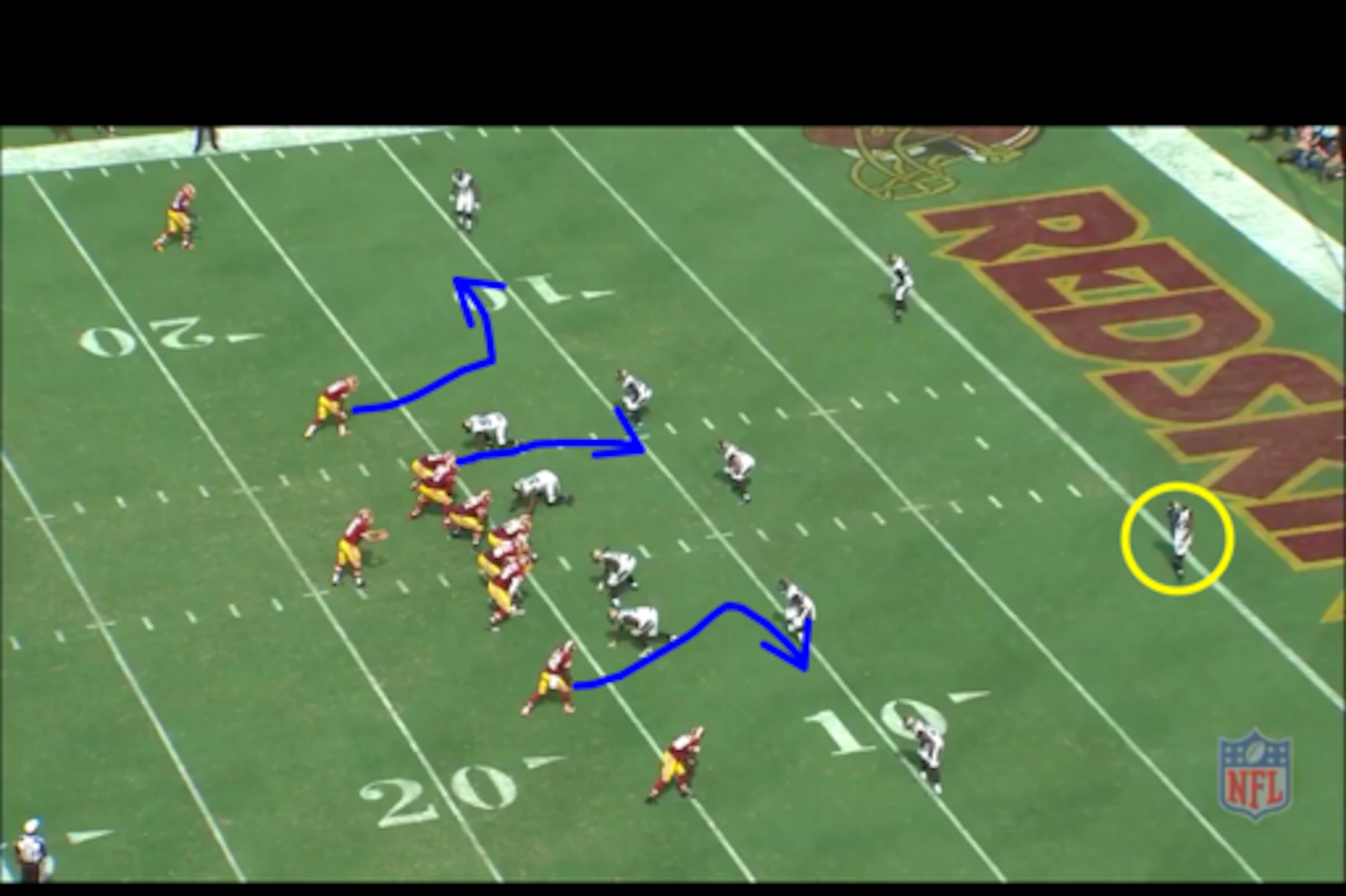
A vertical release from Paul would also occupy middle linebacker Paul Posluszny. Cousins made a good early read of the coverage.
He knew one safety would go to the tight-end side of the formation. He also knew the other safety would hang on the outside receiver:
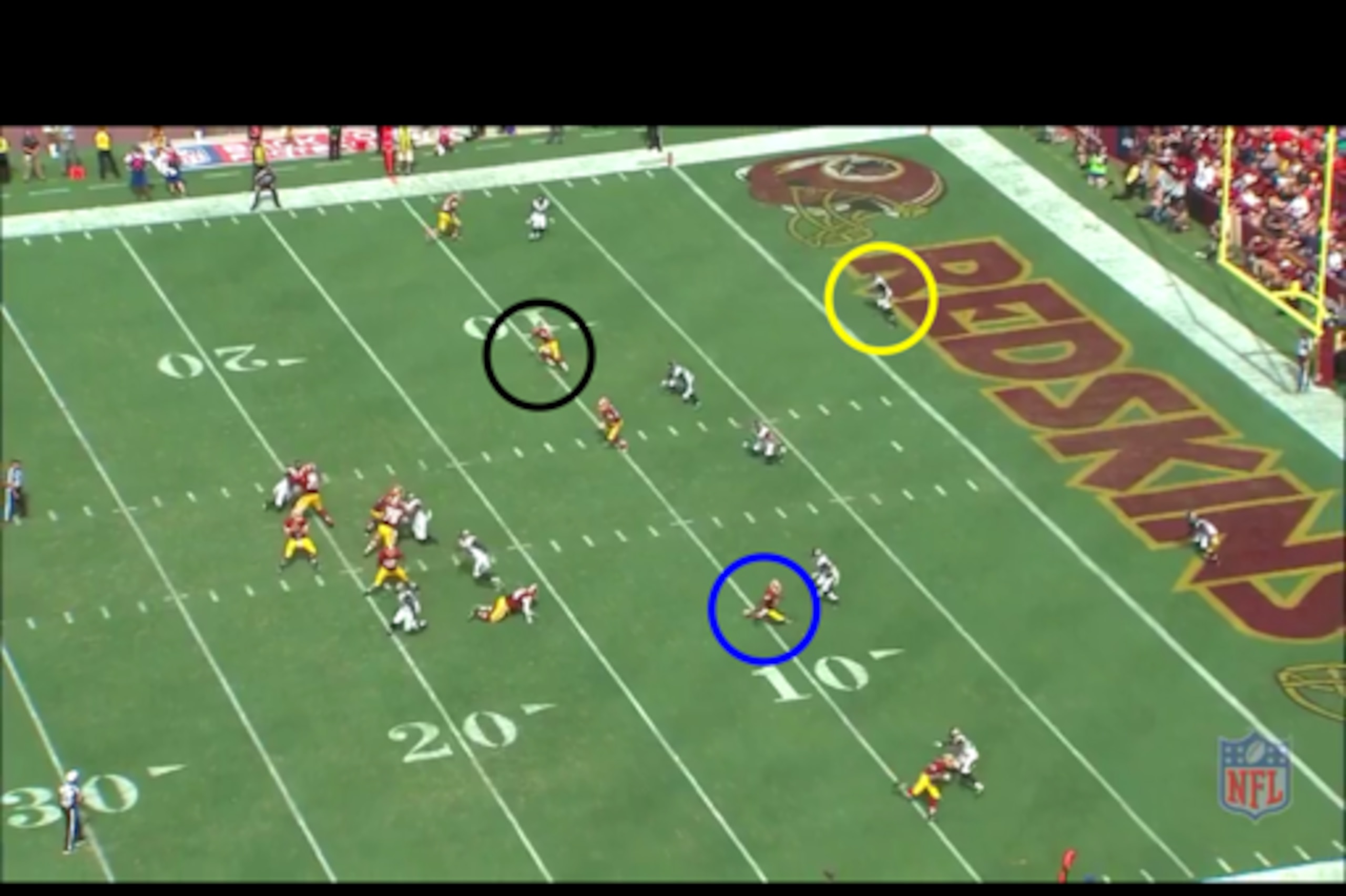
That meant Roberts, aligned in the slot on the right side of the offensive line, was his best read. Cousins set that read up by looking off the linebackers to make sure they leaned the other way:

When he turned back, Roberts was wide open. Cousins' quick throw found Roberts for eight yards to convert on 3rd-and-4:

Cousins' next pass to move the chains was perhaps his best throw of the day. It came on the final play of the third quarter, with Washington facing 3rd-and-5.
Cousins had three receivers to aim for on the same side. Paul was in-line on the right of the formation with Roberts in the slot, while rookie Ryan Grant was the outside receiver on that side:

Cousins would make his choice based on the rotation of both safeties. Specifically, he would read how the strong safety reacted to Roberts and Paul's routes.
On Cousins' first look, you can see Paul (84) taking Posluszny deep into the strong safety's zone:

Cousins read the safety leaning toward Roberts and Paul, attempting to bracket both routes and react to either possible throw:

This left Grant one-on-one on the outside. Cousins now had his best option and simply had to throw him open.
As Roberts and Paul occupied their coverage, Grant began to win on the outside. With the safety leaning in, Grant was able to get behind the coverage:

Cousins had a clear spot to throw to. But his pass still had to be precise. Because the safety was bound to react to Cousins' throw and bail to cut it off, the pass had to fit into a tight and shrinking window.
Cousins floated a great throw, and Grant returned the favor with an excellent catch:
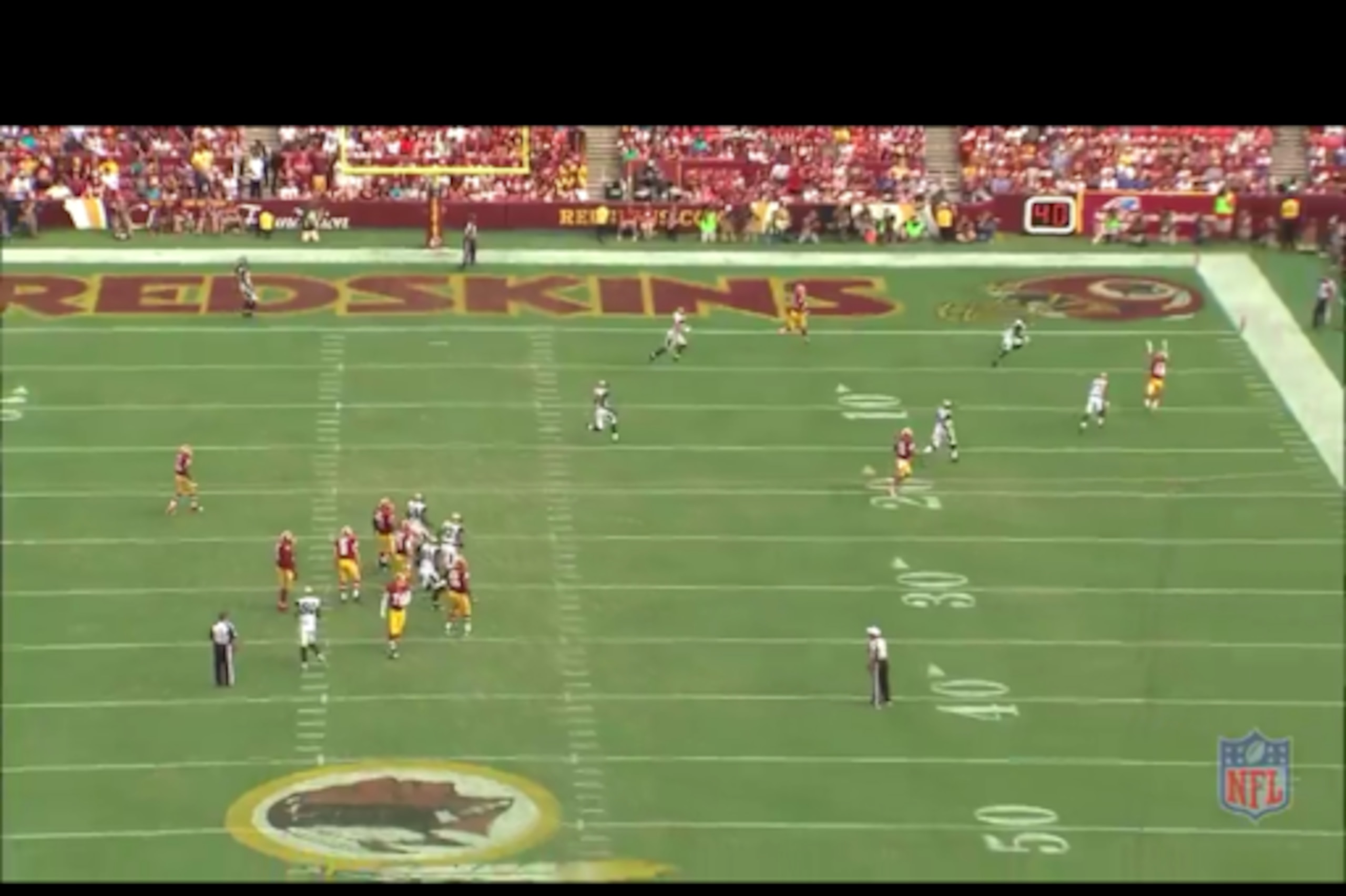
The 21-yard connection with Grant was a fine example of how Cousins created big plays from the pocket. That's something Gruden wants as the core of his offense.
It's something he plans on reintroducing as a feature of his scheme now that Cousins is running it, per Jason Reid of The Washington Post:
"On Wednesday, the Redskins will begin to install their plan for this week’s road game against the NFC East rival Philadelphia Eagles. Many plays featuring longer-developing routes, which Gruden was reluctant to call because of concerns about Griffin’s decision-making, figure to be included in Sunday’s game plan.
Confident that Cousins will get rid of the ball promptly when facing pressure, Gruden won’t limit him to plays that include three-step drops and short routes. After spending weeks eliminating stuff that didn’t suit Griffin, Gruden will restore much of the playbook for Cousins.
"
The expanded routes and substantial strikes against the Jags represented a night-and-day difference to the way offense performed in Week 1, during a 17-6 loss to the Houston Texans.
While short-range throws and screens dominated the playbook in Houston, downfield passing tormented the Jaguars. Perhaps the best example was a 31-yard pass to Roberts in the second quarter.
The design was based on freeing the receiver on a deep curl behind the linebacker level of the defense and in front of the safeties:
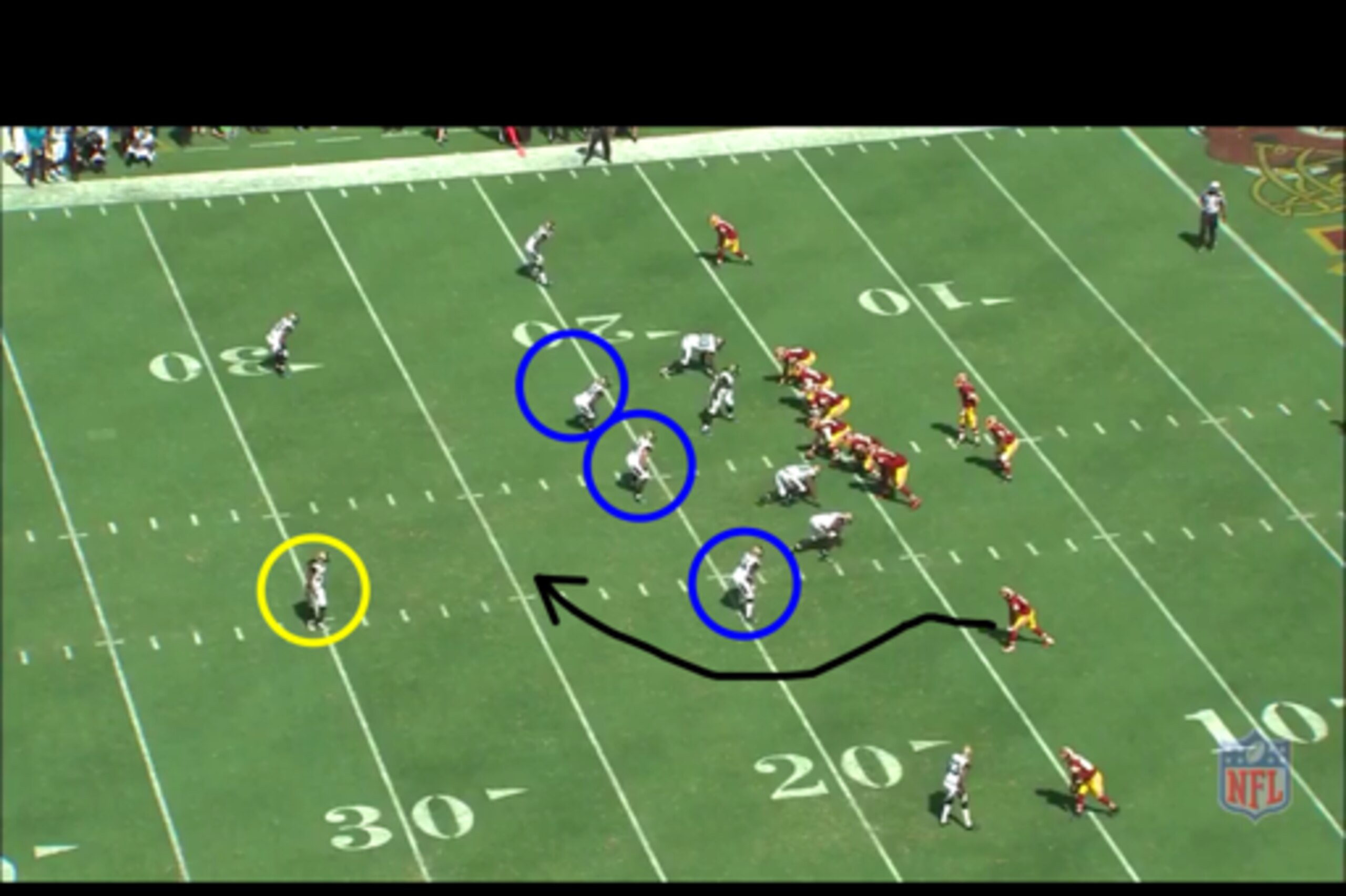
Cousins used his eyes to manipulate both safeties. He wanted to make sure the safety away from Roberts wouldn't rotate to the deep middle and force the receiver to cut the trajectory of his route short.
He also wanted to freeze free safety Winston Guy from locking onto Roberts in the slot.
So Cousins first stared down the side of the field away from Roberts. His look encouraged the coverage to drift that way, as zone defenders spied his glance:

It also caused the strong safety to lock onto the outside receiver. Of course, that took him away from the deep middle, the very void Roberts was aiming for:
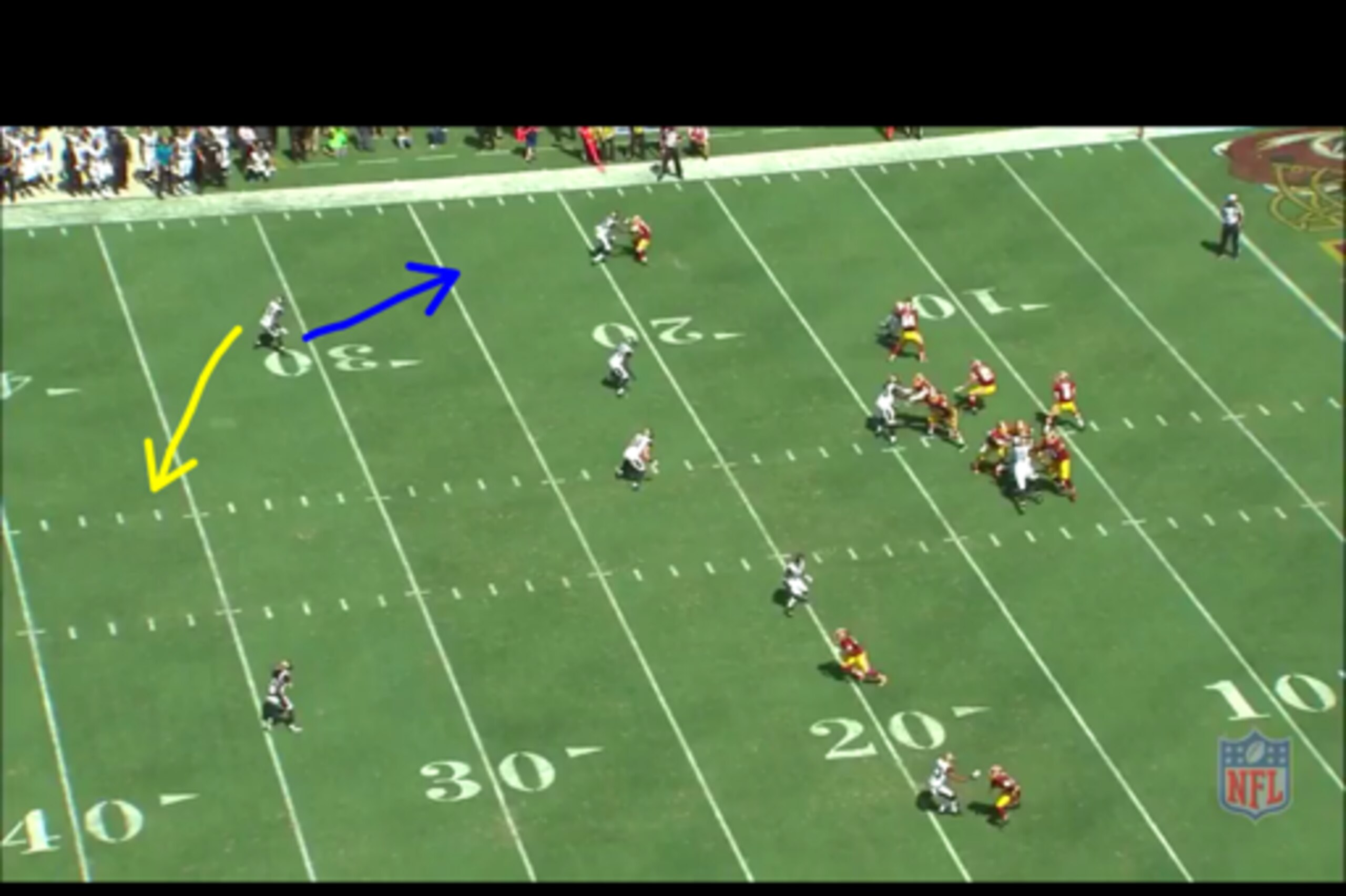
With that safety looked off, Cousins turned toward Roberts. His initial look had frozen the middle linebacker, who now had a bad angle trying to get across to Roberts:

By the time Cousins released his pass, Roberts was wide open. He had gotten inside the initial coverage and in front of the deep safety who had switched off assuming Cousins would attack the other side:
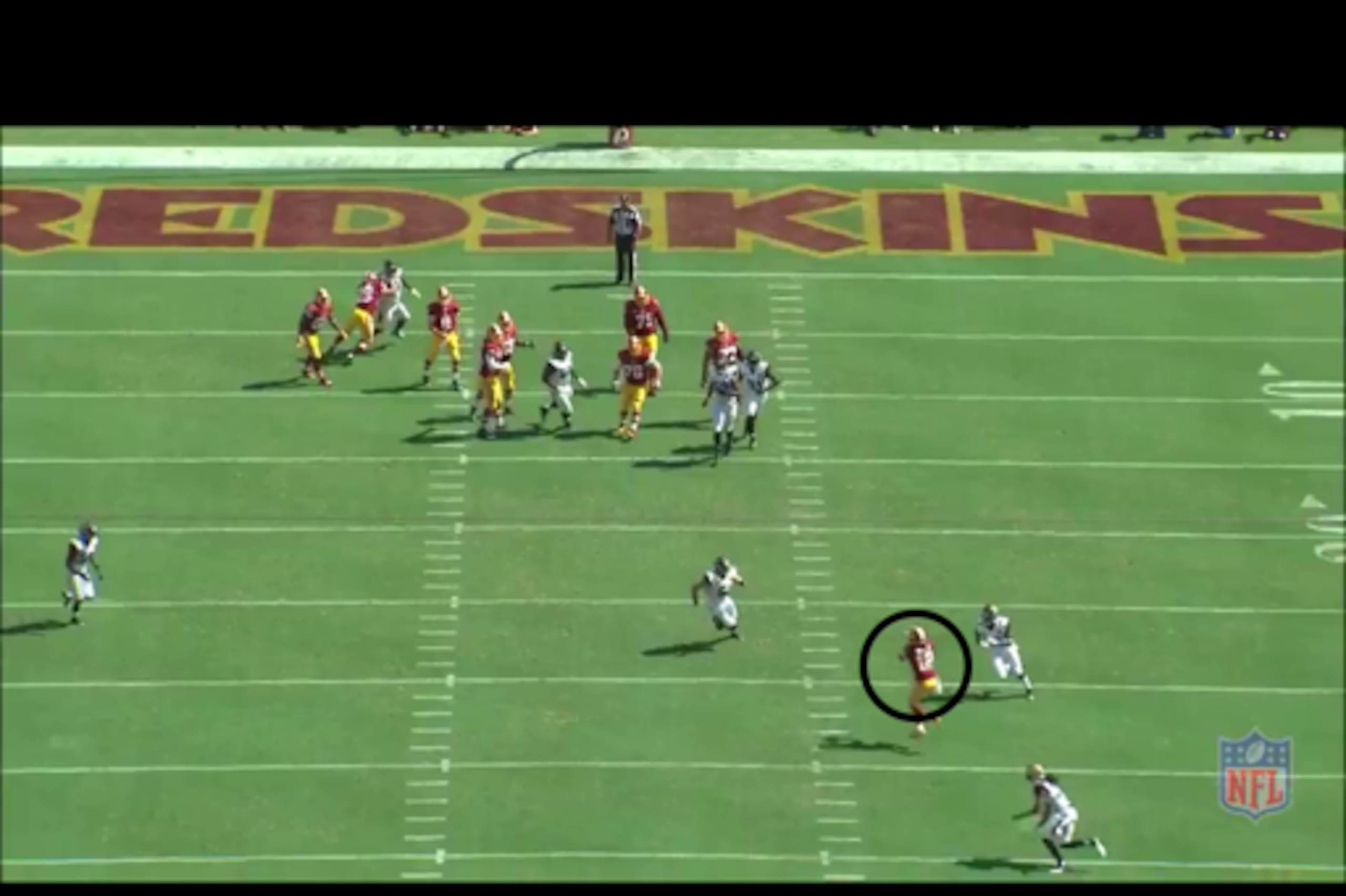
Cousins' ability to hit the big play as proficiently as he connects with the short-range routes opens up the playbook. It lets Gruden call plays like the one that got Paul open for 26 yards in the third quarter.
The design featured three vertical patterns to attack man coverage. Paul would release from an in-line alignment and run a deep hook over the middle:

Paul's route, along with one from the slot, split the linebackers and created a huge hole in the middle:

That hole expanded when the deep safety, faced with three different receivers, chose to hover over the outside routes:
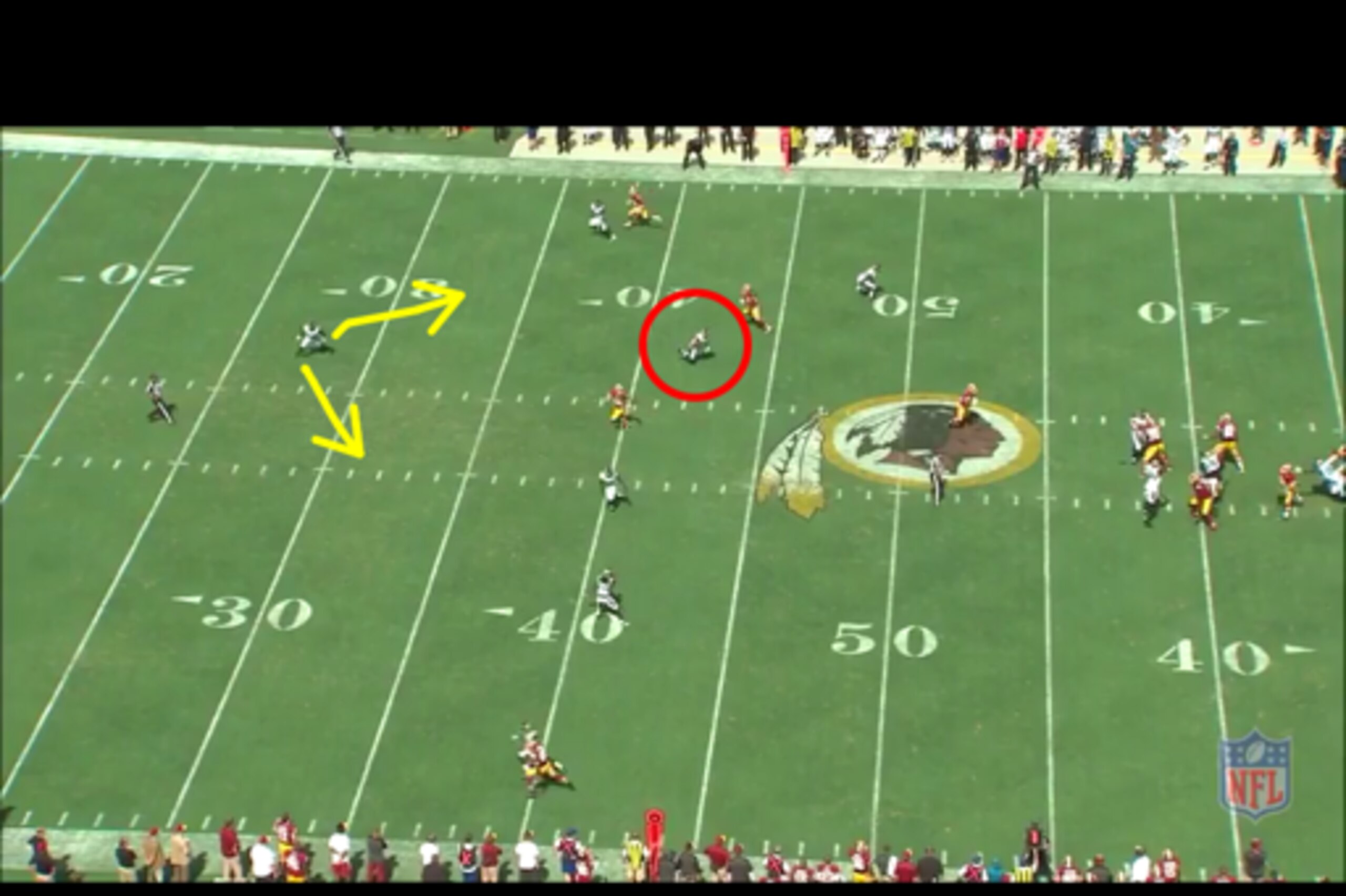
Cousins quickly read that Paul would be left free in the void of the zone. He hit him for a huge gain over the middle:

This is the type of concept Gruden loves to use for his tight ends. It's a schematic ploy detailed in this previous article. Notice how similar Cousins' strike to Paul is to the deep inside pass to Jermaine Gresham, detailed at the end of that article.
This similarity is further proof that Cousins is capable of running the offense Gruden wants. Cousins under center will mean an expanded version of the West Coast passing game, one designed to attack down the field based on smart reads and quick decisions.
Cousins' comfort with the scheme should help him perform well as a regular starter teams will prepare to face. His efficiency with the Gruden playbook can also help the Washington offense produce the points and production to match its talent level.
All statistics via NFL.com.
All screen shots courtesy of CBS Sports and NFL.com Game Pass.

.jpg?w=2560 "🚨 Week 8 AP Top 25 Poll")

.jpg?w=2560 "Lamar Being Out Shocked Ravens")
.jpg?w=2560 "Raiders Could Start Mendoza")