Toronto Blue Jays: Why the Team Should Look to Trade Jose Reyes
When the Toronto Blue Jays acquired Jose Reyes, per the National Post—among others—in a 12-player trade from the Miami Marlins in November of 2012, expectations for the team were sky-high.
This is a club that was heading on 20 years without seeing any postseason action.
Something had to be done.
TOP NEWS

Realistic Offseason Trade Ideas 💡

Players Who Were Worse Than You Think in 2026 ⚾
Latest Free Agent Rumors 👂
Along with starting pitchers Josh Johnson—now long gone—and Mark Buehrle, Reyes was supposed to help transform an ailing Jays organization that had drawn just over 25,000 fans a game in 2012—ranking 23rd out of 30 major league teams, per ESPN.com.
Nearly two years later, it's highly unlikely the Jays will see any postseason action since the blockbuster trade with Miami. The team trails Kansas City for the American League's second wild-card berth by four games, with just 14 to play.
What's worse, is the marquis piece to that trade in Reyes is actually hurting the team's chances at making this team a contender moving forward.
If Toronto wants to stay competitive in 2015 and beyond, it's imperative they find a way to trade the 31-year-old shortstop. Here's why.
Declining Offensive Production
Once upon a time, Reyes was an incredibly productive player. The fact that he played up the middle and had sound defensive numbers only added to his worth.
The 2014 version of the Dominican native, however, is not the player he once was.
Gone are the days of leading the league in stolen bases. His 26 swiped bags are still respectable, but for reasons we'll touch on later, the writing is on the wall for a sharp decline in that department as well.
His .282 average and .724 OPS—good for third and fifth among all major league shortstops—look good on the surface, but the advanced metrics tell a different story.
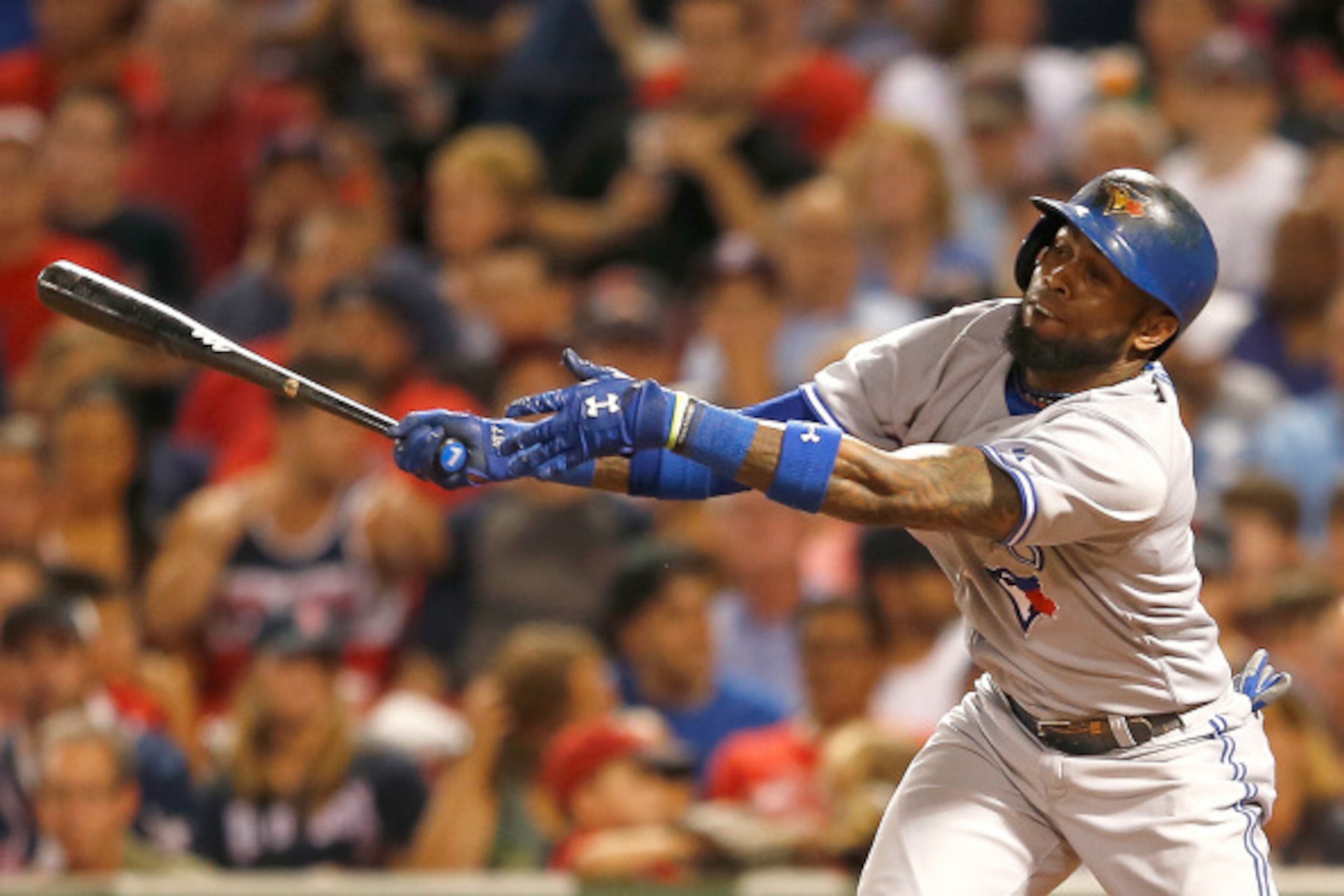
The first concern stems from the fact that a .724 OPS is the lowest he's posted in the big leagues since 2005. The fact that he's fifth is also misleading, since there are another six shortstops within 20 points of him.
An optimist may see that as a down year from which he can rebound. Others may interpret it as the decline that occurs naturally when a player reaches the wrong side of 30 years old.
Then there's the matter of his OPS+, which takes a player's OPS and controls for his league and the park he plays in. By that measure, Reyes' score of 102 is just two percent better than the average everyday player.
In terms of measuring how many runs he's created for the club with the same factors being weighed in as OPS+—a measure known wRC+—Reyes scores 101, or one percent better than the average player.
Even in clutch situations, his numbers are weak. Though Reyes is a leadoff hitter more than a run producer, he's still had 116 at-bats with runners in scoring position. His average in those situations? A dismal .224, per MLB.com.
With his numbers down across the board from last year, as well as in years past, this offseason may be the only chance Toronto has to get value for their aging middle infielder.
Major Defensive Shortcomings
During his best years, not only was Reyes astoundingly good at the plate for a shortstop, but his play in the field was also respectable, making him a complete—and very valuable—player.
Today, not only has his offensive game taken a dip, but his defensive play has taken a dive off a cliff.
His defensive numbers aren't just bad. They're among the worst of all qualified shortstops.
With 22 shortstops qualified in FanGraphs' rankings, Reyes ranks 19th in Ultimate Zone Rating (UZR) and 21st in Defensive Runs Saved (DRS).
To put it in perspective, FanGraphs lists a minus-16 DRS—Reyes' total in 2014—as awful.
In terms of fielding percentage (the most basic metric of defensive play), ESPN.com has him listed in 18th among 22 qualified shortstops.
That play can only get worse with age and the fact that Reyes plays on turf.
Even a position change to second base would be a demanding task, while he doesn't have the requisite offensive game to play any other position.
Health and Contract
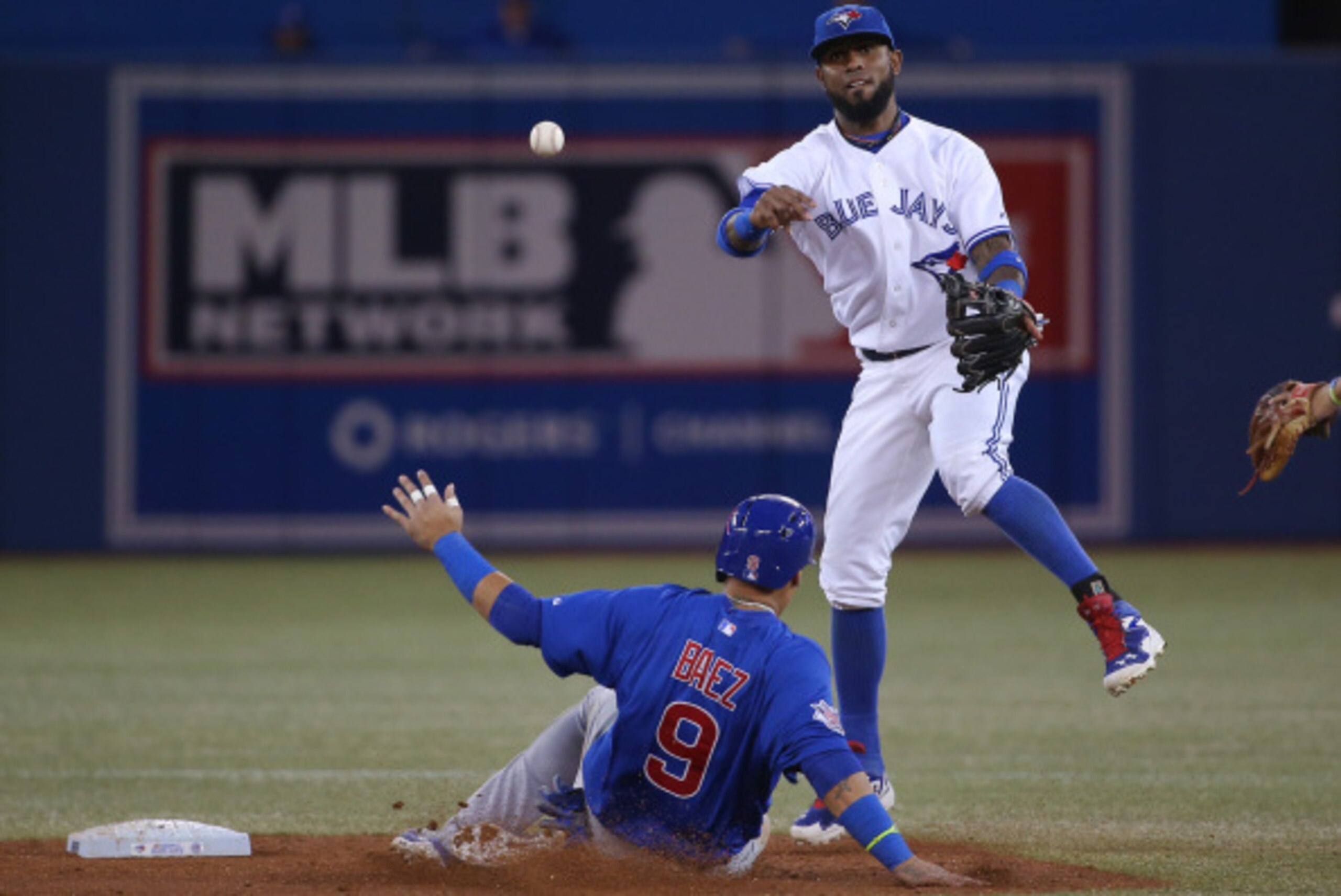
The other major reason to deal Reyes this offseason is a combination of off-field concerns.
First, there's the fact that Reyes has already missed time this year due to injury.
According to Shi Davidi of Sportsnet.ca, his injury concerns are still a problem, with Reyes indicating that he's playing through hamstring troubles.
Jeff Blair, also of Sportsnet, wrote earlier that the Jays are hoping a position change and new turf will help Reyes, as they hope to keep him and get him back to his glory days moving forward.
That's not exactly a gamble a general manager should be willing to take with an aging player—especially one scheduled to make $22 million moving forward.
If Reyes' decline continues, there isn't a chance in the world anyone will relieve the Blue Jays of his contract moving forward. This could very well be the team's last chance to offload Reyes for some value.
Surely there are teams desperate enough and on the verge of contention looking for a shortstop to put them over the top.
Furthermore, the deal would give the Jays some much-needed breathing room salary-wise.
Ridding themselves of Reyes would free up enough space to re-sign Melky Cabrera, as well as a replacement for Reyes—perhaps someone like J.J. Hardy if he leaves Baltimore. After all, his numbers offensively aren't too far off Reyes'. And his defense would provide a major upgrade.
Some fans may not like the idea of trading one of the team's most recognizable players, but in the end, it would behoove the front office both in the short and long run to make it happen.
All statistics courtesy of baseball-reference.com or FanGraphs.com unless otherwise noted.
Jon Reid is a correspondent for Bleacher Report. Follow him on Twitter @JonReidCSM.

.jpg?w=2560 "2 NFL Officials Suspended")
.jpg?w=2560 "Injury-stricken Seahawks signing veteran RB")


.jpg?w=2560 "Mahomes' Wife Trolls Kubiak 💀")