Breaking Down Portland Trail Blazers Center Position for 2014-15 Season
Despite such a successful, turnaround season, the Portland Trail Blazers had one of the worst frontcourts in the NBA last season. It was largely to do with inexperience and a lack of development, with a youthful rotation of Thomas Robinson, Meyers Leonard and Joel Freeland backing up the starters.
The center position was no doubt the weakest part of the team last year, but the addition of Chris Kaman in free agency gives Portland a much stronger rotation down low. There’s still work to be done, but the Blazers can be a little more confident about their men in the middle going into next season.
TOP NEWS

Power Ranking Every NBA Team's Starting Lineup 🔢
Worst NBA Predictions 🫣

Jokic says booing fans not welcome in Denver
Looking Back to Last Season
Portland made a huge leap during the 2013-14 season, making a 21-game improvement to launch into the upper echelon of the Western Conference. The team was largely the same, save for one addition.
A competent and efficient two-way center in Robin Lopez.
The Blazers finally had a decent contributor to pair with LaMarcus Aldridge in the frontcourt, who offered exactly what the team needed. Lopez’s passing, defense and rebounding were the missing pieces to Portland’s puzzle, resulting in a major turnaround.
Lopez's defensive rating of 103.7 for last season outdid former Blazers center J.J. Hickson's rating of 107.5 from the 2012-13 season. Playing career-high minutes, Lopez pitched in 11.1 points, 8.5 rebounds and 1.7 blocks per game.
In addition, Portland jumped from No. 21 (tie) in rebounding percentage for the 2012-13 season to No. 7 for last season. While Hickson remains an able-bodied player in his own right, Lopez does that little bit extra.
Dane Carbaugh of AYoungSabonis.com summed it up well: "Lopez does a number of things well for Portland that Hickson did not. Lopez is a hard worker around the rim, a fundamentally sound post player who keeps a hand on his man and squares his hips to box out as shots go up. The result is that teammates are now rebounding at a greater rate."
In short, improving the center position turned a lottery-bound team into a fringe contender.
There are other factors to be considered, such as the players adjusting to head coach Terry Stotts’ system and the improvement of Damian Lillard. But nothing made a bigger difference than having a more complete roster with the likes of Lopez on board.
It is probable that Portland would not have gone as far as it did without Lopez last season.
The reserve big men, on the other hand, were either underdeveloped or were lacking in skill against the competition. Robinson and Leonard were both lottery picks of the 2012 draft, picked No. 5 and No. 11, respectively.
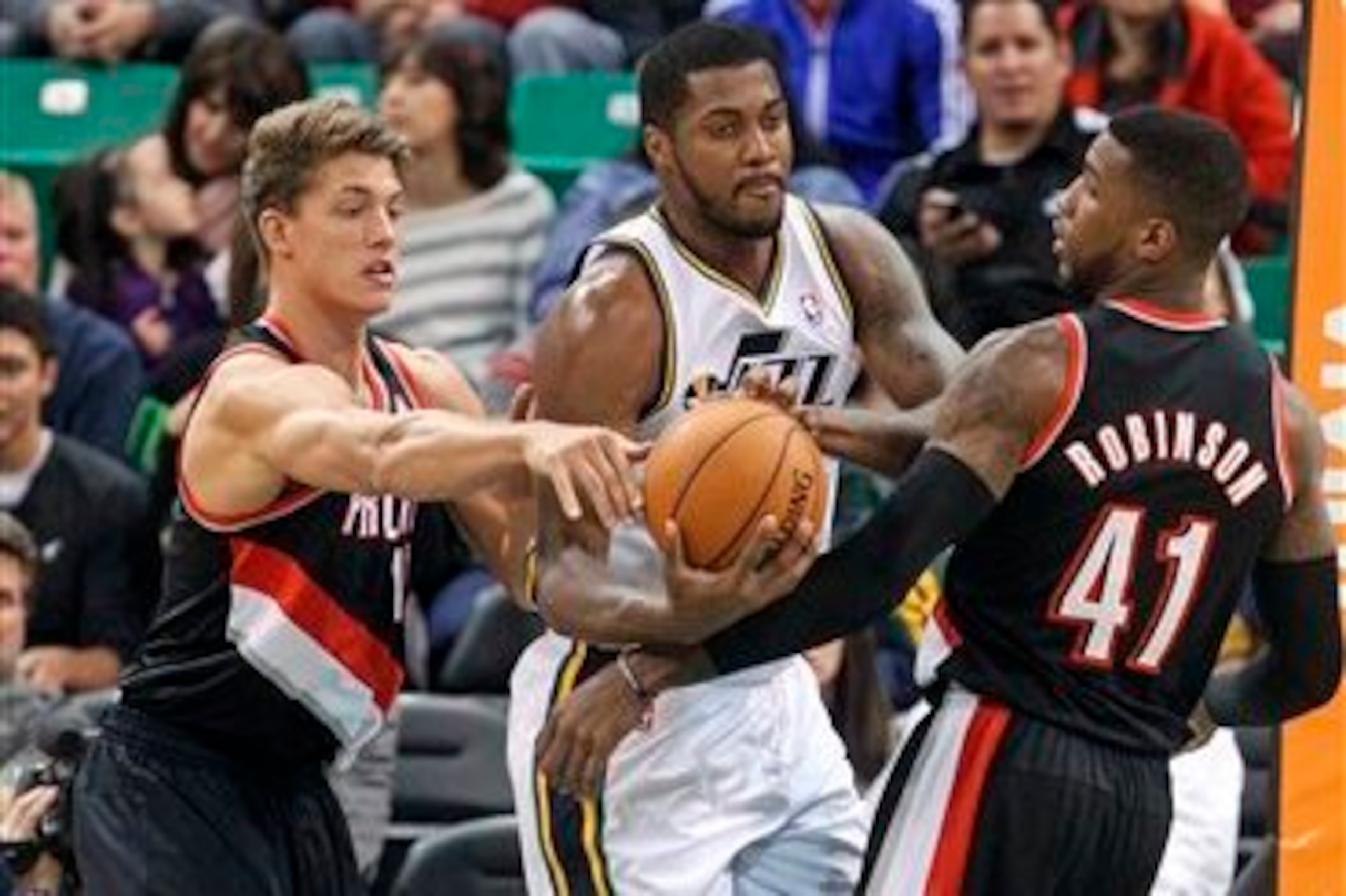
Neither has grown into the player many expected, with flaws found in scouting reports becoming fleshed-out issues. Robinson's lack of offensive moves became glaring, while Leonard's confidence issues and court awareness have limited his playing time.
The duo posted less-than-average player efficiency ratings of 14.2 and 9.5, respectively, for last season, per ESPN.com. The coaching staff had their hands tied when it came to substituting players behind Aldridge and Lopez, opting to play a smaller lineup to move away from the inconsistency of Robinson and Leonard.
It was to the extent that a 13-game absence of Aldridge, due to injury, led to Stotts starting small forward Dorell Wright in his place at power forward and playing a very undersized lineup.
Both had their moments, but it was too erratic to truly value either's contributions.
Lest we forget the play of Freeland, who actually offered some form of regular help. A sprained MCL derailed much of his season, but the big man put forward 3.3 points and 4.0 rebounds per game with a rebound rate of 15.4, per ESPN.com's John Hollinger, which was solid and ranked ahead of even Lopez.
While it's more than likely due to Freeland playing in garbage time, it still points to his value as a player to crash the boards.
If the center position could receive some sort of grade, it'd fall under a high C to a low B, at best. Lopez was terrific in his own right, but the lack of help all around in the middle was a major flaw in the makeup of the team.
As such, Portland's frontcourt needed a desperate upgrade. That was the central focus of the Blazers' offseason, as the front office signed Kaman to a two-year deal worth $4.8 million in the first season.
It's fairly certain what the big man can offer, and it's exactly what Portland needs.
Looking Forward to the 2014-15 Season
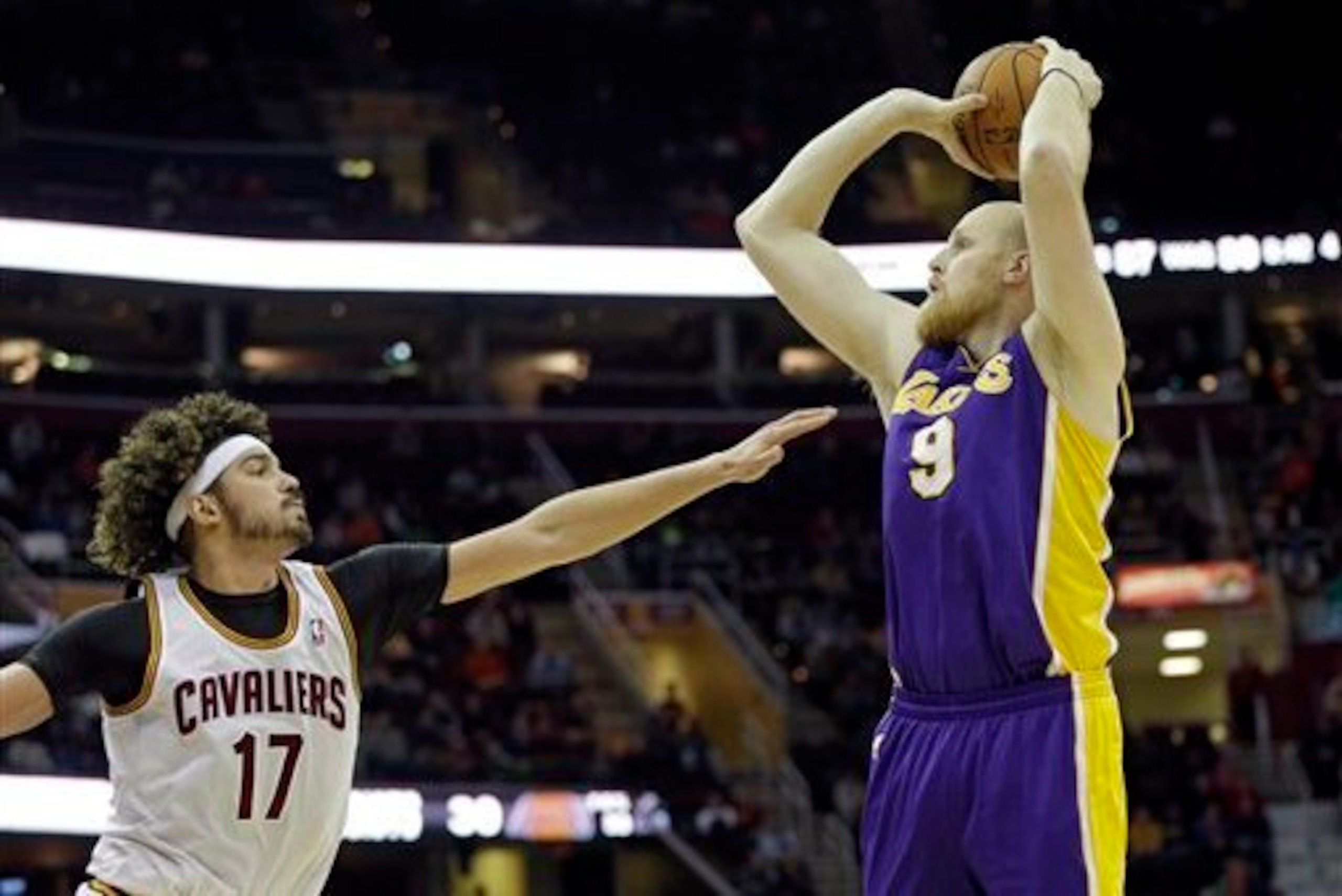
Kaman spent last season with the Los Angeles Lakers in a campaign that's hard to label. The team wasn't competitive or rebuilding, but rather just playing it out without purpose.
Injuries were obviously a factor, with 16 players starting five or more games. Kaman himself was limited to 39 games, but there were also nights where he and Lakers head coach Mike D'Antoni butted heads.
The big man received sporadic playing time over the course of the season, which contrasted to what Kaman expected when he signed in Los Angeles. Per Mike Bresnahan of the Los Angeles Times:
"I'm just going to take the high road and do the right thing, but it's definitely not what I was told coming in here. Obviously, I would have never came here if they had said, 'We're not going to play you at all.' I thought I had a good opportunity coming here.
It's frustrating and I want to be able to try to help if I can, you know? And I really, truly think I can, but it's not up to me.
"
There was even a point of the season that Kaman had not spoken to D'Antoni in almost three weeks.
Jeez.
It's safe to predict that won't be the case with the Blazers, as the team has an obvious need for his services in the post.
Kaman put up respectable numbers for a reserve center for the Lakers, with 10.4 points and 5.9 rebounds on 50.9 percent shooting. His numbers are potentially inflated under D'Antoni's uptempo system, as he played just 18.9 minutes per game.
Either way, it's clear what he can offer to Portland.
His low-post scoring, mid-range shooting and passing are staples of what the Blazers do offensively, so he'll fit right in. Kaman isn't a stopper defensively, though he does have quick feet and averaged a blocked shot per game last season.
As such, he'll be the primary backup for either spot in the frontcourt. Whether Lopez or Aldridge heads to the bench, Kaman will be inserted to keep the Blazers' engine running. Robinson showed flashes of improvement in the summer league, averaging 13.7 points on 50 percent shooting with 8.7 rebounds, 2.0 assists and 2.3 steals.
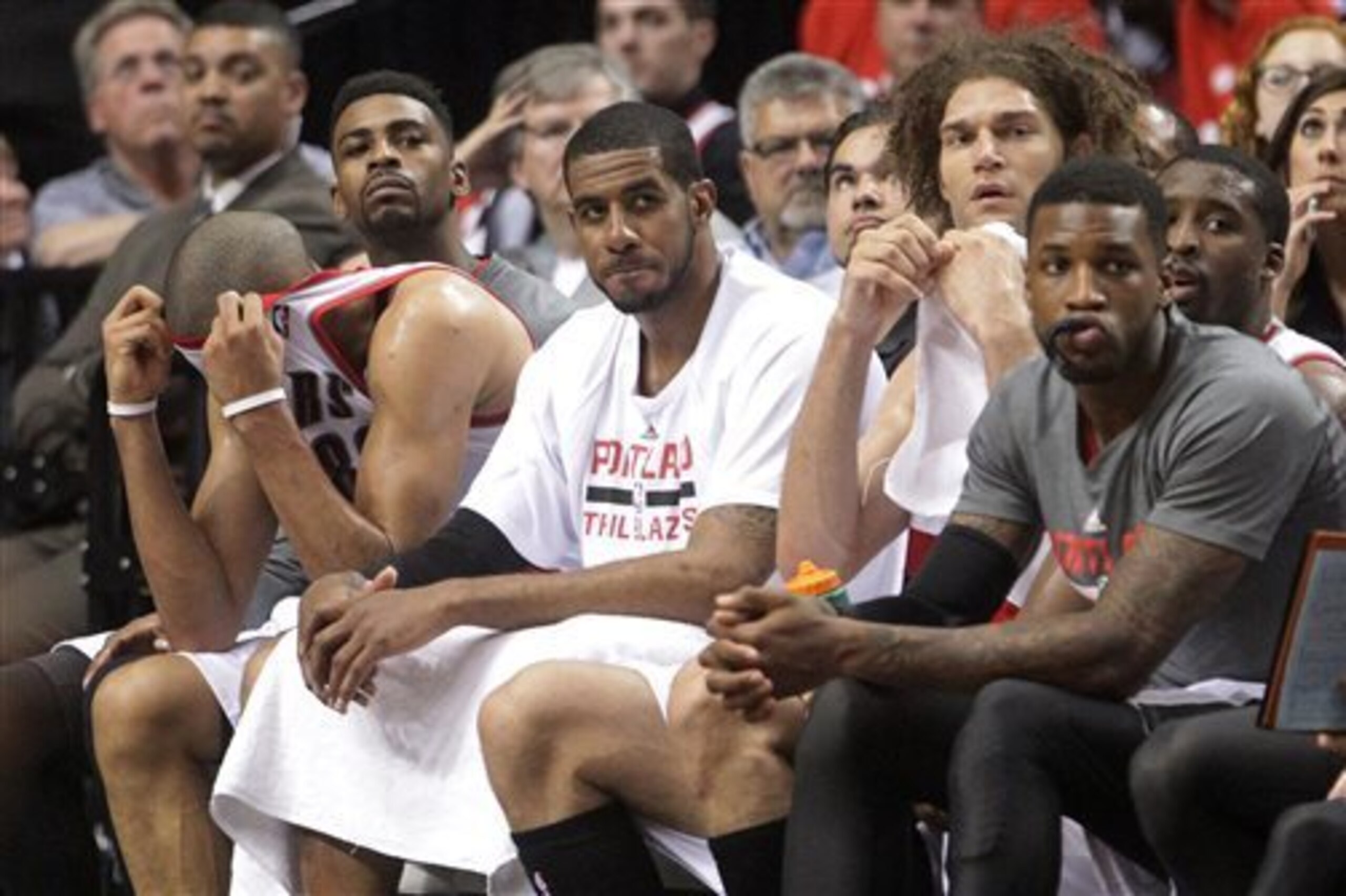
But the level of competition in the NBA and the summer league is extremely different, so it's important to take Robinson's play with a grain of salt. Basically, it's encouraging, but we shouldn't expect anything overwhelming too soon.
Robinson is a power forward, to be sure, but can slide over to play center should injuries occur. It won't be his primary position, though, as Kaman, Freeland and Leonard will back up Lopez at the 5.
And in that order.
Leonard's slow development can be expected to a certain extent, as he was a sophomore at Illinois when he was drafted. He's still just 22 years of age despite two professional NBA seasons, and big men have a tendency to develop late.
With Kaman on board, it'll relieve a ton of pressure on Leonard to become an instant contributor off the bench. An even lesser role in the rotation has the potential to stunt his growth, but it's the best thing for him at this point.
Freeland will do nicely as a secondary reserve, coming in to do the dirty work and close quarters strong after Kaman and Robinson have played.
As a whole, the center position for the Blazers is much stronger compared to last season. The only thing that has changed is the addition of Kaman, but it already looks potent with a depth chart of Lopez, Kaman, Freeland and Leonard.
Respect is due to the latter two for their contributions, but both will now be in roles where their services are matched appropriately. Neither will be tested to perform outside their capabilities on a nightly basis and instead can rest easy and hopefully improve with shorter, more efficient bursts of playing time.
It's more than likely the rotation will change on a game-to-game basis, which will be subject to the opposition, as well.
If Portland faces a frontcourt-heavy squad like the Chicago Bulls, the scale would tip in favor of Lopez and Freeland with defense to limit the energetic play of Joakim Noah. When the Blazers go against an uptempo team that thrives of swift offense, Kaman and Robinson can get in on the action and put their skills to good use.
Compared to last season, Portland now has a respectable frontcourt that the coaching staff can rely on. It only needed a mild tweak, which the Blazers found in Kaman. His mid-level deal will see him play plenty of minutes, as it'd be nonsensical to sign him for such an amount without a cemented role in mind.
It'll mean Robinson, Freeland and Leonard will battle for minutes, while keeping in mind that each player offers something different depending on the opposing team. Robinson's athleticism is polar opposite to Freeland's low-to-the-ground play, but both will be useful traits for the Blazers at different points of the season.
In any case, Portland can be much more confident in its frontcourt rotation and the team that is put forward to compete. The Blazers made great progress but will absolutely look to go further and deeper in the playoffs.
Having a more complete roster is essential in doing so, and that's something Portland now has with strong and fundamental depth at the center position.
Advanced stats courtesy of NBA.com unless otherwise noted.
.jpg?w=2560 "Mahomes Told Teammate to Leave Meeting")


.jpg?w=2560 "🚨 Week 8 AP Top 25 Poll")


.jpg?w=2560 "Updates from EVERY NFL Game 🏈")