You know it, I know it, and the rest of planet knows it: The 2014 FIBA World Cup is a two-team tournament in which America and Spain are basically just goofing around until they tangle, inevitably, in the final.
That was the consensus before the festivities kicked off last month, and the six games each team has played since only reaffirmed that sentiment. Team USA has trounced opponents, smoking foes by an average of 33.2 points per game in group play before casually edging out Mexico to advance to the quarterfinals.
Spain has been nearly as good, winning its group-play games by an average of 25.2 points. It handily dispatched Senegal by 33 to advance in its first elimination-round game.
Clearly, both squads are a cut above the rest in this World Cup. Perhaps a more specific breakdown is in order if we're to determine which team has an edge over the other.
We'll consult the numbers as we parse out some position-by-position analysis, but we will also turn an eye toward intangibles.
Hopefully, by the end, we'll finally figure out which team is the best.
Point Guard: Stephen Curry vs. Ricky Rubio
1 of 8
Advantage: America
Hey, we all like Ricky Rubio. He's a unique talent whose passing flair and underrated defense make him a highly enjoyable watch. He's dangerous, too, and he has been leading Spain's potent attack with 5.8 assists and a tournament-best 3.7 steals per game.
He is not, however, Stephen Curry.
Curry had been quiet until unleashing one of his patented perimeter punch outs against Mexico, firing six triples in a 20-point outburst that made everyone remember that the U.S., despite its slow start from distance, could do serious outside damage.
"In 2010, we did that," Curry said, per The Associated Press via ESPN.com. "Every game was fun, it was energetic, just enjoying the ride and I think now we're here in Barcelona and got our first medal game under our belt, we got the wheels going and excited to get back to work on Tuesday."
Curry has actually been somewhat hesitant at times during the World Cup, perhaps recognizing the need to keep the ball moving on a team full of superstars. But the fact remains that no shot he takes can possibly be a bad one.
Rubio is a very good player who has capably captained an excellent offense.
Curry is the best shooter alive and probably one of the top-10 players on the planet. As good as Rubio is, that's a significant difference.
Shooting Guard: Kyrie Irving vs. Juan Carlos Navarro
2 of 8
Advantage: America
Full disclosure: Kyrie Irving has been a bit of a mixed bag so far.
For every incredible wrong-footed, reverse, by-what-sorcery-is-this-possible finish inside, he's missed a wide-open shooter in transition.
For every staggering display of ball-handling, he's ignored cutters who would have finished easily in the lane.
It's equal parts annoying and awe inspiring to watch a player with such obvious talents fail to make the easy plays. Still, Irving is probably a better player than Spain shooting guard Juan Carlos Navarro. I mean, objectively, of course Irving is better, right? He's an NBA All-Star who scores at will.
The thing is, context is important.
Navarro fits seamlessly into Spain's system as an aggressive, three-point bombing guard. He plays in the flow of the offense, and though he can be too trigger happy at times, he also makes sure to get teammates involved.
Irving looks more like a playground star who passes as an afterthought. A great, often unstoppable playground star—but a playground star nonetheless.
Viewed as part of a team, Navarro is very nearly as valuable as Irving. In the end, though, Irving's raw talent gives him a narrow advantage.
Small Forward: James Harden vs. Rudy Fernandez
3 of 8
Advantage: America
The temptation here is to vote for Rudy Fernandez, but that's mostly because he musically encouraged us to do that six years ago. It's also because he's averaging nine points per game while hitting 50 percent of his shots from the field and 50 percent from beyond the arc. But it's mostly the first thing.
James Harden doesn't have a catchy tune to encourage voters, and he hasn't hit half of his triples, but he's done all of the other things that make him such an effective talent.
The Beard has bulled his way to the foul line a whopping 5.2 times per game, more than any two players on Team USA's roster combined. He's hit nearly 55 percent of his shots in the tournament and led the U.S. with four assists per contest.
As he's wont to do, Harden has also held the ball on offense and inadvertently frozen out some of the team's other offensive threats. On a squad with so much talent all over the floor, stopping the rock on the perimeter to survey the scene isn't an ideal tactic.
Harden remains a potent weapon, though, and if we completely ignore defense (Fernandez is no great stopper either), he gives Team USA an edge at the three.



Power Forward: Kenneth Faried vs. Pau Gasol
4 of 8
Advantage: Spain
If you don't want to read a few unabashedly fanboy-esque paragraphs about Pau Gasol and his general awesomeness, feel free to skip ahead.
Still here? Cool. Commence gush fest:
Pau Gasol leads the World Cup in two key categories: pleasant tweets and potentially league-altering career resurgences.
As evidence for that first category, consider this delightful missive from Pau after Spain handily dispatched Senegal to open the round of 16: "Today we have the day off to recover physically from the 6 games in 8 days that we've just played. Have a great Sunday my friends!!"
What a guy.
And as for that second thing, Gasol dominated group play with an average of 21.2 points on 61.9 percent shooting. That production made his 17 points and five rebounds on 8-of-10 shooting in the 89-56 elimination win over Senegal wholly unsurprising. Overall, his average of 20.5 points per game tops any player remaining in the tournament.
More than the numbers, Gasol looks like a different player. Actually, maybe different isn't the right word. He looks like the same player—just 10 years younger.
Gasol is getting up and down the floor with a pain-free speed we simply haven't seen since his Memphis Grizzlies days. He's moving the ball brilliantly, scoring inside and showing off three-point range. It's as though his liberation from the Los Angeles Lakers has unlocked some kind of new (old) level in his game.
More than anything else, Gasol's remarkable play gives Spain a legitimate chance to defeat Team USA in the teams' inevitable final matchup.
Kenneth Faried has averaged 12.5 points per game on 74.5 percent shooting and been a major surprise for the U.S., dominating the glass and probably parlaying this summer's performance into a near-max deal from the Denver Nuggets.
But he hasn't been better than Gasol.
You can trust me on that because I think it's now pretty clear I can be objective about the wonderful, indomitable, spectacular Pau. In the battle of regular Manimal vs. Renaissance Manimal, the latter wins handily.
Center: Anthony Davis vs. Marc Gasol
5 of 8Advantage: America
It physically pains me to deny Marc Gasol the win here, as he's everything that's right about basketball (I'm starting to wonder if maybe I like the Gasols too much).
He dominates the lane on defense without being athletic, scores efficiently without a go-to move and makes everyone around him better by seeking out cutters and delivering the ball on time. If this were a question about which player on either team would be most fun to compete with, Gasol would be the landslide victor.
But Anthony Davis is not a human being—or at least not a version of one we've seen before.
He is absurdly smooth on offense, scoring on the pick and roll, offensive glass and with a scary one-dribble pull-up that seems patently unfair. On D, he's a viper, striking with unimaginable quickness and sending the U.S. on its way with controlled blocks.
Oh, and there have been highlights. "I like how you can pretty much throw the ball into the stands and get an alley oop assist to Anthony Davis," Ethan Strauss of ESPN.com tweeted.
Credit Team USA assistant Tom Thibodeau for implementing a system in which Davis now drops to the foul line on pick-and-roll coverage. There, he can use his length to recover and bother jump-shooters while also deterring any foolhardy attempts to challenge him at the rim.
There is simply nobody like him, and unless you've been hibernating this summer (which is the opposite of how you're supposed to do it), you're aware of Davis' ascent.
Frankly, the battle for tournament MVP is between him and Pau.
There's no shame in being bested by AD.
Bench
6 of 8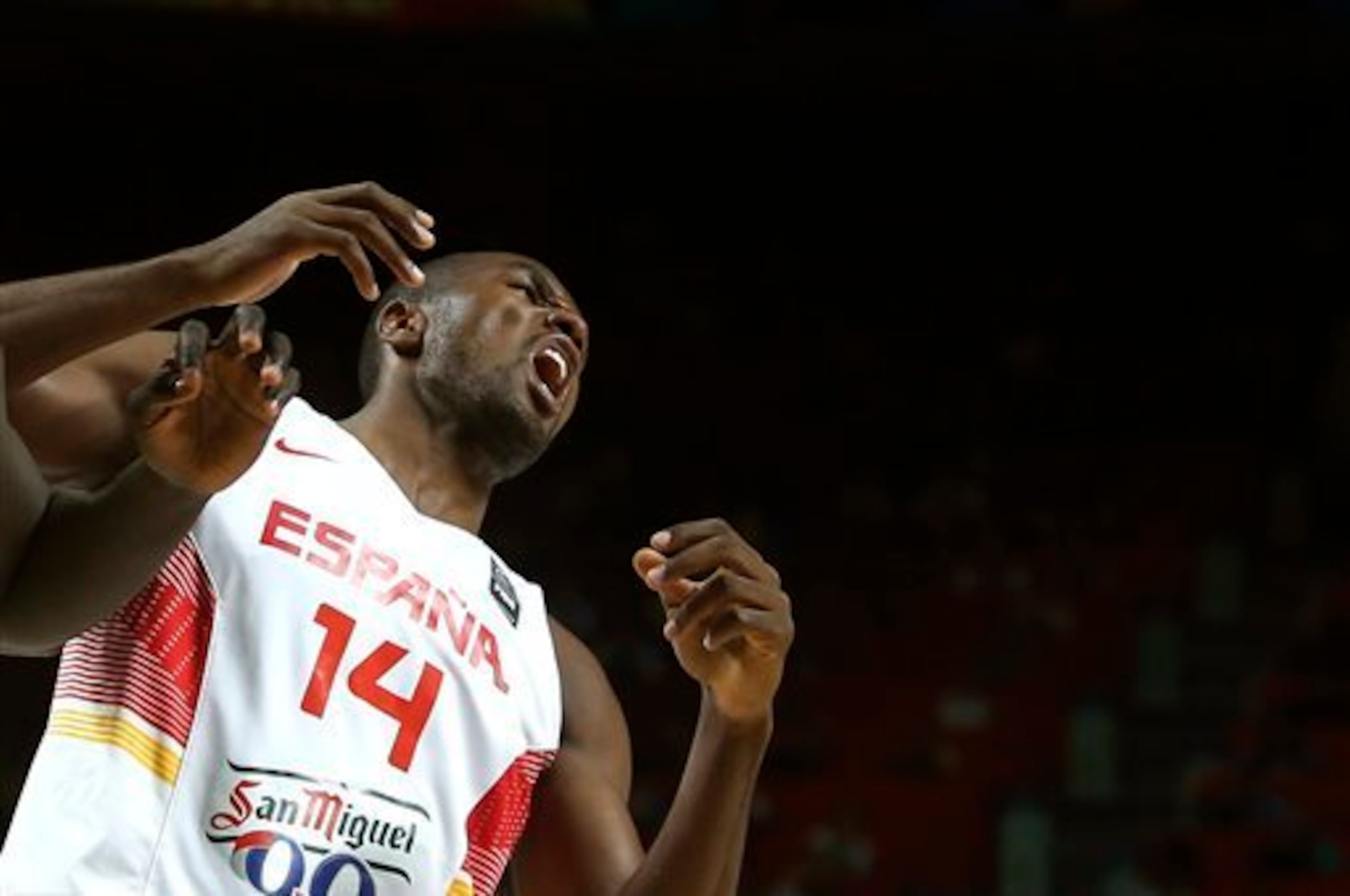
Advantage: America
See that guy? That's Serge Ibaka, one of maybe four or five guys in the NBA who can knock down deep jumpers and protect the rim at an elite level.
He is routinely in the conversation for Defensive Player of the Year in the best league in the world. He is an integral part of a team that has made the NBA Finals. He is young, still getting better and could help his OKC win a championship or two in the coming years.
He comes off the bench for Spain.
The bench!
That says plenty about Spain's depth, and it also points to the major advantage it has against the U.S.: its frontcourt size and experience.
Yes, Team USA has loads of talent to call upon in reserve. Derrick Rose has an MVP in his trophy case and Klay Thompson is rapidly becoming the best three-and-D specialist in the NBA. DeMarcus Cousins and Rudy Gay have both also performed well.
Spain can call on Jose Calderon and Victor Claver, but the overall depth of Team USA's bench is superior. As great as Ibaka is, the overall edge here has to go to Team USA. But it's a narrow advantage, and one that we could see shrink even more as Spain's more battle-tested reserves hunker down.
Intangibles
7 of 8
Advantage: Push
We can't just render judgment based on the rosters not viewed as individual pieces.
This is a team tournament, and how those pieces fit together and manage their collective strengths and weaknesses is important. Of course, trying to measure those overall qualities is when things get exceptionally complicated.
Team USA has vastly superior athleticism, but Spain possesses better chemistry and a more fluid style.
How you weigh those tough-to-measure attributes against one another probably says a lot about how you view basketball, and it's hard to say which will ultimately matter most when these two teams clash.
Remember, Spain wants to run, too. It has better passers and an unselfish style that the U.S. simply hasn't seen in this tournament. At the same time, Spain has to know it can't outrun the U.S., no matter how hard it might be tempted to try.
Let's leave it here: America can overrun Spain if it relies on its talent to force turnovers and get out in transition. Having an advantage in four of the starting positions would seem to make that easy enough. But Spain's core has played together for nearly a decade, and it won't easily succumb to pressure or nerves against an imposing opponent.
This is a toss-up.
The Verdict
8 of 8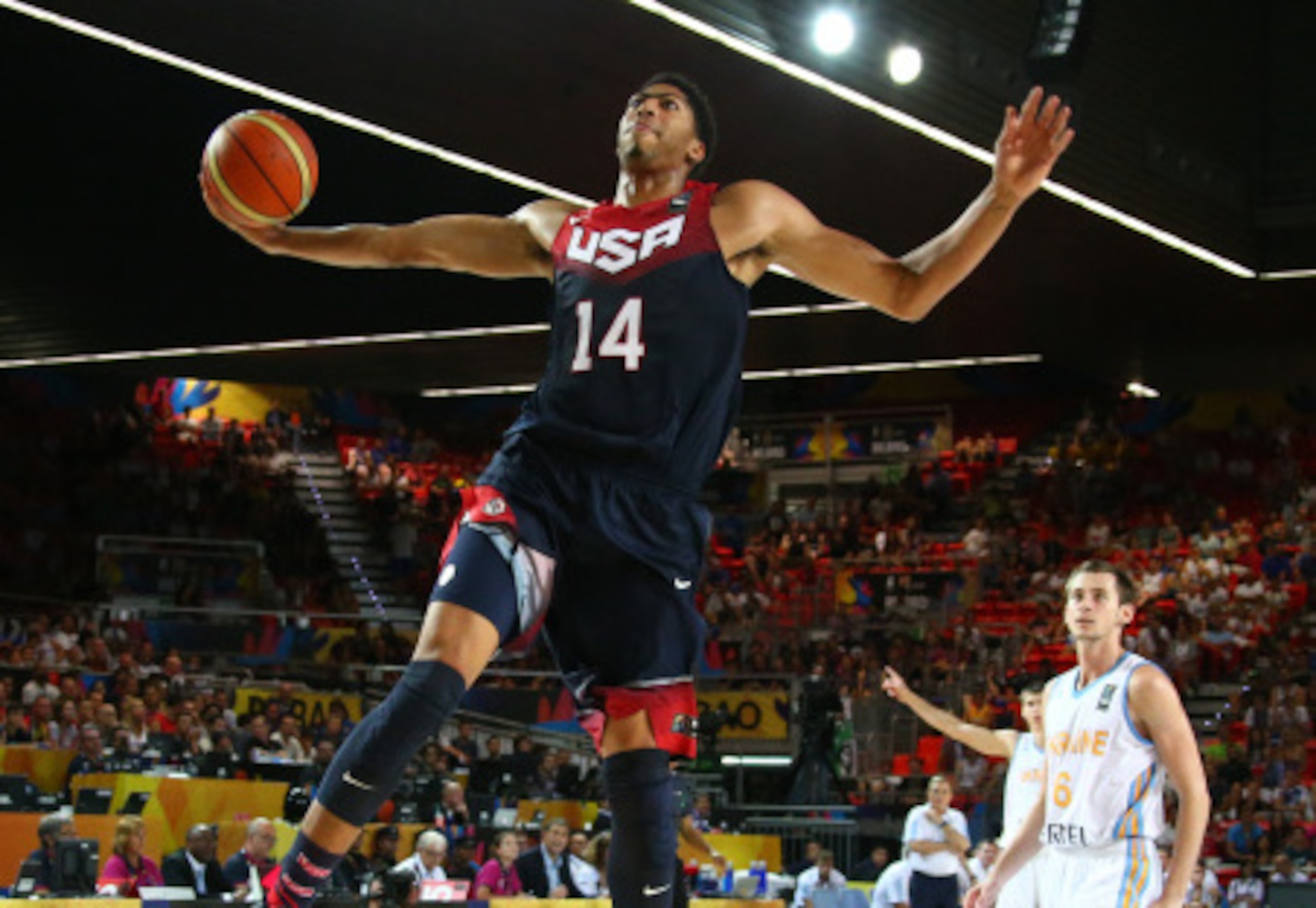
Advantage: America
Spain is a joy to watch, and if you removed the jerseys, patriotism and familiarity with American NBA players, my bet is that most objective fans would actually be rooting for the Spaniards to win.
That could still very easily happen, by the way.
Team USA has several key advantages, and if forced to choose (which I guess I am), I'd say America would win a matchup with Spain six or seven times out of 10. With that in mind, nobody should be surprised if Spain takes the gold.

.jpg?w=2560 "Rodgers Iced Out on Plane 💎")

.jpg?w=2560 "Raiders Could Start Mendoza")
.jpg?w=2560 "Packers Safety Slams Refs 🤬")
.jpg?w=2560 "🚨 Week 8 AP Top 25 Poll")