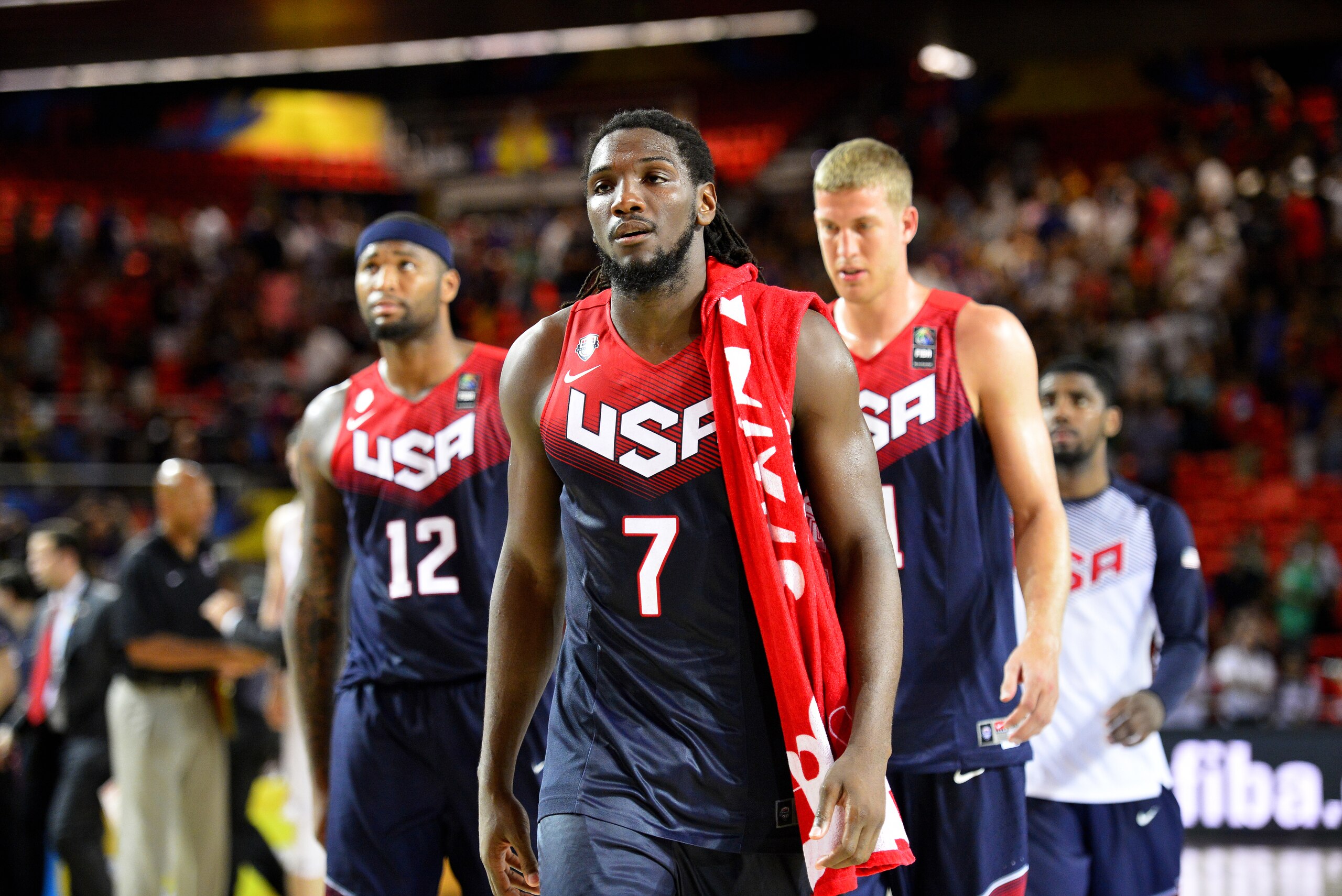

10 NBA Players Opening Eyes at 2014 FIBA World Cup
For most players, participating in the FIBA Basketball World Cup is about teaming with one’s countrymen on basketball’s biggest international stage and the pride and patriotism wrought from competing against the world’s best.
But rest assured, however deeply imbedded in the mind’s recesses, many harbor something of a secondary motivations: being noticed.
Authoring a breakout performance at FIBA can alter the trajectory of one’s career, serving as either a launching pad to bigger and better things, or as a reminder to everyone there’s still plenty of hardwood fuel left in the tank.
With that, let’s take a look at 10 players—some of them household names, some of poised to pop from the shadows—who’ve made their FIBA experience as much about opening eyes as raising a flag.
For all you Renaldo Balkman fans out there, we have some bad news. He didn’t quite make the cut.
Andray Blatche (C, Philippines)
1 of 10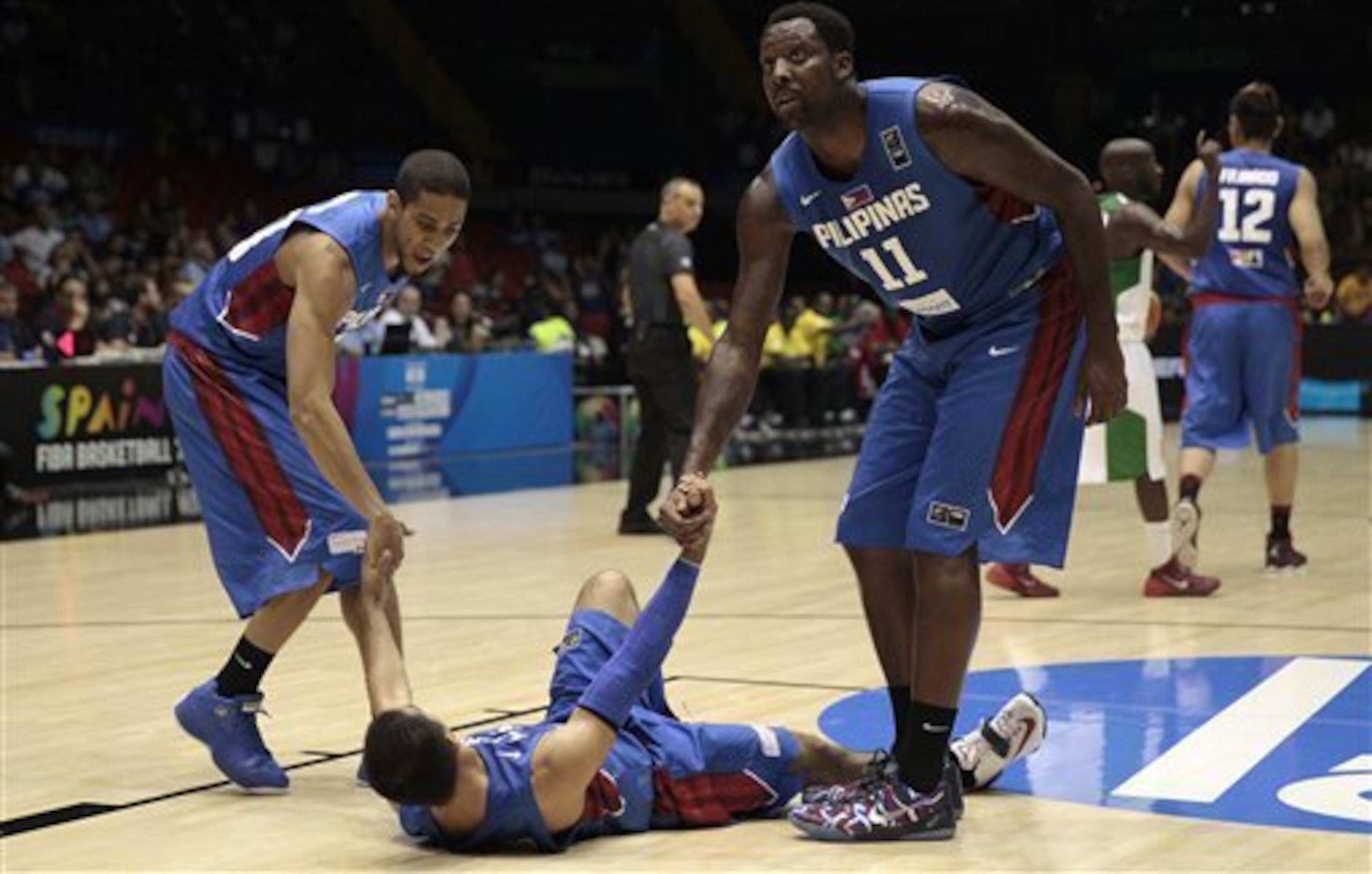
One thing’s for sure: Andray Blatche wins the award for most unlikely pairing of NBA player and country with which said player probably wasn’t too familiar until a few months ago.
Blatche, who remains without an NBA contract following a productive two-year stint with the Brooklyn Nets, was absolutely dynamite leading the Philippines, finishing the group stage with averages of 21.2 points and 13.8 rebounds (tops for the tournament) on a crisp 50 percent shooting.
Off-court baggage aside, Philippines head coach Chot Reyes saw in the hyper-skilled Blatch reason enough to take a gamble. From Rafe Bartholomew’s stellar profile of Blatche at Grantland:
“We said, we’ll take a risk,” Reyes said. “We may not be sure about the other parts of his personality, but at least we’re sure about his athletic ability. … In my mind, we could assimilate anyone as long as that person is open. Working with imports, bringing them from the cold into a team — we have a lot of experience there.”
Unfortunately, Blatche and company only mustered a single win, failing to qualify for the tournament’s knockout round. Still, considering his employment limbo, Blatche could’ve done a lot worse than allying himself with one of the most certifiably basketball-crazy countries in the world. Even when he’s 35 and out of the NBA entirely, Blatche will doubtlessly have a second hardwood home to call his own.
The good news: Blatche’s stint has been so productive (and incident free) that NBA teams are finally starting to remember just how talented the 28-year-old big really is, starting with the Miami Heat.
Bojan Bogdanovic (G/F, Croatia)
2 of 10Not to be confused with Serbian guard Bogdan Bogdanovic, Bojan Bogdanovic has showed everyone why he’s considered one of the international game’s deadliest, most versatile swingmen.
Bogdanovic, originally selected with the 31st overall pick in the 2011 draft, will begin his NBA journey this fall as a member of the Brooklyn Nets. And if the Croatian sharpshooter’s FIBA play is any kind of harbinger—20.8 points, 3.8 rebounds and 1.4 assists on 48 percent shooting—the Nets can look forward to a lot of nifty scoring coming off the bench.
After authoring one of the tournament's more incendiary round-robbin resumes, Bojan will look to get Croatia off on the right foot when it takes on France in the first round of the tournament’s knockout round on Saturday.
Anthony Davis (C, U.S.A.)
3 of 10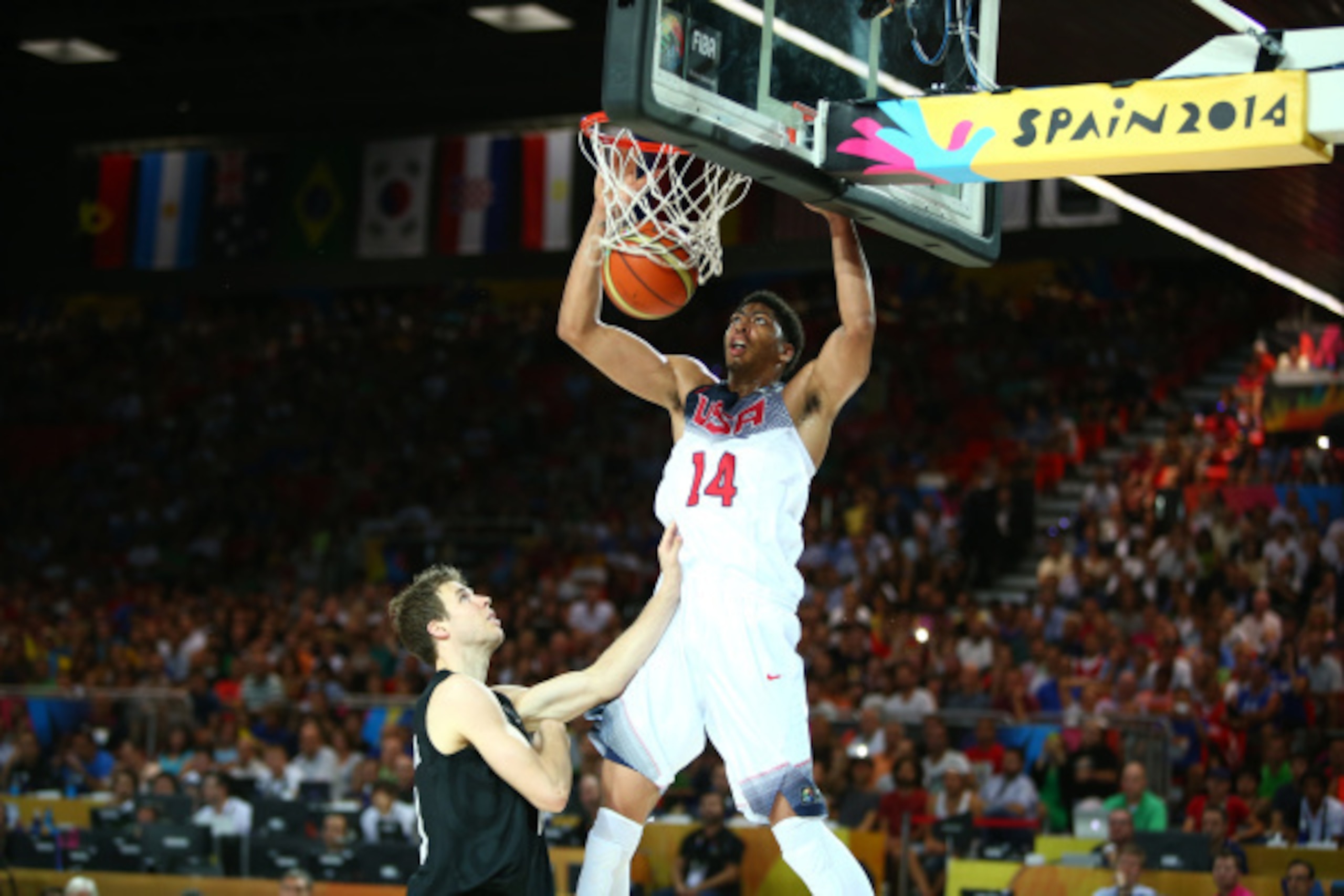
I know, I know. Two whole slides in and still no mention of Anthony Davis. Well, consider that transgression rectified.
On a certain level, including Davis on this list is a bit of a stretch, mostly because everyone and their father knew the New Orleans Pelicans wunderkind was destined to make FIBA his own personal international coming-out party. However, the last thing we want to do is upset our new unibrowed overlord. So here he is.
At first glance, Davis’ numbers don’t exactly pop off the page: 15.8 points, 6.4 rebounds and 1.8 blocked shots in a little over 21 minutes per contest. But it’s how efficiently Davis is doing his damage—his 62.7 percent clip is second only to teammate Kenneth Faried—that’s made his run so impressive.
Pair that with Davis’ unparalleled defensive presence, typified by his ability to cover essentially any of the five positions at a moment’s notice, you get a portrait of a basketball artist who won’t seem like a very young man for long.

Hamed Haddadi (C, Iran)
4 of 10
Let’s be clear: Iran, whose only win came at the expense of an equally woeful Egypt, is not a good team. But that didn’t stop Hamed Haddadi from serving serious notice that, contrary to the game’s positional trends, there’s still room in this sport for skilled 7’2” centers.
After suiting up sparingly for the Memphis Grizzlies and Phoenix Suns between 2009 and 2013, Haddadi returned to his native Iran, where he now serves as one of the key cogs of Mahram Tehran of the Iranian Super League. During his team’s five-game FIBA run, Haddadi was nothing short of stellar, compiling a slew of double-doubles en route to averages of 18.8 points and 11.4 rebounds.
At 29, Haddadi is far from washed up. And while it’s unclear whether his FIBA play will be quite enough to entice other teams to seek out his services, the multifaceted center has certainly stated his case for getting a second look—and not just from the NBA either.
Omer Asik (C, Turkey)
5 of 10
Unlike Haddadi, Omer Asik isn’t falling out of the NBA ranks any time soon. Although after a season spent riding the pine behind Dwight Howard, you could forgive those who thought he might have already.
As the newest member of the Pelicans, Asik is poised to recapture his former promise, while allowing Anthony Davis the kind of free range of motion that could make New Orleans one of the sneaky-best defensive teams in the league.
While Asik’s FIBA scoring (10.8 points) doesn’t exactly suggest Wilt Chamberlain incarnate, his rebounding (9.2 per) and defensive presence have been one of the few constants on a Turkey team that hasn’t exactly lived up to its world No. 7-ranked billing.
At the very least, Asik’s impressive play just goes to show that, sometimes, making an impact in the NBA is less about one’s ability and more about sheer timing and circumstance—both of which stand to be squarely in Asik’s favor with the Pelicans.
Dario Saric (F, Croatia)
6 of 10
Selected by the Philadelphia 76ers with the 11th overall pick in June’s draft, Dario Saric hopes to be the latest in a long line of Croatian players to make a productive NBA leap. That Saric is a mere 20 years old, and thus might not even be coming stateside for a few more seasons, only adds to the intrigue.
Much like Croatian legend Tony Kukoc, Saric is the definition of a do-it-all forward—a 6’10” hyper-skilled technician renowned the Euroleague over for his tremendous playmaking abilities. Saric’s FIBA numbers (13.2 points, 6.6 rebounds and 2.8 assists on 52 percent shooting) have only reinforced that legend.
Now comes Saric’s toughest test yet: getting by an undermanned France team and securing a date with host Spain in the knockout stage’s second round. Should Croatia pull off an upset for the ages, you’d better believe Saric’s name would immediately be on the breath of basketball fans the world over.
Gorgui Dieng (C, Senegal)
7 of 10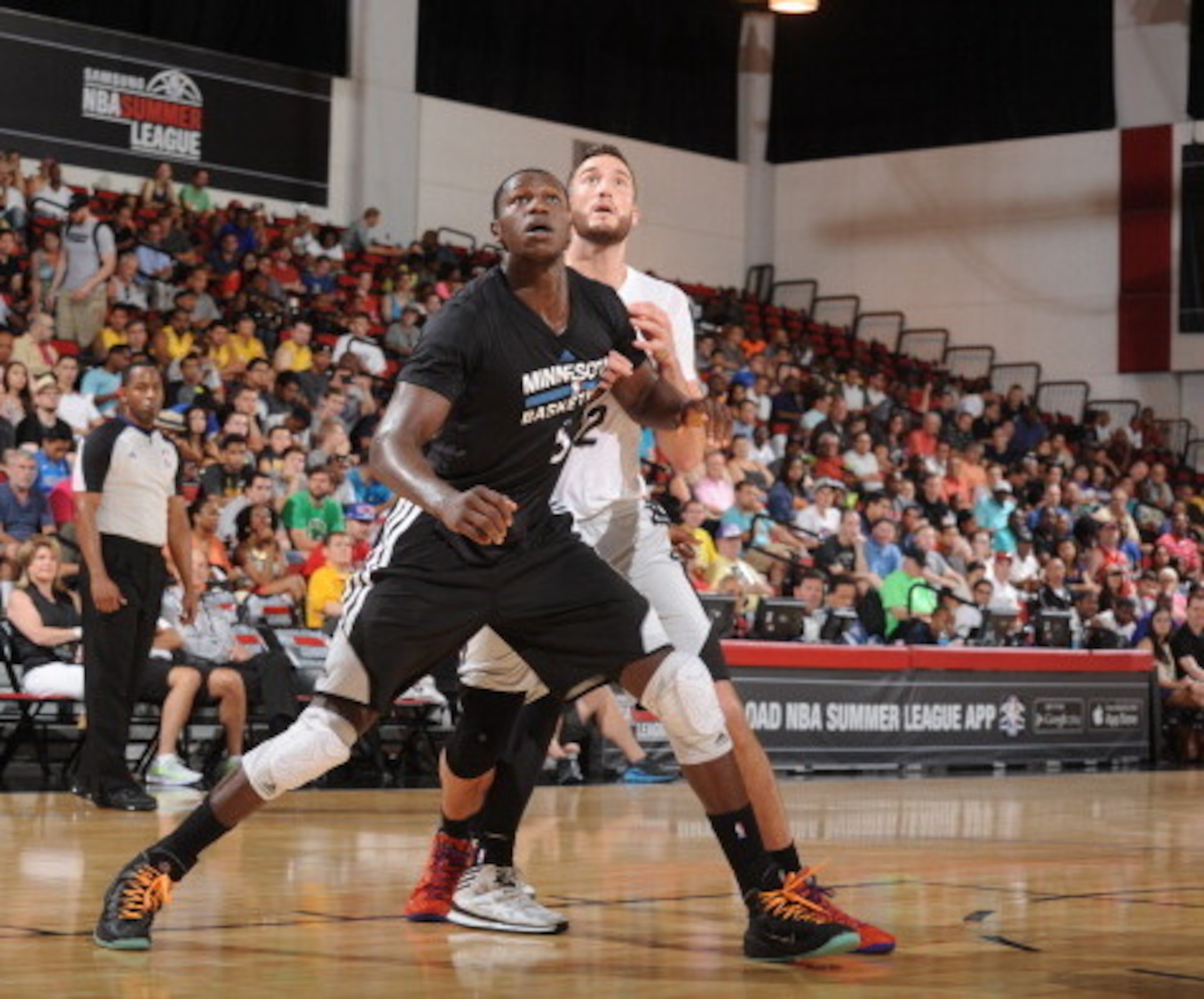
During his time under Rick Pitino at the University of Louisville, Gorgui Dieng—for all his natural talent and defensive gifts—was very much considered a raw product at the other end of the floor.
What a surprise, then, when Dieng emerged as knockout-round-bound Senegal’s unquestioned two-way cornerstone, finishing the group stage with clips of 18 points, 11.4 rebounds and 1.4 blocks.
Dieng emerged as something of a fringe surprise as a member of the Minnesota Timberwolves a season ago—a per-36 cult hero who stands to get a lot more burn now that Kevin Love has decided to take his talents to the Cuyahoga River. And while Flip Saunders will have to be creative in how he uses Dieng and fellow center Nikola Pekovic in tandem, the former’s FIBA showing is proving that a pretty nice problem to have.
If you ask Bleacher Report’s Zach Buckley, however, Saunders might soon have a tough decision on his hands:
"Minnesota Timberwolves sophomore-to-be Gorgui Dieng needs more minutes, and they could come at the expense of incumbent starting center Nikola Pekovic. Rather than burying one of the two on the bench, Wolves president-coach Flip Saunders might be forced to see what the market would bear for a productive big man.
Saunders has been in this position before, although under entirely different circumstances. This isn't about caving to a superstar's demands, as was the case in the franchise-altering Kevin Love trade Saunders orchestrated earlier this offseason.
"
The 6’11” center has a long way to go before hitting Gasol-brothers territory. But with Senegal poised to take on Spain in the first game of the elimination round, Dieng will have arguably his biggest stage yet from which to serve notice he’s no longer just a paint-protecting savant.
Jose Barea (PG, Puerto Rico)
8 of 10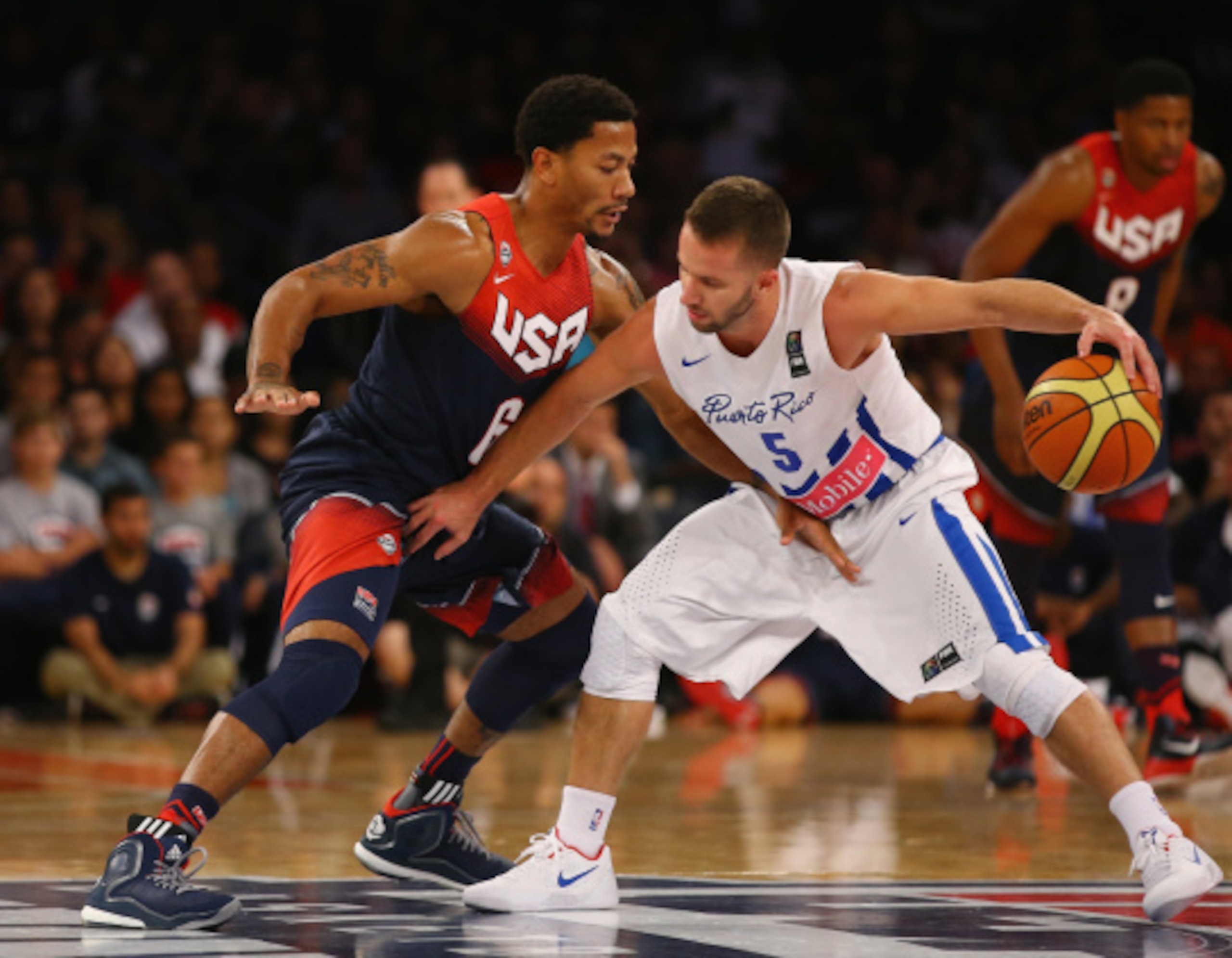
Jose Barea (J.J. to many of his fans) is listed on the FIBA website as standing 5’11” in height. If that were the case, Hammed Haddadi should be listed at 11’3”. Which makes Barea’s transcendent round-robbin play—his 22 points per game just edged out Argentina’s Luis Scola (21.6) as tops in the tournament—all the more impressive.
Sadly, it wasn’t enough to propel Puerto Rico into the knockout round. It was, however, enough to remind everyone just how explosive the 30-year-old basketball Lilliputian can be. Anyone who needs a refresher, go ahead and check out some of the highlights from the 2011 Finals, where the Miami Heat had zero answers for Barea during the Dallas Mavericks' six-game series win.
Barea hasn’t been quite the same since joining the Minnesota Timberwolves. But as many a past player has proved, there’s no better basketball launching pad than turning in a stellar international performance.
Pau Gasol (F/C, Spain)
9 of 10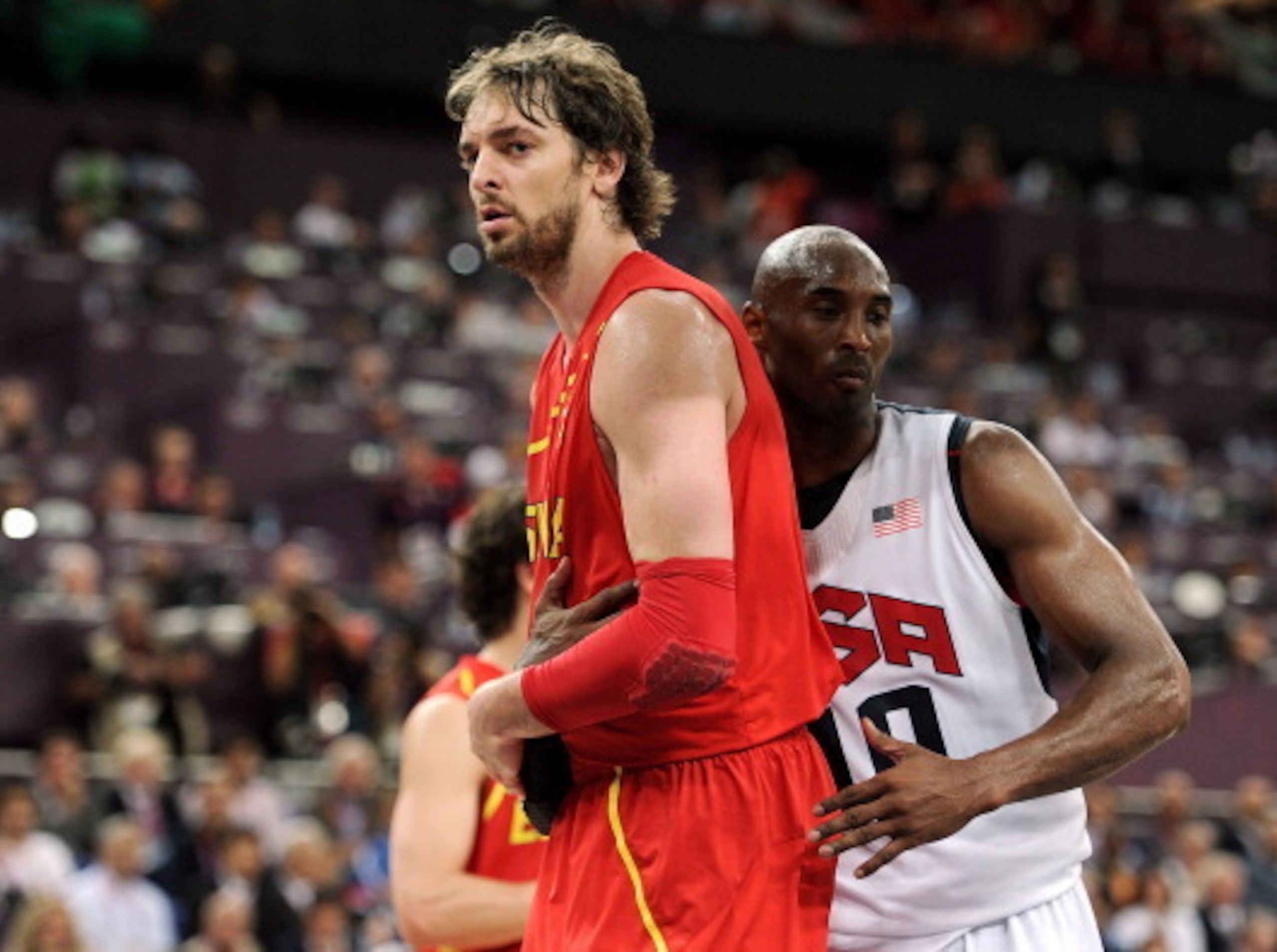
Yeah, we know: How can someone with as many notches on his NBA belt as Pau Gasol possibly make this list? One simple reason: Even at 34 years old, this guy has plenty left in the tank—something over which Chicago Bulls fans in particular are no doubt rejoicing.
That savvy Spaniard has been downright monstrous in his home country’s undefeated run, registering averages of 21.2 points (including a 33-point outburst in Spain's opening game), 5.6 rebounds and 1.6 assists on a cartoonish 62 percent shooting from the floor, including a silky 38 percent from distance.
With Derrick Rose looking a bit rustier than many had hoped, Gasol’s spectacular play has to be reassuring to Chicago’s fanbase, shell-shocked as they’ve been from losing their cornerstone floor general for the better part of the past two seasons. With Gasol in tow, Rose won’t have nearly the pressure to be the team’s first, second and third options every night.
If and when Spain and Team USA meet in the FIBA finals, expect Gasol—steaming, no doubt, from two straight Olympics defeats—to come out with fists-a-flying.
Kenneth Faried (PF, U.S.A.)
10 of 10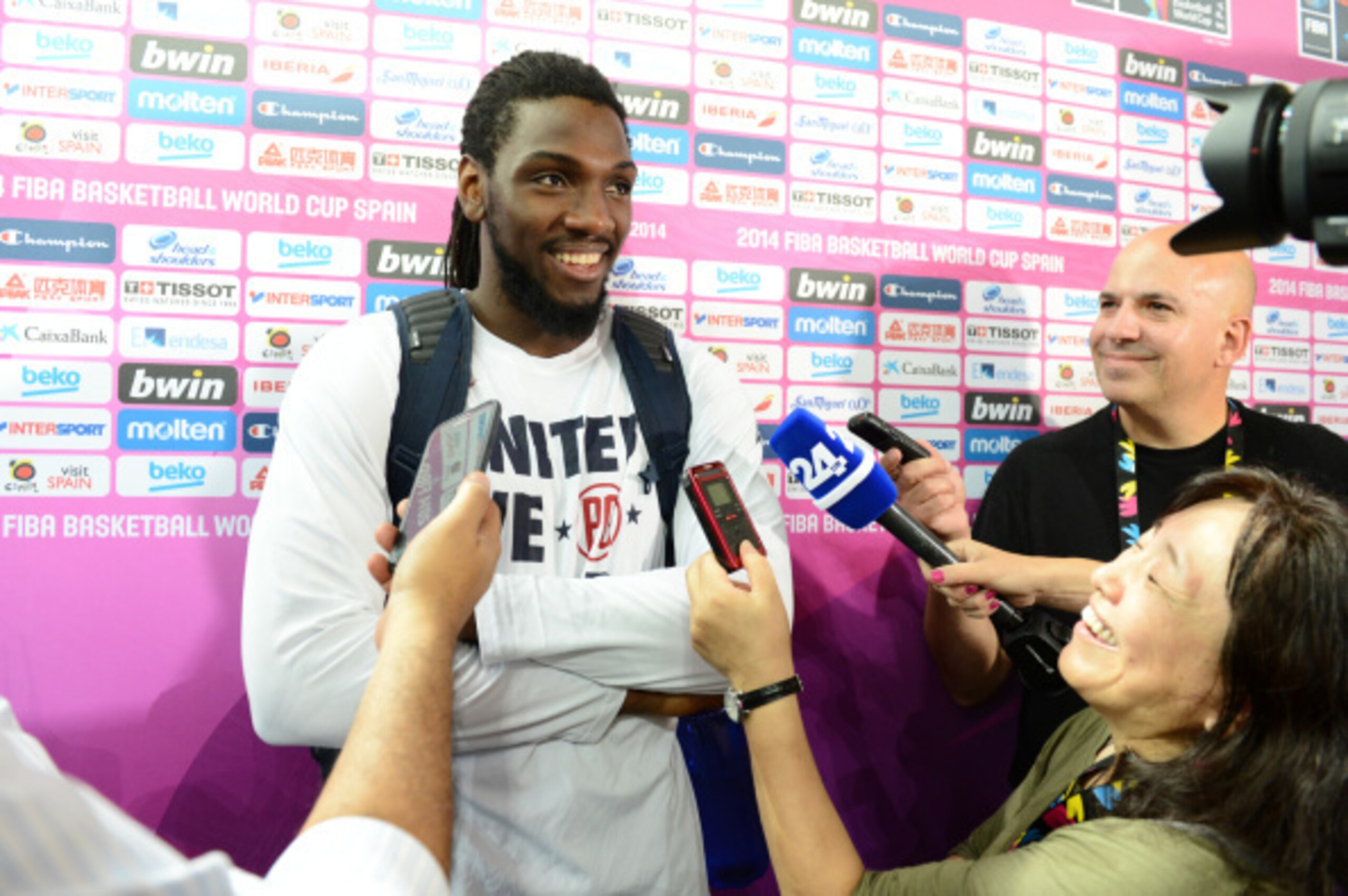
Perhaps no one on this list has used his FIBA play for more immediately powerful leverage than Kenneth Faried, Team USA’s high-energy power forward and one of the unquestioned all-around standouts of the tournament.
One month ago, it wasn’t even a certainty that Faried—for all his energy, hustle and rebounding, not exactly the most polished of products—would even make the team.
To say Faried’s taken heed of that fact would be an understatement: Behind averages of 13.8 points, 7.8 rebounds and a tournament-high 79 percent field-goal clip (that is not a typo), Faried has emerged as one of Mike Krzyzewski’s most indispensable cogs.
Not only does Faried’s athleticism make for a perfect defensive fit with Anthony Davis; his speed and hustle have also proved the perfect complement to Team USA’s heavy emphasis on turning defense into offense, with Faried often being the thunder-dunking beneficiary.
Just how good has Faried been? The Denver Nuggets are rushing to complete an extension to keep the high-octane forward for the long haul. Now that’s getting noticed.

.jpg?w=2560 "Mahomes Told Teammate to Leave Meeting")
.jpg?w=2560 "Rodgers Iced Out on Plane 💎")
.jpg?w=2560 "🚨 Week 8 AP Top 25 Poll")


.jpg?w=2560 "Lamar Being Out Shocked Ravens")
.jpg?w=2560 "Raiders Could Start Mendoza")