

NBA Draft 2014: Updated Big Board and Breakdown of Fastest-Rising Prospects
Rationality will, always and forever, be the best way to climb through the muck that is the NBA draft process and come out successful.
Then again, being rational is typically solid advice for all walks of life. Just because Wiz Khalifa has one hot song does not mean he's going to be spitting Nas-like bars all of the sudden. Just because your wildly unpredictable spouse finally settled down on some random Tuesday and bought you a gift does not mean that behavior should be expected going forward. And just because Yi Jianlian comes to your workout and looks like the second coming of Dirk Nowitzki does not mean he's actually Dirk Nowitzki.
TOP NEWS
Broadcaster sorry for false LeBron rumor
76ers HC Addresses Bron-Embiid Rumors
Buss Siblings File Response
Wiz Khalifa still makes lousy party music. Your spouse will probably fly off the handle 15 minutes after delivering the roses. Yi Jianlian stays...Yi Jianlian.
The sample we have at hand is always the most reasonable predictor of future action.
I highlight this because it often gets lost in the shuffle when assessing the predraft hubbub. When a player is "moving up draft boards," he is typically not rising from anonymity into the top 10; he's moving up within a pre-arranged tier. An overwhelming majority of teams and evaluators rank players within general tiers as a starting point, before then shuffling them around after watching them in person or getting a more nuanced look at game tape.
Case in point: A phrase like "lottery pick" can mean wildly different things. Right now, there are 19 players on my board who I feel can plausibly be taken within the lottery. There are only 14 picks in a lottery. That a player moves up or down within that hierarchy is neither a condemnation nor an admission of incorrectness.
It's merely a best possible outlook as we get more information at our disposal. With that in mind, let's check in with my latest Top 60 board and highlight some players who are moving up within their tiers.
| 1 | Joel Embiid | Kansas | Freshman | C |
| 2 | Andrew Wiggins | Kansas | Freshman | SF |
| 3 | Jabari Parker | Duke | Freshman | SF |
| 4 | Dante Exum | Australia | N/A | PG/SG |
| 5 | Julius Randle | Kentucky | Freshman | PF |
| 6 | Noah Vonleh | Indiana | Freshman | PF |
| 7 | Aaron Gordon | Arizona | Freshman | PF |
| 8 | Marcus Smart | Oklahoma State | Sophomore | PG |
| 9 | Nik Stauskas | Michigan | Sophomore | SG |
| 10 | Gary Harris | Michigan State | Sophomore | SG |
| 11 | Zach LaVine | UCLA | Freshman | PG/SG |
| 12 | Doug McDermott | Creighton | Senior | SF |
| 13 | Dario Saric | Croatia | N/A | PF |
| 14 | Adreian Payne | Michigan State | Senior | PF |
| 15 | Rodney Hood | Duke | Sophomore | SF |
| 16 | James Young | Kentucky | Freshman | SF |
| 17 | Tyler Ennis | Syracuse | Freshman | PG |
| 18 | Elfrid Payton | Louisiana-Lafayette | Junior | PG |
| 19 | Jusuf Nurkic | Bosnia | N/A | C |
| 20 | Kyle Anderson | UCLA | Sophomore | SF |
| 21 | Clint Capela | Switzerland | N/A | PF |
| 22 | P.J. Hairston | North Carolina | Junior | SG |
| 23 | Jerami Grant | Syracuse | Sophomore | SF |
| 24 | T.J. Warren | North Carolina State | Sophomore | SF |
| 25 | Cleanthony Early | Wichita State | Senior | SF |
| 26 | Glenn Robinson III | Michigan | Sophomore | SF |
| 27 | Shabazz Napier | Connecticut | Senior | PG |
| 28 | Jarnell Stokes | Tennessee | Junior | PF |
| 29 | C.J. Wilcox | Washington | Senior | SG |
| 20 | Spencer Dinwiddie | Colorado | Junior | SG |
| 31 | Kristaps Porzingis | Latvia | N/A | PF/C |
| 32 | K.J. McDaniels | Clemson | Junior | SF |
| 33 | Jordan Adams | UCLA | Sophomore | SG |
| 34 | Mitch McGary | Michigan | Sophomore | PF/C |
| 35 | Jahii Carson | Arizona State | Sophomore | PG |
| 36 | DeAndre Daniels | Connecticut | Junior | SF |
| 37 | Vasilije Micic | Serbia | N/A | PG |
| 38 | Bogdan Bogdanovic | Serbia | N/A | SG |
| 39 | Jordan Clarkson | Missouri | Junior | PG/SG |
| 40 | Patric Young | Florida | Senior | PF/C |
| 41 | Jabari Brown | Missouri | Junior | SG |
| 42 | Deonte Burton | Nevada | Senior | PG |
| 43 | Isaiah Austin | Baylor | Sophomore | PF/C |
| 44 | Nick Johnson | Arizona | Junior | SG |
| 45 | Joe Harris | Virginia | Senior | SG |
| 46 | Dwight Powell | Stanford | Senior | PF |
| 47 | Semaj Christon | Xavier | Sophomore | PG |
| 48 | Russ Smith | Louisville | Senior | PG |
| 49 | Thanasis Antetokounmpo | Greece | N/A | SG/SF |
| 50 | Lamar Patterson | Pittsburgh | Senior | SG |
| 51 | Artem Klimenko | Russia | N/A | C |
| 52 | Jordan McRae | Tennessee | Senior | SG |
| 53 | Roy Devyn Marble | Iowa | Senior | SF |
| 54 | DeAndre Kane | Iowa State | Senior | PG |
| 55 | Alec Brown | Wisconsin-Green Bay | Senior | C |
| 56 | Walter Tavares | Cape Verde | N/A | C |
| 57 | James Michael McAdoo | North Carolina | Junior | PF |
| 58 | LaQuinton Ross | Ohio State | Junior | SF |
| 59 | Johnny O'Bryant | LSU | Junior | PF |
| 60 | Damien Inglis | France | N/A | SF |
On the Rise
Elfrid Payton (PG, Louisiana-Lafayette)
Payton is a guy I'm still pumping the brakes on—at least a little bit. ESPN's Chad Ford leapfrogged Payton over Syracuse's Tyler Ennis and made him his No. 13 overall prospect on his latest big board. That's a big show of faith for this year's Damian Lillard All-Star, a (totally fake) award given to the mid-major conference player who convinces scouts he's a lottery pick.
Worked out well for Lillard. Not so much (at least through one year) for 2012 recipient C.J. McCollum.
But while Lillard and McCollum rose up draft boards because of their elite scoring prowess, Payton is an entirely different prospect. The Louisiana-Lafayette product is moving up on the back of his elite athletic profile.
Listed at 6'4" and 185 pounds, Payton has a lightning-quick first step and projects as a defensive stopper due to his length. Opposing point guards are going to have fits dealing with his 6'8" wingspan, and that size makes him big enough to defend both guard spots.
Louisiana-Lafayette was a poor defensive team last season, and Payton was no patron saint of discipline in executing team defense concepts. But, per Synergy Sports, players made just 26.1 percent of their shots against Payton in isolation, typically the best indicator of one-on-one defense. He also graded out well coming off screens in Synergy's measuring system.
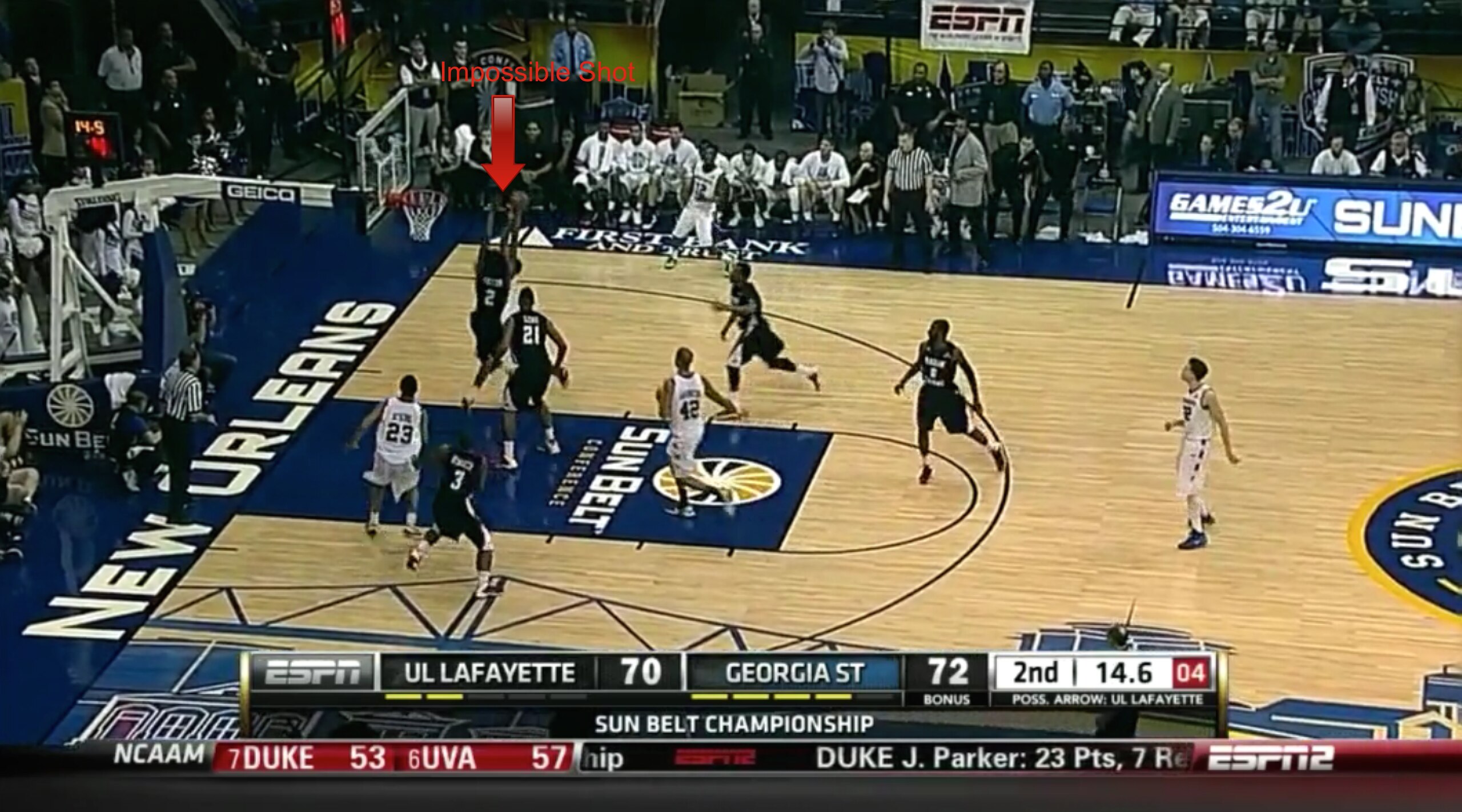
Offensively, Payton is just as much a mixed bag. His first-step quickness allowed him to blow by defenders in the Sun Belt, especially as he became more comfortable reading the play. Patience is still an issue, and his aggression can sometimes lead to bone-headed turnovers or bad shot attempts early in in the clock. Payton turned the ball over on 21.5 percent of pick-and-roll plays this season, per Synergy. That's a horrendous number and one that few NBA coaches will put up with.
When he gets in the open floor, though? Yikes.
Cajuns coach Bob Marlin encouraged an up-and-down tempo, and Payton thrived when he could get a step in transition. He used nearly a quarter of his possessions last season in transition changes, shooting 63.4 percent. The aforementioned aggressive disposition led to numerous steals and breakaway chances. Payton is also a very fine rebounder and passer, averaging better than five per game in both categories the past two seasons.
In the Russell Westbrook/Derrick Rose era at this position, Payton is something of a natural in that mold. Rose and Westbrook were more polished coming out of school—especially the former—but Payton might be a steal if he ever develops a jumper.
Important note: We're a long way from that at this point.
Zach LaVine (PG/SG, UCLA)
The NBA pre-draft process was made for Zach LaVine to shine. I'm convinced. It was built years ago in a lab where league officials someday envisioned a scrawny 6'6" kid jumping out of the gym, hitting every jumper in sight and typically unimpressed scouts turn their heads to one another as if to say "damn."
We're obviously exaggerating here. Slightly.
LaVine's run (and jump) up to the draft has cemented a one-year enigma at UCLA as a lottery pick. The process started at the combine, where LaVine had his jumper and athleticism on full display. He made 14-of-25 from the NBA three-point line, flashed a pretty off-the-dribble mid-range game and made everyone go all AND1 Tour with his agility numbers. LaVine's lane agility time was more than three tenths of a second better than anyone else, and he finished no lower than eighth in any other drill.
By that time, the throng of reporters and executives knew LaVine's numbers by heart. Even as Andrew Wiggins stole the show with an Instagram photo touting his 44-inch vertical, a dude whose playing time decreased as his freshman year went along was getting mentioned alongside Wiggins as the class' most athletic player.
Then came the Lakers workout.
Then came photo from the Lakers' official Twitter feed:
The camera angle there has to be lying, right? This is another one of those perspective tricks, wherein someone makes someone or something look bigger or higher than he or it is.
Nah. Bleacher Report's Kevin Ding reported LaVine's vertical measured in at 46 inches—nearly five better than his combine number. Having the longer lead-up undoubtedly played a part in the increase, but the number is so impressive that it almost doesn't matter.
LaVine is a ridiculous athlete with a solid three-point stroke. At the very least, executives are beginning to see a prototypical Three-and-D guy. LaVine is fast and long enough to handle both guard positions, and still has so much untapped potential that it's hard to avoid being excited. We haven't even mentioned that LaVine worked with the point guards at the combine and some scouts even envision a Westbrook-like rise at the next level.

I'm not quite on that train. LaVine is a 2 who will be a good secondary ball-handler; not a primary ball-handler who can play the 2. And he's also a borderline lock for the lottery after many questioned his decision to leave school early in the first place.
C.J. Wilcox (SG, Washington)
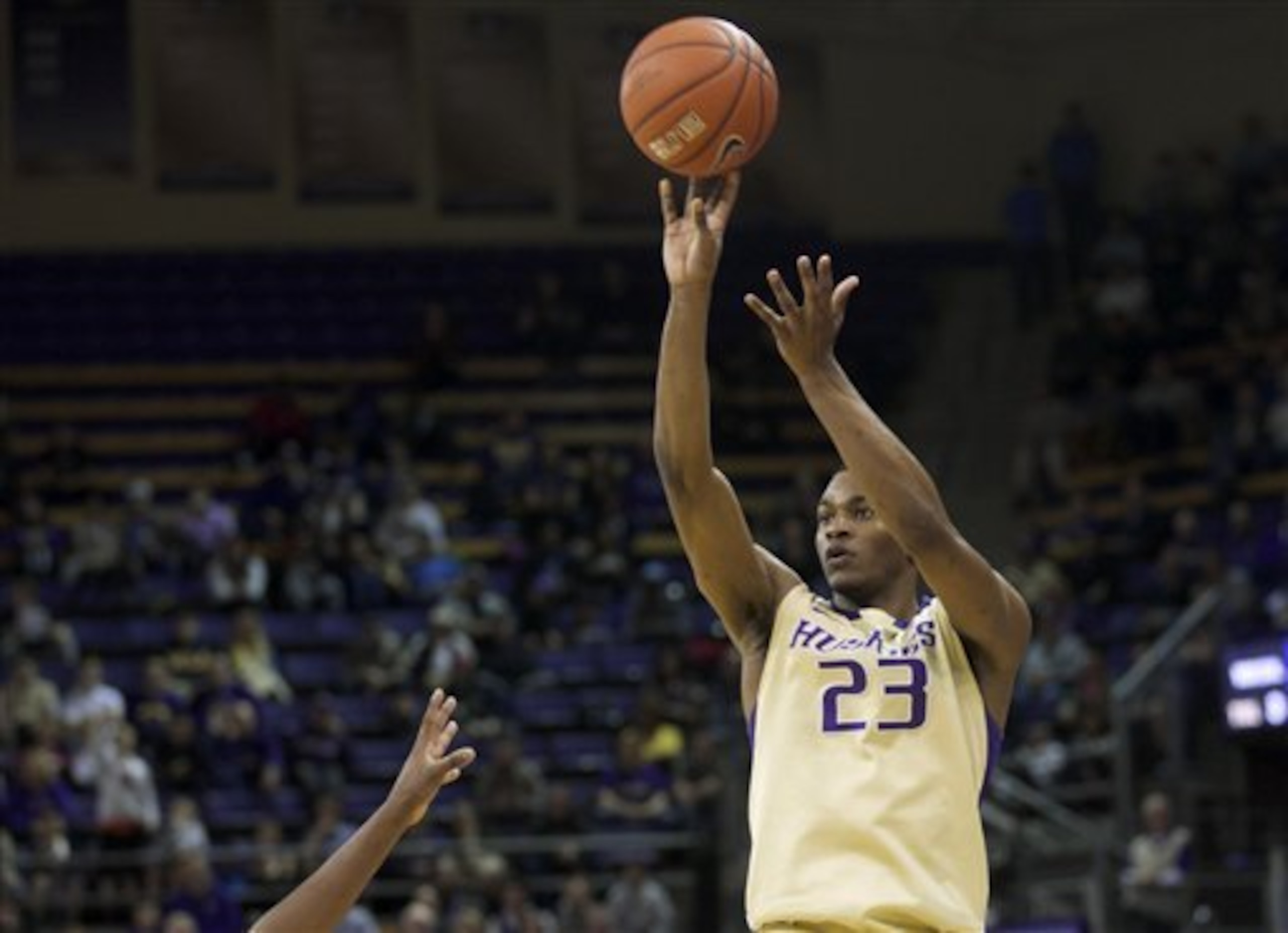
Unless you're a hoops zealot or simply have an affinity for Pac-12 basketball for some reason, C.J. Wilcox's four-year stint in Washington could have come and gone without you being able to pick him out of a lineup. He was never a fixture on SportsCenter's "Top 10 Plays" segment, nor the leader of any particularly good basketball teams.
The Huskies made the NCAA tournament in 2010 and 2011, but he was mostly a role player on those squads. The last two seasons have featured back-to-back NIT berths—ones that coincided with Wilcox's standing as the team's leading scorer. Not even his conference thought Wilcox deserved first-team recognition.
This is all worth pointing out for one reason: C.J. Wilcox will not fail at the next level. He won't be a star, either, but I'd be shocked if he weren't a key bench cog on an NBA rotation as soon as next season. If he hadn't spent the last four years at Washington honing his game, perhaps we'd even be talking about him as a top-20 prospect.
As it is, Wilcox is one of the most underrated prospects in this class. He's the best shooter who has no chance at making the lottery, having made 39.1 percent of his threes as a senior on 7.2 attempts per game. He ranked in the 88th percentile nationally on jump shots overall, per Synergy. That stroke was on display at the combine, where Wilcox hit 17 of 25 threes from NBA range and knocked down all but four of his shots from college range.
While 6'5" in shoes isn't ideal for an NBA 2-guard, Wilcox makes up for it with an impressive 6'10" wingspan. He was a fine defender in college and projects as such at the next level. The lane agility drill measured him as slightly below the median, but Wilcox turned in good numbers in the shuttle run, three-quarters sprint and vertical leap.
Teams near the end of the first round aren't looking for superstars; history says they're not there in most cases. Guys like Wilcox, a safe bet who can instantly help a shooting-needy team, have value once the draft starts stretching into the early-20s. If I were Sam Presti, I'd take a long look at Wilcox as a Thabo Sefolosha replacement.
Combine stats via NBA.com.
Follow Tyler Conway on Twitter:


.jpg?w=2560 "Dak to Stroud: Get Some Wins 💯")
.jpg?w=2560 "Vikings HC Called OBJ Before Release ☎️")
.jpg?w=2560 "5 NFL Players Getting Trade Buzz")
.jpg?w=2560 "NFL Won't Fine 'Beverage' Celebrations 🍻")