


The Miami Heat enter the 2013-14 season deeper than they've ever been in the Big Three era.
Coming off back-to-back championships, the Heat added the 2007 No. 1 overall pick (Greg Oden) and the 2008 No. 2 overall pick (Michael Beasley) this offseason, both of whom represent significant upgrades over Juwan Howard and Josh Harrellson, respectively.
That added depth should allow Miami to buy some extra regular-season rest for LeBron James, Dwyane Wade and Chris Bosh. Keeping all three fresh for the playoffs will be key to the Heat pulling off their three-peat bid.
During the 2012-13 regular season, the Heat averaged 102.9 points, 38.6 rebounds, 23.0 assists, 8.7 steals, 5.4 blocks, 13.3 turnovers and 8.7 made three-point field goals per game. The team shot 49.6 percent from the field, 39.6 percent from three-point range and 75.4 percent from the free-throw stripe.
This year, given their added depth, it wouldn't be a surprise to see them improve on just about every statistical category. I'm projecting the following: 104.5 points, 41.3 rebounds, 24.1 assists, 8.9 steals, 6.2 blocks, 14.5 turnovers and 9.3 made three-point field goals per game while shooting 48.7 percent from the floor, 39.1 percent from three and 76.6 percent on free throws.
Here, I've come up with full-season projections for each player based on their past production, their potential upside and injury risk. Keep in mind that the players' statistical projections will exceed the above team predictions, due to certain players sitting out on any given night.
Note: Players are sorted from least amount of projected playing time to most. Unless otherwise noted, all statistics come from Basketball-Reference.com.
Roger Mason Jr.
1 of 15
2012-13 per-game stats (with New Orleans): 69 games, 17.7 MIN, 5.3 PTS, 1.9 REB, 1.1 AST, 0.4 STL, 0.2 BLK, 0.7 TO, 1.0 3PT, 43.3 FG%, 41.5 3FG%, 90.7 FT%
After averaging more than 15 minutes per game with the then-New Orleans Hornets in 2012-13, Roger Mason Jr. would be lucky to see a third of that playing time this season with the Miami Heat.
Mason turned down more lucrative offers this offseason to sign a non-guaranteed contract with the Heat, per ESPN's Tom Haberstroh. Once considered a long-shot to make the team's 15-man roster, Mason's strong preseason performance earned him one of the squad's final spots.
He shouldn't expect anything more than spot appearances throughout the regular season, though. In games where Dwyane Wade or Ray Allen sit out, Mason could force his way into the rotation, but otherwise, he's only seeing the floor during blowouts.
Projected 2013-14 statistics: 32 games, 5.1 MIN, 2.3 PTS, 1.1 REB, 0.5 AST, 0.2 STL, 0.1 BLK, 0.3 TO, 0.4 3PT, 41.8 FG%, 40.6 3FG%, 85.9 FT%
Rashard Lewis
2 of 15
2012-13 per-game stats: 55 games, 14.4 MIN, 5.2 PTS, 2.2 REB, 0.5 AST, 0.4 STL, 0.3 BLK, 0.6 BLK, 0.9 3PT, 41.4 FG%, 38.9 3FG%, 62.2 FT%
Rashard Lewis helped prove in 2012-13 exactly why veteran players are willing to take major discounts to play for the Miami Heat.
Lewis averaged only 5.2 points and 2.2 rebounds in 14.4 minutes of playing time per game, but that's the funny thing about championship rings: They get awarded to every player on the roster, no matter how large or small their contributions.
There's no reason to expect Lewis to experience a major uptick in production during the 2013-14 season. He'll be one of the last members of the team off the bench, the de facto "break-glass-in-case-of-emergency" forward who's only needed when LeBron James sits out a game.
With Miami's addition of Michael Beasley, Lewis likely won't have the opportunity to even come close to matching his 2012-13 statistics. But if this season ends the same way last season did, Lewis has absolutely no reason to complain.
Projected 2013-14 statistics: 48 games, 5.9 MIN, 3.1 PTS, 1.4 REB, 0.2 AST, 0.2 STL, 0.1 BLK, 0.4 TO, 0.6 3PT, 40.6 FG%, 37.9 3FG%, 78.3 FT%
Joel Anthony
3 of 15
2012-13 per-game stats: 62 games, 9.1 MIN, 1.4 PTS, 1.9 REB, 0.2 AST, 0.2 STL, 0.7 BLK, 0.4 TO, 0.0 3PT, 51.5 FG%, N/A 3FG%, 60.7 FT%
Joel Anthony again finds himself at the back of the Miami Heat's big man rotation at the start of the 2013-14 season.
Miami's addition of Chris "Birdman" Andersen rendered Anthony more or less obsolete in the second half of last year. He averaged only 6.9 minutes per game after the All-Star break (compared to 10.2 minutes before), as Andersen pushed his way ahead of Anthony in the Heat's rotation.
This year, with Greg Oden in the fold, Anthony will only be pushed back further onto the bench. He didn't earn a single minute in the team's regular-season opener against the Chicago Bulls on Oct. 29, and likely won't see much time outside of blowouts.
If Chris Bosh or Udonis Haslem were to miss time with an injury, Anthony would have a shot at some regular playing time. Barring that, though, there's no reason to project him for more than a handful of minutes and negligible statistical contributions across the board.
Projected 2013-14 statistics: 56 games, 7.2 MIN, 1.2 PTS, 1.6 REB, 0.1 AST, 0.1 STL, 0.5 BLK, 0.3 TO, 0.0 3PT, 52.4 FG%, N/A 3FG%, 62.3 FT%

James Jones
4 of 15
2012-13 per-game stats: 38 games, 5.8 MIN, 1.6 PTS, 0.6 REB, 0.3 AST, 0.1 STL, 0.2 BLK, 0.1 TO, 0.4 3PT, 34.4 FG%, 30.2 3FG%, 50.0 FT%
James Jones hardly made his way off the bench for the Miami Heat during the 2012-13 season, averaging fewer than six minutes per game in only 38 appearances.
This year, with Mike Miller now playing in Memphis, Jones may take on a slightly larger role for the team. Any time Ray Allen or Dwyane Wade sits out a game, Jones will figure to be the team's top backup shooting guard.
That doesn't mean he'll be averaging 20-plus minutes any time soon, though. Assuming Wade and Allen remain healthy, Jones' services will only be needed if both players fall into early foul trouble.
Expect Jones to average roughly 10 minutes per game when he plays, leading to a slight increase in his statistical output. When he does make it onto the court, his three-point shooting will be his greatest asset to Miami.
Projected 2013-14 statistics: 41 games, 10.4 MIN, 2.8 PTS, 0.9 REB, 0.4 AST, 0.2 STL, 0.2 BLK, 0.3 TO, 0.8 3PT, 38.3 FG%, 37.2 3FG%, 81.6 FT%
Greg Oden
5 of 15
2012-13 per-game stats: N/A
Greg Oden enters the 2013-14 season as the biggest wild card on the Miami Heat's roster.
The former No. 1 overall pick hasn't appeared in a regular-season game since fracturing his left kneecap on Dec. 5, 2009. He played a total of four minutes this preseason, notching two points, two rebounds, a turnover and a foul.
Miami held him out of the regular-season opener against the Chicago Bulls, but his debut presumably isn't far away. Even when he does make it onto the court, though, it's doubtful that the Heat trot him out for 30-plus minutes in any single game.
The Heat signed Oden with the playoffs in mind, knowing they'd need size to counter Indiana's Roy Hibbert and Chicago's Joakim Noah. That means Miami will always err on the side of caution in terms of Oden's usage in the regular season, which will limit his on-court production significantly.
Projected 2013-14 statistics: 45 games, 14.7 MIN, 5.4 PTS, 4.6 REB, 0.3 AST, 0.2 STL, 1.1 BLK, 0.1 TO, 0.0 3PT, 51.7 FG%, N/A 3FG%, 75.8 FT%
Michael Beasley
6 of 15
2012-13 per-game stats (with Phoenix): 75 games, 20.7 MIN, 10.1 PTS, 3.8 REB, 1.5 AST, 0.4 STL, 0.5 BLK, 1.9 TO, 0.6 3PT, 40.5 FG%, 31.3 3FG%, 74.6 FT%
Five years after drafting him as the No. 2 overall pick, the Miami Heat took a flyer this summer on a down-on-his-luck Michael Beasley, who had just been released by the Phoenix Suns.
They brought Beasley in on a one-year, non-guaranteed contract, ensuring that expectations for his second tenure with the team would remain low. He's not going to average 30-plus minutes a game for this Miami team; he simply needs to come off the bench, stick to his role and dominate opponents' second units.
Miami kept Beasley parked on the bench during their season-opening win over the Chicago Bulls on Oct. 29, even as the team opened a 20-point lead. It remains to be seen whether Beasley's absence was game-plan specific or indicative of a larger trend, but it's clear that Erik Spoelstra will have the Beas on a short leash, at least in the early portion of the season.
If Beasley can rein in his talents and find a niche with Miami, his presence should buy a few extra minutes of rest for the Heat's top talents (such as LeBron James). The second he gets trigger-happy with his shot selection, though, he's going to find himself glued to the bench.
Projected 2013-14 statistics: 65 games, 15.2 MIN, 7.8 PTS, 3.2 REB, 1.1 AST, 0.3 STL, 0.3 BLK, 1.4 TO, 0.5 3PT, 43.1 FG%, 35.8 3FG%, 76.1 FT%
Chris "Birdman" Andersen
7 of 15
2012-13 per-game stats: 42 games, 14.9 MIN, 4.9 PTS, 4.1 REB, 0.4 AST, 0.4 STL, 1.0 BLK, 0.6 TO, 0.0 3PT, 57.7 FG%, 66.7 3FG%, 67.7 FT%
The Miami Heat's mid-year addition of Chris "Birdman" Andersen during the 2012-13 season may have been the difference between going home empty-handed and pulling off their back-to-back title runs.
Andersen provided a post presence for Miami that the team otherwise sorely lacked, especially on the defensive end. He's not a light-up-the-scoreboard type of player, but he's easily one of the team's best rebounders and shot-blockers.
This season, it's clear that Miami plans on using him as one of its regular reserve bigs. The Heat need a reliable shot-blocking presence manning the middle if they hope to three-peat, as the other top Eastern Conference contenders all have the size to bully Miami down low.
Birdman won't stuff the stat sheet beyond rebounds and blocks, but his contributions in those two categories will earn him sizable minutes in the Heat's rotation.
Projected 2013-14 statistics: 71 games, 17.4 MIN, 5.6 PTS, 4.8 REB, 0.5 AST, 0.5 STL, 1.2 BLK, 0.8 TO, 0.0 3PT, 58.5 FG%, N/A 3FG%, 65.9 FT%
Udonis Haslem
8 of 15
2012-13 per-game stats: 75 games, 18.9 MIN, 3.9 PTS, 5.4 REB, 0.5 AST, 0.4 STL, 0.2 BLK, 0.6 TO, 0.0 3PT, 51.4 FG%, N/A 3FG%, 71.1 FT%
Udonis Haslem will continue to be a nominal starter for the Miami Heat throughout the 2013-14 season, but he's not going to rank among the team's top five in terms of minutes played.
The Haslem-Chris Bosh frontcourt duo gives Miami enough size up front to start a game off against bigger opponents. A few minutes into each game, though, Heat coach Erik Spoelstra can turn to his bench for a variety of lineup options, depending on each matchup.
Haslem's bread-and-butter continues to be his pick-and-pop jumper, which remains invaluable for a team that draws so much attention on drives to the hoop. Having someone like Haslem positioned out in the 15- to 18-foot range, ready to drill an open jumper when need be, forces opponents to pick their poison defensively.
He's not nearly strong enough as a shot-blocker, however, to earn more than 20-25 minutes in a given night. Chris "Birdman" Andersen and Greg Oden (to a lesser extent) are likely to soak up more and more of Haslem's minutes as the season progresses.
Projected 2013-14 statistics: 73 games, 18.6 MIN, 3.6 PTS, 5.2 REB, 0.4 AST, 0.4 STL, 0.2 BLK, 0.5 TO, 0.0 3PT, 50.9 FG%, N/A 3FG%, 74.6 FT%
Norris Cole
9 of 15
2012-13 per-game stats: 80 games, 19.9 MIN, 5.6 PTS, 1.6 REB, 2.1 AST, 0.7 STL, 0.1 BLK, 1.3 TO, 0.4 3PT, 42.1 FG%, 35.7 3FG%, 65.0 FT%
Of all the Miami Heat's returning rotation players, Norris Cole may be the team's biggest X-factor in 2013-14.
Since Mario Chalmers can't play all 48 minutes each game, the Heat desperately need a point guard capable of running their second unit. Cole has repeatedly proven that he's up for the task, only growing more comfortable as he continues to gain NBA experience.
Cole averaged just shy of 20 minutes per game last season, but he made the most of his time while on the court. It's going to be difficult for Erik Spoelstra not to play Cole for at least 20-24 minutes each game, especially when Chalmers is having an off night.
With that increase in minutes should come a slight boost in production across the board for the third-year guard. He's very likely to surpass his career highs in terms of points, rebounds, assists, steals and made three-point field goals per game in 2013-14.
Projected 2013-14 statistics: 80 games, 22.1 MIN, 6.3 PTS, 1.8 REB, 2.6 AST, 0.8 STL, 0.1 BLK, 1.9 TO, 0.6 3PT, 42.4 FG%, 36.9 3FG%, 73.5 FT%
Shane Battier
10 of 15
2012-13 per-game stats: 72 games, 24.8 MIN, 6.6 PTS, 2.3 REB, 1.0 AST, 0.6 STL, 0.8 BLK, 0.5 TO, 1.9 3PT, 24.0 FG%, 43.0 3FG%, 84.2 FT%
Since joining the Miami Heat before the 2011-12 season, Shane Battier has been asked to do two things: draw charges and knock down open three-pointers.
He's excelled on both of those fronts over the past two seasons, proving critical to Miami's back-to-back championship runs. In fact, Battier shot better on threes last season (43.0 percent) than on twos (34.8 percent), per Basketball Reference.
Of Battier's 5.0 field-goal attempts per game in 2012-13, 4.4 of them came from three-point range. He's a player who fully understands his role and sticks to it, eschewing most two-point shots in favor of passing to a teammate.
Because he's such a smart help defender and legitimate three-point threat, Erik Spoelstra will find it difficult to keep him out of the Heat's regular rotation. He's likely to post very similar statistics in 2013-14 compared to his output from the prior season.
Projected 2013-14 statistics: 76 games, 23.5 MIN, 6.1 PTS, 2.3 REB, 1.1 AST, 0.8 STL, 0.7 BLK. 0.5 TO, 1.6 3PT, 41.6 FG%, 42.4 3FG%, 80.8 FT%
Ray Allen
11 of 15
2012-13 per-game stats: 79 games, 25.8 MIN, 10.9 PTS, 2.7 REB, 1.7 AST, 0.8 STL, 0.2 BLK, 1.3 TO, 1.8 3PT, 44.9 FG%, 41.9 3FG%, 88.6 FT%
Ray Allen proved his worth to the Miami Heat with a single shot during the 2013 Finals.
The Heat stood seconds away from going home for the summer empty-handed, but Allen had other ideas. He drained what might go down as the most clutch shot in NBA history during the waning moments of Game 6 in the NBA Finals, single-handedly resuscitating Miami's title aspirations.
With Allen on their side, no lead is safe against Miami. They'll use his sharpshooting prowess to their advantage throughout the regular season, but won't risk wearing him down before what they hope to be another lengthy playoff run in 2014.
Expect Allen's minutes to slightly decline during the 2013-14 regular season in an effort to keep him fresh for the postseason. When he's on the court, though, it'll be raining threes, just as it has throughout his 17-year career.
Projected 2013-14 statistics: 77 games, 24.3 MIN, 10.2 PTS, 2.5 REB, 1.6 AST, 0.8 STL, 0.2 BLK, 1.4 TO, 1.7 3PT, 45.3 FG%, 43.6 3FG%, 89.7 FT%
Mario Chalmers
12 of 15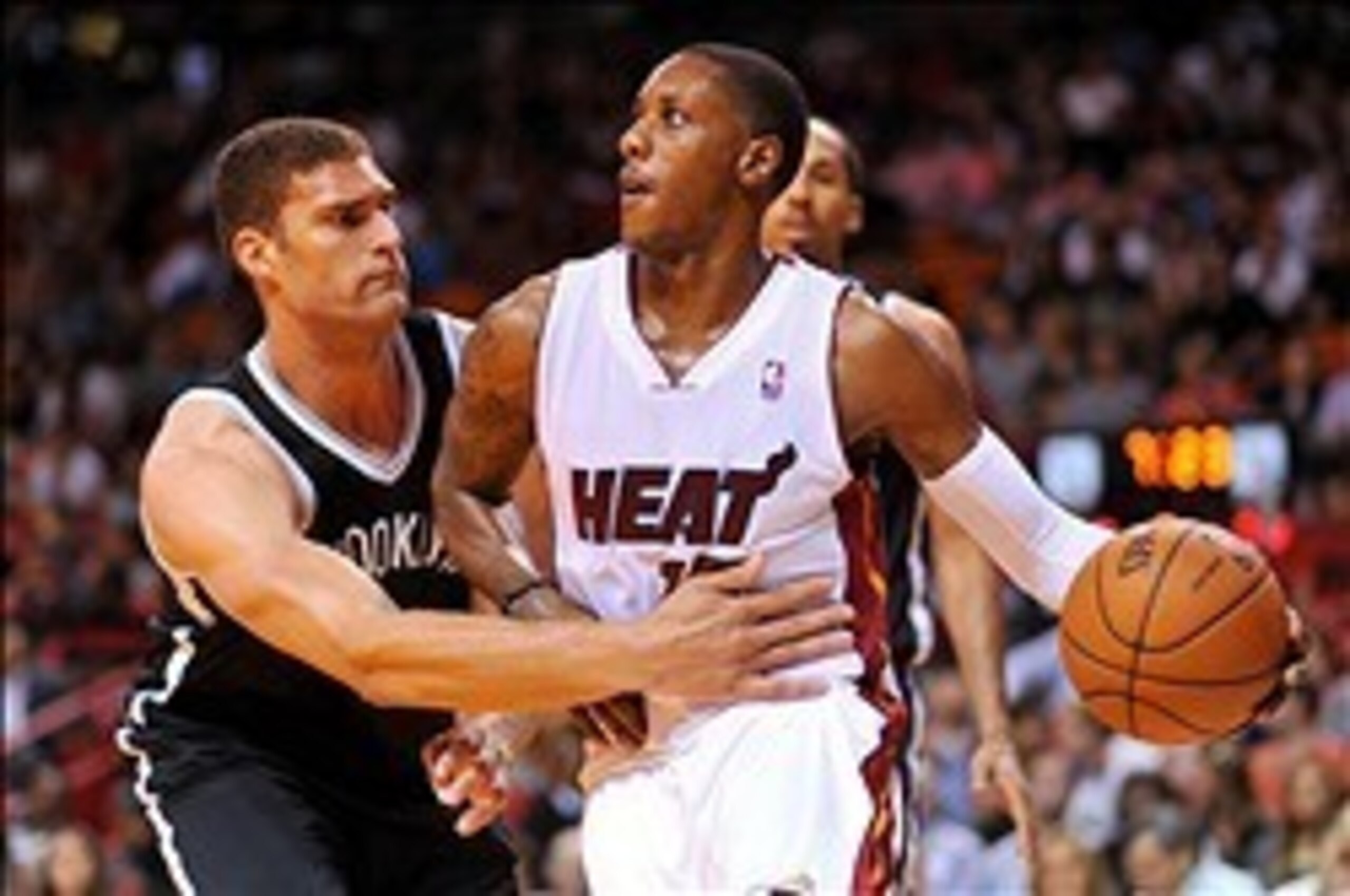
2012-13 per-game stats: 77 games, 26.9 MIN, 8.6 PTS, 2.2 REB, 3.5 AST, 1.5 STL, 0.2 BLK, 1.5 TO, 1.6 3PT, 42.9 FG%, 40.9 3FG%, 79.0 FT%
For all the flak Mario Chalmers catches from his teammates, he's just about the ideal point guard for this particular Miami Heat squad.
With LeBron James, Dwyane Wade and Chris Bosh in the fold, the Heat don't need a high-usage point guard like Chris Paul or Derrick Rose directing traffic. Instead, they need someone like Chalmers, a guard who's perfectly happy to pass the ball to one of his high-profile teammates and get out of the way.
Chalmers ranked third on the Heat in terms of steals per game last season, and got a head start in that department in Miami's 2013 season opener by notching five takeaways against Chicago. He's not going to wind up on an All-Defensive team any time soon, but he's pesky enough defensively to be an annoyance to opposing floor generals.
His per-game stats won't ever jump off the page so long as the Big Three reign in Miami, but he's proven capable of taking over games on occasion. Given his modest amount of playing time, expect another underwhelming statistical season from the Heat's starting point guard.
Projected 2013-14 statistics: 78 games, 27.1 MIN, 8.8 PTS, 2.4 REB, 3.7 AST, 1.5 STL, 0.2 BLK, 1.8 TO, 1.7 3PT, 43.5 FG%, 41.3 3FG%, 80.2 FT%
Dwyane Wade
13 of 15
2012-13 per-game stats: 69 games, 34.7 MIN, 21.2 PTS, 5.0 REB, 5.1 AST, 1.9 STL, 0.8 BLK, 2.8 TO, 0.2 3PT, 52.1 FG%, 25.8 3FG%, 72.5 FT%
After battling knee ailments for each of the past two years, Dwyane Wade enters the 2013-14 season in optimal condition.
This past summer, Wade tapped his on-again, off-again trainer, Tim Grover, to help him build up his core strength, according to B/R's Ethan Skolnick. He entered training camp 10 pounds lighter than he was last season, reported Shandel Richardson of the Sun Sentinel, which could reduce the amount of stress he puts on his knees.
Still, he's a 31-year-old guard who loves playing in the post and relies largely on his athleticism. There's little reason to assume that he'll make it through the entire regular season unscathed.
When he does play, he should remain a dominant force of nature capable of stuffing every category of a stat sheet. It wouldn't be surprising to see the Miami Heat limit Wade's number of regular-season minutes, though, which would result in slight declines in production across the board.
Projected 2013-14 statistics: 67 games, 33.8 MIN, 21.5 PTS, 4.7 REB, 4.8 AST, 1.7 STL, 0.8 BLK, 2.7 TO, 0.3 3PT, 51.1 FG%, 27.7 3FG%, 76.4 FT%
Chris Bosh
14 of 15
2012-13 per-game stats: 74 games, 33.2 MIN, 16.6 PTS, 6.8 REB, 1.7 AST, 0.9 STL, 1.4 BLK, 1.7 TO, 0.3 3PT, 53.5 FG%, 28.4 3PT%, 79.8 FT%
When it comes to Chris Bosh's 2013-14 season projections, I'm incredibly bullish.
Bosh's points, rebounds and assists per game have dropped each year since he joined forces with Dwyane Wade and LeBron James, but that trend will end in 2013-14. The Miami Heat need to be incredibly careful with Wade throughout the regular season, which means Bosh must play the Robin to LeBron's Batman more than ever.
Having Chris "Birdman" Andersen and Greg Oden around for a full season will allow Bosh to roam around the perimeter more frequently, which should lead to a slight uptick in offensive production. He'll also be able to sneak around for a few extra weakside rebounds and blocks when those two are manning the middle.
It's unlikely that Bosh matches his career-high 53.5 percent shooting from last season, but he'll still reside comfortably above 50 percent. Throw in his improvements elsewhere and Bosh could be primed for his best season as a member of the Heat.
Projected 2013-14 statistics: 75 games, 34.9 MIN, 17.6 PTS, 7.7 REB, 1.9 AST, 0.9 STL, 1.2 BLK, 1.9 TO, 0.2 3PT, 52.4 FG%, 29.5 3FG%, 81.3 FT%
LeBron James
15 of 15
2012-13 per-game stats: 76 games, 37.9 MIN, 26.8 PTS, 8.0 REB, 7.3 AST, 1.7 STL, 0.9 BLK, 3.0 TO, 1.4 3PT, 56.5 FG%, 40.6 3FG%, 75.3 FT%
LeBron James officially erased all doubt during the 2012-13 season as to who should be considered the best basketball player in the world.
James set career highs in terms of rebounds per game (8.0), field-goal percentage (.565) and three-point shooting percentage (.406), finishing the year with an astronomical PER of 31.6. Fun, yet terrifying fact about LeBron: He's increased his field-goal percentage in each of the past seven seasons.
It may be foolish to bet against him exceeding all expectations once again, but it's also difficult to fathom him shooting better than 56.5 percent from the field this year. He and Kenneth Faried were the only two wing players to finish among the NBA's top 10 in terms of field-goal percentage last year.
With Michael Beasley now in the fold, the Miami Heat can afford to buy LeBron a minute or two of extra rest each game. He's never played fewer than 37.5 minutes per game over the course of a season, but don't be surprised if he finally does this year.
That slight reduction in minutes will also lead to minuscule downticks in his per-game production. He'll still be the best player in the world, but even tiny statistical declines will open the door for someone like Kevin Durant to come and steal the Most Valuable Player award away from James.
Projected 2013-14 statistics: 76 games, 36.8 MIN, 26.5 PTS, 7.8 REB, 7.2 AST, 1.8 STL, 0.9 BLK, 3.1 TO, 1.3 3PT, 55.2 FG%, 39.6 3FG%, 77.4 FT%

.jpg?w=2560 "Chiefs, Steelers Eye WR Trades")





.jpg?w=2560 "Raiders Sticking with Cousins")