
Ranking the 10 Best 3rd-Year Players in the NBA
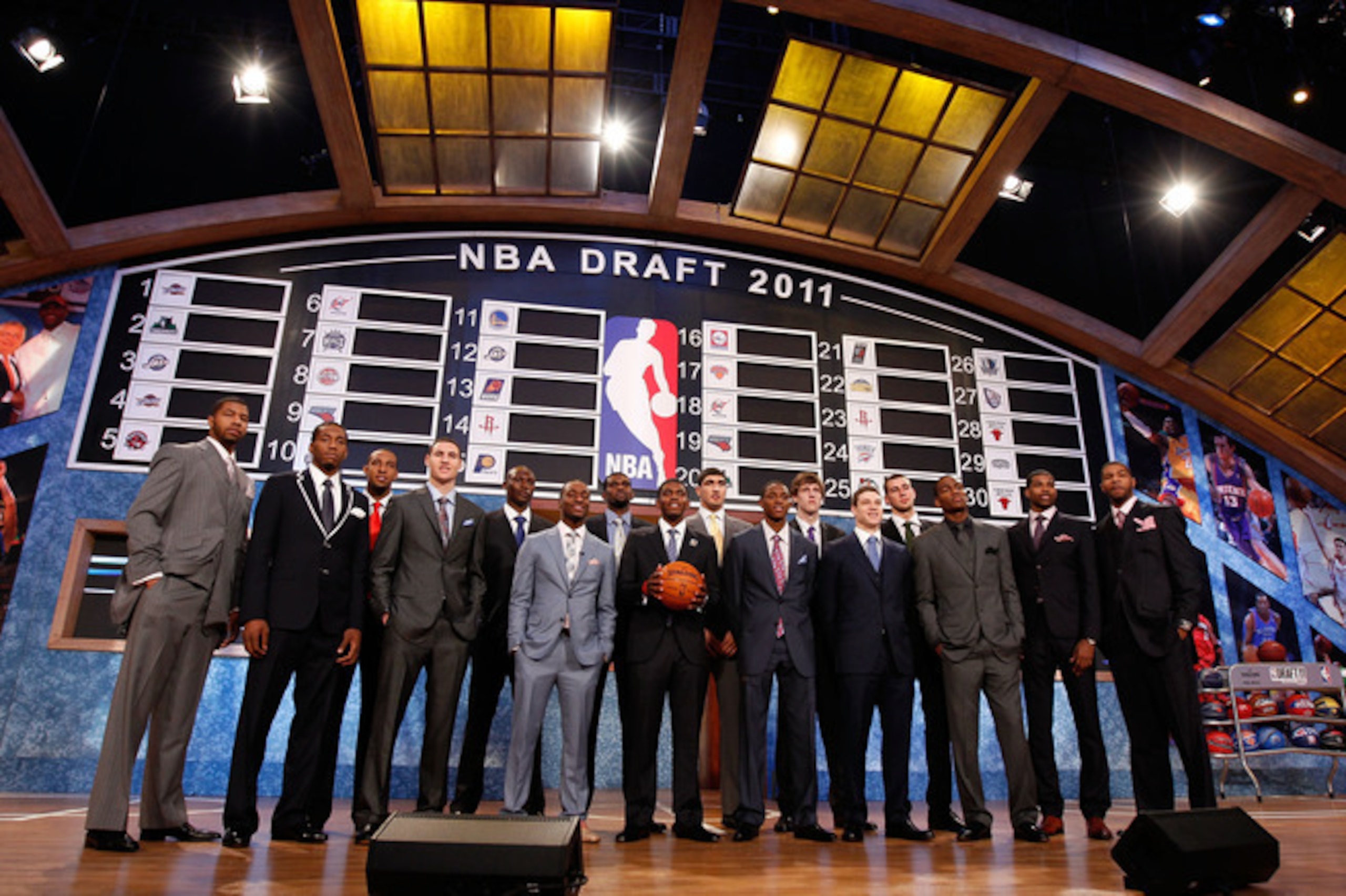
The 2011 NBA draft, at the time considered one of the weaker drafts in recent memory, has produced a great number of solid, if not star-level players. With only two weeks until the 2013 season tips off, these players have spent the offseason preparing for their third professional season.
A player's third season is often a key indicator for his star potential in the league. Derrick Rose won league MVP in his third season in 2010-11. James Harden was the Sixth Man of the Year in 2011-12. Last season saw Paul George and John Wall rise to All-Star-caliber play, and they were handsomely rewarded with max-level contracts over the past few months.
With such great accolades and large contract extensions looming for the 2011 draft class, it's time to take a look at the 10 best third-year players in the league.
Honorable mentions: Enes Kanter, Tobias Harris, Derrick Williams, Iman Shumpert, and Isaiah Thomas.
Image above courtesy of She.Got.Game and all statistics courtesy of Basketball-Reference.com, unless otherwise sourced.
10. Tristan Thompson
1 of 10
Coming in at the 10th spot in this list is Cleveland Cavaliers' power forward Tristan Thompson.
2012-13 statistics: 82 GP, 31.3 MPG, 11.7 PPG, 9.4 RPG, 1.3 APG, 48.8% FG, 0.0% 3PT
The Cavs are expecting big things for their young big man. As part of a potentially devastating front line with former All Star center Andrew Bynum, the team looks to contend for a playoff spot.
Thompson’s most impressive skill is his ability to crash the offensive glass. In each of his two seasons in the league, he’s managed to offensively rebound at a top-10 rate. His 306 offensive boards (3.7 per game) were second in the NBA last year. Despite being slightly undersized for the power forward position, his tenacity in snagging his teammate’s misses is nearly unmatched. He should continue to be a great security blanket for the team’s offensive players, guards Kyrie Irving and Dion Waiters.
However, he's going to have to improve his free throw shooting; his career 58.6 percent rate isn't going to cut it. But if Thompson can improve at the line, he projects as a vital part of an improving Cavaliers squad.
9. Klay Thompson
2 of 10
The ninth-best third-year player in the league is another Thompson, Warriors shooting guard Klay Thompson.
2012-13 statistics: 82 GP, 35.8 MPG, 16.6 PPG, 3.7 RPG, 2.2 APG, 42.2% FG, 40.1% 3PT
After being a key cog in the Warriors' Cinderella-style playoff run last season, the Warriors have re-upped for 2013-14. The growth of Thompson, already one of the better "three and D" players in the league, could be the difference between a first-round defeat and contending for a title.
The key aspect of Thompson’s game is something that he shares with teammate Stephen Curry: His ability to shoot from deep at high volume. He was third in the league in both three-point attempts and makes, while maintaining an excellent 40 percent accuracy. His dead-eye marksmanship is a huge asset to the Warriors and makes him a deadly third option when defenses key in too much on Curry or All-Star forward David Lee. In addition, he has yet to miss a game in two seasons, so there’s no easy way around his shooting. You’ll just have to hope he has an off night.
But with the addition of Andre Iguodala, Thompson's moving out of the starting lineup to the sixth man role. He'll inevitably bring a offensive spark off the bench, but will a lack of minutes translate to a lack of production?
8. Ricky Rubio
3 of 10
A year and a half after tearing his ACL, Timberwolves point guard Ricky Rubio comes into the 2013 season fully healthy and at eighth on this list.
2012-13 statistics: 57 GP, 29.7 MPG, 10.7 PPG, 4.0 RPG, 7.3 APG, 36.0% FG, 29.3% 3PT
Very few players thrive with their hands on the ball at both ends of the floor like Rubio. He had a well-above average assist-to-turnover ratio that floated around 2.5 for the season, and on the defensive end, he was able to snag 2.4 steals per game. The latter figure ended up being just shy of Chris Paul’s league lead.
However, his individual successes haven't translated to many wins for his team. A key reason for that: the number 13. That’s how many minutes the three Timberwolves stars (Love, Rubio, and Pekovic) managed to share the court together last year. After being severely limited by injuries the past few seasons, look for this Minnesota team to finally find some consistency, and hopefully, success.
Rubio is also going to have to improve upon his poor shooting percentages. The addition of long-range threat Kevin Martin coupled with Love's return should open up the floor more for Rubio to drive to the basket, and if he can convert on those looks, he might become a top-10 player at his position in the league.
7. Jimmy Butler
4 of 10
A year after bursting onto the NBA scene, Bulls shooting guard and defensive specialist Jimmy Butler is the seventh-best third-year player in the NBA.
2012-13 statistics: 82 GP, 26.0 MPG, 8.6 PPG, 4.0 RPG, 1.4 APG, 46.7% FG, 38.1% 3PT
A late pick in the 2011 draft, Butler played sparingly his rookie season. But last season, he played his way into the starting lineup by the end of the year and projects as a long-term starter for the Bulls.
With an increased workload during the 2013 postseason (40.8 MPG in 12 games, all of which he started), Butler came up big. He scored 13.3 points per game, adding 5.2 rebounds, and was able to shoot 40.2 percent from deep. With defenses forced to adjust to star guard Derrick Rose back at full strength for this season, open looks from three-point range will be available. Count on Butler to knock them down.
The one weakness in Butler's game is a lack of creativity off the bounce. Look for him to develop and learn to find better angles to attack the weak points of defenses off of Rose drive-and-kicks.
6. Chandler Parsons
5 of 10
Few second-round picks have been able to make as much of a difference as Rockets forward Chandler Parsons, the sixth-best player on this list.
2012-13 statistics: 76 GP, 36.3 MPG, 15.5 PPG, 5.3 RPG, 3.5 APG, 48.6% FG, 38.5% 3PT
Despite being a second-round pick, Parsons has started all but six of his 139 career games at small forward. His jack-of-all-trades offensive game has made him a key cog in the high-octane Rockets offense, where he was the team’s second-leading scorer last season.
The versatile forward was also one of the more efficient scorers in the entire league, owning the seventh-highest effective FG% at 56.7. That mark was third-best among non-centers, behind the league’s MVP, LeBron James, and its most accurate three-point shooter, Jose Calderon.
For a team that has added two elite stars the past two offseasons in James Harden and Dwight Howard, Parsons is the perfect third option for an offense that projects to lead the league in scoring yet again.
5. Nikola Vucevic
6 of 10
A season after breaking out as one of the league's elite rebounders, Magic center Nikola Vucevic comes in as the fifth-best third-year player in the league.
2012-13 statistics: 77 GP, 33.2 MPG, 13.1 PPG, 11.9 RPG, 1.9 APG, 51.9% FG, 0.0% 3PT
Initially considered an afterthought in the massive Dwight Howard trade last August, the 22-year-old Montenegrin more than proved he could be a solid replacement for the franchise center.
Vucevic absolutely devours the glass. He finished the season in the top five for offensive rebounds, defensive rebounds, total rebounds, defensive rebound rate, total rebound rate, and rebounds per game (where he was second only to Dwight Howard). Only Howard and David Lee had more double-doubles, of which the young Magic center recorded 46.
The rebuilding Magic have a lot of nice young assets to complement their center, including forwards Tobias Harris and Mo Harkless, as well as recently drafted guard Victor Oladipo. In a few years, this team could be a force to be reckoned with in the East, and Vucevic could very well be in the middle of it all (literally).
4. Kemba Walker
7 of 10
Bobcats guard Kemba Walker comes in at fourth on this list and looks to drag his struggling franchise out of the NBA cellar this upcoming season.
2012-13 statistics: 82 GP, 34.9 MPG, 17.7 PPG, 3.5 RPG, 5.7 APG, 42.3% FG, 32.2% 3PT
Walker was one of the better scoring guards in the NBA in 2012-13, putting up more points than more highly regarded point guards like Jrue Holiday, Ty Lawson and Chris Paul. But he didn't just excel on offense.
Overall, his PER of 18.86 was second only to Kyrie Irving among his fellow draft class mates this past season, which reflects his ability excel on the defensive end, as well, where the diminutive guard’s 2.0 steals per game were fifth in the league. He also has yet to miss a game in two NBA seasons.
Perhaps most impressively, his performances came with very little help from his supporting cast. The Bobcats frontcourt improved greatly during this offseason, adding big men Al Jefferson and Cody Zeller in free agency and the draft, respectively. With those two replacing heavy minutes in the rotation from the struggling Bismack Biyombo and the now-Clipper Byron Mullens, the team has a lot more talent than in recent years.
By giving Kemba a lot more to work with, the Bobcats might just be able to surprise some folks this year.
3. Kenneth Faried
8 of 10
Despite being a trendy pick to miss out on the playoffs this season, the Nuggets can count on production from power forward Kenneth Faried, the league's third-best third-year player.
2012-13 statistics: 80 GP, 28.1 MPG, 11.5 PPG, 9.2 RPG, 1.0 APG, 55.2% FG, 0.0% 3PT
Overcoming early questions about his size and skill level, Faried has exhibited his penchant for making plays happen because of his relentlessness on both ends of the floor.
He finished in the top 10 in both field goal percentage and offensive rebound rate. He ranked ninth and sixth in the two categories at 55.2 percent and 13.2 percent, respectively. His ability to snag his teammates' misses and convert them into easy putbacks is among the best in the league.
Faried's hustle also makes a difference on defense. Along with LeBron James, he's one of the league's foremost experts on the chase-down block. Not convinced? Here's another from the Nuggets' 2013 postseason series against the Warriors.
If Faried can develop a better mid-range jumper, the Nuggets' ultra-athletic frontcourt (with JaVale McGee) could be one of the reasons they return to the postseason in 2013-14.
2. Kawhi Leonard
9 of 10
Just months after the Spurs' stunning loss in the Finals to the Miami Heat, forward Kawhi Leonard is the second-best player entering his third season in the league.
2012-13 statistics: 58 GP, 31.2 MPG, 11.9 PPG, 4.9 RPG, 1.6 APG, 49.4% FG, 37.4% 3PT
The Spurs generated some controversy when they traded promising young guard George Hill to the Pacers for the 15th-overall pick of the 2011 NBA draft. However, that pick turned out to be Kawhi Leonard, and now the Spurs seem to have snagged the draft's biggest steal.
After two years of solid play on the wing, Leonard averaged a double-double (14.6 points, 11.1 rebounds and 2.0 steals per game) in the 2013 NBA Finals. Most of that production came while being matched up against LeBron James, a 4-time league MVP. Had the Spurs won the series, Leonard would've likely garnered some major Finals MVP support.
Leonard looks to carry his momentum from his clutch playoff performance into the 2013-14 season, where he'll take on a larger role in the offense as Spurs franchise cornerstones Tim Duncan and Manu Ginobili draw ever closer to retirement. If he can continue to knock down corner threes in the Spurs' offense, grab big rebounds and defend at an elite level, he might just make his first All-Star team this year.
1. Kyrie Irving
10 of 10
It's not up for debate. There is no better third-year player in the league than Cavaliers point guard Kyrie Irving.
2012-13 statistics: 59 GP, 34.7 MPG, 22.5 PPG, 3.7 RPG, 5.9 APG, 45.2% FG, 39.1% 3PT
Irving is perhaps the league's most skilled point guard. There are a select few players, if any, who can match his ability to score from all over the floor and penetrate defenses off the dribble. He's a human highlight reel every time he steps on the court.
The reigning Three Point Shootout Champion was eighth in the NBA in scoring, and did so very efficiently. His shooting splits (45.2% FG, 39.1 3PT%, 85.5% FT) were among the best all-around rates for not just point guards, but any player in the league.
If Irving has any weakness, it's his defense. He only managed 1.5 steals per game and was often out of place in pick and roll coverage. He also turned the ball over 3.2 times per game, which compares unfavorably to more turnover-efficient guards like Chris Paul.
However, Irving is an all-world talent, and picking apart his defensive shortcomings doesn't take away from his beyond-elite offensive ability. If the Cavaliers are going to go anywhere over the next decade, it'll be because Irving takes them there. Expect plenty of MVP-caliber seasons from the young star in the coming years.

.jpg?w=2560 "Chiefs, Steelers Eye WR Trades")