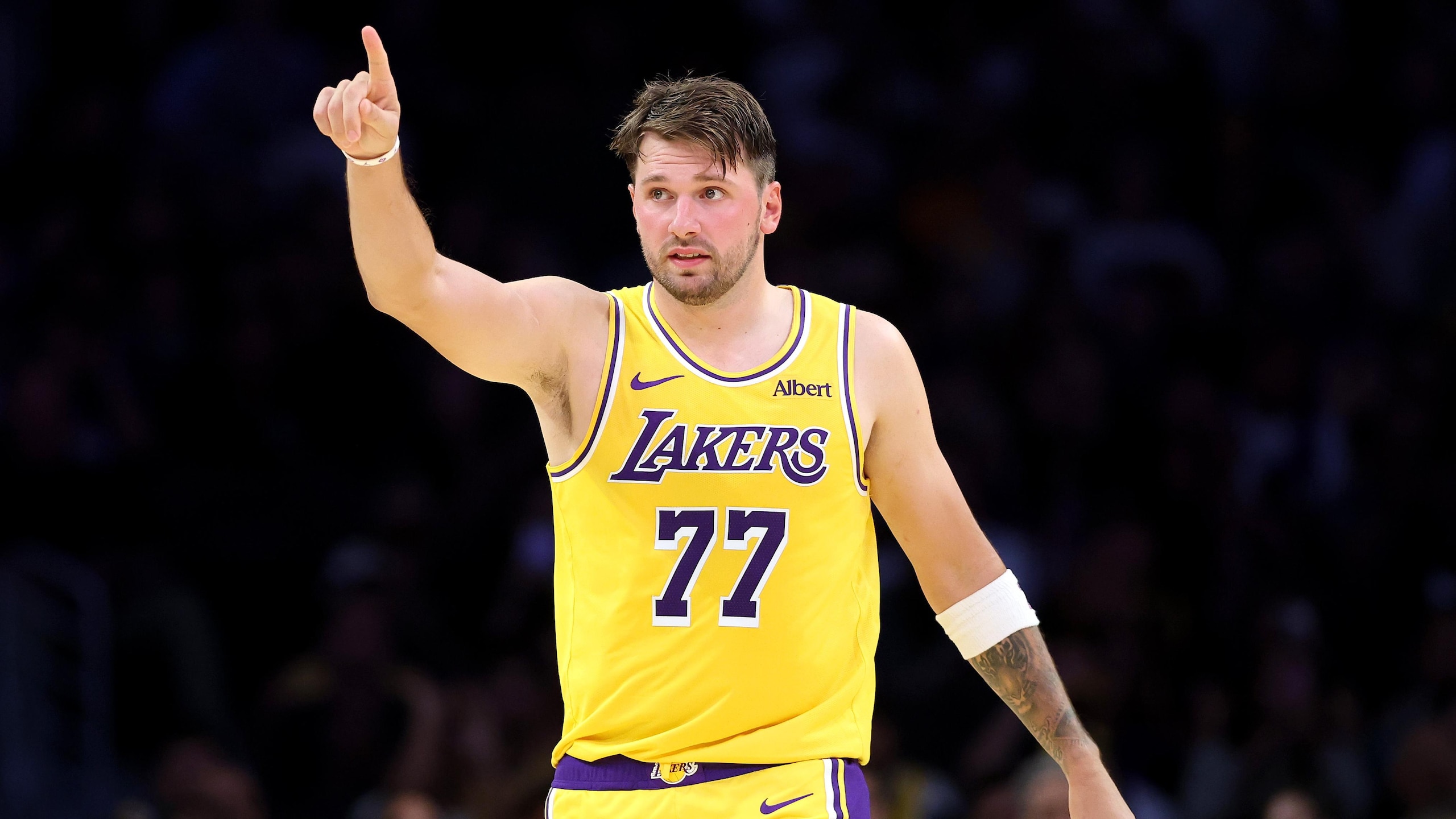
Bryce Harper: 10 Reasons Why He Can Be Nationals' X-Factor in the Playoffs
Bryce Harper has only been in the majors for a few short days and there's already plenty of talk of how he will provide a big boost to an abysmal Nationals' offense.
The team was 14-6 prior to his call-up, but his presence since hasn't actually made a difference—yet.
At 14-8, the Nationals still sit atop the NL East—albeit by a 0.5 game—and their stranglehold on the rest of the National League has vanished.
Don't blame the team's starting pitching, though, as they have easily been the most dominant rotation in baseball. Were it not for the weak offense or inability to close out games, the Nationals could potentially have 17 wins.
Luckily for Nats fans, things can only get better from here.
Sure, the pitching staff likely won't keep up this insane production, but Drew Storen will eventually be back to close out games and Ryan Zimmerman and Michael Morse will be back to provide some pop to the lineup.
Add in the fact that Harper and fellow prospect Tyler Moore are still getting acclimated to the majors, and the rest of this season looks bright for Washington.
With the way they're playing now, the Nationals deserve a spot in the playoffs. When they get there, Harper will no doubt be the team's X-factor.
His Speed
1 of 10People don't give Harper enough credit when it comes to his speed.
He is very, very fast.
He has yet to attempt a steal in his two games this season, but he had 26 steals combined between Hagerstown (Single-A) and Harrisburg (Double-A) in 2011.
Prior to his call-up, he had already recorded a steal at Syracuse (Triple-A).
Speed thrills in baseball, especially in the playoffs.
A speedy runner on first in an intense situation can really slow down a game and frustrate a pitcher.
Even if his speed doesn't result in any steals in the postseason, the fact that a runner of his caliber is on base would be enough to mess with the concentration of the pitcher.
That leads to mistakes, and mistakes lead to long balls.
With an offense as poor as the Nationals', they'll take any advantage they can get.
His Hustle
2 of 10One thing I noticed from Harper's first two games was his great hustle.
In his first major league at-bat, he tapped the ball right back to pitcher Chad Billingsley. It was almost as routine as they come, but that didn't stop the young phenom from running hard out of the box and making the play seem significantly closer than it actually was.
I again witnessed his hustle when he roped his first major league hit over the head of center fielder Matt Kemp.
He absolutely scorched the ball; it was hit so hard that there was no way he would make it past second base.
That didn't stop him from trying.
Halfway between first and second, he turned on the afterburners, flipping his helmet off of his head and making a big turn after reaching second.
Similar to speed, hustle can really put pressure on an opposing team.
On a routine grounder to shortstop, expect Harper to run hard-in and attempt to beat it out.
This would put extra pressure on the fielder and could possibly force an errant throw.
Harper's hustle will be key for the remainder of the 2012 season.
His Cannon of an Arm
3 of 10Harper can really sling it.
Just check out this line drive strike he threw to catcher Wilson Ramos against the Dodgers. It's a sight to behold.
That arm could potentially be the difference between a two-run lead and a one-run lead; a tie-game and a one-run deficit; a blowout or a save situation.
There will be runners who try and score on Harper in the playoffs, no matter how many assists he tallies in 2012. In his first go-around in the postseason, it may be worth the risk.
That being said, they will run on his inexperience and likely be hosed down by his cannon.
There will also be those runners that are smart enough to not try to go first-to-third when he has the ball. Good for those runners, they just saved the team an out.
But do you realize what Harper just saved his team?
An extra base.
An extra base that could lead to a run scored on a wild pitch or even to a run scored on a sacrifice fly.
If nothing else, the threat of Harper's arm should save the Nationals a run or two in the postseason.



His Range
4 of 10Two days in the majors, two different outfield positions.
Such is the life of a top prospect.
Harper made his debut in left field—where we witnessed his arm—and played center field the following night in Los Angeles.
He showed off his arm for us in Game 1 and didn't want the fans to go home without a little something else in Game 2.
He did not disappoint, as his leaping catch into the right-center field wall on a ball hit by Juan Uribe was easily one of the top plays early on in the 2012 season.
He looked a little shaken up after bashing his body up against the wall, but he quickly waved off the trainers and manager Davey Johnson.
The fact that he was a catcher is astounding when you look at the ground he covers on this play.
This range has the potential to save the Nationals many runs this postseason.
In my opinion, he should be manning center field for all of 2012 because he has the best range on the team, but the Nationals will likely shift him around a bit.
His Power
5 of 10Harper has game-changing power.
He has the type of swing that can change the outcome of a game in the blink of an eye.
In a Nationals lineup that lacks significant pop, his presence will most certainly be felt in the postseason.
Zimmerman and Morse are more pure hitters than power hitters, while Adam LaRoche has been very inconsistent as a power-bat over the past several seasons.
If Harper can live up to the insane amounts of hype that we have projected upon him, he'll become an integral part of the offense.
Early on in games, especially in the postseason, the Nationals will need to capitalize on scoring chances.
Instant offense is important in the playoffs, as the competition generally sports strong pitching. If a team can't capitalize on chances, they won't win.
With Harper at the plate, every at-bat is a scoring opportunity—even when there's nobody on base.
His Ability in the Clutch
6 of 10Harper's big league debut on Saturday was monitored by fans of nearly every team, and the pressure was clearly on him to perform.
After roping the double off of Billingsley, some of the pressure seemed to subside.
With the game tied in the ninth inning, Harper stepped up to the plate with runners on first and third.
He proceeded to take an outside pitch to left field, deep enough for the runner on third to score.
That sacrifice fly in the ninth shows that he doesn't crumble under pressure. It's not the postseason, but a major league debut is also a situation where the pressure can get to a young player.
In the postseason, every run counts.
If Harper's not driving the ball over the fence, he'll still be able to drive in runs in clutch situations.
He's still young, but he seems to realize the importance of situational hitting, something that gets lost at the major league level.
Finding a young power hitter with the ability to get it done in clutch situation is hard to come by, and the Nationals will benefit from Harper's ability to do such things in the postseason.
His Ability to Get on Base
7 of 10The Nationals offense fails to score runs mostly because they lack run producers outside of Zimmerman and Morse (and now Harper).
They would definitely score more runs if they possessed more guys who were capable of getting on base consistently, and that's something that Harper can bring to the table.
Albeit in just one minor league season, Harper posted a .392 on-base percentage in 2011. He had put together a .333 OBP in 20 games at Syracuse before his call-up.
His OBP may be skewed a bit because of pitchers' tendencies to pitch around him, but that still doesn't change the fact that he's on base with the potential to score.
His ability to get on base would not only create more opportunities for other guys to drive in runs; it would give him the opportunity to put himself in scoring position with his great speed.
If the Nationals allow him to utilize his entire skill set, he can easily turn walks or singles into doubles by swiping second.
Getting on base and rattling starting pitchers is key in the postseason, and Harper's ability to get on could be an important asset for the Nationals.
His Marketability
8 of 10Home-field advantage plays a big role in the postseason. It actually goes beyond just the field itself, as having the home fans behind you at all times can really pay dividends for a team.
With Harper at the big league level, and because the Nationals would be making their first-ever playoff appearance, there will no doubt be sellout crowds for every home game.
Harper's ability to fill a ball park will go unnoticed by most, but its importance to the Nationals will be invaluable.
Fans won't want to miss Harper's first playoff at-bat, first hit or first home run, so they'll fill the seats in hopes of witnessing history.
Getting a few autographs from the young slugger would likely bring some fans to the park as well.
His Youth
9 of 10Harper's youth could bring an exciting element to the otherwise under-the-radar Nationals.
I can't help but think of Andruw Jones and his World Series debut in 1996 as a 19-year-old phenom.
The Braves may have lost the series, but there's no doubt that Jones provided a spark in his first postseason.
He became the first player since Gene Tenace to homer in his first two World Series at-bats, as well as the youngest player to homer in a World Series in MLB history at 19 years, 180 days.
Should the Nationals be lucky enough to make it to the World Series, we can only hope that Harper performs at a similar level.
Expecting him to hit home runs in his first two at-bats is unfair, but homering at least once in the series is a fair expectation.
At worst, Harper will provide a youthful spark to a lineup with a mix of veteran players. He'll help to keep things light in the clubhouse even when facing defeat, something that not every young player has the ability to do.
His Swag
10 of 10Harper's infallible swagger will keep him cool, calm and collected during the postseason.
The confidence he has in his abilities are borderline cocky, but there's nothing wrong with that if he his producing.
Not only does he have the ability to keep calm in pressure situations, the passion and fire he displays in important situations are second to none.
The passion he plays with will be contagious and spread through the Nationals' clubhouse as they make a run at the World Series.
We'll have to wait and see if he can control his emotions and pick his spots well, but, regardless, there's no doubt that his fire will work as an X-factor for Washington.
Look for Harper to be a big reason why the Nationals make a run at the playoffs this season, and expect nothing less than 100 percent effort from him when they get there.



.jpg?w=2560 "Mahomes Told Teammate to Leave Meeting")

.jpg?w=2560 "5 Teams Eyeing Jonathan Taylor")
.jpg?w=2560 "Jonathan Taylor Landing Spots 📍")