
10 Minnesota Twins with Something to Prove in 2012
With the opening of the 2012 baseball season, the Minnesota Twins can finally start to erase the memories of the terrible season that was 2011.
It should be fairly easy for the team to start fresh since the Twins Opening Day roster contains 12 players who did not open the 2011 season in Minnesota. Among the 12, seven are new to the Twins organization, and have no connection to the debacle of last year.
This is a crucial year on many fronts for the Twins. In only their third season at Target Field, the team needs to be the main draw for fans, not the effect of smelling fresh-cut grass and having the sun in your face.
For manager Ron Gardenhire, it's the chance to prove he is still one of the best managers in baseball. A five-time runnerup, he finally won the AL Manager of the Year in 2010.
In 2011, with the highest payroll he's had to manage, it was a perfect storm of injuries that limited the talent on the field and his ability to put together a consistent lineup.
It will be important as well for the second coming of Terry Ryan. When the Minnesota general manager stepped down in 2007, he left behind a solid foundation that produced six AL Central division titles from 2002 to 2010. He needs to work his magic a little quicker and turn around a team that lost 99 games last year.
On the player front, there are plenty of players with something to prove.
For some, it's the fact that they are fully recovered from injuries that limited their play, for others, that they have earned the right to be on the 25-man roster, and for a few, it's time to step up and deliver, as they are playing for that next contract.
If the Twins are going to have any shot at competing in the American League Central, it's going to take improved, consistent play from every member of the team.
Here are the 10 Twins with the most to prove in 2012.
No. 10: Pitcher Liam Hendriks
1 of 10If starting pitcher Scott Baker were healthy, Liam Hendriks might be opening the season in the starting rotation of the Rochester Red Wings, the Twins' Triple-A affiliate.
Hendriks, an amateur free agent the Twins signed in 2007, is only 23 years old. In four seasons in the Twins' minor league system, he has only pitched in nine games at the Triple-A level.
He had a fantastic spring, making it very difficult for the Twins to leave him behind.
In 25.1 innings, he finished with a 3-1 record and a 2.84 ERA.
If he is to stick around once Baker is ready to return he will have to continue to make his case with every opportunity he gets. There will be no chance to ease in to a major league role.
Here's hoping he makes the decision very difficult for manager Ron Gardenhire and pitching coach Rick Anderson.
No. 9: Outfielder Trevor Plouffe
2 of 10It's going to be very interesting to see where, and how often, Trevor Plouffe will play.
He is listed as one of four outfielders on the Twins active roster, and manager Ron Gardenhire is calling Plouffe his "super utility" role player. He opens the season as the only backup shortstop on the 25-man roster. He could see playing time in the outfield and at second base as well.
With Plouffe failing to earn the starting shortstop position last season because of his defense, the Twins moved him to the outfield, a position he has only played in seven games over eight minor-league seasons, and 13 games for the Twins last year.
This could be his last shot to play at the major-league level for the Twins.
No. 8: Infielder Luke Hughes
3 of 10Luke Hughes is out of options. It was either make the Twins out of spring training or look for an opportunity with another team.
I like the power Hughes brings to the Twins lineup—at least during spring training.
The last two years, he's led the Twins with 12 home runs in 131 at-bats in Grapefruit League play, averaging a home run every 10.9 at-bats—those are Jim Thome-like numbers.
The problem is over the past two regular seasons he has only eight home runs, averaging one every 36.8 at-bats.
In 96 games last season, he demonstrated his flexibility by playing at second, third and first for the injury-depleted Twins.
If Hughes can bring the power north with him during the regular season, it could result in a position in the regular lineup.


No. 7: Relief Pitcher Brian Duensing
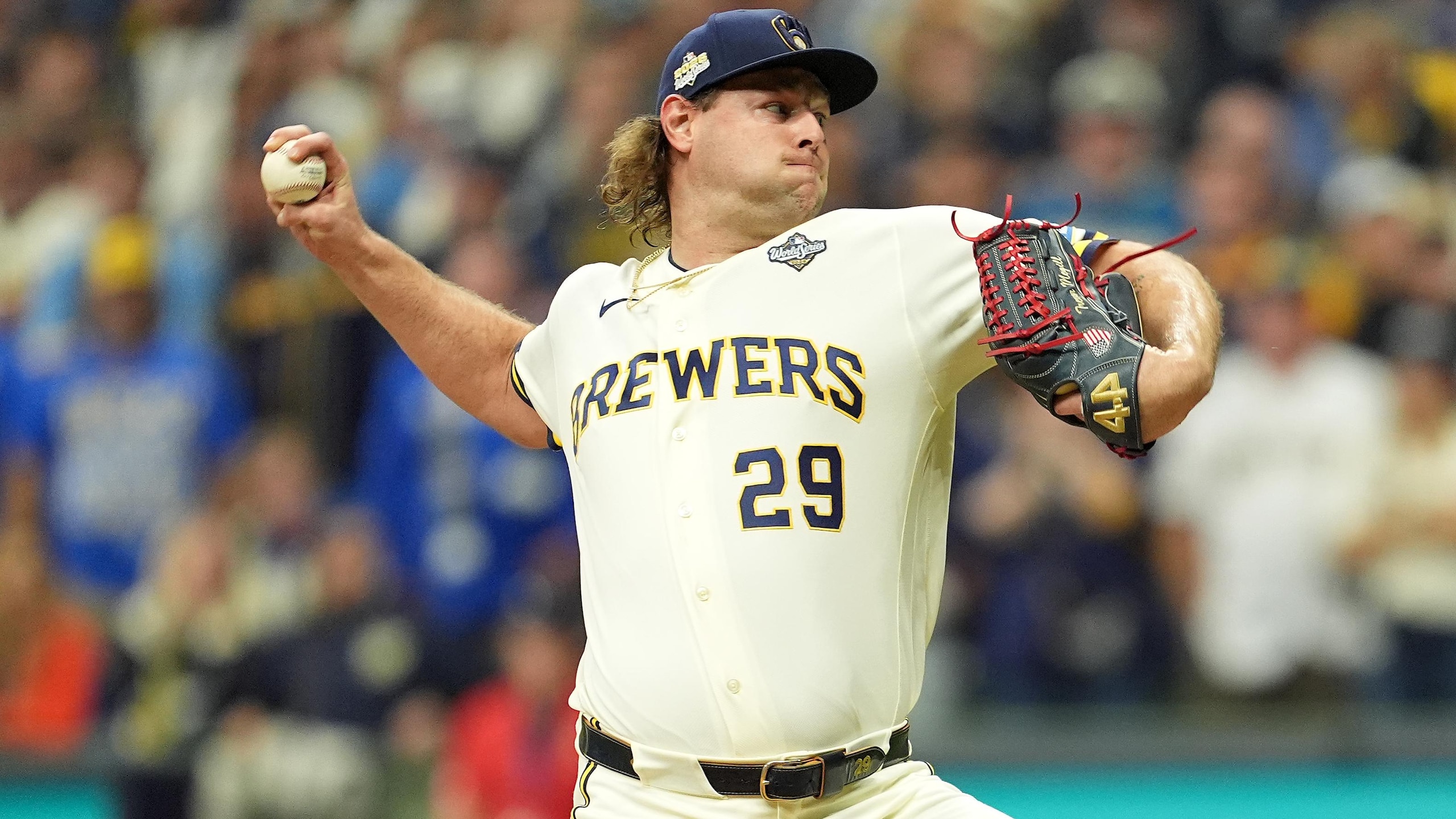
4 of 10After a failed attempt to be in the Twins starting rotation, Brian Duensing is hoping to pitch like he did in 2010.
That's when he led the Twins' pitching staff with a 2.62 ERA in 53 games, including 13 starts and finished with a 10-3 record.
He even got one of the three starts in the playoffs for the Twins.
Due to his success, he was promoted to the starting rotation in 2011. He struggled in making the transition. His ERA shot up to 5.23 ERA, the highest among the Twins starters.
This season, he finds himself back in the bullpen. The expectations will be that he pitches like he did two years ago. If that doesn't happen, it could be a long year for Duensing and the Twins.
No. 6: First Baseman Chris Parmelee
5 of 10Chris Parmelee opens the season as the Twins' first baseman.
He made quite a splash when he hit four home runs in 76 at-bats as a September call-up.
Having never played above the Double-A level, Parmelee showed no signs of being overmatched as he hit .355 in 21 September games.
His power numbers continued to impress this spring as he hit five home runs in 23 games, averaging a home run every 13.8 at-bats.
If he continues to put up these kind of numbers in April, there's no doubt the Twins will continue to find a place for him to play when Justin Morneau is ready to return to the field.
No. 5: Outfielder Ben Revere
6 of 10Ben Revere did just everything right last season filling in for Denard Span in center field.
In 117 games, he led the Twins with 34 stolen bases, the most by a Twin since Otis Nixon stole 37 in 1998.
He covered a lot of ground in center, and was awarded the Gibby for the Play of the Year for a catch he made in Baltimore off the bat of Vladimir Guerrero last Aug. 22.
Concerns about lack of arm strength and inability to bunt may have contributed to manager Ron Gardenhire naming Revere as the Twins fourth outfielder, playing behind Ryan Doumit or Trevor Plouffe—neither of whom call the outfield his first position.
That cannot sit well with Revere.
The Twins need Revere's speed in the lineup, more than as an occasional pinch-runner late in a game.
No. 4: Starting Pitcher Carl Pavano
7 of 10Carl Pavano is pitching on the last year of his contract.
The last time he was in this situation, he finished the 2010 season with a team-best 17-10 record, a 3.75 ERA and a league-leading seven complete games and two shutouts.
Last year as the the Twins struggled to score runs, Pavano's record dropped to 9-13 with a 4.30 ERA. He still led the team with three complete games and 222 innings pitched.
It was his complete-game shutout to end the season that prevented the Twins from losing their 100th game last year.
Pavano will make his second consecutive Opening Day start for the Twins when they open the season in Baltimore.
If the Twins are going to turn things around, they will need to rely on their workhorse to pitch another 200-plus innings and win 15 or more games.
No. 3: Designated Hitter Justin Morneau
8 of 10Justin Morneau would like nothing better than to forget the last two seasons ever happened.
It was Wednesday, July 7, 2010 when Morneau suffered the concussion sliding into second base that ended his season and started the long uphill battle to make it back in the Twins lineup.
At the time, he was leading the Twins with a .345 average, 18 home runs and 56 RBI.
Unable to completely shake the effects of the concussion and the plethora of injuries that assailed him last season, including neck surgery, Morneau was limited to only 69 games, the fewest since 2003 when he made his major-league debut.
While he's glad to be back in the starting lineup as the designated hitter, Morneau wants to prove he can still play first base.
After starting the spring out slow, he found his bat towards the end of spring training and finished strong with three home runs and 14 RBIs in 20 games—a huge improvement over 2011 when he was only able to play in 11 games with 33 at-bats.
If Morneau can regain his power and average from 2010, the potential of having him and Chris Parmelee in the lineup together could be a the start of another dynamic duo.
No. 2: Closer Matt Capps
9 of 10In 2012, the Minnesota Twins have no safety net at the closer position—it's Matt Capps' job to lose.
Here's hoping he can return to the dominating form that earned him an a spot in the 2010 All-Star game.
Signed to a one-year contract with a club option for 2013, Capps, like Carl Pavano, is pitching for his next contract.
In 2010, after acquiring him from the Nationals, Capps earned 16 saves pitching in 27 games. Last year he struggled and only had 15 saves in 69 games.
Not only did he lose the closer role to Joe Nathan, who was coming off Tommy John surgery, but he also lost the set-up role to Glen Perkins.
After struggling this spring with a 5.25 ERA in 12 innings, he could find himself once again on a short leash.
No. 1: Catcher Joe Mauer
10 of 10Joe Mauer's timing could not have been any worse.
After signing a contract extension before the opening of the 2010 season that made him the fifth highest paid player in baseball at $23 million per season, fifth in baseball, he suffered the worst season of his career.
Now, just about every avid Twins fan has heard of bilateral leg weakness, something that slowed Mauer's recovery from arthroscopic knee surgery before last season.
Only able to play in 82 games, Mauer hit .287 with three home runs and 30 RBI. Not the numbers expected from a former MVP and three-time batting champion. It has led to the questioning if the wear and tear of catching has taken its toll on the perennial All Star.
I have been a proponent to moving him to another position in order to extend his career and maximize the number of games he is in the lineup. Mauer is a career .323 hitter, and the Twins need his bat in the lineup as often as possible.
As the face of the franchise and the Twins best hitter, Mauer has a lot to prove that he is worth the $23 million the team is paying him. Otherwise, he might want to take a page out of Lyman Bostock's book and look to return some of the money.


.jpg?w=2560 "Rodgers Iced Out on Plane 💎")
.jpg?w=2560 "Raiders Could Start Mendoza")
.jpg?w=2560 "Mahomes Told Teammate to Leave Meeting")
.jpg?w=2560 "🚨 Week 8 AP Top 25 Poll")


.jpg?w=2560 "Lamar Being Out Shocked Ravens")
.jpg?w=2560 "Lions Outlast Packers")