
The 10 Best 'New' Rivalries in College Football
With yet another round of conference-realignment shifts on the cards for 2012 and 2013, it’s time to take another look at the ever-changing definition of “rivalry” in college football.
One of the biggest hits to the sport, from a traditionalist approach, is the loss of treasured rivalries due to league-swapping.
Yes, the money grab makes everyone want a piece of the action, and given the current climate, each institution is truly now in a position to have to look out for No. 1. But, gone in the process are traditional rivalries that have defined the sport and made it what it is today.
Among those whisked away in the upcoming shifts are longstanding annual grudge matches between Texas and Texas A&M (currently known as the Lone Star Showdown), West Virginia and Pitt (the Backyard Brawl) and Kansas vs. Missouri (the Border War).
And the way things are going, the list seems sure to continue to grow as the landscape of college football is forever altered.
On the upside, taking a purely “glass-is-half-full” approach, for every rivalry lost, there is potential for a new regularly scheduled hate-fest to emerge from the ashes of change.
The following slideshow looks ahead to the next 24 months of known shifts and pinpoints 10 potential “new” rivalries in college football.
Texas vs. TCU
1 of 10First up is a rivalry that could be more clearly defined as “renewed” as opposed to “new.”
Indeed, the Horned Frogs and Longhorns have been squaring off since 1897 (their first meeting ironically was in Waco, TX) and have met a total of 82 times, with Texas having a considerable advantage all-time at 61-20-1.
The two schools (located only 190 miles apart) met on an annual basis from 1927-1996, when both were proud members of the since dearly departed Southwest Conference.
And now, in a strange twist of fate that involved Texas A&M exiting stage right for the SEC, TCU is back on Texas’ radar due to its impending move to the Big 12 for the 2012 campaign.
Yes, TCU could be identified as a rival for Baylor, Texas Tech and even Oklahoma and Oklahoma State, but the true pomp and circumstance will be assigned to the renewal of their annual meeting with Texas.
Why?
Well, first you’ve got Texas without Texas A&M, and though the Aggies won’t be easily replaced, TCU is another school in Texas and one who has been more successful in football recently.
Secondly, the Frogs have been in position to be a national championship contender as members of non-BCS leagues, so what better way to prove that they “belong” than getting a chance, annually, to knock off big-boy Texas?
And remember, this is not a one-sided affair by any stretch of the imagination—TCU has been ranked higher than Texas in the final AP poll in the last two seasons, so everybody’s got something to prove in this one.
The rivalry is back in business Saturday, Nov. 24 in Austin…and don’t think that the placement of the game on Thanksgiving weekend is any accident.
Missouri vs. Tennessee
2 of 10From a purely geographic and rival-centric perspective, Missouri would have been better served to flee to the Big Ten Conference as opposed to the SEC, which they will join this summer.
And that’s exactly what Mizzou attempted to do before defecting elsewhere.
Regardless, the Tigers are Deep South-bound, which makes picking a new grudge match partner difficult given that Missouri is firmly situated in the Midwest.
Geographically speaking, Arkansas is a potential rival for Missouri, but since the two will play in different divisions, this won’t be an annual meeting, and therefore, hate will be harder to fuel.
Another option is Kentucky (also from the East Division), but it’s difficult to conjure up a reality-based notion that folks will get all fired up about the Mizzou vs. UK football matchup (though the basketball clash is quite tasty).
Realistically, from both a geographic and level-of-competition standpoint, Tennessee makes the most sense to provide the kindling for a full on fire of football hate.
Ironically, the two schools have never met on the football field, which means that their Saturday, Nov. 10 meeting in Knoxville will be the first chapter of their own book of gridiron history.
You have to think that this specific clash might take the longest to catch on of any on our list.
West Virginia vs. Oklahoma
3 of 10And here’s what could be a dandy between two flagship state schools who are passionate about their successful football programs.
Since 2003, both West Virgina and Oklahoma have won six conference titles in their respective leagues, meaning that on only four occasions in the last decade has a team other than the Sooners or Mountaineers won the Big East or Big 12.
Yes, it’s the Mountain State vs. the Sooner State for all the marbles.
And then you’ve got delicious undertones of the Big East not being as competitive as the Big 12 and the Sooners being overrated.
Additionally, who doesn’t want to see Oklahoma (not necessarily a road darling) travel to an amped-up Morgantown to get it on for a conference crown (every other year)?
The Sooners and Mountaineers have clashed only four times in history, and each program has two wins against the other.
Oklahoma won the first two contests (blowouts in 1958 and 1978, both in Norman), and West Virginia has reigned victorious in the last two meetings (a lopsided win in Norman in 1982 and then the beat-down in the 2008 Fiesta Bowl).
Game five betwixt the two—the first as league foes—is slated for Saturday, Nov. 17 in Morgantown, and I personally hope they get it on at night so the Sooners can see the furniture burning from the parking lot.


Texas A&M vs. LSU
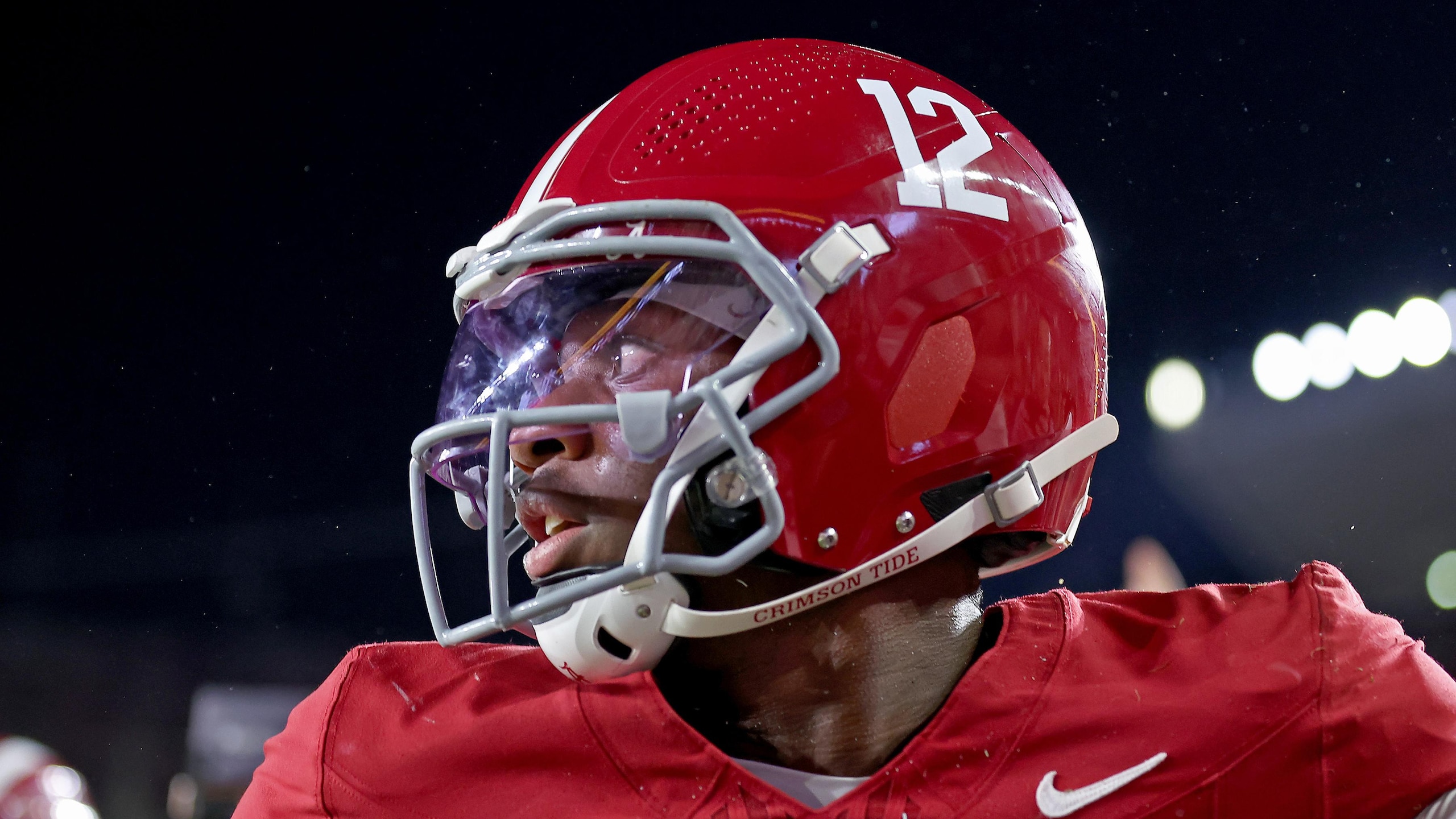
4 of 10Though much ado has been made about the Aggies taking on former Southwest Conference foe Arkansas in a neutral-sited affair over the last three years, really, the best chance of a hate-fest for A&M in the SEC lies straight down the I-10 corridor.
And I say I-10 because it connects Houston with Baton Rouge, not College Station.
Yes, the densest Aggie-laden major market is Houston, which is located only less than 100 miles from College Station and makes a rivalry with LSU (located a convenient four hours down I-10 from Houston) a natural fit.
And don’t forget, A&M duked it out with LSU in a regularly scheduled home/away series from 1986-1995, which was wildly received by both schools.
If Texas A&M can continue to rise from the ashes, to the tune of being competitive in the SEC West, then look for LSU vs. Texas A&M to be a firecracker of a matchup.
The Aggies and Tigers have met 50 times in history, with LSU holding a 20-27-3 advantage all-time.
The first game was played in 1899 in College Station, and the first league game will be played Saturday, Oct. 20—also in maroon-hued College Station.
Nevada vs. UNLV
5 of 10Perhaps completely overlooked by the league shifting being done on the BCS level, Nevada’s move from the WAC to the Mountain West has all the makings of a Peaches and Herb “Reunited” music video.
Nevada has been aligned with the WAC since 2000, but is slated to join the MWC in 2012, where it will join in-state UNLV, which it shared a Big West address with from 1992-1995.
Regardless of their relatively brief prior interlude as members of the same league, Nevada and UNLV have squared off 37 times in history, including consecutively since 1989.
And now, they will do so with conference-championship implications on the line.
Nevada leads the all-time series 22-15-0, and the two will meet for the first time as MWC members at some point during the 2012 schedule, which has yet to be finalized.
This has all the makings of a great regional rivalry that should really benefit college football in the state of Nevada.
Pittsburgh vs. Virginia Tech
6 of 10Looking further ahead, we have Pittsburgh’s impending move from the Big East to the ACC for the 2013 campaign.
Pitt has been a member of the Big East since its birth in 1991, and prior to that, had been an independent since first taking the field in 1890.
When the Panthers finally join the ACC, they’ll do so as members of the Coastal division, which gives them several options for potential rivalries.
Maryland is the closest geographically, but as members of the ACC Atlantic Division, they won’t meet Pitt on a year-to-year basis.
Next in line, logically, are Virginia Tech and Virginia, both Coastal members and both close enough to stir the pot.
Virginia Tech is the logical choice because there is history between the two schools due to the fact that they shared Big East membership from 1991 until 2003, when Virginia Tech left for the ACC.
Really though, it will all come down to who plays whom more often, early on, for a shot at the divisional title because building rivalries—especially where no natural tendency lies—is a situational affair.
And with this being the case, Virginia Tech (who has won five out of seven total Coastal titles since the ACC split into divisions in 2005) will be the team to beat, and therefore, has a better shot at becoming an adversary for Pitt.
The Hokies and Panthers have met 11 times in history (the series didn’t start until 1993), and Virginia Tech holds the advantage by a 4-7 margin; the two last met in 2003.
Pitt’s another program, like Missouri, that will have a more difficult time making enemies quickly.
Boise State vs. Louisville/Cincinnati
7 of 10Boise State’s planned move from the MWC to the Big East in 2013 presents an interesting set of variables in terms of rivalries.
First, Boise State has moved around enough recently that it’s difficult to pinpoint their current football adversaries, though you definitely could mention Idaho, whom they left behind when they fled the WAC and joined the MWC in 2011.
Secondly, the Broncos' move to the Big East is so absurd, from a geographic standpoint, that it’s difficult to think who they might even have a potential natural tendency to hate.
San Diego State is also set to join the East (also as a football-only member) in 2013, but it’s not easy to see this being a title-determining clash in what should be the "western division" of the new Big East.
And that leads us to Louisville, who, if they stick around (and don’t join a Big 12 that should also expand further), might be the squad best equipped to challenge Boise State for dominance in the “west” of the East league.
Cincinnati is another option and perhaps one that is just as viable as Louisville for the same reason.
Boise State has never faced Cincinnati in football, and they are 1-1 all-time against Louisville, with both meetings being in bowl games (the ’99 Humanitarian Bowl and the ’04 Liberty Bowl).
Syracuse vs. Boston College
8 of 10Syracuse becoming adversarial with Boston College when they join the ACC Atlantic in 2013 wouldn’t necessarily represent a “new” rivalry, but instead (and like Texas vs. TCU), it would be more of a renewal of bad feelings.
Boston College (who had been independent for all of its history before joining the Big East in 1991) left the Big East in 2005, and prior to that, spent 14 years slugging it out with Syracuse in the same league.
Before that date, Syracuse (who was also independent for its entire history before joining the Big East in 1991) had clashed with Boston College 32 times when the programs met as independents.
These are schools separated by a mere 300 miles with lots of shared history, and both are basically newcomers to an ever-expanding ACC.
Though this won’t necessarily be Alabama vs. Auburn or Texas vs. Oklahoma, Syracuse vs. Boston College will be a good grudge match between two division rivals who make sense geographically and historically.
Syracuse leads the all-time series 28-18-0, and the two last met in 2010 in New York.
UCF vs. USF
9 of 10One of the more underplayed aspects of the Big East’s attempt to make up for attrition by sending out upwards of eight invites to its league-survival party is the potential of having two programs from Florida in the conference.
Yes, in a move that actually makes sense (Florida has real estate on the East Coast), Central Florida will join South Florida in the Big East Conference in 2013.
And what makes things more exciting, from a rivalry-potential perspective, is that these are both young programs that are on their way up the football charts.
South Florida (USF) didn’t field a football team until 1997 and didn’t join the FBS ranks until hooking up with C-USA in 2003. Since this time, almost amazingly, the Bulls have recorded only two losing seasons (2004 and 2011) and have scored eight or more wins on five occasions.
Really impressive given the time they’ve had to ramp it up.
Central Florida (UCF) didn’t hit the gridiron until 1979, when they debuted as a D-III school, and didn’t join the FBS until 1996, when they moved up as an independent.
In 2002, the Knights joined the MAC, and then in 2005, they hooked up with C-USA. Impressively, UCF has won three divisional and two conference championships since ’05.
In 2013, USF and UCF will become adversaries in what should be the eastern division of the Big East, leading to what has the potential to be—based on the rising level of play and geographic locale—a natural rivalry waiting to explode.
Yes, what if UCF vs. USF is the next solid hate-fest in the state of Florida, and what if—in a weird twist of fate—it has the best chance of being the realest “rivalry” on our list?
The Bulls and Knights have met four times previously (consecutively from 2005-2008), with USF winning all four games.
West Virginia vs. Texas
10 of 10Another natural blockbuster in the making is West Virginia’s potential annual date with destiny in the form of the Texas Longhorns.
As in the case of West Virginia vs. Oklahoma, you’ve got two flagship universities with wildly passionate fanbases squaring off annually (at least until the Big 12 expands and possibly splits into divisions again).
Either way, there is something inherently exciting about the Mountaineers vs. the Longhorns for dominance in a new era of the still-young Big 12.
Indeed, this matchup has all the long-term qualities, title-implication and potentially historical impact of, say, Nebraska vs. Iowa/Michigan or Texas A&M vs. LSU/Alabama.
It just has “wow” written all over it.
The Longhorns and Mountaineers have met only once in history, which came in 1956, when West Virginia nipped Texas, 7-6, in Austin.
The two will kick off their newfound adversarial relationship on Saturday, Oct. 6 in Austin, with more than just the Longhorn Network viewership tuned in.
_0.png?w=2560)





.jpg?w=2560 "Love's Body Already 'Tired'")
.jpg?w=2560 "2 NFL Officials Suspended")
.jpg?w=2560 "Mahomes' Wife Trolls Kubiak 💀")


