
The MLB Playoff Trend in 2023 That Front Offices Must Remember in the Offseason

Long gone are the days of MLB managers allowing their rubber-armed aces to work deep into postseason starts.
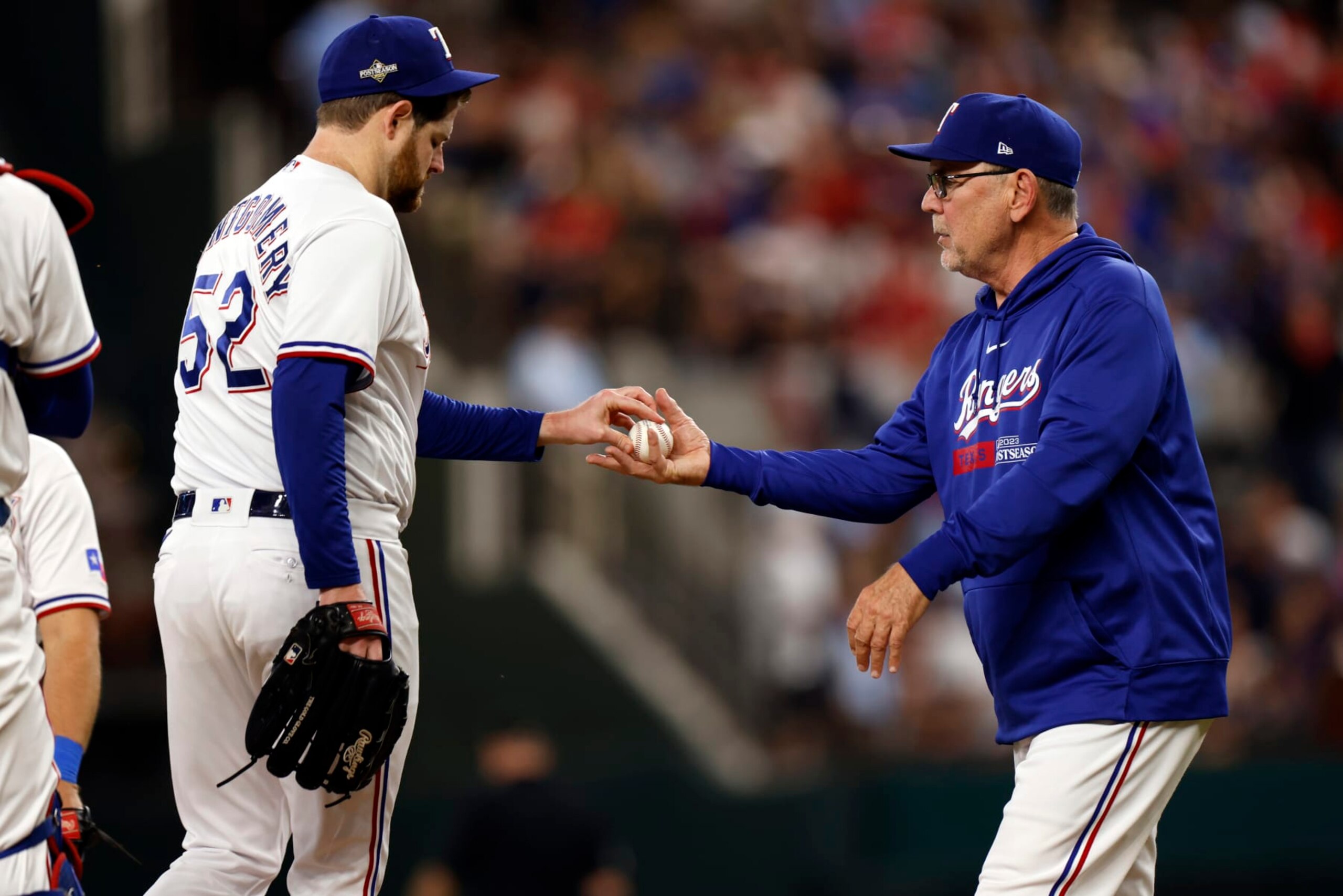
Instead of arguing whether Pedro Martínez should've been left in to try to work his way out of that eighth-inning jam in Game 7 of the 2003 ALCS, nowadays, we've grown accustomed to quick hooks a la Arizona's Brandon Pfaadt getting pulled at 70 pitches after 5.2 scoreless innings of work, or Toronto's José Berríos getting yanked one batter into the fourth inning of a scoreless game.
But at the risk of becoming a meme of an old man yelling at clouds, I just have to say it wasn't always like this.
TOP NEWS

MLB Commissioner Defends Salary Cap
Miz Trades Cards With Kid 🥹

Live Rays vs. Brewers Game 2 🎬
Middle relievers didn't used to be this doggone important.
Only a decade ago in 2013, pitchers averaged 17.3 outs per start in the postseason—just a shade under six full innings. That had consistently been the average for nearly four decades dating back to 1975. Some years it was north of 18 outs; occasionally it was down in the 15-16 range. But over the course of those 38 years of playoff baseball, the average starter lasted 17.66 outs.
That all started to change in 2014, even though Madison Bumgarner did everything in his power to keep the average up with one of the all-time great postseason runs by a starting pitcher. (MadBum averaged 23.8 outs per start, while the other 28 starters averaged 15.9 outs per start.)
By 2016, the average was down to 15.3 outs.
Two years later in 2018, it was barely 14 outs.
2021 was an all-time low with starting pitchers not even lasting four innings (11.9 outs) on average, though that number was skewed a bit by the five instances of openers who were never going to pitch beyond the first inning.
This October, despite four quality starts by each of Zack Wheeler and Nathan Eovaldi and multiple from each of Aaron Nola, Jordan Montgomery and Justin Verlander, the average postseason starter is lasting just 13.9 outs—in between 4.1 and 4.2 IP—with relievers logging nearly as many innings pitched (273.2) as starters (306.2).
It has now been more than six calendar years since the last complete game was tossed in the postseason (Verlander on Oct. 14, 2017), and we have yet to see a starter even pitch into the eighth inning this October.
But at least until a few days ago, that long-bullpen approach was working almost to perfection in 2023.
Through October 18, 101 pitchers had combined to make 210 relief appearances spanning 220.0 innings, and they had a cumulative ERA of 2.86. Meanwhile, starting pitchers had been saddled with a 4.50 ERA in their 254.0 innings of work.
Things did go quite poorly for relievers this past Thursday and Friday, combining for four blown saves in the span of about 27 hours after there was just one blown save in the first 27 games of the postseason.
However, even after those mishaps, we're looking at a 3.19 ERA for relievers and a 4.40 ERA for starters.
While that divide is a bit more pronounced than usual, bullpens collectively posting better marks than starting rotations in October has been par for the course for some time now.
Dating back to 2002, the only postseasons in which starters posted a better ERA than relievers were 2012 (3.04 vs. 3.06) and 2019 (3.36 vs. 4.24).
Cumulatively in those 22 postseasons, it's a 4.12 ERA and an 8.0 K/9 for starters compared to a 3.57 ERA and a 9.0 K/9 for relievers.
It's not hard to see why managers have grown increasingly eager to hand the ball to their bullpens.
Here's the thing, though: There's seemingly no rhyme or reason to which bullpens will be reliable in the postseason.

En route to last year's World Series, Philadelphia's bullpen ERA went from a sub-par 4.27 during the regular season to a rock-solid 2.62 in the postseason, while Houston's bullpen went from "really good" (2.80 ERA during the regular season) to "goodness that's ridiculous" (0.83 ERA in the postseason).
This year, both Arizona and Texas entered the postseason with relief pitching representing a massive concern. The Diamondbacks had a 4.22 bullpen ERA and had to trade for Paul Sewald to finally get someone to pitch the ninth inning. The Rangers had a 4.77 bullpen ERA and blew more saves (33) than they converted (30).
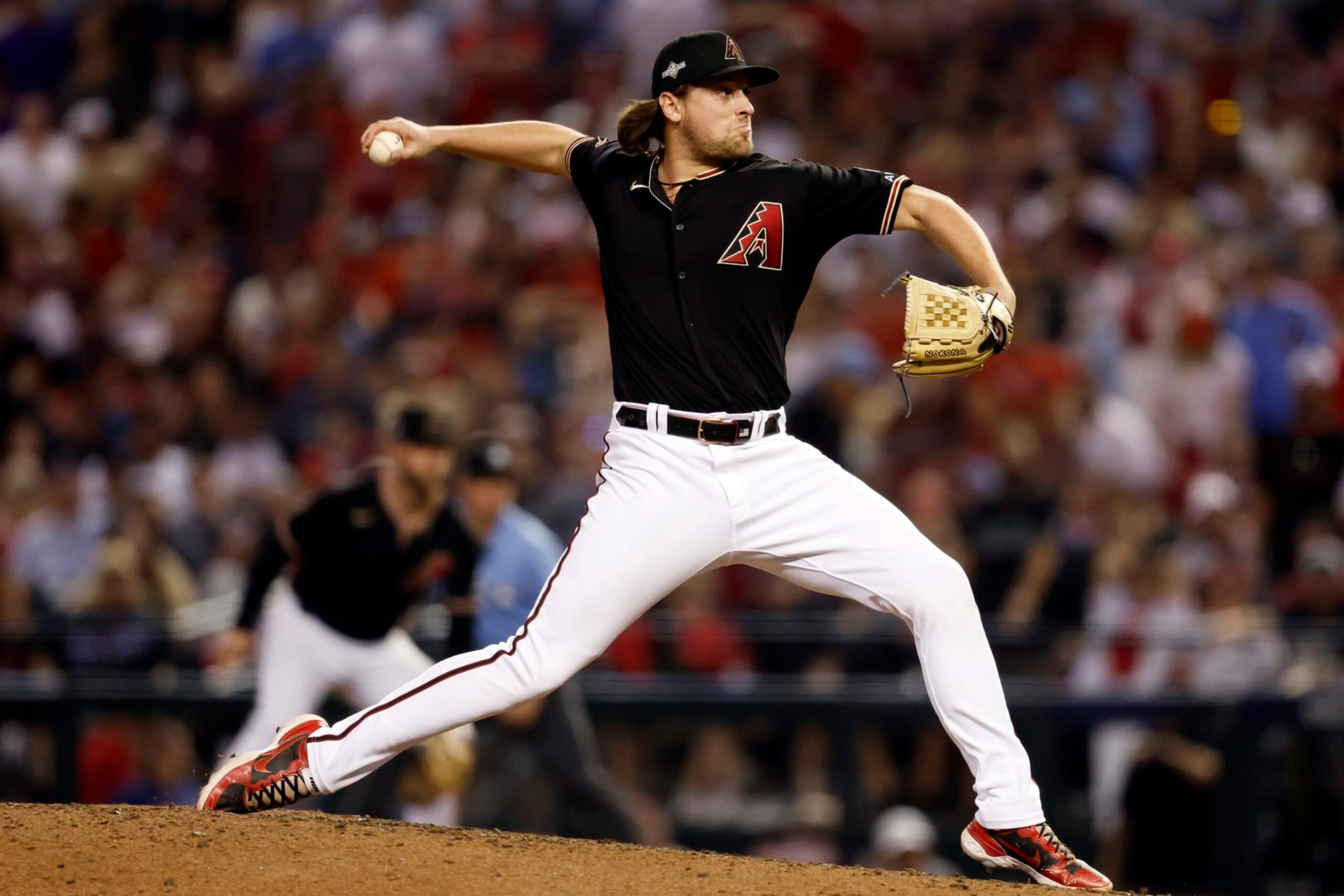
But in the postseason, those bullpens have gone a combined 6-2 with eight saves, 19 holds and just the one blown save by José Leclerc. The Diamondbacks even won Game 4 of the NLCS with an "all hands on deck" approach, using eight relievers in the process of out-bullpening the Phillies.
What's worth noting about both of those previously-concerning-now-clutch bullpens, though, is that while the overall numbers during the regular season were fairly brutal, they each have a few relievers they they can trust in October to protect a lead from the sixth inning onward. (Though, we can certainly debate how much Bruce Bochy actually trusts Aroldis Chapman at this point.)
And having more than just a trustworthy closer in the bullpen has been a growing emphasis for some time now, with baseball games looking more like chess matches after the second rotation through the batting lineup.
Remember the 2011 Atlanta Braves who felt impenetrable with a late-game lead behind the combined strength of Eric O'Flaherty, Jonny Venters and Craig Kimbrel? If they hadn't collapsed in historically painstaking fashion that September to miss the postseason, they would've been set up beautifully for a deep run in October.
There were also the 2017 New York Yankees with the bullpen quartet of Dellin Betances, Chad Green, David Robertson and Aroldis Chapman. That team was built for a World Series, holding the Astros to a .187 batting average in the 2017 ALCS. It just wasn't enough when New York's offense was held to zero or one runs in each of its four losses of that seven-game classic.
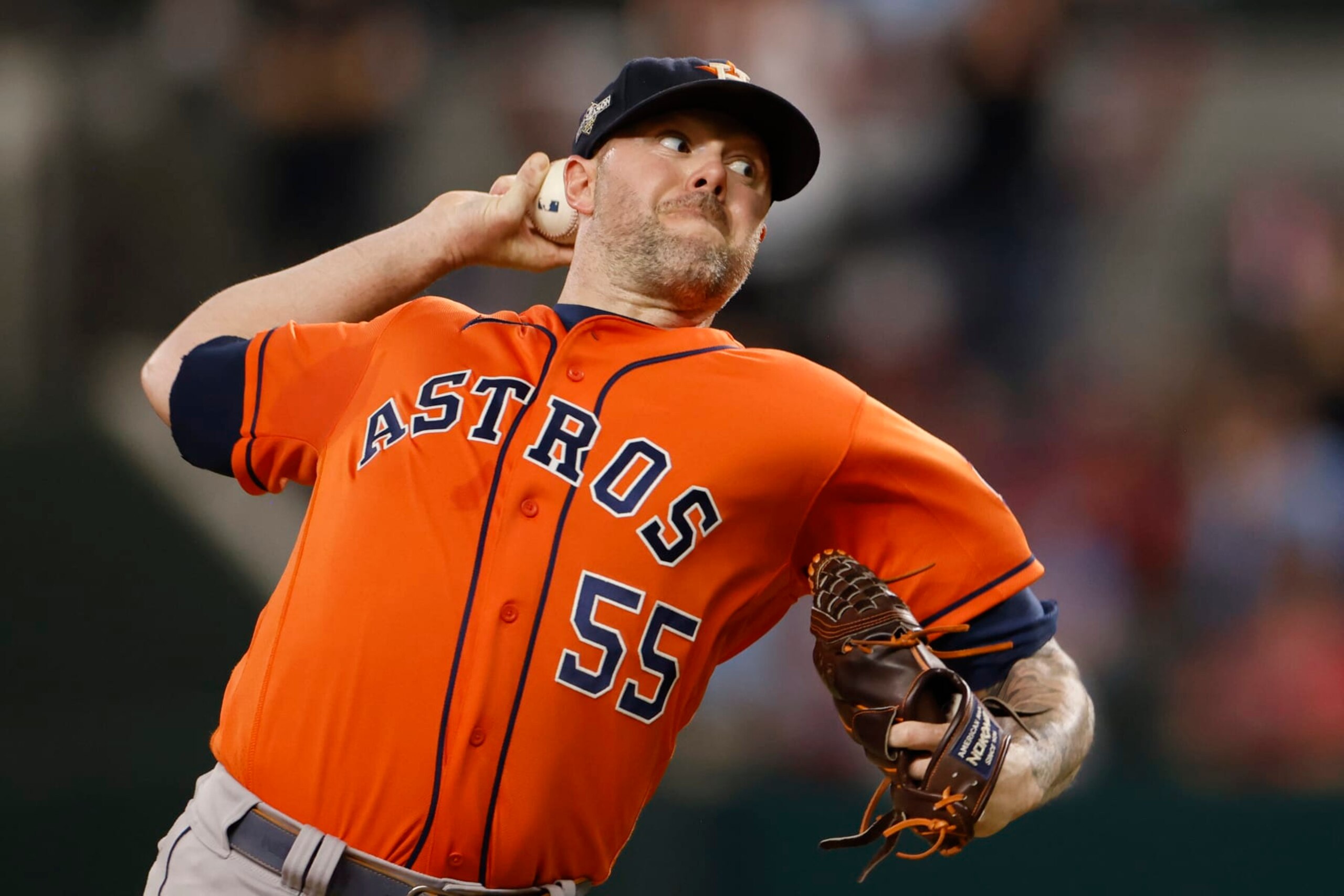
And if any franchise has ascertained the true value of reliable relievers in the postseason, it's the one that has been to seven consecutive ALCS. Per Spotrac, the Houston Astros spent more on relief pitchers than any other team this season. And even though they already had a loaded bullpen, they traded for Kendall Graveman to make that strength even stronger—though, he missed the postseason with a shoulder issue.
Prior to allowing Texas to score a bunch of insurance runs late in Game 6, that carefully, expensively constructed bullpen had been sensational, posting combined marks of 2.18 ERA, 0.81 WHIP and 10.9 K/9 through the first nine games.
Save for the elite ones—like Josh Hader, who could be headed for a $100 million contract in free agency this offseason—most relief pitchers are a dime a dozen. But putting together a deep bullpen needs to be of greater importance when it comes to building postseason-worthy rosters for the foreseeable future.
Because let's face it: The fifth starter in the rotation never plays a factor in the postseason, unless he is used as a long reliever. And with so many days off, even the No. 4 starter might make a grand total of two appearances during a World Series run.
A reliable reliever, though?
He'll pitch in damn near every game you win in October.
So stock up on as many of those as you possibly can.
Because if this postseason has taught us anything, it's that you can win it all with just two solid starting pitchers and a deep stable of bullpen arms.




.jpg?w=2560 "Malik Beasley Negotiating Plea Deal (AP)")
.jpg?w=2560 "Aikman Blasts Cowboys WR 🫣")


.jpg?w=2560 "Jonathan Taylor Landing Spots")