

Value is the name of the game when it comes to the NFL draft. Some teams did better than others with that during the 2023 NFL draft.
There's more than one way to approach the draft. Each front office has a unique approach based on team-building philosophy, roster management and scheme.
However, the best picks often happen at the intersection of team need, positional value and upside.
Here, we'll take a look at one pick for each team that best fits that description. The final big board from the B/R Scouting Department was used as a general guideline, but team fit and positional value were also taken into consideration.
Arizona Cardinals: Edge BJ Ojulari, No. 41 Overall
1 of 32
B/R Rank: No. 24
The Arizona Cardinals could have selected Will Anderson Jr. at No. 3 and filled their major need for a pass-rusher. But the value they got in return from the Houston Texans in the trade to go down to No. 12 was too good to pass up.
Drafting BJ Ojulari with the 41st overall selection takes some of the sting out of passing on Anderson, too. Ojulari was the 24th-ranked player on the final B/R big board and was praised for his "wide array of finesse moves to win around the edge like a cross chop, arm over and inside or outside stick moves" in his B/R scouting report.
Ojulari is a bit undersized at 6'2" and 248 pounds. However, new Cardinals head coach Jonathan Gannon helped edge-rusher Haason Reddick put together the best season of his career last season as the defensive coordinator with the Philadelphia Eagles.
With his quick first step and bend to get around the edge, Ojulari has the potential to step into that role and lead the Cardinals' pass rush. That's an incredible value in the second round.
Atlanta Falcons: CB Clark Phillips III, No. 113 Overall
2 of 32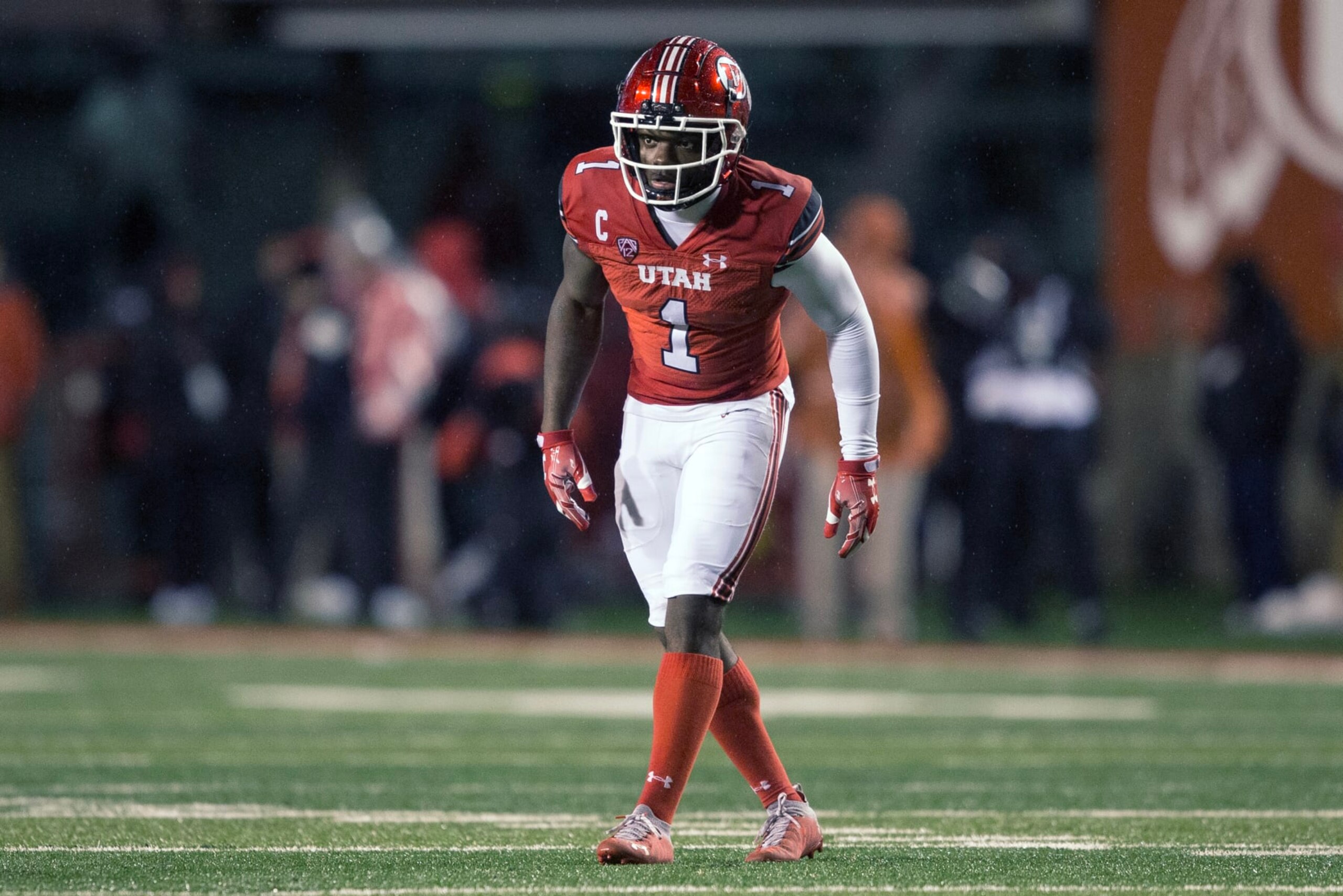
B/R Rank: No. 25
Among the B/R Scouting Department's top 32 prospects, Utah cornerback Clark Phillips III had the biggest disparity between where he was ranked and where he was drafted. Our scouting department was higher on him than others, but he was ranked 57th on NFL Mock Draft Database's consensus big board.
Either way, the Atlanta Falcons getting him at No. 113 overall is an incredible value.
Phillips' 5'9", 184-pound frame makes him a questionable fit as an outside corner, but he has the tools to be an elite option in the slot.
"His ball-hawking tendencies make him an elite player and one that will be coveted at the next level," B/R scout Cory Giddings noted in Phillips' scouting report. "His size may be a question to play out wide, but his movement skills are more than capable of playing from the slot."
The Falcons already have a great cornerback in A.J. Terrell on the outside, and they traded for Jeff Okudah this offseason. Sliding Phillips into the slot gives them an exciting group of young, dynamic corners to shut down opposing passing attacks.
Baltimore Ravens: LB Trenton Simpson, No. 86 Overall
3 of 32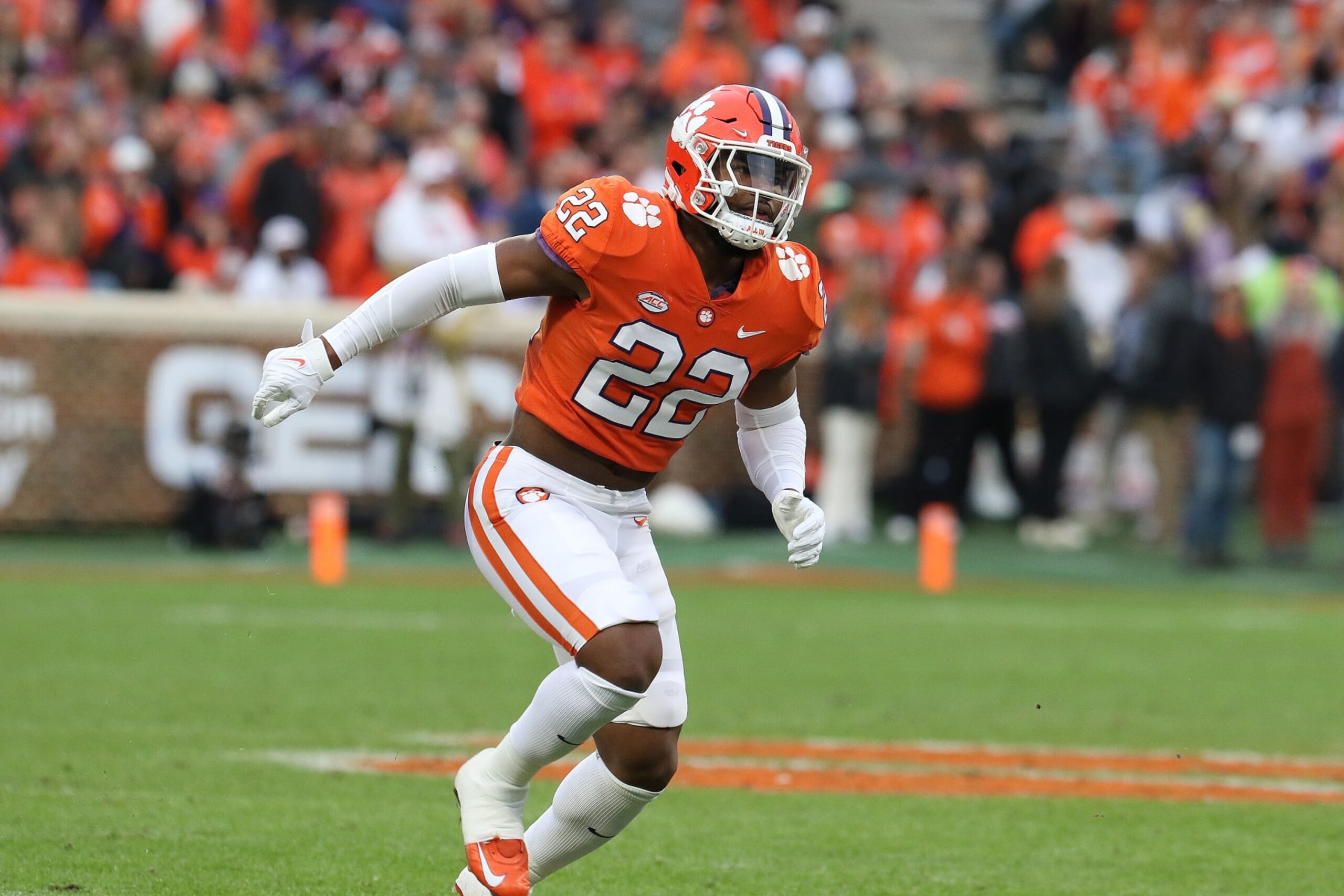
B/R Rank: No. 43
The Baltimore Ravens took the 42nd-ranked player (Zay Flowers) and 43rd-ranked player (Trenton Simpson) on the final B/R big board. The difference is that they took them 64 picks apart.
They might have reached a bit on Flowers, but they got quite the bargain with Clemson linebacker Trenton Simpson.
At 6'2" and 235 pounds, Simpson is a great athlete whose 4.43 speed shows up on film. His ability to fill run lanes with confidence and violence fits well with the Ravens' ethos on defense.
Simpson also showed the ability to be a great blitzer in college, with 13 sacks across three seasons. Most of the weaknesses mentioned in our scouting report for him are related to his zone coverage.
That shouldn't be as big an issue for the Ravens. He'll likely be playing alongside Roquan Smith, a three-time All-Pro selection who is one of the best coverage linebackers in the game. That should allow defensive coordinator Mike Macdonald to accentuate Simpson's strengths.
If the third-rounder is ready to crack the starting lineup right away, he could make Patrick Queen expendable. There is already speculation that Queen could be a trade target, and the team has already declined his fifth-year option.
.jpg?w=2560 "Chiefs Giants Football")
.jpg?w=2560 "Steelers Buccaneers Football")
.jpg?w=2560 "Titans Colts Football")
Buffalo Bills: OG Cyrus O'Torrence, No. 59 Overall
4 of 32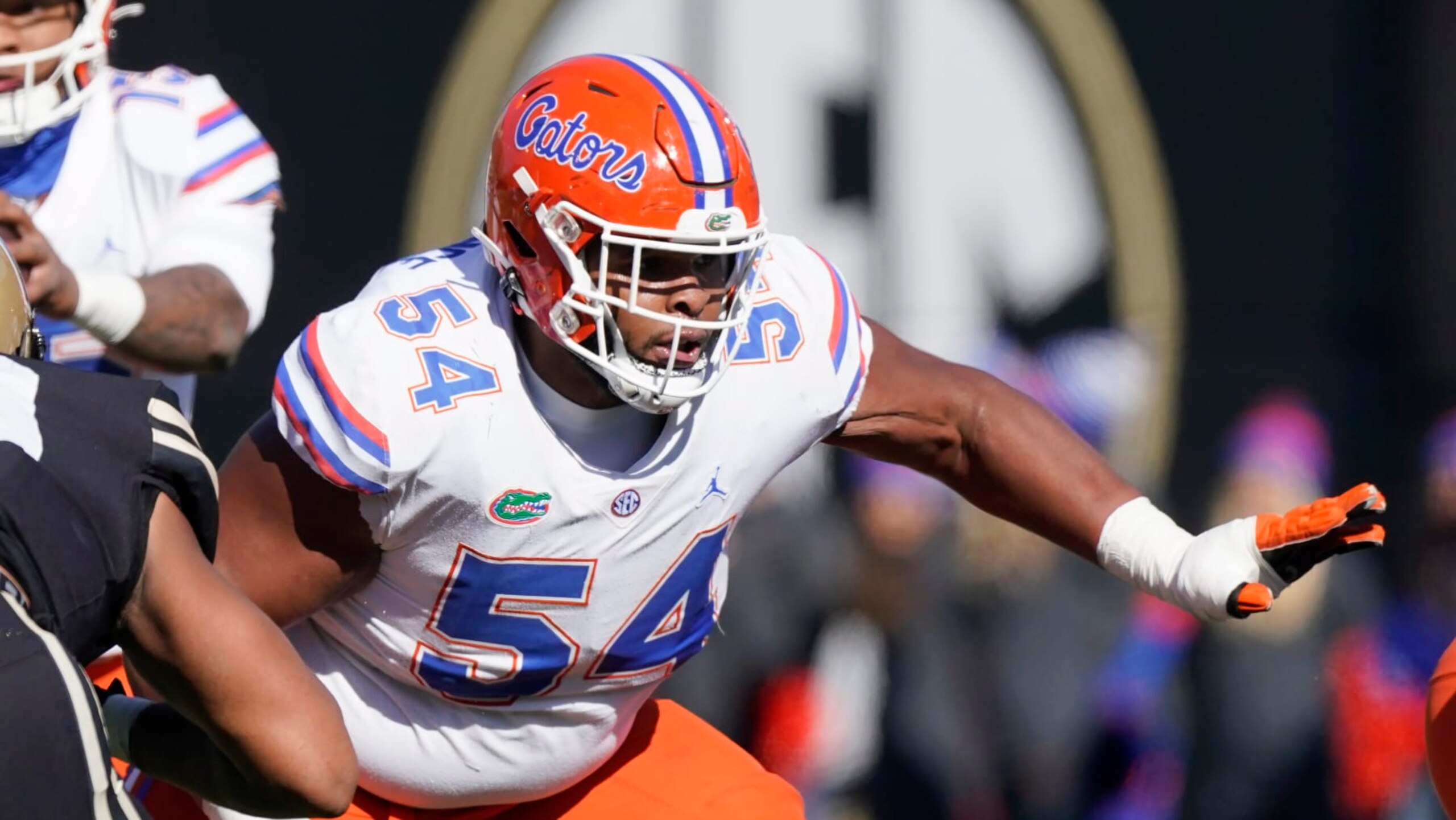
B/R Rank: No. 51
There isn't a huge difference between where the Buffalo Bills selected Florida guard Cyrus O'Torrence and his spot on the final B/R big board. However, there is a potentially big difference between this offense with the likes of Ryan Bates and Connor McGovern starting at the guard spots and O'Torrence.
Bates (6'4", 302 pounds) and McGovern (6'4", 306 pounds) are smaller guards with the mobility to excel in pass protection, but they have a difficult time changing the line of scrimmage in the run game. Bates allowed only one sack on the season but finished with a mediocre 61.8 grade from Pro Football Focus.
O'Torrence is a 6'5", 330-pound wrecking ball of a guard who should push for a starting job right away. His ability to displace defenders in the run game is a strength, and he didn't give up a sack over the past three years at Florida and Louisiana-Lafayette, per PFF.
Drafting O'Torrence signals a change in philosophy on the offensive line. His mentality and physicality are a step in the right direction for a team that has to take some of the burden off quarterback Josh Allen to maximize its offense moving forward.
Finding an immediate starter in the second round is huge for a team on the cusp of a Super Bowl run.
Carolina Panthers: S Jammie Robinson, No. 145 Overall
5 of 32
B/R Rank: No. 87
Bryce Young's success—or lack thereof—is going to define the 2023 draft for the Carolina Panthers. But when they traded away the Nos. 9 and 61 picks along with a 2024 first-rounder, a 2025 second-rounder and veteran wide receiver D.J. Moore to move up for No. 1 to select Young, it became imperative for them to find some high-value picks later in the draft.
Grabbing Jammie Robinson in the fifth round certainly qualifies. The 5'11", 191-pound defensive back has the size and versatility to play as a deep or box safety, and he can make some guest appearances in the slot if need be.
Lance Zierlein of NFL Media noted that Robinson had "top-100 tape" but said his workout results measurables caused him to fall in the draft. That seems like a classic example of other front offices overthinking things.
Robinson is a feisty player who shows no fear in filling the alley and sticking his nose in the run game. He isn't bad in coverage, either, as he showed with five interceptions and eight pass breakups during his two seasons at Florida State.
Robinson's experience should help him find a role early on in Carolina. Few fifth-round picks will have as good of a shot at playing as many snaps as he will for the Panthers this season.
Chicago Bears: RB Roschon Johnson, No. 115 Overall
6 of 32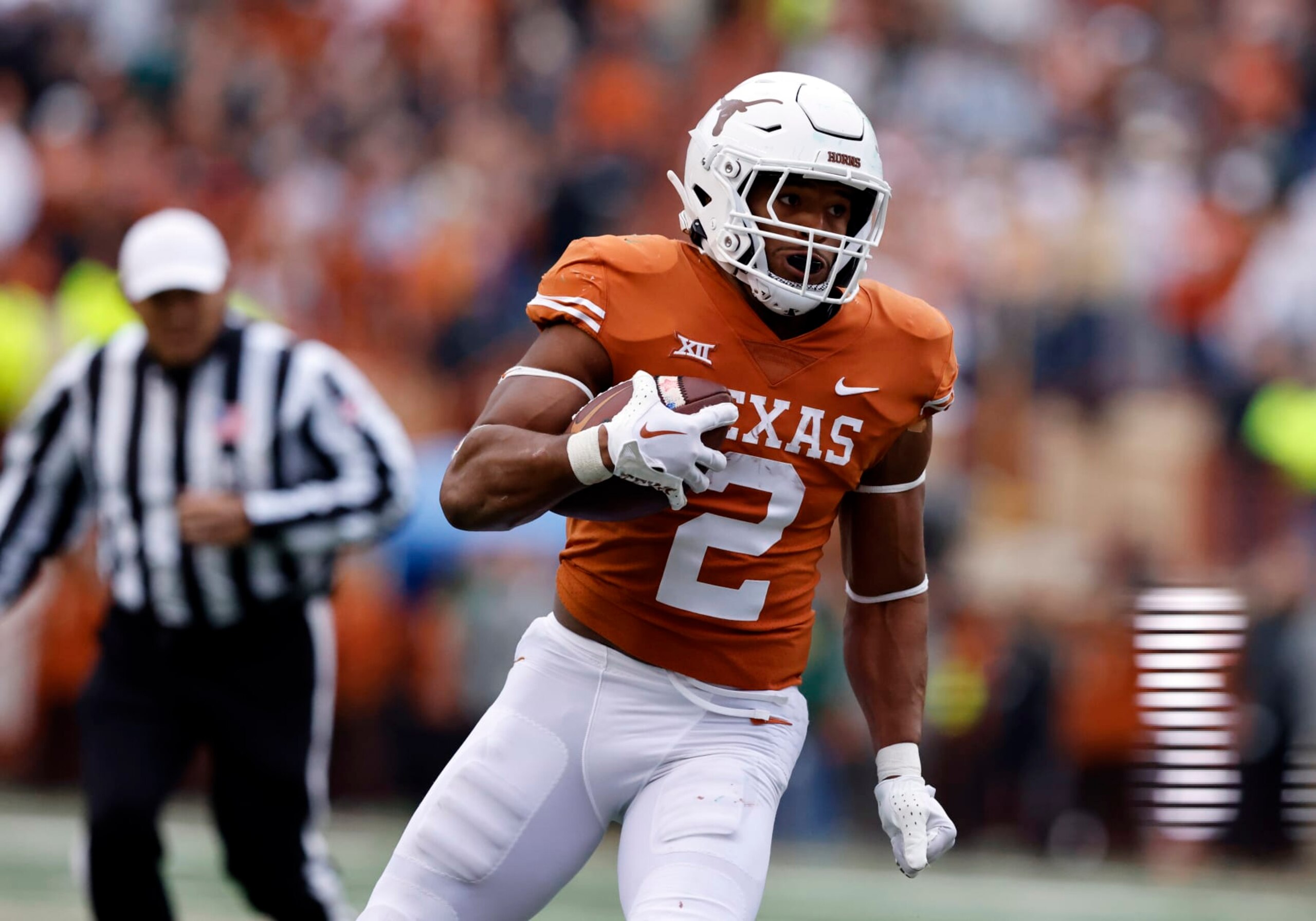
B/R Rank: No. 90
Noah Sewell was a strong candidate here. The Oregon linebacker was No. 73 on the B/R big board, and the Chicago Bears took him even later (No. 148 overall) than they selected Texas running back Roschon Johnson (No. 115 overall).
But after the Bears made serious investments in linebackers Tremaine Edmunds and T.J. Edwards this offseason, it's hard to imagine Sewell paying off in a big way early in his career. That isn't the case for Johnson.
The longtime Texas backup carried the ball only 392 times during his four years with the Longhorns. He's used to splitting carries with another running back, whether it's Keontay Ingram or Bijan Robinson.
Although Khalil Herbert remains on the Bears' roster, Johnson should be able to carve out a role following David Montgomery's departure in free agency. The B/R Scouting Department voted Johnson as the running back with the best power in this draft class, so he could emerge as Chicago's lead back by the end of the season.
Landing that kind of contributor in the fourth round is a great find for the Bears.
Cincinnati Bengals: Edge Myles Murphy, No. 28 Overall
7 of 32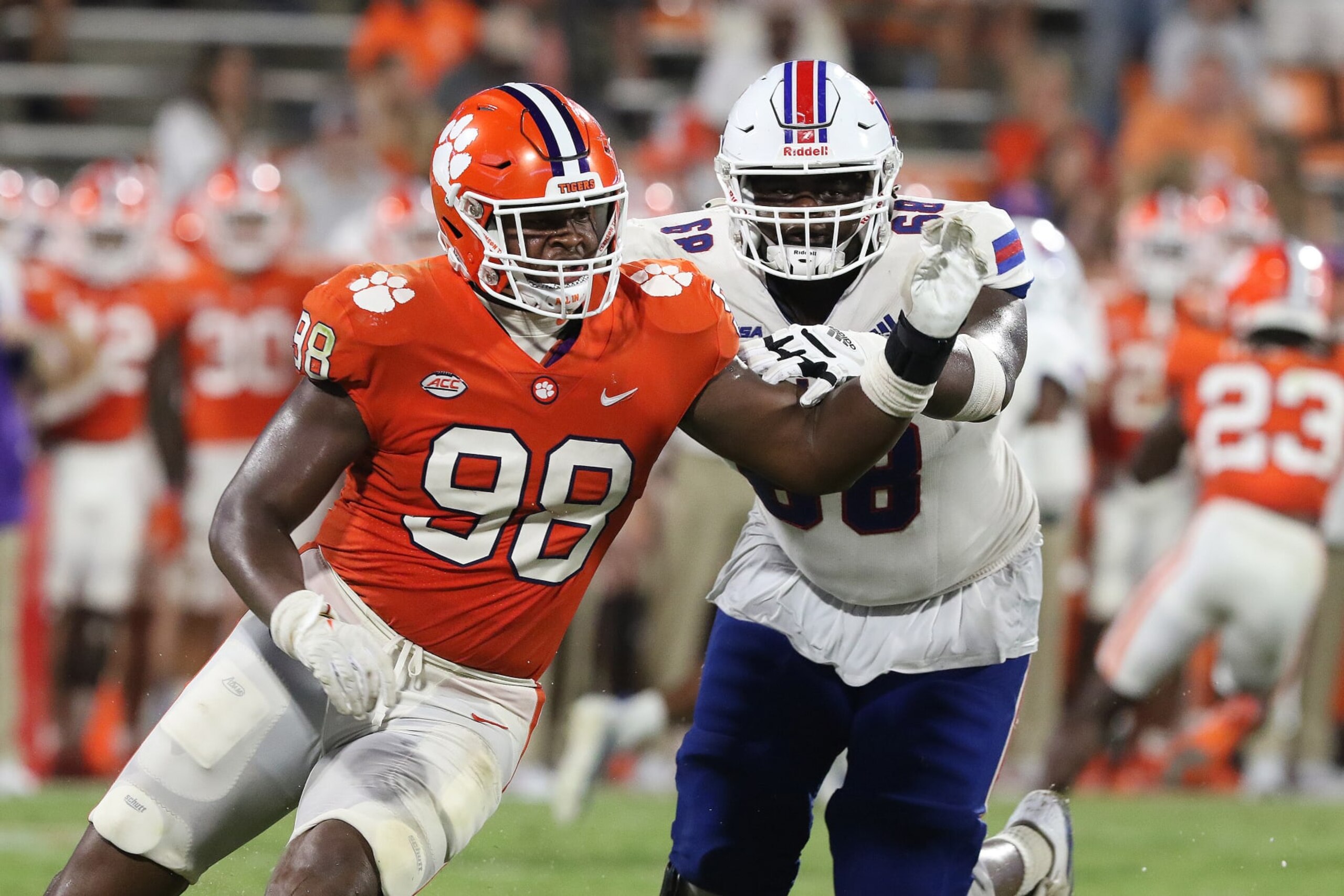
B/R Rank: No. 3
When we look back on this draft in five years, we might have a hard time understanding why Myles Murphy didn't go in the top 10.
Edge-rusher is a premium position in the NFL, as evidenced by the price that the Houston Texans paid to move from No. 12 to No. 3 to take Will Anderson Jr. Yet Murphy, who has the physical tools of an elite edge prospect and decent college production, fell to the bottom of the first round.
At 6'5" and 268 pounds, Murphy has ideal size for an edge-rusher. The Athletic's Bruce Feldman had him at No. 3 on his list of exceptional athletes in college football last season. The B/R Scouting Department not only made him their No. 3 overall prospect, but named him the "most versatile" edge-rusher in the class.
Murphy will have the opportunity to make his presence known early in Cincinnati. The Bengals had only 30 sacks last season, ranking 29th in the league.
Murphy has a real chance to be the best edge-rusher in this class, or at least push Anderson for the honor. It's rare to find that kind of talent at the bottom of the first round.
Cleveland Browns: DT Siaki Ika, No. 98 Overall
8 of 32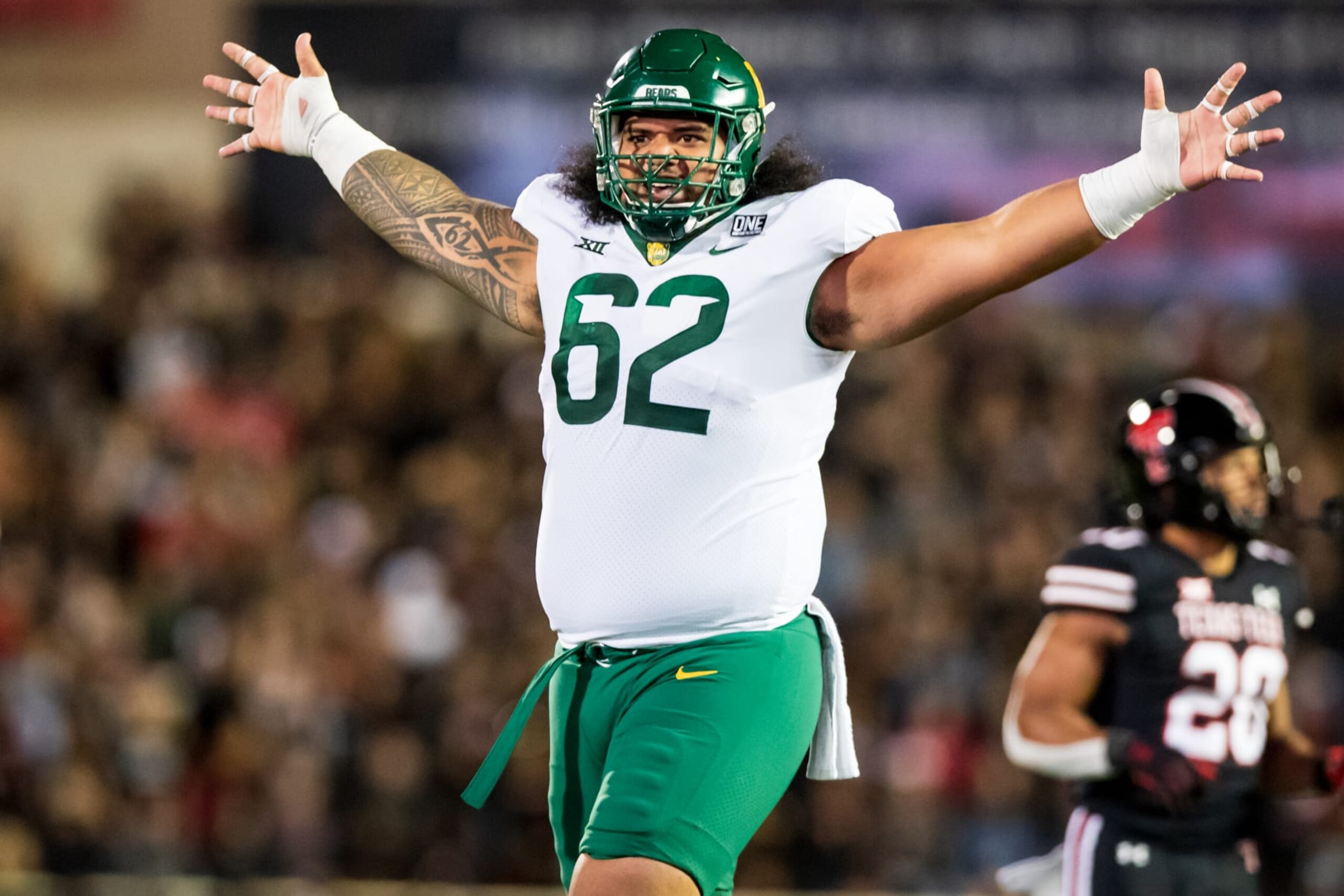
B/R Rank: No. 44
The Cleveland Browns put together an impressive draft considering they didn't have a first- or second-round pick. They made several high-value picks, including grabbing the No. 41 player on the B/R big board (Ohio State tackle Dawand Jones) at No. 111 overall.
He could wind up being the highest-value pick, but between Jack Conklin's recent contract extension and the Browns picking up Jedrick Wills Jr.'s fifth-year option, he isn't likely to become a starter anytime soon. That's why defensive tackle Siaki Ika, who also went much later than expected, gets the nod here.
Ika (6'3", 335 pounds) is the kind of immovable force in the middle of the defense that the Browns need. Jordan Elliott, Taven Bryan and Perrion Winfrey were often displaced out of their gaps and contributed to the Browns giving up 4.7 yards per carry last season.
With the Browns drafting Ika and signing Dalving Tomlinson, they have a defensive tackle duo who can clog lanes and hold firm in run situations. Finding a reliable solution to a glaring need in Round 3 was huge for the Browns.
Dallas Cowboys: OT Asim Richards, No. 169 Overall
9 of 32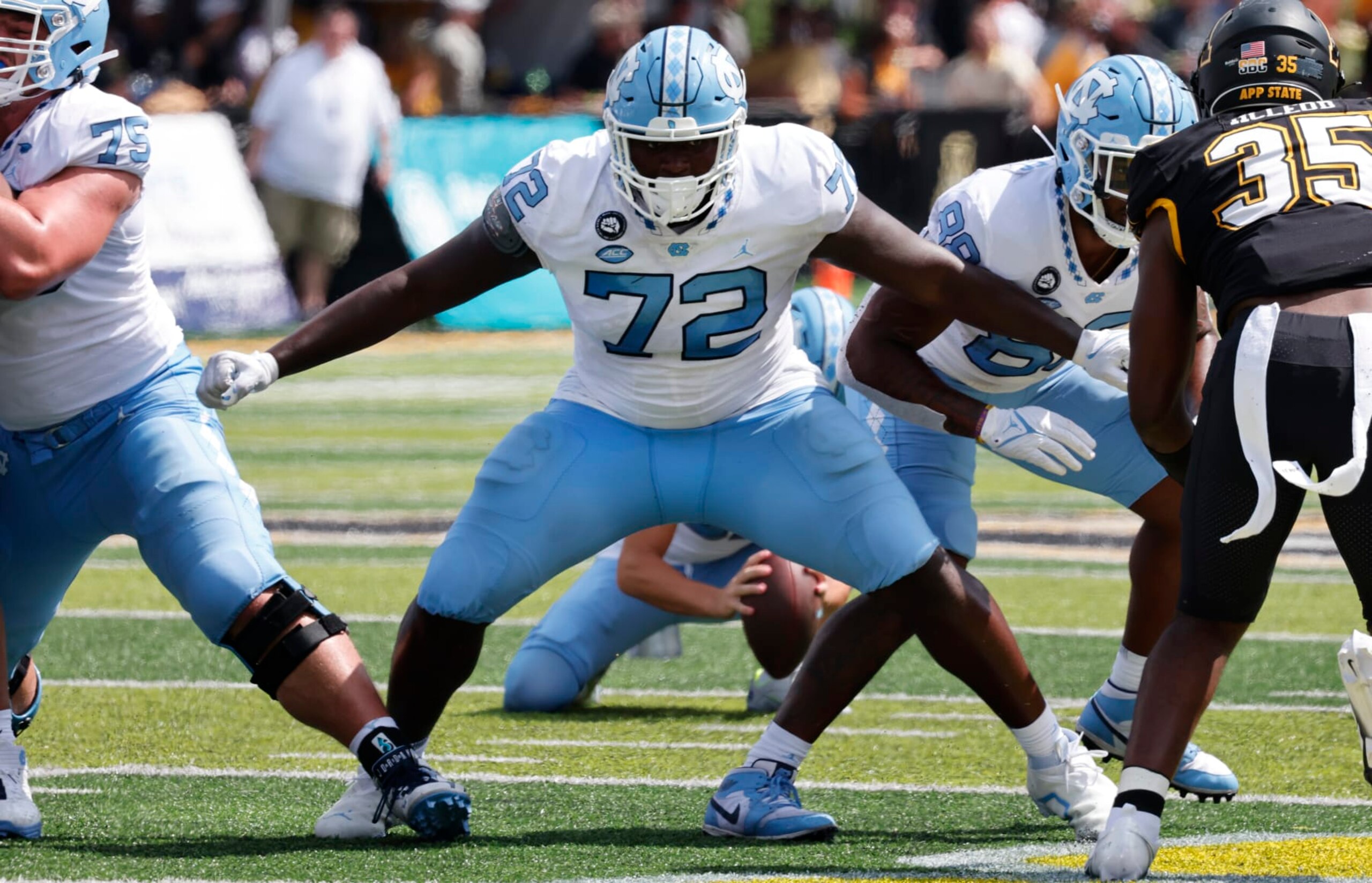
B/R Rank: No. 117
By and large, the Dallas Cowboys draft did not sit well with the Bleacher Report big board. Most of their picks were well above where our scouting department ranked those players.
North Carolina offensive tackle Asim Richards was the exception. It's easy to get behind his selection in the fifth round.
"Richards is a powerfully built, durable blocker with very good length, lower half strength and vice grips for hands that make him an obstacle to work around or through," B/R scout Brandon Thorn wrote in his scouting report for Richards.
Richards manned the left tackle spot at North Carolina and wasn't the greatest in pass protection. He surrendered 15 sacks over the past three years, according to PFF, but he did cut that number down to three during his final season on campus.
However, Richards is a prime candidate to eventually kick inside to guard. He has great power for a 309-pounder, and Thorn praised his grip strength. Those qualities should make him a great interior blocker without getting exposed by more athletic pass-rushers on the outside.
As Tyron Smith ages, it's important for the Cowboys to have an exit strategy. Moving Tyler Smith from left guard to left tackle and penciling in Richards on the inside could help them make a seamless transition from the veteran.
Denver Broncos: LB Drew Sanders, No. 67 Overall
10 of 32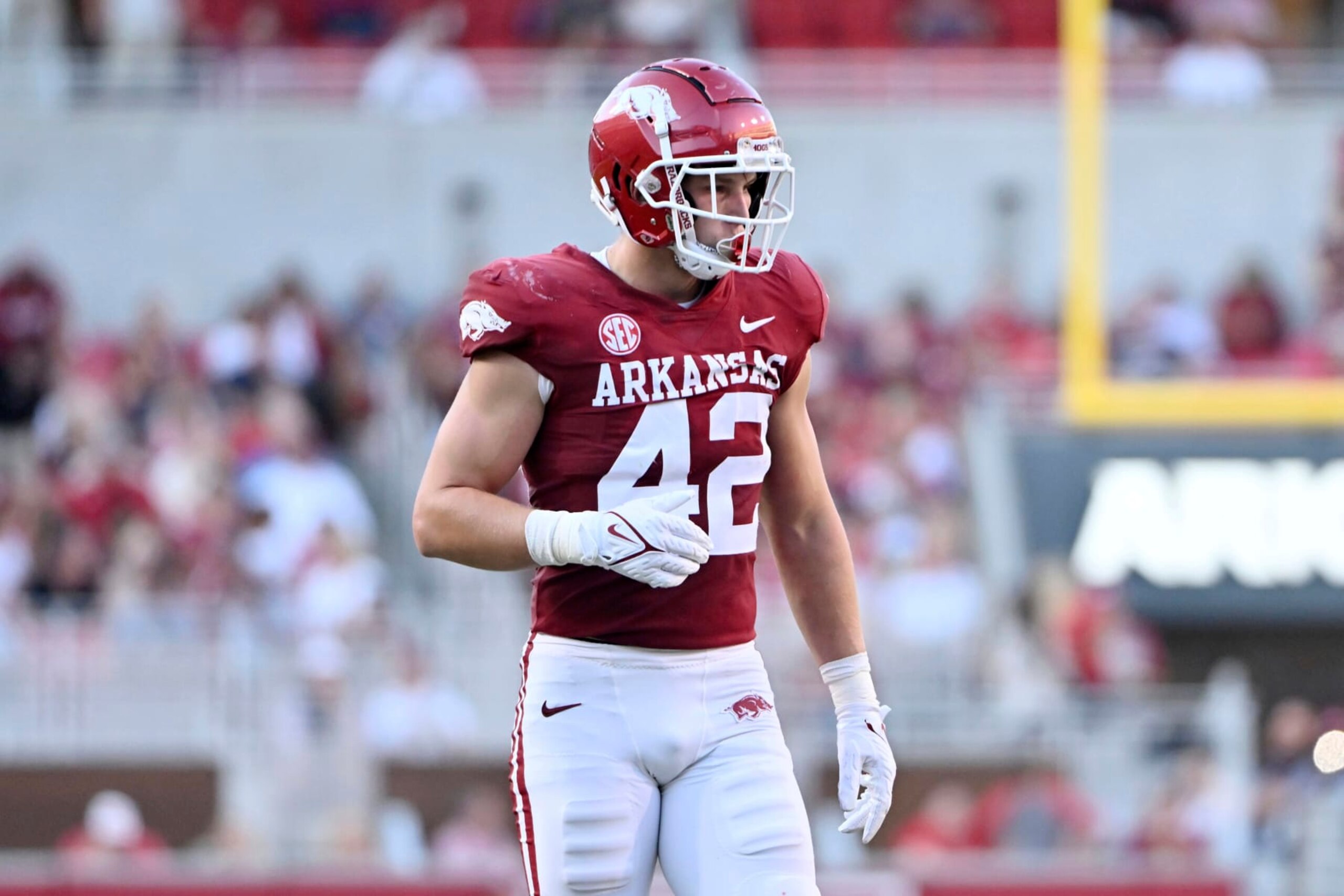
B/R Rank: No. 33
It bears watching how new Denver Broncos defensive coordinator Vance Joseph utilizes Drew Sanders. The linebacker showed incredible versatility at Arkansas, posting 103 total tackles, 13.5 tackles for loss, 9.5 sacks, one interception and five pass breakups in his final season with the Razorbacks.
Peter King of NBC Sports reported the Las Vegas Raiders had a similar grade on Sanders as they did with tight end Michael Mayer, edge-rusher Nolan Smith, cornerback Deonte Banks and offensive tackle Anton Harrison. All of those players went in the first round with the exception of Mayer, whom the Raiders traded up for at No. 35.
The Broncos took Sanders only three picks before the Raiders were back on the clock at No. 70. Stealing him from a division rival makes this pick even better for them.
Joseph is a creative defensive coordinator, and his attacking 3-4 will likely benefit from Sanders' versatility.
"It also helps that Sanders has experience as a pass-rusher, so he can be used in a variety of ways against the pass. I wouldn't be surprised if he ends up being the first linebacker off the board seeing as his best football is in front of him," B/R scout Matt Holder wrote in his scouting report for Sanders.
If Sanders becomes a productive member of their linebacking corps, the Broncos will celebrate his draft-day fall for a long time.
Detroit Lions: S Brian Branch, No. 45 Overall
11 of 32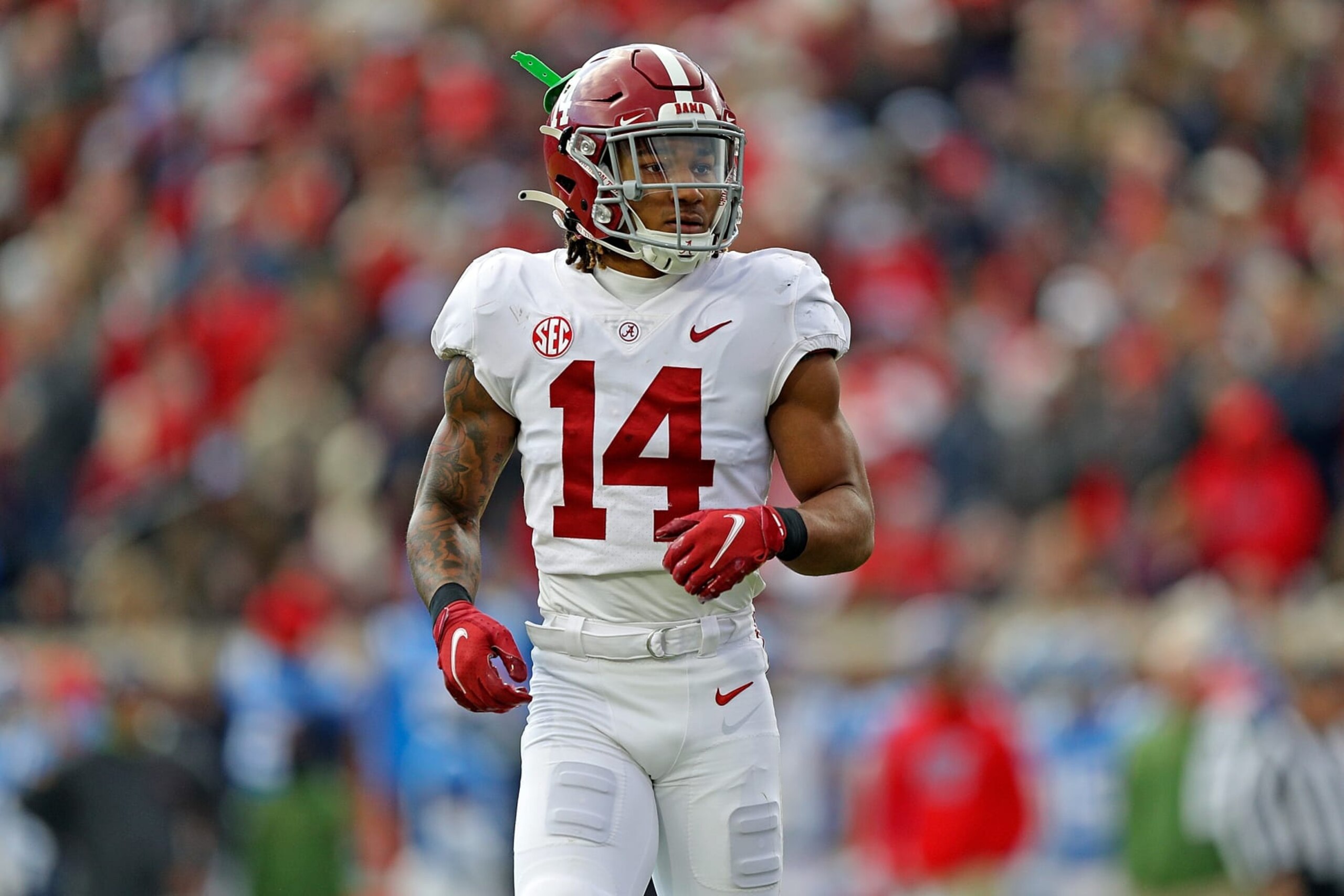
B/R Rank: No. 30
The Detroit Lions drafted three players ahead of Brian Branch, but he was nearly their highest-rated pick on our board. Iowa linebacker Jack Campbell (No. 27) just narrowly beat him out, but the Lions used the No. 18 overall pick on him.
It's fair to question why the Lions used their two first-round picks on devalued positions with Campbell and running back Jahmyr Gibbs going No. 12 overall. But they got great value by using the No. 45 overall pick on Branch, the No. 1-ranked safety in the class.
Branch primarily played in the slot at Alabama, but he also took snaps in the box and even as a deep safety in Nick Saban's defense, per PFF. Mike Renner gave the pick an A+ on Bleacher Report's live draft show, and Michael Felder called him the best defensive back in the class, comparing him to Tyrann Mathieu.
Mathieu fell to the third round back in 2013, but he ended up becoming a three-time All-Pro safety. It wouldn't be surprising if Branch also develops into a star after his own slide.
Green Bay Packers: TE Tucker Kraft, No. 78 Overall
12 of 32
B/R Rank: No. 45
During the 2022 draft, the Green Bay Packers double-dipped at receiver. Christian Watson got most of the attention coming out of the draft after they traded up in the second round to get him, while Romeo Doubs became a training camp darling.
A similar situation could play out at tight end this season. The Packers had a dire need for a tight end who could help Jordan Love as he takes over at quarterback for Aaron Rodgers.
After letting Robert Tonyan walk in free agency, the Packers addressed the need early, taking Oregon State tight end Luke Musgrave in the second round (No. 42 overall). They struck again with Tucker Kraft in the third round.
The thing is, Kraft might be better than Musgrave.
The latter is coming off a knee injury that limited him to only two games last season. He has the athleticism and frame (6'6", 253 pounds) to become a Darren Waller-esque downfield threat, but it might take him some time to acclimate to the NFL.
Meanwhile, Kraft came in higher on B/R's big board and played 24 games over the past two seasons. The 6'5", 254-pounder has similar size as Musgrave, but he worked more as a traditional in-line blocker, which could help him see the field sooner and more frequently than his fellow rookie.
Not bad for a third-round pick.
Houston Texans: IOL Jarrett Patterson, No. 201 Overall
13 of 32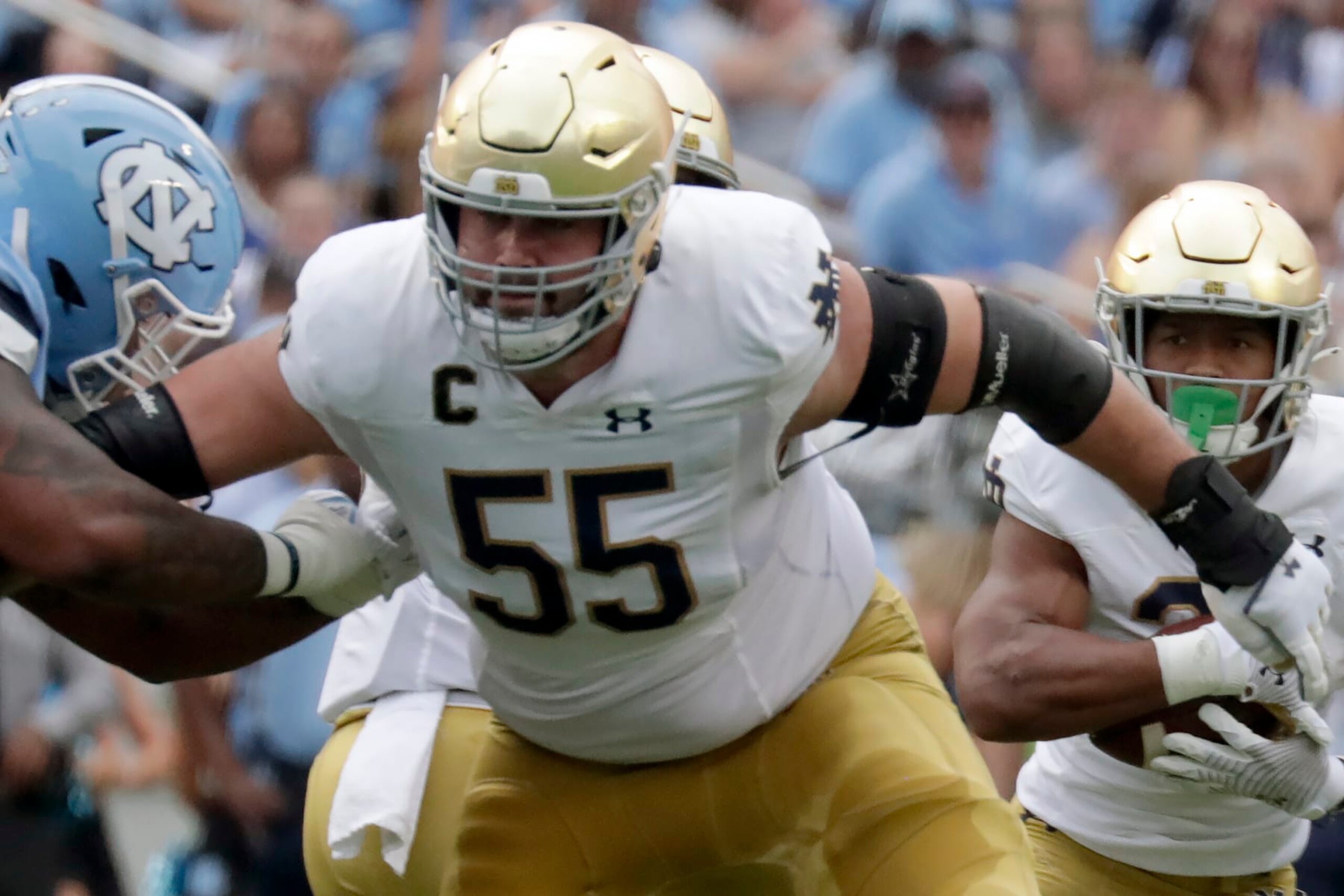
B/R Rank: No. 110
The Houston Texans came into the draft with a need to find a replacement for Scott Quessenberry.
After Quessenberry spent four years being a backup interior lineman for the Los Angeles Chargers, the Texans started him in 16 games last season to disastrous results. He gave up seven sacks and earned a horrific PFF grade of 36.6.
The Texans started by taking Juice Scruggs in the second round. However, the Penn State center was 187th on our big board, so there isn't much value to be found there.
They selected a higher-ranked lineman in Jarrett Patterson in the sixth round, though.
According to PFF, Patterson didn't allow a single sack across 1,688 career pass-blocking snaps at Notre Dame. While 12 of his starts came at left guard this past season, he had 34 starts at center before that.
Injuries might have contributed to his draft-day fall. As Brandon Thorn noted in Patterson's scouting report, he suffered multiple injuries in his college career, although they didn't cost him a lot of playing time.
If Patterson can stay healthy, the Texans might have found an eventual starter with some versatility in the sixth round.
Indianapolis Colts: DT Adetomiwa Adebawore, No. 110 Overall
14 of 32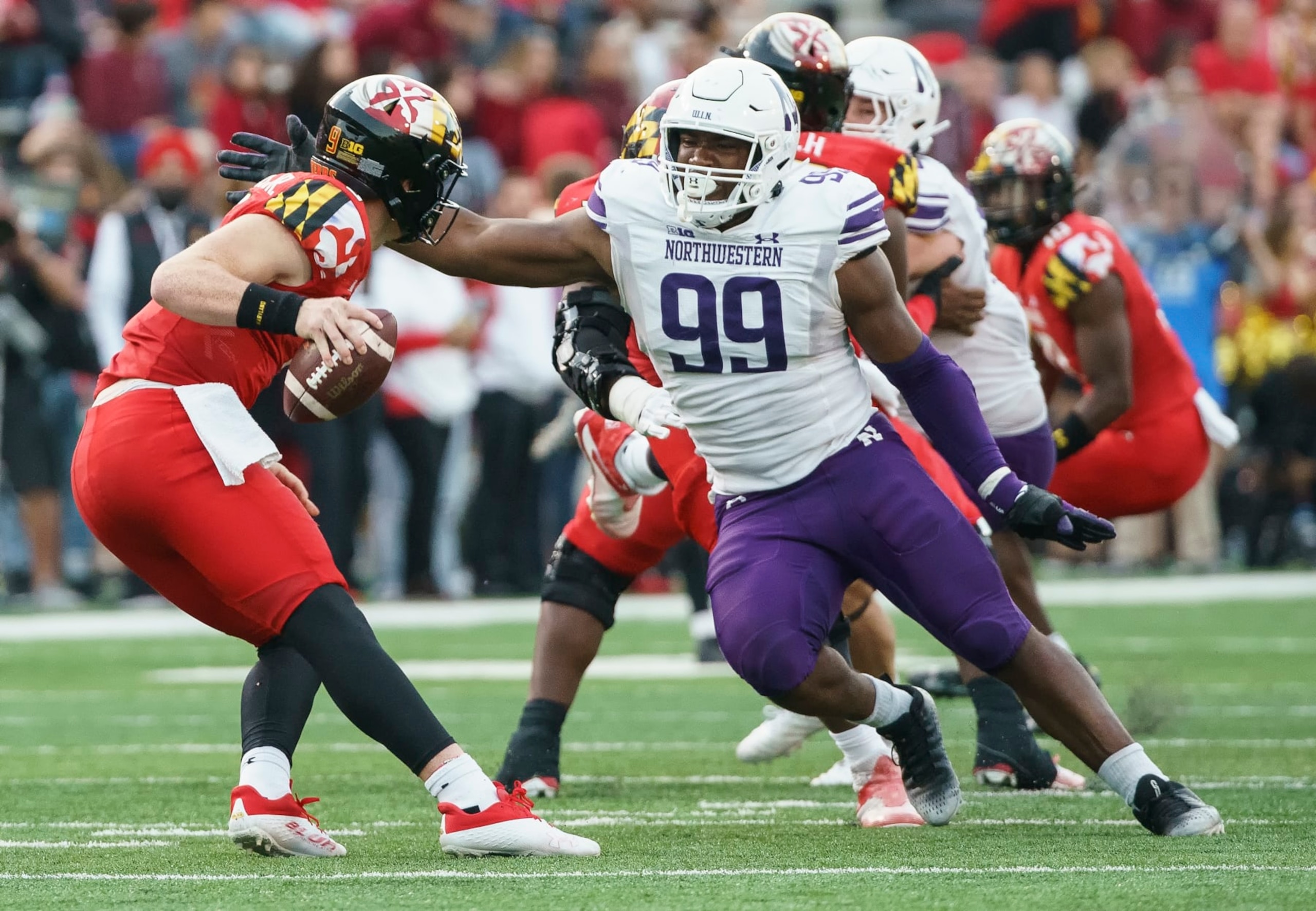
B/R Rank: No. 56
Adetomiwa Adebawore ran a 4.49-second 40-yard dash at the NFL combine after measuring in at 6'2" and 282 pounds. That's an outlier combination of size and athleticism.
Outside of Aaron Donald, it's hard to come up with many defensive tackles who have been wildly successful with that small of a frame in the modern NFL. Yet Pittsburgh defensive tackle Calijah Kancey—who is even smaller at 6'1" and 281 pounds—was a first-round pick.
That isn't a knock on Kancey, whom the B/R Scouting Department voted as the best pass-rusher among this year's crop of defensive tackles. It's just hard to understand the three-round gap between him and Adebawore.
It isn't like Adebawore is all physical tools with no production. He had 9.5 sacks and 17.5 tackles for loss during his final two seasons with the Wildcats.
Adebawore has some things to work on, but the Indianapolis Colts seem to target ultra-athletic prospects who need some additional development. Adebawore was well worth the risk in the fourth round.
Jacksonville Jaguars: S Antonio Johnson, No. 160 Overall
15 of 32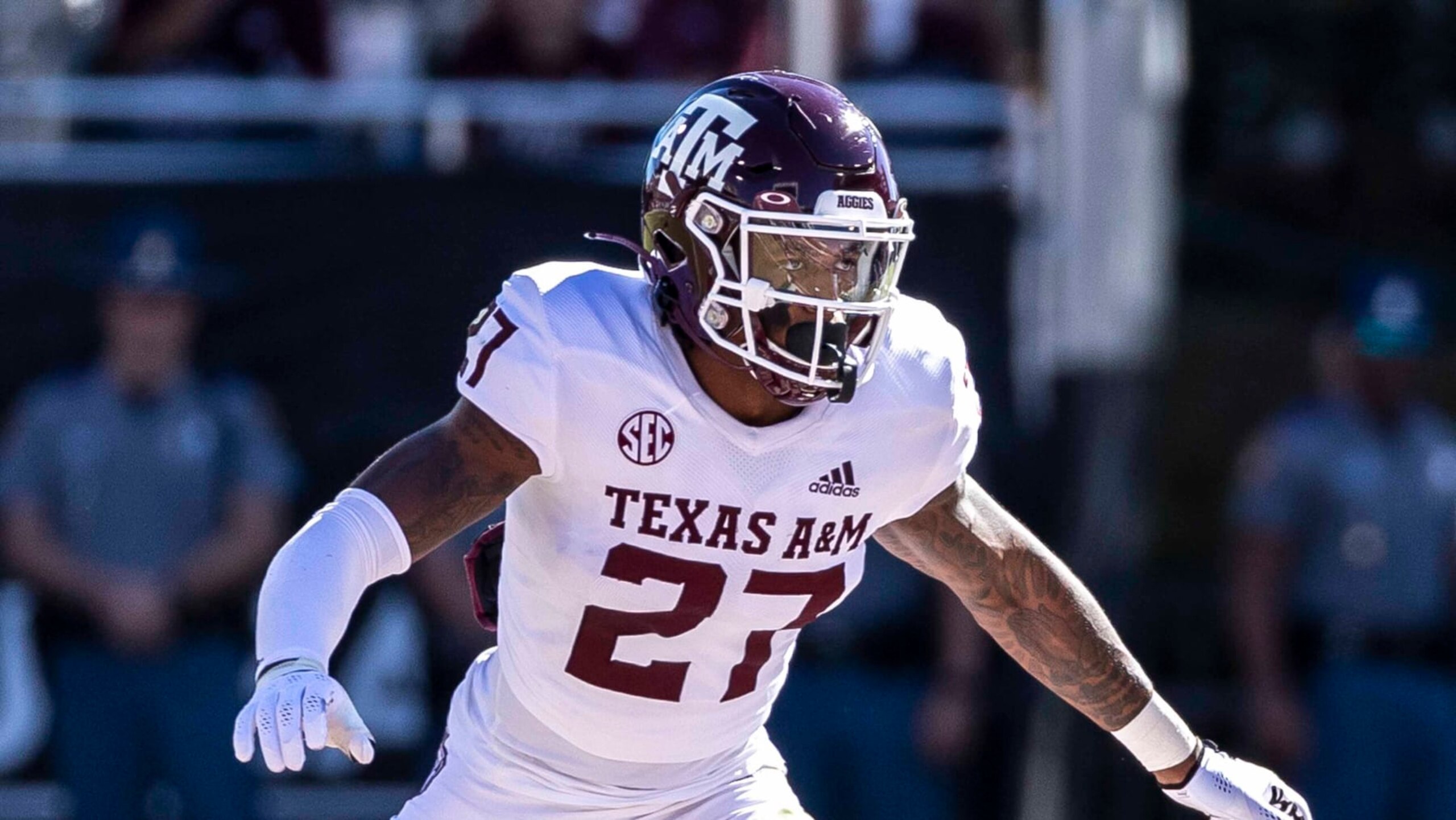
B/R Rank: No. 146
If the season started today, Tre Herndon would likely be the Jacksonville Jaguars' starting slot corner. The 27-year-old graded out as the 93rd-ranked cornerback out of 118 corners last season, according to PFF, but he's the veteran option on the inside.
Meanwhile, Antonio Johnson was the highest-graded slot defender (91.2) in college football since 2021, per PFF.
Johnson didn't live in the slot at Texas A&M, though. In his final season with the Aggies, he also played in the box and in deep alignment at times.
The B/R Scouting Department named Johnson as the best man-coverage safety in this year's draft class. At 6'2" and 198 pounds, his frame should enable him to play multiple roles.
Johnson will probably need to focus on one role early in his career to become a starter, but the Jaguars have a lot to work with for a fifth-round pick.
Kansas City Chiefs: DL Keondre Coburn, No. 194 Overall
16 of 32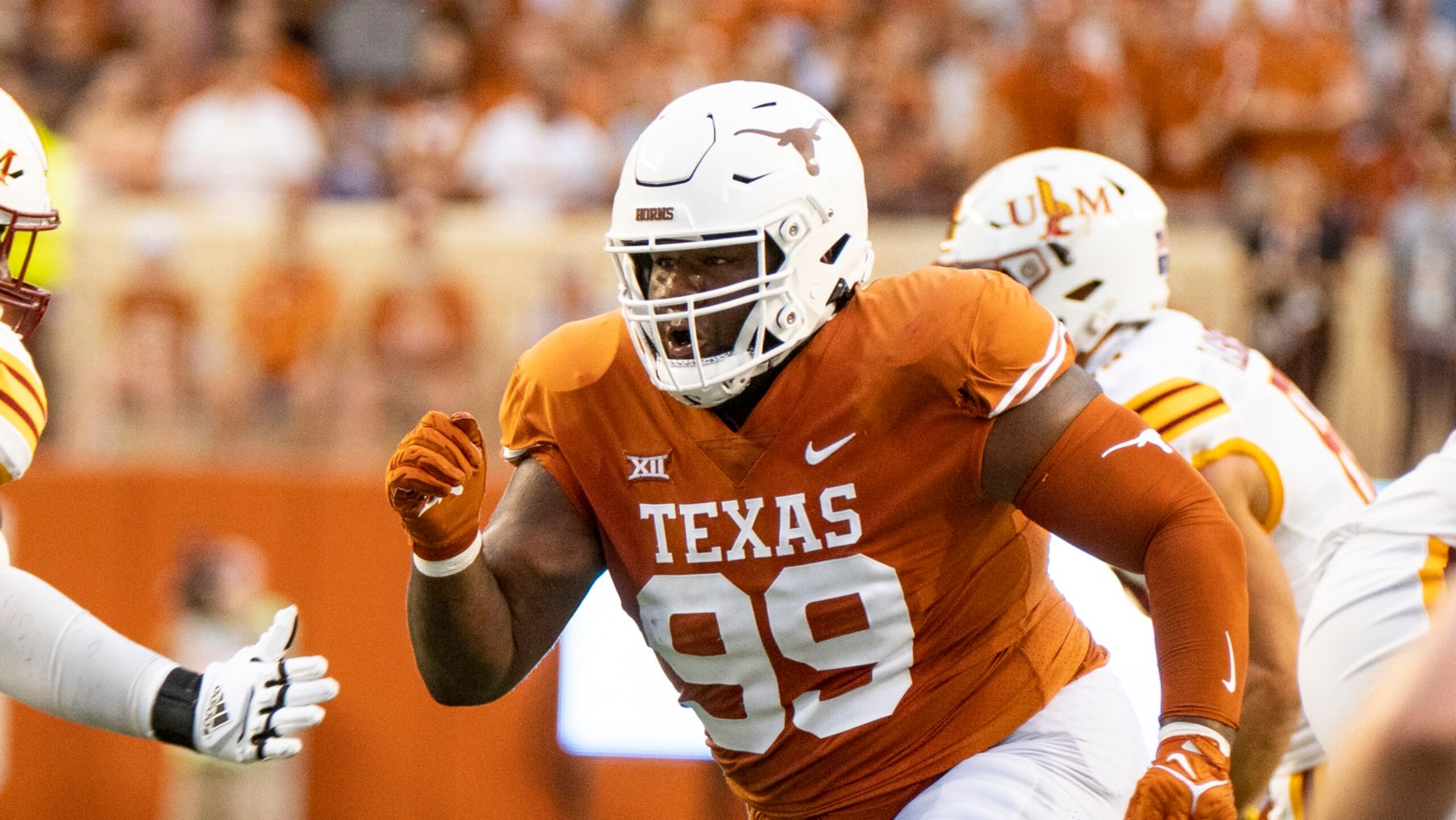
B/R Rank: No. 140
The Kansas City Chiefs have done a tremendous job of building their defense by hitting on several recent draft picks. Cornerbacks Jaylen Watson and L'Jarius Sneed were both Day 3 picks, while linebackers Nick Bolton and Willie Gay Jr. were second-round picks.
Keondre Coburn could soon join that list.
With Khalen Saunders leaving in free agency and Derrick Nnadi signing only a one-year deal, the Chiefs need a block-eating nose tackle to pair with Chris Jones on the interior. That's exactly what the 6'2", 332-pound Coburn can be.
"Schematically, the Texas product is pretty versatile," B/R scout Matt Holder wrote in Coburn's scouting report. "He can two-gap, penetrate or be used on slants, and he can play anywhere from nose to a 2i-technique."
Coburn might be able to fill a long-term need for the Chiefs, and they only needed to spend a sixth-round pick on him.
Las Vegas Raiders: TE Michael Mayer, No. 35 Overall
17 of 32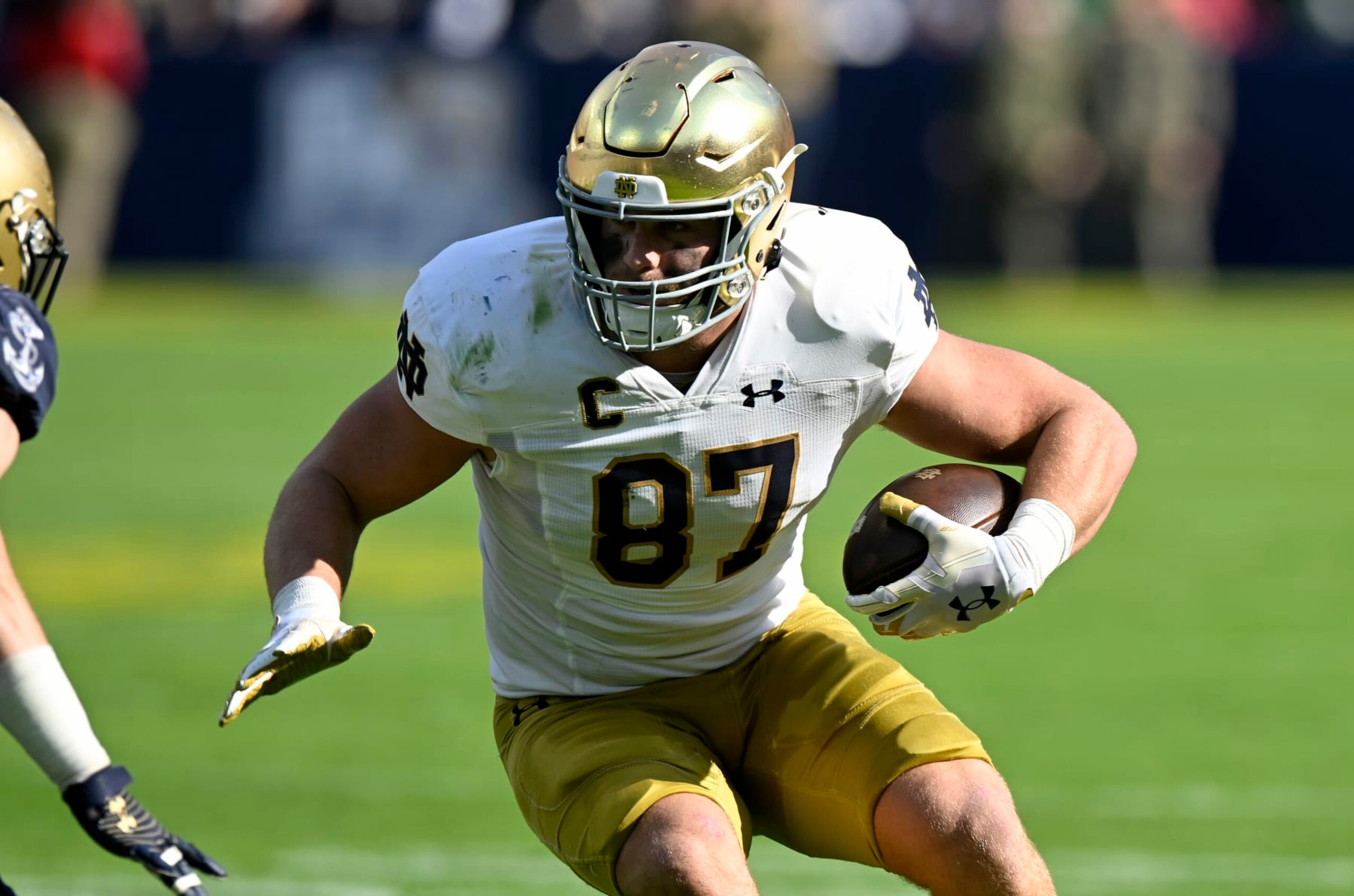
B/R Rank: No. 5
The Las Vegas Raiders had two strong candidates here. Georgia safety Christopher Smith was the 35th-ranked player on the B/R big board, and the Raiders scooped him up at No. 170.
But there's a chance that Notre Dame tight end Michael Mayer could end up being a top-five player at his position within the next five years. There aren't many prospects about whom you can say that in this year's draft class.
The 6'4½", 249-pound pass-catcher is as good of a pure tight end as anyone in his class. Although Utah tight end Dalton Kincaid went ahead of him, Mayer's blocking is much better, and he's just a different receiver.
Mayer is not going to threaten the seams with his speed. But his ball skills and ability to weaponize his big frame against smaller defenders with enough power to gain yards after the catch could help him develop into a No. 2 receiving option eventually.
That's big for the Raiders, who traded star tight end Darren Waller to the New York Giants this offseason. Even if Austin Hooper begins the year with the starting tight end job, Mayer has the tools to replace him early.
Mayer could wind up emerging as a top-10 player in this class. Getting that kind of a player at the top of the second round is great value.
Los Angeles Chargers: Edge Tuli Tuipulotu, No. 54 Overall
18 of 32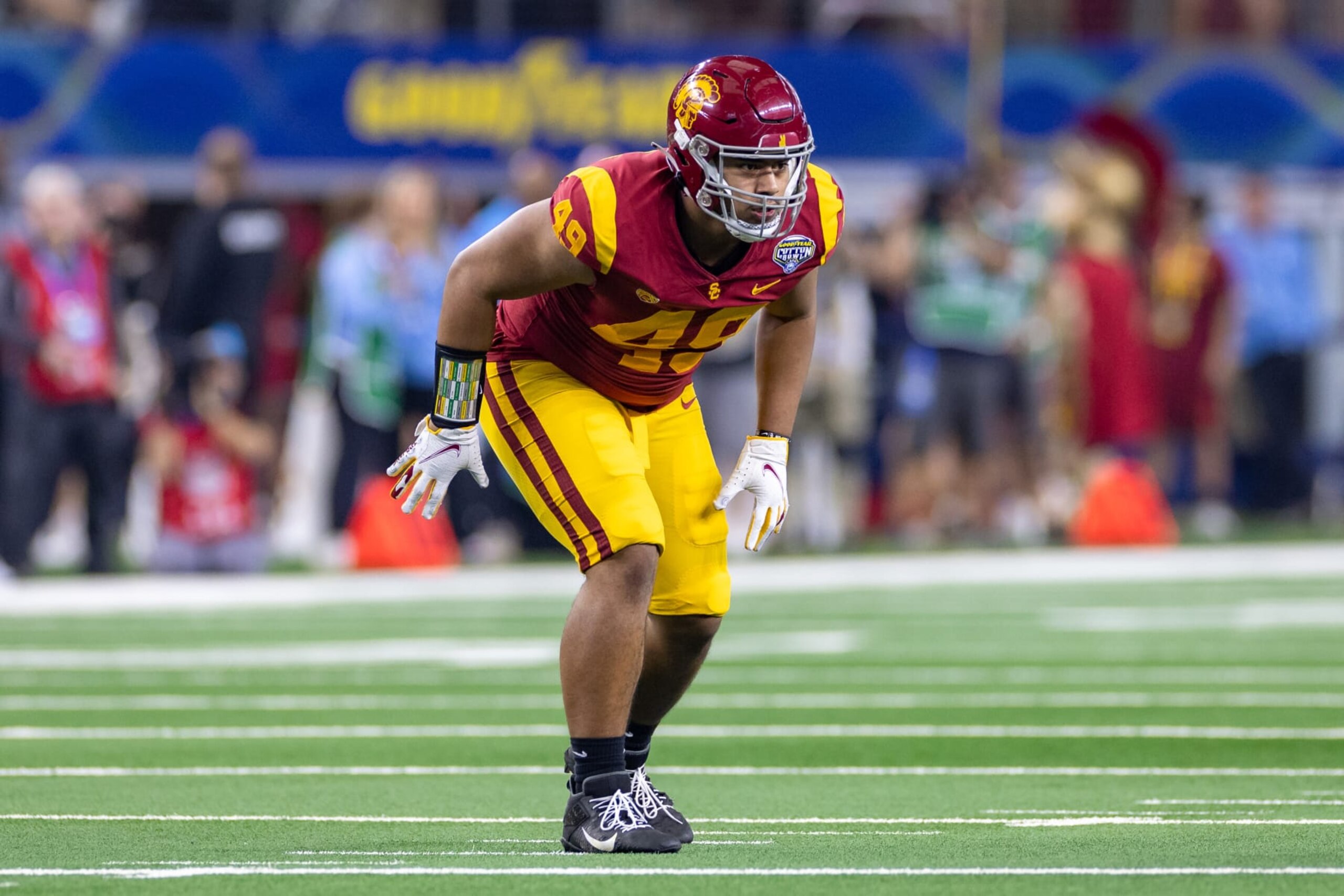
B/R Rank: No. 47
Tuli Tuipulotu wasn't a huge value based on where the Los Angeles Chargers selected him relative to his rank on the final B/R big board. But he addresses a big need at a premium position, which makes him their best value pick.
Joey Bosa's groin injury last season exposed the Chargers' lack of depth on the edge. Khalil Mack responded with eight sacks, but the rest of their production largely came from Morgan Fox, Drue Tranquil, Kyle Van Noy and Derwin James. None of them are true edge-rushers, and the Chargers mustered only 40 sacks despite blitzing at the eighth-highest rate of any team.
Tuipulotu led the nation with 13.5 sacks last season. He played all over the front at USC with reps at outside linebacker, defensive end and defensive tackle.
That versatility figures to be crucial for the Chargers. With Mack and Bosa on the outside, Tuipuloto's ability to play multiple alignments should allow him to contribute right away.
As he develops and the 32-year-old Mack continues to age, he could become a long-term succession plan at a vital position.
Los Angeles Rams: CB Tre'vius Hodges-Tomlinson, No. 182 Overall
19 of 32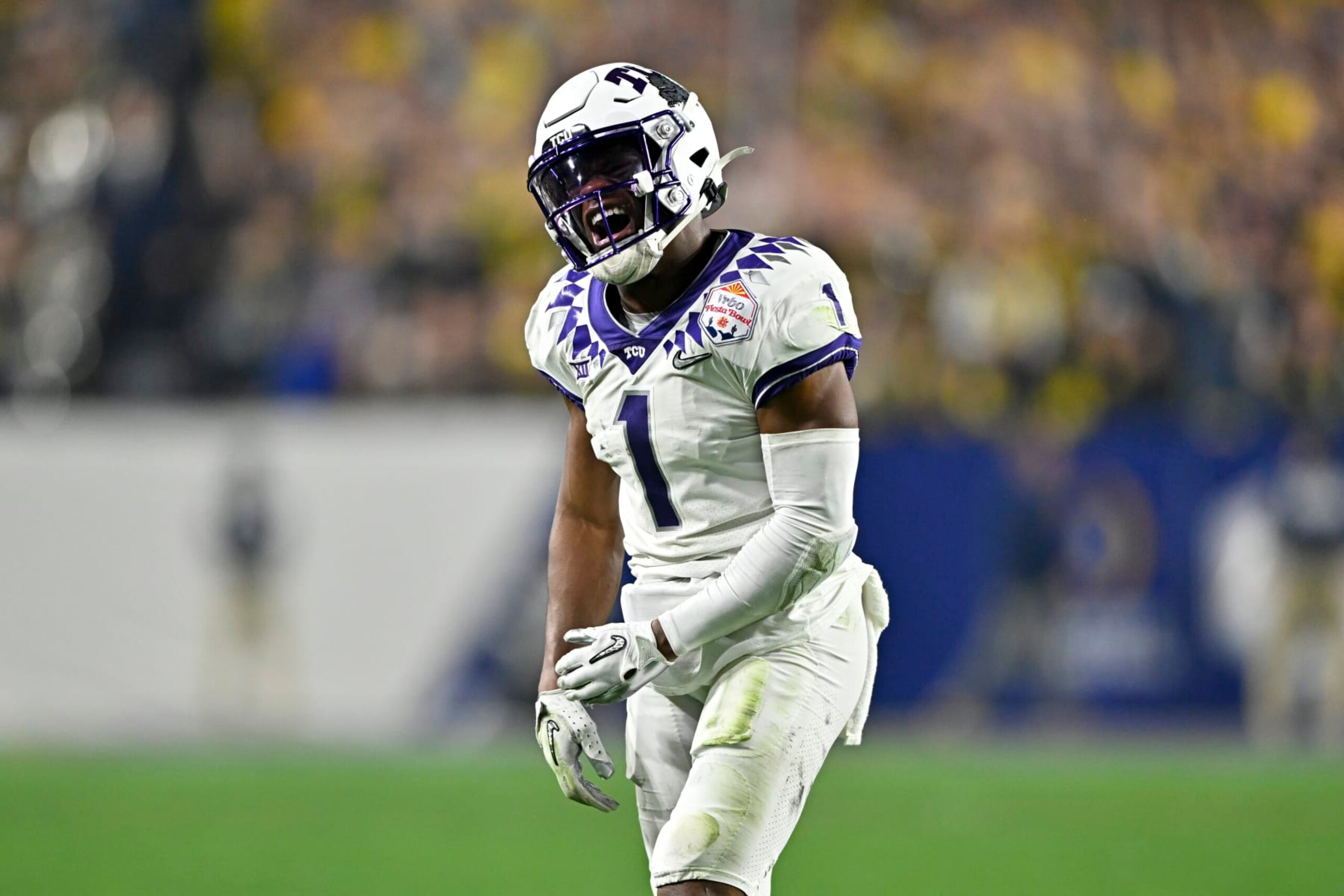
B/R Rank: No. 101
The Los Angeles Rams had one of the largest draft classes in the league with 14 selections. However, 11 of those came on Day 3, including 10 picks in Rounds 5-7.
Fortunately, the Rams have been adept at finding starters on Day 3 in recent years. Tight end Tyler Higbee, safety Jordan Fuller, defensive lineman Greg Gaines, offensive lineman David Edwards and wide receiver Ben Skowronek are among the late-round picks who have played important roles for them since 2016.
Tre'Vius Hodges-Tomlinson could soon join that list.
Hodges-Tomlinson has less-than-ideal size at 5'8" and 178 pounds, but he was the 13th-ranked corner on our big board. According to PFF, he allowed 72 receptions on 184 targets (39.1 percent completion rate) for 975 yards (5.2 yards per target) with five interceptions and 29 pass breakups.
The nephew of Hall of Fame running back LaDainian Tomlinson had great athletic testing with a 4.41-second 40-yard dash and a 39" vertical that allows him to play a bit bigger than he actually is.
The Rams don't have a ton of experience at cornerback after trading Jalen Ramsey to the Miami Dolphins this offseason. Cobie Durant, Robert Rochell and Derion Kendrick should compete for starting positions, and all three have two or fewer years of NFL experience.
Hodges-Tomlinson could become a contributor earlier than expected for a sixth-round pick.
Miami Dolphins: RB Devon Achane, No. 84 Overall
20 of 32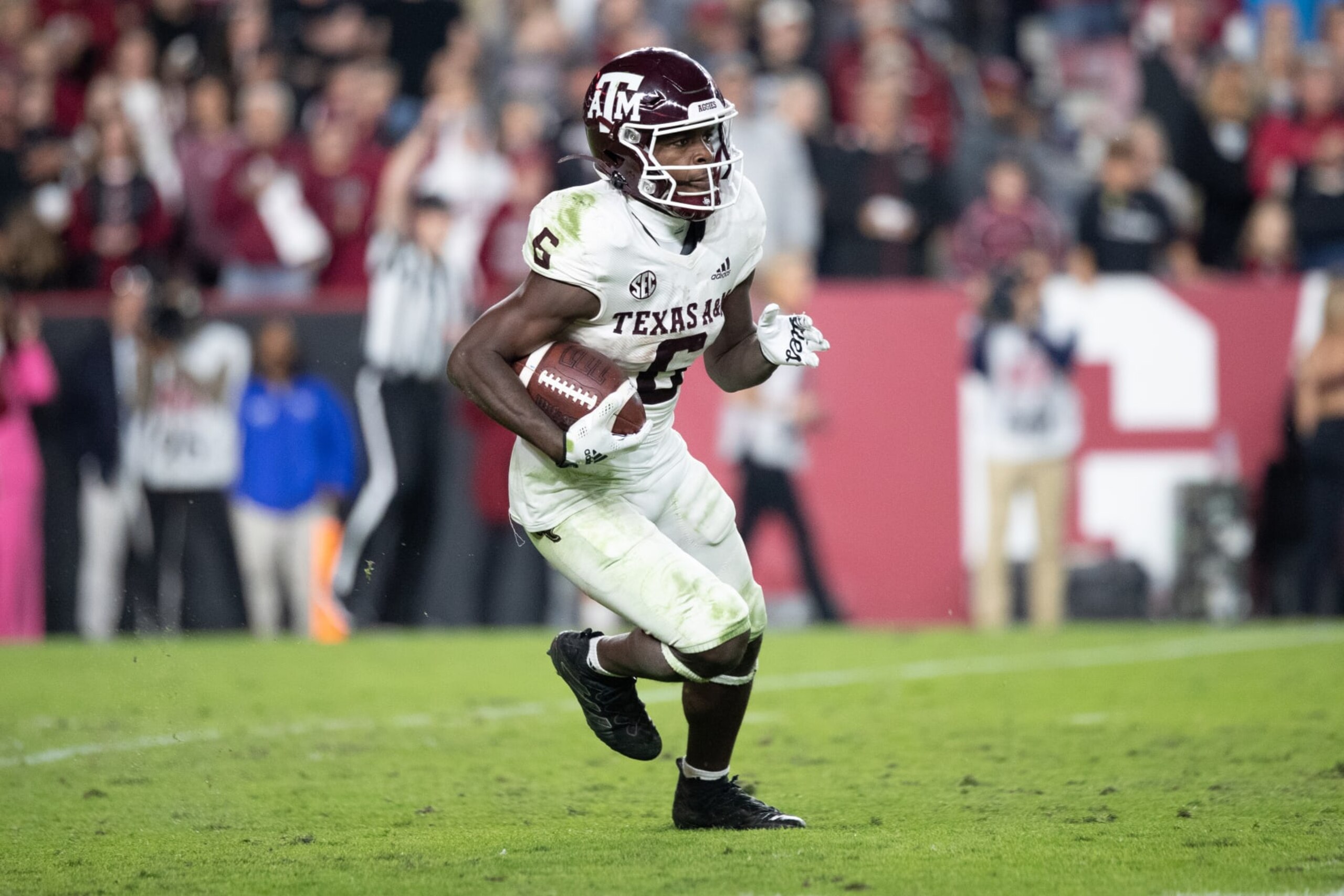
B/R Rank: No. 40
The Miami Dolphins had one of the smallest draft classes for the second consecutive season. They took only four players after being stripped of their first-round pick for tampering violations and trading the San Francisco 49ers' first-rounder to the Denver Broncos for Bradley Chubb at the deadline last season.
Still, the Dolphins managed to find a potential key offensive player in the third round with Texas A&M running back Devon Achane.
Speed is the defining characteristic of the Dolphins' skill-position corps. Tyreek Hill and Jaylen Waddle might be the fastest 1-2 punch at receiver in the league. Raheem Mostert brings the velocity in the backfield, but the 31-year-old has a lengthy injury history. Jeff Wilson carved out a role after they traded for him at least year's deadline, but he's never been a lead back.
Enter Achane and his 4.32 speed. The Texas A&M runner was the fourth-ranked running back on the B/R big board, and B/R's Scouting Department picked him as having the best speed of any player at his position.
The 5'8", 188-pound Achane might never be able to take full control of the Dolphins' backfield, but head coach Mike McDaniel is going to find ways to get him involved. He might largely be Mostert insurance as a rookie, but he has the ability to take Mostert's place down the road.
Minnesota Vikings: RB DeWayne McBride, No. 222 Overall
21 of 32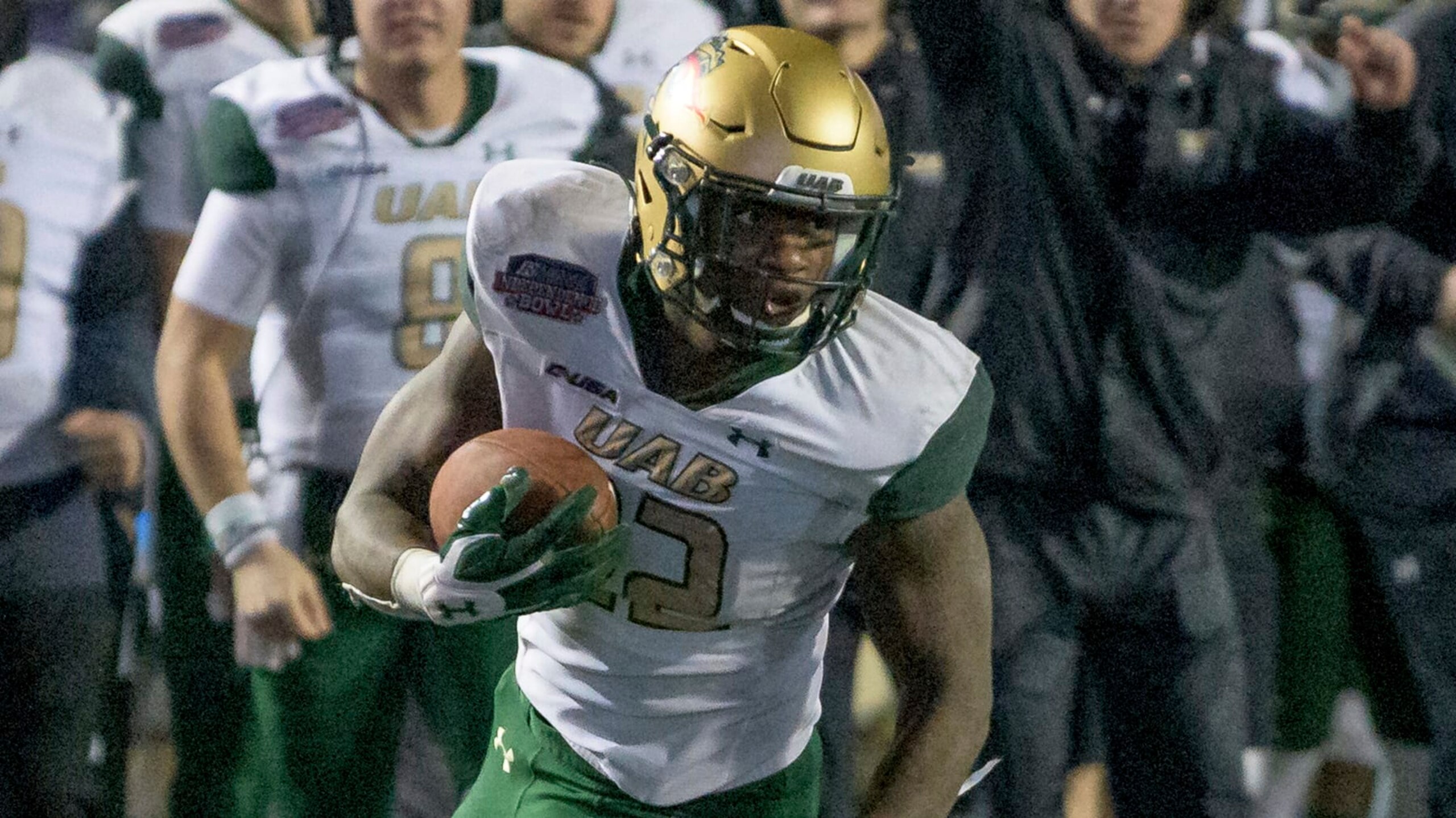
B/R Rank: No. 133
The NFL is littered with examples of Day 3 running backs who ended becoming difference-makers. For example, seventh-round rookie Isiah Pacheco just led the Super Bowl champion Kansas City Chiefs in rushing last season.
With Dalvin Cook and Alexander Mattison on the Minnesota Vikings roster, McBride isn't likely to replicate Pacheco's feat. However, he was one of the best-kept secrets of the draft, and he could work himself into a useful role.
The 5'10", 209-pounder was not a factor in UAB's passing game, but he was a tough between-the-tackles runner with one of the best broken-tackle rates in college football, according to PFF data (h/t Thor Nystrom of FantasyPros).
Cook has found himself in trade rumors this offseason. If McBride looks like he'll be able to contribute right away, that could push the Vikings to deal their star back, which could pave the way for a backfield featuring Mattison and McBride.
That potential flexibility is a huge value going forward.
New England Patriots: Edge Keion White, No. 46
22 of 32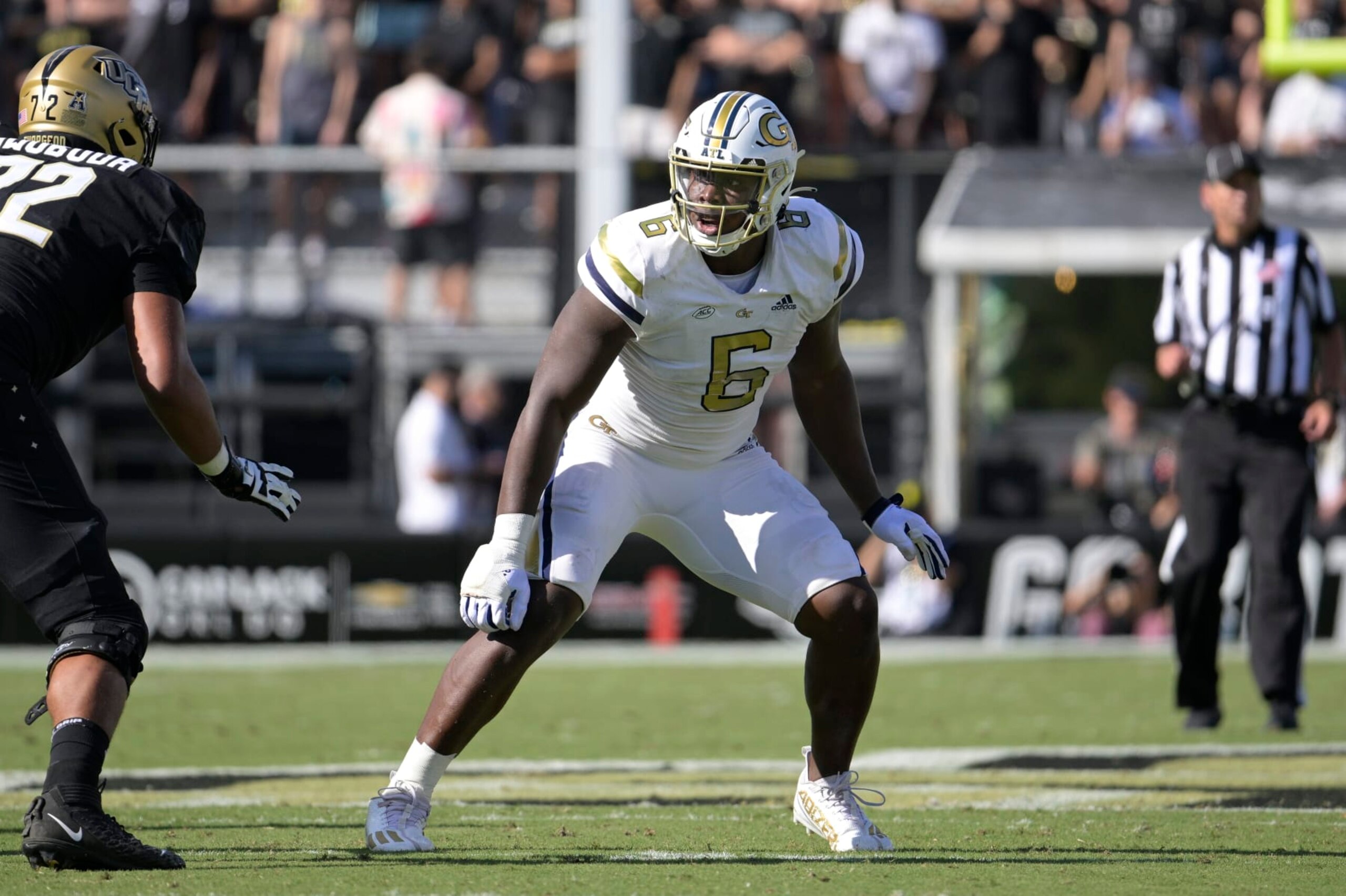
B/R Rank: No. 34
Keion White came in just outside of the top 31 on our big board, so he would have been a reasonable late first-round pick. Instead, the New England Patriots got an ultra-athletic prospect with a sky-high ceiling in the middle of the second round.
When White first arrived at Old Dominion as a 2-star recruit in the 2017 class, he was a tight end. He moved to the defensive line ahead of his redshirt sophomore season and was an immediate force against the run with 62 total tackles and 19 tackles for loss.
He transferred to Georgia Tech ahead of the 2021 season, but an offseason ankle injury cost him eight games. When he got healthy in 2022, he proved he could dominate in the ACC with 14 tackles for loss and 7.5 sacks.
At 6'5" and 285 pounds with an incredibly athletic profile, White is the kind of versatile defender whom Patriots head coach Bill Belichick typically maximizes. Getting a defensive lineman with that kind of ceiling is great value in the second round.
New Orleans Saints: OT Nick Saldiveri, No. 103 Overall
23 of 32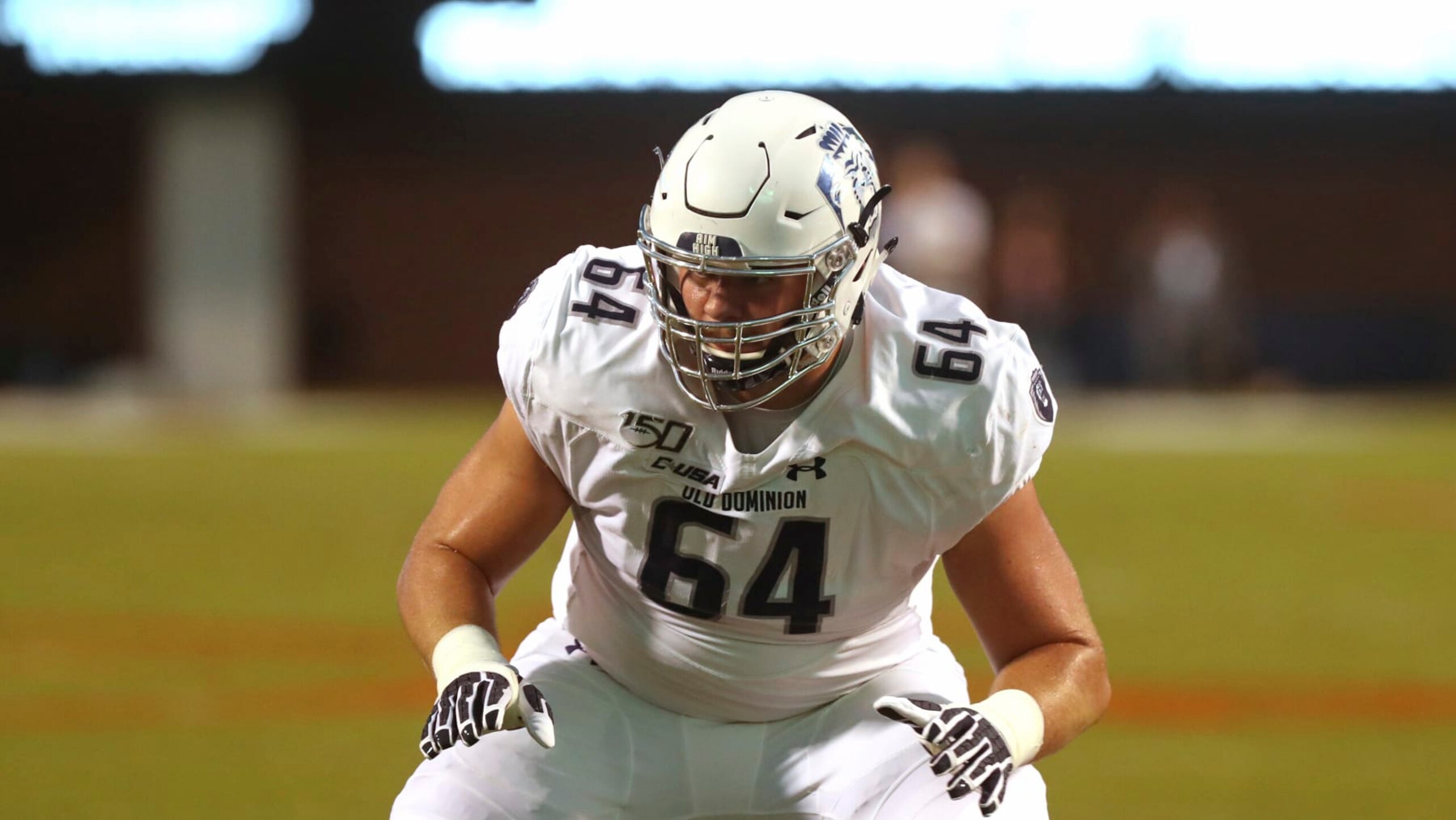
B/R Rank: No. 65
The New Orleans Saints learned the importance of offensive line depth last season. Backup left tackle James Hurst played the highest share of the offensive snaps at 92.7 percent, but no lineman played in all 17 games.
A toe injury limited Trevor Penning to only one start, and he suffered a Lisfranc injury in that game which could keep him sidelined until June. Meanwhile, Andrus Peat played in only 11 games, bringing him to a grand total of 17 over the last two seasons.
What the Saints needed was a utility lineman who can fill in wherever needed while developing into an eventual replacement at one of the guard spots. Nick Saldiveri fits that description to a tee.
"He is a skilled, technically refined pass protector at tackle with the movement skills to be an asset in the zone run game and be serviceable on downhill, gap concepts," B/R scout Brandon Thorn wrote in Saldiveri's scouting report. "He showed enough in limited snaps on film and at the Senior Bowl at guard to offer inside-out versatility and will be a high-quality backup or potential starting right tackle right away."
Finding an answer to an important issue in the fourth round makes Saldiveri a great value pick.
New York Giants: WR Jalin Hyatt, No. 73 Overall
24 of 32
B/R Rank: No. 86
This is not a value based on the B/R big board, but our scouting department was much lower on Jalin Hyatt than the consensus. The Tennessee speedster was ranked 39th on the NFL Mock Draft Database consensus big board and was a first-round pick in 36.2 percent of mock drafts.
Instead, the New York Giants picked up another pass-catcher for quarterback Daniel Jones in the third round, allowing them to address other pressing needs with their first two picks.
Although B/R draft scout Derrik Klassen ranked Hyatt lower than the consensus, he said the Tennessee product should be a useful receiver early in his career.
"Hyatt's speed alone will make him useful out of the gate," Klassen wrote. "He should immediately be an effective downfield threat and a useful field-stretching decoy at worst."
Hyatt ran a limited route tree at Tennessee, but that was a byproduct of the Volunteers' scheme. He's young enough to improve in that area, and he otherwise has the potential to be a high-end No. 2 receiver.
New York Jets: OT Carter Warren, No. 120 Overall
25 of 32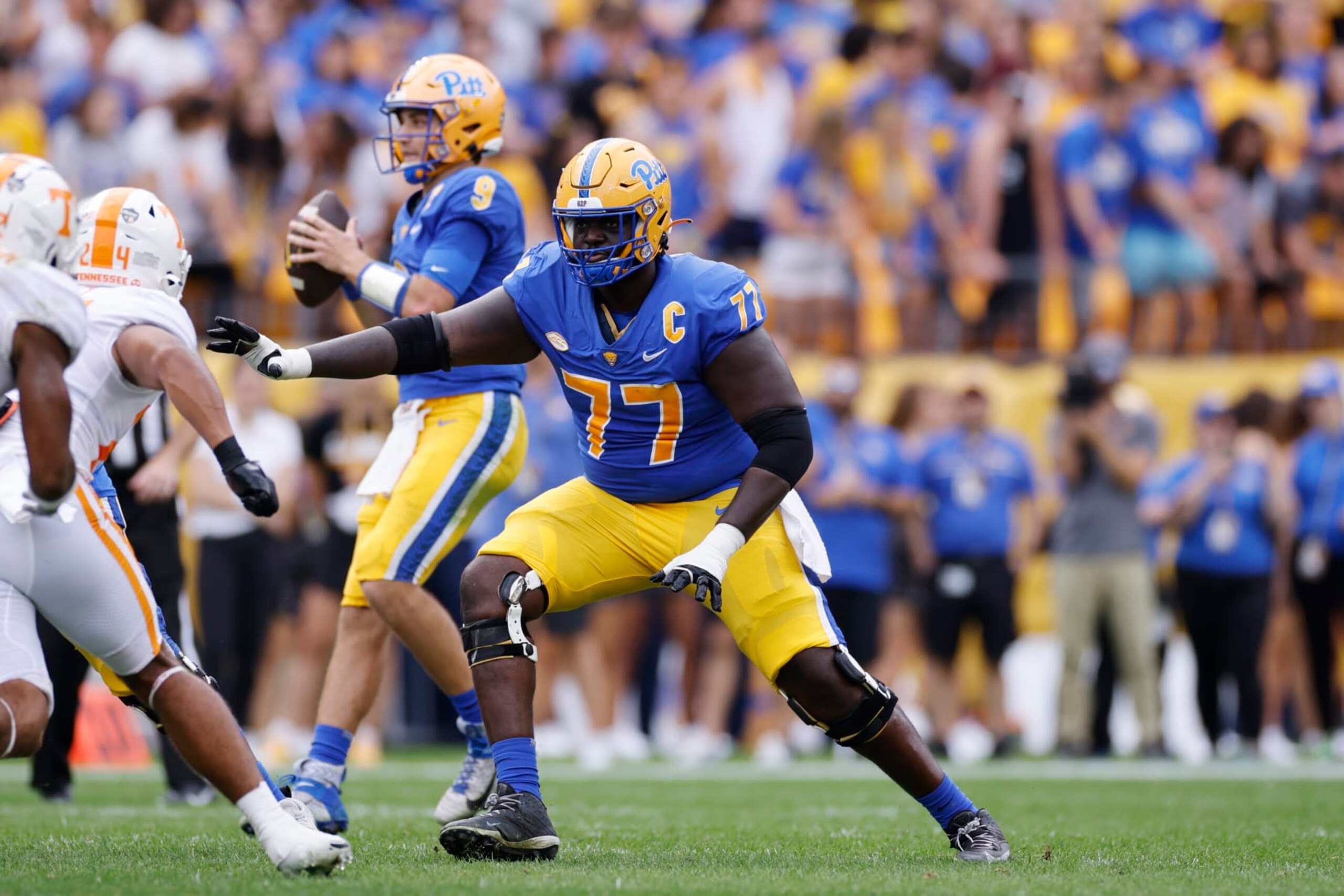
B/R Rank: No. 84
The New York Jets were late to the tackle run in the first round. The Pittsburgh Steelers traded up in front of them to take Broderick Jones, and Anton Harrison was the only other tackle to be picked later in the first round.
It was a less-than-ideal situation for a team that has questions at both right and left tackle. Finding Carter Warren in the fourth round could make up for it, though. The Pitt product likely would have gone earlier had a meniscus injury not ended his final season after four games.
The Jets know a thing or two about tackles with shaky knees, as various injuries have limited Mekhi Becton to only one game over the past two seasons. Warren has a smaller frame (6'5½", 311 lbs) than Becton (6'7", 363 lbs), which could help him stay healthier.
Warren wins with his 35⅜" arms, which give him the length to keep pass-rushers at bay. His knee injury kept him from doing athletic testing at the combine, but he's a fluid mover with demonstrated quickness on film.
Warren's draft-day drop could be a blessing for the Jets, as he could be a Becton insurance plan or the heir apparent to Duane Brown.
Philadelphia Eagles: DT Jalen Carter, No. 9 Overall
26 of 32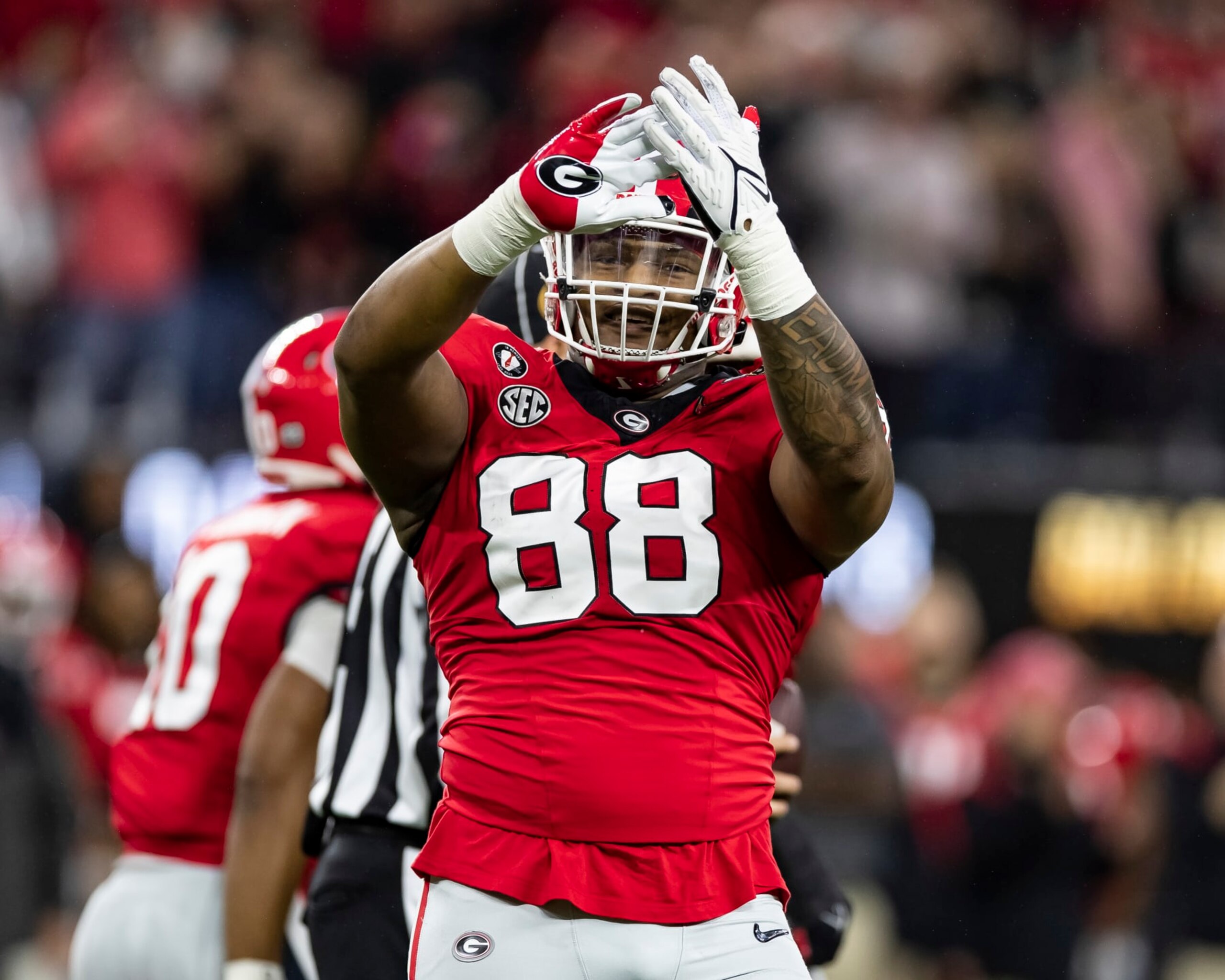
B/R Rank: No. 2
Finding value in the draft often means landing a starter on Day 3 or late in Day 2. Other times, it means finding an All-Pro talent in the bottom half of the top 10.
Off-field concerns likely contributed to Jalen Carter's draft-day tumble. He pleaded no contest to two misdemeanor charges for street racing prior to a single-car crash involving a separate vehicle that killed Georgia recruiting staffer Chandler LeCroy, who was driving, and offensive lineman Devin Willock. Carter also showed up nine pounds heavier at his pro day than he did at the combine and couldn't finish his position drills, according to ESPN's Mark Schlabach.
However, Carter has otherworldly explosiveness and agility for a man his size (6'3", 314 pounds). On a Georgia defensive front that has produced five first-round players, including 2022 No. 1 pick Travon Walker, Carter found a way to stand out.
While player comparisons tend to be current or recent players, B/R's Matt Holder compared Carter to Warren Sapp. The former Tampa Bay Buccaneers star was a six-time All-Pro selection and ended his career with 96.5 sacks.
Carter also drew an Ndamukong Suh comparison from FantasyPros' Thor Nystrom. If the Philadelphia Eagles can keep him focused and in shape, he'll be a steal even at No. 9.
Pittsburgh Steelers: TE Darnell Washington, No. 93 Overall
27 of 32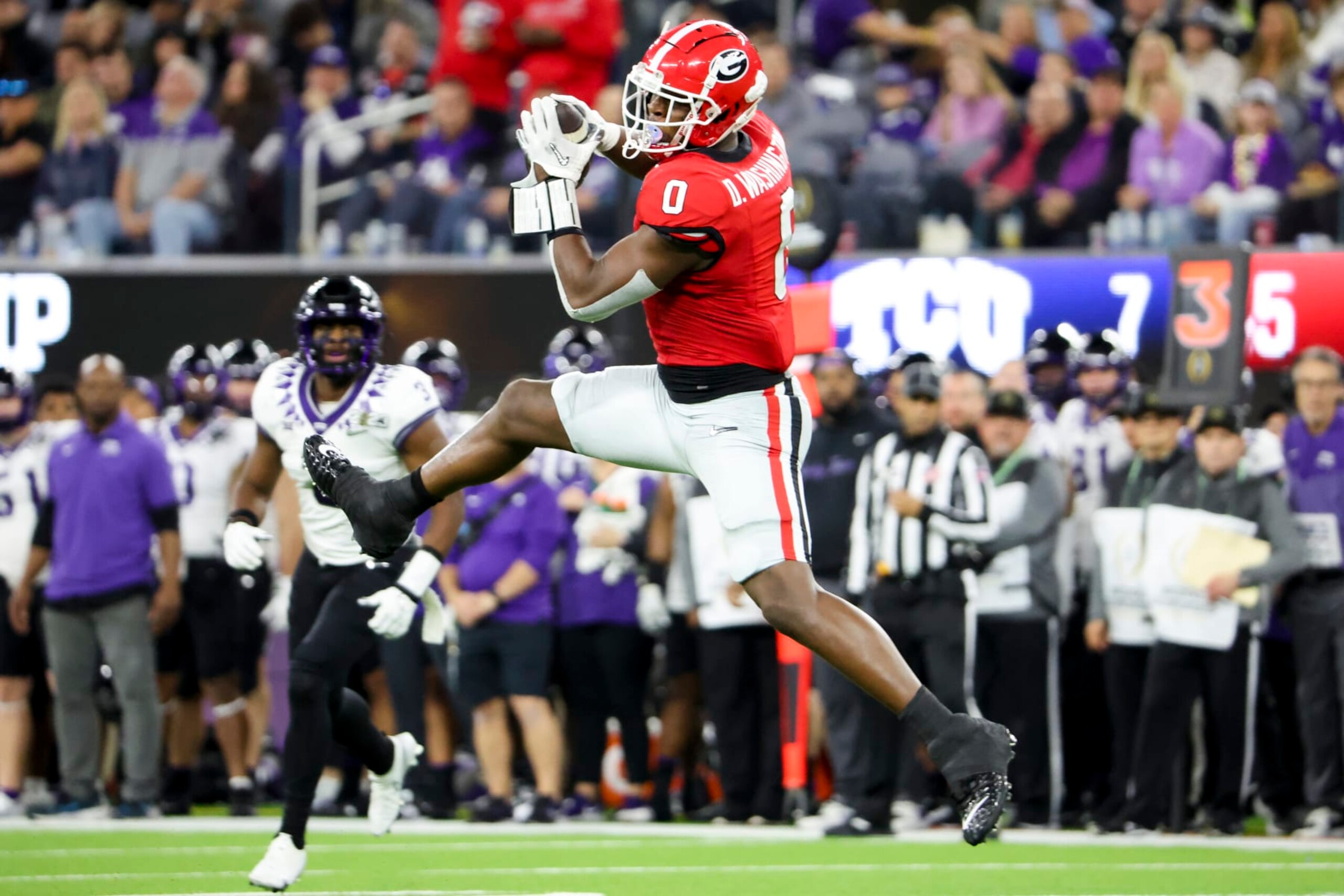
B/R Rank: No. 26
The Pittsburgh Steelers did a phenomenal job of finding value with nearly all of their picks. They managed to grab three prospects in the top 26 on our big board—Joey Porter Jr. (No. 10), Broderick Jones (No. 19) and Darnell Washington (No. 26).
All three players have the potential to be the top player at their respective positions in this draft class, but the Steelers got Washington in the third round.
At 6'7" and 264 pounds, Washington looks like he isn't far away from being able to bump inside to tackle. Yet his 4.64-second 40-yard dash and 9.88 relative athletic score underscore his potential to become a legitimate receiving threat.
Pairing with Pat Freiermuth should give Washington time to develop as a part-timer. He has all of the physical tools to be a dominant blocker, but he has some technical things to clean up and needs to improve as a route-runner.
Tight ends have a steep learning curve, but no one has the combination of size, speed and physicality that Washington brings to the table. The Steelers were fortunate that he fell so far in a loaded tight end class.
San Francisco 49ers: S Ji'Ayir Brown, No. 87 Overall
28 of 32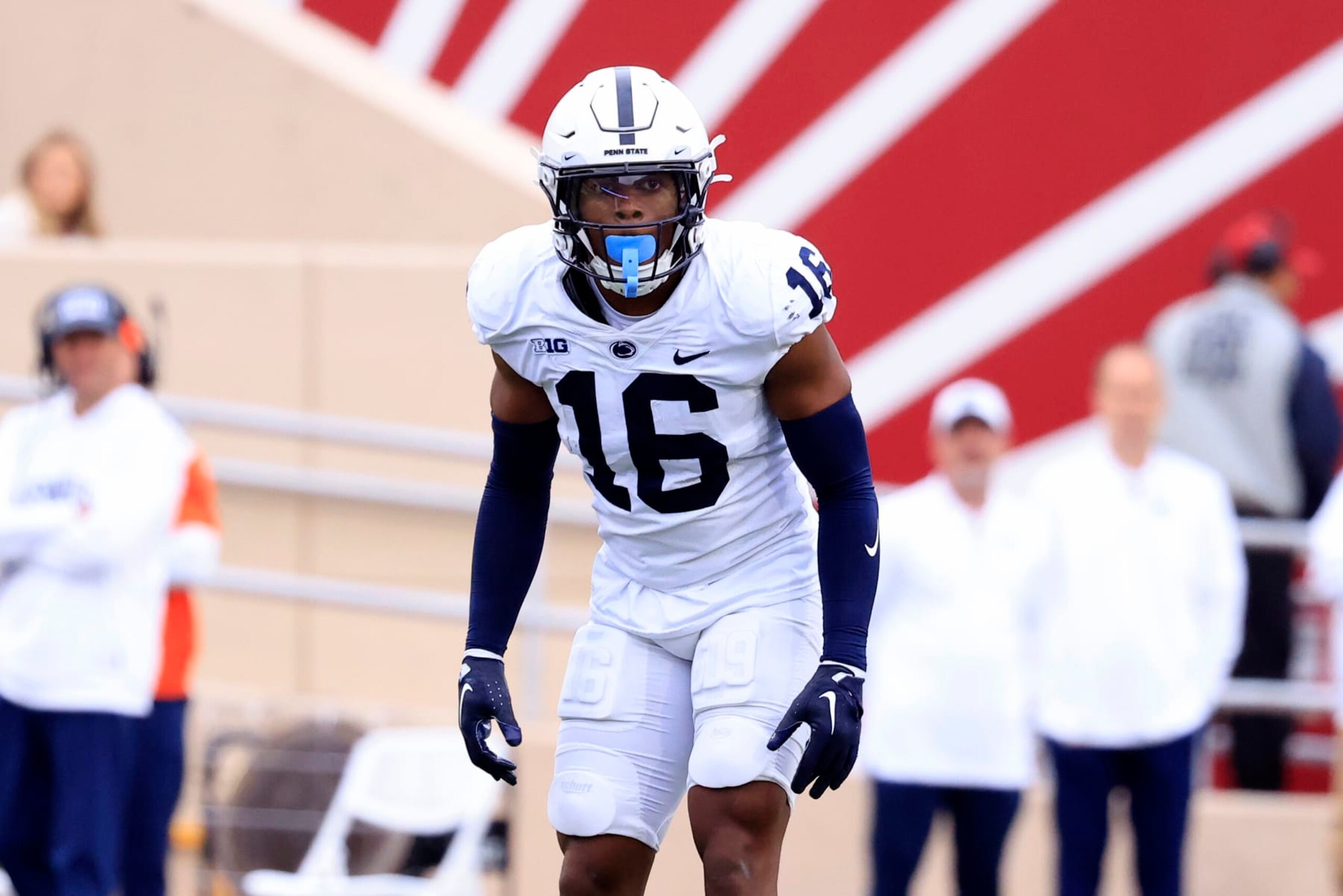
B/R Rank: No. 94
The San Francisco 49ers don't get points for drafting someone above their B/R big board rank here, but that doesn't mean that Ji'Ayir Brown won't wind up being a valuable pick.
The Niners didn't have a first- or second-round pick because of the trades for Trey Lance and Christian McCaffrey. When they were finally on the clock late in the third round, it was important for them to find someone who can contribute right away.
This year's safety class was difficult to get a read on. Brown was the sixth-ranked safety on the B/R big board, but he was No. 1 in Next Gen Stats' rankings, which classified Alabama's Brian Branch as a cornerback.
"His overall upside as a player may be capped by his lack of a true position and athletic profile, but his understanding of the game and ability to fill multiple spots should please most coordinators," B/R scout Cory Giddings wrote in Brown's scouting report.
San Francisco has few glaring needs, but getting more depth at defensive back was important. With Jimmie Ward and Tarvarius Moore both leaving in free agency, Brown is likely to be in the rotation early, especially due to his ability to play multiple roles.
Seattle Seahawks: WR Jaxon Smith-Njigba, No. 20 Overall
29 of 32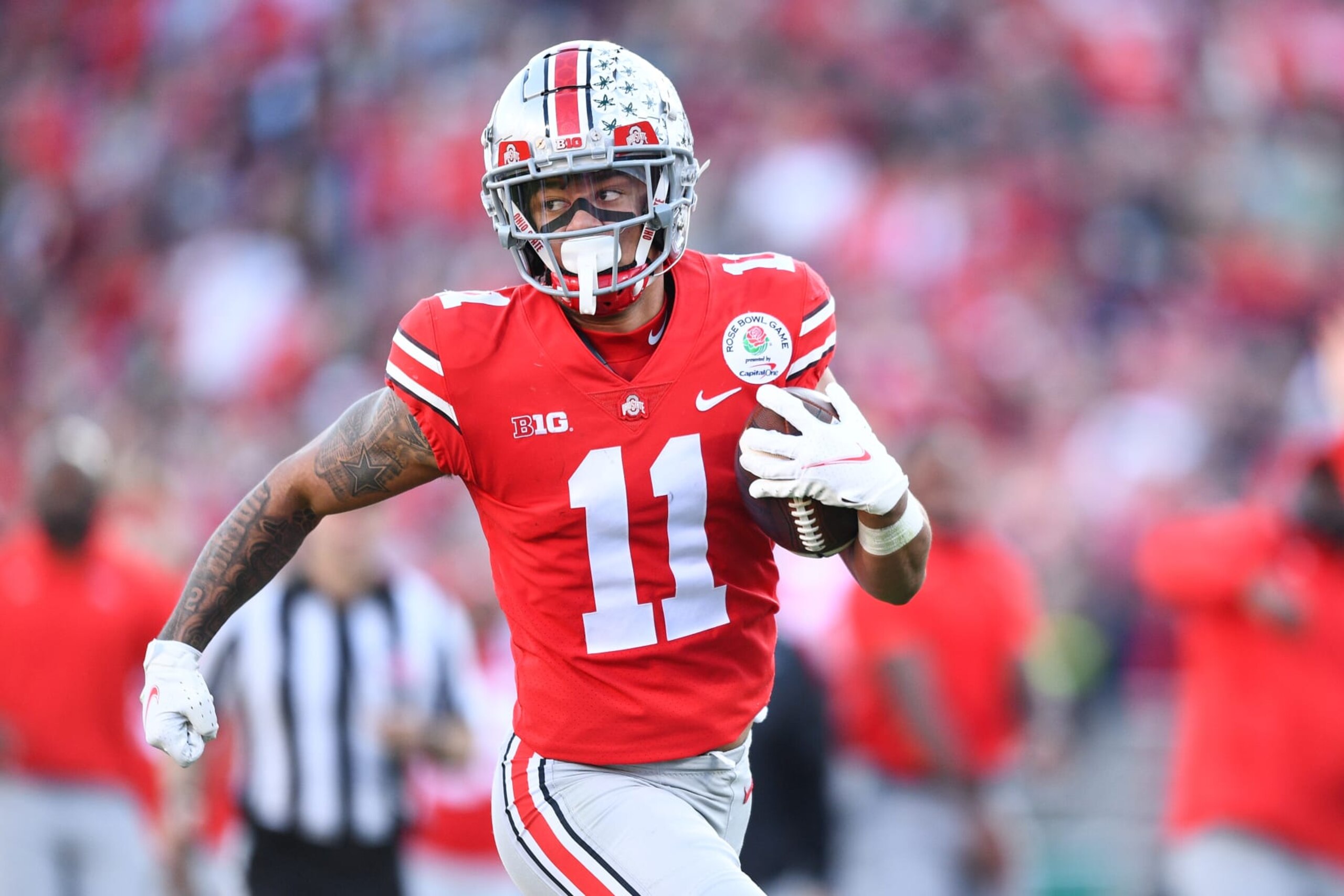
B/R Rank: No. 12
Over the last few offseasons, the wide receiver market has exploded. There are now 14 receivers whose annual average value exceeds $20 million, including slot specialists like Keenan Allen and Chris Godwin.
Given that market, the idea that Jaxon Smith-Njigba might not have been worth an earlier selection than No. 20 because he's best suited for the slot doesn't make sense.
The Seattle Seahawks proved last season that they can win games with Geno Smith at quarterback. But to contend with teams that have an elite quarterback in the postseason, they have to surround Smith with as much talent as possible. That's hard to do when DK Metcalf is averaging $24 million and Tyler Lockett is averaging $17.3 million.
In Smith-Njigba, the Seahawks now have one of the best receiver trios in the league and a clear succession plan when Lockett's age (30) starts to show.
There were six receivers taken in the top 20 of last year's draft. The Seahawks got a steal by being the first to take one with the 20th pick in this draft.
Tampa Bay Buccaneers: WR Trey Palmer, No. 191 Overall
30 of 32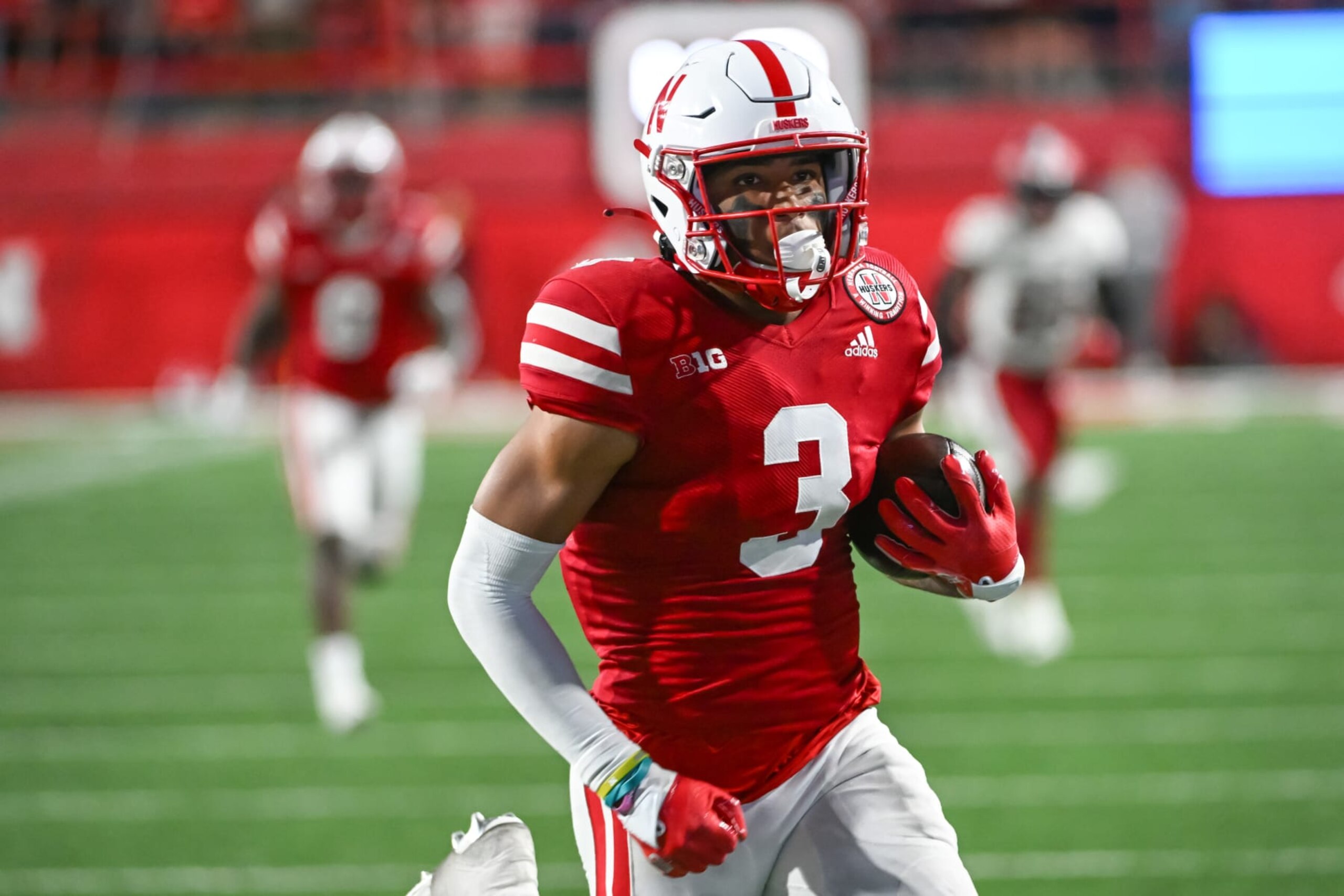
B/R Rank: No. 116
"He's the fastest guy in the draft," an NFL receiver coach told The Athletic's Bruce Feldman about Nebraska wideout Trey Palmer. "On film, (Jalin) Hyatt is up there, but Palmer, he's different fast on film."
The 22-year-old might be a little one-dimensional, but that one dimension can make a safety take an extra step back before the snap and creates extra room for others to work.
The coach also told Feldman that Palmer had some drops on film and the Cornhuskers force-fed him the ball. But he said there wasn't "a whole lot around him" to take away the attention of the defense, which won't be the case in Tampa. Mike Evans and Chris Godwin are the top pass-catching options when healthy.
The Bucs had little straight-line speed to pair with that duo last year, though. The next leading receiver was Russell Gage, who is more of a slot, while Julio Jones and Scotty Miller contributed sparingly as well.
Palmer brings an element that the Bucs didn't have last year, which is a great use of a sixth-round pick.
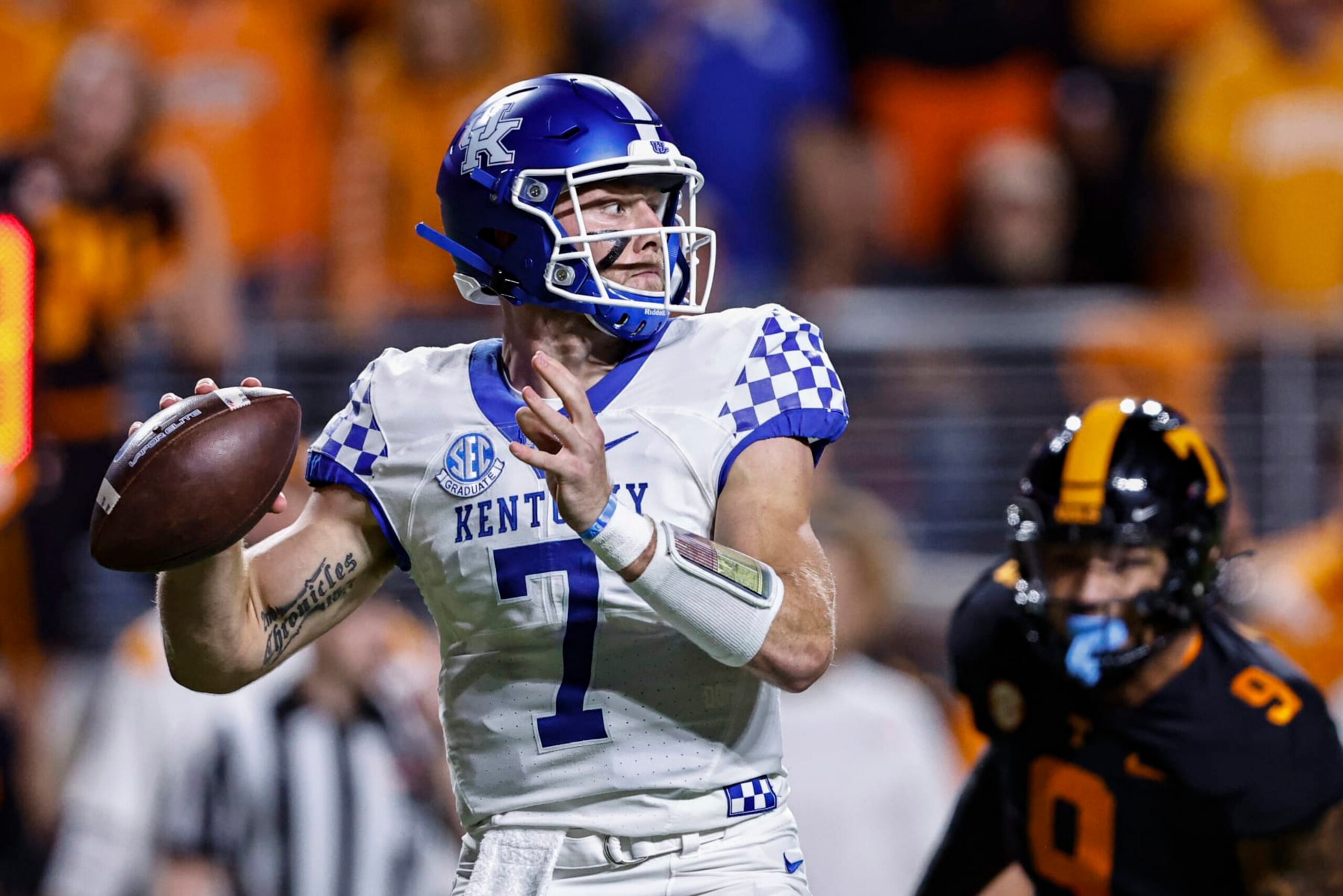
Tennessee Titans: QB Will Levis, No. 33 Overall
31 of 32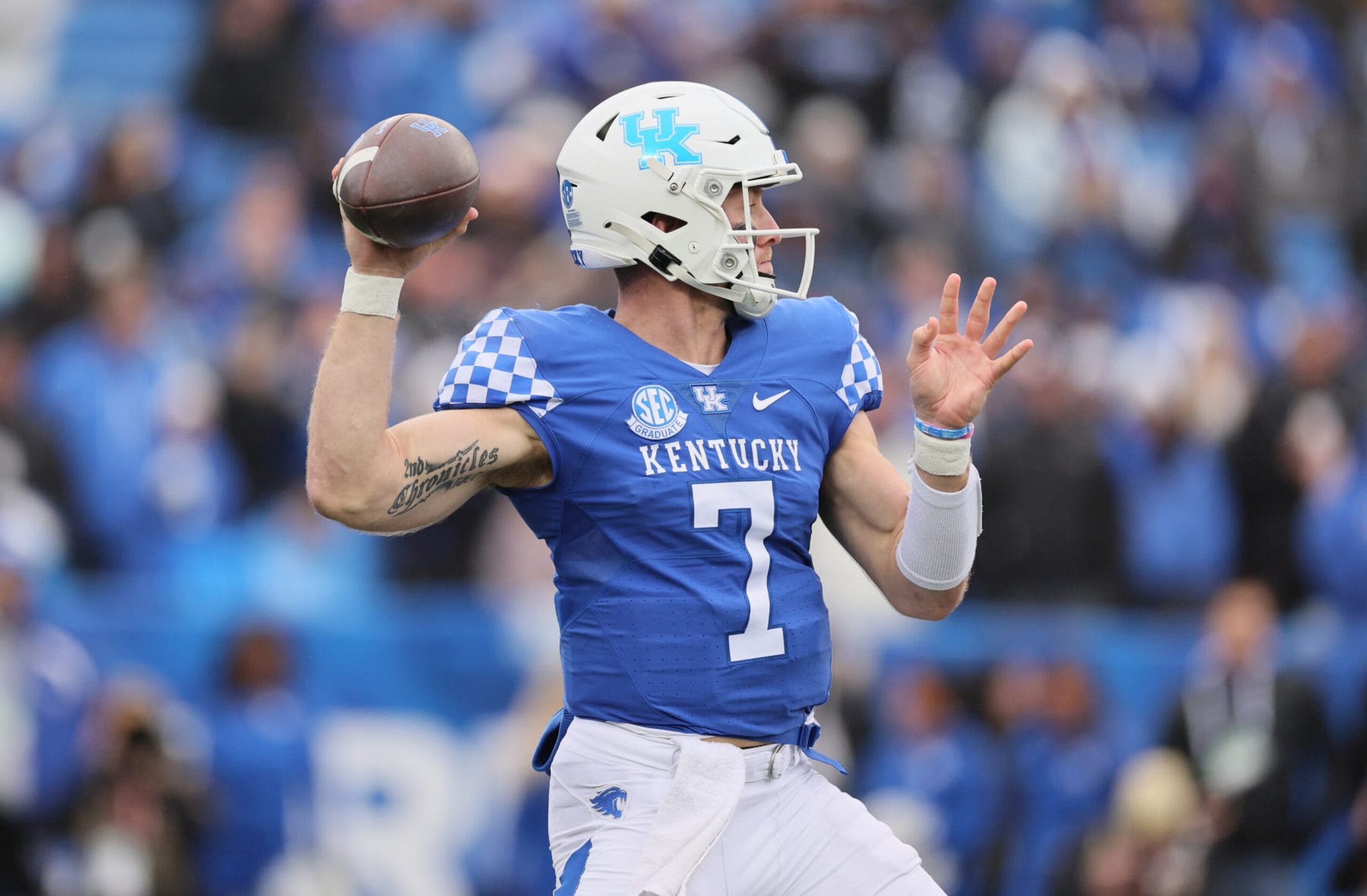
B/R Rank: No. 22
Will Levis' slide was one of the biggest storylines on Day 1 of the draft. The Kentucky quarterback was the odds-on favorite to be the No. 2 selection in the draft at one point and briefly got buzz as a sleeper No. 1 overall pick.
Either would have been a disastrous pick based on the B/R big board, which saw Levis as the clear No. 4 quarterback in the class. But taking someone with his tools and upside at the top of the second round, even though the Tennessee Titans had to trade up to No. 33 to do so, is well worth the risk.
That isn't to say the 6'4", 229-pound quarterback is guaranteed to light up the league. There's always a level of uncertainty when it comes to quarterbacks transitioning into the NFL.
However, Levis had a lot of success in an NFL-style offense at Kentucky in 2021. He has prototypical size for a quarterback and the arm to go with it. That package of traits and film is well worth the gamble in the second round.
Bleacher Report's Derrik Klassen compared Levis to Ryan Tannehill in his scouting report. That might not be what Titans fans want to hear, but he went 30-13 as the starter during his first three years in Tennessee.
Going to the Titans led to the best years of Tannehill's career, and the coaching staff didn't get to work with him until his age-31 season. If Levis pans out, he'll be one of the most valuable picks in the draft.
Washington Commanders: IOL Ricky Stromberg, No. 97 Overall
32 of 32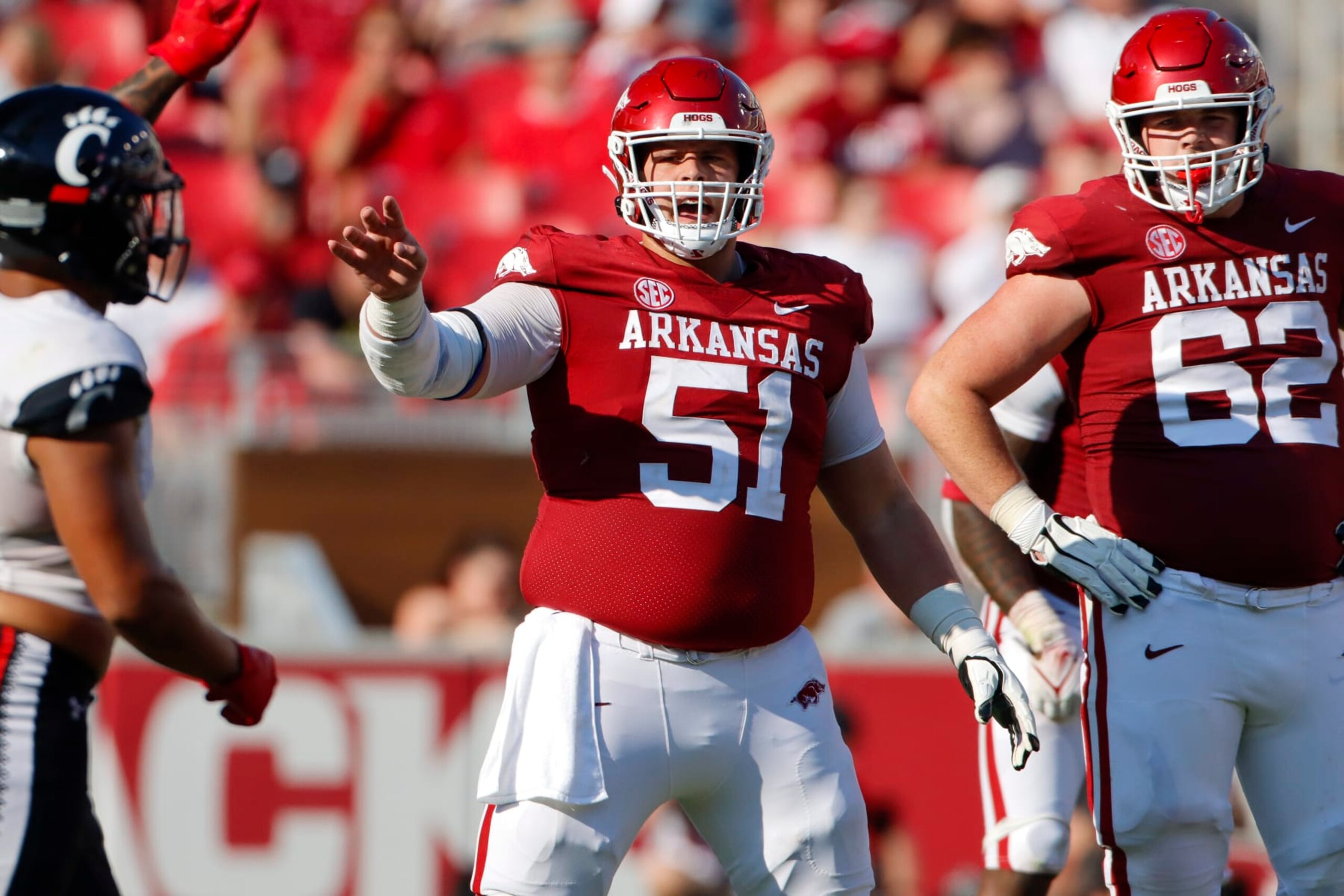
B/R Rank: No. 104
There isn't a huge discrepancy between Ricky Stromberg's spot on our big board and where the Washington Commanders drafted him. But he's a solid player with a defined path to playing time.
The middle rounds are a great time to fill out an offensive line, especially on the interior, where plenty of functional starters can be found. That's an apt description of what Stromberg brings to the table.
The 6'3", 306-pounder is physical, especially for being relatively undersized. But he's an experienced starter with three years of starting at center for the Razorbacks.
His pass protection has gotten better as he continues to develop. He allowed no sacks in his final season after giving up four over the previous two, per PFF.
The Commanders have some questions on the interior of their offensive line. Nick Gates mostly played guard with the New York Giants, but he could move to the middle. Tyler Larsen played center for them last season, but he isn't an inspiring option after giving up three sacks on 534 snaps and finishing with a PFF grade of 58.2.
Stromberg is equipped to push for playing time early and could wind up being a quality starter. That's a great outcome for a late third-round pick.
.jpg?w=2560 "Steelers Saints Football")
.jpg?w=2560 "Eagles Jaguars Football")
.jpg?w=2560 "🚨 Week 8 AP Top 25 Poll")