

Ranking Every NBA Team's Top 3 Trade Assets This Season
The dawn of a new NBA season brings with it renewed hopes for 30 fanbases, the promise of a fresh batch of breakout ballers and a nightly highlight reel your eyes will struggle to believe.
Oh, yeah, and we have another excuse to talk NBA trades again—not that we needed it.
While teams have spent the past several months fine-tuning their roster, the next few weeks could force clubs to rethink those decisions. With both a seemingly wide-open championship race and major incentive to tank ahead of what appears to be a stacked 2023 draft, this season could be hyperactive on the trade front.
To help set the stage for the #TradeSZN ahead, we're breaking down each club's top three trade assets and ranking them based on their likely appeal.
A few quick notes before getting started. We're only examining assets that have a realistic chance of being traded this season, so you won't see top-tier superstars or recent blue-chip prospects who are clearly leading a rebuilding project. Also, rather than spotlighting specific draft picks, we'll simply include a blanket reference to draft considerations, since protections are unsettled and different suitors may place different values on certain selections.
Enough for the particulars, though, let's get to the assets.
Atlanta Hawks
1 of 30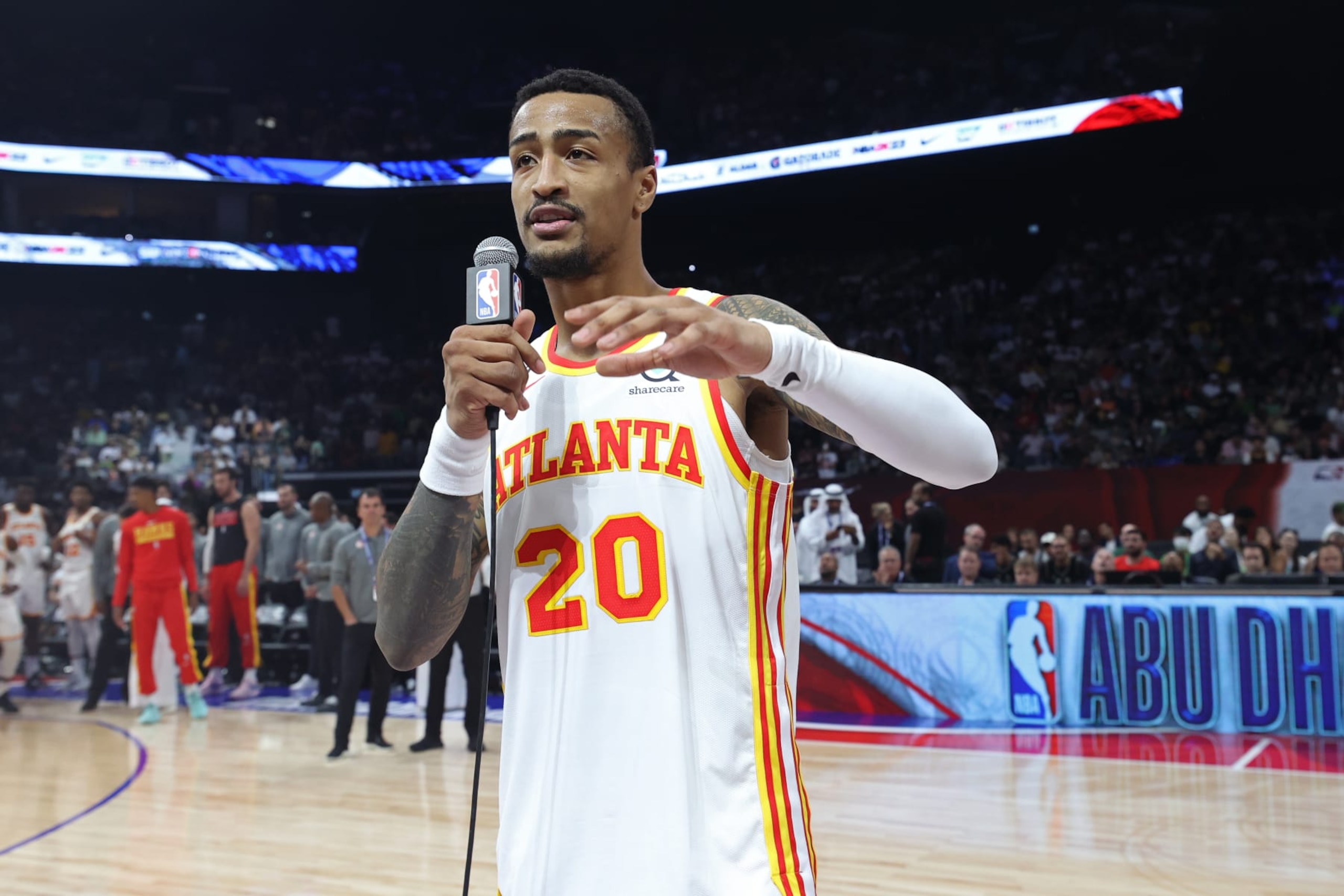
3. Jalen Johnson
It's too early for Atlanta to even dangle this year's first-rounder, AJ Griffin, but it might be willing to talk shop on Johnson, last year's No. 20 pick. He logged just 120 minutes as a rookie and remains without a clear path to the hardwood. As a trade chip, though, he's only 20 years old and in possession of an intriguing blend of handles and hops for a 6'9", 220-pounder.
2. First-round pick
While the Hawks sent out three first-round picks and a swap in the Dejounte Murray megadeal, they could still ship out their 2023 first-rounder if they feel so inclined. If Murray makes a smooth transition to Atlanta, and this roster looks ready for anything close to championship contention, the front office might be willing to sacrifice another draft pick in pursuit of a title.
1. John Collins
Collins never strays far from the rumor mill, which speaks to his appeal as a target but imperfect fit as a building block.
The selling point is easy: He's an athletic, 25-year-old, 6'9" combo big with career per-36-minute averages of 20.5 points, 10.4 rebounds and 1.2 threes. On the other end, he's a flawed frontcourt defender that is neither a great rim protector nor a lockdown stopper on perimeter switches.
If a high-end shopper sees third-star potential in Collins, it might make an offer rich enough to finally pry the bouncy big man out of Atlanta.
Boston Celtics
2 of 30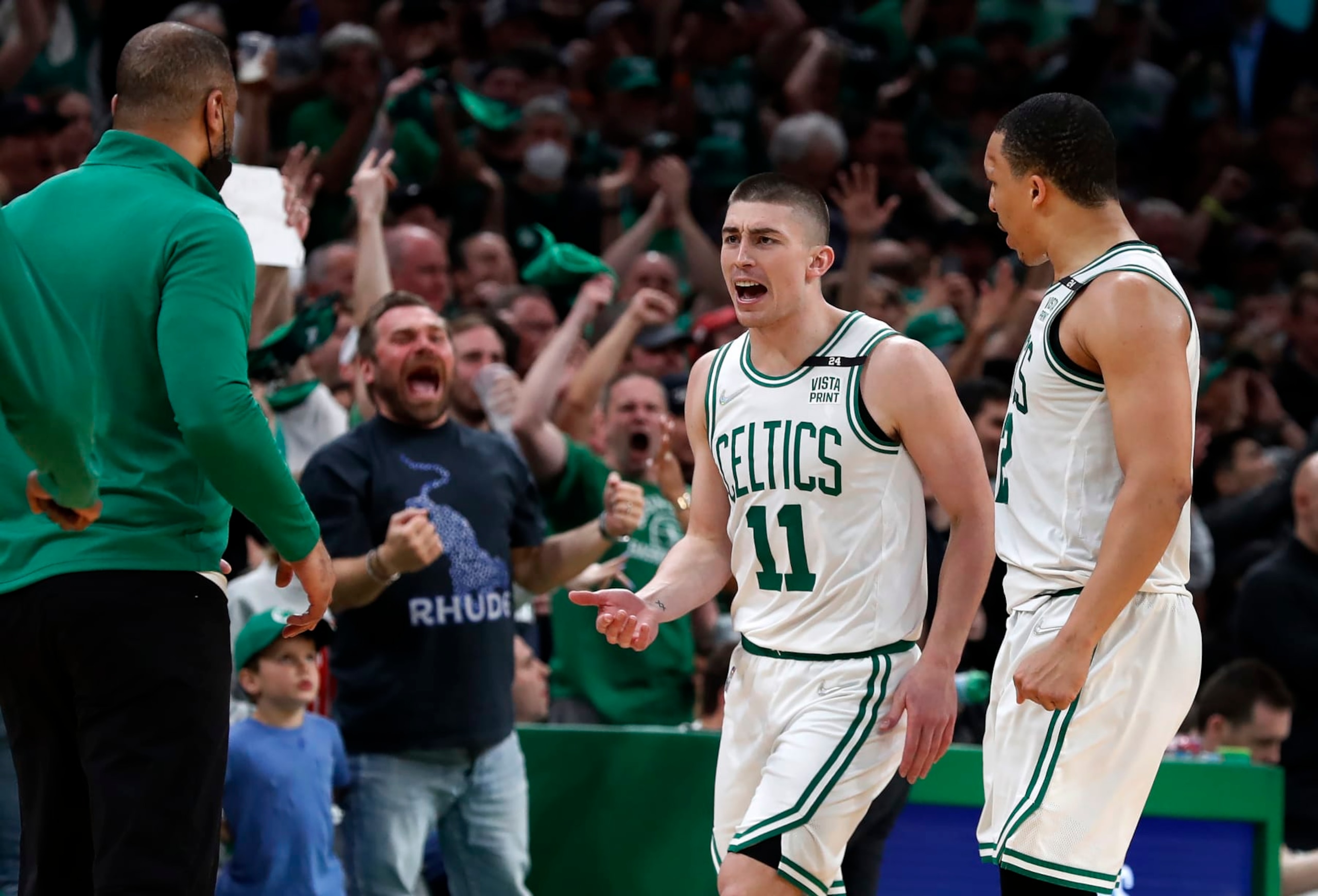
3. Payton Pritchard
Pritchard has struggled to find consistent floor time through two NBA seasons, and that could continue to be a challenge given his lack of size (6'1", 195 lbs) and athletic limitations. However, teams could still see significant spark-plug potential in him, as he pairs a fiery three-ball (career 41.2 percent) with sound decision-making (1.9 assists against 0.7 turnovers).
2. Future draft picks
The Celtics owe a top-12 protected pick to the Pacers in 2023 and only have top-one protection on a 2028 swap with the San Antonio Spurs, but otherwise, all of their first-round picks are in their possession. They have a decent amount of youth for being a win-now contender, but a pick that wouldn't convey for a few more years would hold substantial appeal.
1. Grant Williams
The Celtics opted against extending Williams, which could be a signal that he's not a part of the franchise's future plans.
Should they not want to cover the cost of his upcoming free agency, they should find a healthy market of interested suitors. Last season was his first in a prominent rotation role, and he responded by striping 41.1 percent of his long-range looks and flashing impressive defensive versatility for a 6'6", 236-pound forward.
Brooklyn Nets
3 of 30
3. Patty Mills
Talent-wise, Mills has an argument to land even higher, but it's hard to picture a scenario in which the Nets want to let him go. However, it's not impossible to reach that point, as he's one of several offense-slanted, undersized guards in this rotation, so should Brooklyn need help elsewhere, it could try shopping around his shot-making and vast postseason experience (career 94 playoff games).
2. Day'Ron Sharpe
Sharpe saw limited action as a rookie (391 minutes over 32 games), and if he's fighting for floor time again, the championship-focused Nets could decide they aren't willing to wait for him to realize his potential. Should he hit the trade market, long-term shoppers might be attracted to his size (6'11", 265 lbs), age (20) and seemingly insatiable energy.
1. Cam Thomas
Thomas spent just two seasons at the famed Oak Hill Academy and still left as the program's all-time scorer. He's a natural bucket, it's just that the Nets aren't exactly hurting for offense when their full roster is available.
He needs to work on his efficiency—he shot just 43.3 percent overall and 27 percent from distance as a freshman—and it's unclear if he'll be much help in areas other than scoring. Those are common problems for a 21-year-old, but Brooklyn could grow too impatient to live through his growing pains.
For teams with a longer timeline, though, they could take a flier now and hope that in a few years' time, they might have stumbled upon a go-to scorer.
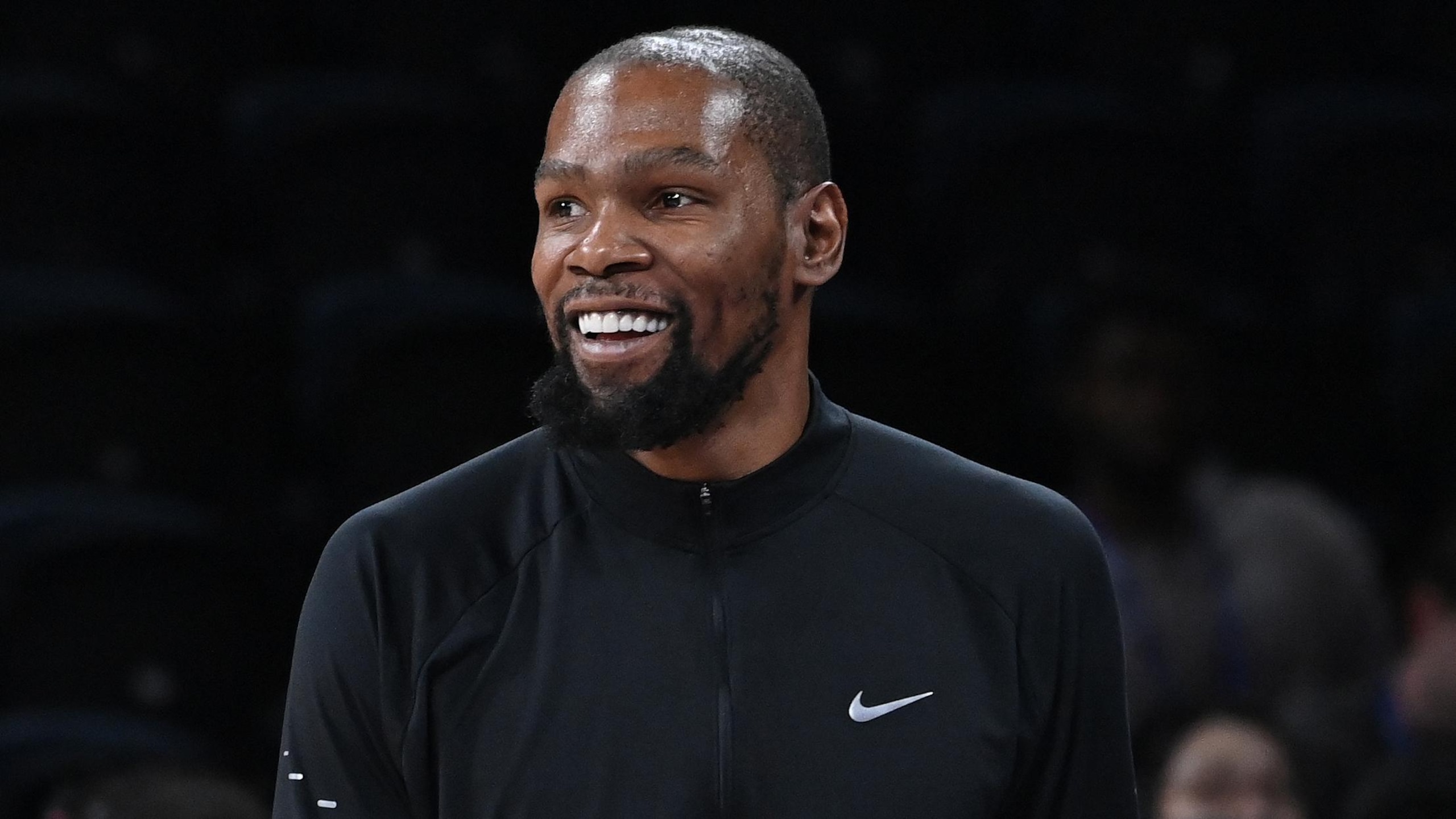
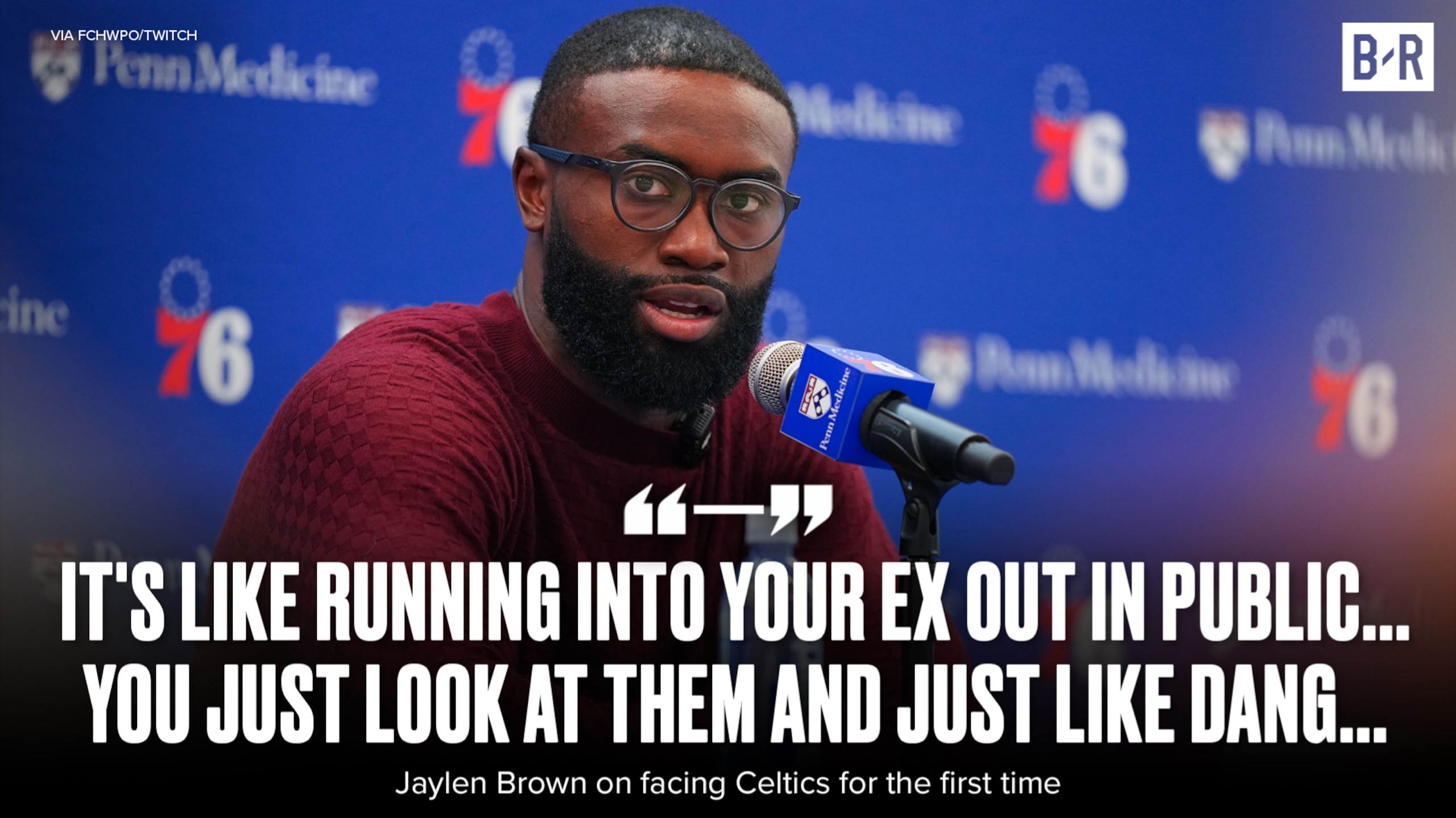
Charlotte Hornets
4 of 30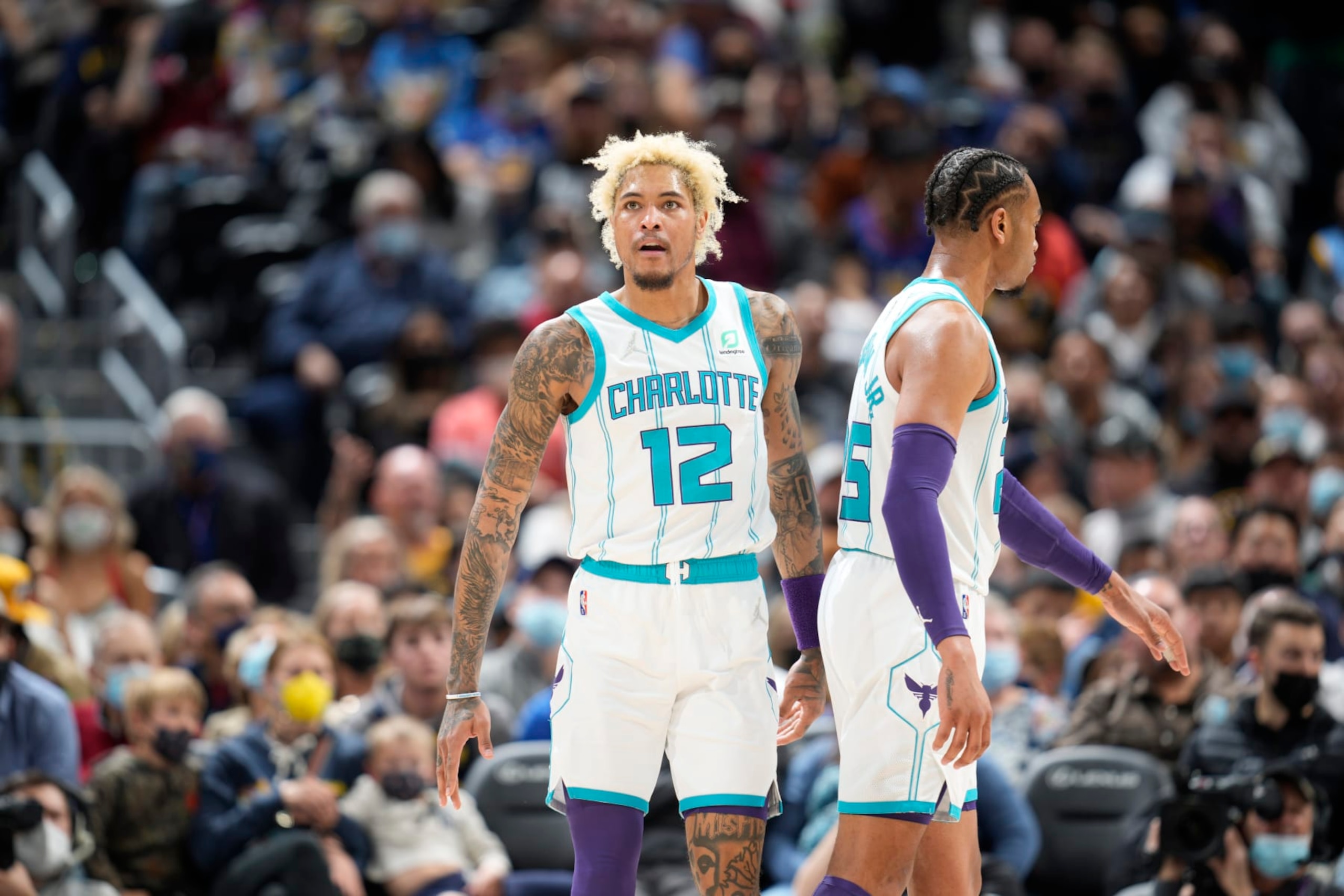
3. James Bouknight
Chances are it's too early for Buzz City to bail on Bouknight, which is why last year's No. 11 pick only checks in at No. 3 here. Still, the Hornets didn't go out of their way to find him floor time last season (304 minutes), and he didn't exactly force the issue when he got the call (34.8 percent shooting). With handles, athleticism and smooth shot-creation, though, he'd pique someone's interest if made available.
2. Kelly Oubre Jr.
It's possible the Hornets will hold on tightly to Oubre given the glaring void on the wing created by Miles Bridges' absence while awaiting trial on domestic violence charges. Then again, if the Hornets are bearish about their chances to compete, it might be prudent to shop around a 26-year-old on an expiring contract. Oubre could command significant interest given his length, athleticism and relatively impressive track record (four straight seasons of 15-plus points per game).
1. P.J. Washington
The Hornets could have extended Washington this offseason and didn't. Regardless how much they value him, they opened up the possibility of him playing elsewhere sooner than later.
Restricted free agency awaits him, and Charlotte could be wary of a rising price tag. Washington hasn't summoned a leap year just yet, but his Swiss Army knife skills show few holes in his game.
He can operate as both a forceful power forward and a small-ball big, and he works in complementary fashion as both a scorer and distributor. Teams who envision even more elements of his game surfacing sooner than later could be willing to part with quite a lot to get their hands on him ahead of his trek to the open market.
Chicago Bulls
5 of 30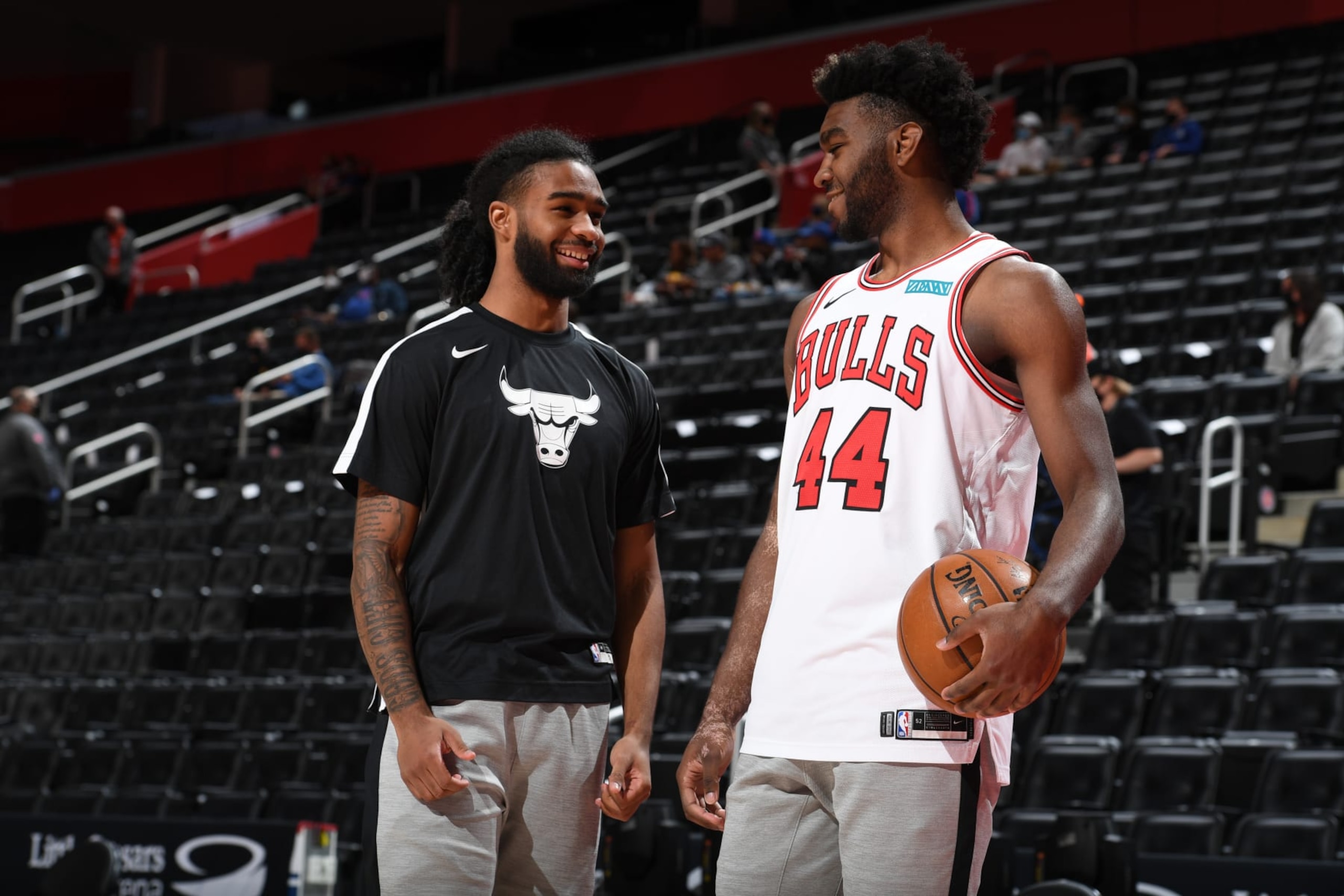
3. Andre Drummond
This is a speculative selection, as Drummond has a chance to carve out a substantial role on the interior rotation. However, if the Bulls fade from playoff contention with Lonzo Ball stuck on the sidelines, they could make Drummond available knowing he has only a $3.4 million player option for next season. He has no perimeter skills in his arsenal, but he's big and active around the basket.
2. Coby White
White's role in the franchise's future seems tenuous at best. Per Joe Cowley of the Chicago Sun-Times, White "has been on the trade block for the last year" and wasn't be extended, meaning restricted free agency awaits him next summer. White could attract scoring-needy suitors with his fiery three-ball and electric attacks in the open court.
1. Patrick Williams
Had the Bulls made Williams available at any point over the last 12 months, they may well have won one of the superstar sweepstakes. The fact he still resides in the Windy City suggests he's unlikely to be heading elsewhere any time soon.
Still, his preseason demotion to the second unit had folks talking for the wrong reasons about his long-term outlook, so maybe views are changing about 2020's No. 4 pick.
He looks the part of an impact two-way wing, but his potential far outweighs his production. If the rest of this roster is ready to compete for something of substance and he simply isn't, there could be a scenario in which Chicago flips him for more immediate relief.
Cleveland Cavaliers
6 of 30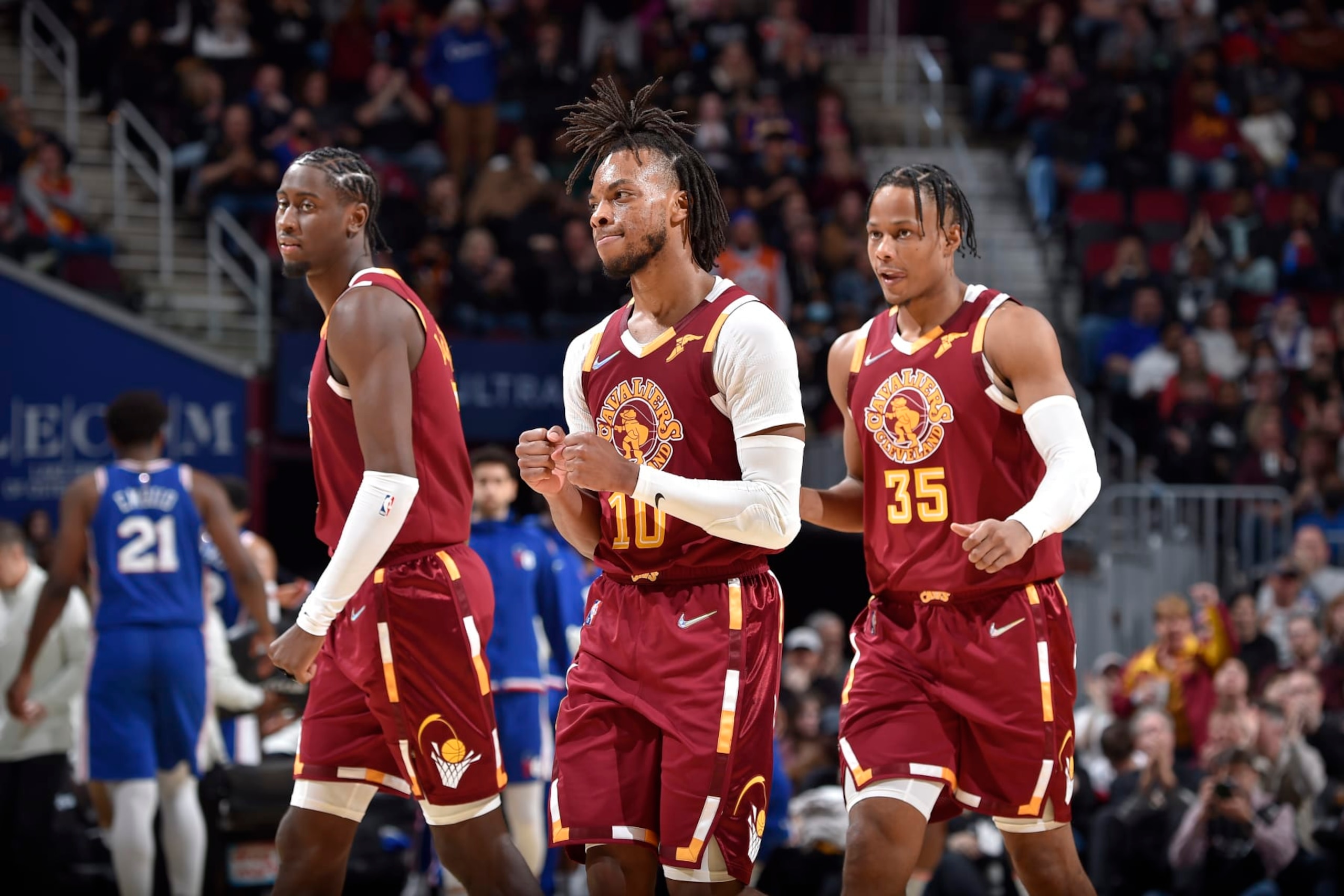
3. Cedi Osman
Osman appears like your classic jack-of-all-trades, master-of-none. It's hard to spot glaring gaps in his game but even trickier to find his standout skill. On a less crowded wing rotation, though, his do-almost-everything arsenal could bulk up someone's bench.
2. Caris LeVert
LeVert is the most talented player vying for Cleveland's starting spot, but the fact he isn't an obvious selection speaks to his redundancies with this roster. He's a smooth shot-creator but not gifted to the point where it makes sense to take touches away from Darius Garland or Donovan Mitchell just to get LeVert going.
He could shine in a sixth-man role, but the Cavs could decide there are better ways to spend the $18.8 million he'll collect this season. Tack on the fact he's unsigned beyond this campaign and it's possible Cleveland dangles him to an offense-starved squad.
1. Isaac Okoro
Like LeVert, it might be telling that Okoro hasn't won the starting 3 gig outright despite offering a cleaner fit with Garland and Mitchell as a defense-first swingman. The worry with Okoro is that opponents can simply ignore him on offense and crowd the attack lanes that might otherwise be available to Cleveland's star guards.
Okoro, the No. 5 pick in 2020, won't turn 22 until in January, so there will certainly be teams interested in seeing what his future might hold. If the Cavs aren't enamored with his immediate offensive outlook, though, they could shop him around in search of a true two-way wing.
Dallas Mavericks
7 of 30
3. Dwight Powell
Powell is an adequate rotational big, which makes him both helpful to have but not necessary to keep. With JaVale McGee now on board and in the starting lineup, the Mavs could look to move Powell with his contract set to expire after this season. A team with major interior issues would appreciate his defensive energy and hard rolls to the rim.
2. Future draft picks
Dallas has only traded away one first-round pick, but it carries top-10 protection through 2025, so if the Mavs moved another first, it would be well into the future. The Mavs may reasonably conclude they'll be a good team for a while since Luka Doncic won't turn 24 until February, but rival clubs might wonder what happens when his veteran supporting cast starts showing its age.
1. Josh Green
Is Green a good NBA player?
He has decent size for a swingman (6'5", 200 lbs) and great athleticism for anyone, and he's showing a better understanding of how to utilize those physical tools on the defensive end. As for his offense, though, he's almost a blank slate. There are flashes of thunderous finishes, smart passes and a pinch of perimeter shooting (35.9 percent last season but only on 78 attempts), but the sample size is too small to get a great feel for any of it.
Maybe he makes a leap this season, but expecting one isn't realistic based on what we've seen so far. His future remains relatively interesting, but the present-focused Mavs might need a more immediate return than he can provide.
Denver Nuggets
8 of 30
3. Zeke Nnaji
Nnaji is two years into his NBA career, yet his odometer just barely cracks 1,000 minutes (1,095). Denver either doesn't think he's ready for a role increase or simply hasn't felt the need to explore one yet. Either way, it hardly feels impossible for the Nuggets to shop him, especially if someone wants to pay a premium based on his combination of size (6'9", 240 lbs) and spacing (career 43.9 three-point percentage).
2. Peyton Watson
It would take a pretty dramatic about-face for the Nuggets to flip Watson after just spending this summer's No. 30 pick on him, but he is a long-term prospect on a win-now contender. That's never an easy balance to strike, and if injuries create a hole in this rotation that Watson isn't ready to fill, they could swap him out for a plug-and-play veteran.
1. Bones Hyland
Admittedly, there aren't many scenarios in which the Nuggets would even listen to offers on Hyland, but deeming him untouchable seems a step too far.
Yes, he exceeded expectations as a rookie, but he still averaged just 10.1 points per game on 40.3 percent shooting. Again, that's encouraging output for a first-year player, but not exactly cornerstone stuff.
Is he ready to run the second unit? If he's not, the Nuggets have a serviceable replacement in-house with veteran Ish Smith, so they wouldn't be totally lost without him. Should they discover they have bigger needs elsewhere—frontcourt depth could be a challenge—there's a universe in which they sacrifice Hyland's potential for a veteran need-filler.
Detroit Pistons
9 of 30
3. Cory Joseph
Joseph played 65 games and made 39 starts for the Pistons, so they probably aren't rushing to let him go. Still, they're already splitting developmental minutes in the backcourt between Cade Cunningham, Killian Hayes and Jaden Ivey, so they don't need to keep Joseph around. His defense, ball control, experience and expiring contract could all appeal to a win-now buyer.
2. Alec Burks
Burks has a ton of traits that can help a good team. He's experienced, versatile and productive, having just splashed 40.4 percent of his threes while nearly tripling his 1.1 turnovers with 3.0 assists last season. The Pistons probably won't be a good team yet, though, so sending him to an actual contender could be the right move to make.
1. Bojan Bogdanovic
Yes, the Pistons just acquired Bogdanovic from the rebuilding Utah Jazz in September, but that hardly means he'll be married to the Motor City for the long haul.
"It remains to be seen whether the Pistons intend to keep Bogdanovic for the entire season—or perhaps move him before the trade deadline in February in the belief that a contender will feel more urgency to make a stronger offer than those Utah received in recent weeks," Marc Stein reported.
Bogdanovic is in the final year of his contract and hoping to find a new multiyear deal, per Stein, and unless the young Pistons are way ahead of schedule, they shouldn't be the ones extending that offer. Instead, they can temporarily use his shooting and scoring threat to simplify the game for their young guards, then flip him by February for assets that actually fit their timeline.
Golden State Warriors
10 of 30
3. Patrick Baldwin Jr.
Baldwin turned some heads this preseason and possesses a towering long-term upside, but he's a project pick on a team that just won the title. Maybe the Warriors can get away with using his roster spot for developmental purposes, but if cracks form in their rotation, they might have to part with his ceiling to find someone with a much higher floor.
2. Future first-round pick
Golden State owes a 2024 first-round pick to the Memphis Grizzlies, but it has a pinch of protection for that draft and the next. If the Warriors moved a first-rounder, it wouldn't convey until way down the line, which is just as well for the team acquiring it, given the age of Golden State's veteran core. The Warriors' recent investment in young prospects, however, suggests this is a franchise that values draft picks and wants to build a bridge to something beyond its current era.
1. Draymond Green
No, a Draymond megadeal doesn't feel very likely, but how can you completely rule it out? Things were already uncomfortable when word leaked that the 32-year-old wants a four-year max extension, per The Athletic's Anthony Slater and Marcus Thompson II, and the discomfort was ratcheted up a million times over when Green punched Jordan Poole during a training-camp practice.
The Dubs will try to smooth things over as best they can, since Green's defensive versatility and distribution remain such vital pieces of their system. Still, this is the kind of distraction they definitely didn't need while trying to defend their throne.
Green's trade value is murky, since it's never been clear what kind of impact he could make outside of Golden State, but he has still played a vital role in four separate championship runs. He'd have suitors; there just may not be a ton of them.
Houston Rockets
11 of 30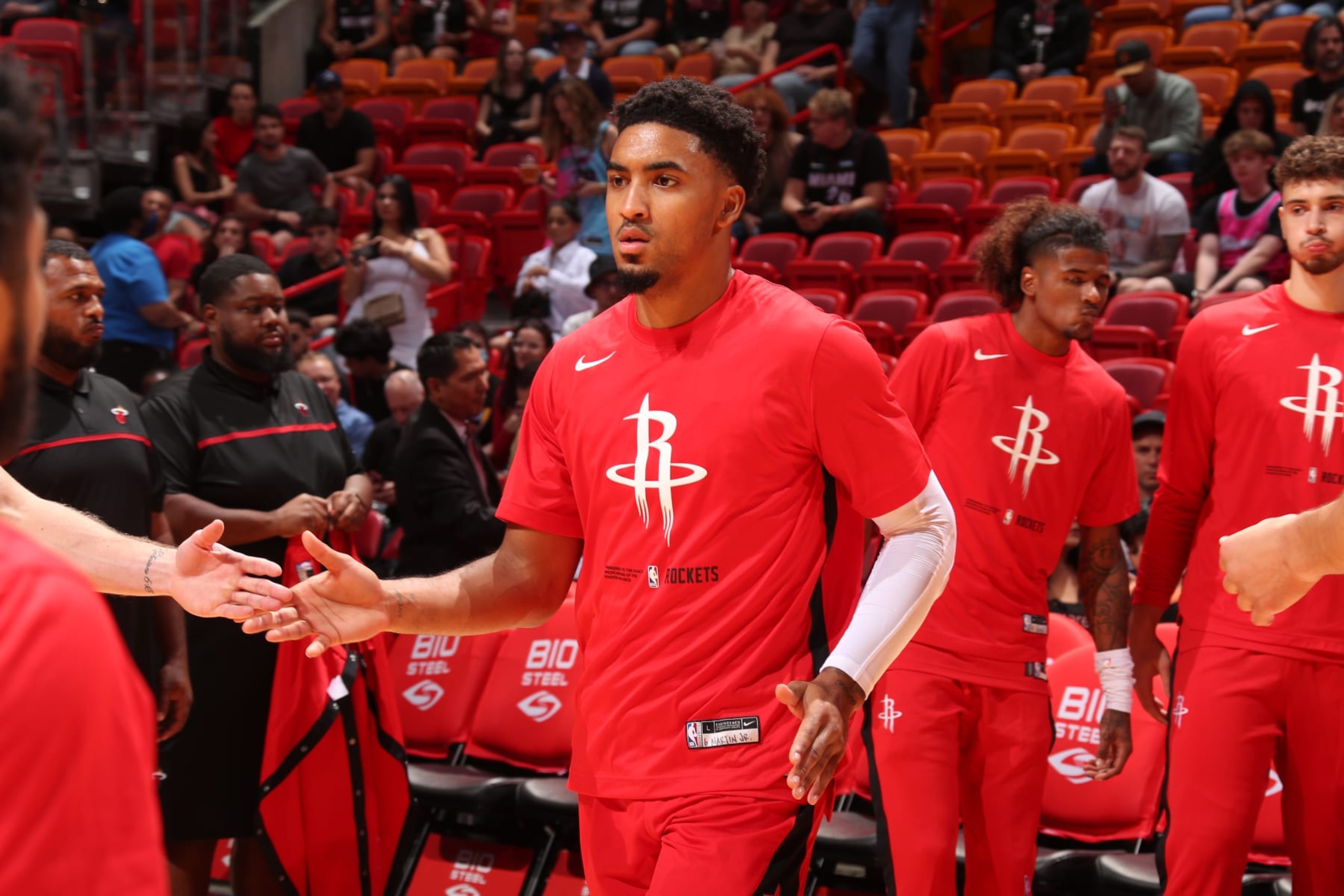
3. Jae'Sean Tate
The Rockets just inked Tate to a three-year deal this summer, meaning he can't be traded until mid-January at the earliest. That's probably just as well, since they shouldn't feel in any hurry to let him go. Having said that, his 27th birthday is fast approaching, so he might be too old to keep around much longer. He'd have wider appeal with a more consistent jumper, but his defense, playmaking and finishing all offer plug-and-play potential.
2. Eric Gordon
Gordon, who turns 34 on Christmas Day, is the elder statesman in Space City and on this season's short list of the most logical trade candidates. His salary is also non-guaranteed for next season, so the time to trade him is now. He hasn't always been the most reliable in terms of health, but when he's upright, he's a steady source of spacing, secondary shot-creating and savvy defense.
1. Kenyon Martin Jr.
Anticipating the crunch of Houston's frontcourt congestion, Martin asked for a trade ahead of June's draft, per Kelly Iko of The Athletic. Martin is, obviously, still on the roster, and it surely isn't for a lack of trade interest.
The thing is, Martin is good—and he's young (21). Teams typically don't part with good, young players if they don't have to, and either the Rockets were underwhelmed by the offers they received or they have plans for Martin and didn't bother picking up the phone.
However, if they choose to shop him, he could pique the interest of almost anyone. His athleticism is elite, his motor is similar and his defensive activity causes all kinds of chaos. If teams buy his jumper—he's a career 36 percent three-point shooter but only a 66.7 percent shooter from the foul line—they could covet him as an energizer for now and maybe much more down the line.
Indiana Pacers
12 of 30
3. T.J. McConnell
The Pacers pivoted toward a rebuild with last season's trade of Domantas Sabonis, but they still have some veterans to ship out for rebuilding tools. McConnell may never have a reliable three-ball, but he could still stabilize a win-now team's second unit with great decision-making (career 5.0 assists against 1.6 turnovers) and some of the peskiest on-ball defense around.
2. Buddy Hield
Hield is more one-dimensional than you'd like for someone set to make $39.1 million over this season and next, but that shouldn't totally torpedo his trade value.
For starters, his specialty is outside shooting, and this perimeter-crazed NBA can't get enough of the long ball. Secondly, he is elite in his craft. He has the third-most triples since entering the league in 2016-17, and his 39.8 percent splash rate ranks 19th all-time among players with at least 1,000 career threes.
1. Myles Turner
Turner's days in the Circle City are numbered. He has rarely strayed far from the trade rumor mill over the course of his seven-plus seasons with the Pacers, and their willingness to let him go should be at an all-time high given their shift toward the future and his expiring contract.
As soon as he hits the open market, the bidding should be ferocious. He's a two-time blocks champion who can anchor a championship-caliber defense, and he keeps the offensive end properly spaced as a 34.9 percent career three-point shooter.
Los Angeles Clippers
13 of 30
3. Luke Kennard
This spot—or one of the others—could theoretically be filled by a future first-round pick, but since their stash is so depleted, the Clippers might prefer to keep the few picks they still control. Truthfully, they probably prefer to keep Kennard, too, since his lights-out shooting (NBA-best 44.9 percent last season) demands attention from opposing defenses. Still, they have the perimeter depth to let him go if they need to trade for interior help.
2. Brandon Boston Jr.
Theoretically, Boston should probably belong in the top spot, since his long-term potential would mean more to a rebuilder than it would this contender. The fact he isn't No. 1 suggests the return wouldn't be rich enough to warrant cutting ties with their top prospect. He had a few nice flashes as a rookie, but teams probably aren't paying a premium for someone who just averaged 6.7 points on 38.5/30.6/81.9 shooting.
1. Marcus Morris Sr.
The Clippers have the top-level talent and depth to compete for a championship—with the usual if healthy caveat attached. They also have the deep-pocketed Steve Ballmer backing them, so they can afford to pay a roster that reads more like an embarrassment of riches.
They don't need to trade anyone. Not yet, anyway.
Should they discover they're missing something—another impact player, more size or an extra playmaker—Morris and his $16.4 million salary are the likely tools to help broker a trade. He could upgrade virtually any frontcourt he joins, but L.A.'s might actually have enough depth to cover his absence.
Los Angeles Lakers
14 of 30
3. Austin Reaves
To be clear, Reaves almost surely isn't getting traded. He impressed at both ends as a rookie and quickly became a favorite not just of the fans, but of LeBron James, too. However, given L.A.'s lack of assets, it's worth including Reaves here, even if he'd probably only exit L.A. as the necessary sweetener in a blockbuster trade.
2. Kendrick Nunn
After missing all of last season with a knee injury, Nunn has finally suited up for the Lakers this preseason and looked good doing it. He's also someone they could reasonably deem expendable since he's an undersized scoring guard and they have other backcourt players who can get buckets.
1. Future first-round picks
The Lakers can't trade first-round picks until 2027 and 2029, which feels like a lifetime away given how much differently things will look in L.A. by then.
James might resemble a basketball-playing cyborg, but he's still a 37-year-old mortal. Anthony Davis, meanwhile, turns 30 this March, so planning that far ahead into the future with him may not be feasible, either.
That's why these picks have so much pull around the Association. If the Lakers lightly protect them or don't include any protection at all, they could land high up the draft board.
Memphis Grizzlies
15 of 30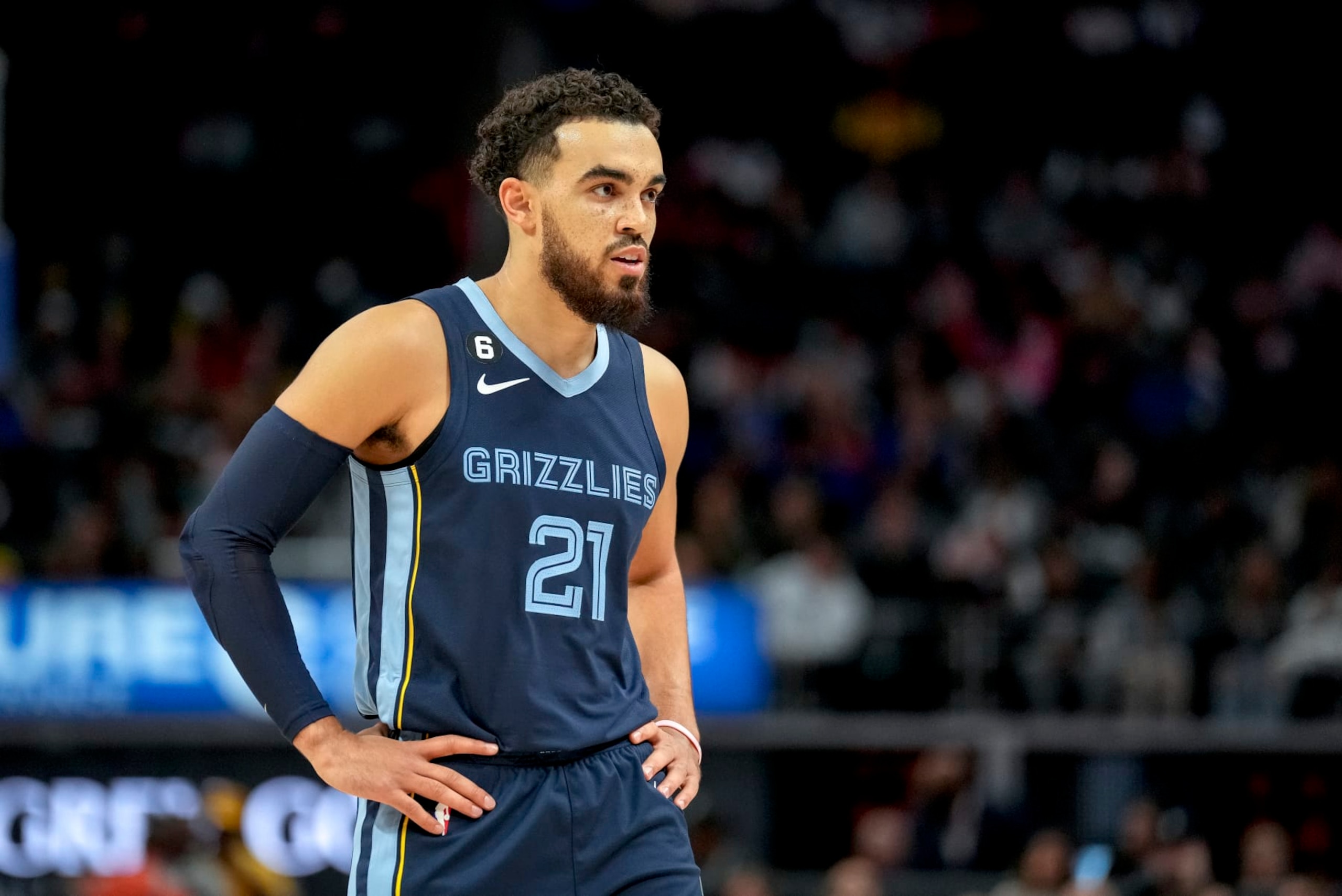
3. Xavier Tillman Sr.
Tillman, the No. 35 pick in 2020, had a solid rookie season but couldn't maintain that momentum through his sophomore campaign. His stat sheet sagged across the board, and reversing that trend this year will be a challenge given how crowded this frontcourt is. That decline won't help his trade value, but he's still a smart player who defends and distributes well for his size.
2. Tyus Jones
The Grizzlies re-signed Jones this summer, making him ineligible for a trade until mid-January. However, it also shows their obvious appreciation for his skills.
Still, he plays the same position as franchise centerpiece Ja Morant and is set to collect $29 million through 2024—a massive amount of money for a backup, even one as good as Jones.
1. Future first-round picks
Memphis won 56 games last season, then pushed the eventual champion Warriors to six games in the second round despite losing Morant in Game 3.
If the Grizzlies are active in trades this season, they'll almost certainly be buying and trying what they can not to disrupt their rotation in the process.
That should be doable, since they own all of their first-round picks and have a future first coming their way from Golden State.
Miami Heat
16 of 30
3. Omer Yurtseven
While Yurtseven could wind up with a sizable rotation role this season, his spot seems less secure than those of Gabe Vincent and Max Strus, making Yurtseven the likeliest trade candidate. Miami could use Yurtseven's size and skill on the interior, but if he's the key to unlocking a trade for a starting power forward, the Heat shouldn't hold back on letting him go.
2. Nikola Jović
The Heat don't typically take on long-term projects, so the fact they made an exception for Jović suggests they might really like him. Then again, his growing pains could make them impatient, particularly if they need to plug any holes in their rotation. Long-term shoppers would appreciate the skills he already possesses as a 6'10", 19-year-old.
1. First-round pick
Miami signaled a willingness—if not an intention—to move a future first-rounder or two when it made a trade at the deadline specifically to remove protections from an outstanding draft debt owed to the Oklahoma City Thunder.
The Heat perpetually push for maximum competitiveness, and they've surely noticed that while most of the other Eastern Conference elites made upgrades this summer, they may have trended the other way by losing P.J. Tucker and never finding a replacement.
If Miami's 4 spot becomes a massive problem or another pressing issue arises, this front office won't hesitate to use tomorrow's draft picks to solve today's puzzles.
Milwaukee Bucks
17 of 30
3. MarJon Beauchamp
To be frank, Beauchamp essentially lands here by default. The Bucks are short on sweeteners, so if they want to make a major move, they'd need to part with a major prospect, and he is by far their best. Having said that, they won the title two seasons back and pushed into the second round without Khris Middleton last season, so they probably aren't in the market for a big shakeup.
2. Jordan Nwora
Milwaukee just re-signed Nwora this summer, which makes him untradeable until late December. If he isn't moving the needle much by then—his shooting regressed in a bad way last season—maybe the team would poke around to see what he could fetch. It probably won't be much, but the right suitor could be drawn to his tough-shot-making as a 6'8" swingman.
1. Future first-round pick
The Bucks unloaded almost every pick at their disposal to build their championship roster, but they can still send out their 2029 first-rounder should they feel so inclined.
That's probably too far into the future for the front office to really consider it, but maybe this roster needs more help than it seems.
The center spot is a major question mark going forward, since Brook Lopez and Serge Ibaka are both ticketed to reach free agency next summer. Middleton's playoff absence also exposed a lack of wing depth, and Milwaukee's only moves to sort of address that were the selection of Beauchamp and signing of Joe Ingles, who's still working his way back from a torn ACL.
Minnesota Timberwolves
18 of 30
3. Taurean Prince
Prince proved a solid fit for the Timberwolves last season, splashing 37.6 percent of his long-range looks and providing adequate defense. They could have let him walk in free agency, but they extended him before the market's opening instead. His spacing can help, but they have other forwards who could take his place if his $7.1 million salary is needed to make a trade work.
2. Naz Reid
Reid has been a reliable reserve and serviceable spot starter across three seasons in Minnesota, but his role could get squeezed by the offseason arrival of Rudy Gobert. Reid's contract is up after this season, and the right suitor might want a closer look at him before he hits the open market. He can shoot threes and protect the paint, which is always an attractive tandem.
1. Jaylen Nowell
The temptation to put D'Angelo Russell in this spot is real, since he's unsigned beyond this season and arguably overpaid as it is ($31.4 million). However, paying a premium for Gobert only to trade away Russell would be moving in opposite directions, so it seems safe Russell will stick around for Minnesota to learn just how this can work.
It's more likely that if the Wolves are shopping this trade season, they'll be dangling a young player for a more established pro.
Nowell's contract is up after this year, too, and he could be too pricey to keep, especially if the Wolves plan on paying Russell. Last season was Nowell's first as a rotation regular, and he responded by hitting 47.5 percent of his field goals and 39.4 percent of his threes.
New Orleans Pelicans
19 of 30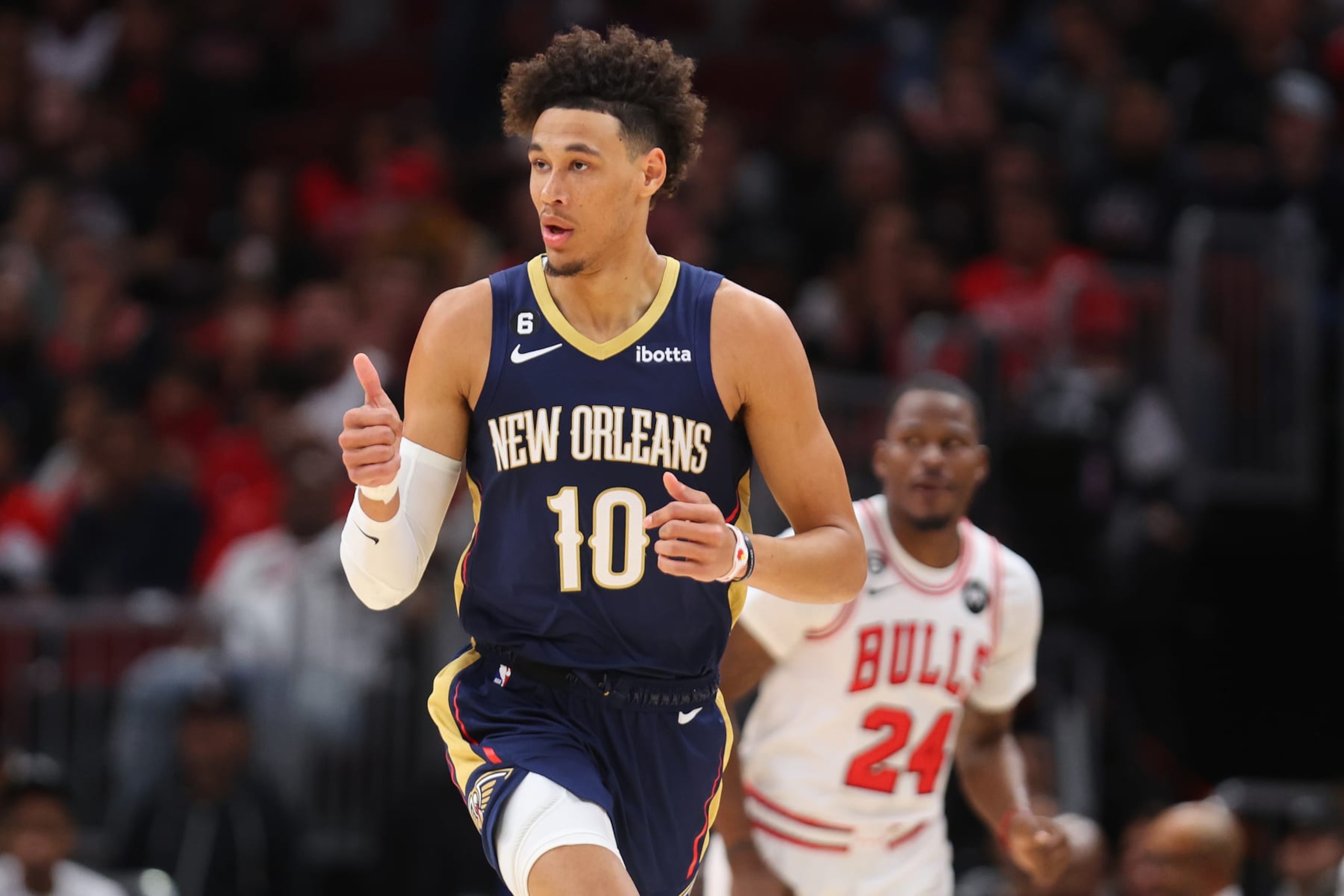
3. Kira Lewis Jr.
Lewis tore his ACL last December, and the backcourt changes made since—namely, trading for CJ McCollum and making Jose Alvarado a rotation regular—could block Lewis' path to the hardwood. He's a work-in-progress prospect, but he's also 21 years old and blazingly fast, so the right shopper might want a flier.
2. Jaxson Hayes
The Pelicans appear loaded up for what could be a lengthy postseason push, so they'll be careful about subtracting anyone from their rotation. Hayes could be the exception, though. He needs a new contract next summer, can be easily replaced in-house and could entice long-term rebuilders as a recent top-10 pick whose 23rd birthday will come after the deadline.
1. Future first-round picks
As impressive as the depth of New Orleans' roster is, its pick collection might be even more magnificent.
Buoyed by the bounties collected in the Anthony Davis and Jrue Holiday deals, the Pelicans have all of their own first-rounders, plus first-round picks and swaps from both the Lakers and Bucks.
New Orleans may not have quite as many picks as the Oklahoma City Thunder, but the Pelicans' willingness to trade them could give them more practical value.
New York Knicks
20 of 30
3. Cam Reddish
Reddish needs a new deal by next summer, and New York has given no indication that it wants to cover that cost. While the Knicks gave up a first-round pick to get him in January, he didn't crack their rotation right away and was lost to a shoulder injury shortly after he did. He still holds theoretical three-and-D appeal, though, so maybe someone wants a flier.
2. Obi Toppin
As a Toppin truther, this is painful to write, but as long as Julius Randle resides in the Empire State, Toppin's position in it will be murky.
The Knicks consider playing the two together "unappealing," per Marc Berman of the New York Post, and since Randle might be impossible to move after a rough 2021-22 season, that could put Toppin on the chopping block. Despite some drool-worthy offensive flashes, it's impossible to know how he'd handle a featured role, since the Knicks haven't extended one—and won't as long as Randle is around.
1. Future first-round picks
The Knicks seem mostly committed to their young core, so if they wind up brokering a big deal, they'll likely use draft picks as the primary currency.
That's just as well since they're quietly sitting atop a mountain of selections. They probably can't roster all of these picks even if they wanted—depending on protections, they could have as many as four first-rounders next summer—so it'd be prudent to ship at least one or two out to fill a current need.
Oklahoma City Thunder
21 of 30
3. Kenrich Williams
Oklahoma City just gave Williams a four-year extension this summer, so he won't be eligible for a trade until mid-January. That won't stop trade vultures from circling over the Sooner State, as the 27-year-old possesses a wealth of win-now abilities who could prop up a playoff hopeful or championship contender—teams on opposite ends of the NBA spectrum from the Thunder.
2. Darius Bazley
Bazley is young, long and athletic, and rebuilders typically don't trade away that type of player. However, he's also an impending free agent after this season, and OKC might have enough depth in the frontcourt to let him go. He has impressive versatility on defense and intriguing handles for a 6'8" forward, but shooting remains a major question mark.
1. Shai Gilgeous-Alexander
Apologies for the uproar this suggestion is surely spawning in Oklahoma City, but the possibilities of an SGA have to be discussed—and are being discussed by others around the league, according to The Ringer's Kevin O'Connor:
"A lot of execs around the league wonder whether SGA is the best player on the market, given the fact he’s signed to a five-year max and OKC isn’t winning anytime soon. My impression is teams just want to wrangle him out of OKC since no other obvious stars will be available. Could there be an offer too good for Sam Presti to refuse?"
Gilgeous-Alexander is only 24, so the Thunder could absolutely keep him around to lead their rebuild. However, he's much closer to his prime than the rest of his teammates, so Oklahoma City could consider shipping him out for a more future-focused package. This doesn't feel likely, but with everyone salivating over the 2023 draft class headlined by Victor Wembanyama and Scoot Henderson, some strange things could happen at the bottom of the standings.
Orlando Magic
22 of 30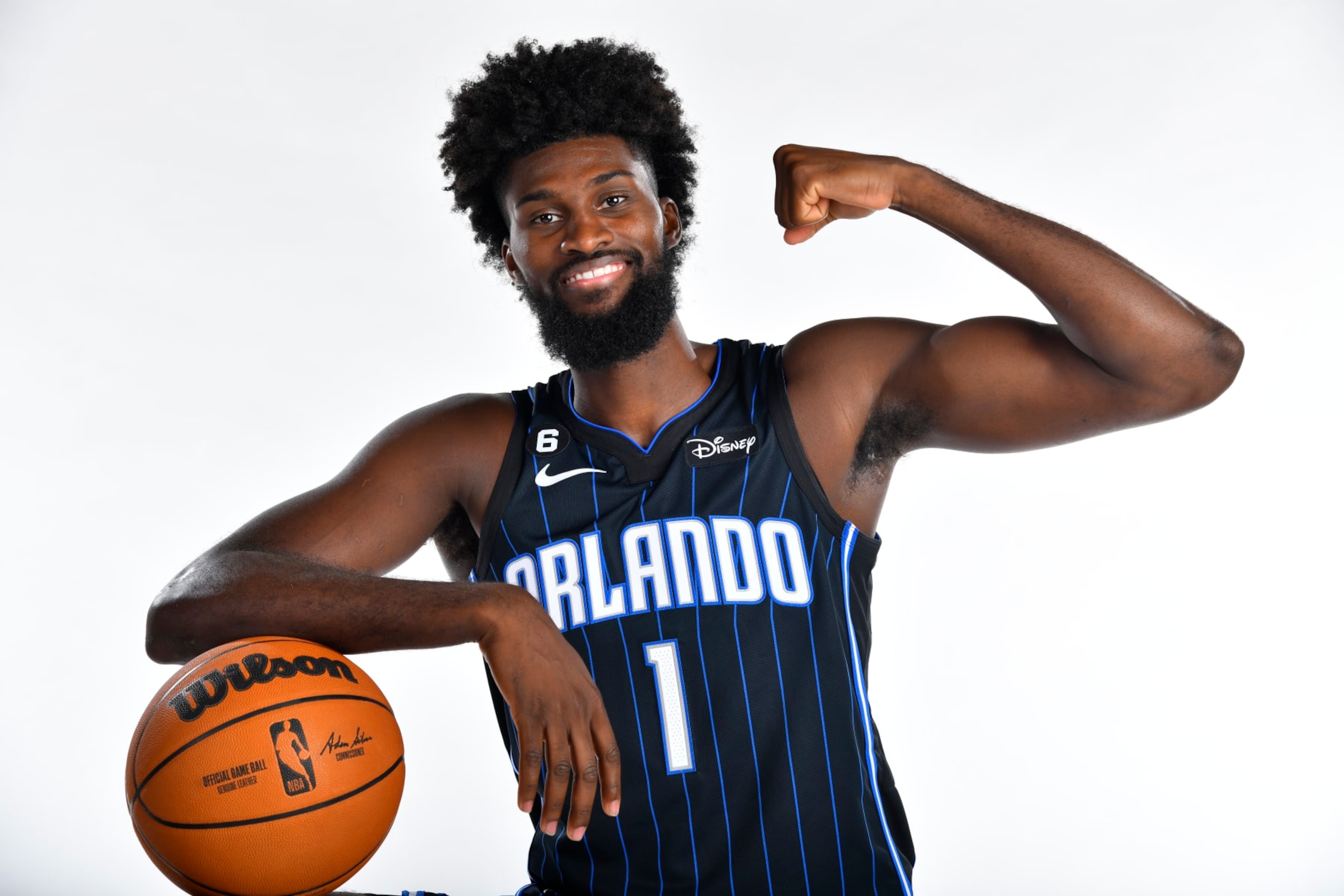
3. Terrence Ross
A healthy Gary Harris would've bumped Ross off of the list, but Harris' torn meniscus threw a wrench in those plans. Instead, Orlando will be left hoping Ross rediscovers his stroke after shooting a career-worst 29.2 percent from range last season. If he does get his touch back, though, he should be rather easy to shop around to win-now suitors in need of a second-unit spark.
2. Mo Bamba
The Magic re-signed Bamba this summer, but his standing in the organization still feels strange. Orlando's frontcourt was crowded before Paolo Banchero arrived on draft night, and a healthy Jonathan Isaac—assuming we actually see that at some point—will only add to the congestion. There has to be a suitor out there who envisions Bamba as a starter after watching him average 1.7 blocks and 1.5 threes on 38.1 percent shooting last season.
1. Jonathan Isaac
It feels a little strange putting Isaac on this list—let alone at the top—when he still hasn't returned from a torn ACL suffered in August 2020, but if he's anywhere near the finish line, he's a no-brainer.
A healthy Isaac has nothing short of Defensive Player of the Year potential. He's a 6'11", 230-pounder who uses his length to challenge shots at the rim and his mobility to chase players around the perimeter. He's an all-purpose stopper who just so happened to make huge offensive strides the last time we saw him in action.
Back then, he looked like this franchise's centerpiece. Now, he's in this awkward position of not having any clarity on the size or scope of his role. A team without Orlando's frontcourt congestion would gladly take a flier on Isaac and hope the 25-year-old still has time to approach his towering potential.
Philadelphia 76ers
23 of 30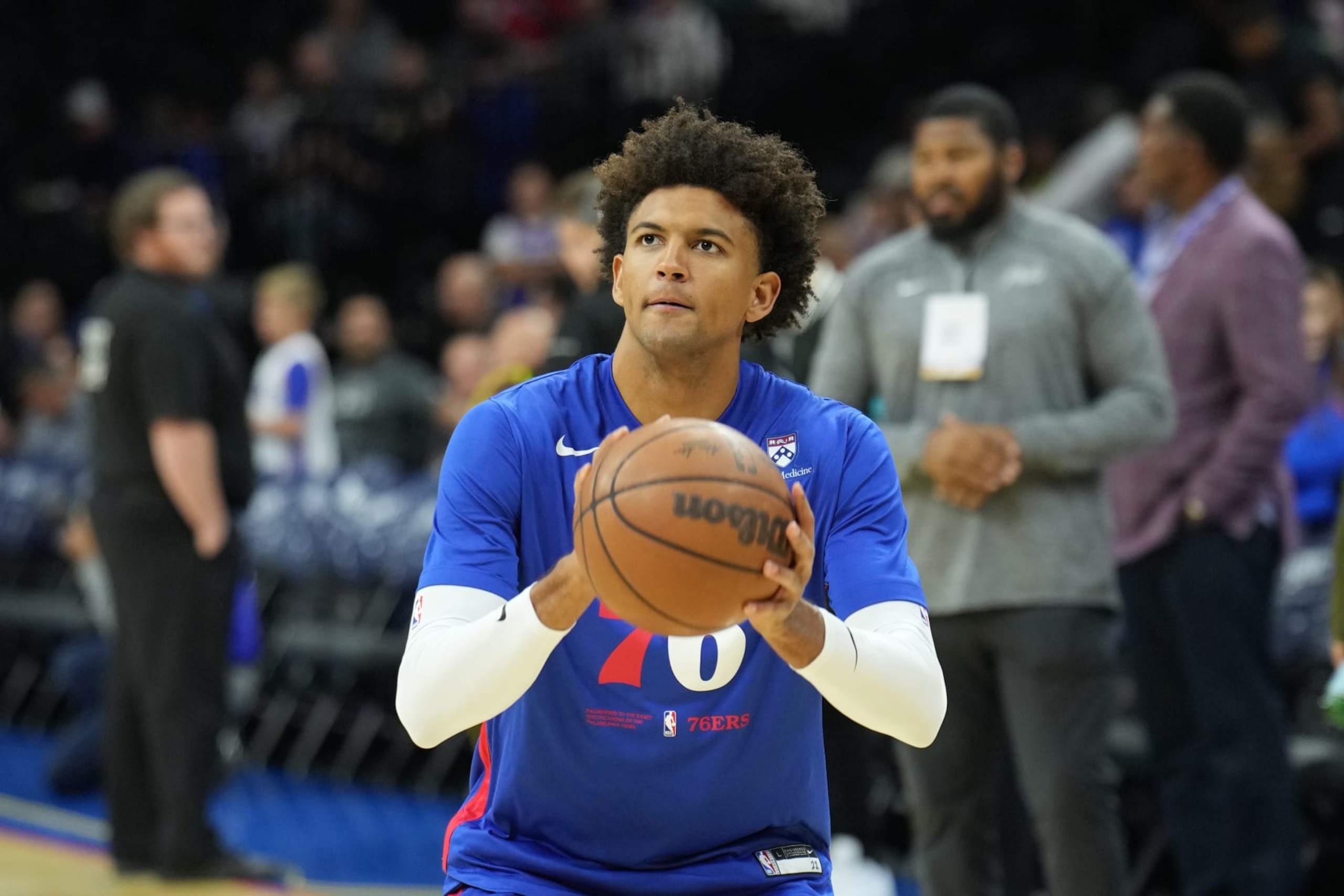
3. Shake Milton
Milton is entering his fifth season in Philly, but it's tough to tell whether he'll get a sixth. He's on an expiring contract, and the Sixers have the backcourt depth to move forward without him if they want. He's an ignitable scoring threat off the bench, though consistency has never been his greatest strength.
2. Jaden Springer
Of the 30 players selected in last year's opening round, 29 of them saw action in more than 20 games. Springer was the lone exception, as he suited up just twice for the Sixers, and the lack of floor time wasn't because of injury. He simply lacks the polish needed to earn trust amid a championship pursuit, and if that doesn't change this season, the Sixers could swap his potential for a capable contributor.
1. Matisse Thybulle
There are moments—almost always on the defensive end—in which Thybulle looks like a building block for this club. Then, there are others—always on the offensive end—in which you wonder why the Sixers even bother trying to find him minutes.
He has been a part of this rotation for three seasons, but every year, his role gets reduced in the postseason. In 2021-22, he saw the biggest drop-off, as he set a career-high in regular-season minutes (25.5) and a career-low in playoff minutes (15.2) while failing to find an offensive niche.
His defensive is so disruptive that rival teams could make an aggressive pitch for him, and if he had any kind of offensive utility, he'd be really valuable. Outside of improving his finishing, though, there hasn't been much progress with his offense, and Philly might be tired of waiting.
Phoenix Suns
24 of 30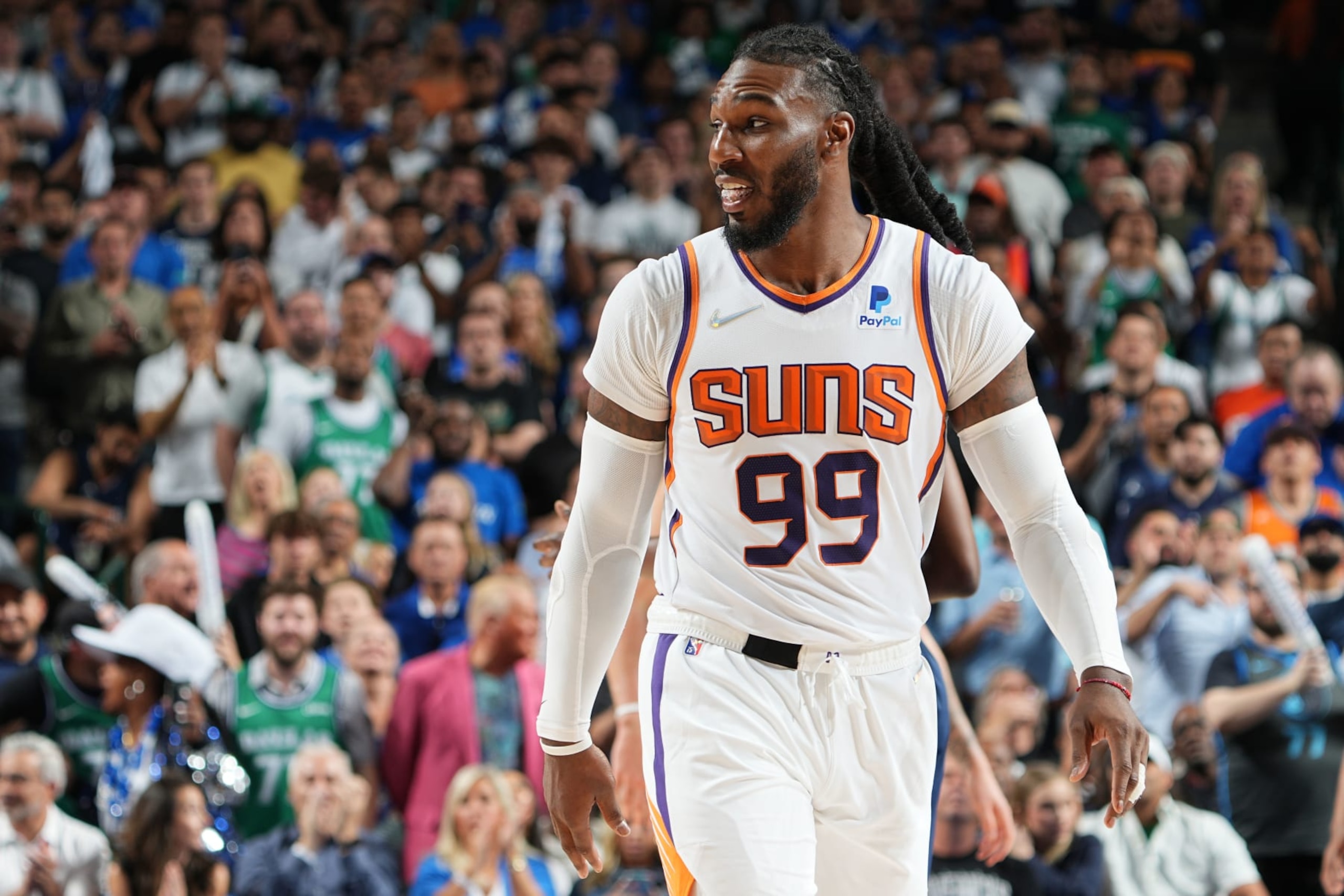
3. Dario Saric
Saric had his 2021-22 season erased by a torn ACL, but when he's healthy, he checks a lot of boxes, especially on the offensive end. However, his role feels up in the air both for this season and going forward, since his contract will expire after this campaign. His $9.2 million salary could be helpful making the money work should Phoenix opt to broker something big.
2. Future first-round pick
Phoenix infamously doesn't put a ton of stock into the draft, but it does own all of its upcoming picks. Trade partners would probably want something down the line, as 37-year-old floor general Chris Paul is playing out his twilight years.
1. Jae Crowder
Crowder's name has bounced around the rumor mill since the draft, per Yahoo Sports' Jake Fischer, and all invested parties seem ready for a change. The Suns seemingly have bigger plans for Cam Johnson, who not only shares a position with Crowder but also needs a new contract next summer.
The challenge is Phoenix is very much in win-now mode, meaning it needs to bring back a plug-and-play contributor. Finding a team that both would have interest in Crowder and has an expendable rotation player or two to send the Suns' way isn't easy.
Still, a solution will surface at some point, probably sooner than later. Crowder is too good for that not to happen. He's most interesting when his streaky three-ball is on, but even as an average shooter he'll drum up interest thanks to his defensive versatility and extensive playoff experience (career 107 games).
Portland Trail Blazers
25 of 30
3. Keon Johnson
Portland's desire to construct a contender around Damian Lillard on the fly could force the front office into playing it fast and loose with the club's prospects. Johnson didn't show much as a rookie—he also had to navigate around a midseason trade from the Clippers to the Blazers—but he's a bouncy 20-year-old who's only one summer removed from being drafted 21st overall.
2. Trendon Watford
Watford had some really impressive moments as a rookie—he averaged 15.4 points on 50 percent shooting over his final 13 outings—but they all came after Portland pulled the plug. With the Blazers back in win-now mode, they may not have more developmental minutes to throw his way and might prefer having a more proven player in his place.
1. Shaedon Sharpe
Sharpe's ceiling stretches as high as a skyscraper, as he has all the moves of a featured-scorer-in-training and enough physical tools to be an asset on defense.
It would take a massive return for Portland to let him go after selecting him seventh overall this summer.
Having said that, a massive move might be what the Blazers need to go championship-chasing with Lillard, so dismissing the idea of a Sharpe trade outright feels inadvisable. He needs plenty of polish—he never suited up during his one-and-done season at Kentucky—and Portland is up against the clock with Lillard's 32nd birthday behind him.
Sacramento Kings
26 of 30
3. Richaun Holmes
Sacramento's deadline deal for Domantas Sabonis bumped Holmes to the bench, transforming his $11.2 million salary from a bargain to an arguably unnecessary expense. He's a solid two-way player, he just doesn't stand out in any particular area.
2. Terence Davis
Last season, Davis struggled to stay in the rotation early, then right as he started finding his rhythm, he went down for the count following wrist surgery. Now, his path to the hardwood looks crowded, as the Kings invested in alternatives on the wing, like Malik Monk and Kevin Huerter. If Davis can't find minutes in Sacramento, he could handle spark-plug duties elsewhere.
1. Harrison Barnes
Sacramento is historically starved for success, so it's understandable why they seem like they're forever pushing for a low-end playoff spot.
At some point, though, you'd assume the Kings will concede they don't have enough to compete in the Western Conference. Making that concession sooner than later sounds enticing, too, given how absurdly loaded the 2023 draft class appears.
Whenever the Kings pull the plug, shopping around Barnes as an experienced, plug-and-play swingman makes all kinds of sense. He's a super-skilled support player who defends multiple positions, feasts on open shots and can create his own looks in a pinch.
San Antonio Spurs
27 of 30
3. Doug McDermott
The Spurs are diving head-first into a rebuild, which should be as good an indication as any of how good next summer's draft class really is. In the last calendar year, San Antonio has shipped out veterans like Dejounte Murray, Derrick White and Bryn Forbes, and McDermott might be up next on the chopping block, since his pure perimeter shot (career 40.9 percent) should be highly coveted.
2. Josh Richardson
If Richardson was a knockdown shooter, he might be at the top of this list, since he already adds significant value as a disruptive defender. Since he's closer to average or slightly above from three (career 36.5 percent), he'll settle for second. The Spurs will likely seek a first-rounder for him, and if he gets off to a hot start, someone might be willing to pay that price.
1. Jakob Poeltl
There's a universe in which it makes sense for the Spurs to keep Poeltl around—not just through the trade deadline, but beyond his upcoming venture into 2023 unrestricted free agency.
Of course, that's a universe in which Victor Wembanyama doesn't exist. Since the 7'4" center has this hoops world in a frenzy, San Antonio has no reason to roster Poeltl and risk him raising the floor just enough to spoil its 14 percent chance at the No. 1 pick.
The Spurs reportedly seek a pair of first-round picks for Poeltl, per Spurs Talk's LJ Ellis, and while that price is steep, Poeltl might be worth it. He cracks the Association's short list of its top interior anchors, and while he doesn't have much range on offense, he sets good screens, finishes reliably around the rim and makes the smart, simple passes.
Toronto Raptors
28 of 30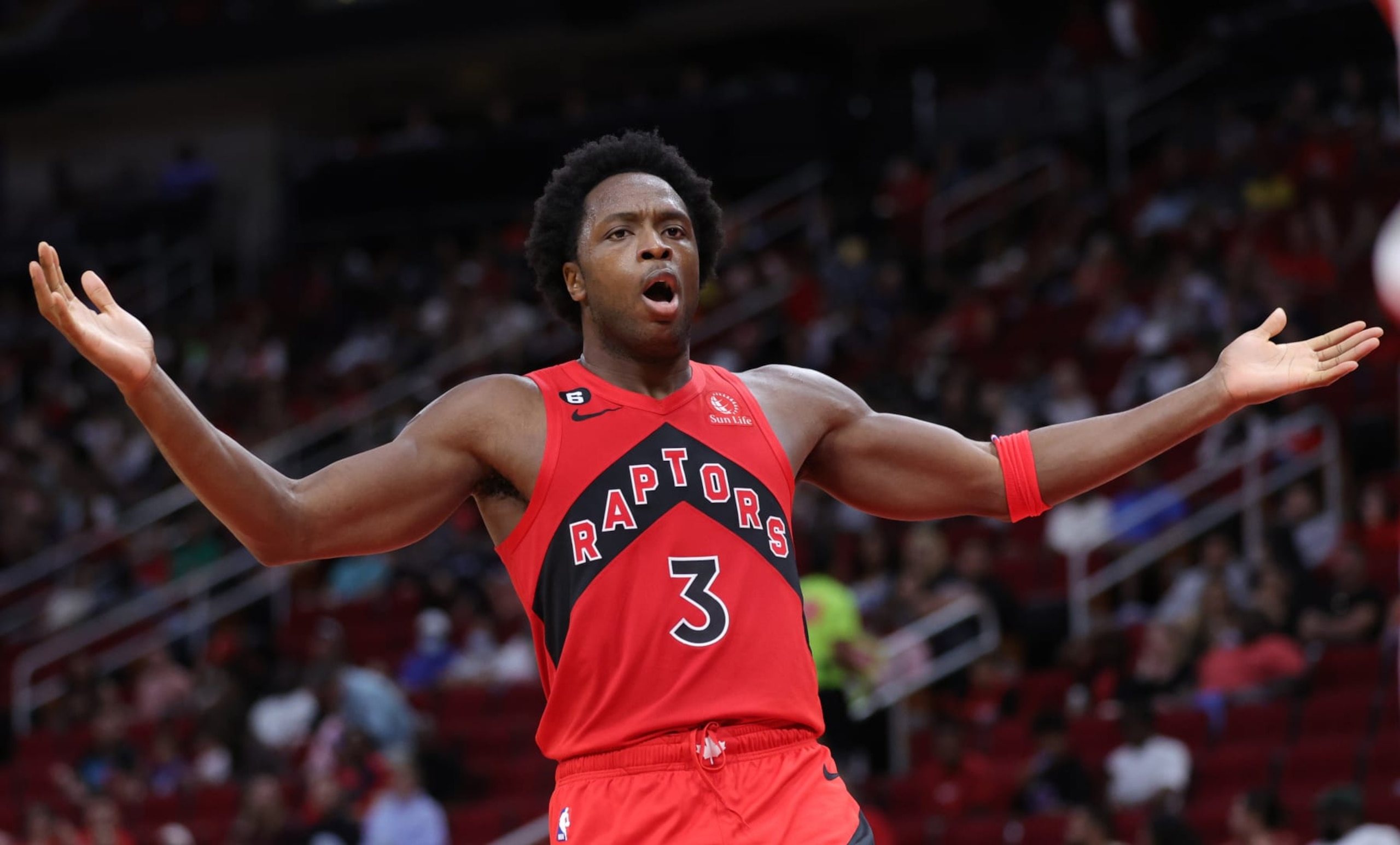
3. Malachi Flynn
It's debatable how much trade value Flynn actually possesses after struggling to lock down a significant role in his first two seasons, but it also feels shortsighted to abandon hope on someone with 91 career games. He can create offense out of pick-and-rolls and hold his own in defensive matchups where his lack of size and athleticism don't plague him.
2. Future first-round pick
The East might be loaded this season, but the Raptors could absolutely be a factor in it. They won 48 games in 2021-22, and most of their key rotation players are still ascending toward their peaks. If Toronto sniffs out a trade that would allow it entry into the conference's elite tier, then it can pull from a pick collection that features all of the franchise's own picks, save for a 2024 second-rounder.
1. OG Anunoby
Admittedly, there probably aren't many scenarios in which the Raptors would seriously consider an Anunoby trade. He has at least two seasons left on his deal (with a $19.9 million player option for 2024-25), and his biggest believers haven't given up on those old Kawhi Leonard comparisons.
Still, Anunoby might not be jazzed about his current role for the Raptors. Maybe that's solved by simply letting him spread his wings more, but who's losing touches to make that happen? Pascal Siakam? Fred VanVleet? Reigning Rookie of the Year Scottie Barnes? There isn't a simple answer here.
Anunoby functions like a high-level role player for the Raptors. If someone else sees cornerstone potential in him, then maybe they send a Godfather offer north of the border and see what happens. If said swap delivers an established star to Toronto, that's at least one to mull over.
Utah Jazz
29 of 30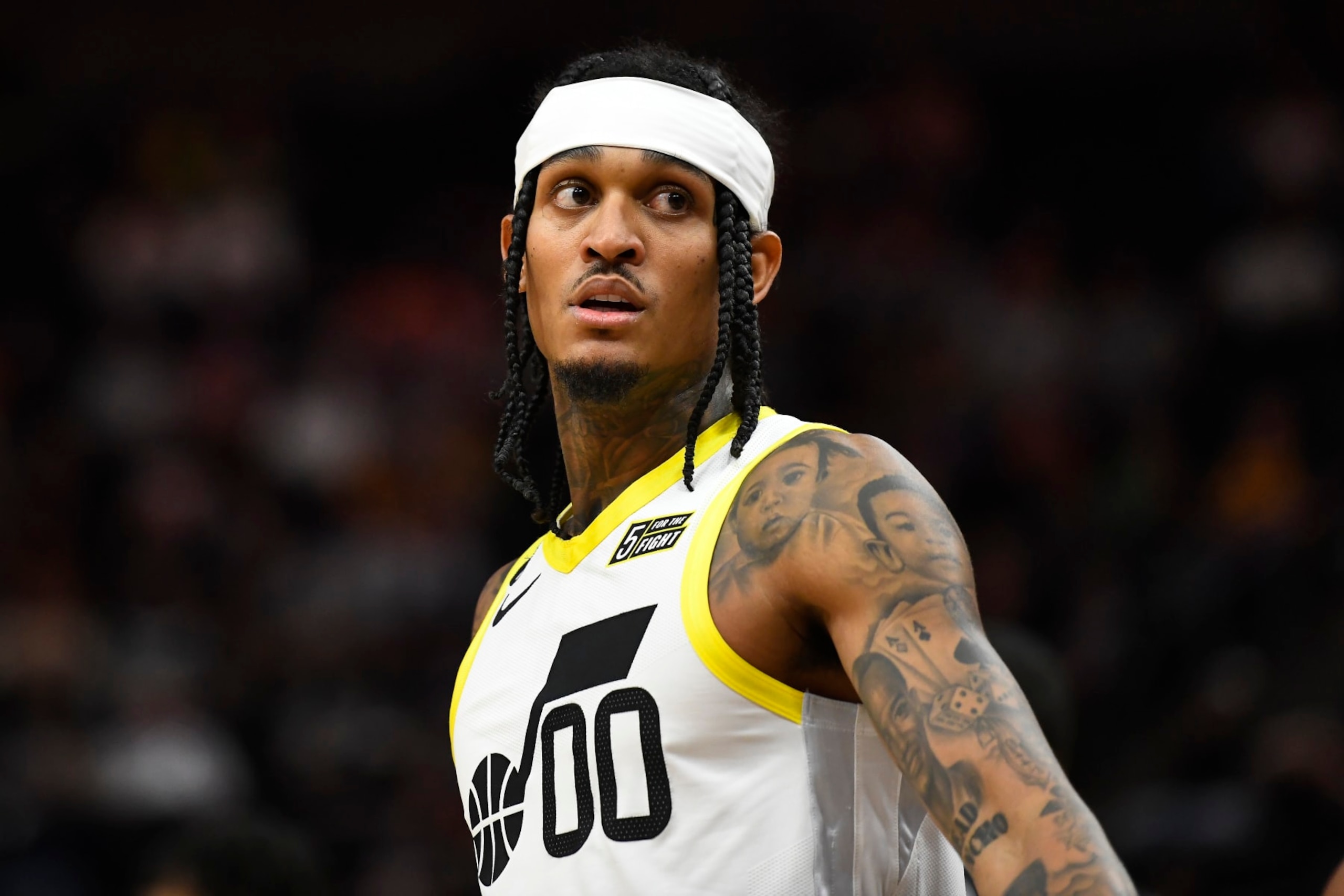
3. Kelly Olynyk
Since the rebuilding Jazz have several veterans on the roster, you can throw a dart at their last of over-25 talent and land on a trade candidate. While some might argue for Rudy Gay or Mike Conley here, Olynyk intrigues for the shooting and distributing he offers as a 6'11" combo big, not to mention the fact his 2023-24 salary is only partially guaranteed.
2. Malik Beasley
Beasley only turns 26 in November, so if you squint, you could maybe see him fitting into the franchise's future. However, the Jazz should be fully focused on maximizing their lottery odds, so there shouldn't be a big appetite for keeping him around. He might be a touch overpaid at $15.5 million, but that feels manageable for a shooting-needy shopper.
1. Jordan Clarkson
Clarkson bagged Sixth Man of the Year honors in 2020-21, and he nearly matched his counting categories last season, albeit on less efficient shooting.
For any team hoping to put more pep in its second unit's step, Clarkson should be a priority target.
He is a quick-strike scorer—nothing more, nothing less. He doesn't have the defense or the vision to expand his role, but he can heat up in a hurry and change a game's outcome by himself.
Washington Wizards
30 of 30
3. Daniel Gafford
With Kristaps Porzinigis now manning the middle in Washington, that could make Gafford expendable. He's an active rim-runner, but that's the extent of what he offers. The Wizards might want him as Porzingis insurance, but that role only offers so much value, and it's possible a team with bigger issues at center would exceed that value in a trade offer.
2. Rui Hachimura
Hachimura still feels a little mysterious, which isn't something you really want to say about a player entering his fourth NBA season. Still, that hints at some untapped potential he might find with better health—and perhaps a scenery change. Last season's addition of a three-ball was interesting (though the sample size of 55 makes wasn't huge), but his challenge is proving he can do more than score.
1. Deni Avdija
Theoretically, this spot could instead go to a future first-round pick, since the Wizards have all of their own except one. The problem is that pick holds protection through 2026, meaning a traded pick would be way too far into the future for a franchise with a 29-year-old centerpiece (who's now owed a quarter-billion) and a horde of question marks.
So, that instead puts Avdija in the No. 1 spot, which simultaneously feels a little unfair and totally reasonable.
The unfair part is that he's a recent top-10 pick (No. 9 in 2020) who hasn't seen a ton of floor time (career 23.8 minutes per game), so this might be too early to bail. Then again, the Wizards haven't exactly been flush with impact wings, so perhaps it's telling that he hasn't forced his way deeper into the rotation by now. He's a pesky defender and capable secondary playmaker, but his ability to score and shoot efficiently remains a major question mark.
Statistics used courtesy of Basketball Reference and NBA.com. Salary information obtained via Spotrac.
Zach Buckley covers the NBA for Bleacher Report. Follow him on Twitter, @ZachBuckleyNBA.

.jpg?w=2560 "Hurricane May Affect NFL Games")