

Weekly Why: Premier League, Refereeing and the Case for Personal Responsibility
Welcome to Bleacher Report's Weekly Why, a place where we discuss world football's biggest questions that may go neglected and/or avoided. Ranging from the jovial to the melancholic, no subject matter is deemed off-limits.
Why Isn't Accountability More of a Thing?
If given the choice between red or blue as your favourite colour, in one way you have autonomy. You have the freedom to select red or blue; you might even find yourself enjoying the manoeuvrability, despite its obvious limitations to someone more learned.


.jpg?w=2560)
In various societal arenas, I find this example the case: We are given the choice (or at least the appearance of choice) between two rather limited options and must make due with our decision(s).
Football, though having rules, is different in that regard. When on the pitch, players don't have two, but have countless options. The game's fluidity is part of its charm—no two matches are ever the same. Decisions have cause to irreparably alter the following century of decisions, thereby creating organised chaos.
What aides this randomness further are neutral arbiters or "referees." Match officials and their linesmen are tasked with managing the game's tenor and making sure rules are adhered to. Understanding perfection is implausible, if not impossible, mistakes are often made in this process. Fouls, offsides, disallowed goals, cards and whatever other litigious items are handled (or mishandled) by them.

I'm not sure when, but while watching last weekend's matches, I noticed something: Most red cards are stupid. In four instances last week, I watched a match where Francis Coquelin, Kevin Mirallas, James Milner and Juan Mata were sent off, receiving two yellow cards, and all eight bookings were avoidable.
Almost as conspiring to scuttle their team's day, the longest time between both yellows was Coquelin's 26 minutes. Obviously they weren't out to intentionally destroy matches, but when the average time between receiving two yellows was 17 minutes, questions must be asked.
Poor challenges, handballs, dissent, celebrations and other things conspire to ruin a supporter's day, but they display the sporadic nature of football and the invaluable asset of a cool head. Some yellow cards are inescapable (or even worth taking to arrest goal-bound processions) but more times than not they're avoidable. Collecting two in 90 minutes is difficult, but in under 20 minutes shows something more baleful.
Many times we understand red cards to be the consequence of malevolent behaviour—something from the school of Eric Cantona, for instance—but I'm finding that's the wrong interpretation. Straight red cards are sensationalised events, which skews our judgment. The double yellow card is more stupidity than malevolence.
This places the fates of players, managers, points and supporters' happiness in the neural (but subjective) hands of the aforementioned arbiters—referees.
As an English major, the worst thing wasn’t reading, listening to lectures or writing papers, the worst part was reading poems and short stories and being bombarded with ridiculous, ludicrous conclusions about what the author meant.
One can have fairly certain conclusions, but I found after five years of study, you could give a room of 30 readers the same poem and receive 30 different interpretations. It's the nature of art, you place your own biases and emotions into whatever you intake. Whether a poem, novel, painting, movie or play—anyone who digests something will have an original reaction.

"Magnificent contest for the stupidest red card of the weekend award: Coquelin, Mirallas, Milner, Mata.
— Richard Jolly (@RichJolly) 6 March 2016"
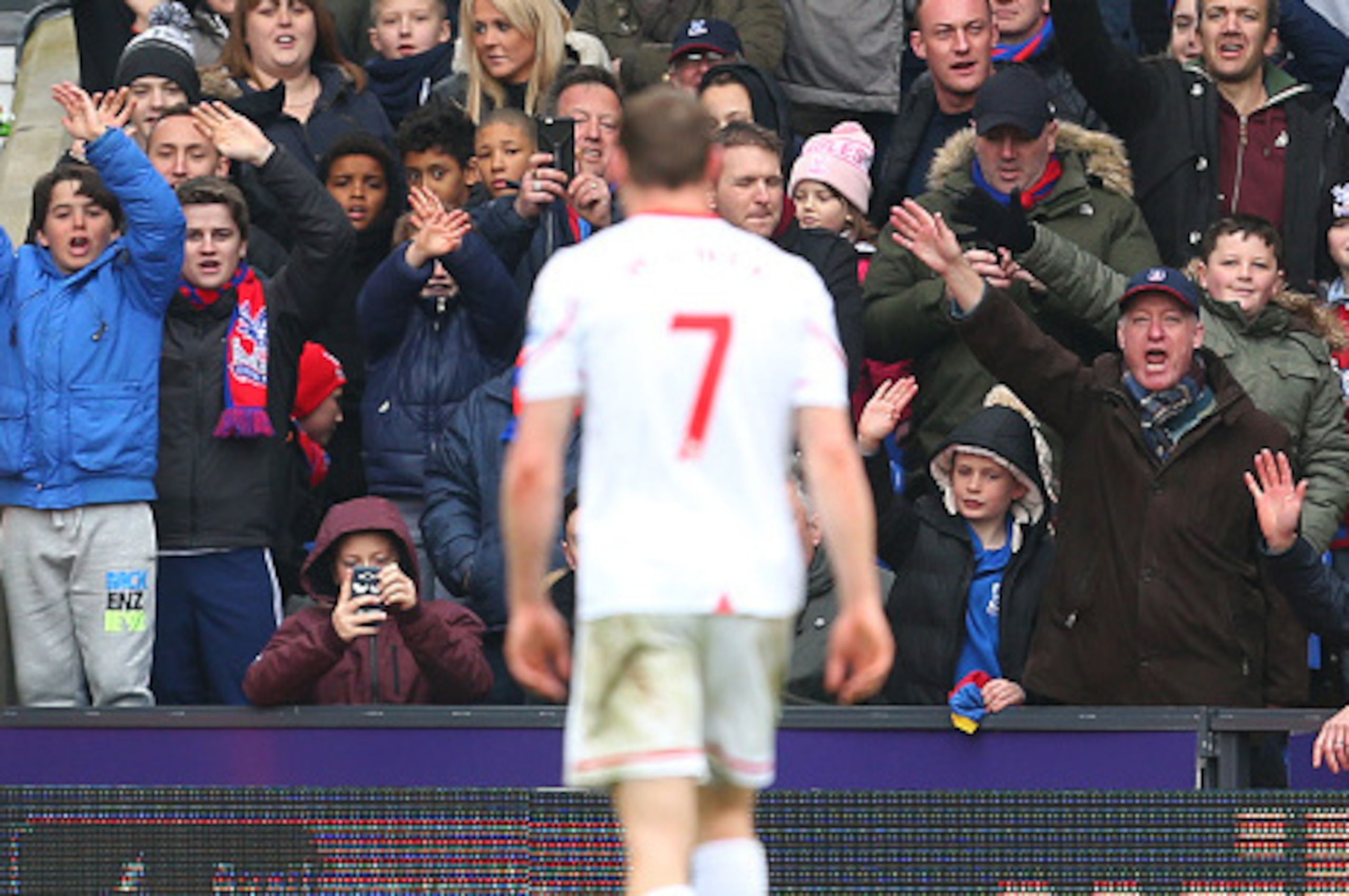
I assume refereeing is much the same way. In a fluent game, with 23 moving parts (including the football), attempting to control and decipher those components is challenging—and one 30 different people would "read" 30 different ways.
Let's take diving as an example.
In Chelsea's home match vs. Stoke City, Oscar was fouled in the box. That's how I saw the play.
Ruben Loftus-Cheek feed the Brazilian on the edge of Stoke's 18-yard box, and Marc Muniesa bundled him over. Anywhere else on the pitch, Oscar falls over, grabs the football (another annoying trait football as picked up) and referee Mark Clattenburg blows his whistle, arm stretched, Chelsea free-kick. Once possession enters the penalty area, however, referees aren't so friendly or accommodating.
I've long thought officials would rather be wrong than conned. If a play warrants a penalty, but the referee thinks diving was involved, they aren't going to blow—but interpretation can never be consistent. That was evidenced with Liverpool's trip to Crystal Palace.
In the dying minutes, Christian Benteke ran into the box, challenged by Damien Delaney. Depending on your eyesight, after five different slow-motion angles, you could make out the faintest of touches on the Belgian by the Palace defender's knee.
Was the contact enough to take the mammoth centre-forward down as if he was the victim of an assassination attempt? Probably not, but referee Andre Marriner, after a brief conference with his linesman, awarded Liverpool a penalty, and Benteke coolly slotted home for a 2-1 victory.
Some refs would've allowed play to continue (effectively ending the game), some might have even booked Benteke, but on this day, in this instance, points were shifted from south London to Merseyside.

The cry for many following the weekend's events was: "The standard of refereeing in England is poor. There is no consistency."
I would argue inconsistency is a form of consistency. There are so many decisions to be made during a game, and differing temperaments and interpretations from referees, it's impossible to expect congruity across the board.
What I'd like is for referees to publicly take questions.
If a manager or player makes a mistake, they answer for it publicly, I'm not sure why referees aren't treated in the same manner? Public accountability would go miles in helping people understand why decisions were made (or not made).
Seeing as that will never happen, though, you and I are left to confront stupidity, inconsistency, the compete spectrum of human error and—sometimes—why we still watch.
*Stats via WhoScored.com; transfer fees via Soccerbase where not noted.

.jpg?w=2560 "Rams Eagles Football")
.jpg?w=2560 "Bijan's INSANE 1st Half 🤩")

.jpg?w=2560 "Injury-stricken Seahawks signing veteran RB")

.jpg?w=2560 "2 NFL Officials Suspended")
