With Keylor Navas Defying Logic, Real Madrid Have a Bail-out Card They've Lacked
It could have been 3-2. It could have been 3-3. It could have been 4-3. Hell, it could have even been 5-3, possibly even 6-3. And for Real Madrid, we're talking the wrong way around here. Badly the wrong way around.
But somehow, it wasn't. The scoreline wasn't any of those. Instead, it was 3-1, and for Madrid, it was a right-way-around 3-1.
All thanks to one man.
TOP NEWS

USMNT Wins Again as it Drops Chile 4-2 🇺🇸

Man City Inflated $1B+ Profits 🤯

Pep's Message to Man City Fans 🫂
"Madrid find a 12th man in Keylor Navas," ran the headline from AS on Saturday evening. From Marca, the delivered message was both shorter and sweeter: "Stop-tastic," it said.
Stop-tastic indeed.
Almost every weekend we're told that certain scorelines haven't been representative of the contests from which they've emerged, but if ever such an assertion has been true, this had to be the occasion for it. Surely. This wasn't just an example, it was the example.
On the day, Real Madrid walked away from their clash with hosts Celta Vigo at Balaidos as victors by a two-goal margin, and yet they were fortunate not to leave with a hiding. A serious one.
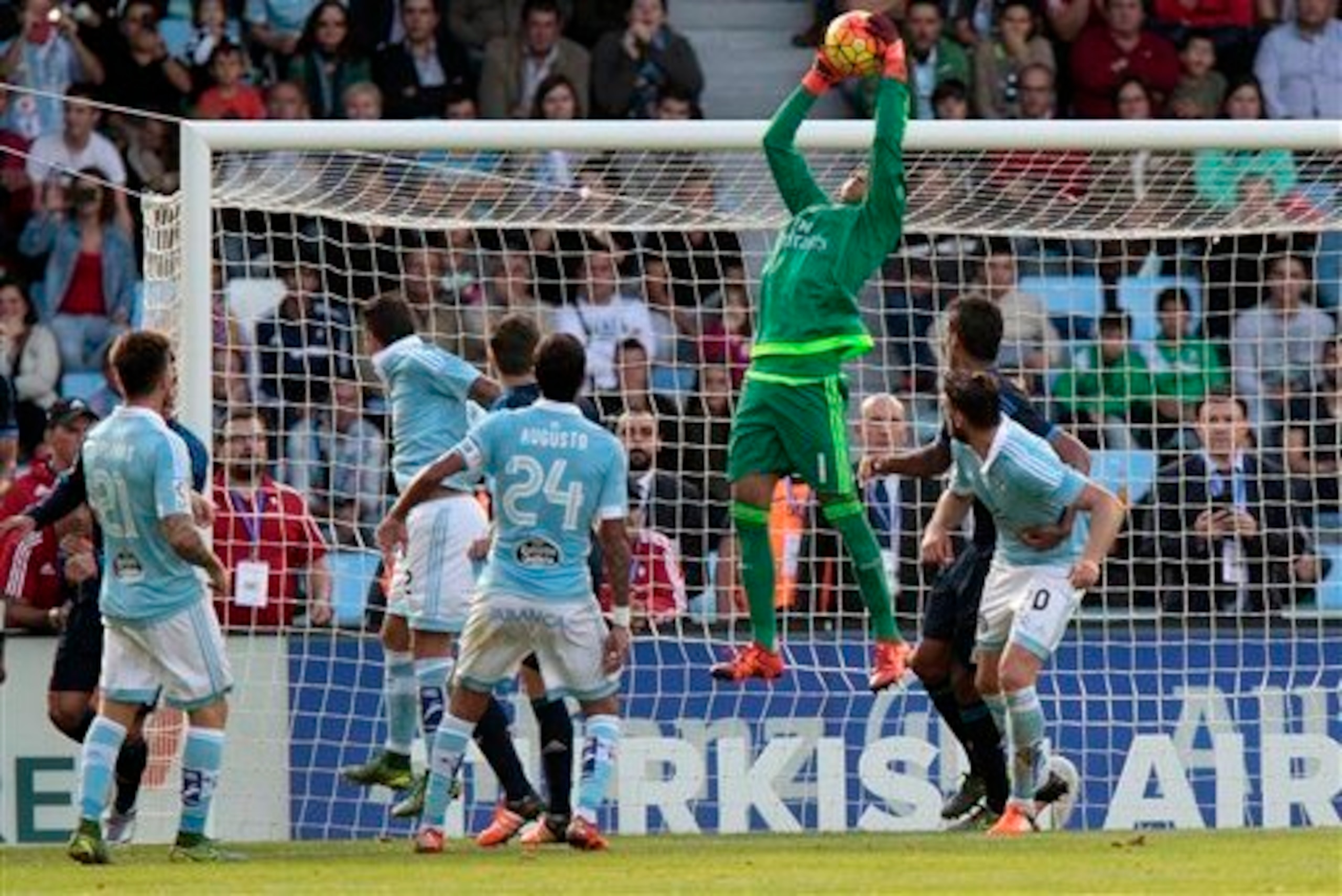
After Cristiano Ronaldo had put Real Madrid one goal ahead, Navas pulled off a stupendous diving stop with his right glove to deny Fabian Orellana. The lead had been protected. Minutes later, Danilo extended the advantage to two.
From that point on, Jonny tried to beat Navas. Daniel Wass tried to beat Navas. Iago Aspas tried. Pablo Hernandez tried. Aspas tried again. Nolito tried.
And "tried" is the operative word here.
In response, the Costa Rican goalkeeper pushed shots from distance around the post; faced with close-range strikes, the speed of his reactions created a new scale of measurement; from glancing headers, he moved as if he'd been given prior warning; when a sprint to a loose ball was there to be won, he won it.
Every. Single. Time.
The only man to beat him was Nolito, and it required a strike that rewrote the laws of physics to do so.
"He's made three or four saves," said a flabbergasted Nolito afterward. "And I have no idea how."
Neither do the rest of us.

From Real Madrid, this wasn't at all a sound performance. In fact, it was one they got away with. After a bright 30 minutes to open the contest, a period in which Rafa Benitez's men looked both sharp and full of clarity for the task at hand, Madrid simply fell apart in a physical sense.
In attack, thrust was lost as Jese and Lucas Vazquez faded, the pair illustrating the toll taken on a depleted squad by Wednesday's slog with Paris Saint-Germain.
Centrally, where the trio of Luka Modric, Toni Kroos and Casemiro had impressively established control in the early going, the midfield gradually became a thoroughfare for Celta attacks.
And in defence, Danilo, his goal aside, had his legs tied in knots by Nolito all afternoon, while Sergio Ramos looked underdone, further damage to his lingering shoulder problem risked because Real basically didn't have a lot of choice.
For Celta, most remarkable about their seizing of dominance is that it continued after they'd gone a man down. When Gustavo Cabral was sent off in the 57th minute, it looked like curtains for the hosts: Two-nil down to Madrid, a man short, there was no way back. Or at least there shouldn't have been.
Instead, Celta finished the contest having won the possession battle, having made more passes and having taken more shots on goal, all while playing the bulk of the second half with a man less. It was as if Celta's players had inserted tubes down the throats of their Madrid counterparts and siphoned their fuel tanks. For Real, it was perilously close to being costly—and not just because of current oil prices.
But that's the point here: It didn't prove costly.
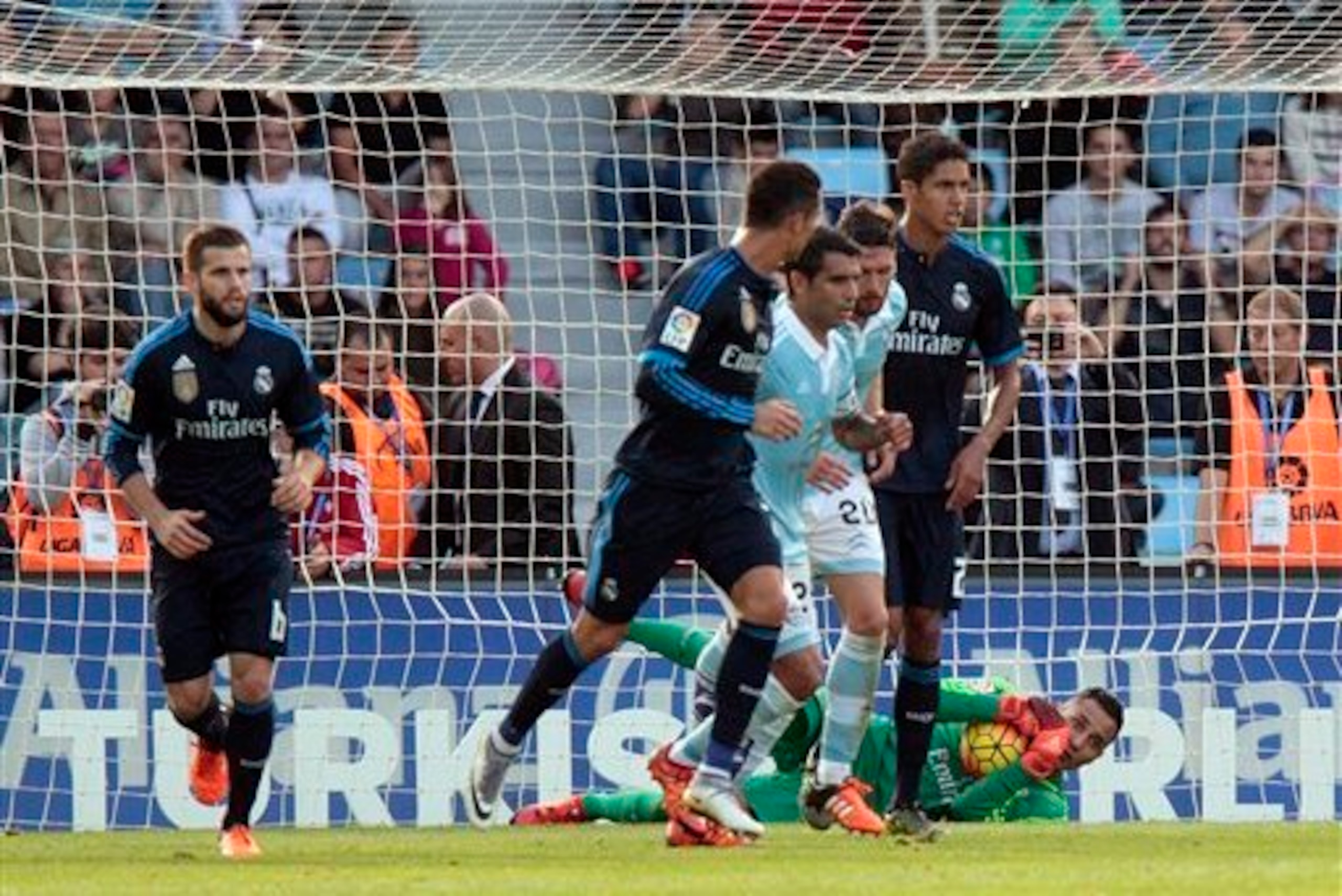
Suddenly, in Navas, Real Madrid now have the sort of bail-out card they've played without in recent seasons. Amid the disheartening decline of Iker Casillas, there were stretches last term where Los Blancos felt alarmingly vulnerable on an almost-permanent basis: Rare attacks from opponents were routinely successful; almost every shot felt destined for the back of the net.
Essentially, the side's ability to record clean sheets felt almost entirely dependent on their ability to prevent any shots in the first place.
As such, there was a sense of anxiety to Real Madrid's defence that became unshakable. It wasn't just that title rivals could find holes; it was that the likes of Real Sociedad and Schalke breached them as though the sum of their security consisted of a "1-2-3-4" password.
But not anymore.
To date this season, Navas has functioned as an encryption service to Real Madrid's defence, masking flaws in other components. In 12 games, he's conceded on just three occasions, a record that's not only remarkable, but one that also flatters the team-mates in front of him.
Against Espanyol and Levante, his warp-speed stops helped to protect early leads. Against Granada and Malaga, his immaculate work was imperative in avoiding disaster in surprisingly arduous scraps. Against Real Betis and Atletico Madrid, he denied opponents from the hardest place of all: the penalty spot. And against Celta, he did, well, everything.
On commentary on Saturday, Ray Hudson began the game by referring to Navas as a "cat"; by the end, that description had become "octopus." That's quite a transformation. Much like Navas' from airport-waiting-room occupant to ultimate bail-out card.
How? Well, it's as Nolito said: "I have no idea how."








_0.png?w=2560 "Wild Card Game 1 Slate Recap ✍️")