

Weekly Why: Premier League Monetisation and the Affront of Half-and-Half Scarves
Welcome to Bleacher Report's Weekly Why, a place where we discuss world football's biggest questions that may go neglected and/or avoided. Ranging from the jovial to the melancholic, no subject matter is deemed off limits.
Why Would You Wear That?
I'm far from a fashion expert. I've nothing to offer on contemporary trends and the world of high-end design, but there is one statement that's beginning to irk my rather humble sensibilities—it's the half-and-half scarf.



Proliferated around football grounds and worn around the necks of purported supporters, I'm genuinely baffled at how any self-respecting football fan could purchase an item with another club's badge permanently attached.
It seems an affront to everything fanatics are meant to be.
For example: If you're an Arsenal or Chelsea supporter—why would you wear an item with a Tottenham Hotspur badge on it, and vice versa? If you're a Liverpool or Manchester City supporter—why would you purchase something with Manchester United representing 50 percent, and vice versa?
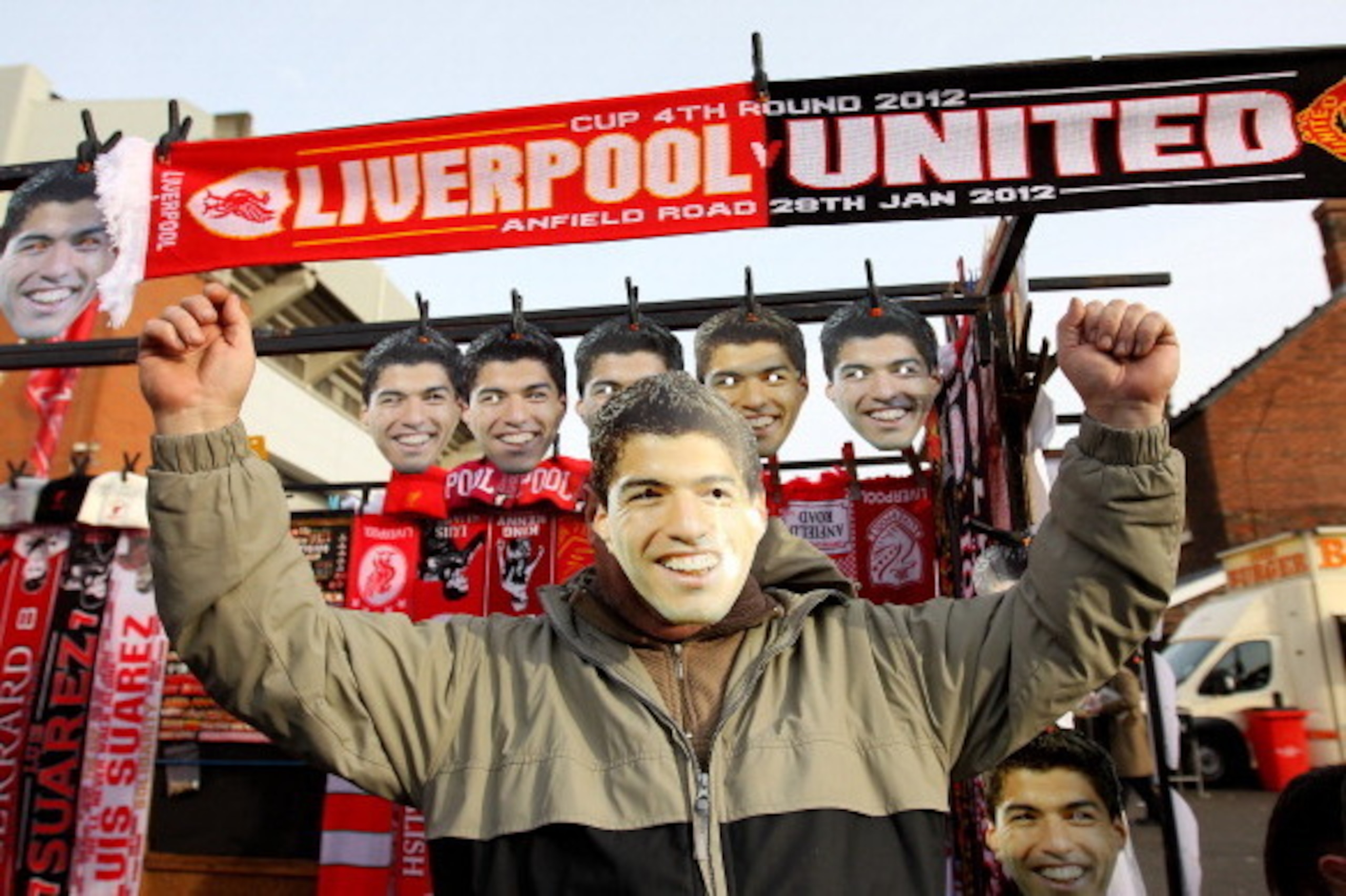
This vexation is not specific to England, but it has become vividly commonplace when observing the Premier League—both inside and outside stadiums. Etiquette should make the notion tantamount to blasphemy, but it's not.
English football has marketed itself exceptionally well.
Groundwork for the Premier League's status as the world's foremost domestic sporting competition started with imperialism. Many are taught that, "the sun never set on the British Empire," and the fruits of those efforts in Africa, Asia, Australia and the Americas are evidenced every time an EPL football is kicked.
Earth's appetite for football can only be rivalled by religion, violence and food. Having avenues to distribute arguably the world's best product, English football (specifically the Premier League) has become one of the more popular sporting businesses our planet has and—in turn—one of the most lucrative.

Fans from all four corners descend in their droves to watch their clubs play on a weekly basis. This creates a stock exchange-like atmosphere. Merchants and clubs alike cater to prospective newcomers with pinned badges, match programmes, half-and-half scarves and whatever else can be sold in megastores.
I understand the logic. If you're going to spend hundreds of pounds at a match, you had better remember your experience. What better way to memorialise one's trip to the Emirates Stadium for an Arsenal vs. Tottenham match than a wearable scarf, with the two clubs and date inscribed? They become mementos, markers of a trip to London, Manchester, Liverpool or whichever city one's team resides.
Where, though, does sentiment end and fanhood begin?
There should come a point where one's loyalty to their club supersedes any kind of commemoration.

Moreover, local supporters (who wouldn't be caught dead in oppositional colours—much less owning an oppositions' badge) are being summarily priced out because copious amounts of money can be made through exorbitant ticket prices.
This trend creates less than enviable atmospheres inside grounds filled with people who have the expectation of entertainment but don't always understand their role in that enterprise (i.e. singing, chanting and being generally vocal).
As an English major, I learned once an author releases something to the public, they lose all power to control the response.
Every author writes with the intention of giving an audience a message, but once the work is dispersed, the author is rendered impotent. The audience has licence to create their own interpretation—independent of the creator's original purpose.

Similarly, the moment English football decided to expand its borders, sign international players and advertise in foreign markets, the disproportionate members of the world who enjoy football were always going to take over—it was just a matter of when.
Monetisation and globalisation walk hand-in-hand.
Case in point: Roman Abramovich is building a new 60,000-seat stadium, replacing the current 42,000-seat Stamford Bridge. Costing £500 million, Chelsea's new arena—according to the Daily Mail's David Kent—will give just 715 of the 18,000 impending additions to current season ticket holders.
Eleven thousand (or 61 percent of the new seats) are projected corporate/hospitality tickets.
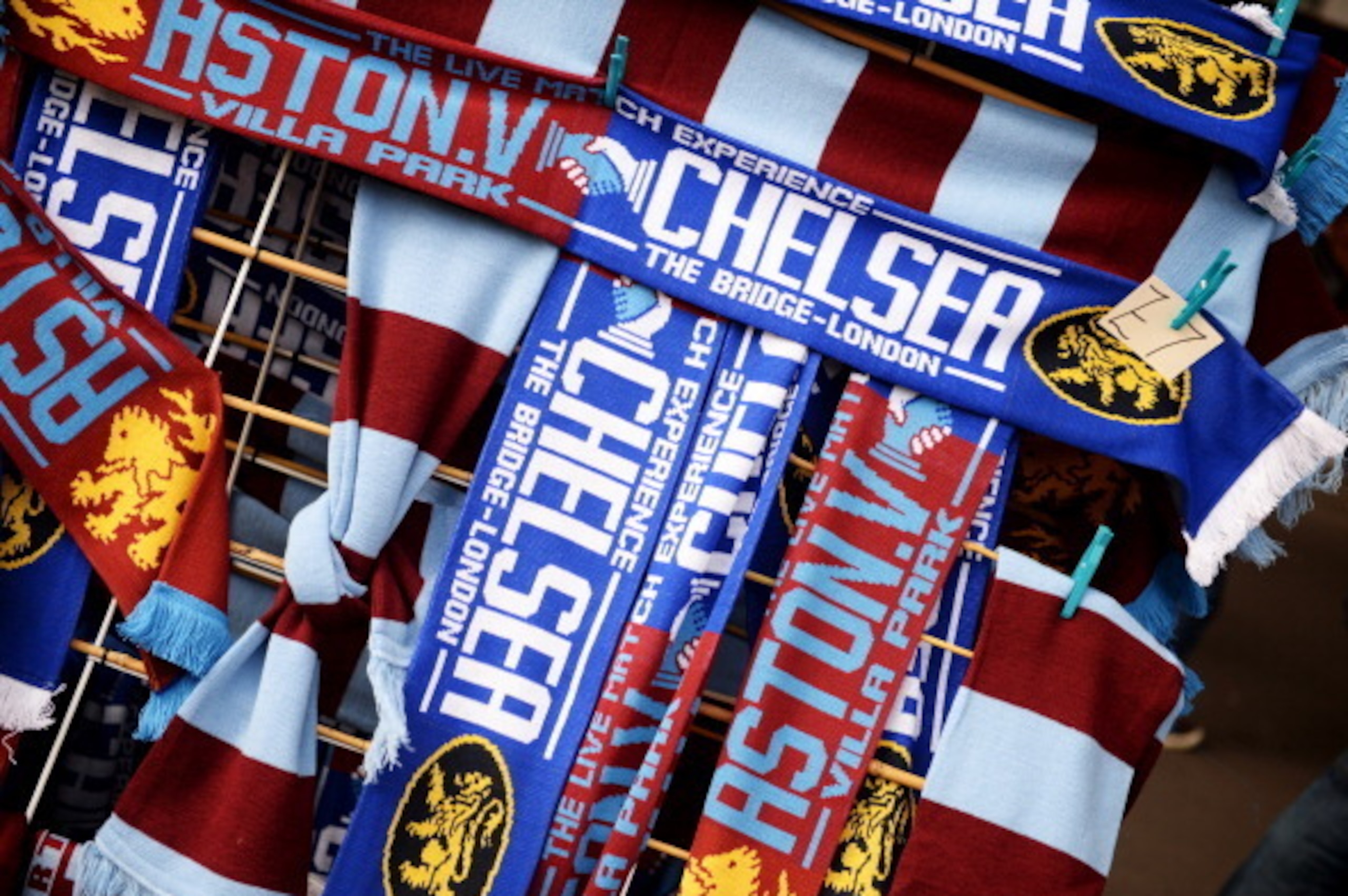
These numbers are emblematic of a greater problem. When the everyday fan gets priced out for tourists and so-called "wine and cheese crowds," English football loses its essence. You begin to hear golf clapping over chanting, you begin to feel dreariness over usually boisterous environments and you begin to see things like half-and-half scarves.
People are attracted to the sense of community football clubs provide.
Whether you're born in Manchester, Tokyo, Lagos, New York or Sydney, Manchester United (for example) can become your way of life. If clubs allow foreign interests to overtake local fans, however, the community becomes an endangered species. If there are no bastions to uphold what it means to be a true supporter, how can the familial attraction last?
I'm not sure it can.

Half-and-half scarves feel a harbinger. Almost as if nothing is sacred any longer—to the point where one would don another club's colours without a moment's hesitation.
All I'm left with now are questions I can't exactly answer:
Is the pursuit of money worth football's soul?
Could we lose our collective footballing identities (assuming they haven't already been taken) because clubs would rather chase pounds than safeguard history, pride and honour?
Or even more frightening: Have history, pride and honour been facades for profit the entire time?
I loathe ending with unanswered questions, but these aren't necessarily mine to solve...
Last Weekly: Manchester City, Chelsea and the Stupidity of Premature Coronations | Why Are Leagues Called "Over" So Quickly?
*Stats are via WhoScored.com; transfer fees are via Soccerbase where not noted.


.jpg?w=2560 "Report: Darnold Could Miss 3-6 Weeks")


.jpg?w=2560 "Breaking News")