

Is There a Genetic Advantage to Being a Twin in Football?
The potential genetic advantage of twins in sports is hotly debated.
To use some modern examples, the promising careers of Lars and Sven Bender currently being forged in the Bundesliga certainly fuel the debate. As does the previous success of Brazilian-born twins Fabio and Rafael da Silva, who in 2011 were poised to take centre stage at Wembley as Manchester United took on Barcelona in the Champions League final.
But for every success story, there are equally as many twins who failed to live up to their genetic potential.
TOP NEWS
.jpg?w=2560 "Titans Giants Football")
Harbaugh Reveals Giants QB1 After McCarthy Trade
.jpg?w=2560 "J.J. McCARTHY")
McCarthy Trade Grades 🔠

New NFL Power Rankings 📊
In 2010, the BBC documented the success of Belgium athlete Kevin Borlee as he took gold in the 400-meter European Championships. Despite following the same training protocol, Kevin's twin brother, Jonathan, was only able to manage seventh place.
So, all things considered, should talent scouts be scouring Germany for the next Bender twins? Analysing research from the world of sports science and combining it with real-life examples, it seems the idea shouldn't be ruled out.
What's more, statistics show twin-related research may become more and more important. That's according to a report by the National Center for Health Statistics, which claims the rate of twin births has risen 76 percent from 1980 to 2009.
This means a topic that was once casually pondered by sports scientists may now need to be taken slightly more seriously.
Is There a Physical Advantage?
What's most obvious when talking about twins are the physical similarities they share. This is an idea supported by research published in the journal Behaviour Genetics, which reviewed the literature on the familial resemblance of body mass index in twins, biological and non-biological family members.
After analysing data "from more than 25,000 twin pairs and 50,000 biological and adoptive family members," they discovered weight was 75 percent similar in identical twins and 32 percent similar for non-identical twins.
They also reported that as the level of genetic similarity declined, so did the subjects' correlation in weight. Weight was 25 percent similar for siblings, 19 percent similar for parent-offspring pairs, 12 percent similar for spouses and only six percent similar for adoptive relatives.
But as we know, sports performance is far more complex than measuring someone's waistline. This is why the research conducted at the UCL Institute for Human Health and Performance in London is particularly important when assessing how much genetic potential twins share.
They start by declaring that "a vast array of human phenotypes (e.g., muscle strength, skeletal structure, tendon elasticity, and heart and lung size) influences sports performance" and add that "genetic factors account for approximately 50-80 percent" of these.
Therefore, in theory, it stands to reason that if one twin is found to be genetically gifted, the other should be too, based on the fact they share similar genes.
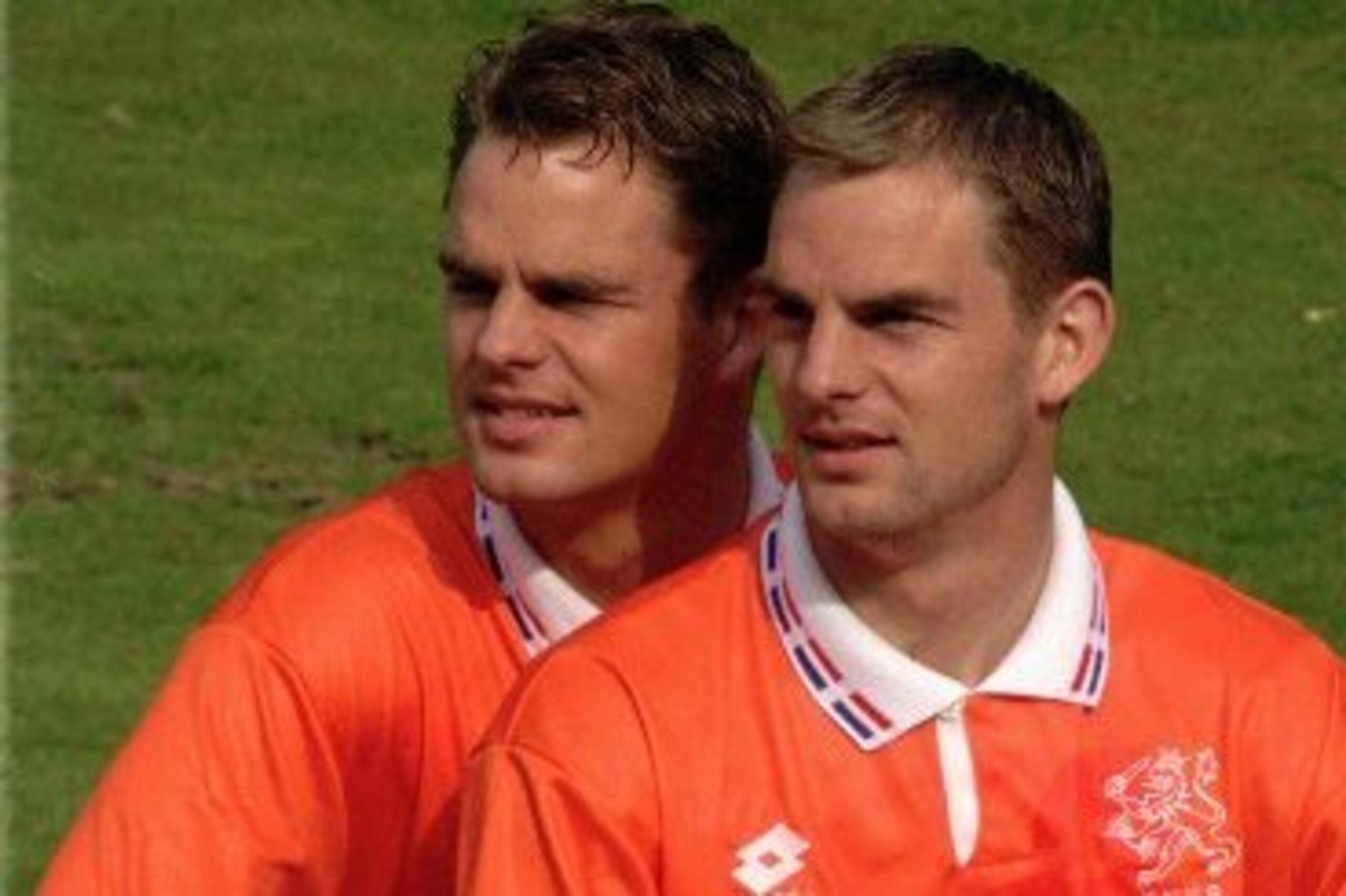
In 1997, Arsenal's vice-chairman David Dein certainly thought this was the case. According to The Independent's Phil Shaw and Alan Nixon, he travelled to Amsterdam with £18 million in his back pocket in the hope of signing Frank and Ronald de Boer.
Believed to be the most successful twins in football history, they won a UEFA Champions League title together in 1995, both played for the Dutch national team and boast a joint resume of Ajax, Barcelona, Rangers, Al Rayyan and Al-Shamal. Dein did not get his men, but it signalled his desire.
So if twins are so similar, why didn’t Jonathan Borlee come a close second to Kevin Borlee in the 400-meter European Championships? Why does Fabio da Silva currently play for Cardiff City in the Championship while his brother Rafael remains at Old Trafford?
The answer is when the difference between sporting success and failure is so small, other attributes—not just physical—must be considered. To use the Borlee example, Kevin won in a time of 45.08 seconds, and Jonathan came in a distant seventh with a time of 45.35 seconds, which means there was a 0.27-second difference.
To prove this, scientists from the Human Biology and Twin Research Center at Rome University examined an Olympic gold medallist in a 20-kilometer competitive walking race and his identical twin brother. He was also of Olympic standard but not quite a medal contender.
Researchers noted both twins had been subjected to the exact training and nutritional protocol for 19 years under the guidance of the same coaching staff.
After analysing their physiological attributes, they found the "differences were negligible," but the differences in personality traits were more distinct when using a State-Trait Anger Expression Inventory to monitor anger expression. This led researchers to conclude, "Although genetic constitution and years of physical training are prerequisites for making an Olympic athlete, success may be largely influenced by personality traits."
It's an idea supported by the aforementioned study at the UCL Institute for Human Health and Performance in London, which adds: "Psychology plays an important role in training, competition, tolerance of pain and motivation. However, the role of genetic variation in determining psychological state and responses remains poorly understood...despite over a decade of research."
But despite being poorly understood, could it be that the careers of Lars and Sven Bender blossom in perfect harmony thanks to the "incredible depth of Germany's coaching resources," to quote the Guardian, much like the careers of Frank and Ronald de Boer did during a time when the Dutch style of coaching was considered at the very forefront of talent identification?

Training is often defined as the realisation of genetic potential, so are the Bender twins the perfect example of two people who share the same genetic potential being harnessed in the same way?
Conversely, are the Silva twins an example of what happens when shared genetics are not efficiently honed and refined? One—much like the Borlee twins—will be remembered in the record books, while the other fades into sporting obscurity.
Based on the evidence, it seems this could be true, and furthering our understanding of the athletic potential of twins could help produce an army of De Boers and Benders as twin birth rates increase.
.png?w=2560)
.jpg?w=2560 "NFL DHS Video Football")


.jpg?w=2560 "Jags DE Confronts Ball Guy 😳")