Manchester United's Most Pivotal Players: Legends from 1992 to Now
People say it's the money. People say it's the club's size and history. But what really makes Manchester United unstoppable (most of the time) is the quality of its players.
Some Man United legends, like Van Nistelrooy, Cantona and Ferdinand, came from other top teams as a result of big money transfers. Others, like Becks, Nicky Butt, the Neville brothers and more, came direct from the United academy as youths.
Here's a look at some of the players who have made United a dynasty in world football for, like it or not, two—going on three—decades.
Eric Cantona
1 of 21United picked up Eric Cantona, a firebrand newbie to English football, off of Leeds at the end of the 1992-1993 season.
Known for his flamboyance and aggressive style of play, Cantona could score from anywhere and was difficult to defend for any team. He went on to score 64 goals over four-and-a-half years with United. He is regarded as one of United's all-time best players.
After kicking a fan at Selhurst Park in 1996, Cantona was banned for almost eight months before retiring. Later he starred in Elizabeth (starring Cate Blanchett) and coached France's beach soccer team to an international title.
Now he's reviving an old classic team, the New York Cosmos.
Wayne Rooney
2 of 21Fiery like Cantona, Rooney came on the English scene as a teen. A few weeks before his 17th birthday, Rooney scored a last minute goal for Everton against Arsenal, breaking the London giants' year-long undefeated streak. That was just the beginning.
United won a bidding war for Rooney at the front end of the 2004-2005 season and he's been a huge contributor ever since.
Despite injuries and the occasional scoring drought, Rooney has scored 102 goals for Manchester United and has a knack for netting monumental goals like the bicycle-kick banger against Manchester City this spring.
Rio Ferdinand
3 of 21Rio The Rock was the prize of the 2002 transfer window when United bid millions to take him off of Leeds United's hands, making Ferdinand the most expensive defender in soccer.
He's been an important element of center defense for both England and Manchester United and seen by both fans and football experts as possibly the most perfect central defender.
Rio Ferdinand brings consistency, unbreakable skill, and leadership onto the pitch.

Ruud Van Nistelrooy
4 of 21During his first season with United, the Dutch striker scored 23 goals in 32 league games and seemed to be United's much needed answer to Arsenal's Thierry Henry and Newcastle's legend-in-the-making, Alan Shearer.
A beast in the air with an indefensible turn-around shot, Van Nistelrooy was highly versatile, like a taller, faster, stronger Teddy Sheringham.
After five years and nearly one hundred goals for United, Ruud moved onto the squad of Real Madrid and remains in Spain to this day.
Denis Irwin
5 of 21Another linchpin in the Manchester United defense was Irishman Denis Irwin, who played mostly at left-back but could play anywhere in defense, really.
Irwin had a knack for innovative, accurate passing and a threatening pace down the side that helped unhinge opposing midfielders and their game.
Irwin was also a leader within the clubhouse and his cool confidence helped counterbalance that of his fiery teammate and fellow Cork native, captain Roy Keane.
Patrice Evra
6 of 21Possibly the world's best left-back today, Patrice Evra bears a resemblance to Denis Irwin in strength with an old school style and pace that brings back pieces of Roberto Carlos and the offensive "wingback" style that is more scarce in today's English Premier League.
Despite a small vocal scuffle with France's national team in 2010, Evra is a class act and a model for how every left-sided defender should play, assuming they're up to it.
Evra's impact for United has been a great one in the few seasons he's been at Old Trafford.
David Beckham
7 of 21Never mind that Becks is the world's most famous footballer—or that he's "too old" to still play, or that most footy fans thinks he has no shot at playing for England again.
David Beckham was a product of Manchester United's academy, part of the "Class of '92" which produced several of United's key players in the last two decades.
With a world-class golden foot that has saved England so many times, he's also played his part in United's offense, scoring 62 times in 252 games (not bad for a midfielder who is not a "winger"). Becks gave excellent service to strikers and had a great chemistry with his team, on and off the pitch.
You may not love Beckham's glamor quotient, but he was an excellent player for United. Rightfully a legend.
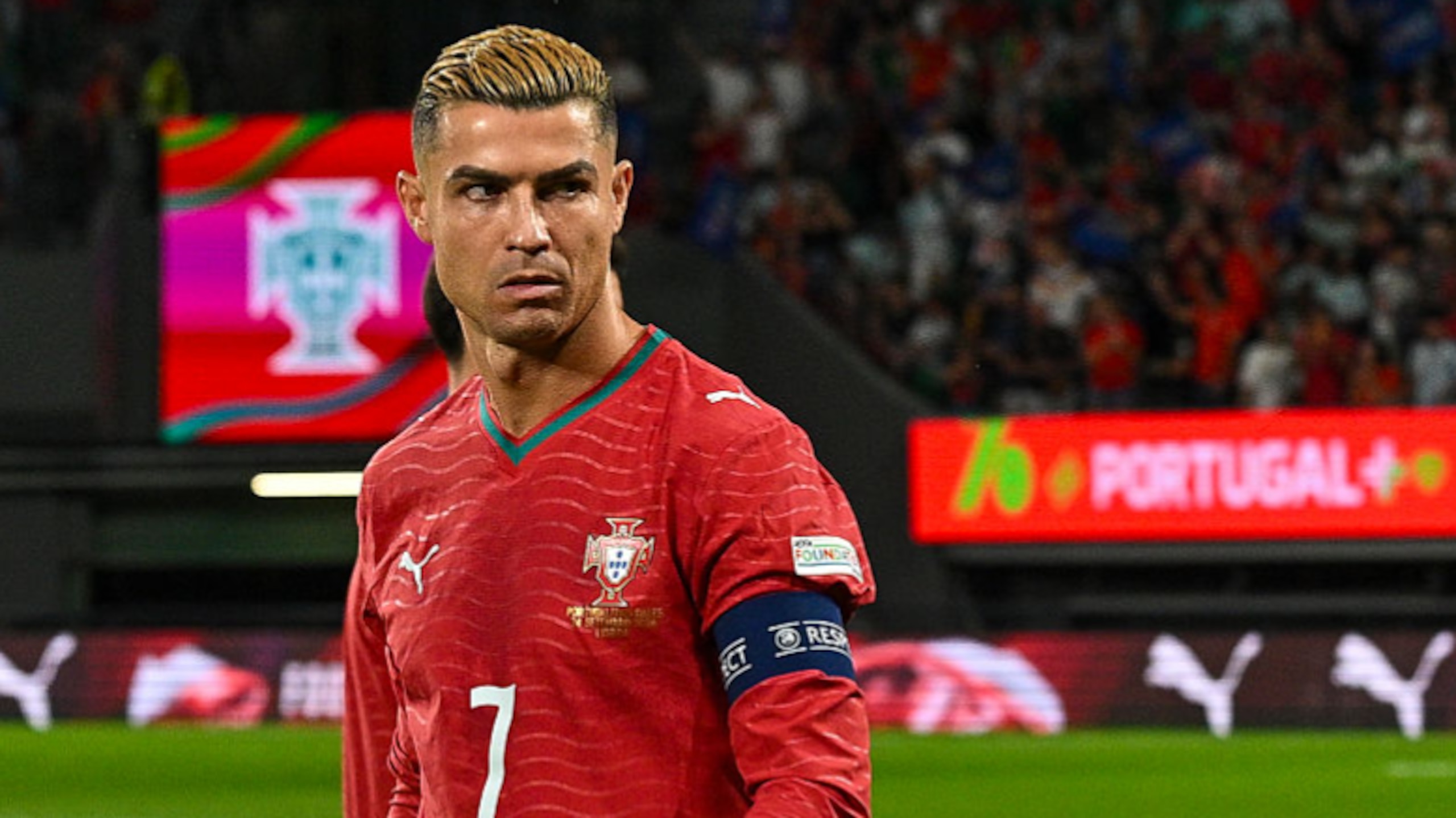
Cristiano Ronaldo
8 of 21Another 17-year-old prodigy who played for United, Cristiano Ronaldo was another legend built from the trails he blazed in Manchester.
Supposedly, Ronaldo did not want the pressure of living up to the No. 7 shirt, previously worn by Beckham, Cantona, and legends George Best and Bryan Robson. Nonetheless, Ronaldo more than filled the shoes and the No. 7 shirt his first year with United.
Within three years, he would become known as the world's best player and too hot for United to hold onto; later going to Real Madrid, a dream transfer for the player.
Steve Bruce
9 of 21This Geordie center-back brought strength and a bit of fire to United's back-line in the first decade of the club's reawakening.
One can surmise that his underling teammates, Roy Keane, Gary Neville and Irwin, learned a lot from Steve Bruce from every tackle to every opposing goal that never happened on the pitch.
Ryan Giggs
10 of 21Ryan Giggs, also known as "The Welsh Wizard," added pace on the wing and a lethal addition to United's offensive options from the early days of Cantona up front, to the present; supplementing the threat that Wayne Rooney holds for opponents.
Giggs will be remembered as one of Manchester United's five-best scoring players.
Roy Keane
11 of 21Roy Keane was a tough guy on the pitch and sometimes his ire and enthusiasm got out of hand. As such, his rivalries with City's Alfie Haaland and Arsenal's Patrick Vieira were the stuff of legends.
But as a player, he was one of the game's most competent and committed central midfielders, and a captain who brought out (and demanded) the best from the teammates around him.
Nicky Butt
12 of 21Nicky Butt was United's no-frills workhorse. His attitude and class as a part of Manchester United's midfield heart and soul were matched by his ball-handling skill, his ability to read other teams and his impeccable tackle.
No wonder Newcastle and other teams wanted Butt so bad.
Paul Ince
13 of 21Paul Ince became a strong presence in the United midfield alongside longtime captain Bryan Robson from 1989 through 1995.
Though Ince was not a prolific goalscorer by any means, he provided a strong gallop and mercurial passing to set up Cantona and United's world-class scoring players, adding an important dimension to the club's title runs.
Bryan Robson
14 of 21Bryan Robson, now a journeyman manager, was a legend in the 1980s for England and United's longtime captain and force of calm and maturity into the 1990s.
Robson made 345 appearances for United in nearly 13 years for the club.
Mark Hughes
15 of 21In an initial stint with United as a lad, from 1980 to 1986, Hughes scored on his first team debut and didn't stop there after. Later, he returned in 1988 to Manchester United, then managed by Sir Alex Ferguson, for a club record of £1.8 million.
No slouch, Hughes again impacted United, and football in general, as a dynamic goalscorer and was a key player for the club over the next seven years. Since then he's managed major clubs, including Manchester City.
Teddy Sheringham
16 of 21An asset to every team he played on, Teddy Sheringham came onto the scene at United in the late 1990s as a second option to the Cole-Yorke strike partnership—he proved to be one of the most versatile scorers, often using his head to score when not slicing through defenses.
Teddy had one of football's most optimistic approaches to the game that showed on every touch of the ball.
The Neville Brothers
17 of 21So the joke goes, "If Phil Neville can play for England, so can I." And to be sure, his brother Gary got his share from opposing fans.
No matter what criticism you throw out there, Phil and Gary Neville were a pivotal piece to Man United's system. With Gary at right-back, and Phil adding support in the midfield, these two weren't among United's glamorous players, but important nonetheless.
Andy Cole and Dwight Yorke
18 of 21Andy Cole and Dwight Yorke were a team that dominated the Premiership, and some might suggest the two together were much more than the parts separated. Likewise, Cole and Yorke's time at United has begun to show up as a textbook description of the quintessential strike partnership.
Regardless, they provided Manchester United with 140 goals collectively, playing their part in several EPL championships and the 1999 treble-winning season.
Solskjaer
19 of 21Ole Gunnar Solskjaer was a cheap buy by Manchester United, from his home club of Molde in Norway. Yet his arrival was invaluable.
The "baby faced assassin" as they called him, was always good for a goal upon entering as a substitute throughout his career with United. Put in late in the 1999 Champions League Final game against Bayern, he scored in extra time to make it 2-1, winning Man U its first cup since 1968.
Paul Scholes
20 of 21Paul Scholes is another United lifer who came from the Class of '92. He proved to be a reliable and creative midfielder for both United and England for over a decade, charged with both great passing sense and a finishing touch that rarely missed the back of the net.
Scholes will be as difficult for United to replace as their manager.
Sir Alex Ferguson
21 of 21He's up there with Bill Shankley, Vince Lombardi, Knute Rockne, Joe Torre, Mike Krzyzewski and the other few and legendary coaches who are said to be the best in their sport. The difference is that Sir Alex Ferguson has more trophies.
Brought in in 1986 when United was (believe it or not) second from bottom of the table, Sir Alex re-energized discipline and accountability to a club that hadn't won a league in many years.
He developed good players to their best, and recruited other top talent, both young and experienced. And after a quarter century at the helm, Ferguson has established Manchester United as the best of the elite in the biggest sport on earth.


.jpg?w=2560 "Terrell Owens Being Sued for Defamation")