
Pac-12 Football: Ranking All 12 Teams Following Spring Football
Without a doubt, the new-look Pac-12 will be full of intrigue in 2011.
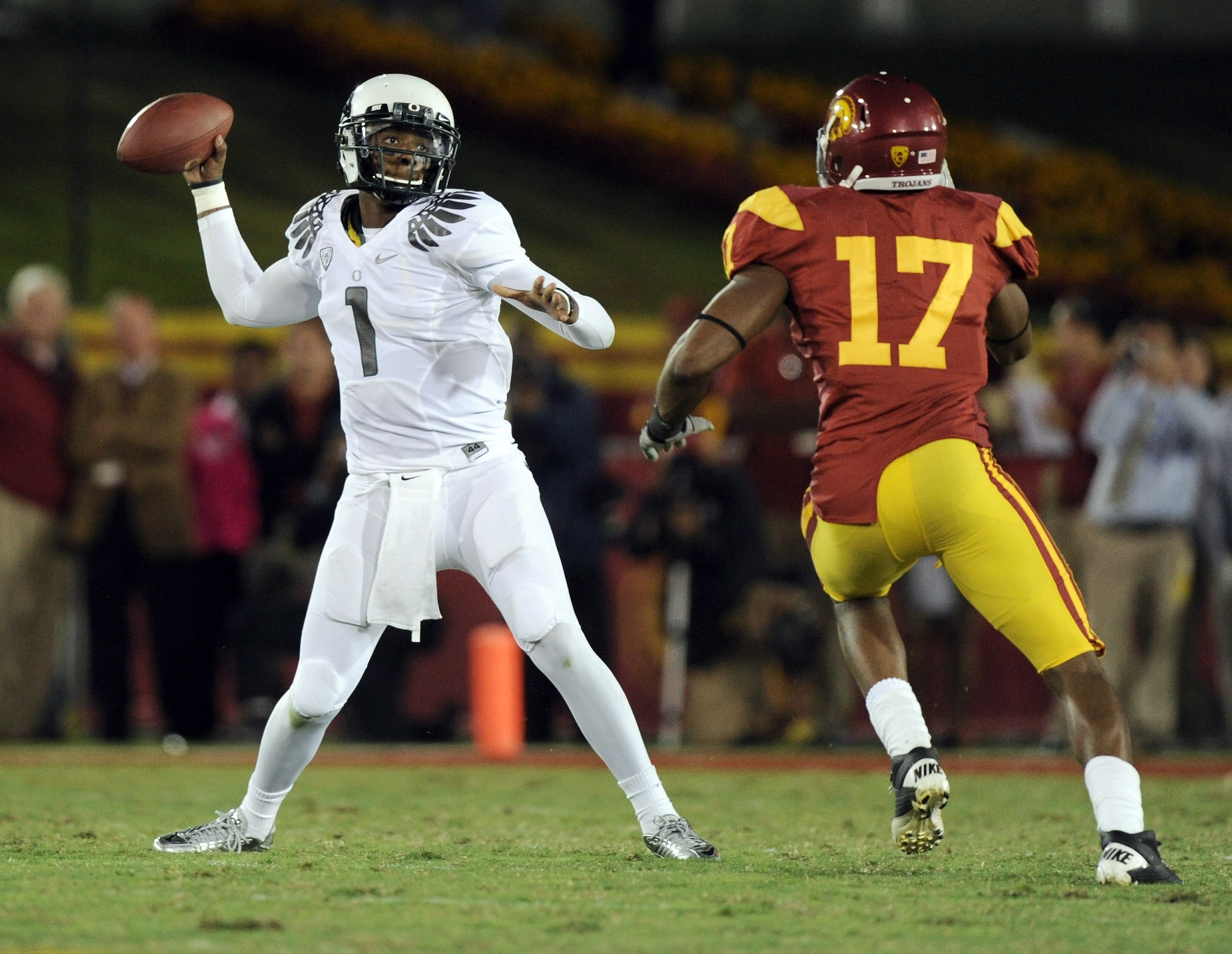
The Oregon Ducks and their high-octane offense are primed and ready for another shot at the national championship. LaMichael James, their starting running back, joins Stanford quarterback Andrew Luck as the frontrunners for the 2011 Heisman Trophy.
And as if Luck won’t be getting enough attention as it is, he will have the added spotlight of being labeled as the consensus No. 1 overall pick in next year’s NFL Draft.
Speaking of Luck, with him, Nick Foles and Matt Barkley -- just to name a few -- it's quarterbacks galore on the West Coast. The Pac-12 easily boasts the best collection of passers out of any conference.
Then there’s USC, the once-dominant powerhouse that has since been hit with NCAA sanctions and is in its second and final year of ineligibility.
And of course, it will certainly be interesting to see how newcomers Colorado and Utah fit into the conference hierarchy.
So without further ado, here are my 2011 post-spring Pac-12 football rankings.
12. Colorado Buffaloes
1 of 12
Change is in the air in Boulder, and not just because of Colorado’s move to the Pac-12. Jon Embree is taking over as head coach of the Buffaloes after the disastrous Dan Hawkins era came to an end last November.
Unfortunately, he doesn’t inherit a whole lot of talent.
The defensive line should be somewhat decent, but the secondary is going to be a disaster. Awful, horrendous, atrocious -- none of these words can even begin to describe simply how bad this unit truly is. Last year, even with two now-NFL cornerbacks in Jimmy Smith and Jalil Brown, the Buffs’ secondary still managed to finish an abysmal 112th in the nation in pass-efficiency defense and second to last in opponents’ completion percentage, allowing opponents to complete 68 percent of their passes.
Needless to say, with Smith and Brown now gone, this unit will continue to be one of the worst in the country, which doesn’t bode well for a team that has to play the likes of Andrew Luck, Nick Foles and Matt Barkley.
On the other side of the ball, the Buffs won’t be nearly as bad. At running back is senior Rodney Stewart, a speedy and shifty ball carrier who gained 1,316 yards last year on an average of 4.5 yards per carry. He will be running behind an experienced offensive line that is anchored by senior guard and NFL prospect Ryan Miller. Sophomore wide receiver Paul Richardson has also been impressive. But overall, Colorado simply has less talent on offense than just about every other team in the conference.
Senior quarterback Tyler Hansen boasted a completion percentage of 68 percent last year, but take that number with a grain of salt. Not only does he not take many shots downfield, but in the slightly more than six games he played last season before getting injured, Hansen only once threw for more than 200 yards in a game and finished with as many touchdown passes (six) as interceptions. He’s not bad; he just doesn’t compare to what other teams in the quarterback-heavy Pac-12 have under center.
The Buffs have the potential to pull off one or two minor upsets, but all in all, it looks like a rough first year at the helm for Embree. Colorado is simply overmatched offensively and defensively by most of the teams on its schedule.
11. Washington State Cougars
2 of 12
Congratulations to the Washington State Cougars! They’re no longer going to be the worst team in the conference.
And the reason for this is not solely due to the addition of Colorado -- it's also because the Cougars are actually getting a lot better.
Gone are the days of looking at the schedule and marking WSU as an easy W. Not only were the Cougs competitive in many of their games last season, but they also finished the year strong. In their final three games, they put serious scares into Cal and UW and upset Oregon State 31-14. The Cougars are on the rise, and expect them to continue to improve this season.
A major reason for the program’s upward trajectory has been quarterback Jeff Tuel. A likely future NFL prospect, Tuel threw for 2,780 yards last season and seems primed for another big year.
Sophomore wide receiver and big-play threat Marquess Wilson, who had 1,006 yards receiving on 55 catches last season, leads a very talented receiving corps.
However, as much as there is to be excited about, there are reasons why WSU is once again going to find themselves in the bottom portion of the conference.
For one, the Cougars’ offensive line is simply overmatched. Last season WSU gave up 51 sacks and their running game managed only 2.6 yards per carry. And with the graduation of running back James Montgomery, and no other proven players at the position, it’s hard to imagine the Cougs improving very much on that 2.6 yard average.
Meanwhile, on defense WSU gave up a very poor 5.6 yards per rush and 8.2 yards per pass attempt last year.
Still, there are enough bright spots on the team for the Cougs to continue to improve this season. Look for WSU to win multiple conference games this year for the first time since 2007, which is no small feat considering where this program was just two or three years ago.
10. UCLA Bruins
3 of 12
In recent years, Rick Neuheisel’s Bruins have been plagued by a constant stream of struggles at the quarterback position, and there is not much to suggest that 2011 will be any different.
Many thought that 17-year-old sensation Brett Hundley would come right in and take over as starting quarterback, but his performance during spring practice made it clear that Hundley was not yet ready for such a task.
So it appears that the battle for the starting job will come down to Kevin Prince and Richard Brehaut, a duo that last season resulted in UCLA having the fewest passing yards of a non-option team in the country.
Last year, Prince was the primary quarterback until he suffered a knee injury midway through the season. Brehaut then took over for the remainder of the year. Over the course of the season, the two of them combined for an absolutely horrendous ratio of nine touchdowns to 12 interceptions.
Unless one of them steps up and significantly improves, it looks like another rough year under center for UCLA.
What’s unfortunate for the Bruins is that their horrendous quarterback play nullifies the fact that they have a group of solid, experienced wide receivers and a talented junior running back in Johnathan Franklin.
It goes without saying that no matter how talented a receiver may be, he’s not going to be very successful without at least a somewhat decent quarterback. However, UCLA’s quarterback struggles hurt the running game as well. With the Bruins’ aerial attack not a real threat, defenses are able to focus on stopping Franklin.
As for UCLA’s defense, they must recover from the loss of both outside linebacker Akeem Ayers and safety Rahim Moore to the NFL. Conventional wisdom suggests that, since the Bruins’ defense was not very good even with Ayers and Moore, the unit is going to be even worse now that both of them are gone.
However, there are some glimmers of hope for Bruins fans that such thinking won’t prove to be correct.
For one, the return of Datone Jones, a potential all-conference defensive end who missed all of last season with a foot injury, will help improve a defensive line that allowed an awful 5.2 yards per rush last year.
Furthermore, the rest of the defensive line apparently had a tremendous spring and looked much improved, and the secondary should be a strength.
In addition, new defensive coordinator Joe Tresey runs a defense that is probably a better fit for UCLA than that of former coordinator Chuck Bullough.
The Bruin defense probably won’t be great, but it likely won’t be as bad as most think.
Still, it looks like another bowl-less season for the Bruins, which likely means the end of Neuheisel’s tenure at UCLA.


9. Oregon State Beavers
4 of 12
Injuries have made Oregon State a particularly difficult team to project.
Nearly all the top players on the Beavers' offense currently have injuries of some sort (quarterback Ryan Katz, wide receivers James Rodgers and Jordan Bishop, tight end Joe Halahuni and running back Jordan Jenkins). Halahuni could definitely miss a few games, but Katz and Jenkins should be good to go before fall camp, and Bishop should be healthy before the season starts.
However, Rodgers’ knee injury, which kept him out for the final seven games of last season, is a major concern.
Oregon State still has no idea when or if Rodgers will be able to play this season. Even head coach Mike Riley has said that he’s not sure whether we will be able to see the same explosive, playmaking James Rodgers on the field this year that we’ve seen in the past.
This is potentially damaging news for the Beavers, as Rodgers is one of the most dangerous players in the nation, both as a receiver and as a kickoff and punt returner.
With a completely healthy Rodgers, Oregon State’s receiving corps is really good. Markus Wheaton, Jordan Bishop and Joe Halahuni (as a pass-catching tight end and a significant part of OSU’s passing game, he can be considered a receiver as well) would all provide very nice complements to Rodgers.
But without Rodgers -- or with an injury-diminished version of him -- the unit overall drops from great to simply a little bit better than decent.
And while Oregon State attempts to move forward amid the uncertainty of Rodgers’ knee, the Beavers are trying to find their way at running back after Jacquizz Rodgers, the brother of James and the star running back at OSU for the past three years, left for the NFL.
Fortunately they have some pretty good options in Ryan McCants, Jordan Jenkins and Jovan Stevenson. No one running back has separated himself from the pack and each has different strengths that play to different game-situations, making a running back by committee approach likely.
However, no matter what they do at the position, Oregon State will not be able to replace what Jacquizz gave them for the past three seasons.
Quarterbacking the Beavers will be junior Ryan Katz. He has a lot of potential and many believe that one day he will be playing on Sundays, but Katz must improve on a very unimpressive 2010. Last season he threw for just 200 yards per game with a fairly poor ratio of 17 touchdown passes to 11 interceptions.
Meanwhile, the offensive line needs to step up their play too. Four starters return on this unit that underachieved last season.
On defense, the secondary, led by safety Lance Mitchell, is a definite strength. And although the Beavers lose their top two linebackers from last year, they appear to have some talented replacements.
However, the defensive line will likely be a major issue for Oregon State this season. Last year the unit did not play very well, and that was with NFL draft picks Stephen Paea and Gabe Miller. With them gone, expect opposing quarterbacks to have ages to throw and opposing running backs to have big holes to run through.
Again, with all the injuries, this is a difficult team to predict. If James Rodgers is at 100 percent, the Beavers' offense will be pretty good, especially if both Ryan Katz and the offensive line step up their play.
However, not only are there a lot of “ifs” in the previous statement, but the defensive line is definitely going to hold this team back. Thus, I see Oregon State hovering around the .500 mark.
With a completely healthy James Rodgers, the Beavers could finish as well as 7-5. However, without Rodgers at 100 percent, a bowl-less 5-7 season is certainly a very real possibility.
8. California Golden Bears
5 of 12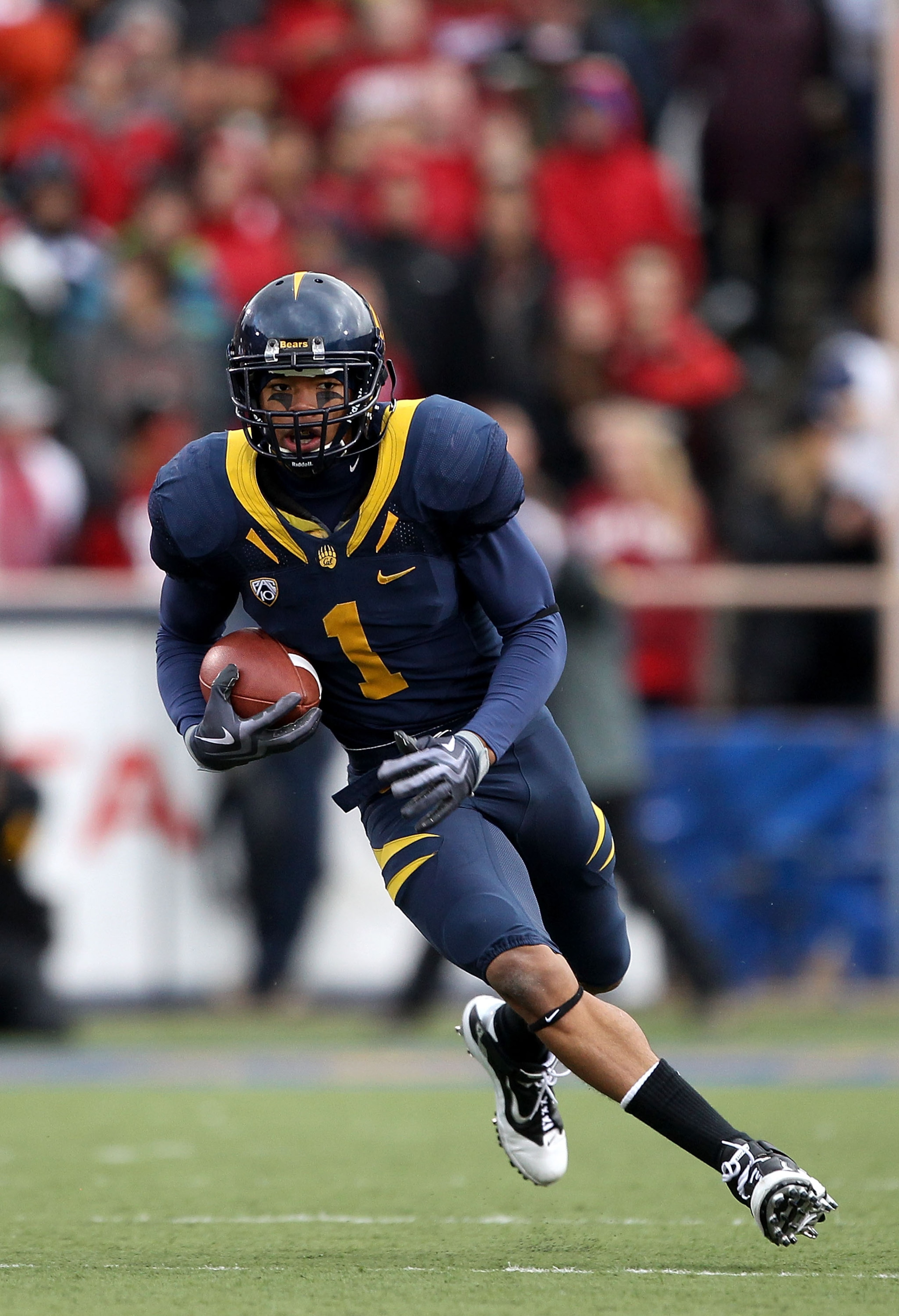
Ever since Jeff Tedford took over as coach of the Golden Bears in 2002, he turned a program with a long history of being the laughingstock of the conference into winners.
Between 2002 and 2009, Cal had eight straight winning seasons and won five bowl games. And for the vast majority of the decade, they were the biggest threat to break USC’s streak of consecutive conference titles.
So needless to say, the Bears' 5-7 finish last year that left them home for the bowl season was very disappointing for Cal fans.
The biggest thing that plagued the Bears last season was poor quarterback play after starter Kevin Riley tore his MCL. Riley’s backup, Brock Mansion, was awful, throwing for just 646 yards, two touchdowns and five interceptions in five games.
With the graduation of Riley, it looked as if Cal was in for another rough season under center. That is, until Buffalo transfer Zach Maynard stole the show during spring practice.
Maynard, who played two years at Buffalo before sitting out last season due to NCAA transfer rules, was very impressive this spring, beating out five other quarterbacks for the starting job.
Being a dual-threat quarterback, the left-handed Maynard is certainly not the typical pocket-passer that people are accustomed to seeing under center on a Tedford-coached Cal team. But he should fit into the offense just fine, as Cal has been gradually transitioning to more of a spread offense over the past few years.
Surrounding Maynard is a talented pair of wide receivers, led by Maynard’s half-brother, Keenan Allen. Allen, a true sophomore, is an absolute playmaker and has the potential to be the best receiver in the conference. Complementing Allen is senior Marvin Jones, who last year had 50 receptions for a total of 765 yards.
However, despite producing a phenomenal six NFL running backs during Tedford’s tenure at Cal, the Golden Bears will have only mediocre talent at running back this year. Maynard’s running ability should somewhat make up for their lacking in this area, but still, a dual-threat quarterback is no substitute for a solid running back.
On the other side of the ball, the Bears’ defense should be at least a slight strength. Last year they were pretty solid overall, as they allowed the second fewest yards per game in the conference.
However, their performance fluctuated dramatically. They fell apart against Nevada, USC and Stanford, allowing 52, 48 and 48 points, respectively. Yet in Cal’s other nine games, they allowed an average of only 13.7 points per game.
And one of those nine games was against Oregon, when the Golden Bears held the highest scoring team in the country (49.3 points per game) to a mere 15 points, only seven of which came from the Ducks’ high-octane offense. To sum it up, the 2010 Cal defense was pretty bad in a few games, solid in the vast majority of their games, and excellent in one game, making the overall net result a decent unit.
However, the Bears lost three players from last year’s defense to the NFL: defensive end Cameron Jordan, linebacker Mike Mohamed and safety Chris Conte. For most teams, losing three players of such caliber would be an absolute disaster for a defense, but that’s not the case here.
Senior Mychal Kendricks and D.J. Holt head a solid linebacking corps, while veteran defensive linemen Trevor Guyton, Ernest Owusu and Kendrick Payne lead a line that was very good last year and should be strong again this season, even without Jordan. Also, Steve Williams and Marc Anthony lead what should be a decent secondary.
Meanwhile, two consecutive years of phenomenal recruiting classes have left Cal loaded with talented youth on defense. Headlining just some of the many talented youngsters on the Golden Bears' defense are defensive tackles Viliami Moala, Mustafa Jalil and Gabe King, linebackers Chris McCain and Jason Gibson, and defensive backs Stefan McClure and Avery Walls.
All seven of the players listed above were among the top recruits nationally for their respective positions. Most, if not all, of this talent is probably too young to really make much of a positive impact this year, but then again, you never know. All in all, Cal’s defense should remain at least a slight strength, even after losing Jordan, Mohamed and Conte.
With quarterback struggles being the primary culprit behind the Bears’ recent issues, it goes without saying that how Maynard fares will have a major impact on Cal in 2011. I believe Maynard will indeed have a successful year and that he will lead the Bears back to a bowl game.
7. Arizona Wildcats
6 of 12
The Wildcats are extremely talented at the skill positions on offense. To begin with, NFL prospect Nick Foles, who threw for 3,191 yards last season, is one of the best quarterbacks in the country. Foles also has a plethora of talented targets to throw to, led by senior wide receiver Juron Criner, who had 1,244 yards receiving last year.
However, Arizona has a major problem.
They lost almost all of their offensive lineman from last season -- only one offensive lineman on this year’s roster has ever started in a college football game. And that player, Kyle Quinn, has just one career start.
Such an unbelievably inexperienced offensive line is bound to struggle, which is going to be devastating for the Wildcats' offense. No matter how good a team is at quarterback and wide receiver, if they don’t have an offensive line that can protect the quarterback and provide enough time for receivers to run their routes and get open, it’s very difficult for the offense to be successful.
Arizona is loaded with talent in Foles, Criner and their other talented wide receivers, but with such a young and inexperienced offensive line, the Wildcats are going to struggle on offense in 2011.
On defense, the Cats’ defensive linemen and safeties could struggle as well, as Arizona loses five starters from last season at those positions. However, the Wildcats should be strong at linebacker and cornerback, where everyone returns.
In the end, Arizona’s 2011 season comes down to its inexperienced offensive line. Foles and his receivers may be good enough by themselves to carry the Wildcats to a bowl game, but without a solid offensive line, Arizona will not be able to take advantage of their relatively weak division and win the Pac-12 South title in 2011.
6. Utah Utes
7 of 12
Utah has won 33 games over the past three years, including an undefeated 13-0 season in 2008 where they beat Alabama in the Sugar Bowl and finished ranked No. 2 in the country.
However, gone are the days of the Utes racking up wins against Mountain West teams that are, outside of TCU, generally mediocre at best. So how will Utah fare against the tougher competition of the Pac-12?
Well, since 2003 Utah has gone 7-3 against Pac-10 teams, so there’s little question that the Utes will be a competitive member of the conference. However, Utah has several major concerns heading into the 2011 season.
First off, starting quarterback Jordan Wynn is coming off shoulder surgery and had to miss spring practice. This is even more of a negative than it would usually be, because the players are in the process of adjusting to a new offense.
With the help of first-year offensive coordinator Norm Chow, Utah is replacing its spread option attack of the past with a new multiple offense. How well Wynn recovers from his injury -- and how quickly the new offense gets in sync once he does -- will both have a major impact on Utah’s success this year.
In addition, a secondary that was pretty bad last year figures to be even worse this season after losing four out of their top five players from last year. That's not exactly a minor issue when you are going up against the likes of Andrew Luck, Nick Foles and Matt Barkley.
Also, with the losses of Matt Asiata and Eddie Wide, the Utes have major holes to fill at running back. Big-time local recruit Harvey Langi, who also received attention from USC, seems to be a good replacement. However, going up against Pac-12 defenses as a freshman is certainly no easy task.
All that being said, Jordan Wynn has a lot of upside, the Utes’ offensive and defensive lines figure to be definite strengths, all three starting linebackers return and junior wide receiver DeVonte Christopher, who averaged 16.9 yards per reception last year, is a real playmaker.
Utah may be a team with a lot of question marks, but they also have a lot of potential.
If things go the right way for the Utes, don’t be surprised if they contend with Arizona State for the Pac-12 South crown and a spot in the inaugural Pac-12 championship game (keep in mind USC is currently ineligible).
5. Washington Huskies
8 of 12
Last year, in just his second season since inheriting an 0-12 Husky team, head coach Steve Sarkisian led the Dawgs to their first bowl game since 2002, where they defeated Nebraska to win the Holiday Bowl and finish with a record of 7-6.
But how well will the Huskies fare in 2011 after losing star quarterback Jake Locker to the NFL?
The answer: actually pretty well.
Sophomore Keith Price was very impressive during spring practice and beat out freshman Nick Montana for the starting quarterback position. This should come as no real surprise to Husky fans, who got a few chances last year to witness Price’s talent.
When Locker was shaken up after a hit to the head during the fourth quarter of the USC game, Price filled in and threw a key touchdown pass to help the Dawgs beat the Trojans. And with Locker recovering from a broken rib, Price stepped up and played a solid game vs. the Ducks on the road at Autzen Stadium, not exactly the best place to be making one’s first career start.
And like Locker, Price is very mobile and has the ability to burn defenses with his feet as well as with his arm.
He may have the tall task of following in the footsteps of a Husky legend, but Price is sure blessed with an abundance of talent surrounding him on offense. To begin with, he has one of the best running backs in the country in Chris Polk.
Polk, who ran for 1,415 yards last season, at times essentially put the team on his back and willed them to victory. He scored the game-winning touchdown on the last play of the game at Cal, racked up 284 yards against WSU in the Apple Cup and gained 177 hard-fought yards on the ground vs. Nebraska in the Holiday Bowl. This year, expect UW to rely heavily on Polk once again.
The Huskies are also very talented at wide receiver, which should be a major help in easing Price into his first year as the starting quarterback. This group of talented receivers is highlighted by Jermaine Kearse, who had 1,005 yards receiving and 12 touchdown receptions last year.
Another major plus for the Huskies this year is that their tight ends will actually be a part of the passing game. Last season, Kavario Middleton’s dismissal from the team and Chris Izbicki’s injuries left UW severely depleted at the position and without a pass-catching tight end.
But with true freshman Austin Seferian-Jenkins, who was regarded by many as the best high school tight end prospect in the country, and a healthy Michael Hartvigson, the tight end position will be a serious threat in the Huskies’ passing game.
On defense, expect a very physical unit. Fiery defensive coordinator Nick Holt has been working to create a culture of physicality on the defensive side of the ball and his efforts came to fruition in the Holiday Bowl as the Dawgs’ defense pushed around the Cornhuskers, holding them to a mere seven points.
Tackle Alameda Ta'amu and defensive end Hau'oli Jamora lead what should be a phenomenal defensive line, senior Cort Dennison is a solid middle linebacker and with junior free safety Nate Fellner and senior cornerback Quinton Richardson, the Huskies have a talented and experienced secondary.
With one of the best defenses in the Pac-12, one of the nation’s best rushers, talented wide receivers and a capable quarterback, it should be another big year for the Huskies.
Unfortunately for UW, both Oregon and Stanford are in their division, meaning the Dawgs won’t win the Pac-12 North. But expect the Huskies to take another step forward this season and finish the regular season with seven, maybe even eight wins.
4. Arizona State Sun Devils
9 of 12
There’s a lot of excitement surrounding the 2011 Sun Devils, and no, it’s not simply because of their flashy new uniforms. ASU has become a trendy pick to make a BCS bowl, win 11 games and maybe even knock off Oregon to win the Pac-12 title.
So, what’s with all the hype?
Well, a lot of it has to do with the fact that Arizona State returns an almost unheard of 17 starters on offense and defense. One might argue that, while it is always nice to have returning starters, the 2010 team went a mere 6-6.
However, this team was probably better than its mediocre record suggests. Four of their losses came by a grand total of nine points, including a one-point loss on the road to eventual Big Ten champion Wisconsin and a four-point loss to Orange Bowl champion Stanford in a game where the Sun Devils fumbled on the Cardinal goal line.
For those experts that are picking ASU to have a monster year, the hope is that, with an extra year under their belts, the experienced Sun Devils win those types of games in 2011.
Experts also like the fact that ASU has Vontaze Burfict, considered by many to be the best linebacker in the country, anchoring what should be a strong defense.
However, the Sun Devils have some major question marks, with the biggest being starting quarterback Brock Osweiler, who has made only two career starts (it’s amazing that with so many returning starters on this ASU team, one of the few positions that doesn’t have a returning starter is quarterback, probably the position where experience is most important). Osweiler was named the starter this offseason after last year’s starter, Steven Threet, was forced to retire after a series of concussions.
In Osweiler’s two primary appearances last season, he was a bit of a Jekyll and Hyde. Against UCLA he was superb, racking up 380 yards passing and throwing for four touchdowns. However, the very next week in the Territorial Cup vs. Arizona, Osweiler completed only 22 of his 49 passes, throwing about a half-dozen balls that should have been intercepted.
So which Osweiler will ASU fans see this season? And will his lack of experience ultimately hurt the Sun Devils?
Another major issue is the loss of senior cornerback and team leader Omar Bolden, who tore his ACL during spring practice. Bolden was one of the best corners in the conference. Whether the Sun Devils can recover from such a loss will play a major role this season.
But perhaps the biggest problem I see with ASU is that recent Sun Devil teams have had a tendency to lack focus and discipline. This was evident statistically last season, as ASU was one of the most penalized teams in the country.
A lack of focus and discipline certainly does not bode well for a team like the Sun Devils, who suddenly have such high expectations.
Don’t get me wrong; ASU has a lot of talent. But I can too easily see this team getting caught up in all the hype, not paying enough attention to the little things, slipping up during the season and not having the discipline to get back on track. The Sun Devils have been known for their letdowns in the past, and this year should be no different.
They’ll likely make the Pac-12 championship game by virtue of USC’s ineligibility and an otherwise not particularly strong Pac-12 South, but expect them to fall short of the lofty, BCS expectations that so many have.
3. USC Trojans
10 of 12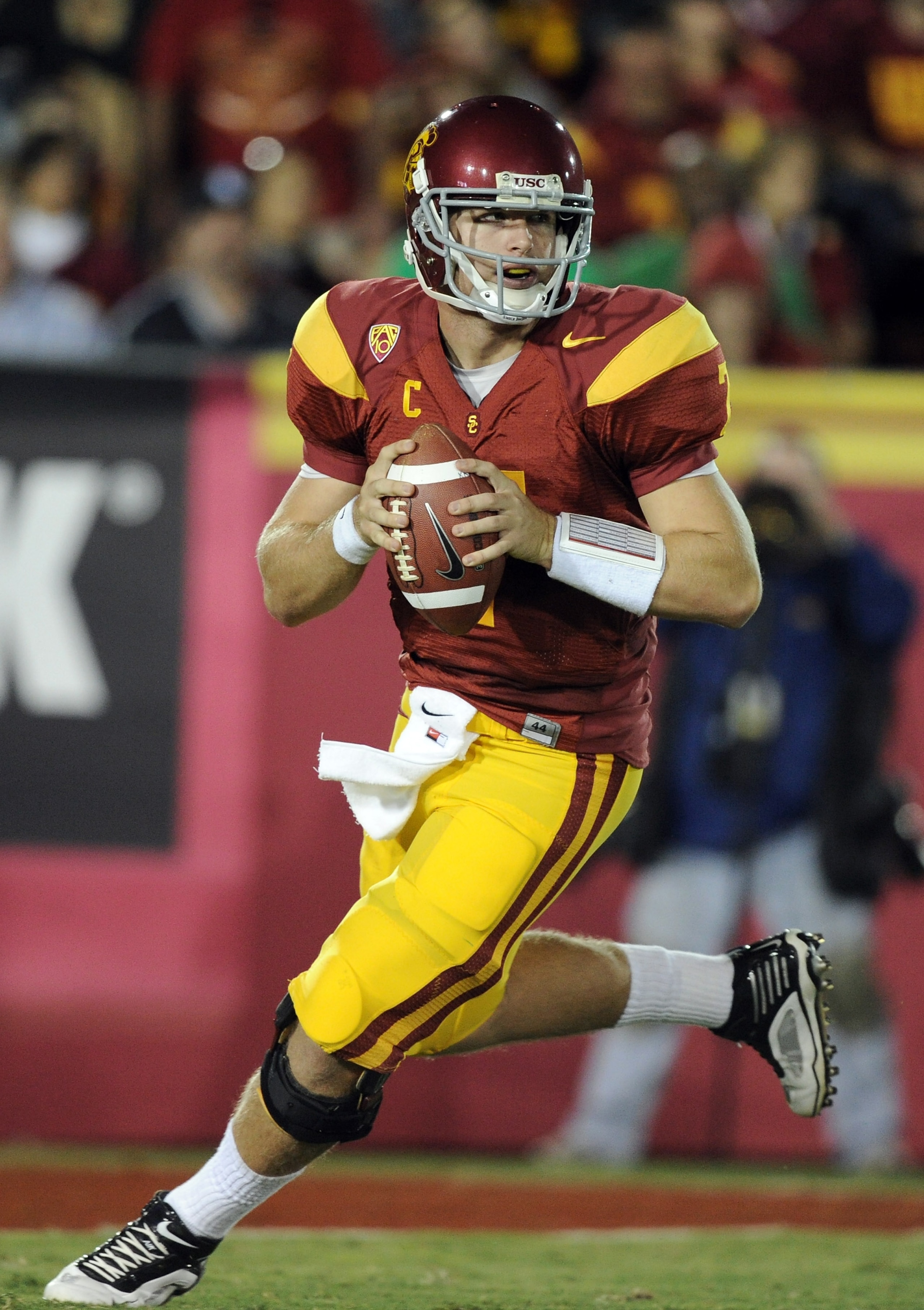
No, they certainly aren’t the mighty Men of Troy dynasty we saw for the better part of the past decade. The NCAA sanctions broke that up.
But they’re still USC, which means they still have an abundance of talent.
The Trojans are led by junior quarterback Matt Barkley, a potential Heisman Trophy contender and future first round NFL draft pick. Last year he threw for 2,791 yards and 26 touchdowns and he seems primed for an even bigger season in 2011.
A major reason for that is big-time wide receiver Robert Woods, who is not only possibly the best wideout in the conference, but likely one of the best in the nation as well. Last year as a freshman, Woods had 792 yards receiving and six touchdown receptions. He also returned a kickoff for a touchdown and had several other nice returns, proving that he is also a big-play threat on special teams.
In addition to Woods, the Trojans also have some very young and inexperienced -- but extremely talented -- wide receivers in Kyle Prater, Markeith Ambles and George Farmer. The fact that defenses will probably give Woods some extra attention will likely create better matchups for these young Trojan wideouts, which should make up for their inexperience somewhat and help them to have fairly big years as well.
And as usual, USC features a very deep and talented backfield, which should lead to a very balanced attack offensively.
However, the offensive line is a cause for concern.
Left tackle Matt Kalil is solid and has a lot of potential, but he is really the only sure thing on a unit that is otherwise generally very young and inexperienced. Even Khaled Holmes, the only other lineman with significant in-game experience, cannot truly be labeled as “experienced,” as this year he will be making the transition from guard to center, a position he has never played competitively.
Being pretty talented, he shouldn’t have too much trouble making the change. However, he lost out on spring practice due to an injury, meaning he has a very short window of time to learn his new position.
Injuries kept a few other USC offensive linemen from participating this spring as well. Although missing spring practice is a negative for any player, it especially hurts these Trojan linemen that are lacking in-game experience, as reps in practice are even more important for them.
With such youth and inexperience, coupled with, thanks to injuries, very little time to gel as a unit before Sept. 3 rolls around, the offensive line will likely hurt the otherwise lethal Trojan offense to at least some degree.
However, no matter how young and inexperienced this unit is, they still have quite a bit of talent and thus should not be enough of a problem to keep the Trojan offense from still being a major force.
On the other side of the ball, the USC defense is coming off a rough 2010. A far cry from the dominant units of the recent past (just three years ago, the Trojan defense gave up a stifling nine points per game), last year’s defense surrendered 400 yards and 26.7 points per contest.
The main culprit was a secondary that got burned for 30 touchdown passes and ranked 109th in the country in pass defense. However, keep in mind that not only was this secondary made up of four first-year starters, but also they were still in the learning stages of first-year defensive coordinator Monte Kiffin’s extremely complex system. With an extra year of experience and a much more thorough knowledge of Kiffin’s defense, the secondary should be much improved this season.
Leading the Trojan secondary is the very talented free safety T.J. McDonald, a member of the all-conference second team last year who has the potential to be an All-American this season. Meanwhile, the defensive line, which should be a definite strength, is spearheaded by defensive end Nick Perry, an explosive pass rusher who put together a phenomenal spring and seems poised for a huge season.
Moreover, this defense as a whole is simply full of up-and-coming, rising talent. There are many players who, like Perry, have all-conference potential and appear ready to emerge as big-time playmakers. For that reason, and due to the fact that the players will have had another year to adjust to Monte Kiffin’s complicated system, expect the USC defense to be much improved this season.
I have the Trojans at No. 3 in the Pac-12, but it was very close to being a toss-up between USC and Stanford for the No. 2 spot; I could almost just as easily see the Trojans being the second best team in the conference.
With an offense loaded with star-power and a defense ripe with potential, as long as the inexperienced offensive line doesn’t hold them back too much, USC is going to be a very dangerous team in 2011.
2. Stanford Cardinal
11 of 12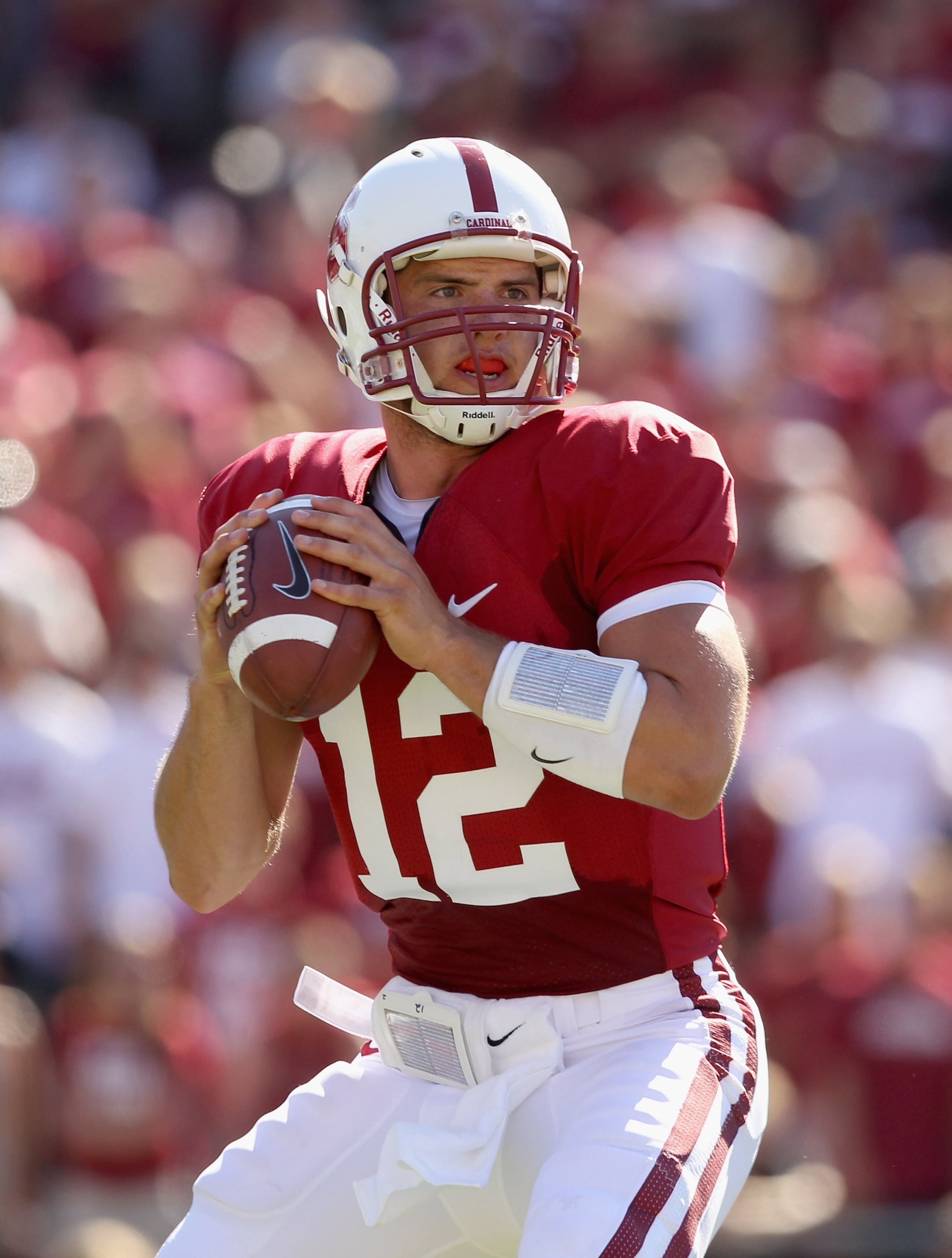
Most 21-year-olds in his situation would have bolted to the NFL.
Andrew Luck had already helped turn the Stanford football program around, leading the Cardinal last year to a 12-1 finish and a victory in the Orange Bowl. He would have been the consensus No. 1 overall pick in this year’s NFL Draft and was already being dubbed as the league’s next great star quarterback.
But fortunately for Stanford, Andrew Luck isn’t your typical 21-year-old. He elected to forego the NFL Draft for a year and return to Stanford to finish his degree in architecture and to quarterback the Cardinal for one more season.
To say that Luck’s return is huge for this team in 2011 is a vast understatement. Luck, who last year threw for an astounding 3,338 yards, 32 touchdowns and only eight interceptions, is without a doubt the best quarterback in the country and is a favorite to win the Heisman Trophy.
Meanwhile, first-year head coach David Shaw takes over the program, earning the promotion from offensive coordinator when Jim Harbaugh left in early January to become the head coach of the San Francisco 49ers. It will be interesting to see how the players adjust to a new coach, because let’s face it, very few coaches can match Harbaugh’s intensity.
But I don’t see it being a problem, as Shaw is a good motivator himself and Luck is an absolutely phenomenal leader. Luck just has something about him that makes his players rally around him; he will certainly make sure this team stays focused day in and day out on accomplishing their goal of bringing a Pac-12 championship to the Farm.
As for the targets Luck will be throwing to, Stanford loses their top two receivers from last year. However, the Cardinal have a very talented wideout in Chris Owusu, assuming the injury-prone senior can remain healthy.
Outside of Owusu, Stanford has some potentially decent wideouts, but it remains to be seen whether they can develop into a really solid unit for Luck to throw to. It certainly helps that the Cardinal have arguably the best set of tight ends in the country in Zach Ertz, Coby Fleener and Levin Toilolo.
Stanford should once again feature a balanced attack, as they have tremendous depth at running back. And the offensive line should remain strong despite losing three of last year’s five starters, as first-team All-Pac-10 linemen Johnathan Martin and David DeCastro return.
A big concern for the Cardinal is their defensive line. The unit lost two of its three starters from last season and is somewhat lacking in talent.
Meanwhile, Stanford also lost two out of their four starting linebackers from last year, but the unit should be very strong this year. For one, spring practice indicated that there are several good replacement candidates. In addition, Stanford returns a dynamic linebacking duo of Shayne Skov and Chase Thomas, who, respectively, figure to be an All-American candidate and an all-conference candidate.
And even with the loss of cornerback Richard Sherman to the NFL, the Cardinal secondary should be very strong as well.
Without a doubt, Luck will carry this team and will have another monster year. But there is also a lot of talent surrounding him.
That being said, Stanford will not quite duplicate its success of last season, as this year’s team is slightly less talented overall. I see the Cardinal as a team that wins nine or 10 regular season games this year, falling short of last year’s 11 regular season victories.
1. Oregon Ducks
12 of 12
Putting the Ducks here at No. 1 is a no-brainer. They are clearly the favorites to win the conference and will be primed for another run at the national championship.
Oregon had the best offense in the country last season, putting up an average of 47 points and 530 yards per game. And the two main pieces from last year’s lethal and electrifying attack -- quarterback Darron Thomas and running back LaMichael James -- both return.
Last year Thomas threw for 2,863 yards and 30 touchdowns and only had eight interceptions. He was also very dangerous on his feet, running for 486 yards and five touchdowns.
Meanwhile, James ran for 1,731 yards and 21 touchdowns, while also putting up 208 yards receiving and hauling in three touchdown receptions. A Heisman finalist last year, James is the top running back in the country and is a Heisman frontrunner going into 2011.
Also, with extremely talented backups in Kenjon Barner and Lache Seastrunk, the Ducks have extraordinary depth at running back, which should allow James to remain fresh throughout the season.
On the negative side, Oregon loses three starting offensive linemen from last year, as well as Jeff Maehl, their top receiver.
However, as long as their replacements are halfway decent, with Thomas and James leading the way the Ducks' offense will once again be a nightmare for opposing defenses.
With Oregon’s offense making all the headlines, many failed to realize just how good the Ducks’ defense was last year. In terms of points allowed, Oregon was 14th best in the country, giving up an average of only 18.4 points per game.
Yet the Ducks lose their top three defensive linemen from last year, as well as big-time linebackers Casey Matthews and Spencer Paysinger. How well the replacements for these losses progress during the offseason will be critical for a Ducks team that faces the very physical LSU Tigers right out of the gate on Sept. 3. The good news is that Oregon’s secondary, led by All-American cornerback Cliff Harris, will be a definite strength.
Harris is also arguably the best punt returner in the country. Last year, he returned four punts for touchdowns.
Expect Thomas and James to lead the Ducks to a third consecutive conference crown, and for Oregon to once again contend for the national championship.
_0.png?w=2560)


.jpg?w=2560 "Grading WWE Raw 🔠")

.jpg?w=2560 "Bijan's INSANE 1st Half 🤩")
.jpg?w=2560 "Viral Rams Coach Vid 🖕")
.jpg?w=2560 "Injury-stricken Seahawks signing veteran RB")


.jpg?w=2560 "2 NFL Officials Suspended")
