

SEC Football: Power Ranking the Depth at Running Back for Each Team
One thing that has stood out as a strong trend in the Southeastern Conference is every team's ability to run the ball effectively.
Over the past several years and in the present, so many running backs have emerged as stars not only in the SEC, but in the entirety of college football.
Players like Mark Ingram, Ben Tate, Knowshon Moreno and Derrick Locke are just a few examples of these exceptional SEC running backs.
But if there is one thing teams have discovered, it is the importance of having depth at the running back position.
Teams can game-plan for a star running back. If teams can play two or more explosive backs, however, defenses are often at a loss when attempting to shut down the run game.
And even though fans have seen big-time running backs move on from the SEC to the NFL, there still remains a strong group of running backs on each team.
Let's take a look at which teams in the SEC have the strongest depth at running back for the upcoming season of college football.
12. Kentucky Wildcats
1 of 12
Kentucky lost its two top running backs from 2010 to the NFL draft: Derrick Locke, who racked up 887 rushing yards and 10 touchdowns, and Randall Cobb, the Wildcats' all-purpose athlete.
So entering into 2011, the Wildcats have a lot of questions at running back that must be answered in order for Kentucky to be successful.
Junior Donald Russell is the Wildcats' top returning running back. He only gained a total of 293 yards in 2010, but one asset about Russell will be his experience.
Most likely, his backup will be sophomore Raymond Sanders from Stone Mountain, Ga.
Sanders has similar statistics as Russell with more than 200 yards rushing and only two touchdowns in his freshman season.
These two will provide a great one-two punch for the Wildcats with Russell being the more bruising running back while Sanders can provide a bit more speed out of the backfield.
While both Russell and Sanders will keep defenses on their toes, their lack of starting experience will hurt them in 2011.
11. Vanderbilt Commodores
2 of 12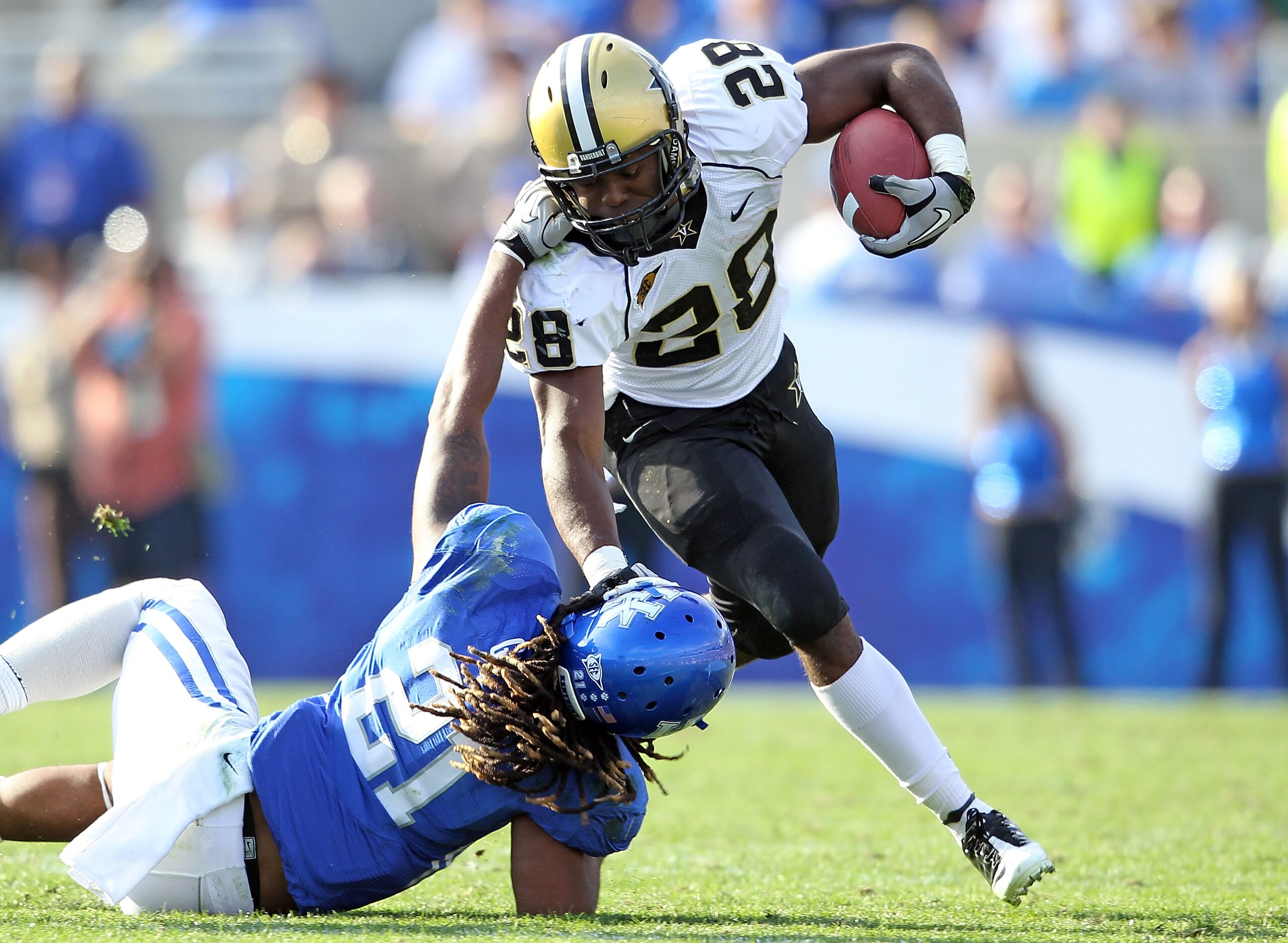
The Vanderbilt Commodores fall in as No. 11 on my list at running back depth for 2011.
While the Commodores only lose senior Kennard Reeves, the running game from last season was below average at best.
Vanderbilt averaged only 138.8 rushing yards per game in 2010 which ranked them 80th in the nation.
Not one running back gained more than 500 yards on the season.
They return their top two running backs: Warren Norman and Zac Stacy, along with dual-threat quarterback Larry Smith.
Norman and Stacy look to rebound off an average 2010 and help put the Commodores back on the college football radar.
Defenses will be focusing in on Smith, the Commodores' lone playmaker, which could open up holes for both Norman and Stacy in the running game.
Three-star Jerron Seymour could also come in and see some immediate playing time.
Vanderbilt has good depth at running back, but it will be a few years until this backfield can really develop.
10. Georgia Bulldogs
3 of 12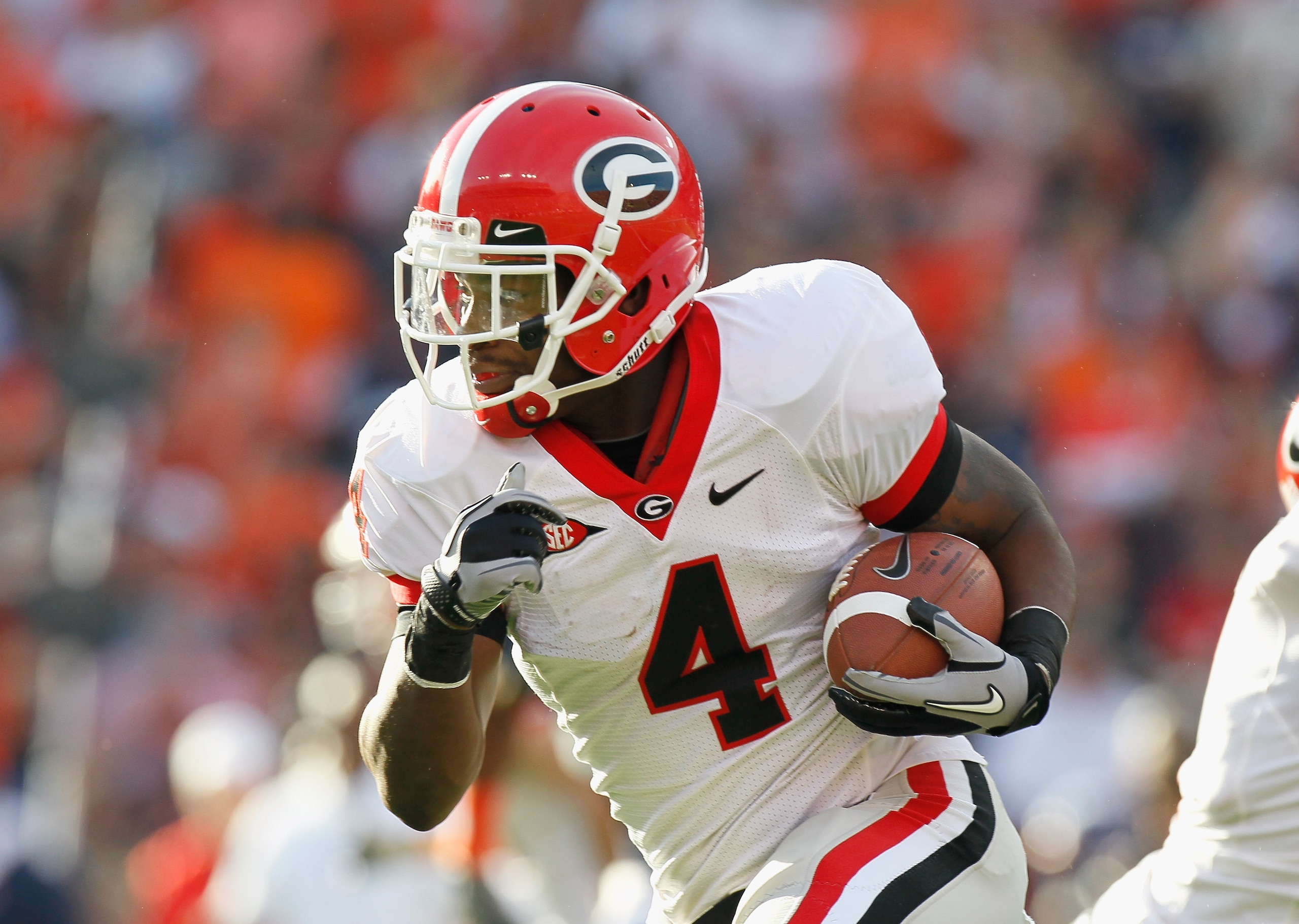
The dismissal of Washaun Ealey was a huge blow to the Georgia running game for 2011.
Ealey, who rushed for 811 yards and scored 11 touchdowns, had been the Bulldogs' leading rusher for the past two seasons.
Now, Georgia will turn to senior Caleb King to lead their rushing attack.
King saw a decline in numbers from 2009 to 2010, scoring five less touchdowns and rushing for 430 yards.
While King will definitely see the bulk of the carries, he will also be followed closely by incoming freshman standout Isaiah Crowell.
Crowell was regarded by Scout.com as the nation's top running back prospect.
He will give the Bulldogs great shiftiness as well as fantastic breakaway speed downfield.
Although Crowell could be one of the most naturally-gifted running backs in the SEC, his lack of experience coupled with King's declining numbers still leaves a lot of questions for the Georgia running attack in 2011.


9. Tennessee Volunteers
4 of 12
The University of Tennessee's running game in 2010 featured one big star in Tauren Poole.
Poole rushed for slightly over 1,000 yards along with 11 touchdowns.
He was one of the breakout stars in all of college football last season after only rushing for a total of 85 yards in all of 2009.
But the problem with Tennessee's running game is what lies behind Poole on the depth chart.
In 2010, the nearest running back to Poole was freshman Raijon Neal who only rushed for 197 yards.
In order to have more success, the Vols will need considerable contributions from Neal and other running backs like David Oku.
As long as Poole is the only threat for the Vols in their running attack, defenses will be able to solely concentrate on him, making it tougher for Poole to find openings at the line of scrimmage.
8. Ole Miss Rebels
5 of 12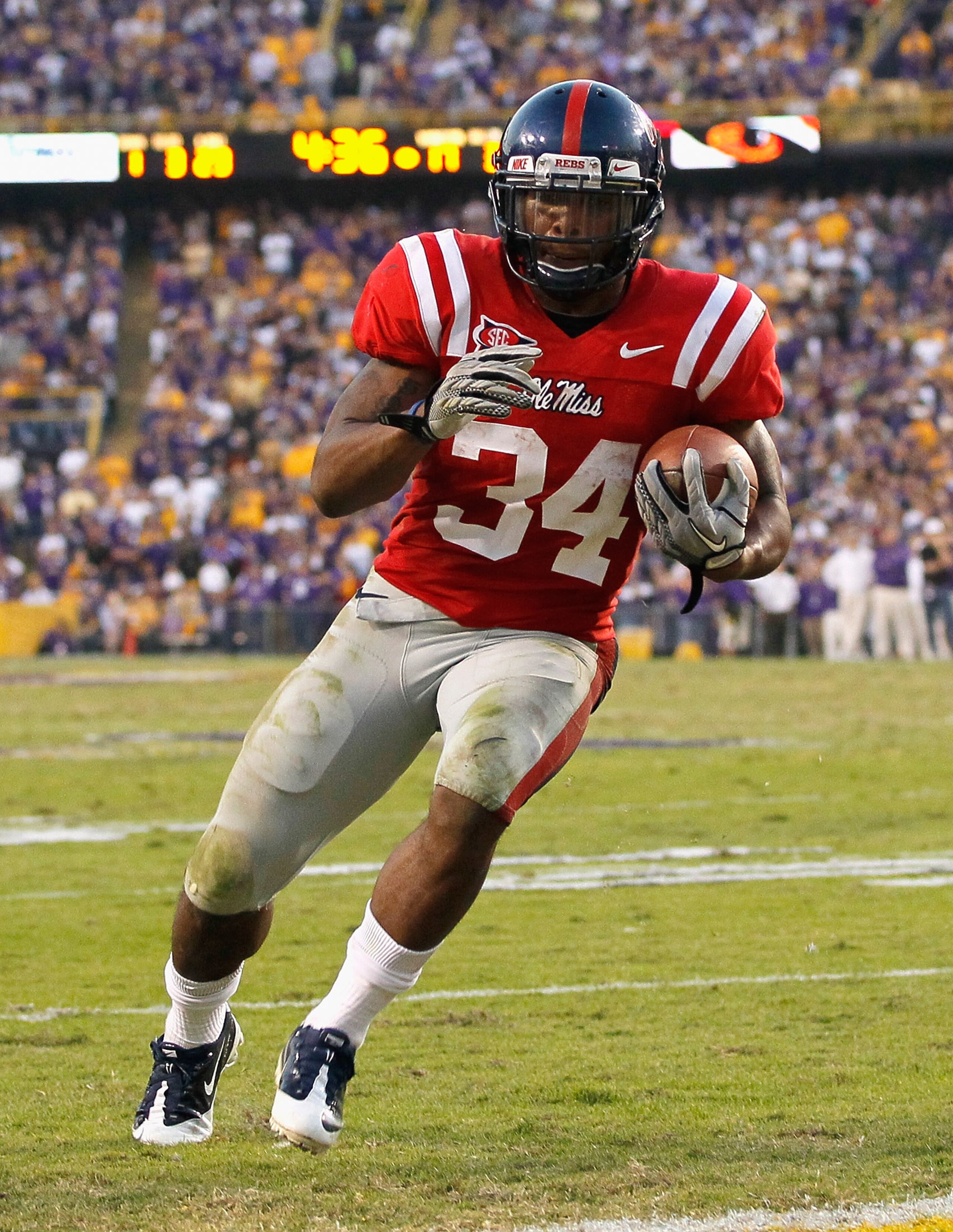
One of the few stars for the Ole Miss Rebels in 2010 was running back Brandon Bolden.
After deciding to stay in school another year, Bolden headlines the Rebels' backfield for 2011.
Bolden had a breakout season last year, increasing his touchdown total by six and rushing for a total of 976 yards, including big games against Tennessee, Fresno State and Kentucky.
Behind Bolden will be sophomore running back Jeff Scott who had a very impressive freshman year averaging 6.5 yards per carry on 66 total carries.
Scott who is only 5'8" and 170 pounds will help balance the run game alongside Bolden with both power and finesse.
The Rebels also return a valuable third option at running back in Enrique Davis who also punched in three touchdowns in 2010.
Davis, at 6'1", will give the Rebels another big back to run up the middle in short yardage situations.
If the Rebels' offensive line can hold its own, look for the running backs to have a breakout year at Ole Miss.
7. LSU Tigers
6 of 12
LSU has always relied heavily on the running game for their success throughout the past several years.
Last year, LSU's big time running back was Stevan Ridley, who declared early for the NFL Draft.
Ridley exploded for 1,147 yards rushing and 15 touchdowns and was a crucial part in pushing LSU to the Cotton Bowl against Texas A&M.
While Ridley is an outstanding running back, there is not too much behind him in terms of replacing him.
Quarterback Jordan Jefferson and wide receiver Russell Shepard combined for 676 rushing yards in 2010.
Michael Ford and Spencer Ware seem to be their only legitimate options, and they'll both only be sophomores.
Ford only tallied 45 carries last season, so one must wonder if he'll be able to handle any kind of increased role.
Ware was able to rush for 102 yards against Texas A&M in the Cotton Bowl and he will look to capitalize off that big time performance.
Ware and Ford will anchor LSU's running game in 2011 and Ware could become an exceptional back with his increased role in the offense.
But these two are still young and will have to prove themselves in the rigors of an SEC schedule.
6. Florida Gators
7 of 12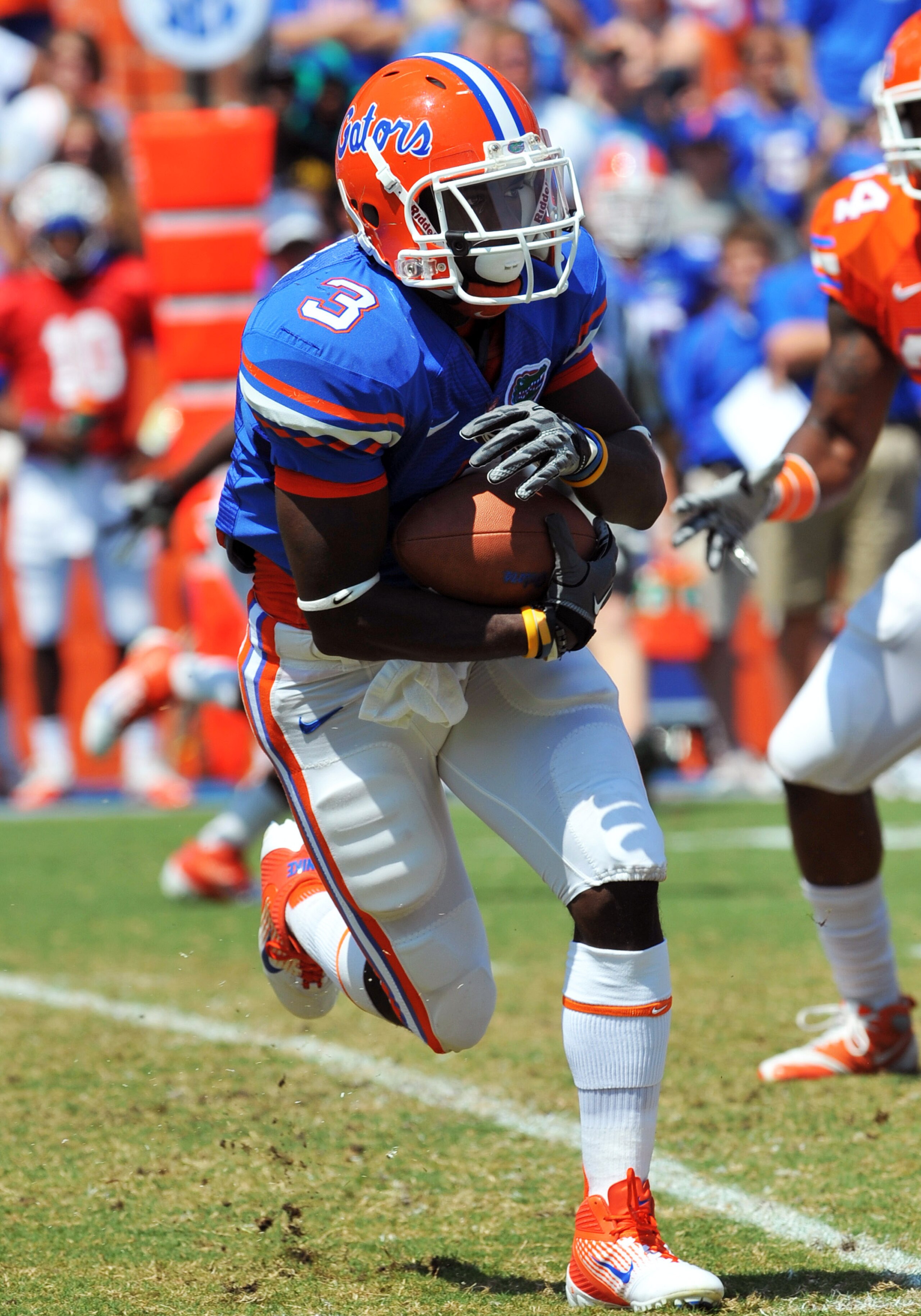
Since the hiring of Urban Meyer, the Florida Gators have failed to have a 1,000-yard rusher for the past five years.
However, in 2011, the Gators will be led by two senior speedy running backs in Jeff Demps and Chris Rainey.
Demps struggled with injuries and Rainey had his off-the-field troubles in 2010, but the potential is there.
Both running backs have shown their playmaking ability in the past, and they will have plenty of opportunities to showcase it in 2011 barring any injuries or other issues.
But with Coach Will Muschamp installing a pro-style offense at Florida, other running backs for the Gators like Mike Gillislee and Mack Brown could also see increased opportunities in 2011.
Whether or not a running back reaches the 1,000-yard mark for the Gators is not the problem, but rather if the Gators can see consistent contributions from all of their options at running back, especially Rainey and Demps.
If the running backs have a big year, the Gators will have a much improved year compared to 2010.
5. South Carolina Gamecocks
8 of 12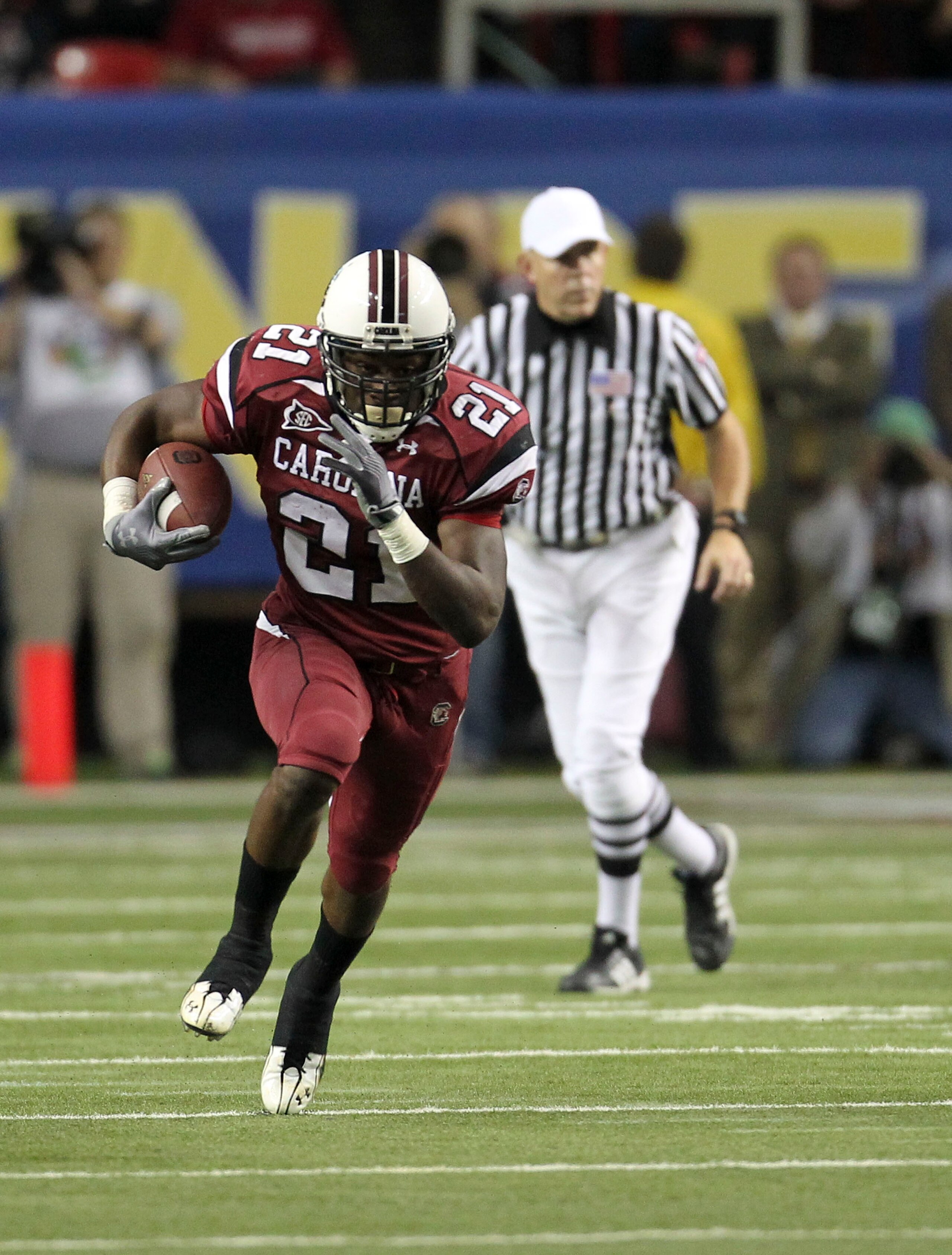
Marcus Lattimore brought the running attack of South Carolina into the national spotlight in 2010.
Lattimore, who was only a true freshman, dominated SEC defenses like a fifth-year senior rushing for 1,197 yards and accumulated 19 total touchdowns.
Lattimore is already considered a Heisman candidate for 2011, and he will surely continue his success into his sophomore season. He is just too big of a physical presence to contain for an entire football game.
He is largely the reason the Gamecocks reached the SEC Championship game for the first time in school history after racking up 212 yards against Florida in Gainesville.
Behind him is junior Kenny Miles who will see limited action while Lattimore is in the starting role. Miles put up below average numbers on 40 carries, only averaging 3.8 yards per carry.
The Gamecocks have no real running threat behind Lattimore, but he is so talented and so explosive that it completely overshadows the Gamecock's depth at running back.
However, if Lattimore sustains an injury that causes him to miss time, it will be tough for South Carolina to duplicate its success from 2010.
4. Arkansas Razorbacks
9 of 12
The Arkansas Razorbacks were mostly recognized for their passing in 2010 behind the arm of Ryan Mallett.
However, the Razorbacks' running game was also very strong as well.
Knile Davis was the SEC rushing leader for running backs in 2010 with 1,322 yards along with 13 touchdowns.
Davis will be a junior in 2011, and with a new quarterback at the helm, Davis will be relied on even more to help carry the offense.
The Razorbacks also have other viable options in Ronnie Wingo Jr. and Broderick Green. Green is a powerful back who is a valuable asset in key short yardage situations. Wingo has often shown the ability to provide a big play here or there for the Razorbacks as well.
Arkansas will have one of the best overall backfields in the SEC, and Davis will shine again in 2011. He possibly could be a dark horse Heisman candidate come December.
3. Mississippi State Bulldogs
10 of 12
Mississippi State was one of the surprise teams in all of college football, and Vick Ballard was one of their surprise stars.
Posting a 9-4 record, the Bulldogs boasted a very strong running game behind the breakout performance of Ballard.
He led the team with 19 rushing touchdowns and rushed for 968 yards. Ballard was also instrumental in wins against Florida and posted 100-yard games against SEC rivals Kentucky and Arkansas.
As for Ballard's backup, LaDarius Perkins posted a strong freshman season, racking up nearly 600 rushing yards and punching in six total touchdowns.
One has to believe Perkins will progress even more in his sophomore season giving the Bulldogs another legitimate option in the running attack.
Not to mention quarterback Chris Relf also tallied 713 rushing yards as well.
Mississippi State will certainly continue to run the ball, and it will bring them even more success in 2011.
2. Alabama Crimson Tide
11 of 12
With the departure of Heisman trophy winner Mark Ingram, one would expect Alabama's running game to take a step back.
On the contrary, junior Trent Richardson has shown that he can perform as well if not better than his predecessor and could carry the Tide to another Heisman trophy and BCS Championship.
Richardson is a powerful back who can run defenders over at will. He has excellent vision downfield, and he cannot be tackled very easily.
Behind Richardson will be Eddie Lacy, another outstanding running back who is not too well-known outside of Tuscaloosa.
Lacy's ability to change speeds while keeping precise balance will allow him to surprise a lot of defenses this year.
In his red-shirt freshman year Lacy rushed for 406 yards and six touchdowns. He will improve those numbers with his increased opportunities as the No. 2 option.
The Crimson Tide also will have a new quarterback, so expect Alabama to rely heavily on the running game of Richardson and Lacy in 2011.
1. Auburn Tigers
12 of 12
The National Champion Auburn Tigers lost a lot on offense in the offseason with the departures of Cam Newton and Darvin Adams.
But they kept a lot in their two top running backs: sophomore Michael Dyer and junior Onterio McCalebb.
Dyer is a powerful, bruising back who was a key part in the Tigers' national championship run last season.
McCalebb is a speedy back who gives the Tigers' running game another gear, which provides them with quickness around the edge.
In 2010, Dyer and McCalebb combined for 1,900 rushing yards and 14 touchdowns.
Dyer might see most of the carries, but McCalebb will surely provide the Tigers plenty of firepower in the backfield as well as in the return game.
While the Tigers are searching for Newton's replacement at quarterback, look for the Tigers to focus on showcasing the talents of Dyer and McCalebb to their opponents.
These two could very easily give the Tigers the top running back duo in the SEC next season.
_0.png?w=2560)


.jpg?w=2560 "Grading WWE Raw 🔠")

.jpg?w=2560 "Viral Rams Coach Vid 🖕")

.jpg?w=2560 "Injury-stricken Seahawks signing veteran RB")

