

SEC Football: 5 Reasons the New Oversigning Policies Won't Work
Mike Slive proudly proclaimed this past week that the SEC had taken great measures to stop the abused system of oversigning. He believed that this measure was so great that it should be pushed nationally and not in the SEC only. While these new policies are a better way they are still not the right way.
In reality, what is happening is Slive is trying to minimize some of the negative publicity the SEC has recently received. This was a political move only and not a move to make the SEC signing practices more ethical.
The truth is, which was proven by the 12-0 coaches vote to keep the current signing cap number at 28, the SEC does not want to fix this problem because they feel like it has given them a competitive edge. However, the most successful team in the SEC over the last five seasons has been the Florida Gators who do not participate in oversigning.
In this article I will expose five major problems that still exist despite the new signing cap rules and how they could easily be fixed.
Coaches Can Still over-Sign
1 of 6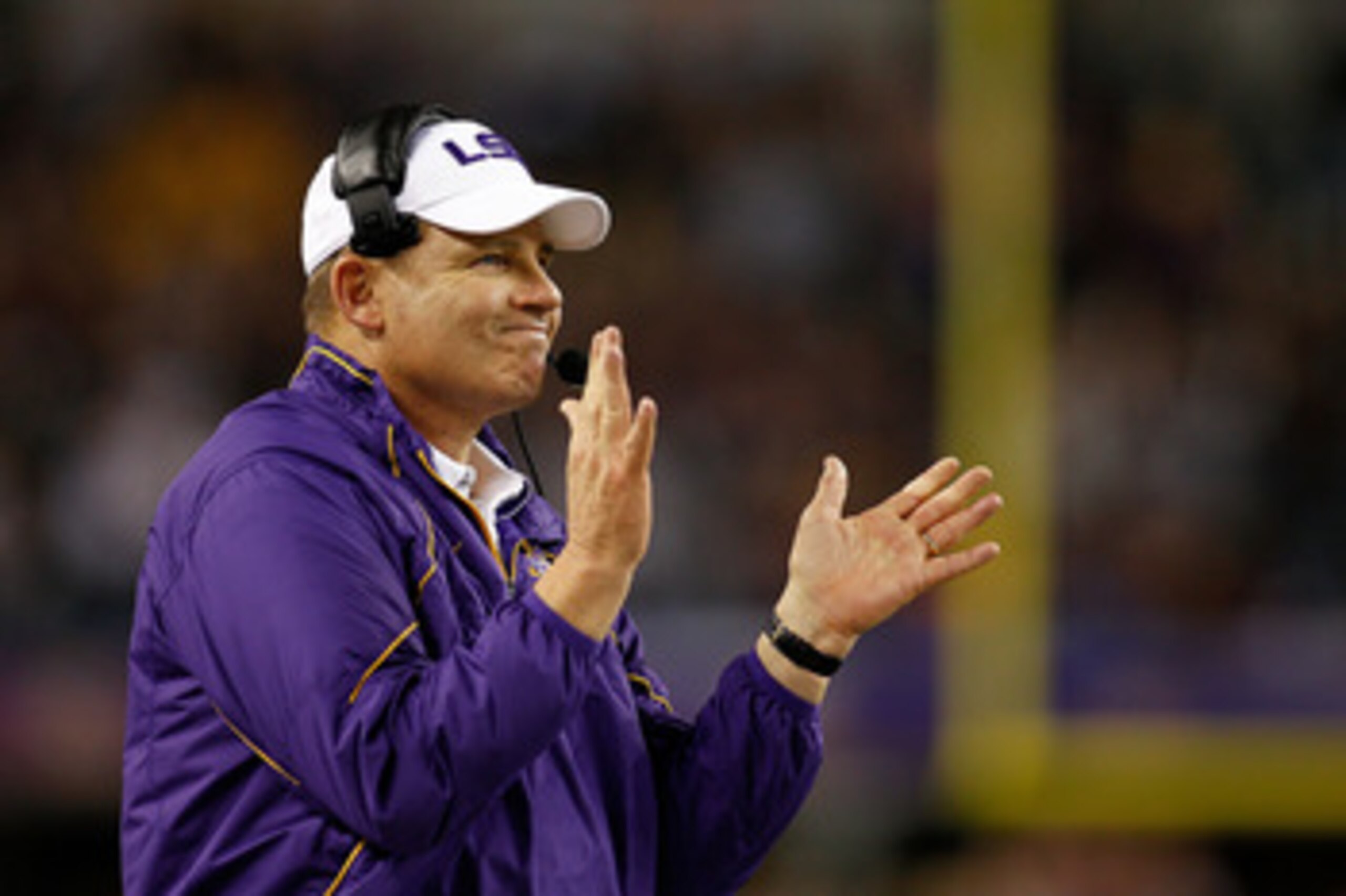
Perhaps the most insulting part of the new SEC oversigning rules are that they expect us to believe that coaches cannot oversign any longer. The truth is that it is now harder to oversign over a four year period. However, 25+25+25+25 still equals a 100 not 85.
Here is the truth behind the numbers. If a coach has 16 available scholarships and he signs 25 players in that recruiting class he has still oversigned by nine players. Despite the new 25 player cap, players can still have promises broke to them and coaches can still receive an unfair advantage at the expenses of these kids.
Some of this problem does not fall on the SEC as much as it does the NCAA. For some absurd reason, the NCAA has made scholarships a one year agreement. Yet they still require the player to sit out one to two years each time they transfer unless they have already received their degree.
Solution:
The SEC cannot fix the problems created by the NCAA. However, they can put a true scholarship limitation on the SEC teams. For example, if you have 23 scholarships available you can sign 23 players. If you have only have 11 scholarships available you can only sign 11 recruits and not one over.
If you have a player who leaves the school after signing day, you can reward that scholarship to a non-scholarship player for one year without going over the scholarship number. The available scholarship can once again be used on recruits in the following recruiting class.
Coaches will argue that this rule would hurt their team in trying to overcome the natural attrition that they face each season. However, if all teams are on the same system and all teams face the same attrition, the numbers will work themselves out with out any team gaining an advantage. Moreover, if their team has a higher rate of attrition than maybe they should adjust their recruiting standards.
Alabama Is Still Not Transparent
2 of 6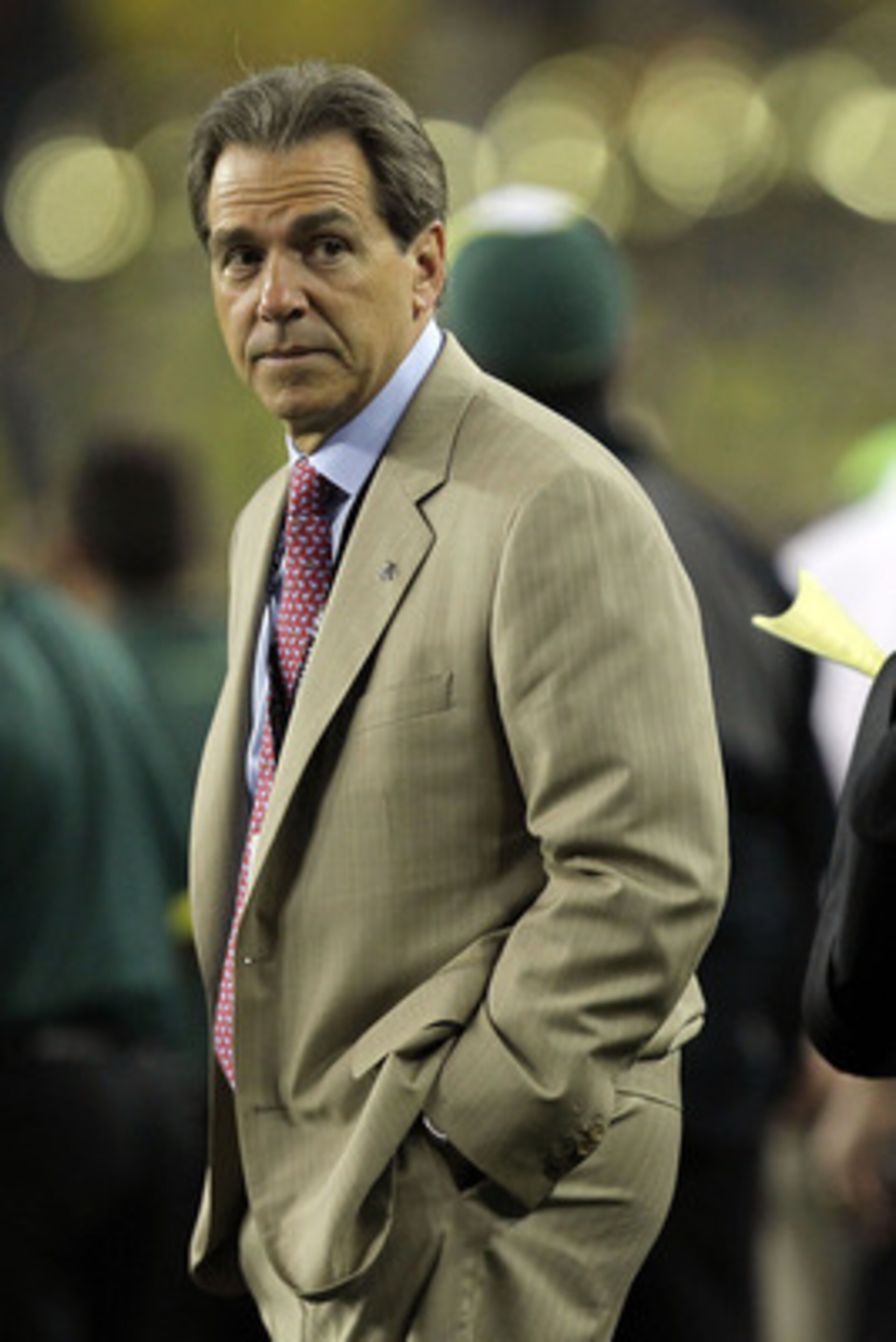
Let me start by saying that Alabama is not the only school that oversigns and as long as Houston Nutt is in the league they will not be the greatest abuser of the system. However, Alabama refuses to be transparent with the league, the fans, or the players and this must change.
Nick Saban recently complained that people accuse them of oversigning because they do not know the numbers. However, when pressed about the numbers he became upset and proclaimed that is no ones business. Alabama remains the only school in the entire NCAA that does not release these numbers.
Alabama tries to hide the information with a bogus interpretation of privacy act laws. Every other school in the nation releases these numbers without breaking any privacy laws. In fact, if any violations are going forth it is more likely by Alabama not granting Freedom of Information Act request as a publicly funded non profit institution.
Every school needs to become transparent. The SEC, media and opposing schools should be able to have direct access to the total number of players on scholarship and who those players are. There is not one logical reason for this not to happen.
What is Alabama hiding? Why will they not let anyone have access to their numbers? The answer seems clear, they must be over the 85 scholarship numbers prior to the deadline. I know supporters of Alabama will argue that there is no proof. However, an honest man has nothing to hide and all schools should be required to release the scholarship numbers three times a year. Moreover, the SEC should know these numbers at all times.
Lets be honest. The Alabama football program does not have a great track record of playing by the rules.I have defended them under the current coaching staff in regards to paying players. However, there is no defense for the transparency issue.
Solution
The SEC can fix this problem quickly. Alabama is voluntarily a member of the SEC. Let them know if they are unwilling to release their numbers quarterly they will no longer be a part of the SEC. It is important that Slive lets them know that having the University of Alabama in the SEC is not more important than the integrity of the league.
Coaches Are Still Rewarded for Players Breaking the Law
3 of 6
It does not matter which school you are at, if you recruit athletes you are going to have some that make bad choices. As a result, every team has to kick players off the roster from time-to-time. However, the current system rewards coaches with larger recruiting classes when players get into legal trouble.
Under the current system, coaches can recruit 10 thugs in each recruiting class and it will not hurt them. If six of them need to be removed from the team, it opens up six more scholarships for the next recruiting class. It is the law of numbers, and they know the more players they can bring in the more they will find to contribute, regardless of how many they have to remove.
Coaches are also notorious for kicking off non-contributors but giving stars multiple chances. For example, if Stephen Garcia had been a third string quarterback he would had been gone way before his fifth suspension.
Sports Illustrated recently comprised a six-month study where they did background checks on the entire roster of teams in the preseason top 25. What they found was shocking. SI did a total of 2,837 background checks in all. Eight percent of the players of the nearly 3,000 they did background checks on were found to have criminal records prior to enrollment and many had multiple arrest.
The types of arrest they found were not minor offenses. The article stated the following, “Of the 277 incidents uncovered, nearly 40 percent involved serious offenses, including 56 violent crimes such as assault and battery (25 cases), domestic violence (6), aggravated assault (4), robbery (4) and sex offenses (3). In addition there were 41 charges for property crimes, including burglary and theft and larceny. There were more than 105 drug and alcohol offenses, including DUI, drug possession and intent to distribute cocaine.”
The article also noted that only two schools nationally, Oklahoma and Texas Christian, conduct background checks.
Solution:
I am not saying that coaches should not take chances on a kid because he has made a mistake in the past. However, I am saying that coaches should have some risk involved when recruiting these types of players. As a result, I believe that coaches should be given a three scholarship mulligans per recruiting class. For example, if college “A” has three players who signed in 2010 kicked of the team during their time at the university they are able to replace those three in the following recruiting class. However, any number over that, the scholarship is lost and will not be returned until four years have passed since the players original signing.
This would force coaches to recruit kids that meet the standard of their football teams.



Players Can Still Be Pushed into Unnecessary Medical Scholarships
4 of 6
Each season it happens, at some schools more than others. A player is considered unable to continue his playing career because of an injury that he sustained. As a result, the universities will respond by placing the injured players on a medical scholarship. Consequently, the players are able to finish their degree programs even though they will not be able to play football.
On the surface, this is a great program. It rewards players, that by no fault of their own, are unable to finish their football careers. The problem is that this program is clearly abused. Coaches will find players with less talent who have sprained ankles and place them on medical scholarships.
The decision is left up to the medical staff and coaching staff on this players future. The Wall Street Journal wrote an article in 2010 citing a dozen medical scholarships that had been given by the University of Alabama. During the article they interviewed two players who felt they were forced into a medical scholarship. One player, Jeramie Griffin, stated that the coaching staff offered him a student-coaching job as well to take the medical scholarship. This is clearly a loophole that must be fixed.
Solution
To fix this loop hole, every school would need to appear before an SEC committee and show why this player is unable to continue his career. If the players was given the proper diagnosis and the player was given the proper amount of time to recover and he did not, the school will be rewarded that available scholarship number. However, they would have to prove this to a board of their peers and not a staff on the university's payroll.
Coaches Can Still Push Underachievers to Transfer
5 of 6
I know schools with a high rate of transferring players each season are not going to like this suggestion but it doesn't make it any less needed. I understand that every team will have players who will transfer to colleges other than the ones they originally signed with. Sometimes it is playing time, some times they are home-sick, and sometimes it just isn't the right place for them.
So the player transfers and risk having to sit out a season and in some cases two seasons. The coach on the other hand has a new recruit on the team the following season in his place. While I agree that there is little a coach can do when a player wants to transfer, this system can also be abused.
I have a personal experience with this abuse. I coached a high basketball team that had so much success hat we started playing junior colleges instead of high schools for the bulk of our schedule. We had 39 players get basketball scholarships in the five seasons that I coached the team. All of them were not division one scholarships but many were.
During that time, I had two players that signed at schools that were above their playing level. I don't believe in telling a player where to go but I did point out they could get more playing time at a smaller school. However, they were told during the recruiting process that they were the next Kobe and MJ and would get playing time right away. After two seasons, both players were approached in a closed door meeting.
They were told with the current players on the roster and the new recruits coming in that they would be lucky to see five minutes all season. The coach went on to inform them that he would allow them to stay on scholarship. However, if they wanted to get playing time it would be better for them to transfer. If they did he would give them a full release. They agreed to transfer and he preceded to give them excuses to repeat when asked why they transferred.
Solution:
This happens all over the nation and we shouldn't be as foolish to think that it doesn't happen in the SEC. With the players needing a full release they are not going to expose the situation to the media. As a result, I believe that they need to add the same limitation I proposed for players who are kicked off.
The coaches are allowed three players in any recruiting class to transfer. After three players have transferred, the next player will cost the University a scholarship and the scholarship is not available for use until four seasons have passes since their initial signing.
This would lead the coaching staff to take more interest in the students personal issues and not to just see them as a number.
Final Take
6 of 6
I know that this is not a popular subject with fans whose teams are guilty of the previously mentioned issues. However, think if it was your son being pushed out the door for the next great player. How would it make you feel if your son was the victim of being just another number to the coach.
Sometimes our love for our team needs to take a backseat to what is morally right. These solutions are simple and would close many of the loopholes that are currently being abused.
The Florida Gators have proven that you can win championships without oversigning. The coaches need to stop using the excuses that players might not make grades or other players might be kicked off. Instead they should recruit players who care about their grades and who are more likely to do the right thing when they leave home.
I love the SEC and watch over 90 percent of the games that take place each season. However, this issue is impossible to rationally defend and brings shame to the conference. Mike Slive needs to either truly fix this issue or step down so that someone who cares about the ethics of the league can take his position.
_0.png?w=2560)


.jpg?w=2560 "Grading WWE Raw 🔠")



.jpg?w=2560 "Viral Rams Coach Vid 🖕")

.jpg?w=2560 "Injury-stricken Seahawks signing veteran RB")
