College Football: The BCS Era Most Wanted List, Jim Tressel Is Public Enemy No.1
America's Most Wanted List.
A list that contains the names of violent individuals who have committed heinous transactions against criminal and moral law.
Let's not go so far as to parallel the activities of the following public figures with that type of notoriety.
In the world of college football, a belief exists that some teams, coaches and players have sparked controversy and gotten away with achieving success at the expense of doing what is proper.
We know who keeps such a list of violators.
It is the fan in the stand, your neighbor viewing on television, the person walking down the street. The observer who knows what he thinks and thinks what he knows.
Damage to our trust and the sanctity of competition by inappropriate actions perpetrated by institutions, coaches and players make such charges clear and require action from the NCAA.
But this is not just a matter of discipline involving a school.
Let us instead focus on the chorus of condemnation that rains with drops of outrage from like-minded believers in each section of the nation.
Specifically, our anger is most pronounced by the breaking of codes of accepted conduct among those fortunate few who participate in the game we hold to be sacrosanct.
And worst of all, the violator who we suspect gets away with it, the one who cultivates a clean reputation while conniving to create an uneven playing field.
During the BCS era we have found an intensity of sentiment that has conjured an entire cottage industry of creating slogans to condemn any school, coach or player who dares to cross the line of what is deemed as fair.
An atmosphere where we will take the most famous of sonnets from writer Elizabeth Barrett Browning' and modify the phrase slightly to express our true feelings.
"How do I hate thee, let me count the ways."
And now, a "Rogues Gallery" of the BCS era.
No. 10: John L. Smith, Former Michigan State Head Coach
1 of 10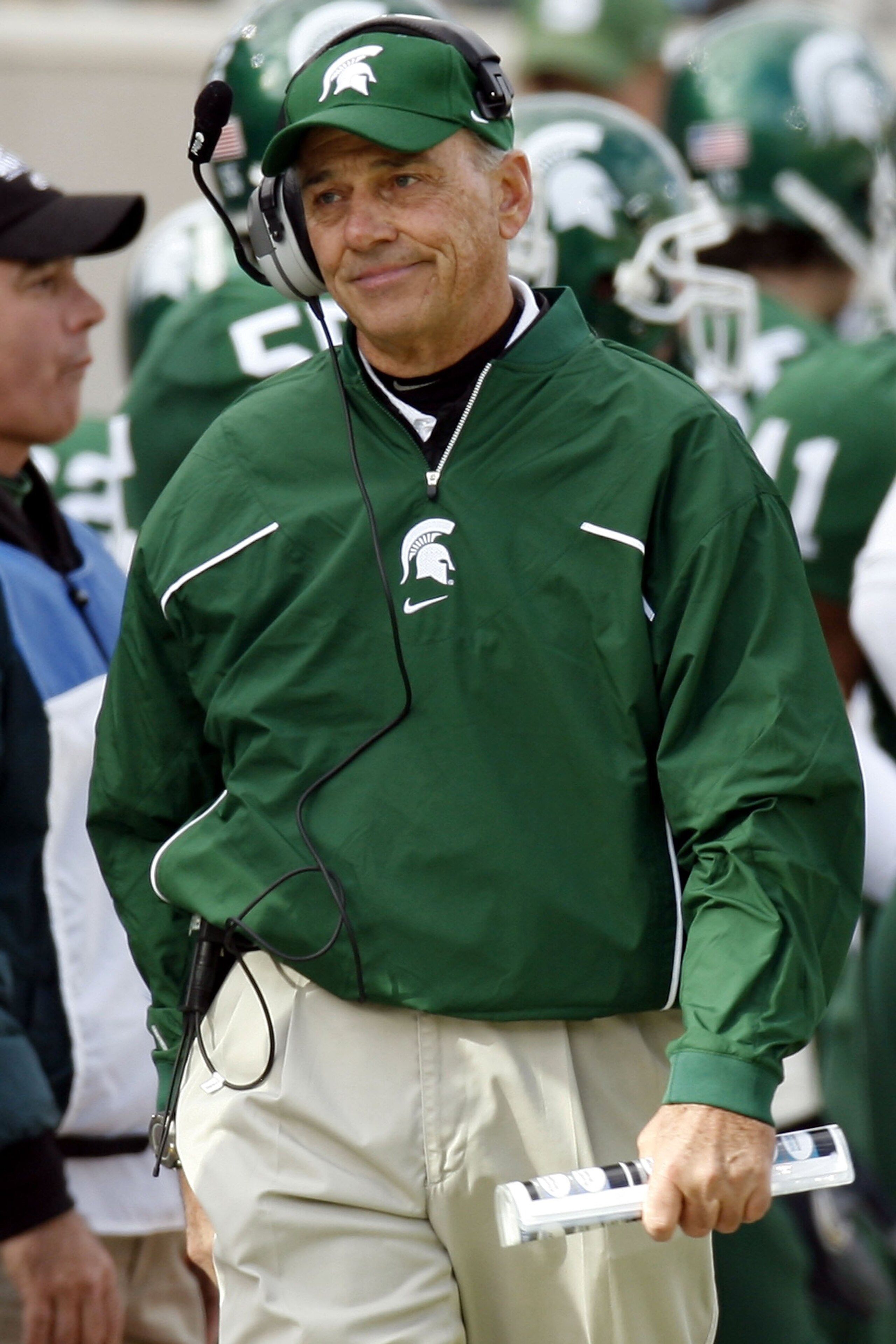
John L. Smith was an assistant coach for Dennis Erickson at three different schools before becoming a head coach at four universities.
Smith has had ample opportunity to enrage numerous fan bases because of his various positions and the circumstances concerning how he went from one to the next.
Rarely was heard a complaint when John L. left his native state as head coach of Idaho for Utah State after the 1994 season.
It was a move up from one classification to another, perfectly understandable.
However, he angered many Aggie fans when he left to become the Louisville head coach for the 1998 season.
Smith had a losing record at Utah State, 16-18, but had sowed the seeds of possible success with promises of better days ahead.
Since Smith had gone to college in the Beehive state (Weber State) and previously professed his desire to build a strong program in Logan, the USU fans expressed shock when he announced he would be leaving to take a job faraway in Kentucky.
After five seasons in horse country, Smith had built quite a respectable program in the hometown of Muhammad Ali and seemed a sure fit for the foreseeable future.
The Louisville teams coached by the bombastic John L. won the Conference USA twice and went to a bowl each season.
Smith angered his Bluegrass followers who watched him deny interest in leaving the Cardinals for the same position at Michigan State and then almost immediately left town to become head coach of the Spartan program.
It was at East Lansing where Smith met his Waterloo.
After struggling to achieve eight wins and an Alamo Bowl invitation in his initial year of 2003, the Spartans fell into a three-year slump of losing seasons.
After a 10th place finish in the Big 10, John L. Smith (pictured) was shown the door at the conclusion of the 2006 campaign.
Michigan State officials had decided to bite the bullet and swallow the remaining $1.5 million owed to him under the existing contract.
John L. Smith was hired in January 2009 as the Arkansas special teams coordinator.
With his coming to Fayetteville, Smith and Razorback head coach Bobby Petrino have worked together on the same coaching staff at four different schools (Idaho, Utah State, Louisville and Arkansas).
Smith's career record as a head coach is 132–86.
His public relations record as a head coach is 1-3.
No. 9: Brock Berlin, Former Quarterback of Miami and Florida
2 of 10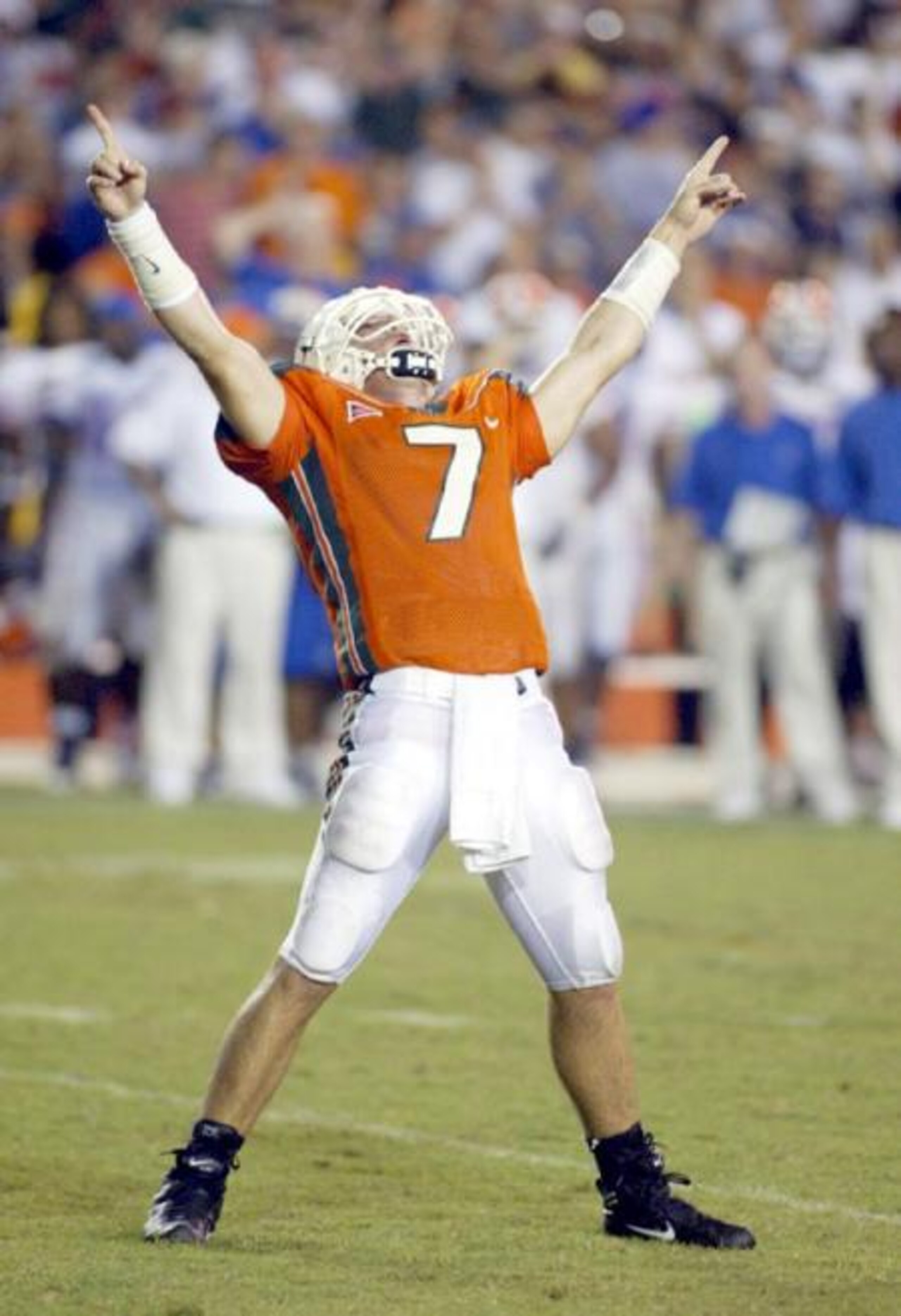
During his spectacular high school career in Louisiana, Brock Berlin {pictured) was named the national Player of the Year.
An intense recruiting battle ended with Berlin deciding to play quarterback for coach Steve Spurrier and the Florida Gators.
He would find himself riding the bench behind Rex Grossman.
During his two seasons as a Gator, Brock tossed 12 touchdowns passes with only four interceptions.
His completion rate was over 60 percent.
After Berlin's second season, coach Spurrier stepped down and went to work in the NFL.
Brock Berlin used this moment to escape Gainesville and transfer to the hated Hurricanes of Miami.
A Hurricane squad that just happened to be the BCS Champions.
Not that there is anything wrong with seeking a transfer, but to an arch enemy?
Until the transfer to Coral Gables, Brock had been regarded as simply the latest star quarterback to become unglued under the pressure of performing for the demanding Steve Spurrier.
Spurrier had been a legendary quarterback during the golden age of the SEC when the conference produced teams claiming a share of the national championship every year from 1957 to 1966.
By transferring to a rival under these circumstances, Berlin raised the stakes of how he would be perceived by fans, foes and viewers.
To Gator fans, it was a simple case of cut and run.
Berlin sat out the 2002 season as required and prepared to take over the role as leader of the U.
Installed as the starter for the first home game, Berlin faced (you guessed it) the Florida Gators.
In the third quarter, Miami trailed by 23 points.
The Florida contingent had booed Berlin from the start but now the Miami home fans began to boo him as well.
Double boos. A new low.
Hurricane head coach Larry Coker, sporting a splendid career record at this point of 24 wins and one loss, made an adjustment during the third quarter that put Brock in a position to succeed.
Miami went into the shotgun alignment on offense.
Berlin responded with a fury and led Miami to 28 unanswered points, resulting in a 38-33 win over his old team.
Feeling his oats, Brock began jeering at the fans of his former team.
He continued doing so after the contest ended.
The Hurricanes continued to roll, increasing their regular season winning streak to 39 games by the end of October.
Suddenly, Berlin came a cropper.
He struggled against the rugged defense of Bud Foster and Virginia Tech. The Hokies stunned Miami by the score of 31-7.
Back at home the following week, Berlin could not lead the flat Hurricanes to victory against Tennessee. Miami lost by a score of 10-6.
Viewers may recall the contest as featuring the infamous, "I am a soldier" phrase being issued by Miami receiver Kellen Winslow, Jr. in a post-game interview.
Winslow accused Volunteer defenders of (allegedly) trying to injure him.
Berlin, under criticism by everyone, was benched for the next game.
He would recover later in the season to lead Miami past Florida State to win the Orange Bowl.
Miami boasted a record of 11 wins and two losses, however the mystique of the invincible Hurricanes had vanished.
In his final year of eligibility, Berlin and the 'Canes were invited to the Peach Bowl.
Incredibly, Brock once again faced his former team, the Florida Gators.
After beginning his career as a Florida Gator, he would defeat Florida in his first game as the Miami quarterback and also in his last game as a Hurricane.
Miami buried Florida, 27–10, finished the year with a 9–3 record and a ranking of No. 11 in both polls.
In his last season, Berlin threw for 2,680 yards, 22 touchdowns and only six interceptions. His improvement was noted by his peers as he was runner-up in the ACC Player of the Year voting.
Berlin threw for 5,099 yards and 34 touchdowns during his two years in Miami.
He produced a 19–5 record as the starting quarterback and won all five games against arch rivals Florida and Florida State.
Conversely, the Florida Gators went 15-10 during the same two seasons.
It is up to the observer to determine who came out best in the Brock Berlin scenario.
No. 8: Damon Evans, Former Georgia Athletic Director
3 of 10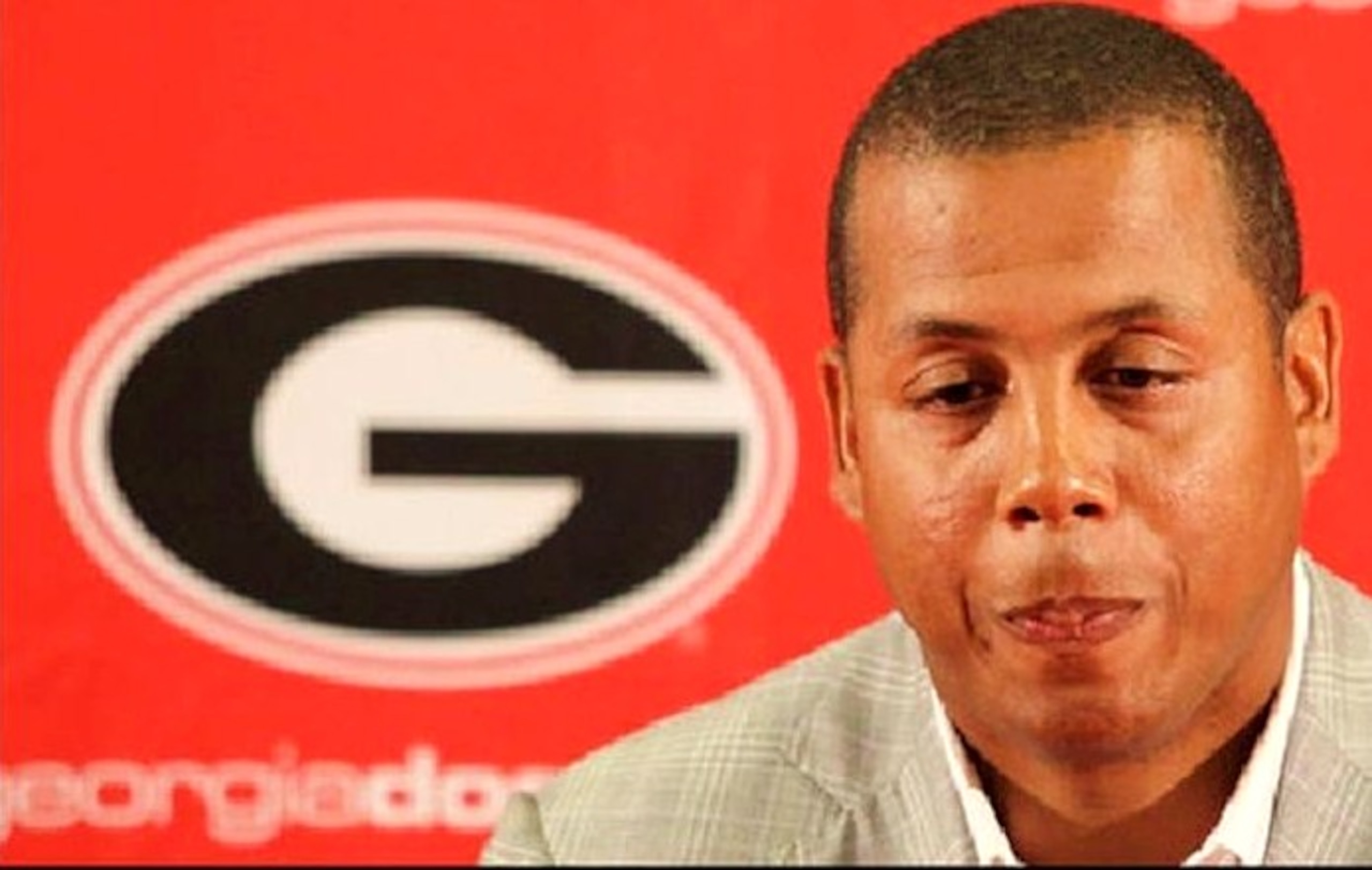
Damon Evans offered an apology on the day his resignation as Georgia's athletic director was announced in 2010.
The legal specifics involved being arrested for DUI and Failure to maintain a lane (weaving back and forth on the road) while driving in Atlanta the prior week.
But to the public at large, the repercussions of Evans' "pantygate" scandal prevented him from having the support necessary to continue in the position and is what eventually brought down the Georgia AD.
To his credit, the 40-year-old Evans released a statement offering an apology to University of Georgia officials, coaches, fans and students.
The former athletic director stated that "as a former Bulldog football player it had been his desire to have a long career in Athens."
He added, "Because of a serious mistake in judgment, that won't be the case, and I understand that I have a long road to rebuilding my reputation and career."
Also arrested with Evans was a young woman named Courtney Fuhrmann, who was charged with disorderly conduct.
According to the law enforcement report, the arresting officer said Fuhrmann told him she had been seeing Evans for "only a week or so."
Evans stated to the officer, "She's just a friend."
But, as often said, the devil is in the details.
And it is the details from the Georgia State Patrol's Incident Report that sealed the fate of Evans.
According to the report, Evans attempted to influence the arresting officer by stating he "was Georgia's athletic director."
As Evans tried to extricate himself out of this terrible situation he "requested he be taken to a hotel instead of jail."
But, it doesn't end there.
The report goes on to specifically describe how the arresting officer noted Evans had a "pair of lady's red panties between his legs."
Unfortunately, Damon Evans is married. The couple are parents of two children.
To Mrs. Evans' credit she attended her husband's resignation news conference. He apologized to his wife on live television.
A beaten man at this point (see picture), Evans also stated during the news conference that he had "failed miserably as a leader and representative of the University of Georgia."
Evans' arrest caused damage to his reputation that led to the resignation according to UGA President Adams in a prepared statement.
"As I said when I first learned of the situation, this is not an example of the kind of leadership that I expect our senior administrators to set."
It was a tough situation for Adams to swallow. He had chosen Evans as athletic director after refusing to extend former AD Vince Dooley's contract.
The face of Damon Evans was part of attending a Georgia football game in Sanford Stadium. Before each home contest a video message from Evans was played urging fans not to drink and drive.
"If you drink and drive, you lose," Evans said in the video message.
He would be the one to know.
Specific quotes reprinted from The Associated Press and ESPN.com.

No. 7: Lane Kiffin, Southern California Head Coach
4 of 10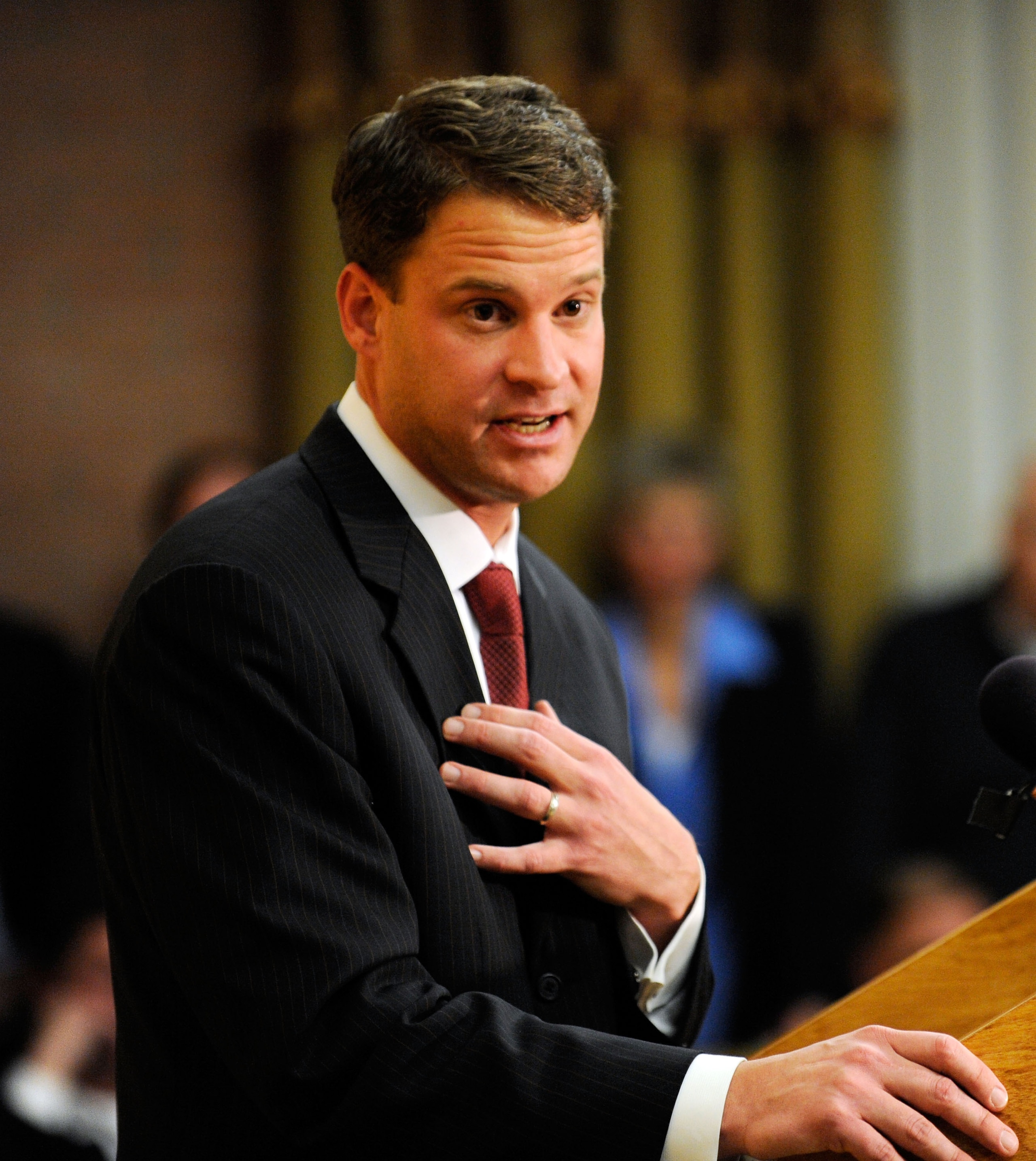
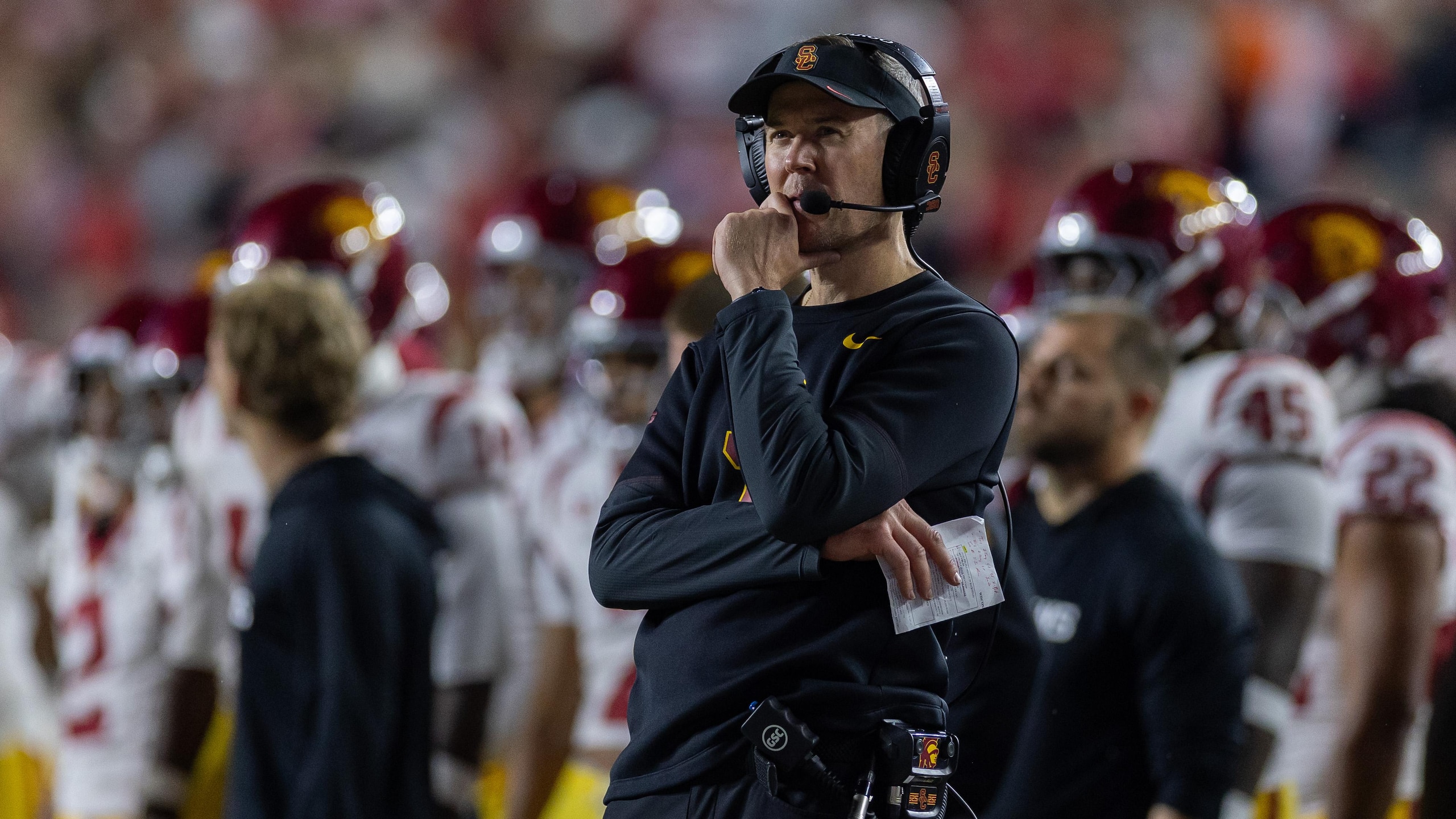
Lane Kiffin has three claims to fame.
One, his father Monte was the outstanding defensive coordinator of the 1971, 13-0 National Champion Nebraska Cornhusker team that is considered the greatest football squad to ever take the field.
Two, his father-in-law is the great Florida quarterback John Reaves, a native of Anniston Alabama, who was a first team All-America in 1971.
Three, when Lane Kiffin was in the first grade, his dad was the head coach at N.C. State and the Wolfpack defensive coordinator was Pete Carroll.
Standing on his own, young Kiffin is a mixed bag of uncompleted business and sour previous associations.
Kiffin has angered people with comments deemed inappropriate, poor results on the field and tumultuous situations he left behind in Knoxville and Oakland during his nomadic chase for happiness.
Lane's career coaching record of 15-11 in college and 5-15 in the NFL is alarming to anyone who believes a person should be paid for performance.
Lane Kiffin does get high marks for being the University of Southern California sacrificial lamb while the Trojans are on probation.
His current salary is $4 million a year.
No. 6: Le Garrette Blount, Former Oregon Running Back
5 of 10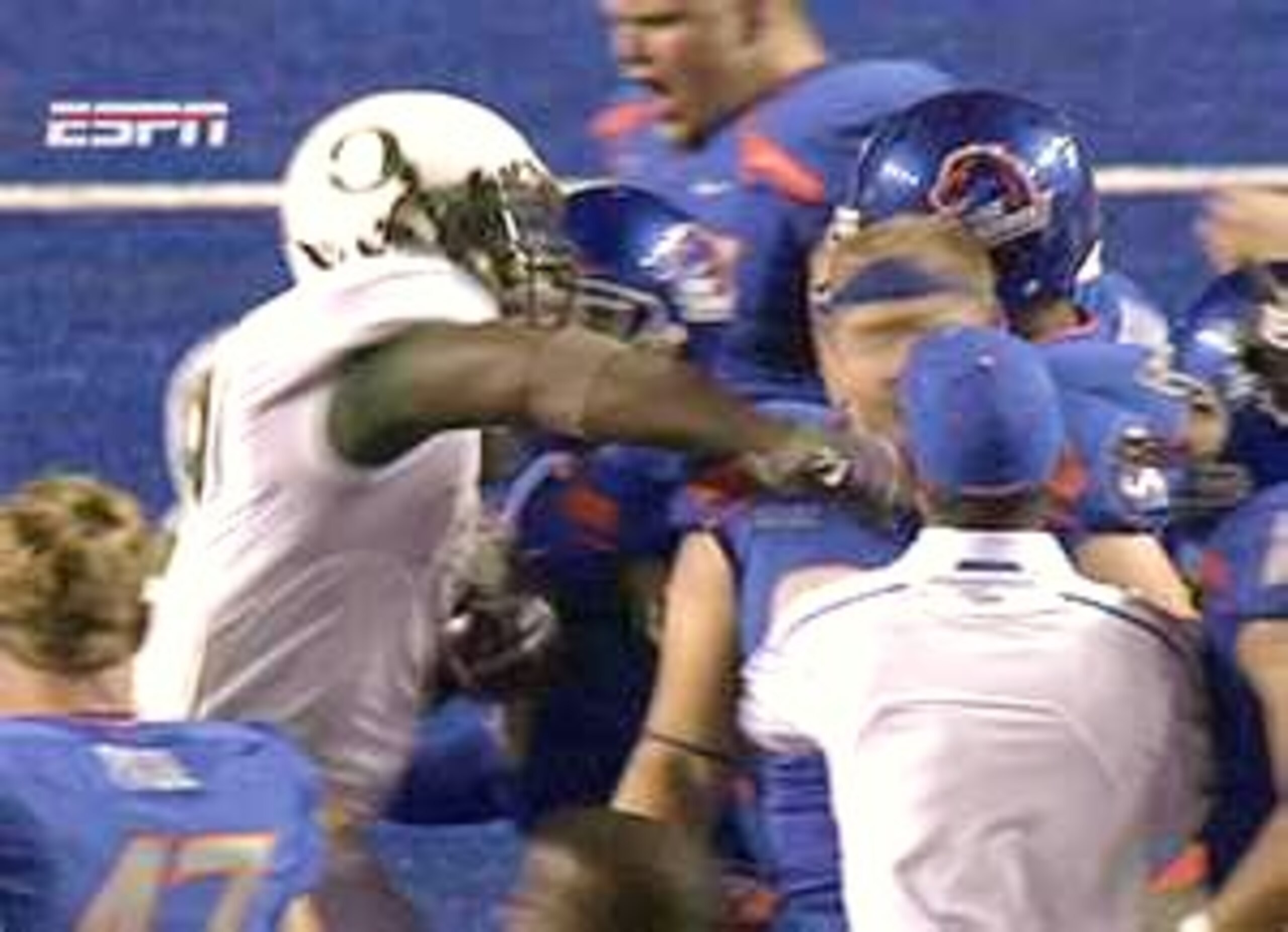
LeGarrette Blount. Now here is a man who knows how to make friends on the football field.
Well, at least he is the undisputed king of the sucker punch.
After his Oregon Ducks lost to the Broncos in 2009, Blount was caught on live television socking a Boise State player when the fellow was not looking.
For his trouble, Blount was quite rightly tossed off the team.
For a while anyway.
A month after the incident, Blount wrote an apology letter that was published in the student newspaper.
Later that day, the Oregon Athletic Department released a statement concerning Blount being able to return to the team.
Sure enough, he was reinstated.
Who says we don't have discipline in sports?
No. 5: Maurice Clarett, Former Ohio State Running Back
6 of 10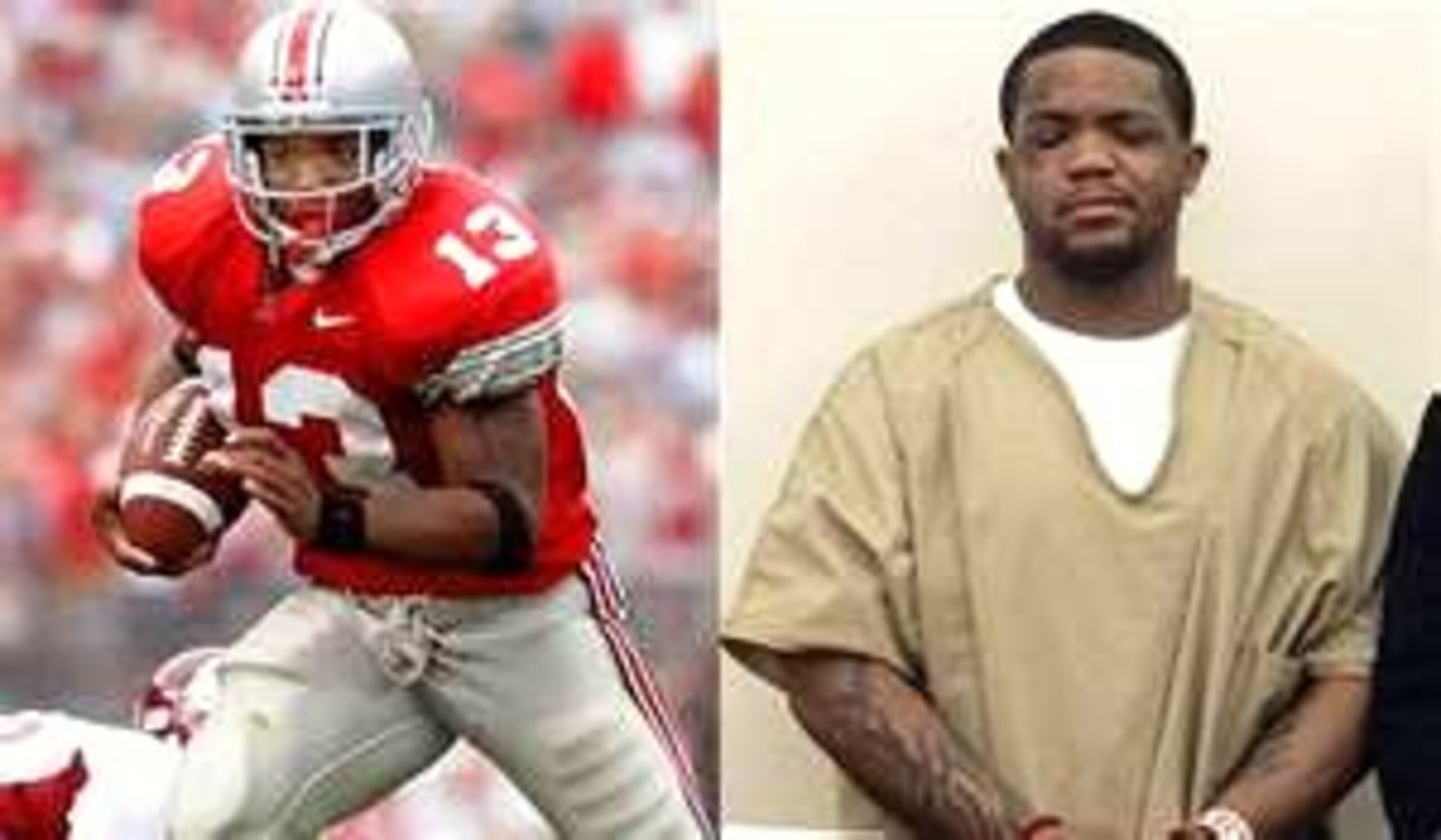
Maurice Clarett was named the Offensive High School Player of the Year in 2001 by the USA Today.
Clarett went to school at Ohio State for only one season but left a lasting impact with his performance.
As a freshman, he rushed for 1,237 yards, scored 18 touchdowns and helped lead the Buckeyes to a 14-0 record resulting in being crowned as the 2002 season BCS champions.
If there has been a player in the BCS era who caused as much controversy as Maurice Clarett he does not easily come to mind.
Clarett chose to attend college at Ohio State over the Miami Hurricanes.
A year later, he would score the winning touchdown against Miami as the Buckeyes dethroned the Hurricanes as national champions.
It had all come easily to the outstanding running back.
This was when trouble began for the young star.
He became the focus of an academic investigation when The New York Times disclosed information concerning Clarett benefiting from preferential treatment.
No misconduct was found in that situation but Ohio State suspended him for the 2003 season after being charged with filing a false police report.
The youngster had filed a false claim stating someone had stolen property valued at more than $10,000 from a car he borrowed from a local dealership.
A car he borrowed from a local dealership?
Clarett later pleaded guilty to a less severe charge of failure to aid a law enforcement official.
Maurice moved to Los Angeles and sued the NFL, hoping to break the rule concerning draft age and experience eligibility.
That did not work out for him, but Ohio State officials could breathe easier knowing he was out of their hair for good.
In 2006, Clarett was wanted by the police for questioning regarding two armed robberies.
He turned himself in.
A month later, the former Buckeye hero was indicted by a grand jury on two counts of aggravated robbery with a gun.
Facing prison, Maurice Clarett pleaded not guilty and was released on bail until his trial.
While out on bail awaiting trial he was arrested after making an illegal turn and leading police on a car chase.
Officer Mike Woods reported Clarett was found with a rifle, two handguns and wearing Kevlar body armor.
The former Buckeye wonder filed a guilty plea and was sentenced to seven years in prison.
In 2010, he was granted an early release.
Here's hoping he has learned his lesson.
No. 4: Rick Neuheisel, UCLA Head Coach
7 of 10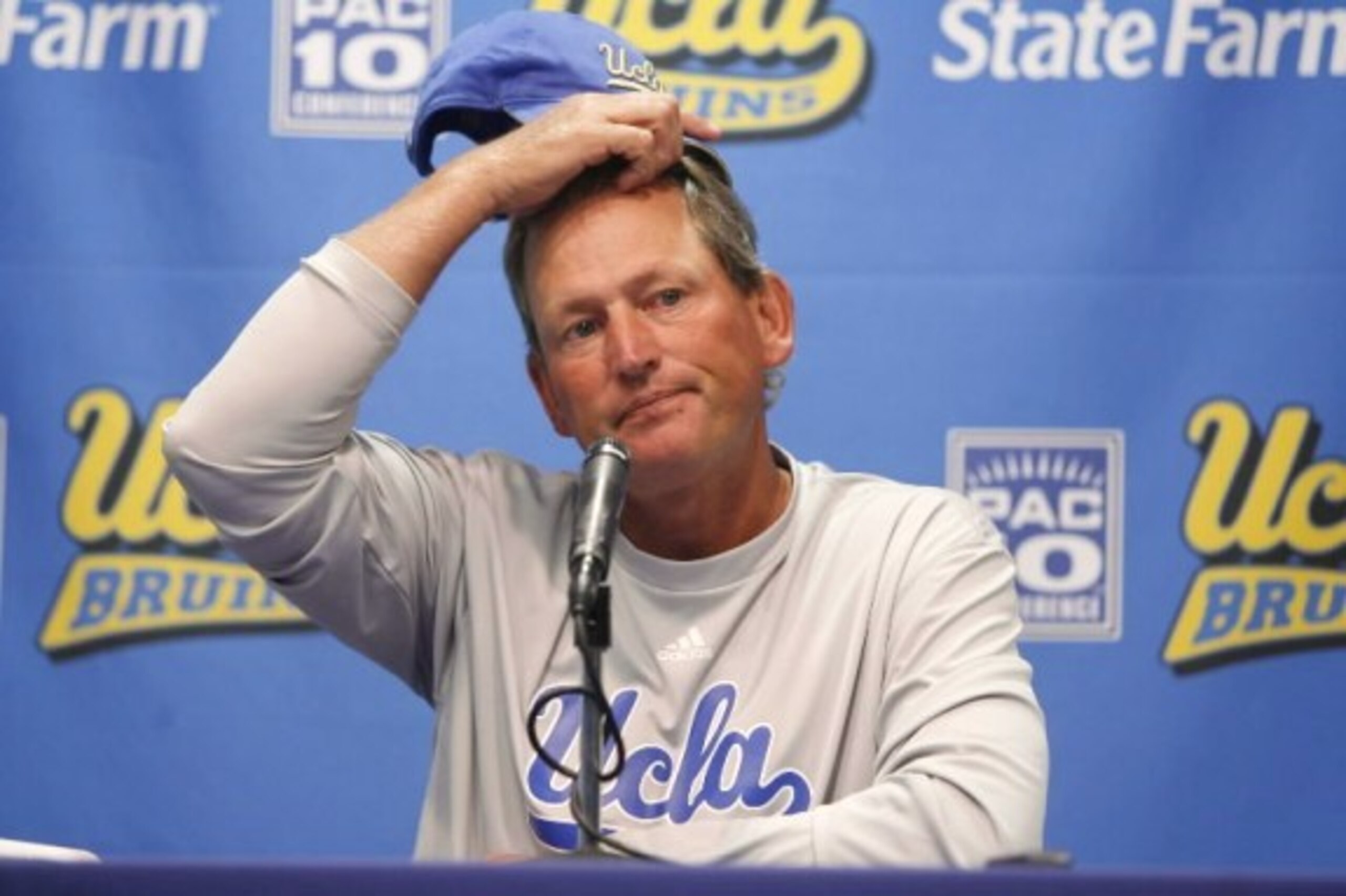
Rick Neuheisel is a former UCLA quarterback who quickly rose through the ranks in major college football.
By age 34, Neuheisel was head coach of the Colorado Buffaloes.
After four seasons leading that Big 12 conference program, Rick opted for Seattle and became head coach of the Washington Huskies.
Upon leaving UW, Neuheisel spent five years as an assistant coach in High School and the National Football league.
In 2008, Rick (see picture) returned to college football by becoming head coach at UCLA.
Prior to returning to his alma mater, Neuheisel was involved in several violations during his tenure as head coach of Colorado and was involved in a variety of unseemly situations at Washington.
After Neuheisel left Colorado, the Buffaloes lost five scholarships and were placed on two years probation.
Seems the Buffs were guilty of 53 rules violations, 51 when Rick was the head coach.
In Seattle, Neuheisel was subject of discussions concerning his lack of discipline over the Husky players, several of whom had run-ins with law enforcement over illegal activity.
But Neuheisel's problem in Seattle was more of the personal variety.
Rick's behavior demonstrated he had failed to learn two of life's "little" lessons that one does not pick up out of a simple textbook.
One, you are taking an unacceptable risk by lying to your boss.
Two, a man is taking his own life in his hands by lying to a woman.
In February 2003, Neuheisel was accused of having secretly interviewed with National Football League member San Francisco regarding the head coaching position without telling anyone at UW.
A day after this alleged interview, Rick issued a public statement through the Washington athletic department, describing how he had no interest in any NFL position.
A Seattle newspaper reporter later revealed he had actually witnessed Neuheisel discussing the job with the 49ers on the telephone.
When athletic director Barbara Hedges learned of the report, she and the school president called Rick in and warned him future deception on his part, regarding any situation, would not be tolerated.
Later, Neuheisel came under investigation for betting money on the 2003 NCAA Basketball tournament.
He denied the accusation to investigators.
After consulting with university officials, he admitted to the activity.
AD Hedges gave Neuheisel an ultimatum of resigning or being terminated.
Rick refused to leave on his own and was sent packing by Barbara Hedges on June 11, 2003.
Did we mention Rick Neuheisel is actually a graduate of the Southern California School of Law?
What a guy.
No. 3: Mike DuBose, Former Alabama Head Coach
8 of 10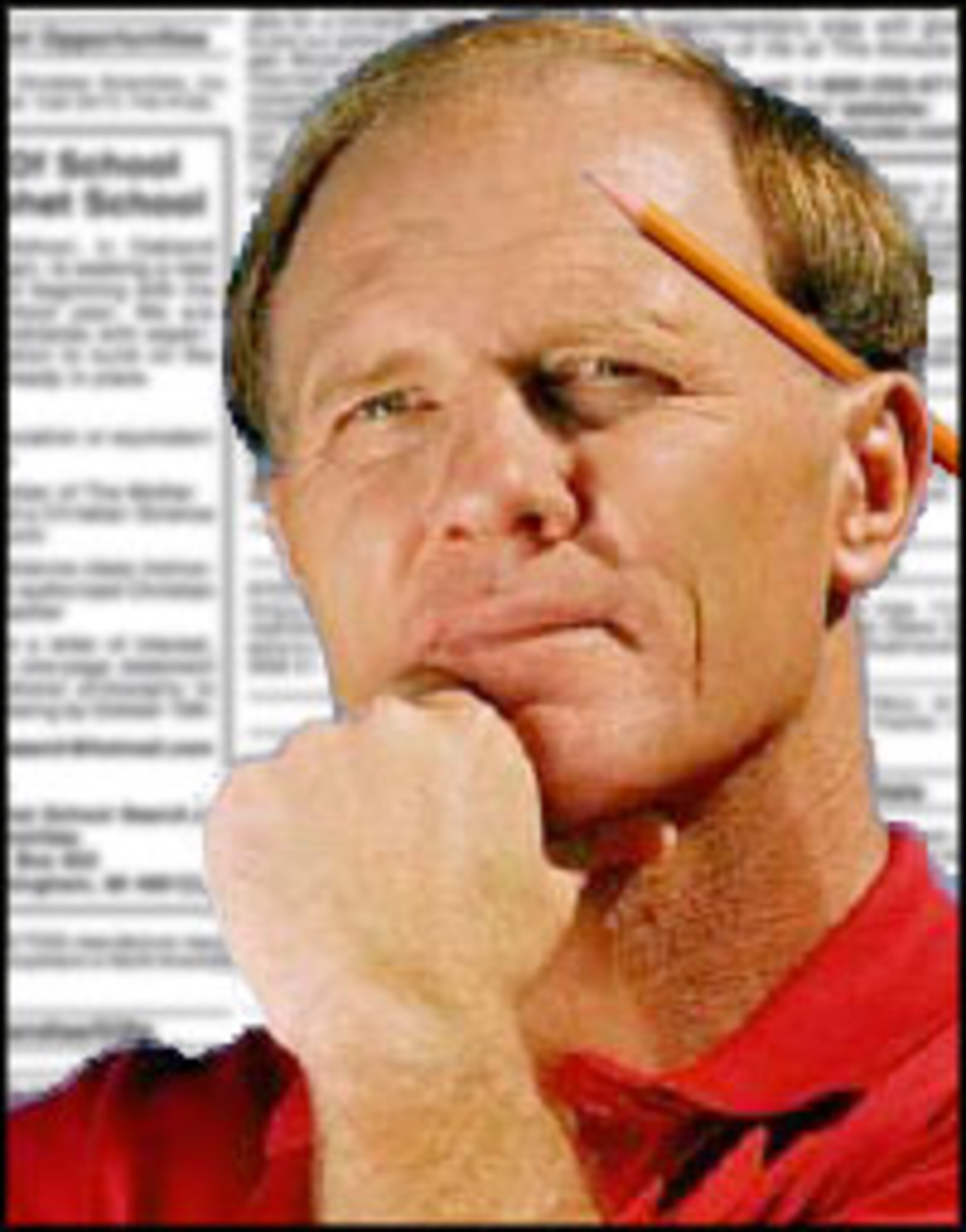
"Oh, what a tangled web we weave when first we practice to deceive," opined the great Scottish novelist, Sir Walter Scott.
Perhaps the more down and dirty version could be found in a quote from the disgraced mid-20th century politician Richard M. Nixon, "It's the lie that gets you."
The former Alabama player turned head football coach, Mike DuBose, would have been well advised to take those two quotes to heart.
Mike DuBose (pictured) came from Auburn country, the little town of Opp, to play football for the late Alabama coach Paul Bryant in 1971.
Make no mistake about it, Mike DuBose was a heck of a player in high school, had a fine college career and later became a superb line coach in college and the NFL.
Nothing in the world wrong with DuBose as a player or an assistant coach. His knowledge and skill of instruction would have been an asset for any football team.
It was the turmoil that resulted from Mike taking on too big a responsibility, at that point of his career, and it led him to being chased out of town as the head coach of the Crimson Tide at the conclusion of the 2000 season.
Following the retirement of the great Gene Stallings as head coach of Alabama, DuBose stepped up from his defensive line coach position to take the top job for the 1997 season.
Looking back from 2011, it is obvious two related events came together like the Titanic and the iceberg.
1. It was cruel of the Alabama administration to place a man in the job of head coach who had no experience as a head coach. This was a recipe for disaster stoked by many demanding and unrealistic, followers of Crimson Tide football.
2. Mike DuBose panicked, and the extraordinary pressure he was under led the inexperienced head coach to create a series of circumstances that could not allow him to continue.
The four years of the DuBose era resulted in a total of 24 wins and 23 losses.
In those four seasons, Alabama won one SEC Championship, the same number current coach Nick Saban has won after four years on the job in Tuscaloosa.
DuBose had ruffled feathers by firing four assistant coaches during his first year on the job. Some suggested the new coach didn't know what was going on and was passing the buck on responsibility.
In the springtime of 1999, a rumor leaked regarding DuBose being accused of having an improper relationship, possibly involving harassment, with his secretary. DuBose flatly denied the charges.
And there is the problem.
Three months later the two reached an out-of-court settlement and DuBose paid $360,000 out of his own pocket.
Following the harassment claim, DuBose admitted that he lied when publicly denying an "improper relationship" with the woman.
In addition, the university removed the final two years of his contract and gave the administration the chance to terminate him at any time, no questions asked.
Who could succeed under such circumstances?
Mike DuBose did.
In 1999, the Crimson Tide defeated Florida to win the SEC championship, played the Michigan Wolverines in the Orange Bowl and DuBose received the SEC Coach of the Year award.
After winning the SEC, the two years removed from DuBose's contract after the cash settlement with his secretary were restored by Alabama officials.
The new millenium was said to bring about the end of the world, and it did for Mike DuBose.
Starting slowly, the team lost games to UCLA, Mississippi State, and Arkansas. After losing to Central Florida, 40-38 the school announced Mike DuBose would be relieved of his duties at season's end.
At last, the long nightmare was over.
That was what the fans of Alabama football believed.
Alabama followers discovered the lasting effects of the DuBose regime.
The NCAA began an investigation in to the recruitment of Memphis schoolboy legend Albert Means by the Crimson Tide.
DuBose was not implicated in specific charges but, Alabama received punishment for various activities that occurred during his time as head coach.
The final verdict? A loss of 21 scholarships over three years, a two-year bowl ban and probation lasting five years.
To Mike DuBose's credit, he resurfaced years later as head coach of tiny Millsaps College in Mississippi and produced some of the best football teams the school has ever seen.
Just think, he could now really be ready for that Alabama job.
No. 2: Pete Carroll, Former Southern California Head Coach
9 of 10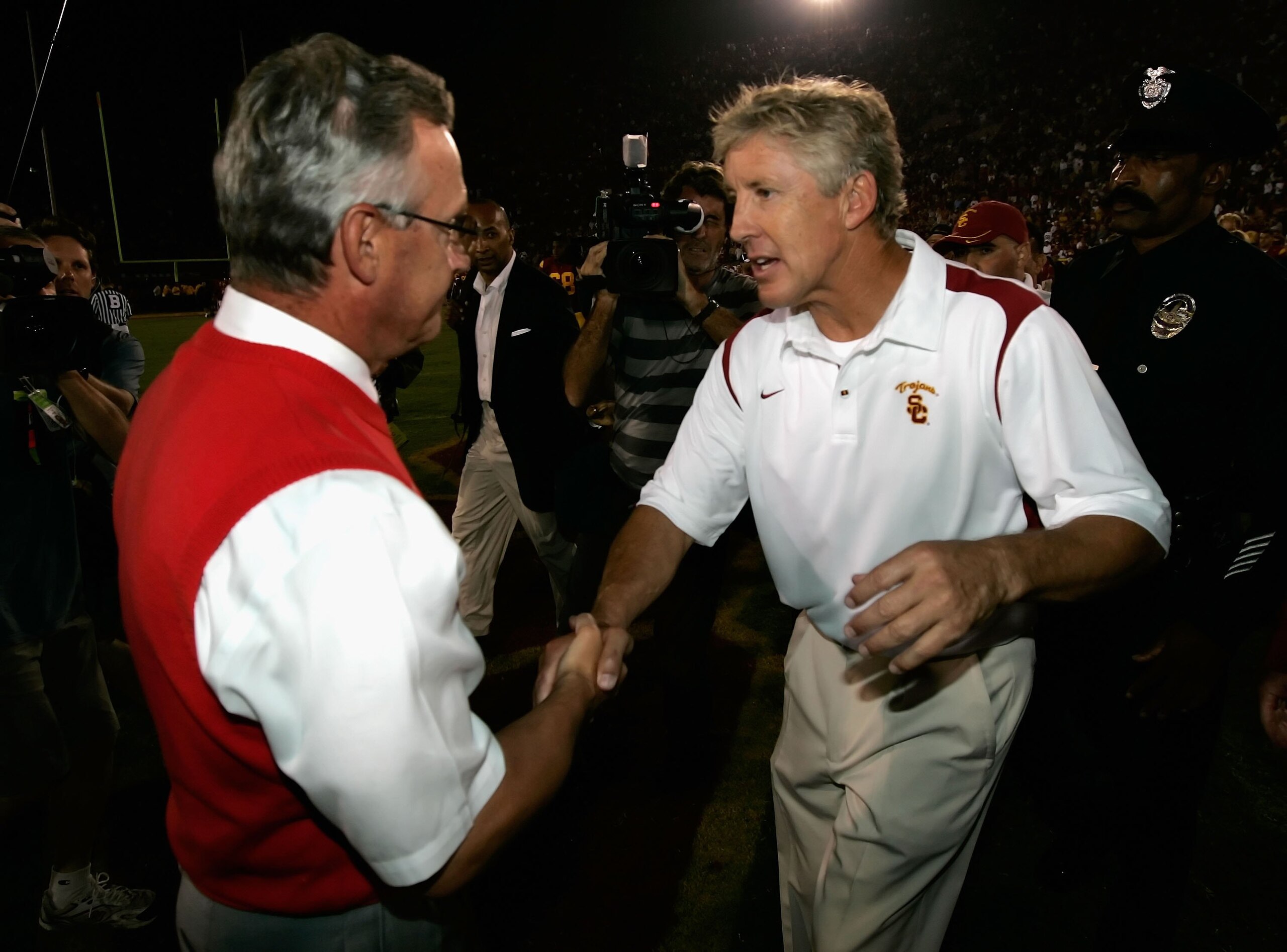
Pete Carroll is one of the most successful coaches in the history of college football.
In the seven seasons of 2002 through 2008, Pete's fearsome Southern California juggernaut won 82 of their 91 games.
That is a 90 percent winning rate.
In addition to being one of the greatest in terms of wins and losses, Carroll could lay claim to being one of the finest defensive coaches that has ever walked a college sideline.
On June 9, 2010, the LA Times reported Carroll had appeared in front of an NCAA Committee four months earlier regarding infractions during his watch as head coach of the University of Southern California.
A day later, the NCAA announced sanctions against the Trojan football program including a two-year bowl ban and elimination of 30 football scholarships.
With another stroke of the pen, Southern California had to forfeit two wins during the unbeaten BCS Championship season of 2004.
Additionally, the Trojans had to forfeit all of the victories from the undefeated regular season of 2005.
The allegations of committing violations spotlighted the relationship between the school and former running back Reggie Bush, who had won the Heisman Trophy while playing for Coach Carroll.
Bush was found to have accepted improper benefits while playing for the Trojans.
The big strike against the Carroll regime was the use of a home in San Diego that was provided to members of Bush's family.
Carroll denied the often-voiced opinion that possible NCAA sanctions had anything to do with his leaving Southern California to take a position in professional football.
Carroll stated, "I know where we stand. It's just a process we have to go through. We know we've fought hard to do right."
Carroll's new employers, the Seattle Seahawks, issued a video statement describing how they were shocked (shocked) to find the NCAA ruled improper activity took place during Pete's tenure leading the men of Troy.
No.1: Jim Tressel, Former Ohio State Head Coach
10 of 10
A great coach and a fine man.
Jim Tressel brings to mind a vision of Nero, the first century emperor of the Roman Empire.
It has been reported through the ages that Nero "fiddled while Rome burned."
Somehow that seems an appropriate image of what happened to the former Ohio State leader and his Columbus empire.
It was burning down all around him, but he couldn't stop the carousel long enough to put out the fire.
On March 8, 2011, Ohio State suspended Tressel for the first two games of the 2011 season and fined him $250,000 for failing to notify the school of specific NCAA violations committed by several players.
The violations involved various members of the Ohio State football team and their financial arrangement with the owner of a local tattoo parlor.
Five Ohio State football players had been suspended due to trading championship rings and other Buckeye items for tattoos.
Coach Tressel requested Ohio State Athletic Director Smith extend his own suspension to the same number of games as his players. Smith accepted the request.
At this point people should ask if this is a prank. No one needs a tattoo badly enough to endanger their playing status.
A tattoo? There must be something much deeper the public is not aware exists.
During this period of the investigation, Ohio State school President Gee advised listeners coach Tressel would not lose his job over the matter.
"It's the lie that gets you."
On April 25, 2011, the NCAA charged Jim Tressel with lying and holding back information to keep certain Buckeye players able to play.
A document described as a "notice of allegations" was sent to Ohio St. by the NCAA stating the coach had been involved in major violations and that Tressel failed to display honesty.
In summary, the NCAA said Jim Tressel was a liar.
On May 30, 2011 Tressel resigned as Ohio State's head football coach.
There is no question Tressel tried to protect his players, but the national view will be he was only looking out for his own skin.
There is a double standard here.
When certain coaches are singled out for any possible transgressions the public laughs and shrugs it off as proving how sharp those boys are.
When a coach perceived as a dignified leader like Jim Tressel falls, he takes all of college football down with him.
The final chapter is not yet written in the book on Jim Tressel.
Now that the ride has stopped, the circus of activity put on hold, he will gather his wits about him and do something that will produce a positive impact out of this negative situation.
He is not ancient and will have a chance to rehabilitate his image.
It seems likely coach Tressel will not stop with changing how he is perceived. He will acknowledge there is a penance to be served for his actions, no matter how well intentioned his motives.
The former Buckeye mentor will learn from his mistakes. If his past history is any indication, Tressel will use these lessons to help others.
Others who could be spared the pain that comes from not understanding life must not be lived at a wide open pace with no reward for having an ethical braking system concerning decision making.
There must be an understanding of the need to occasionally slow down, heed the moral compass and do what is correct despite the consequences.
Jim Tressel still has control over the pen that writes the epilogue of his legacy.
Let's hope he uses it wisely.
.png?w=2560)
.jpg?w=2560 "Colts Texans Football")
.jpg?w=2560 "Chiefs, Steelers Eye WR Trades")