
College Football: 10 Coaches Who Are Bigger Than Their Program
Which college football teams are led by head coaches who garner more name recognition than the program itself?
Which school, when you say its name, do you think of the coach’s name before anything else?
It’s important to note that programs paired with bigger-than-life coaches may not necessarily be smaller, less-known schools.
Even a big, historically dominant program might have a coach that is or has become larger than the program itself; a leader that the school would feel “lost” or “lacking an identity” without either due to success or long tenure (and success).
The following slideshow attempts to identify 10 college football coaches who are bigger than their programs.
Bob Stoops
1 of 10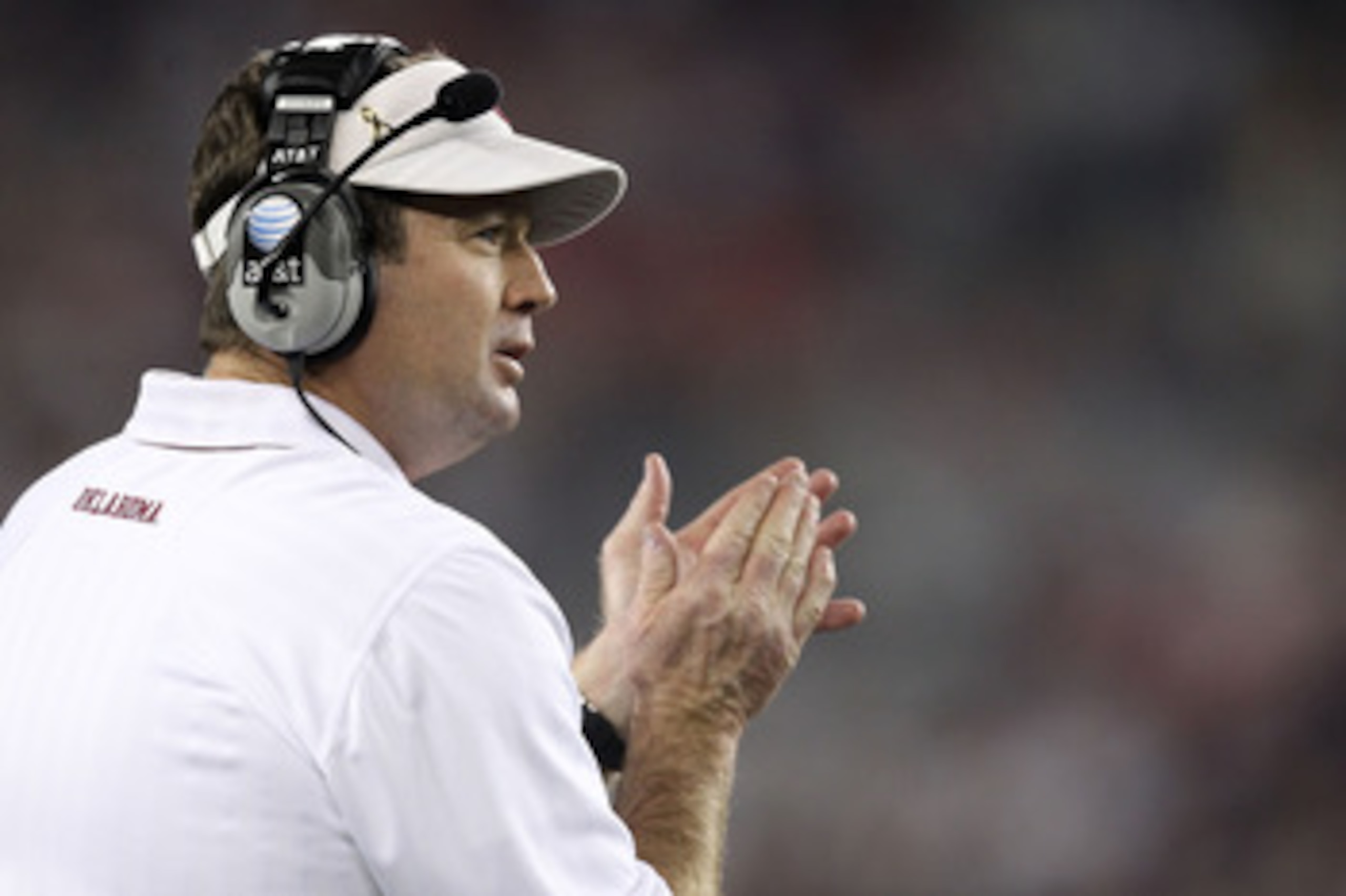
After Barry Switzer left Oklahoma after the 1988 season, the Sooners spent a decade in the throes of decline before the Bob Stoops football revival began in 1999.
Stoops took over a program that went 5-6 under predecessor John Blake in ’98 and improved to 7-5 in ’99 under Stoops, which would mark the worst record in his 12 seasons as the Sooners head coach.
Stoops is 129-31 at Oklahoma, has a, 80 percent winning ratio, has won seven Big 12 titles in 12 years, captured one national championship (in 2000) and has led the Sooners to eight BCS appearances in a dozen years.
However, Coach Stoops is not the winningest coach in Sooner lore, he actually currently comes in third behind Barry Switzer (157-29-4 from 1973-88) and Charles “Bud” Wilkinson (145-29-4 from 1947-63).
Yes, Oklahoma football has a rich, long and storied history, but if Bob Stoops were to pack his bags and leave Norman, the Sooners would be forced to start all over again.
For the time being, at least, he is Oklahoma Sooner football.
Nick Saban
2 of 10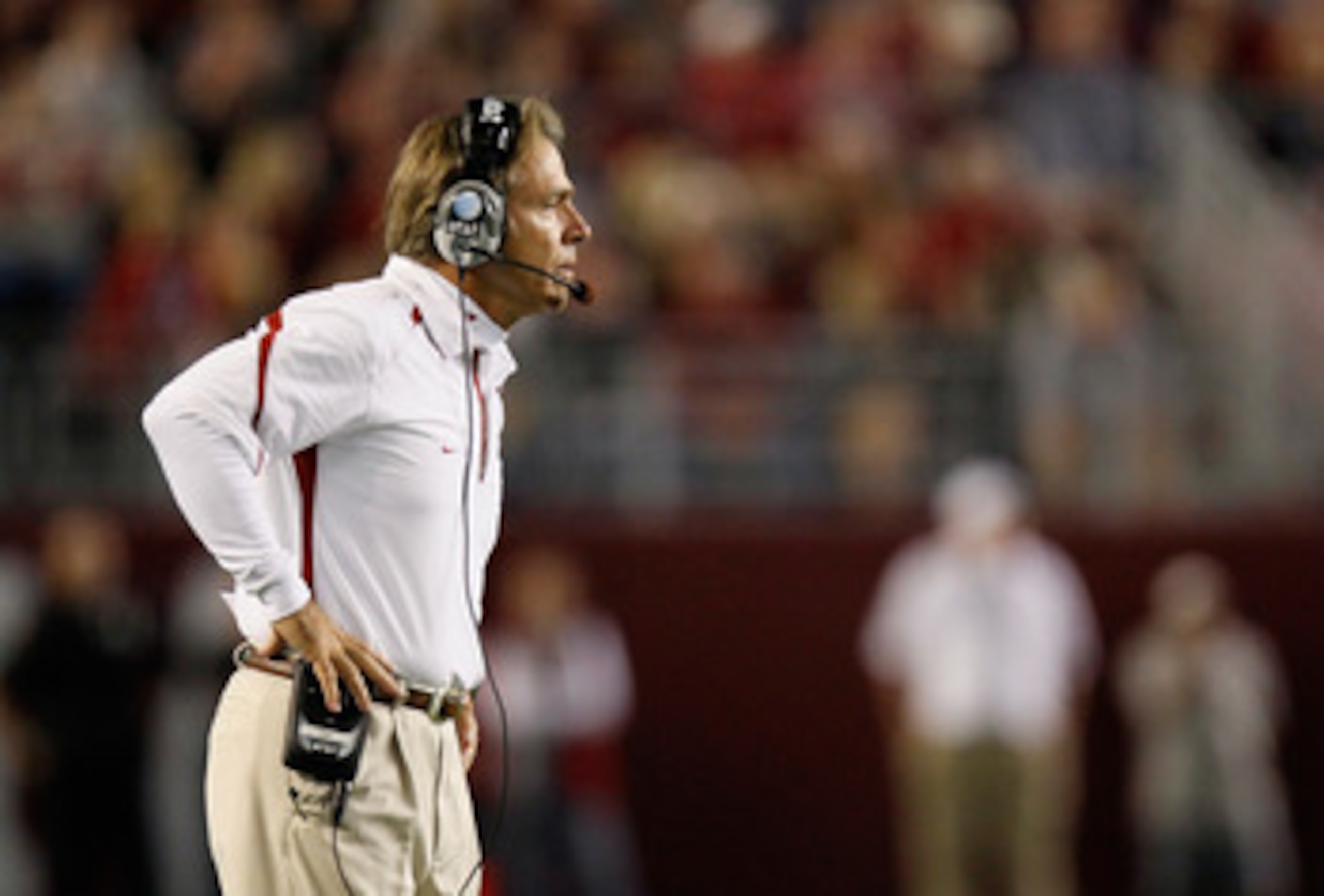
Nick Saban has left a trail of tears and broken dreams behind him as he “loved and left” the good people of East Lansing, Michigan and Baton Rouge, Louisiana before landing the Alabama job in 2007.
Saban has an overall college coaching record of 134-53-1 and has earned three SEC titles, five SEC West divisional crowns and two national championships (2003 and 2009).
As rich and dotted with huge successes as the Crimson Tide’s football history may be, Nick Saban (like Stoops at Oklahoma) is the “flavor of the month” in Tuscaloosa, and he is, for now, Alabama football.
A Saban exit (which if you look at the guy's track record is absolutely possible) would create quite an upheaval in the world of Crimson Tide football.
Previous gridiron experiments labeled Mike DuBose, Dennis Franchione and Mike Shula all make you realize that coming across a bottle labeled Nick Saban is special, rare and valuable.
Bill Snyder
3 of 10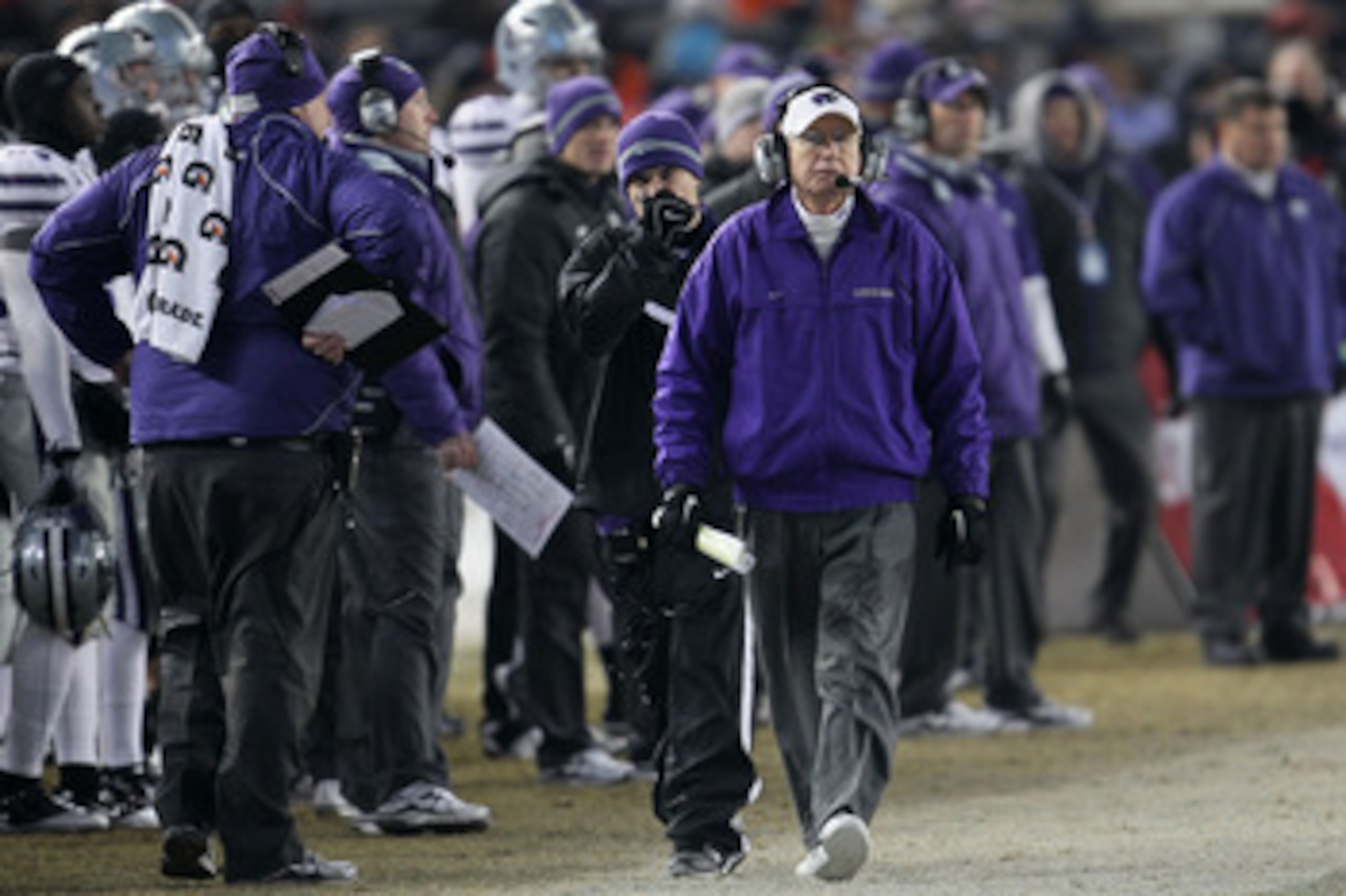
Unlike some of the other coaches on this list, Bill Snyder made Kansas State football.
Bill Snyder didn’t carry the torch or continue the glory or revive a once great football power; instead, he quite literally put the football program on the map.
Before Snyder was hired in 1989, the Wildcats had only five winning seasons in the previous 50 years of play, they had only been to a bowl game once (the 1982 Independence Bowl where they lost to Wisconsin 14-3) and were never (not even once) ranked in a postseason Top 25.
Since Snyder’s two-part tenure began, Kansas State has gone 149-80-1 (not including the two years of the Ron Prince era), they’ve won the Big 12 North four times and the Big 12 title once, they’ve been to 13 bowl games and they’ve been ranked in the final AP poll 10 times.
Bill Snyder’s name is on the stadium in Manhattan, Kansas and he is the reason the Kansas State Wildcats are still in an FBS school in a BCS conference.

.png?w=2560)
Greg Schiano
4 of 10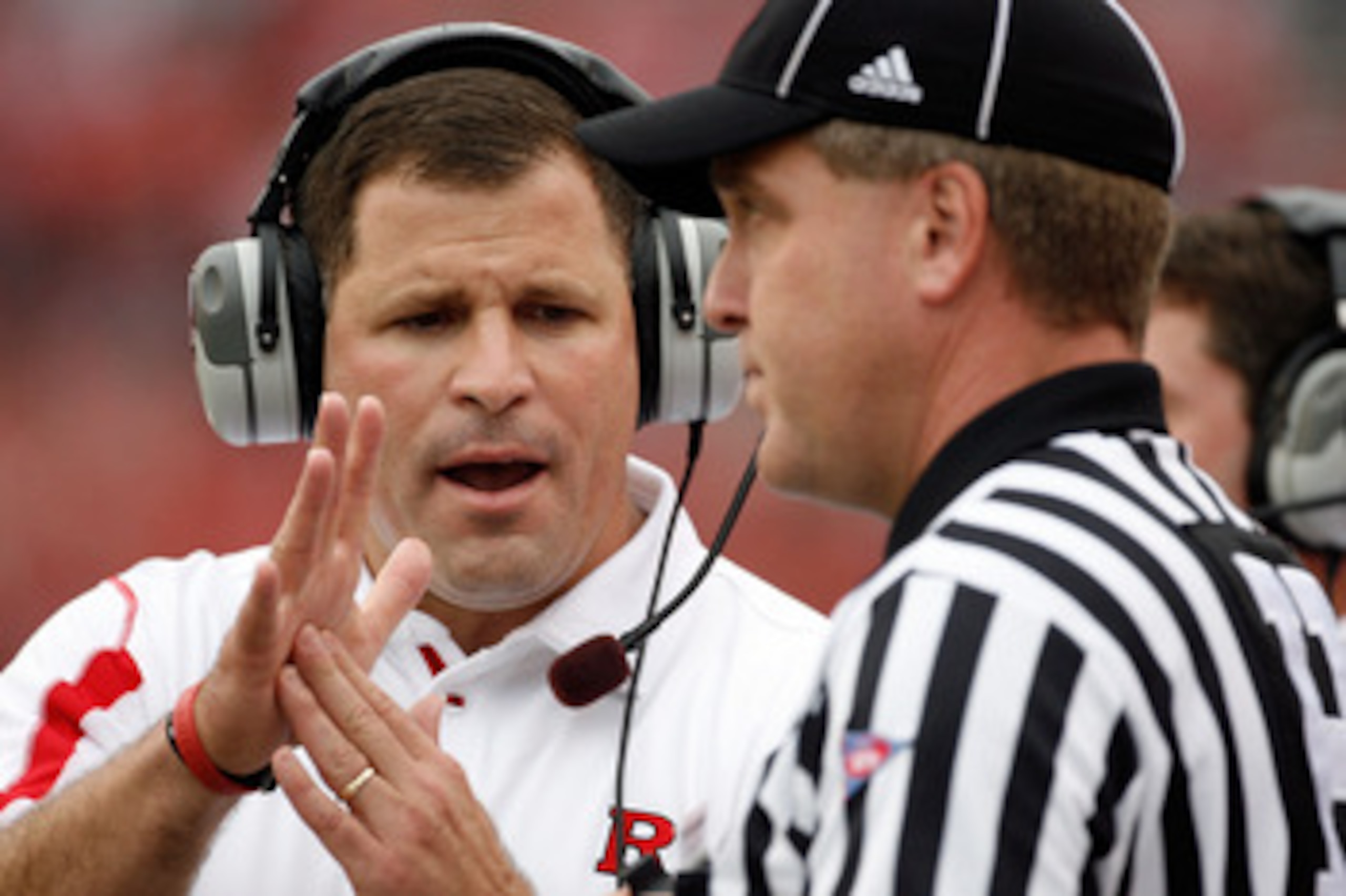
Rutgers University’s place in college football history is undeniable; it’s the birthplace of the college gridiron game and it all started in 1869 when Rutgers beat Princeton 6-4 in the first college football game ever played.
Really, it’s amazing that Rutgers has managed to continue to be a relevant part of big-time college football (as a member of the Big East they are BCS bowl AQ eligible) which few, if any, of the “founding” schools can claim.
Greg Schiano became the head coach at Rutgers in 2001 and took over a team that hadn’t had a winning season in almost a decade.
After going 12-34 in his first four seasons, Schiano led the Scarlet Knights to a 7-5 finish in 2005, a stunning 11-2 record in 2006, 8-5 in both 2007 and 2008, 9-4 in 2009 and then dropped to a 4-8 record in 2010.
Rutgers’ No. 12 finish in the 2006 final AP poll was their first ranking since 1976 and their appearance in the 2005 Insight Bowl was only the second postseason appearance in program history (the first was the 1978 Garden State Bowl—ironically, both were losses to Arizona State).
The Scarlett Knights earned their first ever bowl victory under Schiano (the 2006 Texas Bowl over Kansas State) and then reeled off three additional bowl wins making the new Rutgers bowl mark 4-2-0.
Perhaps Schiano should have cashed in on his success at Rutgers and taken another, more high-profile job after 2006, but you have to respect the guy for sticking around at the program he transformed.
Despite the history of Rutgers football, Schiano is more than likely the first thing that comes to mind when you think of the modern era of Scarlett Knights football (other than fans storming the field after the Louisville game in 2006 and the USF game in 2007).
Skip Holtz
5 of 10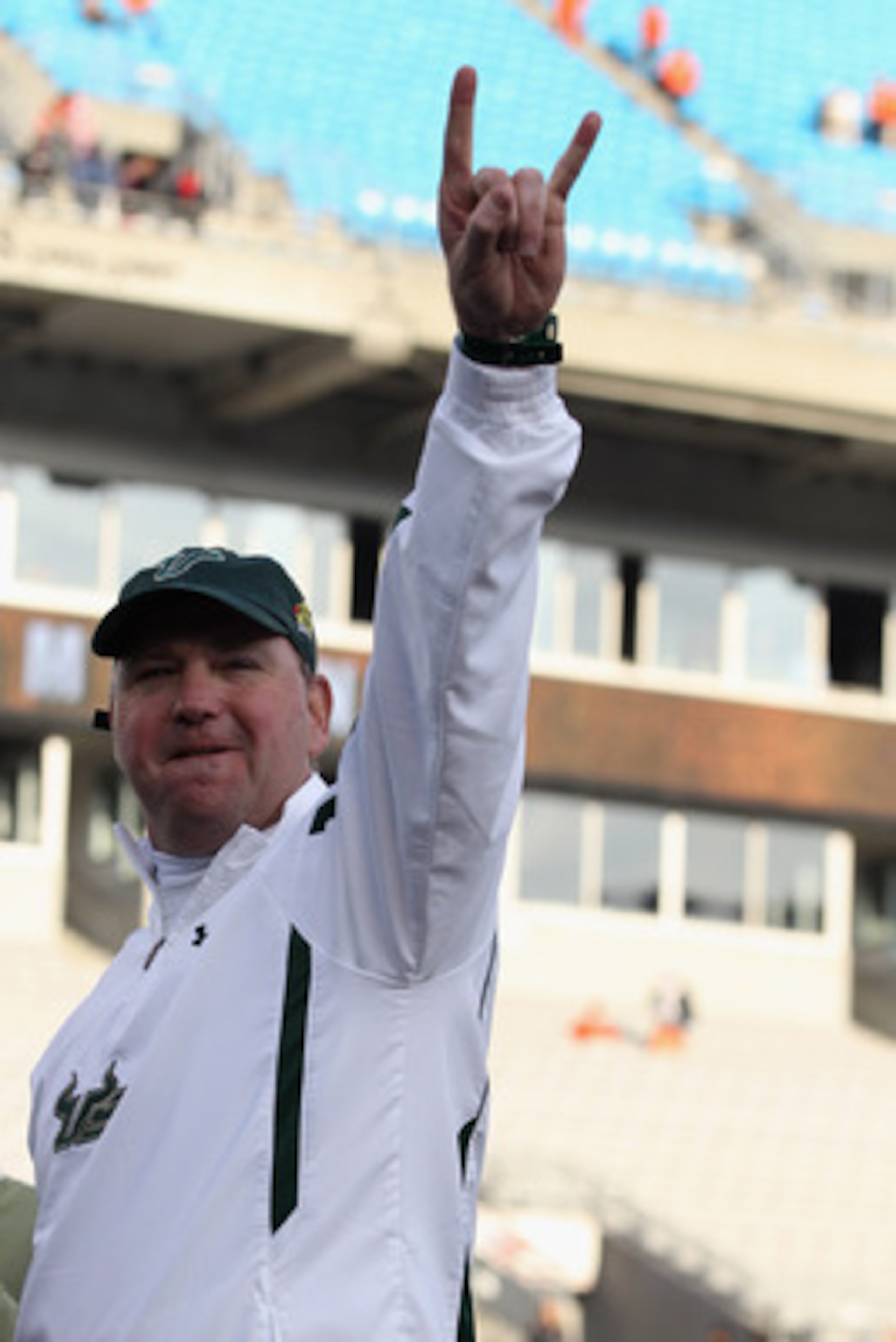
Now, this selection might be a bit of a stretch; Skip Holtz has only coached one season at USF, and though he went 8-5 and won a bowl game, it's hardly the stuff legends are made of.
What makes this choice even more fraught is that the University of South Florida Bulls have had only one football coach (other than Holtz) in their entire 14-year history.
Jim Leavitt was the original Bulls coach and was stalking the sideline in 1997 when they first starting competing in college football and was there all the way through 2009, compiling a 95-57 record and a 3-2 mark in bowl games (impressive for a team that has only been fielding a team for 14 years).
But when you think of USF football, do you really think of Jim Leavitt?
Probably not.
I think now, in the last year or so you, might be more apt to think, “Isn’t that where Lou Holtz’s kid is now, the guy who was so successful with East Carolina? Yeah...I think he’ll be a good coach like his old man.”
Sure, Skip Holtz has the family name to assist him, but I think he might prove himself to be a solid coach despite having to live with his dad’s sparkling reputation.
USF has a sweet setup that could easily catapult them into the national limelight at any moment; the Tampa Bay hotbed recruiting area, the most winnable BCS conference (the Big East) and an up-and-coming coach that everybody has heard of.
Jim Tressel
6 of 10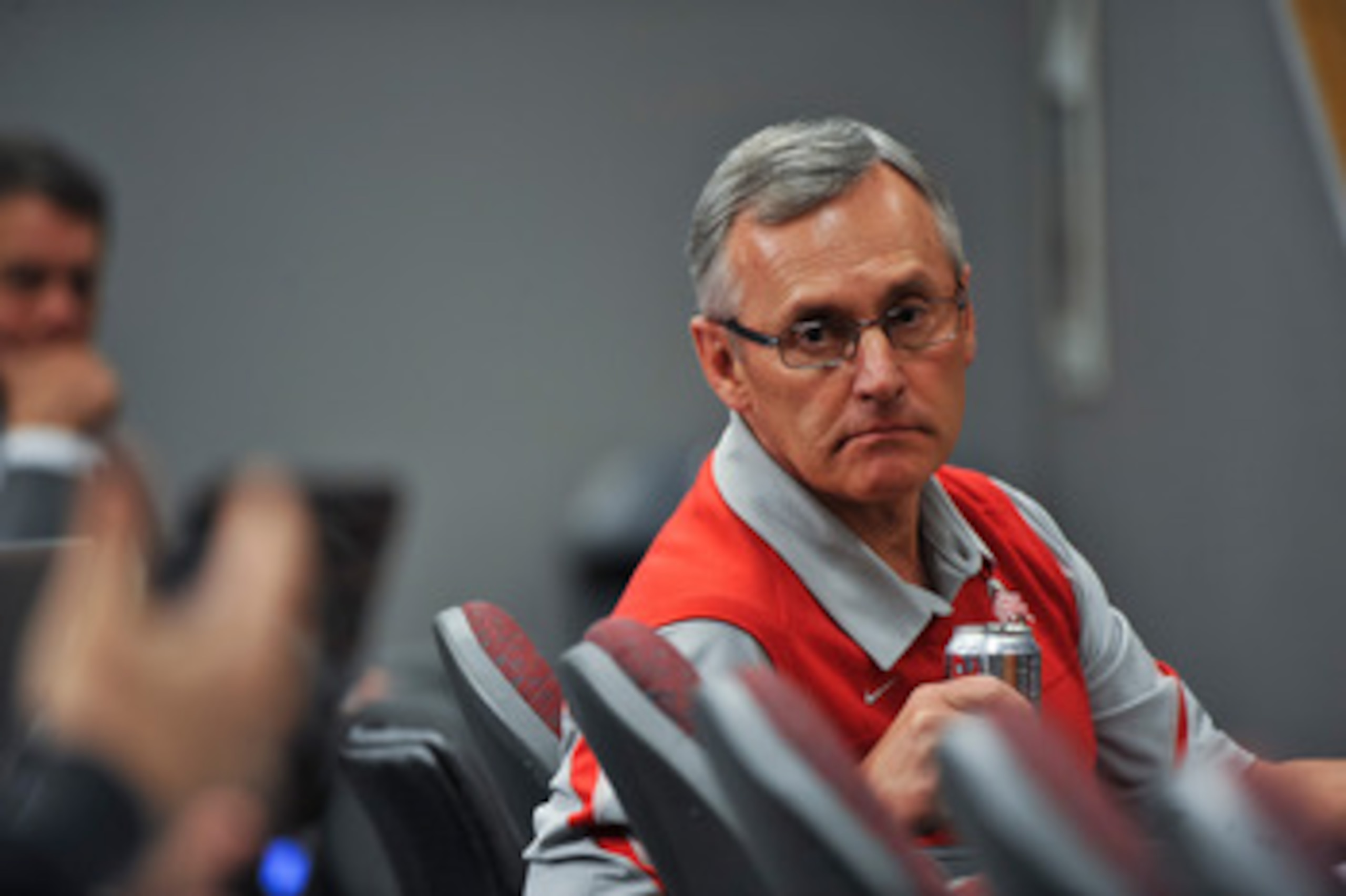
Is Coach Tressel really bigger than The Ohio State University?
Bigger than 121 years of college football? Bigger than an 831-309-53 record? Bigger than 35 Big Ten titles? Bigger than seven national championships?
Bigger than nine BCS appearances, which is more than any other school in BCS history?
Bigger than 54 appearances in the final AP poll in the 74 years it’s been operating?
Bigger than the OSU school motto, “Disciplina in civitatem,” or, “Education for Citizenship?”
Well, considering the fact that Jim Tressel is still employed as the Buckeyes, yes, he is bigger than THE Ohio State University football program.
June Jones
7 of 10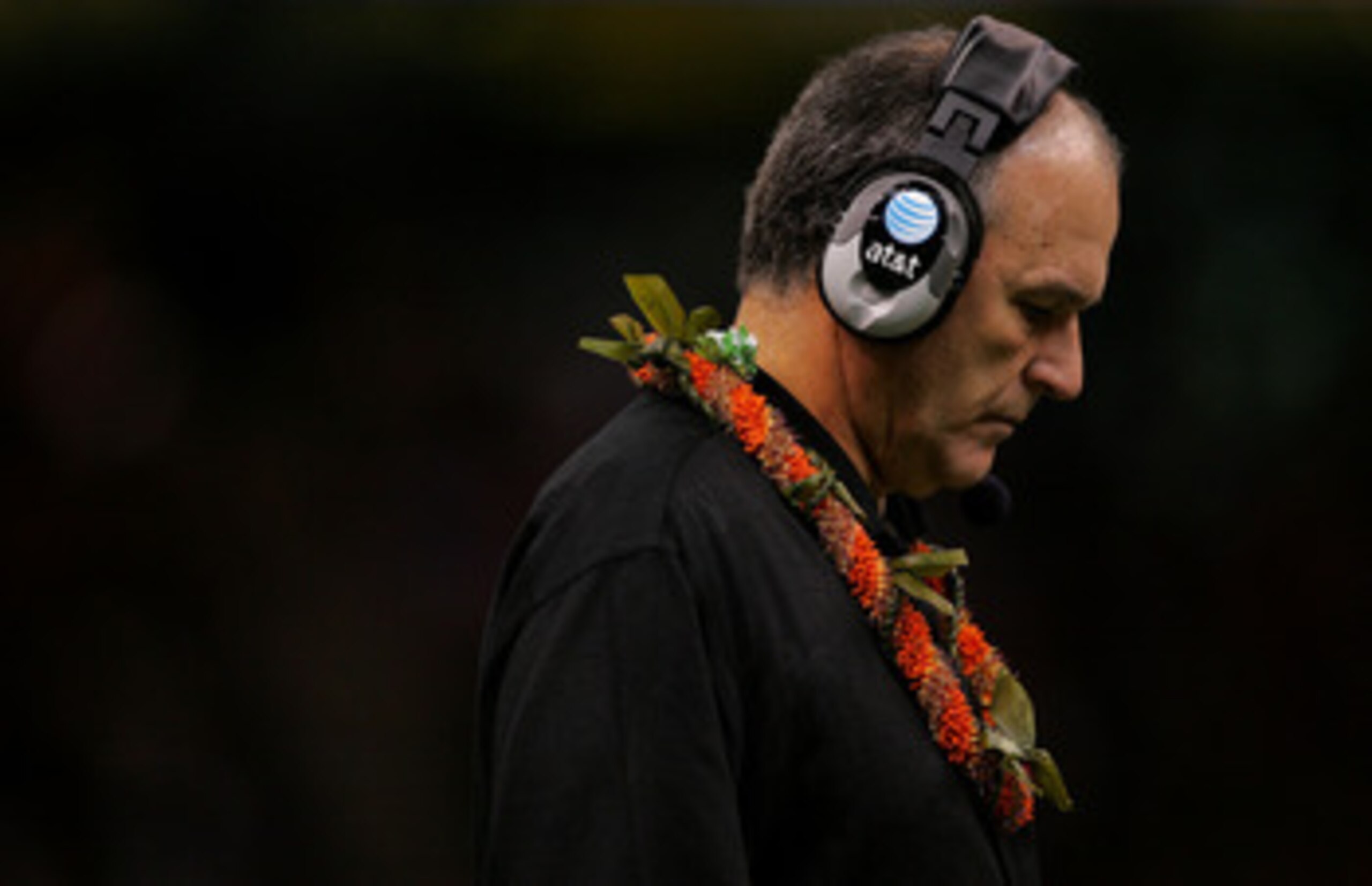
June Jones is a name associated with football history at both the college and professional level.
Jones was a quarterback with the Atlanta Falcons from 1977-81, the head coach at the Falcons from 1994-96, the head coach at Hawaii from 1999-2007 and has been the head coach at SMU since 2008.
June Jones is probably most renowned for leading the Hawaii Warriors to a 12-1 mark in 2007, including a BCS run into the Sugar Bowl and a No. 17 ranking in the final AP polls.
His successes at Hawaii where exactly what the brass at SMU hoped he could repeat in Dallas for the Mustangs, a program still reeling from the after effects of the “death penalty” sanctioned almost 25 years ago.
And turn things around is exactly what Jones has done in Dallas, taking a team that went 1-11 in both 2007 and 2008 to an 8-5 mark in 2009 and a 7-7 mark in 2010.
Jones and his Mustangs have thus far captured two C-USA West Division titles (the first crowns of any type since 1984) and two bowl bids (1-1), which also mark the first SMU postseason appearances since 1984.
However, until the Mustangs can consistently become winners again, vying for division and conference titles year after year, June Jones will continue to be the most notable person associated with the program (in the present era).
Steve Spurrier
8 of 10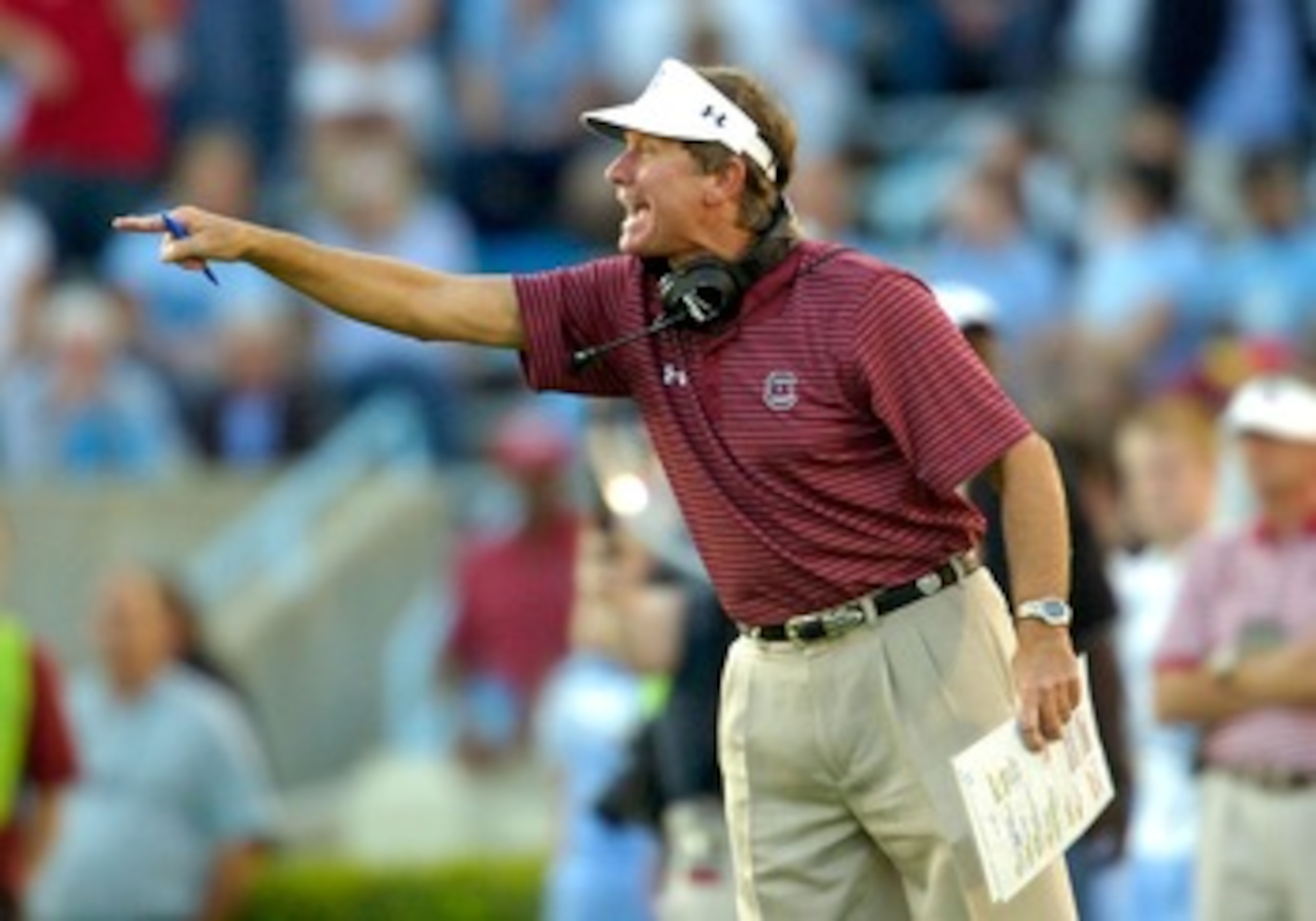
“The Old Ball Coach” is certainly the face of South Carolina Football.
His reputation precedes him: 186-73-2 overall as a college head coach, one national title (1996 at Florida), one ACC title, six SEC crowns, eight SEC divisional titles, the 1966 Heisman Trophy and stints as a head guy both in the USFL (the Tampa Bay Bandits 1983-85) and the NFL (the Washington Redskins 2002-03).
No matter what you do, how well you do it or as much as you might improve, it’s hard to not be overshadowed by Steve Spurrier.
Unless, of course, you win a BCS national title.
Howard Schnellenberger
9 of 10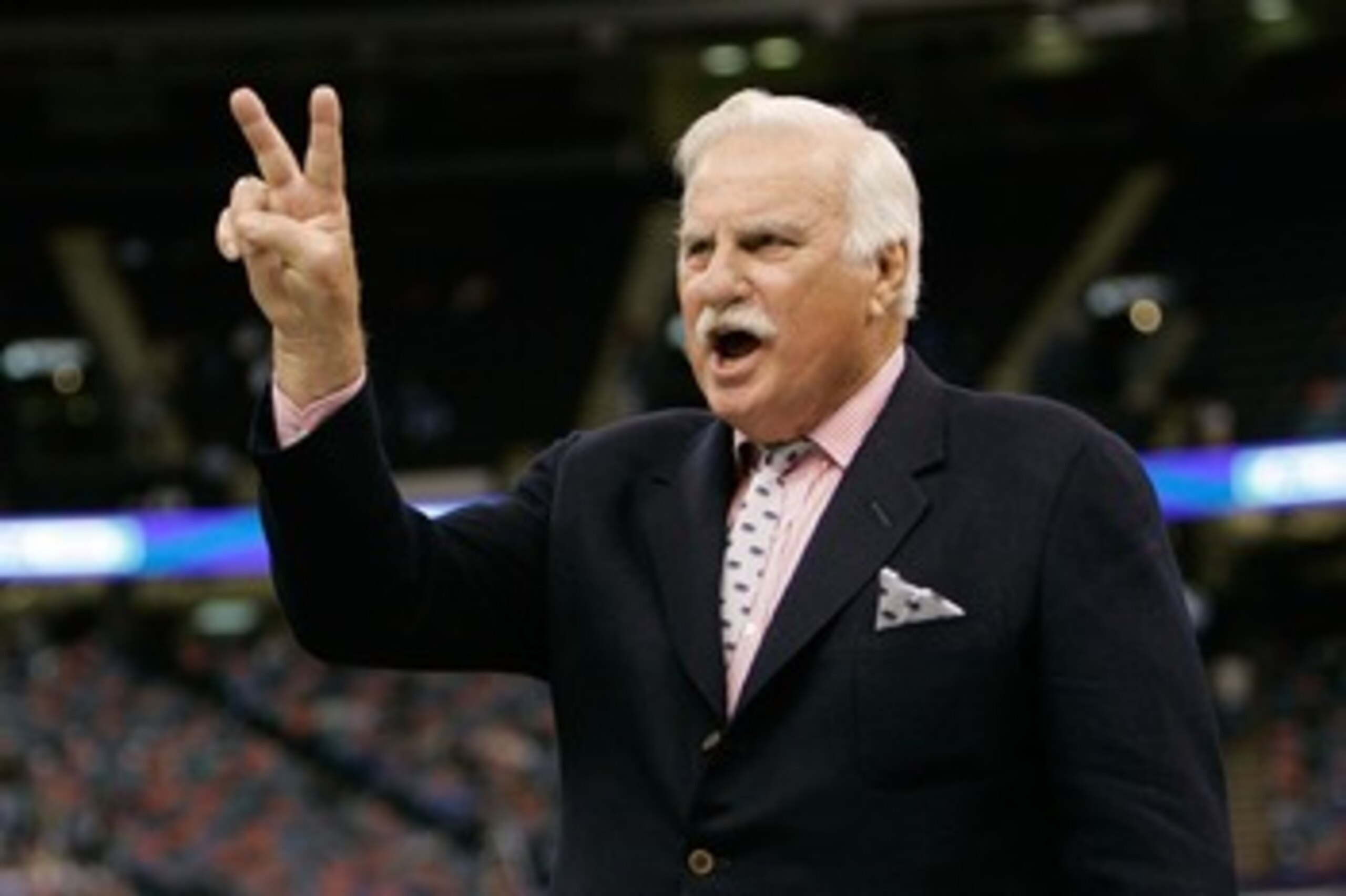
Howard Schnellenberger (born March 16, 1934 in Saint Meinrad, Indiana) seems to have traveled everywhere in college football.
Did you know he played tight end at Kentucky from 1952-56?
Remember his “revival” of Miami Hurricane football that culminated in the 1983 national championship?
Remember his decade long run at Louisville that featured a 10-1-1 campaign and a top-15 finish in 1990?
Remember that one year he spent at Oklahoma (between Gary Gibbs and John Blake) when he promised to bring tradition, pride and winning back to Norman? That was 1995 and the Sooners went 5-5-1 before opting for John Blake as their longer-term solution. (Blake, of course, lasted three years before Bob Stoops came to town.)
Schnellenberger is still coaching, isn’t he? Isn’t he at a smaller school that moved into the Sun Belt Conference?
Well, yes, he is.
Howard Schnellenberger has been the head coach at Florida Atlantic since 2001, which included their 2006 transition from Division I-AA (FCS) to Division I (FBS).
He is 57-63-0 at FAU and has led the Owls to their first ever football title (2007 Sun Belt co-champions), their first-ever bowl bids and victories (over Memphis in the 2007 New Orleans Bowl and over Central Michigan in the 2008 Motor City Bowl) and their first-ever ranking in any postseason poll (No. 4 in the final 2003 Division I-AA polls).
Yep, Schnellenberger is larger than life and living the dream in Boca Raton, Florida.
Joe Paterno
10 of 10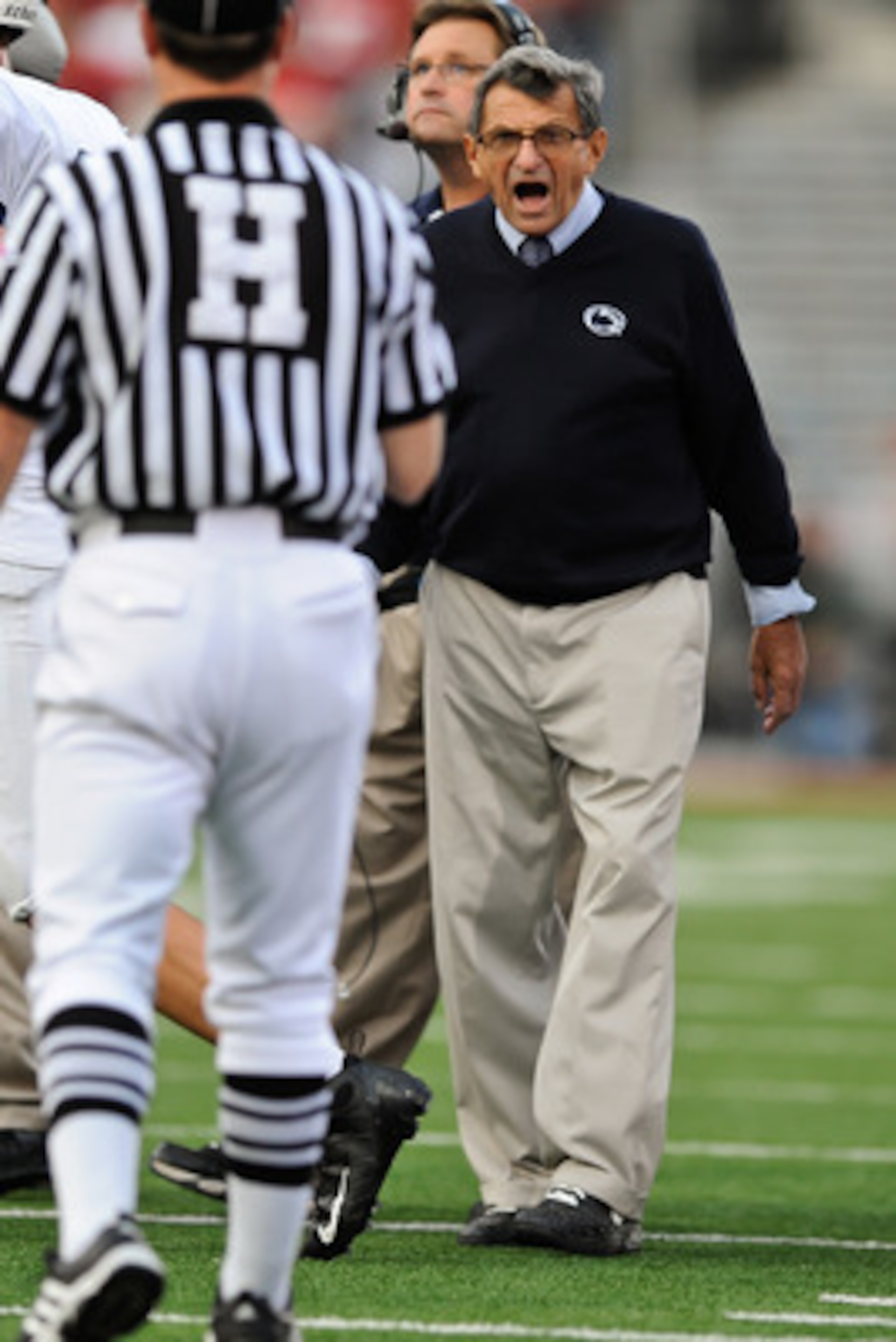
Though the Nittany Lions fielded quality football teams before Joe Paterno became their head coach in 1966 (they won the national championship in both 1911 and 1912), it’s hard to separate the institution from the coach when you are talking about “JoePa” and Penn State.
Joe Paterno is (in a world where flowery verbiage is overused) a living legend, and in a way, he’s not only bigger than Penn State, he’s bigger than college football itself.
He has 401 wins (more than any other FBS coach), he has a 75 percent winning ratio over 45 seasons of top-caliber college football, he holds two national titles (1982 and 1986), three Big Ten titles (remember PSU did not join the Big Ten until 1993) and has more bowl wins (24) than any coach in history.
He’s averaged almost nine wins a season over a career that has spanned over four decades; he’s had five undefeated seasons and six one loss seasons.
Is Joe Paterno bigger than Penn State? Absolutely—and he’s earned every ounce of it.
.png?w=2560)



.jpg?w=2560 "Latest Peyton-Colts Rumors")