
NBA Playoffs 2011: Miami Heat vs. Chicago Bulls Game 1 Reaction
Prior to the series, I identified 10 keys to the series for the two teams. After each game of the series, I will review to see how each of these particular battles measure how they went in the game and how much influence the details had on the game.
First, the general theme of the game was Chicago's defense. The Bulls defense was on full display and particularly in the second half just stopped the Miami Heat. Whether it was the starters or the bench the Bulls were just absolutely unrelenting on defense. The player of the game for the Chicago Bulls is Tom Thibodeua because it was his defense that ruled the day.
The Rebound Battle
1 of 10
The Heat are a good rebounding team. The Bulls are a great rebounding team. When the Heat lose the rebounding battle, they are 17-18 when they lose the rebounding battle and 41-6 when they win it. The Bulls lead the NBA in rebound differential.
While the game was close, the rebound battle was close, but the energy of the Bulls was relentless. When the bench players started coming in the Bulls started to take over the rebound battle, particularly on the offensive glass, with the Bulls grabbing 19 offensive rebounds to the Heat's six.
Overall the rebound battle was won by Chicago 45-33. Joakim Noah led them with 14, Carlos Boozer added nine, Luol Deng and Taj Gibson added seven each.
Co-Dominance: LeBron James Plus Dwyane Wade Over/Under 50
2 of 10
When LeBron James and Dwyane Wade combined to score 50 points in the regular season they went 48-9. When they failed to do so they went 23-13. When held to 45 or fewer combined they were just 18-11.
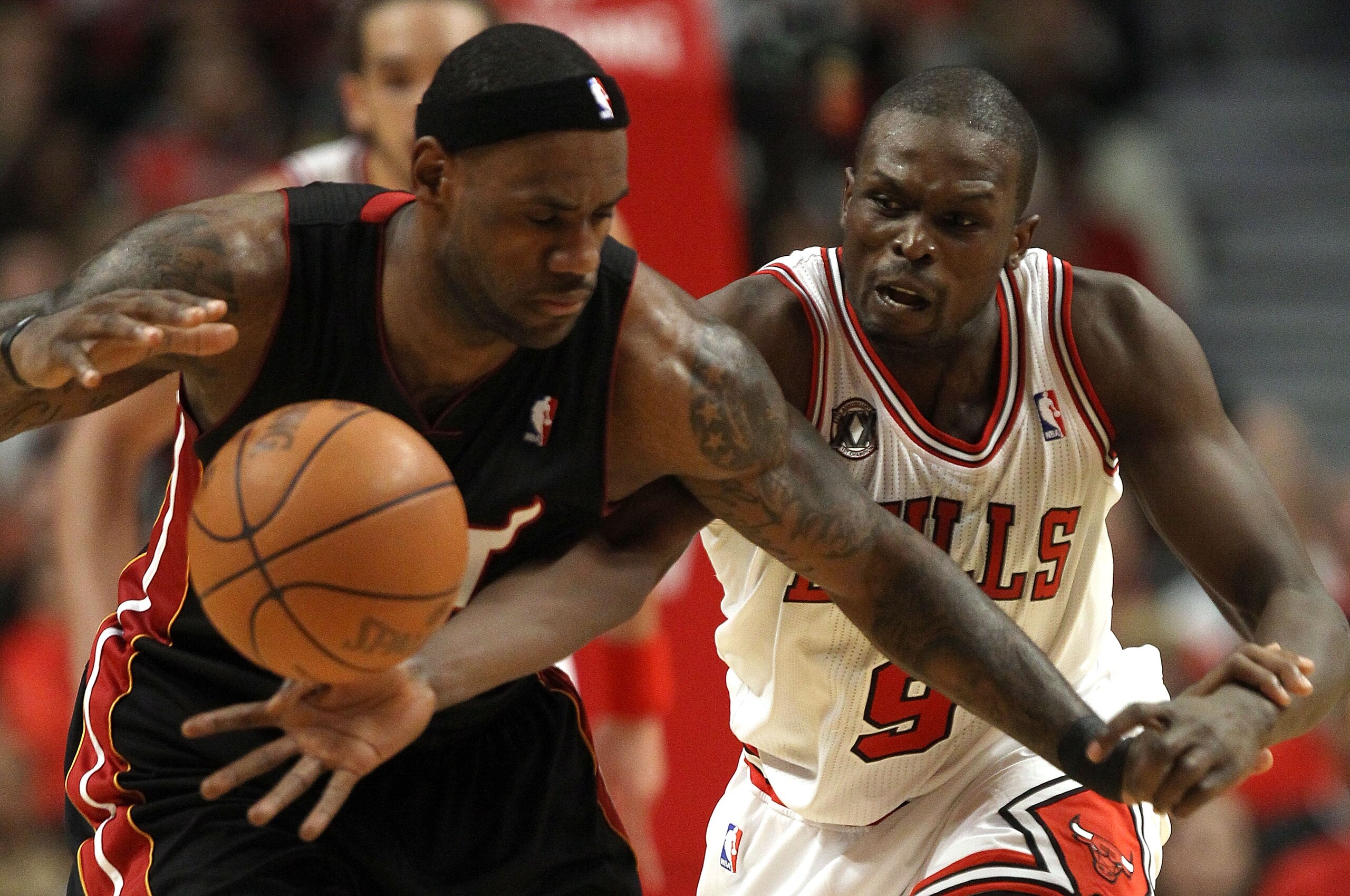
Perhaps Luol Deng wants to prove he should have been on the NBA All-Defense team because the way he shut down LeBron James was just eye-popping. In fact, Deng outscored James 21-15 on the night, and if they can get more out of Deng than the Heat get out of James, the Bulls are going to win the game almost every time.
Dwyane Wade only scored 18. The combined total of 33 was the second lowest the two have combined for all season.
Keith Boganas and Ronnie Brewer Producing Offense
3 of 10
When Keith Bogans and Ronnie Brewer combine for two three-point shots the Bulls are 46-4. When they get scoring from the shooting guard position without having to worry about Kyle Korver's defense, it forces teams to defend the shooting guard, which opens space for Derrick Rose.
Bogans was 1-4 from the three, but his first three was when the game started to open the game for the Bulls. Overall the Bulls were in a different stratosphere from behind the arc, hitting 10-of-21 to Miami's 3-of-8. The Bulls were able to punish Miami for stacking the lane to try and keep Derrick Rose out.


Chris Bosh vs. Carlos Boozer
4 of 10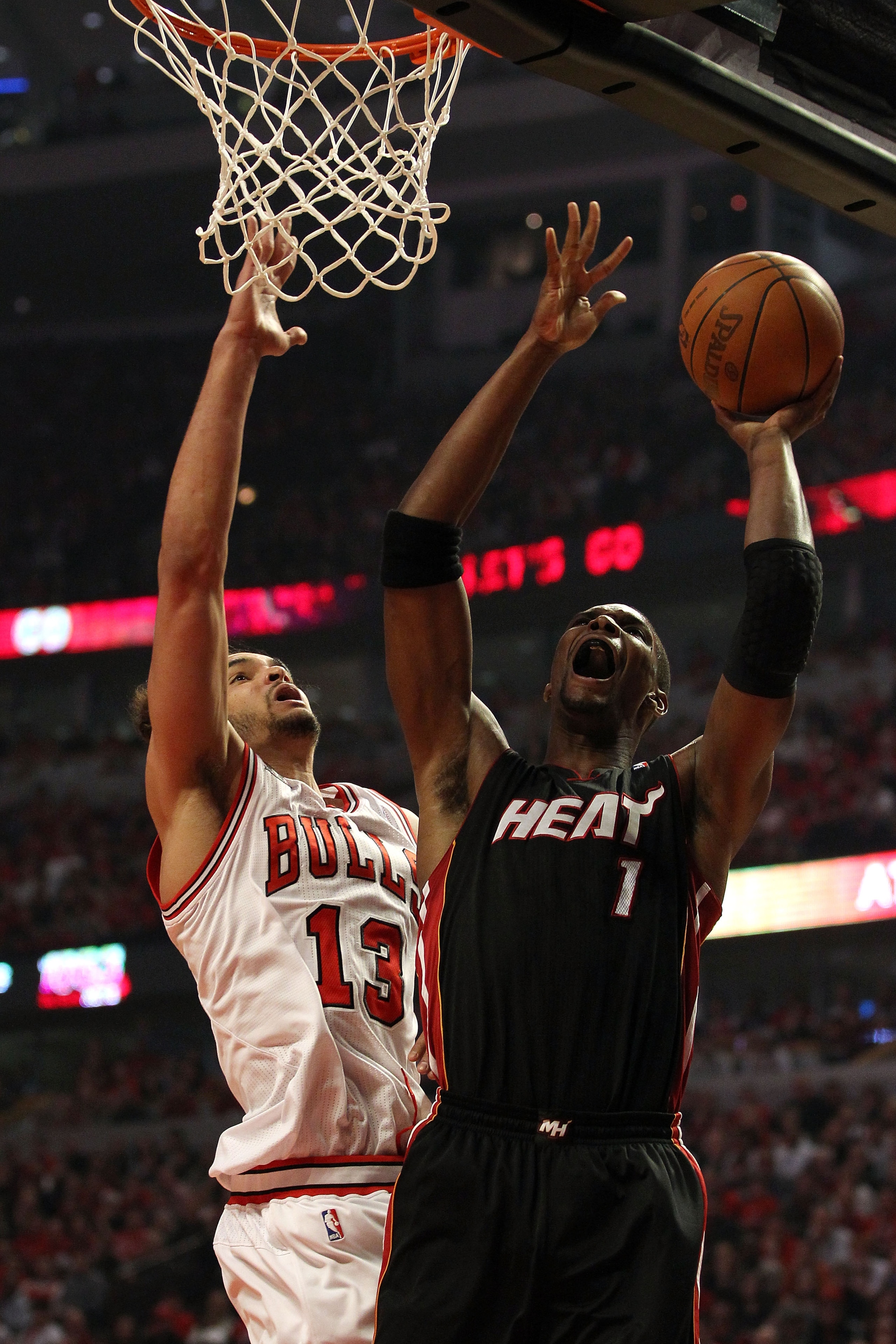
While they might not be guarding one another for much of the night whichever of these two plays better could be the determining factor in the game. For both teams, it is critical for production from their power forward.
The bright side for the Miami Heat is that Chris Bosh had a spectacular game. He was certainly the only one of the Big Three that played big. He was 12-for-18 from the field and racked up 30 points. He also led the Heat in rebounds. He was clearly the leader in the "vs. Boozer" match.
Boozer wasn't bad though, he was just no Bosh. Boozer scored 14 points on 5-for-10 shooting and had nine boards.
Incredibly the far less celebrated Chicago Big Three of Rose, Boozer and Deng scored the same 63 as the Heat big three.
Defending the Paint, Joakim Noah vs. Joel Anthony
5 of 10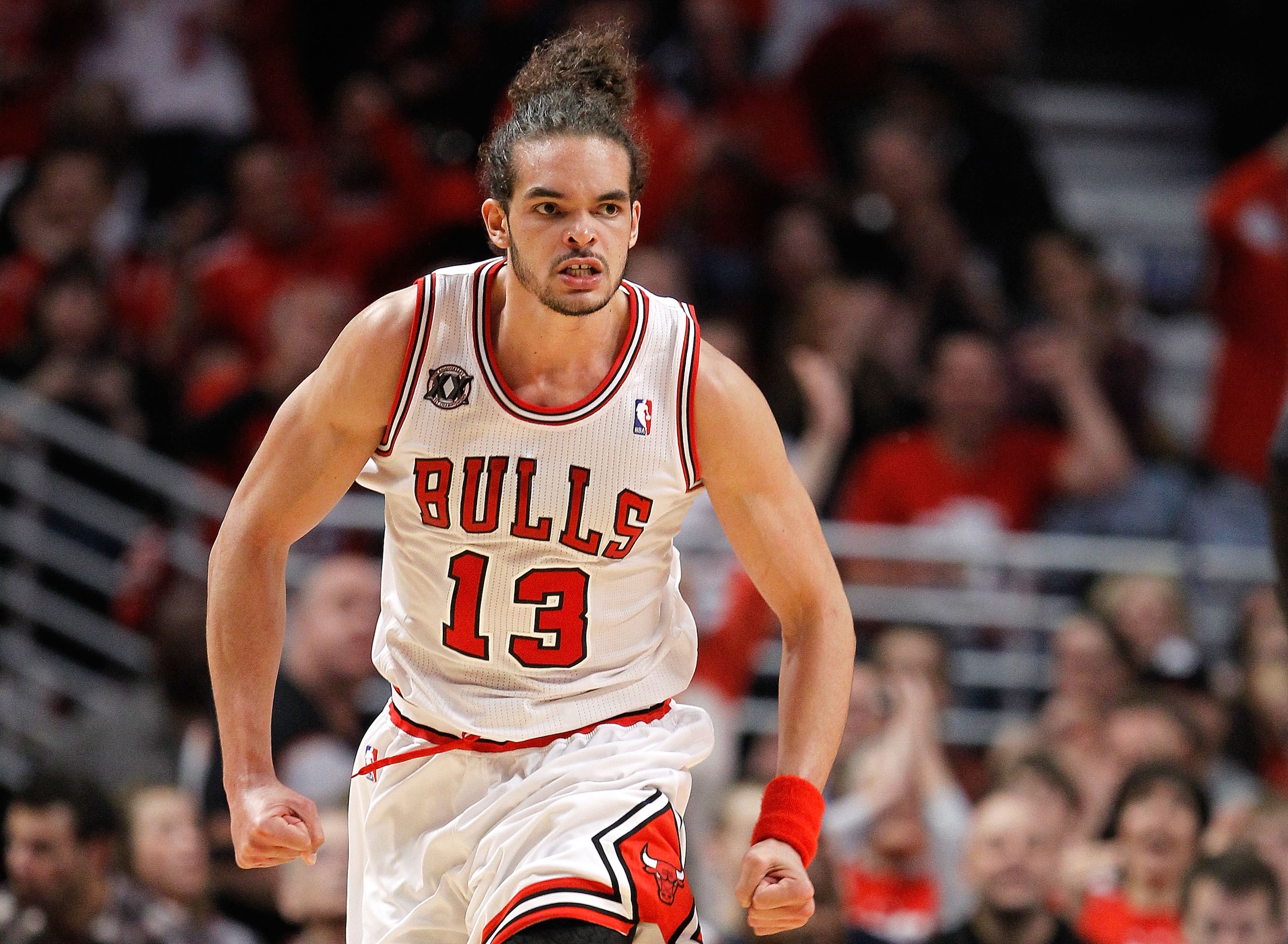
The three best players at getting into the paint in the world are going to be playing in this game. The Heat have both Wade and James to penetrate. The Bulls have Rose. Joakim Noah and Joel Anthony will be leading the defensive efforts in the paint.
While Maimi has the advantage in having both James and Wade, defensively Chicago has a lot of great defensive big men with Noah, Taj Gibson, Omer Asik and Kurt Thomas. Who wins the battle in the paint will be key.
The Heat actually won the points in the paint battle, a large reason for that being the play of Chris Bosh. However, the Bulls defense in the paint was spectacular for most of the night in keeping Dwyane Wade and LeBron James from penetrating and scoring at will.
Their bench big men, Gibson and Asik were both outstanding defensively and contributed heavily to the stretch of the game in the fourth quarter where Chicago was able to pull away from Miami.
The Battle for Field Goal Percentage
6 of 10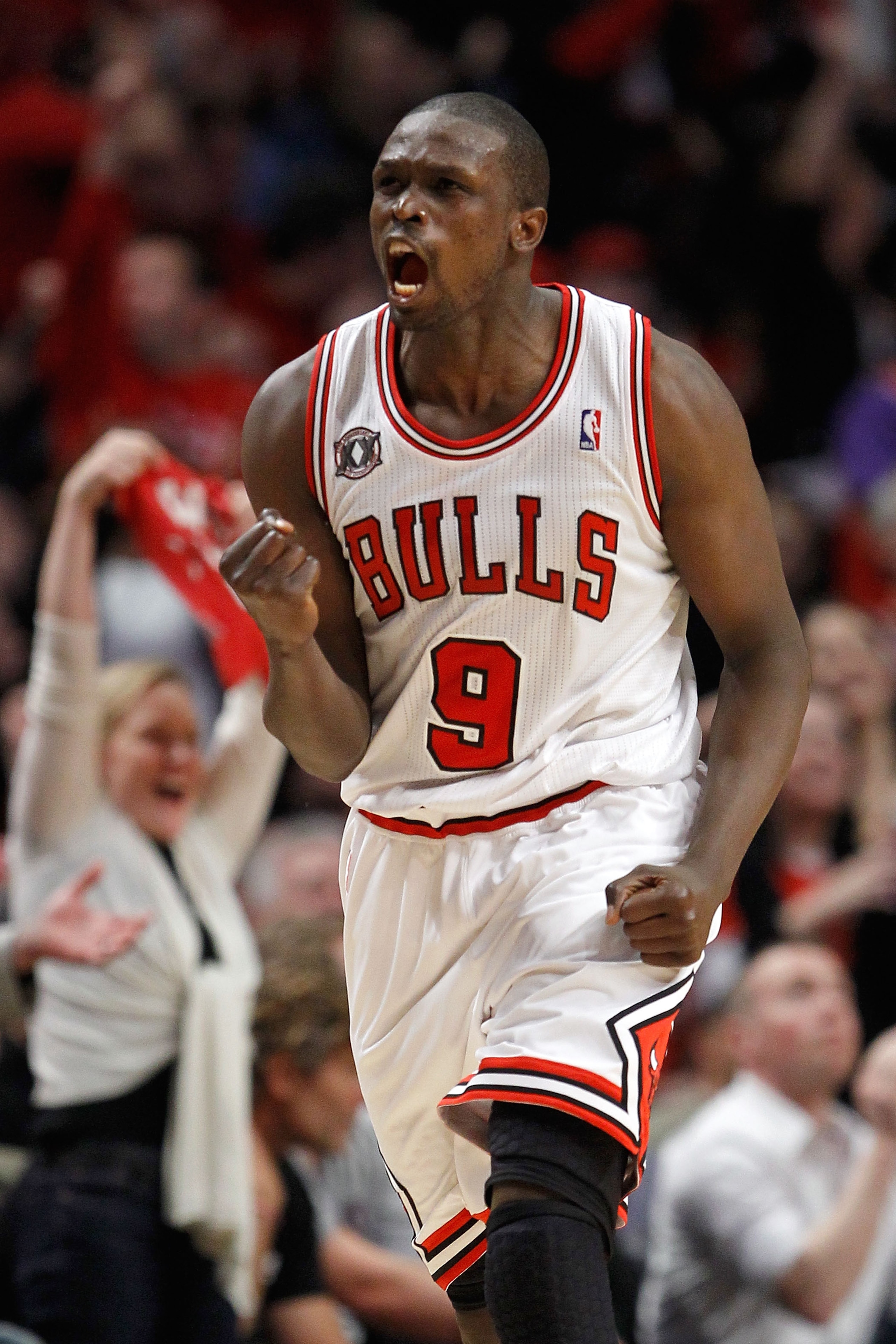
Both teams excel when they lead the battle for field-goal percentage. Both also tend to win that particular war. Miami is second, having outshot their opponents 59 times. Chicago is third having won the battle 54 times. When Miami wins they are 54-5, Chicago is 49-5. Needless to say, this will be key.
The Miami Heat shot better. They actually shot a lot better, .471 to .437 better. There were two reasons it didn't pay off for them though. First, Chicago's three-point shooting changed that a bit, hitting .495 to Miami's .492 if you adjust for threes.
Second because of offensive rebounding the Bulls had 31 second chance points. The Bulls had 87 attempts to Miami's 68. When you have 30 percent more attempts, making them isn't so critical.
The Turnover Battle
7 of 10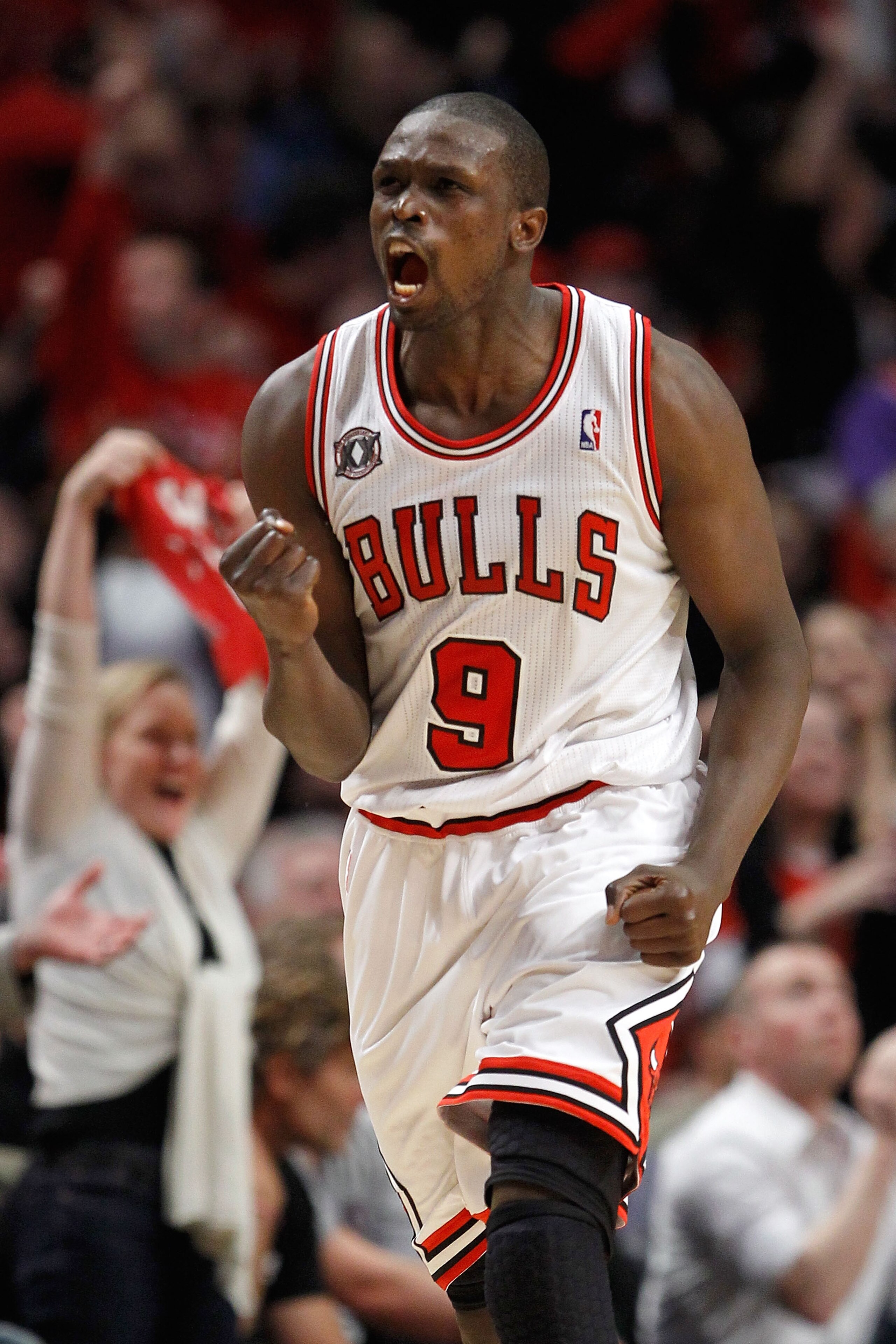
The Bulls are 31-6 when they win the turnover battle. The Heat are 26-10. Neither team is exceptional at winning that particular battle, but the both take advantage of it when they do.
The Bulls started off rough. The Heat's first two baskets were transition points. They scored eight points in transition in the first quarter. The Bulls held them to two for the rest of the game.
The Bulls halfcourt defense is just better than the Heat's halfcourt offense, and if the Heat aren't able to speed up the game, this series will not last long. Chicago had only 10 turnovers on the game to Miami's 16. They had nine fastbreak points to Miami's 10.
The Bulls don't need a big edge here. They just need to keep it close, and they did.
Luol Deng led all players with four steals.
The Battle of the Bench
8 of 10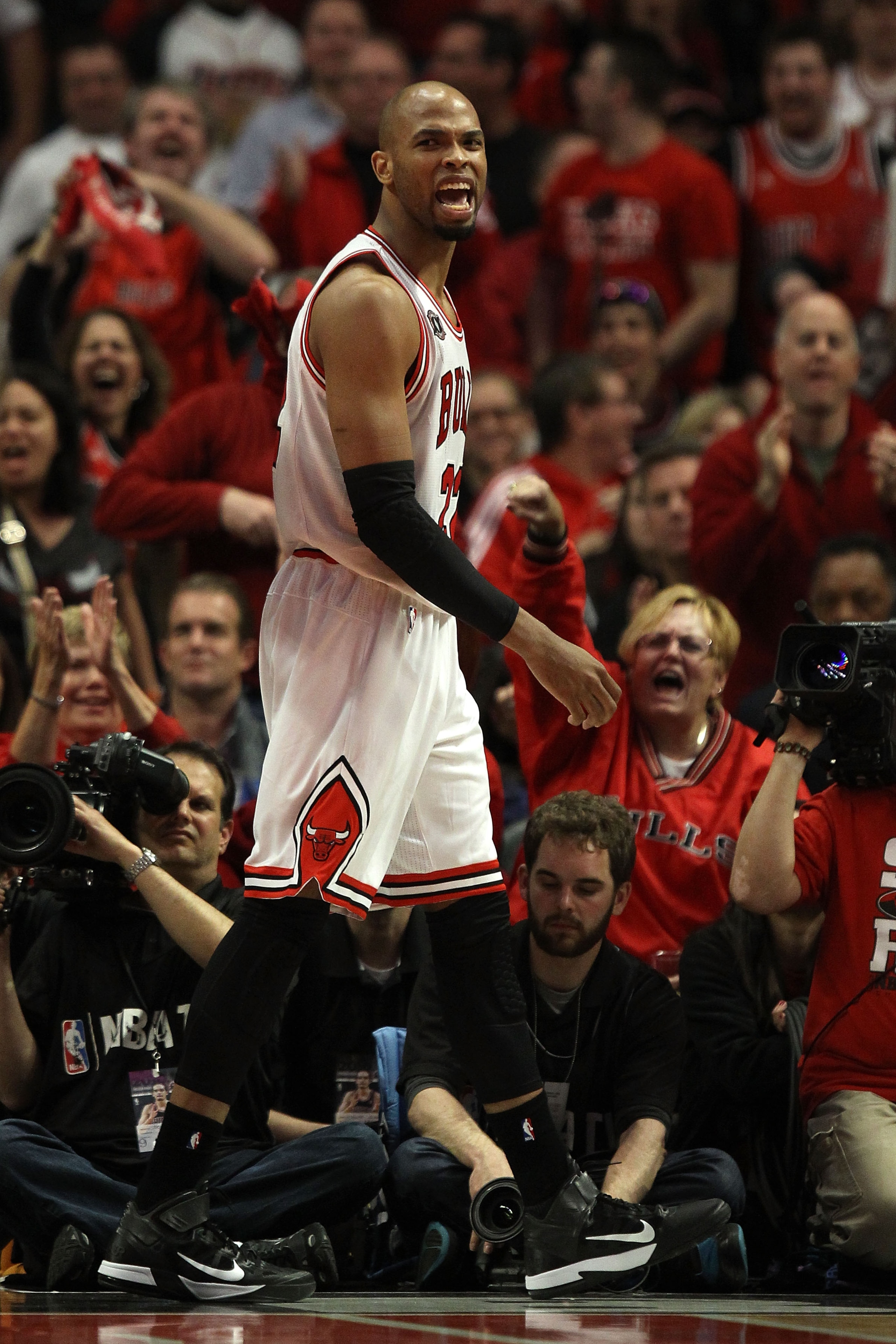
Neither team relies on their bench for a lot of scoring but both use their benches for a lot of the "little things." The Heat are 30-7 when their bench outplays their opponents. The Bulls are 55-11. Winning the bench battle will be a crucial factor to winning the games.
The Bulls bench was just on a different level, and it's hard to foresee how that's going to change in the duration of the series. Chicago's defenders that come off the bench are just so good. In fact, it can be argued that the Chicago bench is the best defensive unit in the NBA, period, starter or bench.
When they contribute scoring too the Bulls are just an impressive team. They outscored Miami's bench 28-13. They won the rebound battle 14-6. They had eight assists and the Heat had zero. The Heat's bench turned it over four times, the Bulls three. They won the steals battle 3-1 and the blocks battle 2-0. They just did everything better.
The Bulls best bench player on the night was Taj Gibson though it's a tough call. Two plays really stood out. On one, he defended LeBron James one on one in isolation and absolutely shut him down. The other was a monster offensive rebound, tomahawk jam near the end of the game.
Taj Gibson may be the best defensive player in the NBA who is not starting.
Eric Spoelstra vs. Tom Thibodeau
9 of 10
The coaching battle is critical in the playoffs as the same teams play one another and adjustments are made. No two games are the same, and whichever coach adjusts the best often is the coach of the winning team. In-game and game-to-game adjustments will determine who wins this category.
Round 1 clearly has to go to Tom Thibodeau. He just made all the right adjustments at halftime. The small ball team that Miami ran out in the first half caught Chicago off guard, but after the adjustments were made, Spoelstra had two choices. Be too small or be too slow.
Derrick Rose Efficiency
10 of 10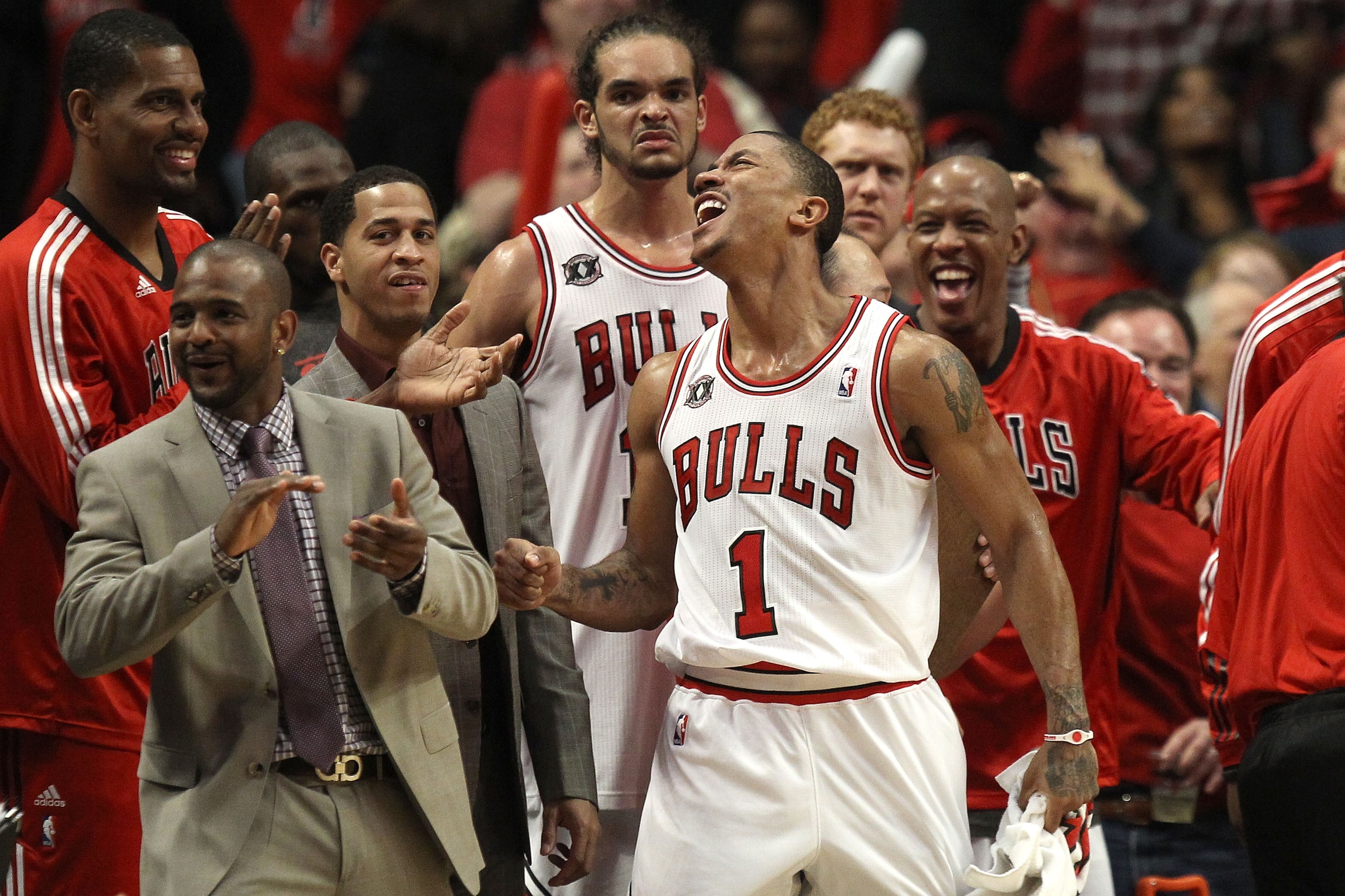
With Derrick Rose efficiency is more telling than field goal percentage. When he scores 1.25 points per field gaol attempt, the Bulls when 83 percent of their games, versus just 60 percent when he doesn't.
When he shoots over 44 percent from the field the Bulls win 80 percent versus 70 percent when he doesn't. That's a 23 percent swing compared to a 10 percent swing. Derrick Rose maintaining that 1.25 efficiency will be an important factor to follow.
After four turnovers in the first quarter Derrick Rose didn't turn over the ball anymore and for the most part, he played contained and efficient. His 28 points came on just 22 shots, giving him an efficiency of 1.27. At one point, he was 10-for-22, but he got a little excited as the Bulls pulled away and took a couple of careless shots.
When the Heat came out to try and challenge him and fill the lane, he made the right decisions, got his teammates involved, made the oft overlooked "first pass" that sets up the play but doesn't show in the boxscore. He did exactly what the Bulls needed him to do. It was a great game for Derrick Rose.

.jpg?w=2560)


.jpg?w=2560 "Latest Peyton-Colts Rumors")

.jpg?w=2560 "Landing Spots for Trade Candidates 📍")
.jpg?w=2560 "Ugly Jets Scoring Stat 😳")