NBA Lockout Impending: The Perfect NBA Model, Where NEVER Happens
 Sports enthusiasts either love the NBA or hate it. Unlike every other professional sports league, there's no in between.
Regardless of which side you're on, the undeniable fact that the league is wildly popular remains. I stand on the love it side. I love all sports, but the NBA stands above all pro sports leagues.
As great as it is today, it could be so much better. The upcoming lockout will address a few of the issues that will ultimately help make it a better product. Because the NBA is a business and everything is about money, some changes can't be made and therefore it will never be perfect.
TOP NEWS

J-Dub Suffers Gruesome Leg Injury
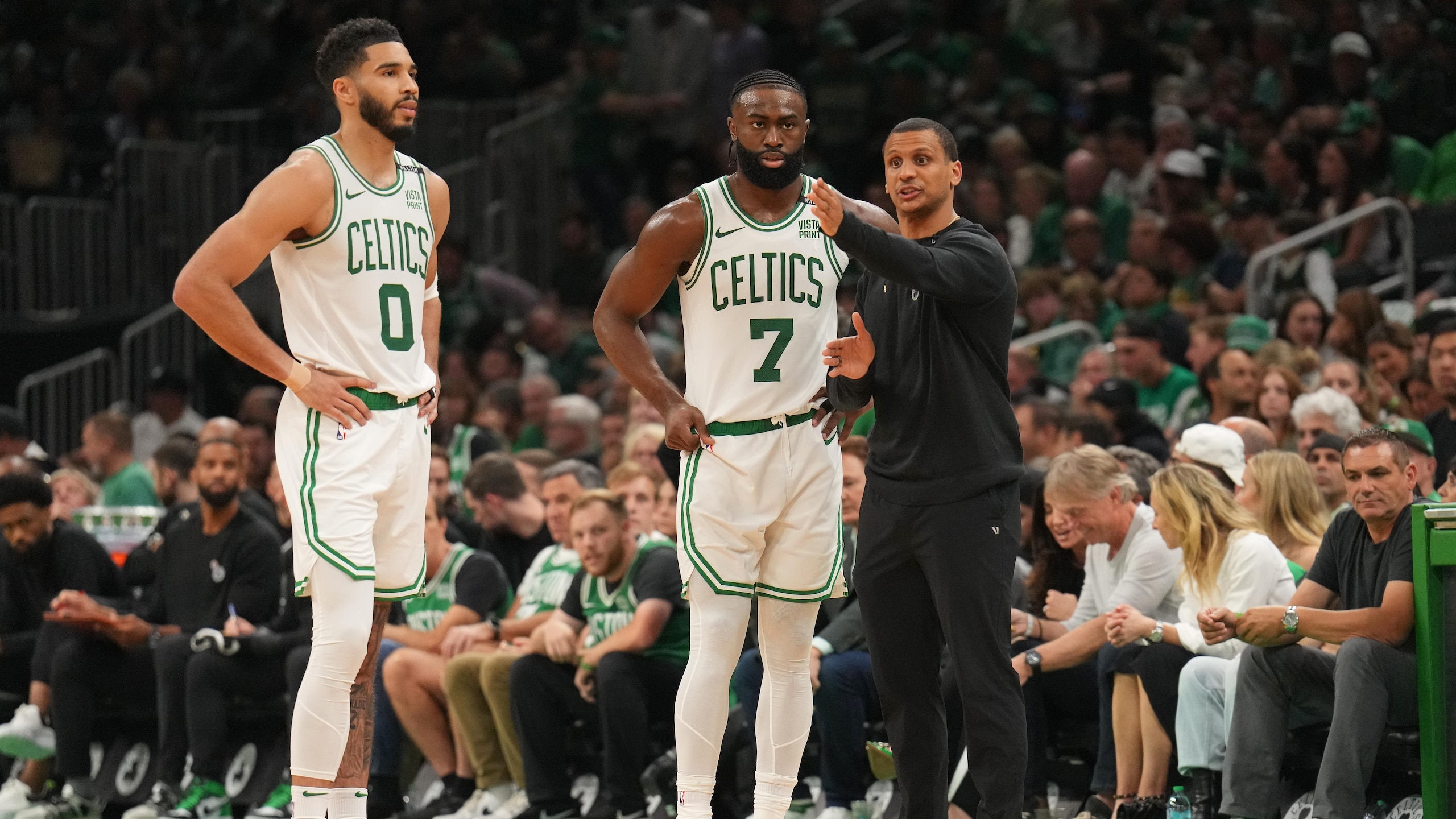
Mazzulla on Tatum-Brown Drama

Blockbuster Trade Idea To Shake Up the East
I recently spent time outlining what the NBA would look like in a perfect world and the format is as follows. Some ideas seem more ludicrous than others because it greatly differs from the norm, but take a second to think about each one and ask yourself how much more exciting the league would be if that change was implemented.
The Perfect NBA Model: "Where NEVER Happens."
1. Implement a hard salary cap and franchise tags.
Commissioner David Stern has finally come to realize his product is in desperate need of a hard cap and franchise tags, but getting the players union to agree is going to be what keeps the inevitable lockout dragging on forever.
One of the reasons the NFL is so great is because any team, regardless of its market, can go from rags to riches from one year to the next. People like that. It can take someone who isn't a football fan at all and make them a casual follower, or it can elevate a casual follower to a diehard fan.
The Green Bay Packers won the Super Bowl in February. That is the smallest of small markets. Can the Milwaukee Bucks win the NBA title? No.
Why?
Because they can't convince a star to pick Milwaukee over Miami in free agency, and if they're lucky enough to draft a star, they can't convince him to stay after his rookie contract expires.
Enter franchise tags. Slap it on your star, and it prevents you from getting LeBron-ed. At worst, the organization is forced to trade its unhappy superstar and receives incredible compensation, keeping it competitive despite the great loss.
A hard cap would eliminate the luxury tax, which allows teams to go above the current salary cap figure to sign whoever they want. The ones that choose to do so are forced to pay the league millions of dollars based on how far over that tax line they go. Only about a third of the league can afford to pay the luxury tax, a group that includes the superpowers like the Los Angeles Lakers, Boston Celtics, Miami Heat, etc.
It allows the rich to get richer and keeps the poor begging in the streets, which kills the competitive balance.
People are tired of the Lakers-Celtics final. Franchise tags and a hard cap would eventually make the whole landscape competitive.
2. Do away with the draft lottery.
The draft lottery is, and always has been, one of the stupidest things about the NBA. It gives each of the 14 teams that missed the playoffs a shot at the top selection in the coming draft.
Usually, one of the three worst teams wins the lottery because their odds are greatest, but in 2008, the Chicago Bulls won the top spot despite a 1.7 percent chance of doing so.
In a way, this changed NBA history—but nobody knew it at the time. The Miami Heat were the NBA's worst team in 2008 and ended up with the No. 2 pick and Michael Beasley.
Had there been no lottery, the Heat would have had first crack at the pool and would have selected Derrick Rose out of Memphis. Team him up with Dwayne Wade, and Miami is instantly a contender again.
Under that scenario, we probably never see "The Decision." LeBron James probably re-ups with Cleveland since the Chicago situation would have very little appeal without Rose.
The NBA needs to give draft preference to the teams that stink the worst, in exact order. It's the one chance most franchises have at landing a star player.
3. Contract four teams.
The reasonable changes were fun while they lasted, and if you like the NBA the way it is then you may want to stop reading, because the remainder of this piece is far outside the box. However, I recommend you stick around and consider the possibilities.
There are too many bad teams and far too many bad players in the NBA. Even worse is the fact that there are a lot of incompetent people running front offices, which gives those organizations no chance to win.
Stern should contract four teams, knocking the number down to 26. Two teams from each conference would have to go to keep the East and West evenly aligned.
It's really a no-brainer in the West. Get rid of New Orleans and Sacramento. The Hornets are currently under league ownership and have been a financial catastrophe for years. The Kings can't get a new arena and are mulling a move to Anaheim as a result. However, that move will never happen because apparently the Maloofs are broke, so there's no way they will be able to afford relocation and the millions of dollars owed to the Lakers and Clippers for entering their market.
As for the East, take out Charlotte and Milwaukee. The Bucks haven't been relevant since Ray Allen, Sam Cassell and Glenn Robinson teamed up earlier this decade and nearly took the deer to the NBA Finals. Charlotte shipped the Hornets to New Orleans due to a number of irresolvable issues, then brought in the Bobcats a few years later.
The team is awful, the arena is always empty and Michael Jordan is running the show—meaning the team is going to continue to be awful. Quit while you're behind and axe Charlotte. Again.
I'm not exactly sure how Stern would handle spreading out the 60 players that were employed by the now contracted franchises, but think of the players that are finally free from the stench of Sacramento, New Orleans, Charlotte and Milwaukee.
Chris Paul, Trevor Ariza, Tyreke Evans, DeMarcus Cousins, Stephen Jackson, Brandon Jennings.
Fewer teams means fewer bad players, which creates a better overall product.
4. Cut playoff qualifiers from 16 to 12, use NFL format.
If the league was to rid itself of four teams, then naturally the next step would be to lessen the number of playoff qualifiers. Currently 16 of the 30 teams (53 percent of league) make it, and that's too many. In the NFL, 12 of 32 (37.5 percent) make it, while only eight of 30 qualify in Major League Baseball.
The NBA should reserve six playoff spots for each conference, giving it a total of 12, and implement the NFL playoff format. For those that aren't familiar or need a refresher, that would give the top two seeds in each conference a bye into the second round and home-court advantage to start its first series.
NBA fans everywhere outside of San Antonio loved that the eighth-seeded Memphis Grizzlies ousted the top-seeded Spurs in the opening round last week, but don't let that fool you. Ninety percent of first-round series between the 1-versus-8 and 2-versus-7 are foregone conclusions that end in sweeps.
Get rid of the seven and eight seeds and ship the top two seeds in each conference to the second round right off the bat.
5. Shorten first two rounds of playoffs.
Even the biggest fans of the NBA, myself included, feel that the playoffs last far too long. There's no reason they need to take almost 10 weeks to complete. Well, there is one reason—money. The longer the league year lasts, the more revenue it receives, and again, that's why this will never happen.
What should happen is this: Stern should shorten the first round to a best-of-three and make the semifinals a best-of-five, while keeping the conference and NBA Finals a best-of-seven.
Part of the reason casual basketball fans can't get into the NBA playoffs is because they usually provide a scratch bracket. In other words, there are rarely any upsets because the better team almost always comes out on top in a seven-game series.
With the top two teams on each side getting a bye into the second round, make the other four duke it out over three games. This would allow for some upsets, because any team can win a best-of-three. Moving on to the semis, a best-of-five also keeps alive the possibility for an upset for whoever advances to play the No. 1 and No. 2 seeds.
The top two have been resting while their opponent stayed in a groove throughout its first series. Rest is usually beneficial, but it can take a game to knock the rust off. If the top seeds drop that first game as a result and lose home-court advantage right away, suddenly, in a five-game series, things get really interesting.
The conference finals and NBA Finals should remain a best-of-seven because the quality of basketball will theoretically be the highest in those rounds. Nobody minds sitting through a seven-game series if you have two great teams facing off, or one David attempting to slay another Goliath.
6. Make it a 50-game season.
This is the grand finale. The R-word ("revenue") will ensure this never happens, but if it did, the NBA would be, by far and away, the greatest professional sports league—and it wouldn't be close.
I love basketball, and part of me loves that the regular season lasts almost six months and 82 grueling games. But as far as excitement goes, the regular season packs very little until the final month. That is a real problem.
The first thing you hear from anyone watching highlights of an NBA regular season game prior to the All-Star break is "Who cares, it's game four of 82!" As much as that has always bothered me, they're right. All of the games count the same in the end, but only the biggest fans recognize that.
These changes are about bringing non-fans up to casual fan level and casual fans up to diehard level. The ones that are already diehard will continue to be, regardless.
Think back to the lockout-shortened season of 1999. There were 50 games. Every single one mattered because that extra 32-game cushion was gone. Factor that in with a smaller playoff bracket, and each regular season game would have playoff intensity.
In the new league of 26 teams, each team plays each other twice, once at home and once on the road. Stern is all about his superstars, and this would ensure that each one plays in every city once during the regular season.
One last reason to shorten the regular season is it would make the quality of play in the postseason so much better. I hate to keep picking on the Spurs, but let's use them as an example.
San Antonio is a fading group that still has its core intact from the team that won four titles over an eight year span earlier this decade. The Spurs are an old team by NBA standards.
After 50 games, they were 42-8 and looked unbeatable. In the ensuing 32 games, they finished an ordinary 19-13, lost their legs and were eliminated in the first round by Memphis.
Same thing with the Boston Celtics. Great core. Old team. Started 38-12. Finished 18-14. Still playing, but on life support in its second-round series with the younger and fresher Miami Heat.
In a 50 game season, even the elders will be fresh enough to make a run at the title.
The lockout begins July 1 at midnight. The league will look very different when a new collective bargaining agreement is finally hammered out.
I'm darn near certain it won't look anything like the Perfect NBA Model, which is a shame.
But if David Stern truly wants his product to be considered the best in professional sports, he'd be wise to follow this format.
.jpg?w=2560)



.jpg?w=2560 "Latest Peyton-Colts Rumors")