
College Football 2011: The 25 Coaches under the Most Pressure to Win a Title
Coaches who suffer under the constant strain of title hopes are not always found on the proverbial “hot seat.”
Though the two lists definitely have shared membership many times, the coach who is expected to win championships is a victim of his own success (i.e. Nick Saban, who garners more expectations with every title).
That said, there definitely are those guys who have been around long enough to have “their system” and “their personnel” in place who will either have to start delivering on the glory they alluded to upon their hiring, or, find another job.
Coaching certainly is a tough business to be in.
The following slideshow attempts to identify the 25 coaches in 2011 that are under the most pressure to win a title.
It’s important to note that the “title” they so desperately need could be a national championship, a conference crown or a mere divisional title.
For a wide array of reasons, and in the next couple of seasons, these guys need to bring some championship hardware to the office in 2011.
Mack Brown, Texas
1 of 25
In his 13 seasons as the head coach at the University of Texas, Mack Brown has won four Big 12 South Division titles, two Big 12 Conference Championships and the 2005 BCS National Championship.
His overall career record of 209-108-1 makes him, at 66.6 percent, the No. 24 ranked winningest active coach in the FBS.
But all this seem to have been immediately cancelled out and swiftly forgotten by the Longhorns tragic (by Texas standards) 5-7 finish in 2010.
Last season marked the ‘Horns worst finish under Brown since he took over in 1998 for the beleaguered John Mackovic, who finished his career at Texas with a dismal 4-7 record in 1997.
But this is a team with the lion’s share of the money, facilities and talented recruits that make modern big-time college football churn.
Perhaps more significantly, this is a fanbase that (like the team itself) is used to winning; since 2000, the Longhorns have had nine 10-plus win seasons.
Will a metered improvement over last season be enough to protect Mack Brown’s job and his legacy at Texas?
I think the Longhorns need to, at the very least, contend for a Big 12 title for Brown to feel secure.
Dabo Swinney, Clemson
2 of 25
Dabo Swinney, who played receiver at Alabama, was promoted to the head coaching job at Clemson after Tommy Bowden resigned in October 2008.
Swinney is 19-15 during his two and half years at Clemson and led the Tigers to an ACC Atlantic Division title in 2009.
The 2009 Clemson squad lost 39-34 to Georgia Tech in the ACC Championship but went on to beat Kentucky in the Music City Bowl.
The 2009 divisional title marked the Tigers first crown of any kind since they last won the ACC in 1991.
It seems a little harsh, and perhaps premature, to say that Dabo Swinney needs to win a title in 2011, but after dropping to 7-6 in 2010 (which included a disappointing 31-26 loss to USF in the Meineke Car Care Bowl), people in Clemson will start getting antsy sooner than later.
At the very least, Swinney and company need to secure eight or nine wins next season, contend for the Atlantic Division (which will be much harder with Florida State, NC State and Maryland all playing well) and show forward, rather than backward progress.
Lane Kiffin, USC
3 of 25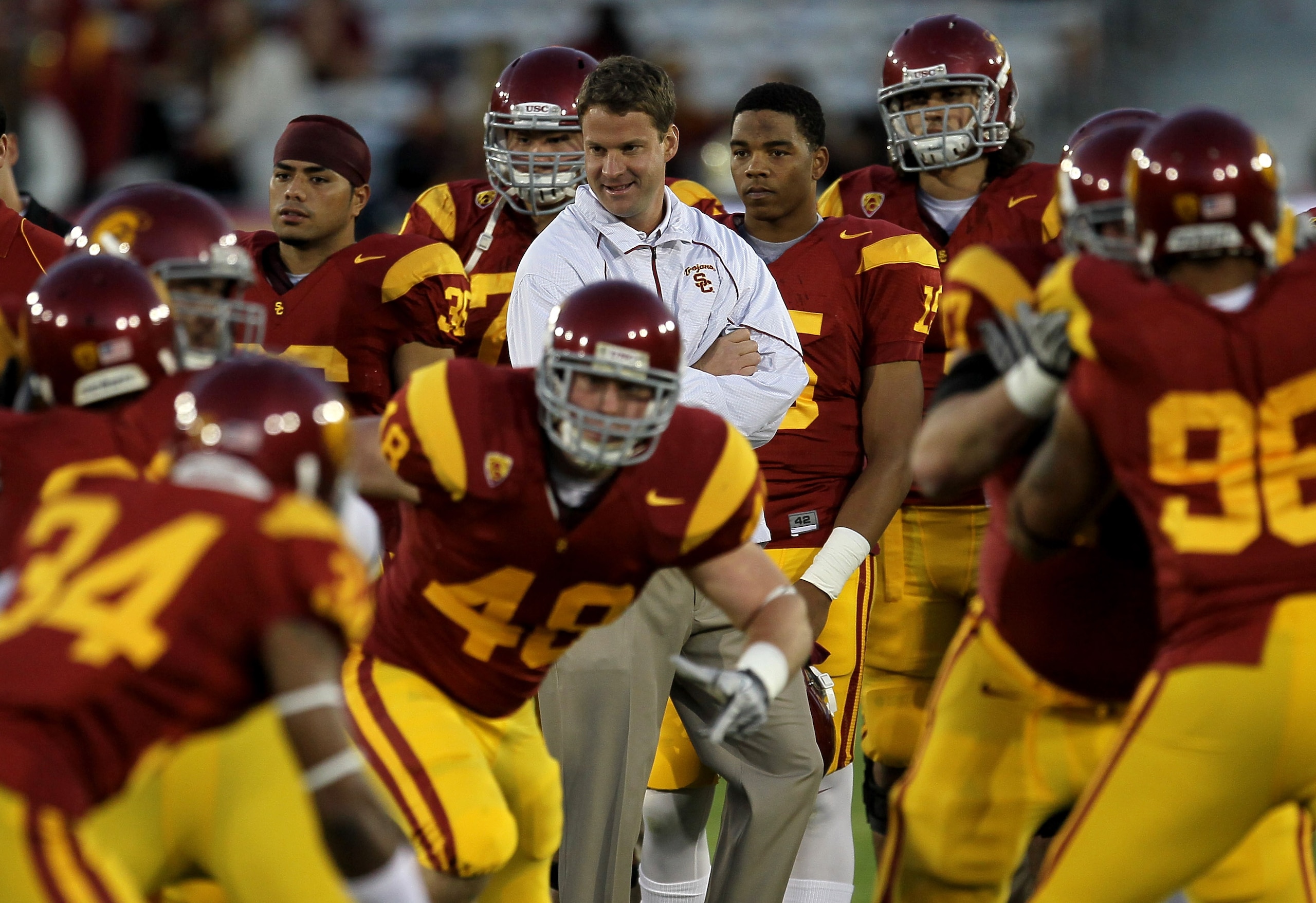
Well, Lane Kiffin can’t win any kind of title in 2011, as the Trojans are still postseason ineligible for one more year.
However, Kiffin needs to have USC title ready for 2012 and 2013 if he expects to keep the family in sunny southern California.
Yes, Pete Carroll is certainly a hard act to follow, especially given the sanction ridden program he left behind when he moved to on the NFL’s Seattle Seahawks, but Lane Kiffin talks a big game, which is fine as long as you can walk the walk and start winning championships.
From 2002 to 2008, USC won seven consecutive Pac-10 titles and two national champions. Once the protective cover created by the label “postseason banned” is lifted, Lane Kiffin will be expected to produce big right away.
“Big” equals one thing at USC: winning championships.

.png?w=2560)
Mike Stoops, Arizona
4 of 25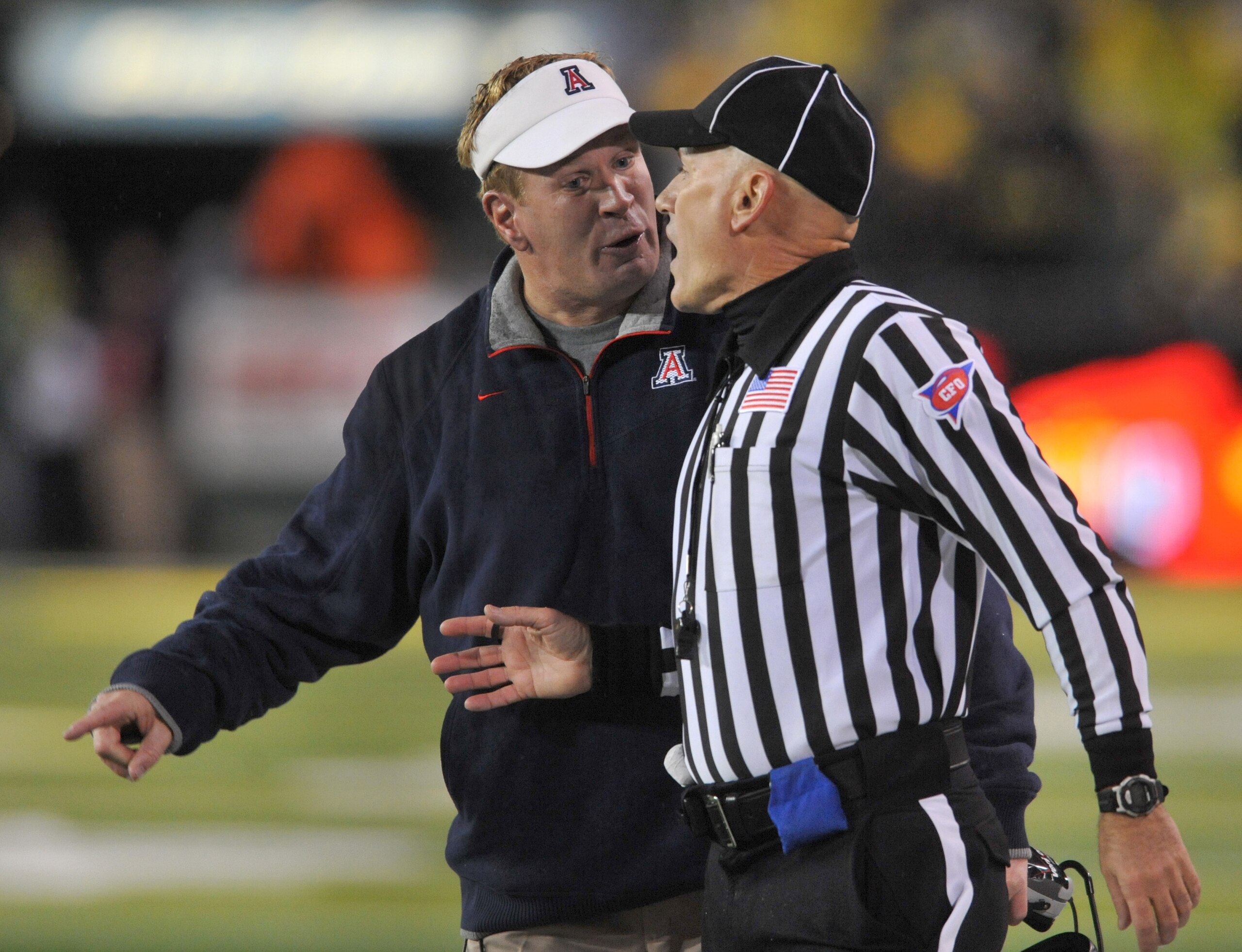
Mike Stoops began his career in college football as a defensive back at Iowa and then made coaching stops at Iowa, Kansas and Oklahoma before landing the head job at Arizona in 2004.
Stoops took over a program that went only 2-10 in 2003 under John Mackovic and Mike Hankwitz. In 2004 and 2005, the Wildcats marginally improved to 3-8, went 6-6 in 2006, 5-7 in 2008 and then finally enjoyed 8-5 finishes in both 2008 and 2009.
The two 8-5 seasons had fans believing that Stoops and Arizona were ready to make the step towards contending for a Pac-10 title, but those hopes were dashed in 2010.
The Wildcats were a lofty 7-1 going into their November 26, 2010 meeting on the road with Stanford, and the 42-17 beat down signaled the beginning of a five game losing streak that finally ended when Oklahoma State beat Arizona 36-10 in the Alamo Bowl.
Arizona finished 2010 with a 7-6 record that seemed worse given how the season ended.
How much more patience Arizona can spare the intense Stoops is unknown; any kind of title (and with the new Pac-12 format a South Division crown will be up for grabs in 2011) will likely keep him as the Wildcats coach for at least little while longer.
Rick Neuheisel, UCLA
5 of 25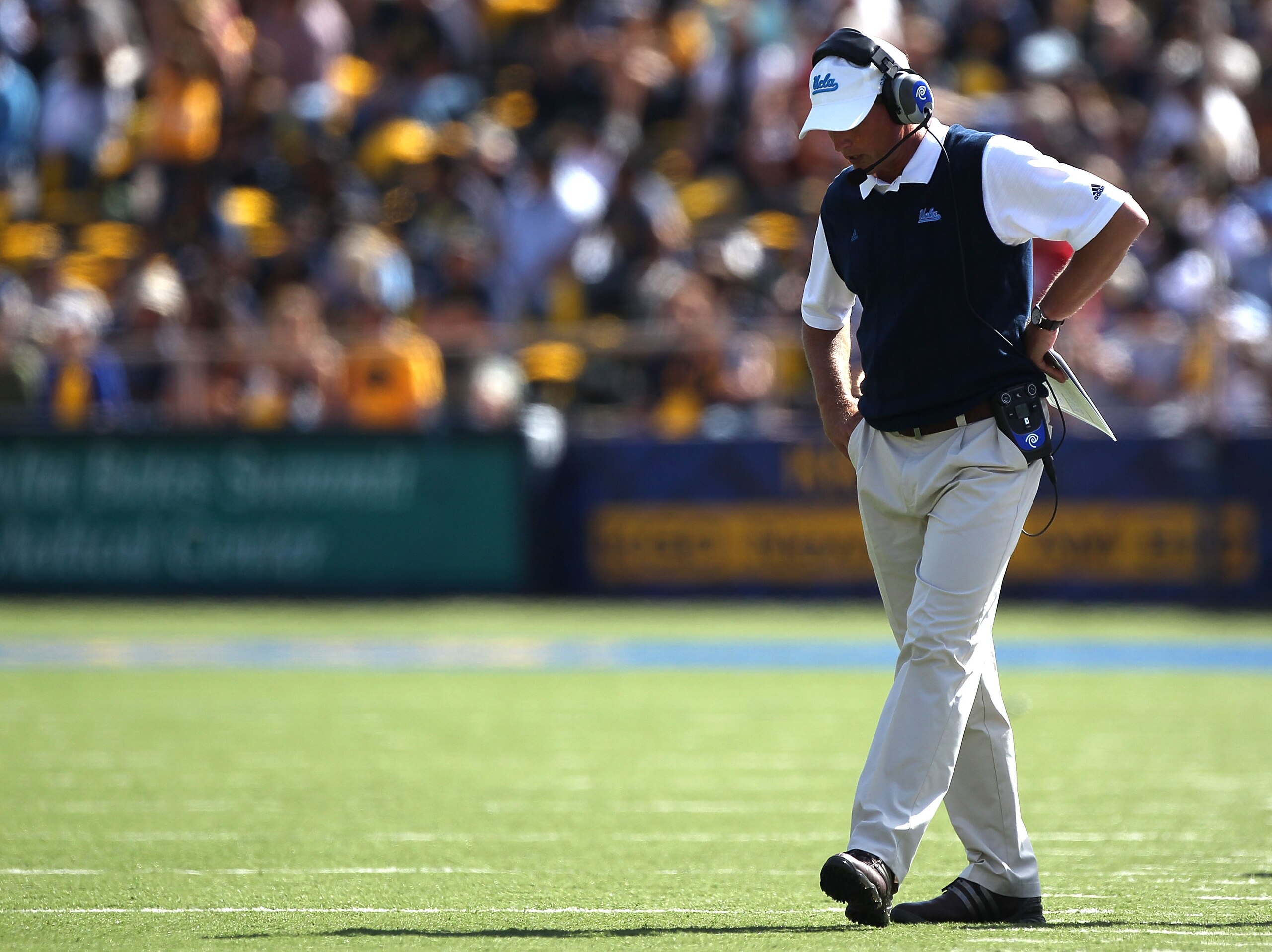
Rick Neuheisel played quarterback at UCLA before starting a coaching career with stops in Colorado, Washington and NFL’s Baltimore Ravens.
Neuheisel returned to his alma mater in 2008 to take over the head coach job from Karl Dorrell, who led the 2007 Bruins to a 6-7 finish.
The Bruins under Neuheisel have been underwhelming; his overall record thus far is 15-22, and the highlight was the 2009 team that went 7-6.
You’ve got to figure that UCLA would like to keep Neuheisel around due to the fact that, as an alumnus, he would offer more stability than someone from outside the Bruin family.
However, UCLA hasn’t won a Pac-10 title since 1998, and at some point, someone (whether it’s Neuheisel or not) will need to return the Bruins to title form if they want to stay for the long haul.
Bo Pelini, Nebraska
6 of 25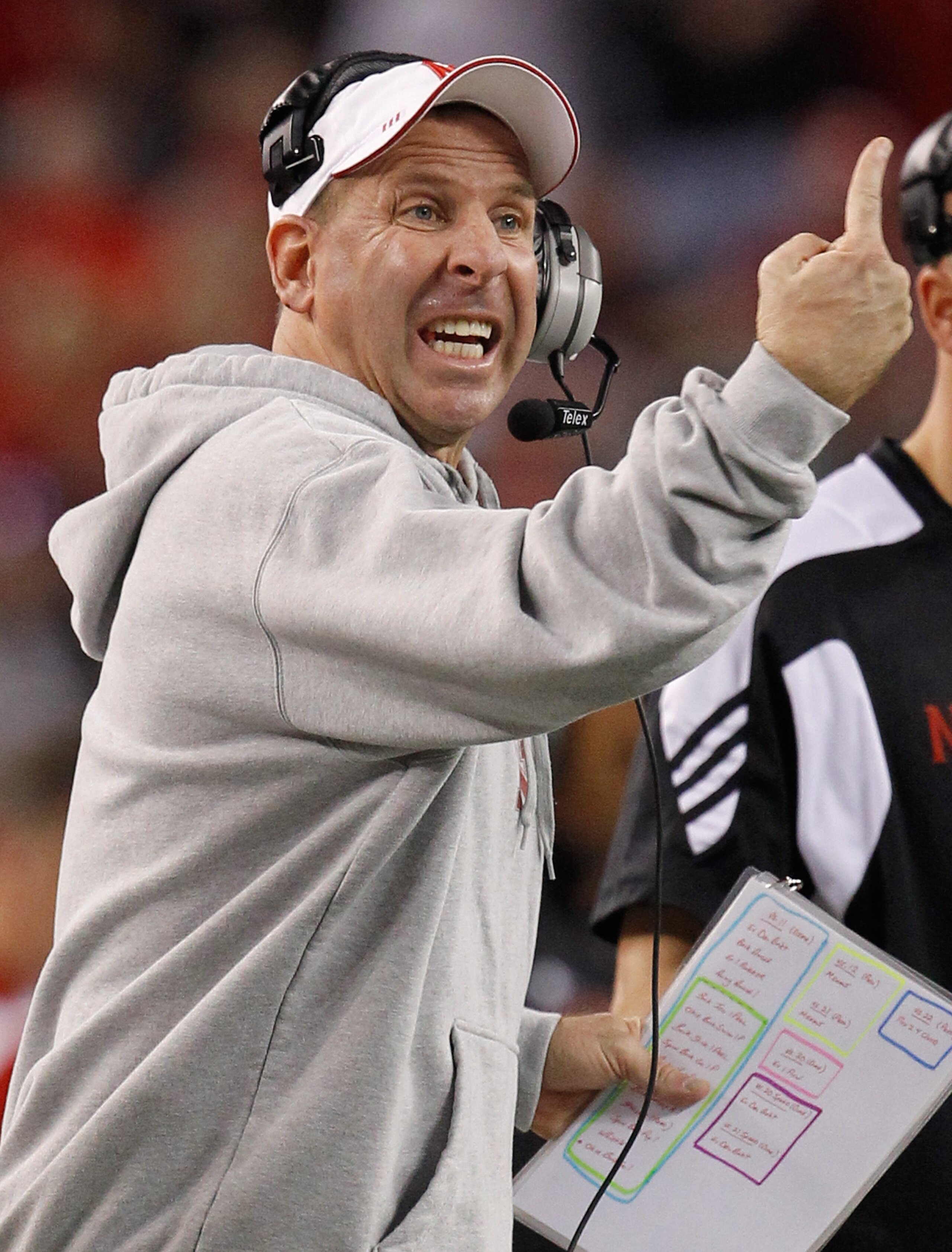
Before starting a coaching career that included almost a decade of defensive focused coaching in the NFL, Bo Pelini played Free Safety at Ohio State from 1987-1990.
Pelini landed the Nebraska job in 2008 and has an impressive 31-12 record thus far that includes three consecutive Big 12 North Divisional titles.
Performance wise (and not considering the violent outburst issues from 2010), Pelini is a long way from any type of “hot seat” designation, but that doesn’t change the fact that Nebraska is a program that will eventually expect to win conference and then national titles.
Overall, the Cornhuskers own 47 conference and five national titles.
1999 was the last year Nebraska won the Big 12 conference, and 1997 was the last time the Cornhuskers won a national title.
Bo Pelini may be the Cornhuskers’ guy, but he’s eventually (and joining a new conference will probably buy him some time) going to be expected to go all the way.
Bob Stoops, Oklahoma
7 of 25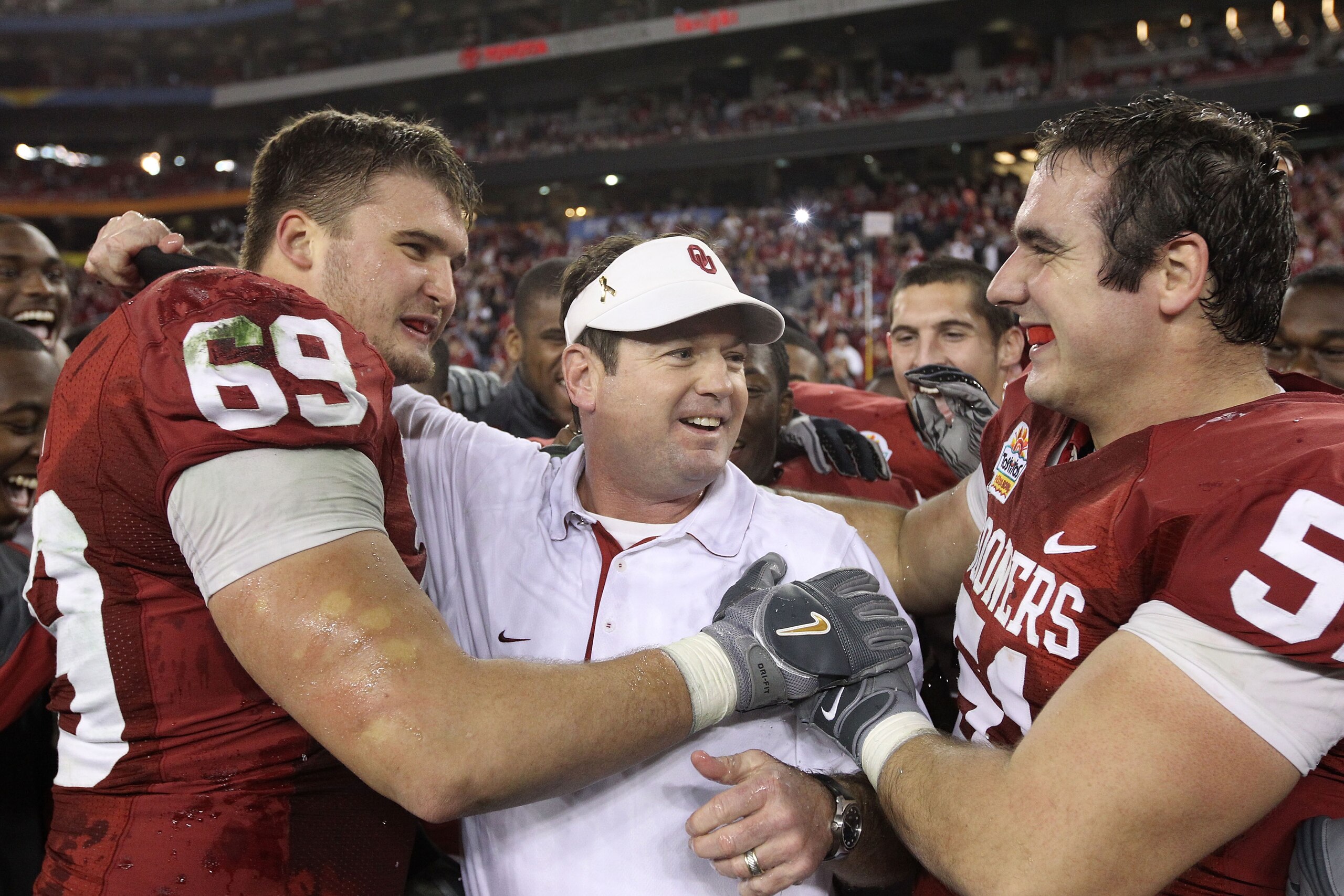
Bob Stoops’ 12 season run at Oklahoma has been nothing short of brilliant: a 129-31 record (the 80.6 percent winning ratio makes Stoops the No. 3 winningest active coach), seven Big 12 crowns and the 2000 National Championship.
However, Stoops (fairly or unfairly) has developed a bit of a reputation for reaching the top and then losing the game that would ice a championship season.
His record in BCS bowls (Oklahoma is second only to Ohio State in BCS appearances) is 3-5, and though he won the 2000 title, he lost in the championship games played in 2004 (21-14 loss to LSU) and 2005 (55-19 loss to USC).
It seems mildly ridiculous to expect more from Stoops, but at some juncture, he will need to (especially given the opportunities he earns) win another national championship.
This very real pressure to “win it all” will be significantly ramped up in 2011 when the Sooners are predicted to be one of the best teams in the nation; anything less than the BCS crystal football will be considered a disappointment.
Tommy Tuberville, Texas Tech
8 of 25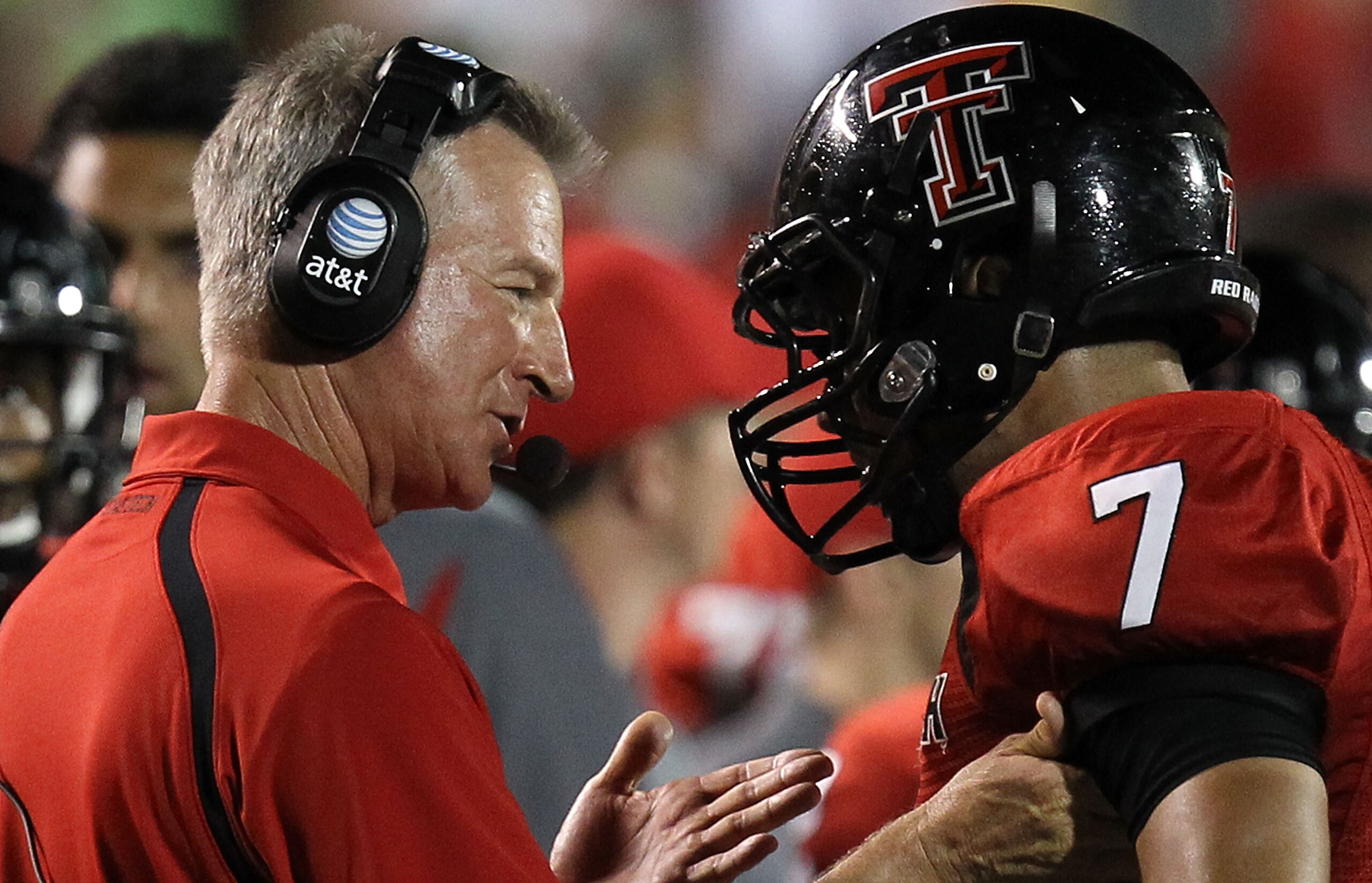
Titles aren’t easy to come by in a place called Lubbock, Texas; regardless of this, Tommy Tuberville needs to win something with the word “championship” attached to it.
Why?
First, Tuberville had the unfortunate luck of following Mike Leach as the head football coach at Texas Tech.
The questionable way Leach was dismissed combined with his huge popularity and relative success make him a very hard act to follow; especially if you (like Tommy Tuberville) are the anti-Leach, contrasting in every way.
None of this is Tuberville’s fault, but one of the only ways to satisfy the Red Raider Nation would be to win more games than Mike Leach did (which means win titles).
Secondly, when Tommy Tuberville came to Lubbock in January of 2010, he openly spoke of (and has continued to speak of) “championships."
If you are going to continue to promise something to people on some level, they will come to expect it.
It’s like dangling meat over a hungry animals head; you either give them the meat or get your hand bit off.
Mike Sherman, Texas A&M
9 of 25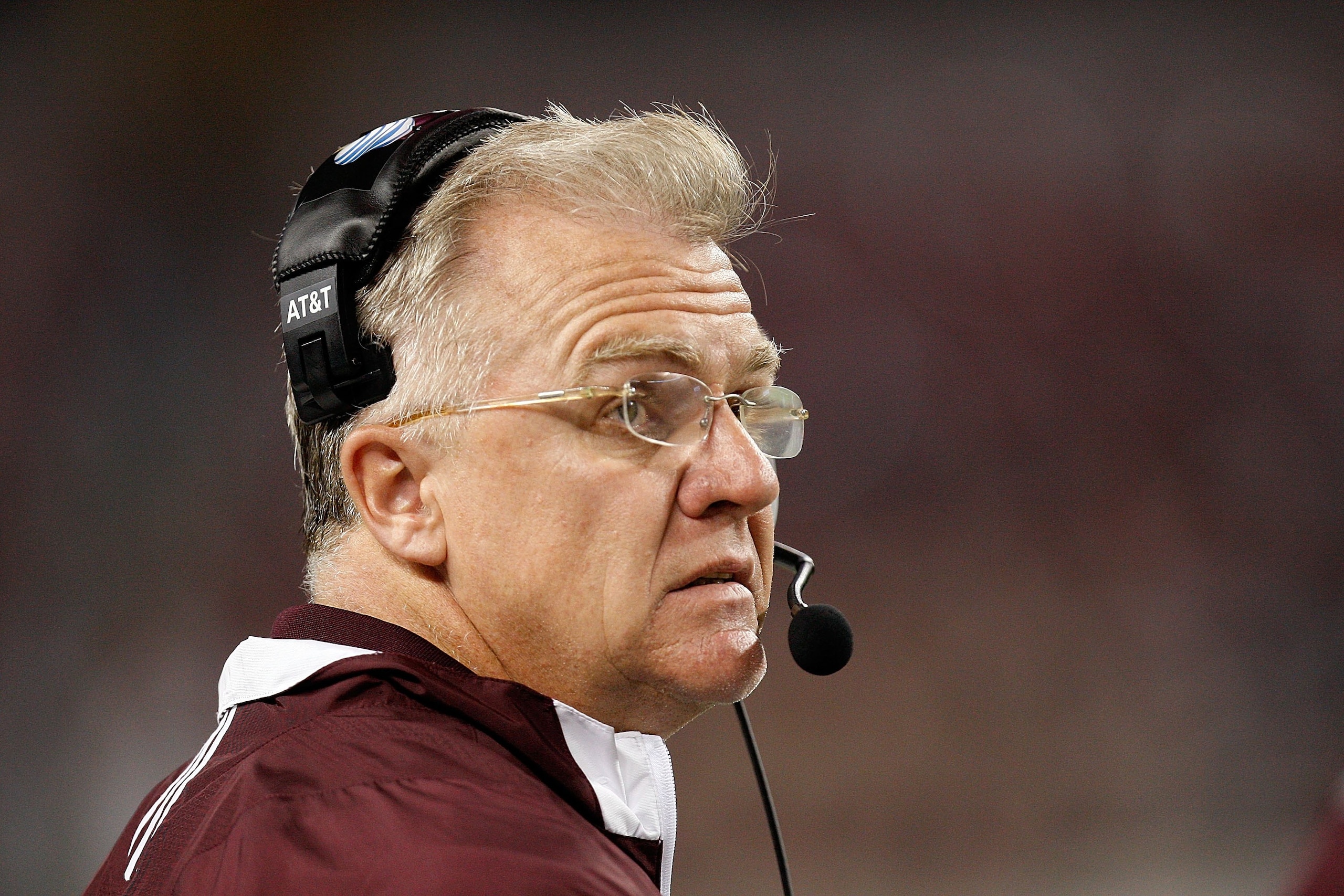
How long will the warm afterglow of the Aggies 2010 six game winning streak (resulting in a 9-4 record) protect Mike Sherman?
My guess is Sherman (who played both defensive end and offensive tackle at Central Connecticut State from 1974-77) will need to win at least nine games in 2011 to keep Texas A&M fans satisfied.
But what the Aggies really want, and you can’t blame them, is to finally be playing with the big dogs (Texas and Oklahoma) and competing with them for conference and then national titles, on a regular basis.
Is this realistic for Texas A&M?
Absolutely. The finances, facilities and fanbase are all in place, someone just needs to start winning more.
If that “someone” is Mike Sherman, then he will, sooner than later, need to bring home a title.
Ron Zook, Illinois
10 of 25
In 2004, Ron Zook left Florida to become the head coach at Illinois. Zook, who went 23-14 with the Gators, took over an Illinois program that had gone 4-19 over the last two years of Ron Turner’s tenure.
In six seasons, Ron Zook has amassed a 28-45 record and a 38 percent winning ratio.
The high water mark amid some fairly ugly seasons was 2007, when the Illini went 9-4-0 and made it to the BCS Rose Bowl, where they were summarily thumped by USC 49-17.
Amazingly, 2010’s 7-6 finish is the second best record at Illinois during his tenure.
Illinois last won a Big Ten Championship in 2001, so a Big Ten title may be too much to ask for. However, with the new Big Ten format, Illinois could shoot for a divisional title in the Leaders grouping (no easy task either due to Ohio State, Michigan and Penn State being in the same division).
Regardless, Zook will have to find a way to win some more games, and yes, titles, to remain the head guy at Illinois.
Brady Hoke, Michigan
11 of 25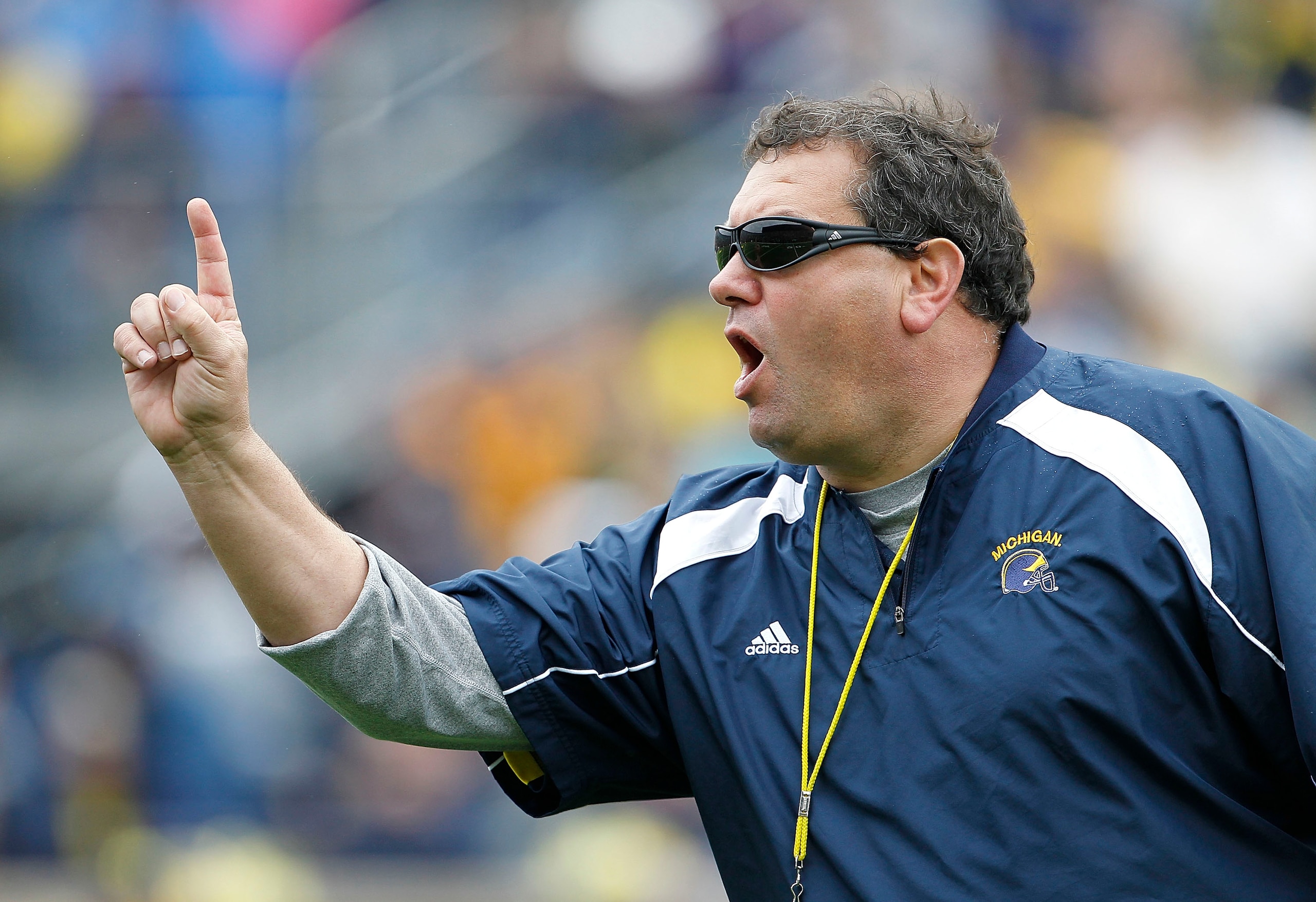
Brady Hoke? Championships? Michigan?
Yes, Brady Hoke, as soon as he took the job at Michigan earlier this year, began to live under the pressure of being the head coach at Michigan (which includes championship induced stress).
The Wolverines last captured a piece of the Big Ten title in 2004, but this is the program that has won 42 Big Ten titles and 11 national championships.
At some point, Michigan will expect Brady Hoke to do far more than beat Ohio State.
Hoke’s only title as a head coach came in 2008 when 12-2 Ball State captured a MAC West crown but lost to Buffalo (42-24) in the MAC title game.
Brian Kelly, Notre Dame
12 of 25
With all NBC’s misty eyed Irish memories and infernal banging on about Notre Dame’s championship tradition, it is important to point out that the Irish haven’t won the big enchilada since 1988.
That was 22 years ago, but the pressure to win the national title at Notre Dame is apparently eternal and so is the angst that goes with.
After surviving the Bob Davie era, Ty Willingham’s short stay and the inspirational but short on results tenure of Charlie Weis, the Irish are confident that they got it right (with good reason) by hiring Brian Kelly.
Can Kelly do it? Can he replicate his stunning successes at Grand Valley State and Cincinnati at the font of football history and tradition? Can he bring the Irish back to the top?
The pressure will be firmly on Coach Kelly’s shoulders until he wins a BCS title.
Chris Petersen, Boise State
13 of 25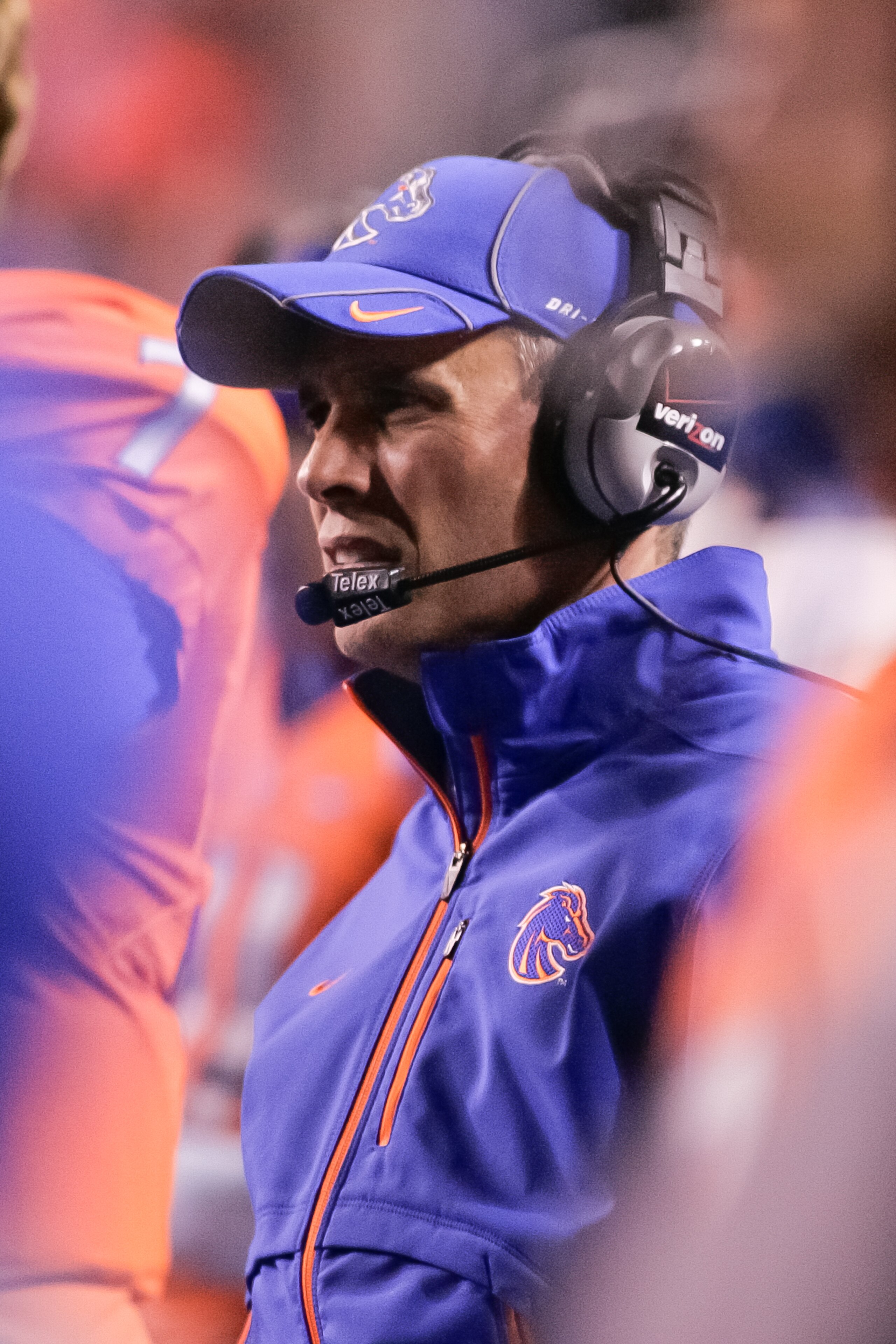
Can Boise State’s Chris Petersen be under the gun to do something that he, in reality, probably won’t be given the opportunity to do?
Seriously, can Petersen and the Broncos actually win a national title?
That’s a complicated question, and probably the most realistic answer is to say that yes, Boise State will be able to compete for a BCS title IF the Broncos go undefeated (and beat a couple of good BCS teams along the way) AND only one team from a BCS conference goes undefeated.
Then the BCS almost has to let Boise State finally get their shot.
But until that time, Chris Petersen will live under the unbearable burden of going undefeated, perfect and unblemished every single season.
Maintaining perfection while quietly and demurely waiting for a fair shake and an opportunity to compete with the other faultless teams.
Now that sucks.
Peterson is 61-5 over five seasons at Boise State.
Will Muschamp, Florida
14 of 25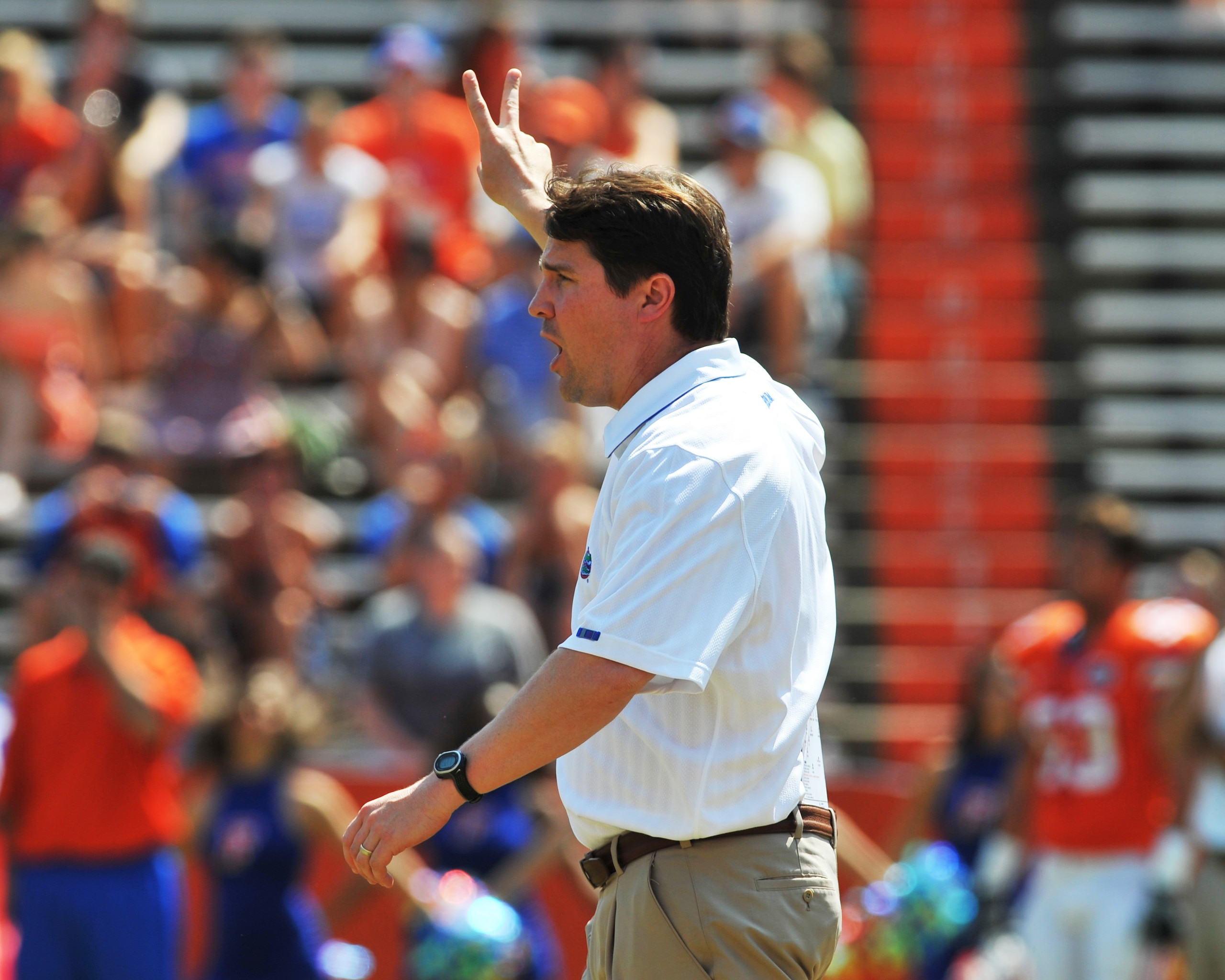
Will Muschamp played safety at Georgia from 1991 to 1994, and despite being one of the most sought after coaches over the last few seasons, Muschamp has never been a head coach on any level.
Yes, he has lots of defensive leadership experience, but the 2011 Florida Gators will be his debut as the head man.
Since 1991, the Gators have won eight SEC titles and three national championships (all since 1996). The people of the Swamp have very, very high expectations.
Urban Meyer is a tough act to follow (65-15 in five seasons), and Florida fans will insist on the Gators being in championship contention year-in and year-out.
The clock is already ticking for Coach Muschamp.
How quickly will his well-groomed, dark brown hair start to gray?
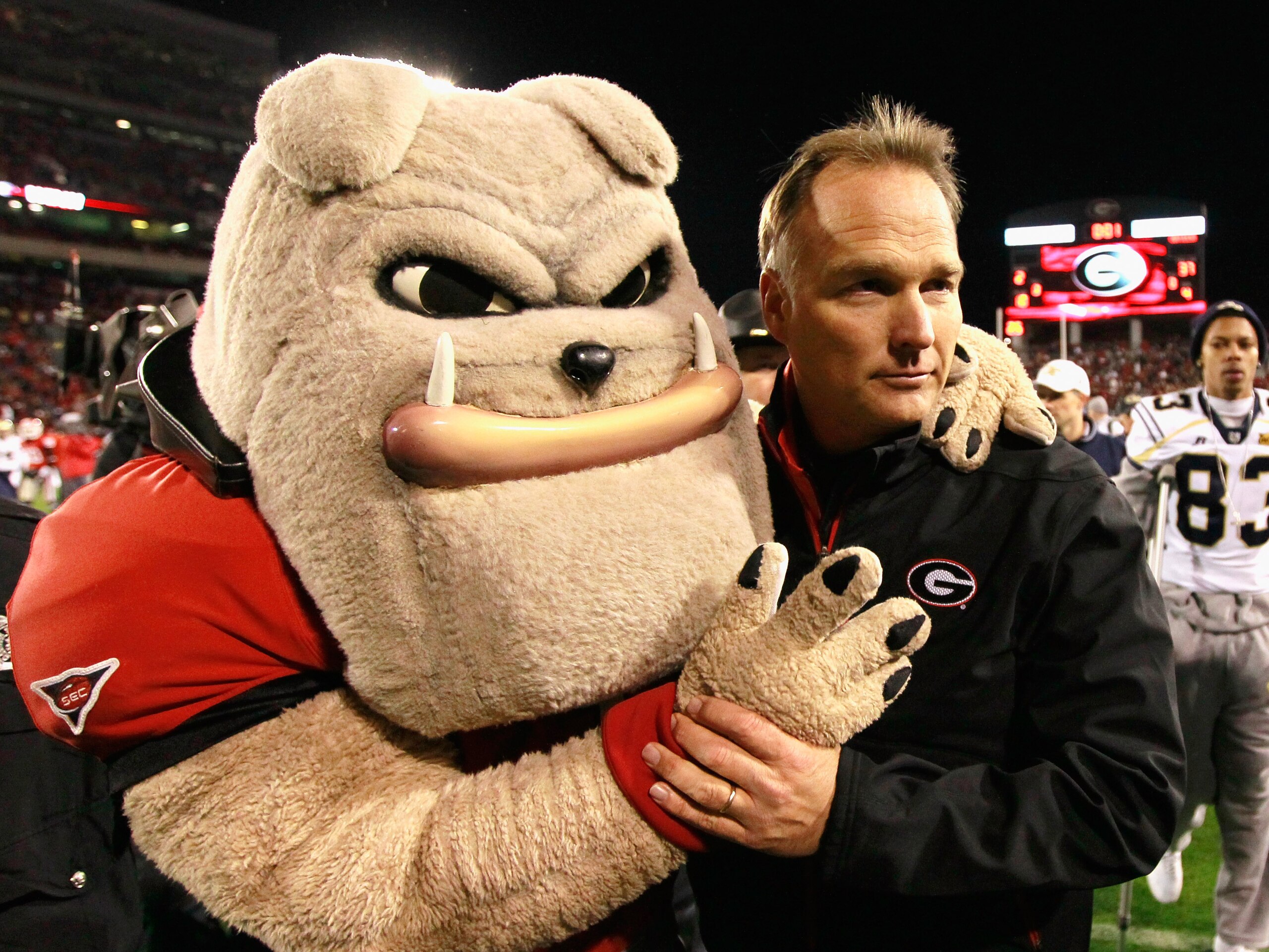
Mark Richt, Georgia
15 of 25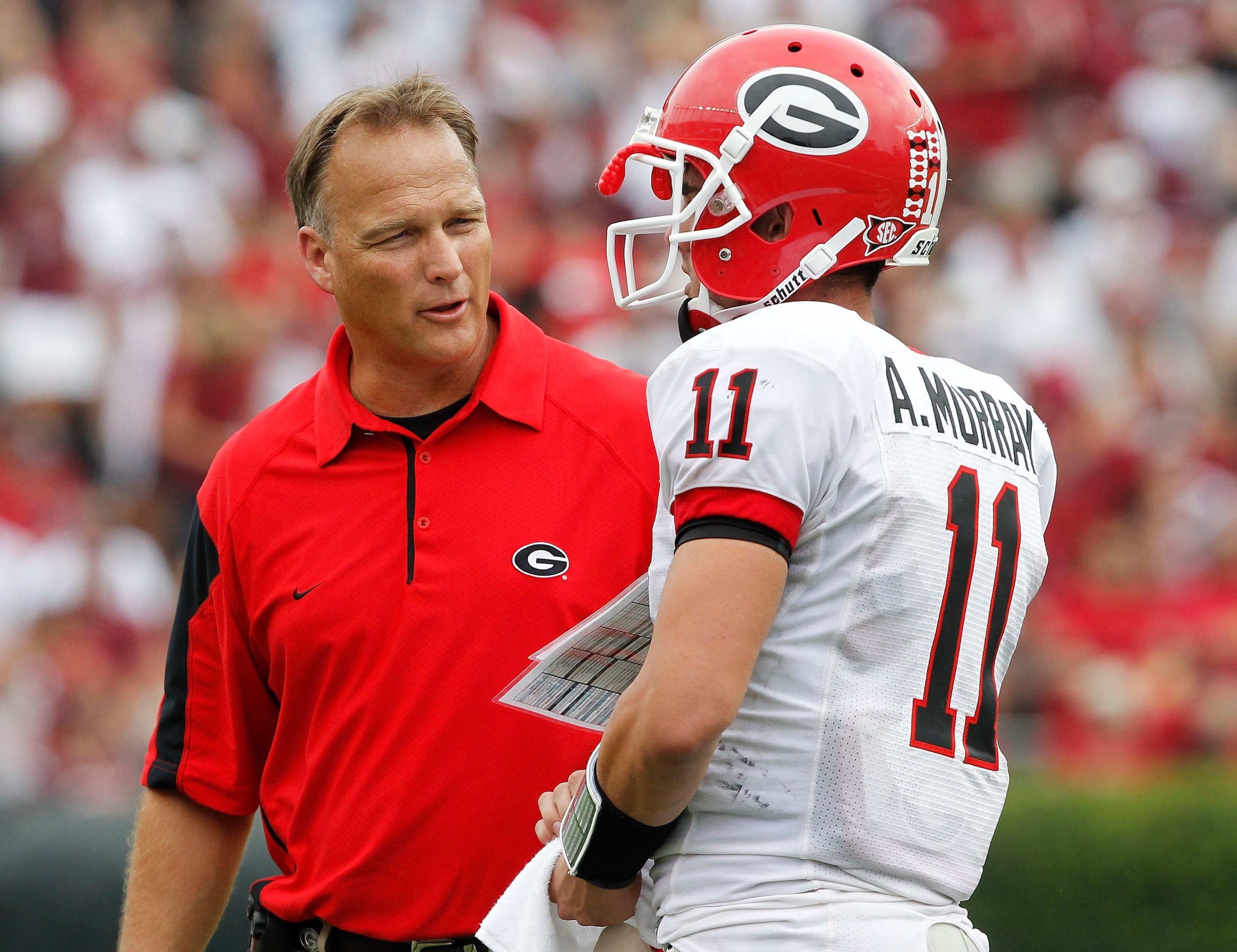
Georgia’s sub-par 6-7 finish in 2010 raised the ire of the Bulldog faithful, who may have been thinking more of along the lines of “contending for the SEC division title ”than “below .500 seasons.”
Before 2010, Mark Richt was 90-27 in his nine years at Georgia, hardly the kind of record you start putting the squeeze on a coach for.
Despite being No. 11 on the winningest active coaches list, Richt has only captured a mere three SEC crowns in his 10 years at Georgia, and it’s been five seasons since the Bulldogs have hit pay dirt.
With fans beginning to grumble down in Athens, Richt will feel the heat to start winning again, which means feeling the pressure to contend for, at bare minimum, divisional titles.
Bobby Petrino, Arkansas
16 of 25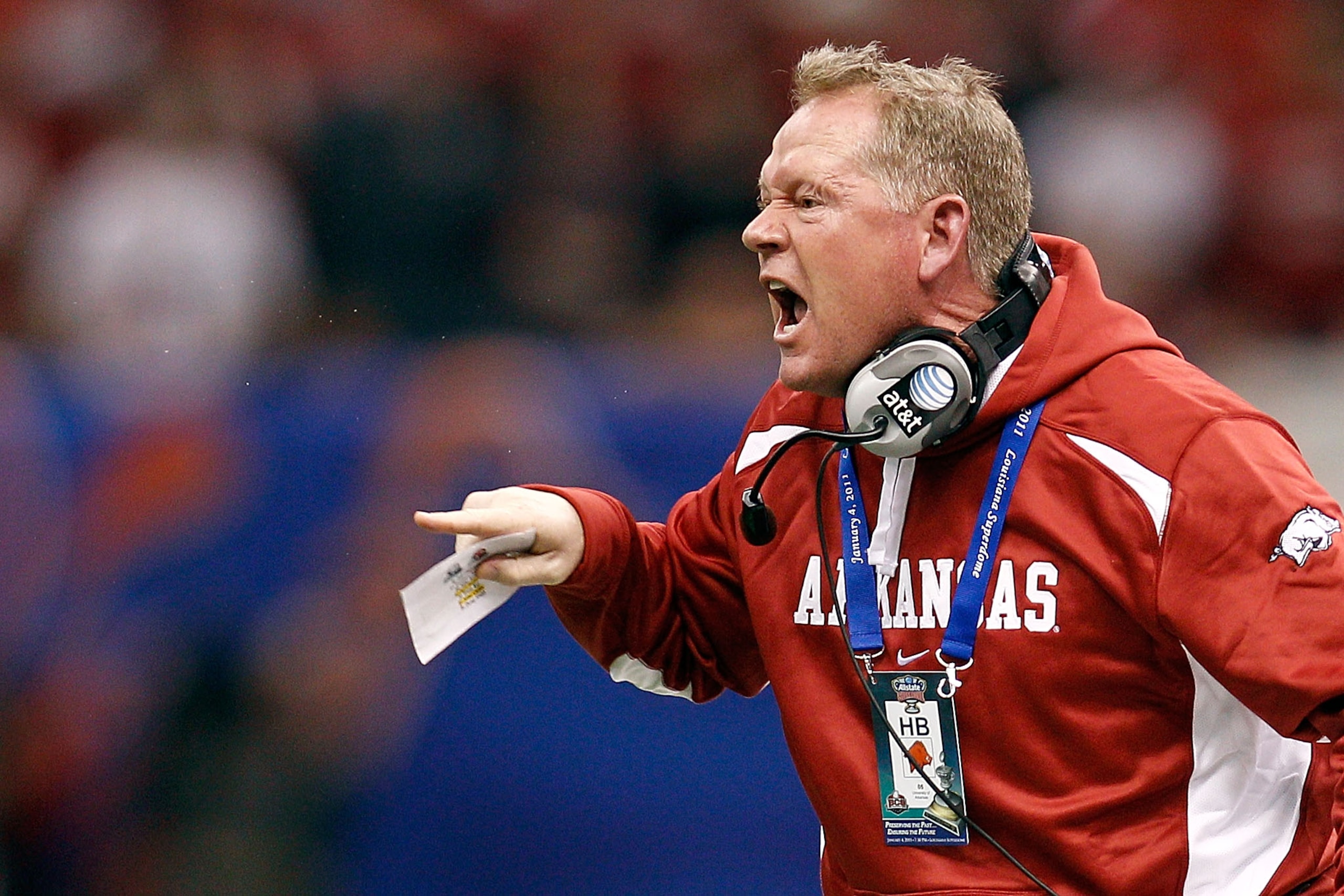
You almost hesitate to put Bobby Petrino on a list like this until you realize that doing so is not pointing out a poor coaching performance but instead pointing out one that hasn’t yet produced (or hasn’t produced in several years) championships.
Petrino came to Arkansas in 2008 after a brief stint as the head coach at the Atlanta Falcons and has posted a 23-15 record since taking over the reins from Houston Nutt.
The Razorbacks have improved every season under Petrino’s leadership (5-7 in 2008, 8-5 in 2009 and 10-3 in 2010), but playing in the SEC West makes championships hard to come by.
To put things in perspective, how many SEC titles do you think Arkansas has won since joining up in 1992?
The answer to that question is a flat “none."
The Razorbacks have won three SEC West crowns (1995, 2002 and 2006), but came up short in each of the subsequent conference championship games.
However, the entire competitive goal of college football is to win titles (especially in the bigger conferences), so at some point, Petrino will be expected to contend for or produce SEC championships.
Nick Saban, Alabama
17 of 25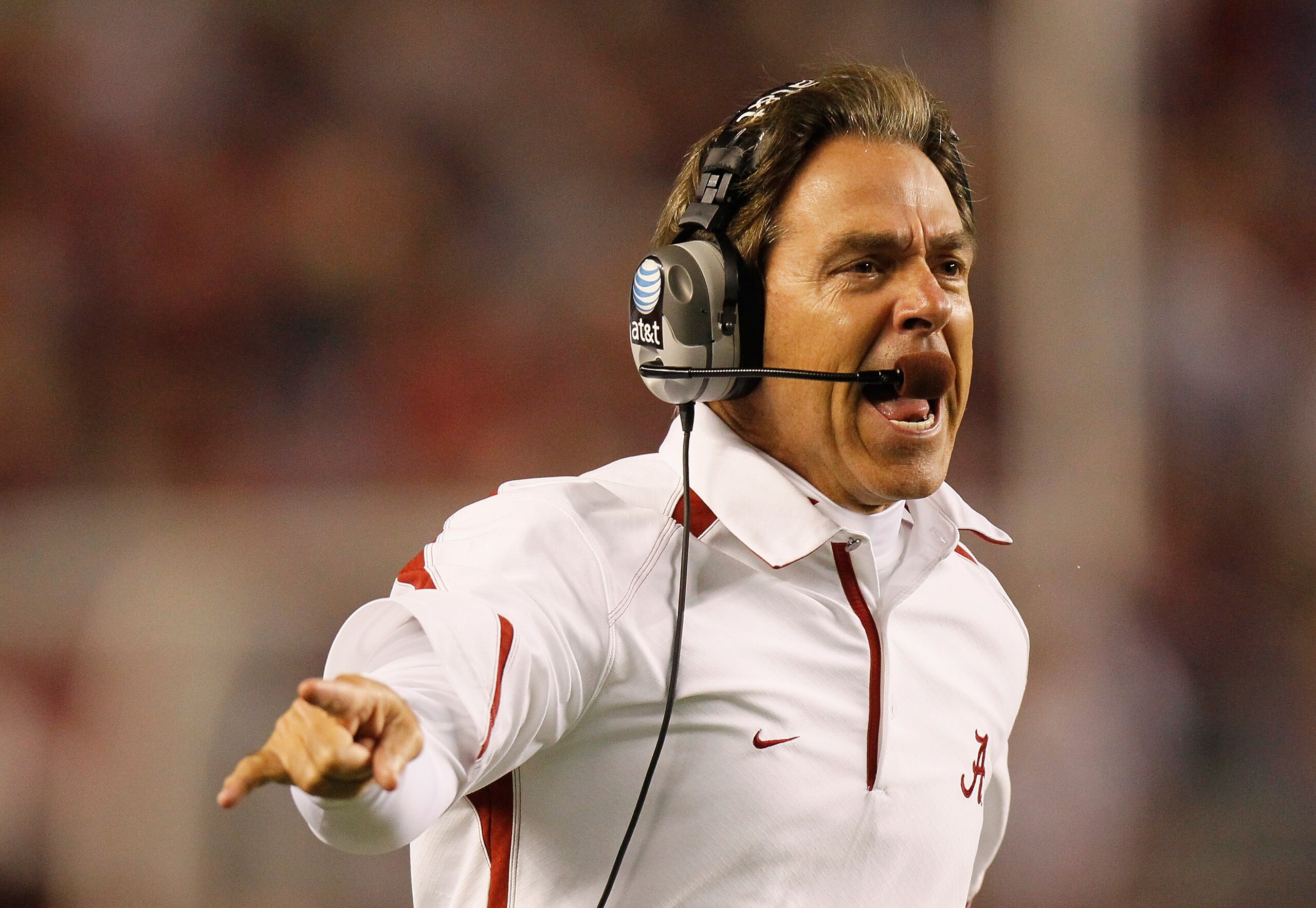
After posting a 38-11 record, winning two SEC West division titles, one SEC crown and one BCS title in his four years with Alabama, it seems safe to assume that the only force that can remove Nick Saban from the loving arms of the Crimson Tide is, well, Nick Saban.
Saban’s own personal football pressure cooker is a direct result of his own success; you win more, they expect more, they want more and the stress and strain builds with each victory and every championship.
The 2011 Crimson Tide is expected, despite the loss of McElroy, Jones and Ingram, to win the SEC West, the SEC conference title and make the BCS championship.
Nick Saban’s Alabama will more than likely be the favorite in each and every one of their 2011 games.
One of the huge drawbacks of making to the top of college football coaching, to garner the sweet, high profile, high paying jobs is that any result less than a championship season is considered a huge disappointment.
Nick Saban (and guys like him) might be under more pressure than the coaches who are listed on the dreaded “hot seat” tracker.
Frank Beamer, Virginia Tech
18 of 25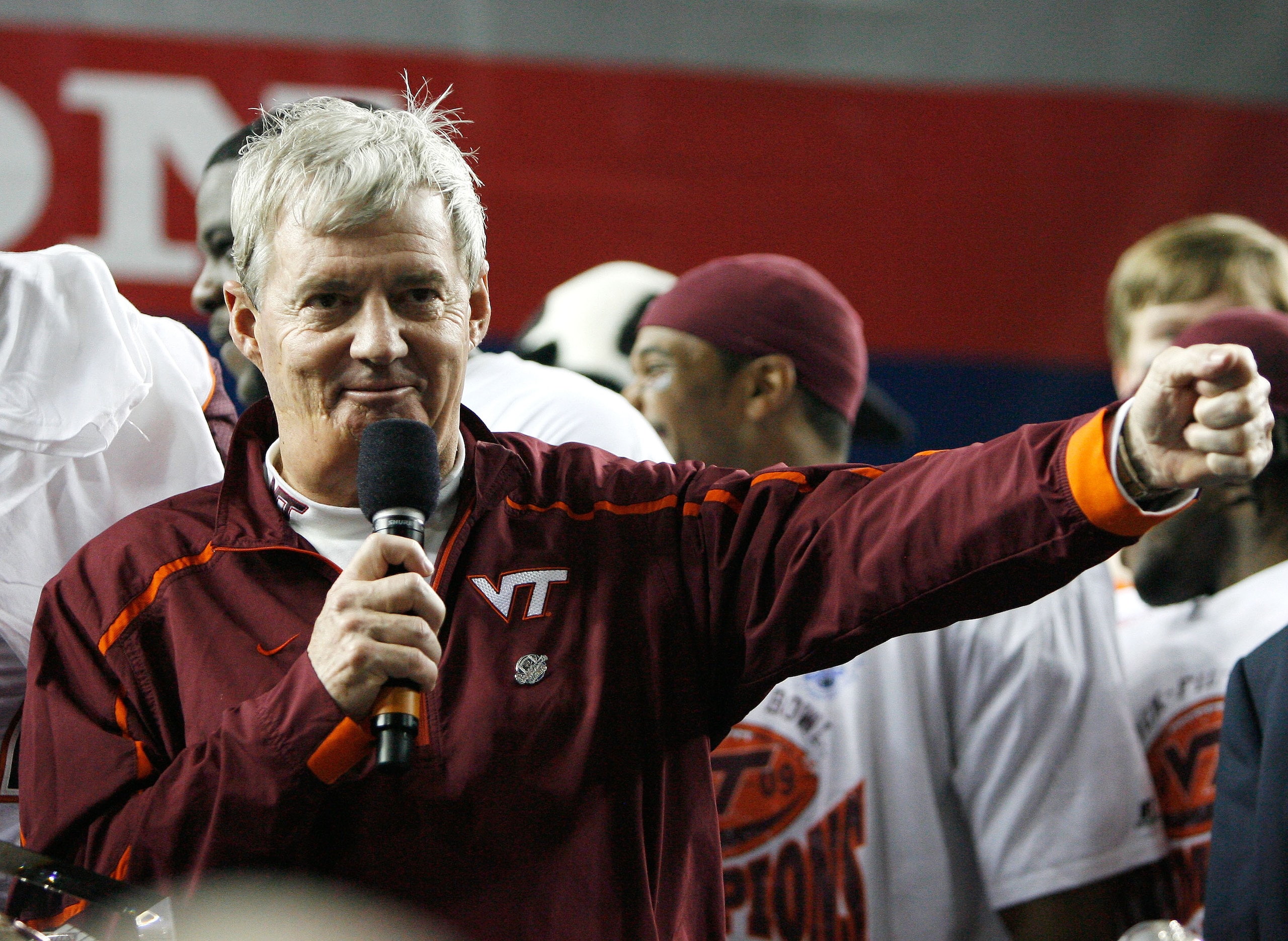
Frank Beamer is in a very similar situation to that of Nick Saban, only Beamer is expected, at the very least, to win the ACC Coastal, compete for the ACC title and then be the representative from the ACC in the BCS.
Why? Because that’s exactly the kind of success Virginia Tech has achieved five of the last seven years.
Yes, the Hokies have won four ACC Coastal titles, four ACC conference championships and been to the BCS four times since 2004.
Overall, Beamer (who played cornerback for the Hokies from 1966 to 1969) is 198-95-2 in his 24 seasons at Virginia Tech.
He has racked up seven conference titles, five BCS bids, played in one BCS title game and finished in the Top 25 17 of his 24 seasons.
Still, all that amazing success produces pressure to generate more triumphs; in Virginia Tech’s case, this includes unbridled anticipation for the Hokies to capture their first ever national title.
It sure would be nice to see a guy like Frank Beamer win the whole shootin’ match.
Todd Graham, Pitt
19 of 25
Despite capturing a piece of the 2010 Big East title, the folks at Pitt released Coach Dave Wannstedt after six seasons and a 42-31 record.
Wannstedt, a Pittsburgh alumnus, had nine and ten win seasons in 2008 and 2009 respectively, but apparently the Panthers have higher expectations for their football program.
Todd Graham spent one year as the head coach at Rice before becoming Tulsa’s leader in 2007 where he posted a 36-17 record, won three division titles and had three 10 plus win seasons.
The reason you have to assume Todd Graham will be expected to produce at least a conference championship and BCS bid over the next few years is the way Wannstedt was let go after having some decent success.
The Panthers are looking for more, and since the Big East is the most winnable of the BCS conferences, recent history tells us they want Todd Graham to produce sooner rather than later.
Dennis Erickson, Arizona State
20 of 25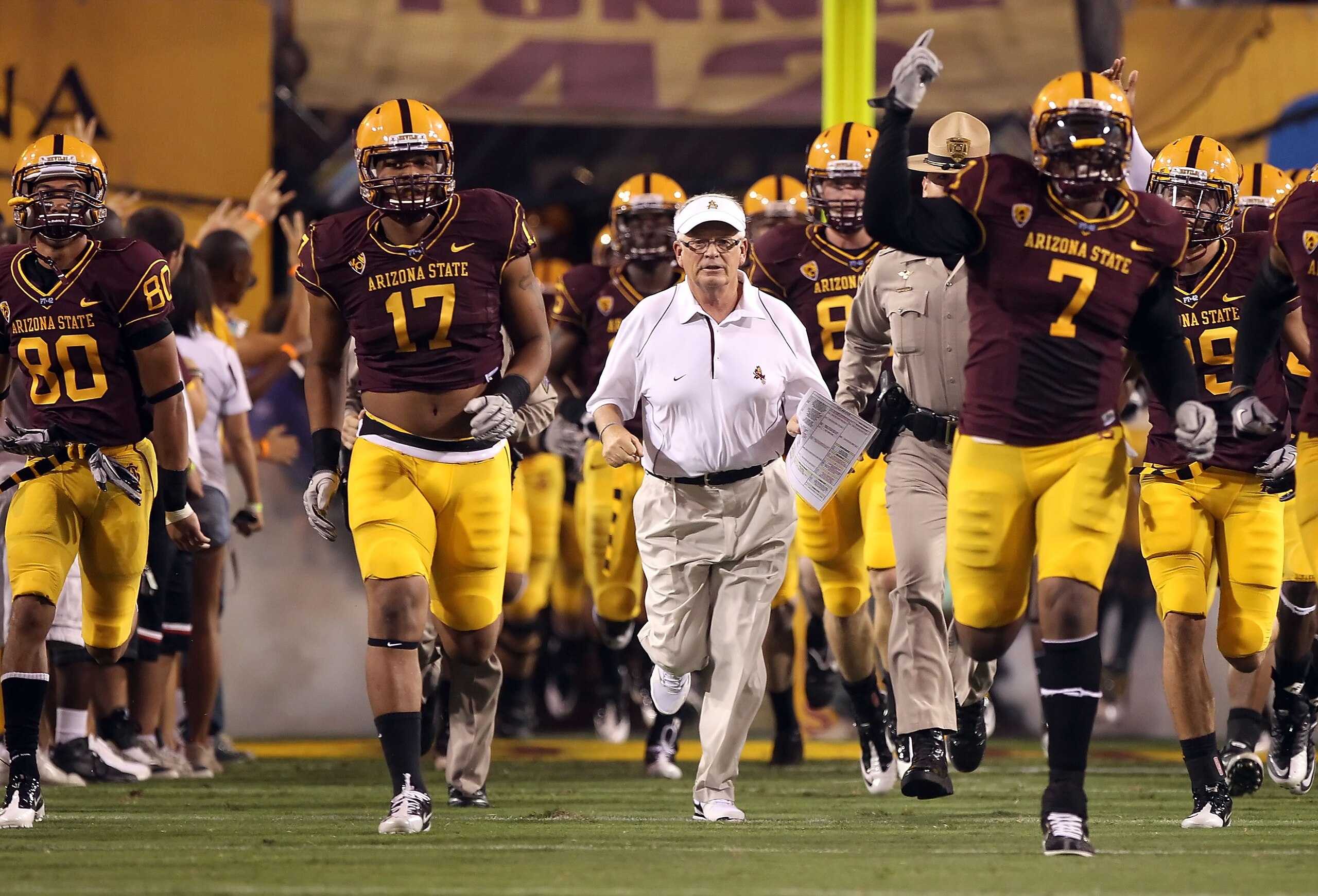
Dennis Erickson exploded onto the scene at Arizona State in 2007 when he led the led the Sun Devils to their best finish in a decade, a 10-3 record that included a share of the Pac-10 title (also the first in over a decade).
After his highly impressive maiden voyage at ASU, Erickson has struggled to a 15-21 record, which was low lighted by a three-season bowl drought.
Hopes are high for Erickson’s 2011 team that returns almost every starter from the 6-6 product in 2010. Regardless, Erickson needs to, at the very least, contend for the new Pac-12 South crown to be assured a place at the dinner table at Arizona State.
Joe Paterno, Penn State
21 of 25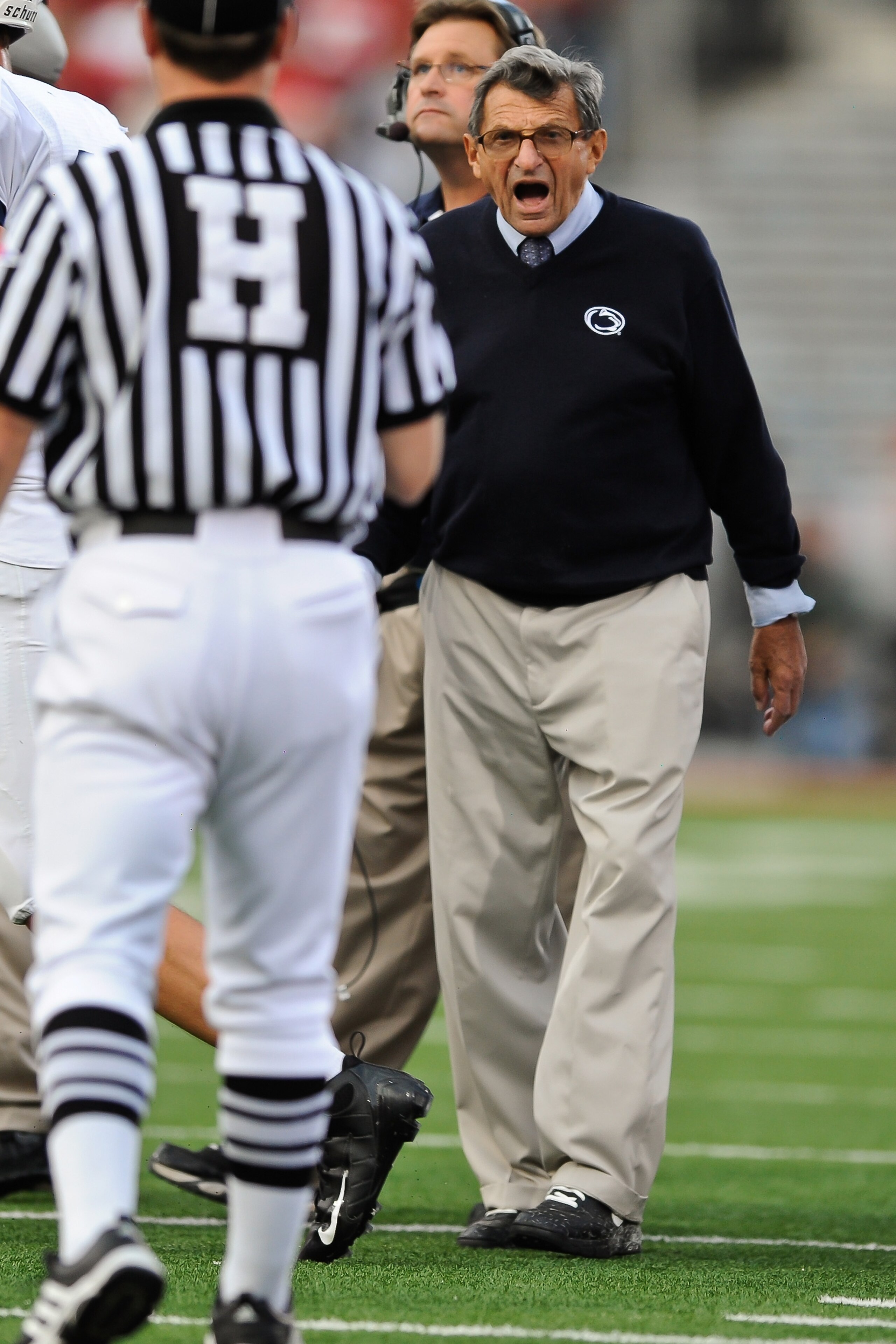
We are all well aware, and duly respect, Joe Paterno’s stats and his legendary status in college football.
Joe Pa’s whopping 45 years as the head coach at Penn State have spawned an overall record of 401-135-3 (No. 9 in winning percentage among active coaches), three Big Ten titles and two national championships.
However, as each year passes and Paterno inevitably ages (he is currently 84), discussion and controversy increases as to whether or not his advanced age and subsequent limitations have somehow stunted the success of Penn State football.
There was a huge outcry for Paterno to resign after posting 3-9 and then 4-7 records in 2003 and 2004 respectively, but Joe Pa fought back by going 11-1 in 2005 and since then has won nine or more games each year, with the exception of last season’s 7-6 mark.
The truth is, they’ll be respectably calling for his resignation until either he succumbs to old age and has to give in, or, he wins another Big Ten or national title and shuts everyone up, becoming (if possible) even more celebrated in the lore of college football.
Kyle Whittingham, Utah
22 of 25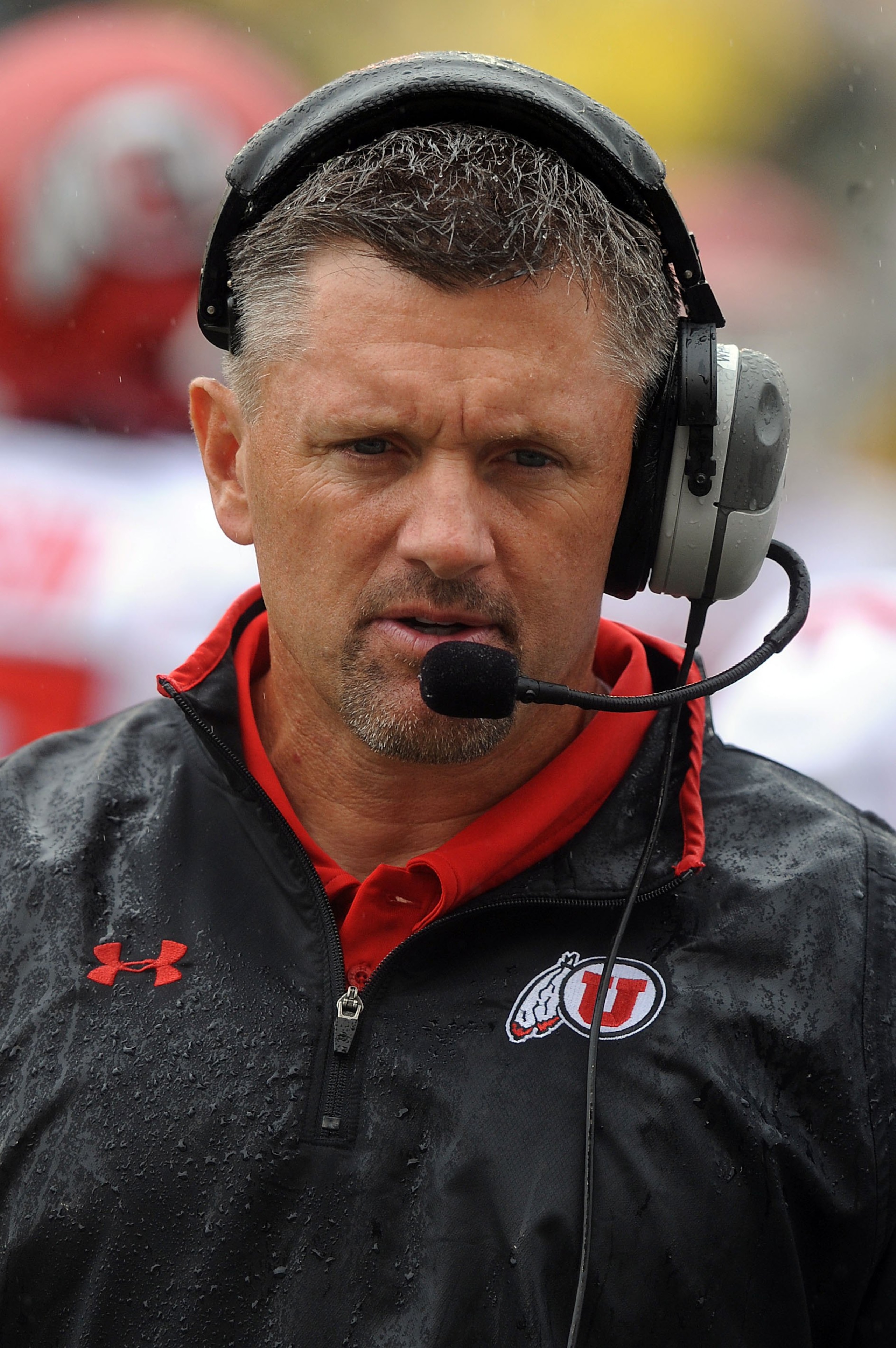
Kyle Whittingham has gone 58-20 since taking over at Utah in 2005 after the departure of Urban Meyer.
He ranks No. 10 among active coaches in winning percentage and posted a perfect 13-0 season in 2008.
Whittingham’s pressure to finally bring Utah a national title (and BCS conference title) is different than that of Chris Peterson of Boise State because the Utes, after much gnashing of teeth, have finally secured their seat at the big kids table.
That’s right, after years of scratching for respect and equality, after years of trying to get around an inherently unfair BCS system, Utah is one of the big dogs.
Utah is now a BCS school, and they automatically qualify for the money laden BCS if they can win their conference, and this time, if they go undefeated, they can play for a national title.
So, how much additional pressure will Kyle Whittingham feel now that there are no roadblocks on his path to championship glory?
No more excuses; the playing field has finally, at long last, been leveled for the Utah Utes.
Derek Dooley, Tennessee
23 of 25
Derek Dooley took the Tennessee job at a low point in Volunteer football history; Lane Kiffin, who promised the Vols the world and his very soul when he took over for the legendary Phillip Fulmer in 2008, had just left after a single 7-6 season as recruits were flying out the door while sanctions were flying in.
You can’t blame Derek Dooley for any of that ugly scenario, and the fact is, Dooley’s 6-7 opening campaign is actually a bit of an uncelebrated coup in light of the messy situation he was dealt at Tennessee.
However, regardless off all of the above, this is still Tennessee Volunteer football, a program that touts 13 SEC titles and four national championships.
The last time the Vols captured even a division crown was in 2007 when they won the east; the last time they won the SEC was in 1998, which also marks their most recent national title season.
The bottom line is simple: Tennessee will expect championship seasons from Dooley, maybe sooner, maybe later, but they are expected.
Jeff Tedford, Cal
24 of 25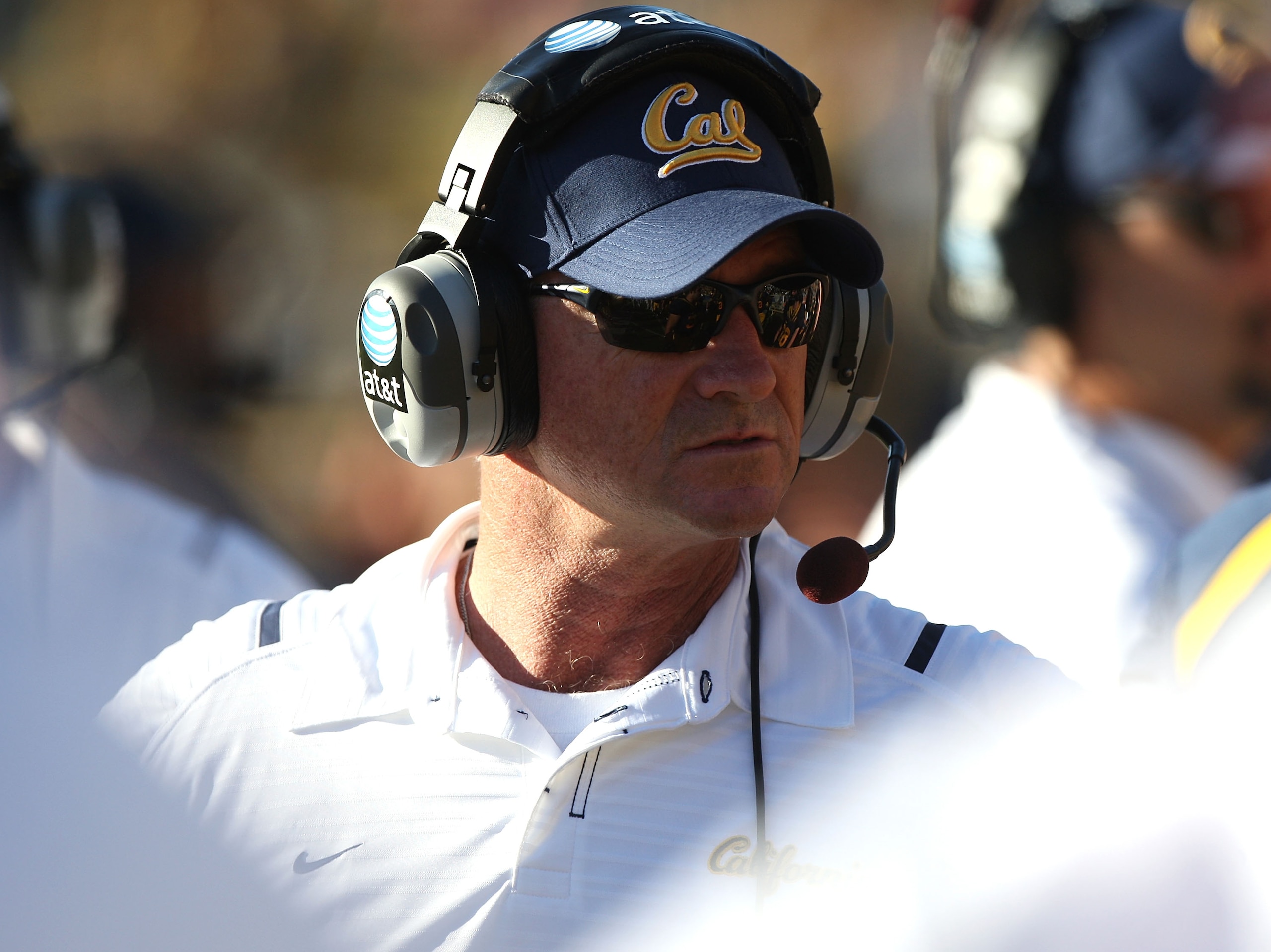
After coaching stops at Fresno State and then Oregon, Jeff Tedford took over as the head coach at California in 2002.
Tedford immediately took a team that had gone 1-10 in 2001 and improved them to a 7-5 mark in 2002; his overall mark in nine seasons is 72-42.
The Golden Bears have captured only one title during Tedford’s tenure: a piece of the 2006 Pac-10 championship when Cal went 10-3 (one of two 10-win seasons for Tedford).
What has Jeff Tedford on the “hot seat” is the slow decline in win totals (and hope) since the 10-3 finish in 2006; seven wins in 2007, back up to nine wins in 2008, down to eight wins in 2009 and then finally the dismal 5-7 finish in 2010.
Tedford and company need nine or 10 wins next season, which should put them in contention for at least the new Pac-12 North division; anything less will get the rumors really swirling in Berkley.
Gary Pinkel, Missouri
25 of 25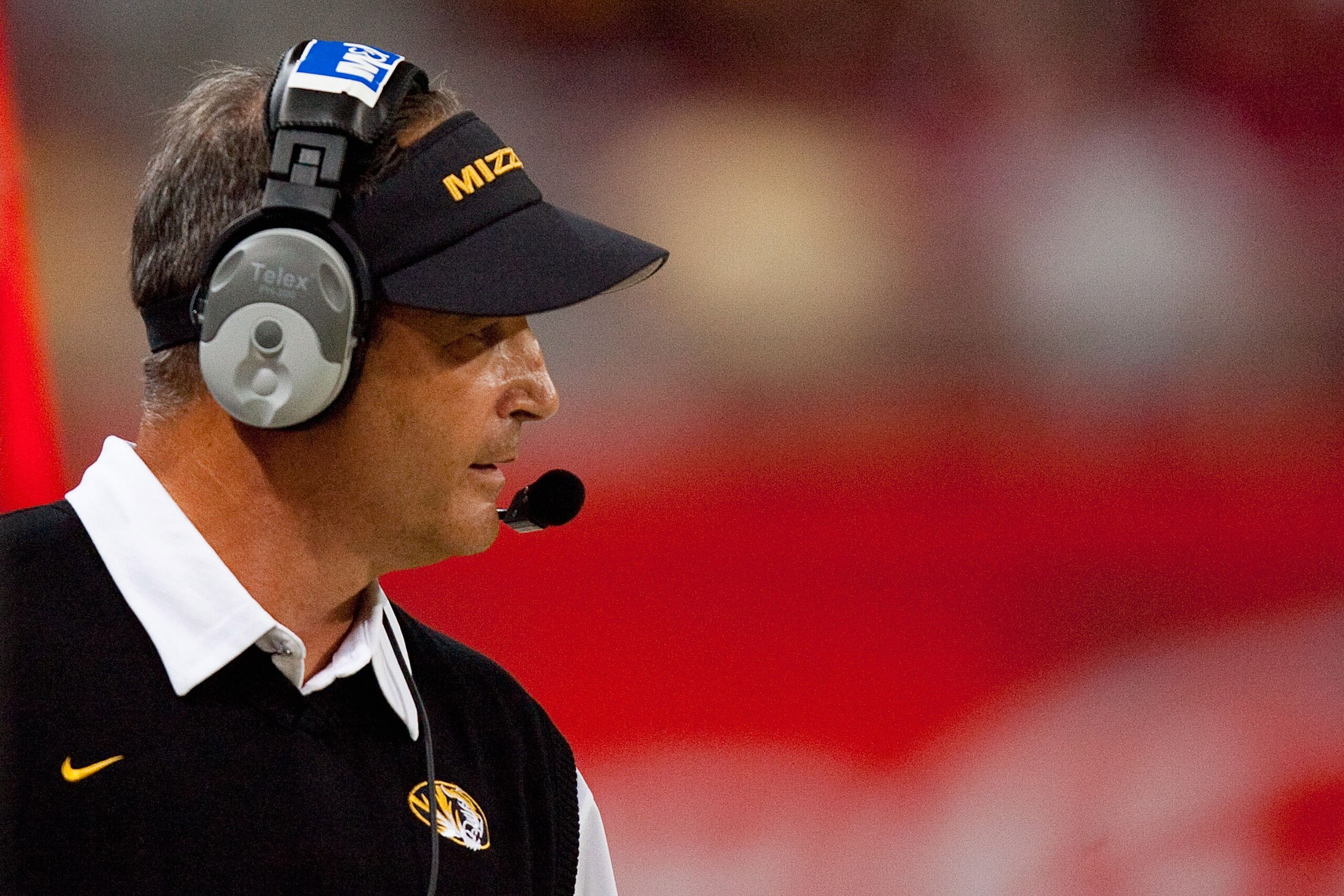
Gary Pinkel has racked up a 77-49 record during his 10 year tenure at Missouri, and though he captured three Big 12 North division titles during this time, he has not yet won a Big 12 conference title or played in a BCS bowl.
Missouri has not fallen short of the eight win mark since 2005, and Pinkel has the Tigers in contention every year.
The next questions for Pinkel and his Tigers are how to transform contention into victory, how to make the leap from 10 wins to 12 wins and how to break through to the BCS.
Gary Pinkel may be under less pressure than others on this list, but with a team that has won so consistently over a five year period the next obvious step is championships, and with that comes pressure.
.png?w=2560)



.jpg?w=2560 "Latest Peyton-Colts Rumors")