Chicago White Sox's Year-End Review
What grade would I give the Chicago White Sox for the performance during the 2008 campaign?
An "A."
The A.L. Central was expected to come down to a team that finished 14-games under .500 (the Detroit Tigers) and a team that finished at .500 (the Cleveland Indians). Instead, it came down to the Chicago White Sox and Minnesota Twins.
TOP NEWS

Brewers Stun Padres in Game 2 😧
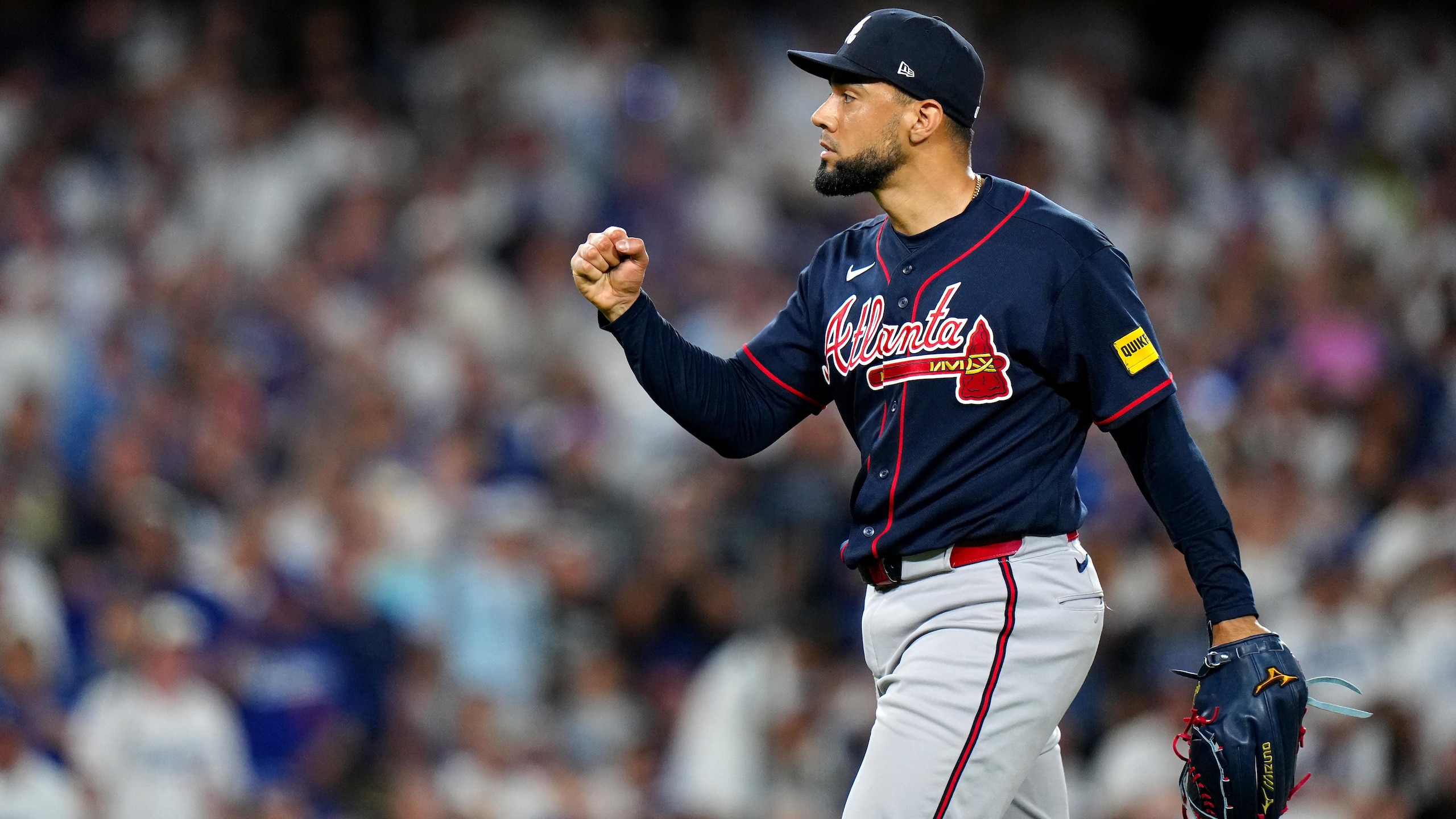
Braves' Opener Shines vs. LA 💪

Aaron Boone Calls Out Yankees Catcher 🗣️
The White Sox had a roller-coaster year. They struggled early, bounced back strong, and then collapsed to force a 163rd game.
WHAT WENT WRONG
July 10: Bobby Jenks goes on the disabled list. The White Sox proceed to lose three games (non-consecutive) to a terrible Kansas City team and two games to a terrible Texas team.
Bobby Jenks' injury affected the rest of the team and altered the bullpen, which had been so strong, to a complete collapse. It forced non-closers to close and other relievers to go longer than they were used to it. The bullpen blew leads or couldn't sustain ties.
July 20/Aug. 11: Jose Contreras goes down. Jose Contreras was a vital part of the White Sox's 2005 campaign. Jose struggled earlier this year, but when it came to down the stretch, he would've been a vital part to prevent the collapse. Instead, Ozzie Guillen relied on people like Clayton Richard and Lance Broadway, who just could not get the job done.
July 26: Joe Crede goes down with injury and the White Sox proceed to lose the next six out of 10 games. The All Star third baseman was replaced by Josh Fields and Juan Uribe, who just couldn't get it done offensively like Crede and nowhere as close to Joe's defense.
Sept. 2/6: This was the biggest heartbreak. The White Sox's strong MVP candidate Carlos Quentin went down with a self-inflicted injury. After Carlos went down, the White Sox proceeded to go on with a 9-13 record, stumbling into the playoffs.
A.L. Central Race to the Bottom: Neither the White Sox nor the Twins seemed to want to win the A.L. Central. When one team lost, the other team wouldn't capitalize and they would also lose. The White Sox couldn't capitalize when the Twins lost, but as Jerry Reinsdorf says, "Thank God for the Kansas City Royals."
Sluggers only slugged: Paul Konerko, Jim Thome, and Nick Swisher all finished at around .250 or below. The only thing they could do is hit home runs. They weren't going to hit home runs every game, which means that run production wasn't there (no small ball). The White Sox lead the majors in home runs, but in the end, it didn't work out.
WHAT WENT RIGHT/WHAT TO LOOK FORWARD TO
1. The bullpen: The White Sox had by far the worst bullpen in Major League Baseball last year. The White Sox completely changed that, acquiring Scott Linebrink and Octavio Dotel, who made the White Sox have one of the best first-half bullpens (before Bobby Jenks went down with injury). Combined with Matt Thorton, Boone Logan, and the departure of Nick Massett (who was terrible), the White Sox's healthy bullpen next year will be dominant.
2. Starting pitchers: The White Sox will make an offseason move because Javy Vazquez just ain't going to cut it. However, everybody should be impressed with Jon Danks and Gavin Floyd. When the White Sox's starters struggled, they stepped in and carried this team to victories (especially down the stretch).
3. Alexei Ramirez: The Cuban Missile struggled early but then found his stride. The Rookie of the Year runner-up is, as Hawk would say, "the best baseball player" on the White Sox. He can flash his glove, run fast, and hit for either average or power.
4. Carlos Quentin: This was, by far, the steal of the year. The White Sox acquired Quentin from the Diamondbacks, and he only got to start because Jerry Ownes got injured, thankfully (bittersweet).
Carlos Quentin was the MVP of the White Sox. When Paul Konerko, Nick Swisher, and Jim Thome all struggled at the same time, it was Quentin's bat that carried the team.
WHAT THE WHITE SOX NEED
The White Sox won the 2005 World Series on small ball. The speedy Scott Podsednik would get on base, Tadahito Iguchi would move him over if Pods didn’t steal a base, and then Dye, Konerko, and Crede would do their things by driving in the baserunners.
There was also a time when all batters, one through nine, hovered at or around .300. The White Sox didn’t have that this year. Their leadoff man was Orlando Cabrera, who recorded the most outs in Major League Baseball this year and had a measly 19 stolen bases (and was caught eight times).
They also didn’t have a batter finish at .300+. The closest was Jermaine Dye, who batted .292. Orlando Cabrera was a likely one-and-done player. The White Sox need somebody with speed that can steal bases and get on base like Scott Podsednik did.
The White Sox will also need to fill the hole at second base (Alexei Ramirez will move back to his natural position at shortstop after Orlando Cabrera leaves). The perfect candidate? Baltimore Orioles’ free agent Brian Roberts.
Brian Roberts batted .296, had 40 stolen bases, 51 doubles, and eight triples. He’s a legitimate base-stealing and extra-base hit threat. Imagine this White Sox lineup (assuming Ken Griffey, Jr. is done):
1. Brian Roberts – 2B
2. AJ Pierzynski – C
3. Carlos Quentin – LF
4. Jermaine Dye – RF
5. Jim Thome – DH
6. Paul Konerko – 1B
7. Joe Crede – 3B
8. Alexei Ramirez – SS
9. Nick Swisher/Brian Anderson – CF
2009 Prediction
My prediction for the White Sox next year is that they'll be in wild-card contention. I think people predicted a Tigers/Indians battle too early, and the A.L. Central will be a four-way race between the Twins, White Sox, Tigers, and Indians.
End Note
Two things that were positive today about the White Sox in the playoffs:
1. They did better than the Cubs. The White Sox were supposed to lose to the Rays. However, the Cubs weren't supposed to get swept by the N.L. West champion.
2. Now we can turn our attention to the first-place (somehow) Chicago Bears.


.jpg?w=2560 "NFL investigating 2 referees for separate viral exchanges")

.jpg?w=2560 "Report: Chiefs Contact Hill's Agent")
.jpg?w=2560 "OBJ Calls Out Giants 😳")
.jpg?w=2560 "Tyreek makes another cryptic post amid Chiefs rumors")