
College Football: 10 Changes That Should Be Implemented Immediately To the NCAA
"The NCAA's core purpose is to govern competition in a fair, safe, equitable and sportsmanlike manner, and to integrate intercollegiate athletics into higher education so that the educational experience of the student-athlete is paramount." - NCAA mission statement
Well, at least they got the part about intercollegiate athletics right. As for everything else regarding things like "fair" and "sportsmanship"...well, um...about that...
Perhaps no body outside of the state and federal government sector in America has come under such harsh public criticisms of corruption, mismanagement and general incompetence than the NCAA over the last several years.
Nary a week passes where a new allegation of rules infractions of varying severity does not come to light. Growing numbers of fans and media members believe that the problems run so deep that the federal government needs to intervene. For a non-profit - and non-tax paying - entity such as the NCAA that brings in over $750-million in revenue annually and has billions of dollars in lucrative television and other deals, the stakes run perilously high.
The point where incremental and measured responses could have helped may very well have passed. What is needed to solve the issues both on and off the field are swift and extensive actions that should shake the NCAA to it's very core.
With football being the most popular collegiate sport, our attention will be focused there. Here are ten proposals of such magnitude that would serve the best interests of the game, the student-athletes and the member institutions. The degree of feasibility of these measures most certainly varies greatly, so we'll start with some moderate tweaks and work on up to revolutionary measures.
Open Transfers Upon Coaching Changes
1 of 12
The most important decision of every college football player is where he will play and receive his education. One of the primary factors in making that life-altering decision is the program's head coach.
However, coaches frequently leave a program on a whim when greater dollars are dangled in front of them with nary a consequence to be had, save for perhaps a buyout sum that his new school will in some way cover. This leaves scores of student-athletes stuck at a school with an new regime in place that often has no allegiance to them.
In contrast to coaches who can come and go as they please, an FBS player who wishes to transfer to another FBS school must sit out an entire season before he can play. This is entirely unfair to these young men who made commitments to a school and a head coach who then abandoned the commitment to the player.
The one season rule must be removed to allow a window of open transfers for all players at schools whose coach has left or been fired.
Independent Infractions Committee
2 of 12
As it currently stands, the NCAA Committee on Infractions is composed of people from member universities, conferences and, of course, lawyers.
This presents two problems.
First, the potential for a tremendous conflict of interest is high. This isn't to say that the members of the committee are immoral individuals, but as they are part of a school or conference, should the opportunity to deal a severe blow to a fierce rival or in someway profit from a penalty present itself, the temptation to find elasticity in one's decision making is possible. That's simply human nature.
Secondly, these are people from an organization that has numerous and well documented issues with enforcing the rules and maintaining consistency in it's penalties. They have become the collegiate version of David Stern.
The solution here is to create an impartial body free of any active ties to schools or conferences to handle the disciplinary aspects of the college game.
Unified Officials
3 of 12
Up until 1999, Major League Baseball used to have separate American and National League umpiring crews. From that point forward, they were unified under the commissioner's office.
Currently, each conference has it's own stable of officials, which leads to unnecessary crossover during inter-conference play. With all of the recent controversy over officiating, it's time form the NCAA to follow MLB's lead.
Such a movement is not unprecedented. Last year, Conference USA, Big-12, Ohio Valley and Southland Conferences joined together to form a combined basketball officiating entity.
While the element of human error will never be excised entirely from the sport, a unified officiating force would create much needed cohesion and consistency with an always beleaguered part of the game.

_0.png?w=2560)
Punishments and Fines That Actually Matter
4 of 12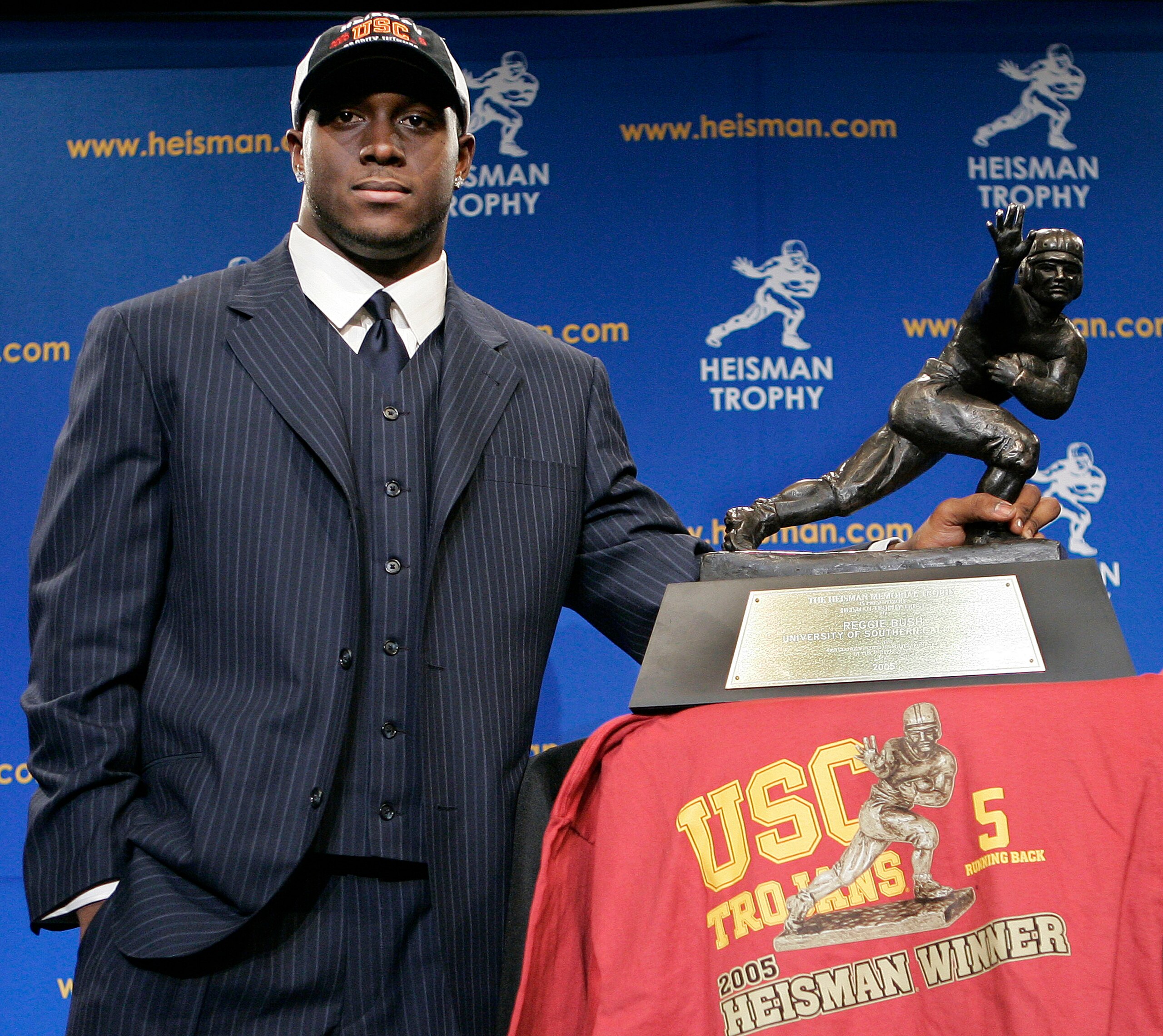
Short of a strong blow to the head, brain deterioration or the invention of the flashy gadgets from the Men In Black films, there is no way to erase memories from people.
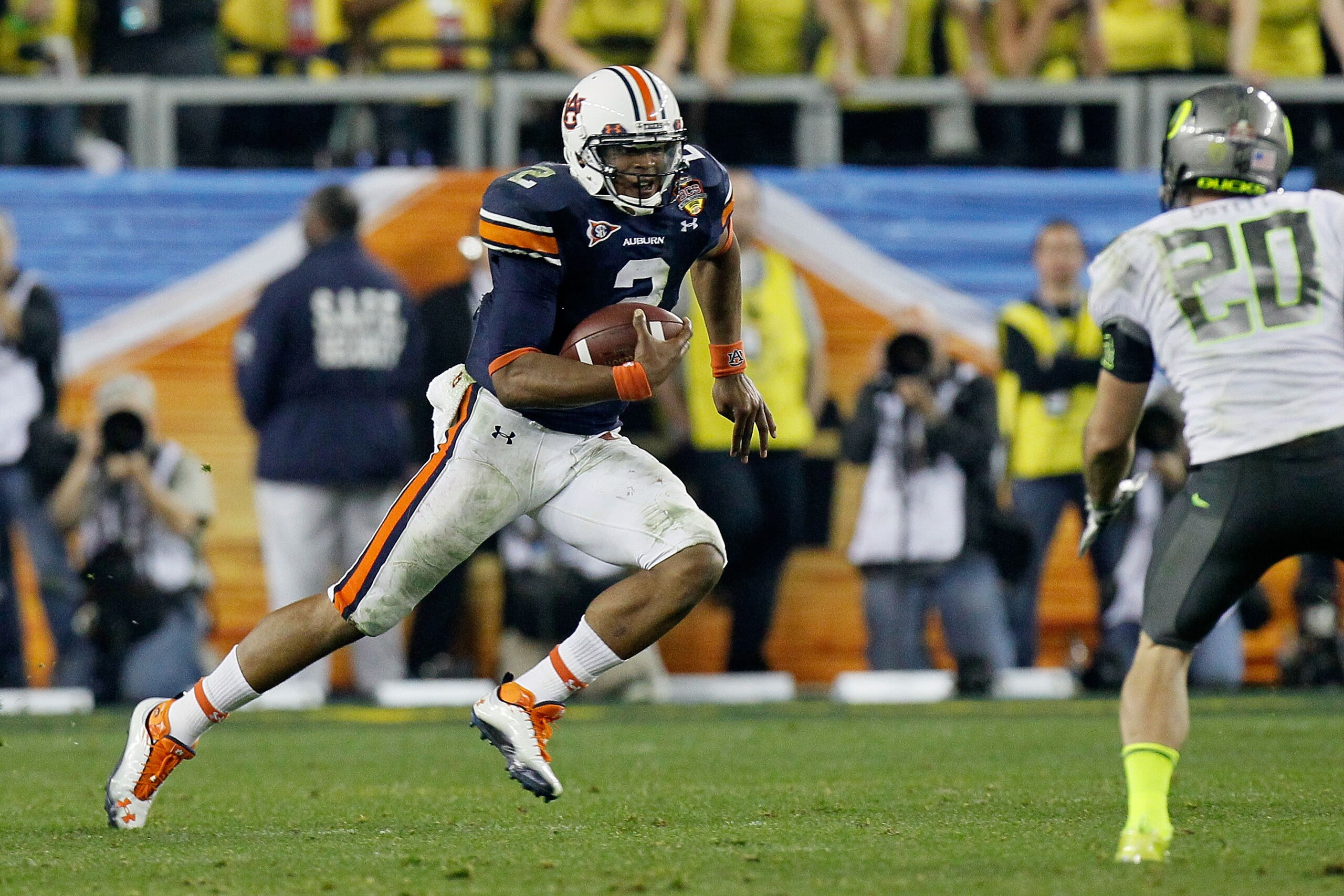
Were Reggie Bush and Cam Newton not the best players in the nation during their respective Heisman winning seasons? Is simply leaving the champion entry blank years after a team that had players on the take really take away from what they did on the field? Do any of the people who break the rules, then leave for riches in the professional ranks really care that their alma mater is bowl ineligible for two seasons?
No.
The perpetrators of the infractions that bring about vacated titles and trophies almost never feel the wrath that their crimes bring to the schools. For his major infractions, the end result for Bush is some extra shelf space.
The clear solution is to extend the punishments extend beyond the schools and to the coaches and players themselves. This could take the form of escalating fines that would go a scholarships funds to multiple games suspensions if the offending individual should move to the pro ranks.
This would of course require...
Formal Partnership Between NCAA and NFL
5 of 12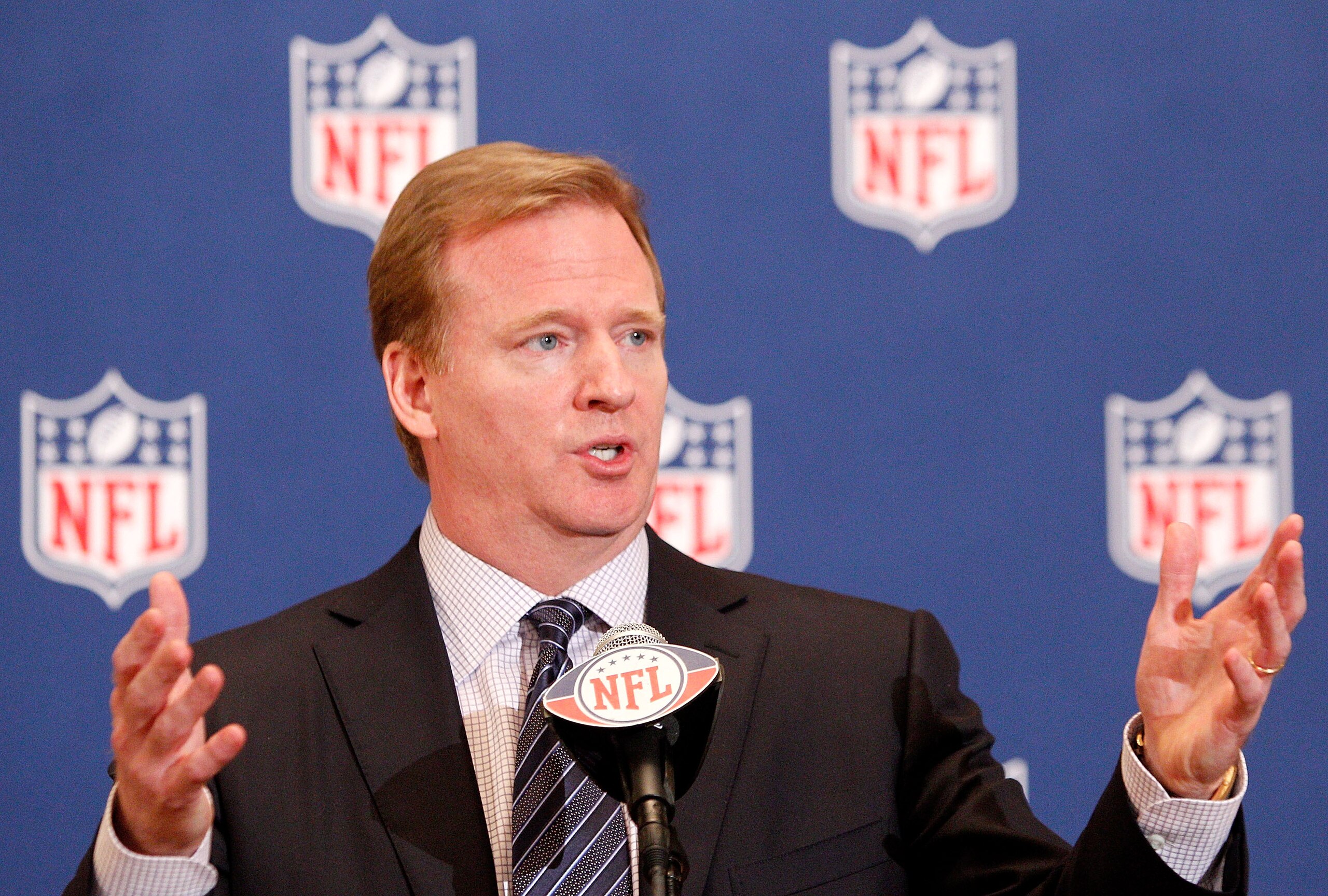
If Family Feud had a "Things Every Already Knows" category, you'd be safe with "The NFL has a free minor league system in the NCAA".
It's time to formalize that bond.
As pointed out on the previous slide, numerous players found guilty of NCAA infractions run off to the pros unscathed while their former schools suffer the wrath. Since a great percentage of the violations committed by players involve NFL-certified agents hoping to lure them to signing with them once they get to the next level, it makes sense for the NFL to levy suspensions and fines to players found guilty.
The partnership would center on outlining a clear - and clean - path for players to maximize their time in college while also helping them prepare for the NFL. The NFL and NCAA could help regulate and monitor the contact between draft eligible players and prospective agents.
The partnership could also include player education and development programs, better scouting opportunities and fertile cross-promotional media opportunities.
Swift and Harsh Penalties
6 of 12
Taking away scholarships? Annoying.
Players suspended for a few games? Tough, but manageable.
Post-season bans? Ouch.
Dusting off the "death penalty"? Now that hurts.
Not since SMU had it's football program banned for the 1987 and 1988 seasons has a Division I school suffered the harshest of the NCAA's penalties.
It's about time that changed.
The NCAA currently has set the criteria for the "death penalty" as a second major infraction within five years by the same sport. Sadly, that leaves far too much room for both manipulation and interpretation.
The NCAA needs to provide real deterrents to programs who are found to knowingly cheated the system, if not in the form of the above listed and common penalties, but by harsh measures like partial of full season forfeitures. Only when the schools and players truly fear a punishment will they likely avoid such infractions.
Elimination of the Existing Conferences and Top Level Contraction
7 of 12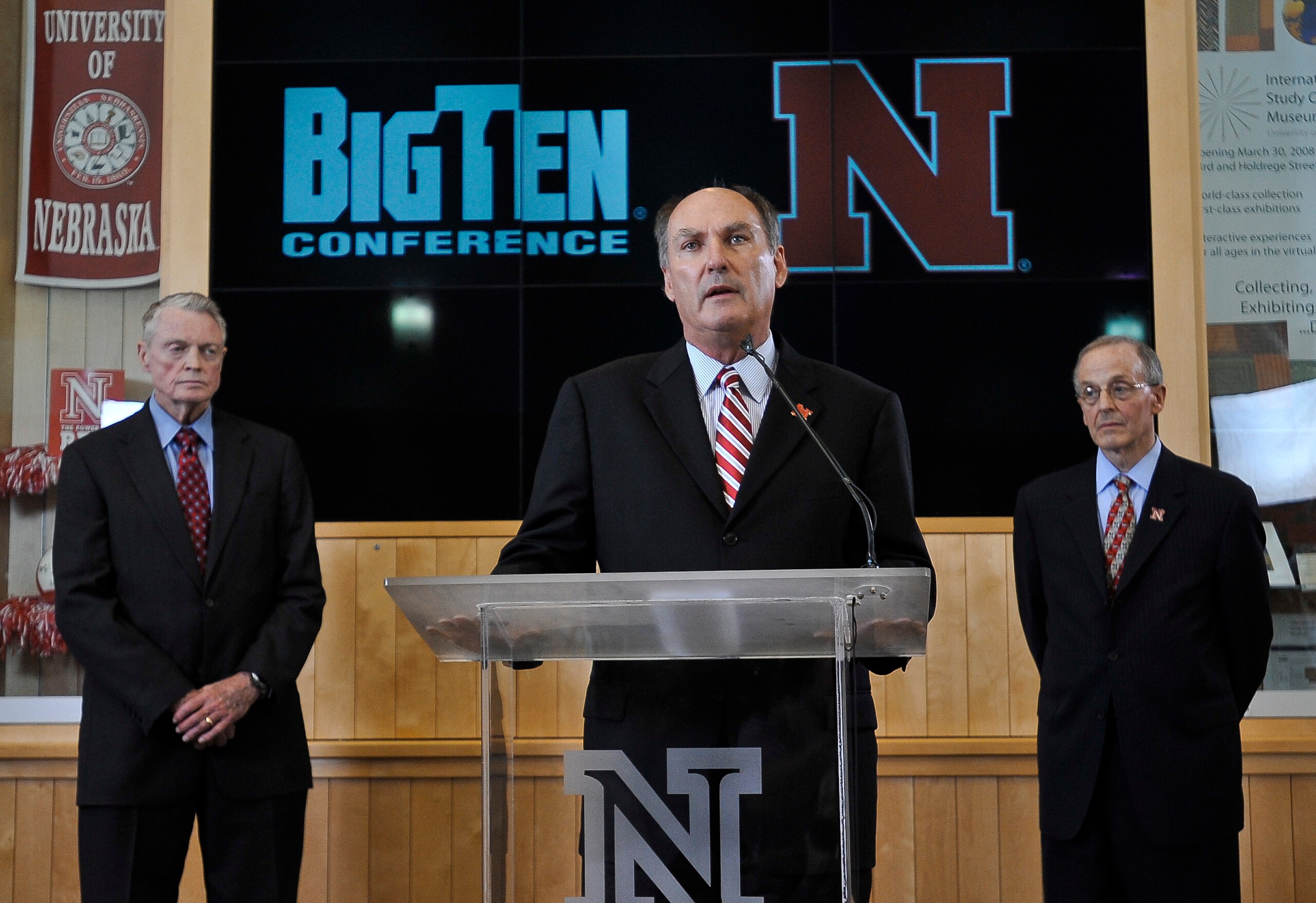
It's now time to replace the scalpel of the preceding moves with a machete.
There are now 120 teams in the NCAA's FBS Division, organized into 11 conferences with three independents. The six BCS conferences - Pac-12, Big Ten, Big 12, ACC, SEC and Big East - will comprise 70 of those teams once TCU officially moves to the Big East in July of 2012.
The structure of the BCS system has made the quest for recognition and a legitimate chance for a title for upstarts in the non-BCS divisions difficult, at best. This has lead to many of those teams, such as TCU and Utah, to secure membership in the six BCS conferences.
It's a system of haves and have-nots and it's getting worse. It's time to break it up.
After last summer's rash of conference musical chairs, any integrity that conference alignment may have had has gone by the wayside.
One approach is to split the FBS into two distinct levels. Take the 64 top teams that comprise the vast majority of the current BCS schools and arrange them into four conferences of sixteen teams, divided into two divisions. This would help ease the transition from the current BCS bowl system into a true playoff.
But what of the other teams? Demoted to a separate level with it's own conferences, playoffs and national champion.
A twist could involve a promotion/relegation system similar to European soccer leagues in which the worst teams of the top division are demoted to the lower level while the tops teams from below get promoted.
Drastic? Yes. Effective? Quite possibly.
Revenue Sharing
8 of 12
Now that the entire structure of college football has been blown up organizationally, the reforms next head to the accountant's office.
With the collegiate game's highest level now rid of, as Ohio State President E. Gordon Gee would say, the "Little Sisters of the Poor", the financial gap between the remaining 64 teams would have closed slightly.
However, as the parity difference between the NFL and Major League Baseball has shown, an unregulated and unaided financial gap will greatly hurt the game.
The solution is to take the small to moderate revenue sharing measures already in place at the conference level and extend them to the entire division.
The media and licensing money would be evenly divided to all member schools, while the ticket and other assorted game day revenue would belong solely to the school. This would place everyone on the same financial playing field and leave Gee in search of new complaints.
Pay the Players
9 of 12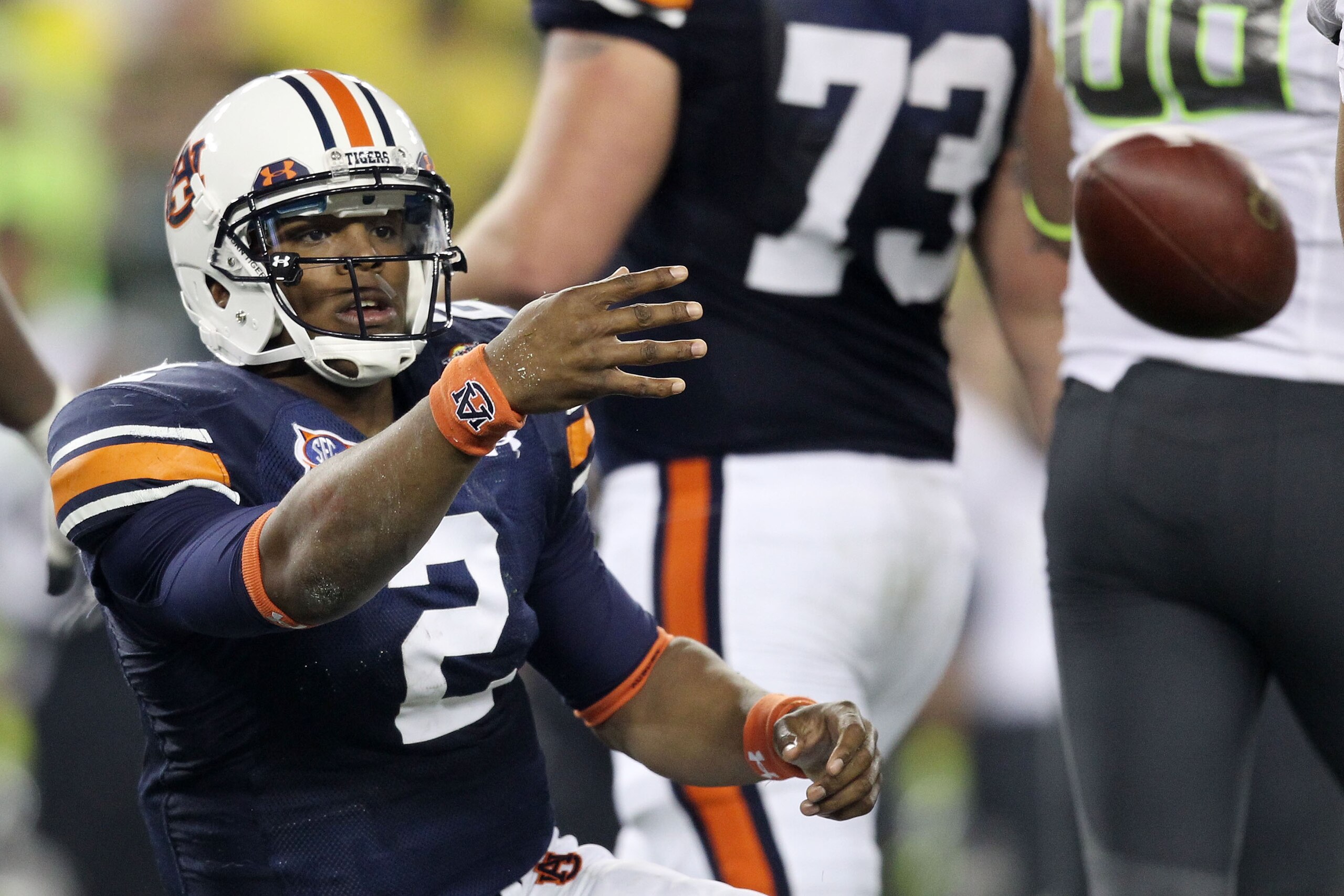
One of the most hotly contested issues surrounding the NCAA is the status of players as amateur-student athletes on whose backs the NCAA generates it's billions of dollars.
Is a free college education enough?
Perhaps there is no right answer to such a question. However, to leave the players, many of whom come from low-income families and whose school, practice and training schedules leave no time for part-time jobs, to their own devices simply begs for trouble.
Now that the top schools are flush with equal amounts of cash, it's again time to mirror the college game's big brother.
Institute a salary cap.
Every student-athlete, in all sports, would receive a base level sum to be determined, and the school's could then determine how to further compensate players with bonuses -their team's record, revenue generation, individual on-field performance, post-season honors, success in the classroom etc.
Will this prevent every instance of players trying to score extra cash? Of course not. But giving them a share of the profits in which they are the primary force in generating would certainly make a large impact.
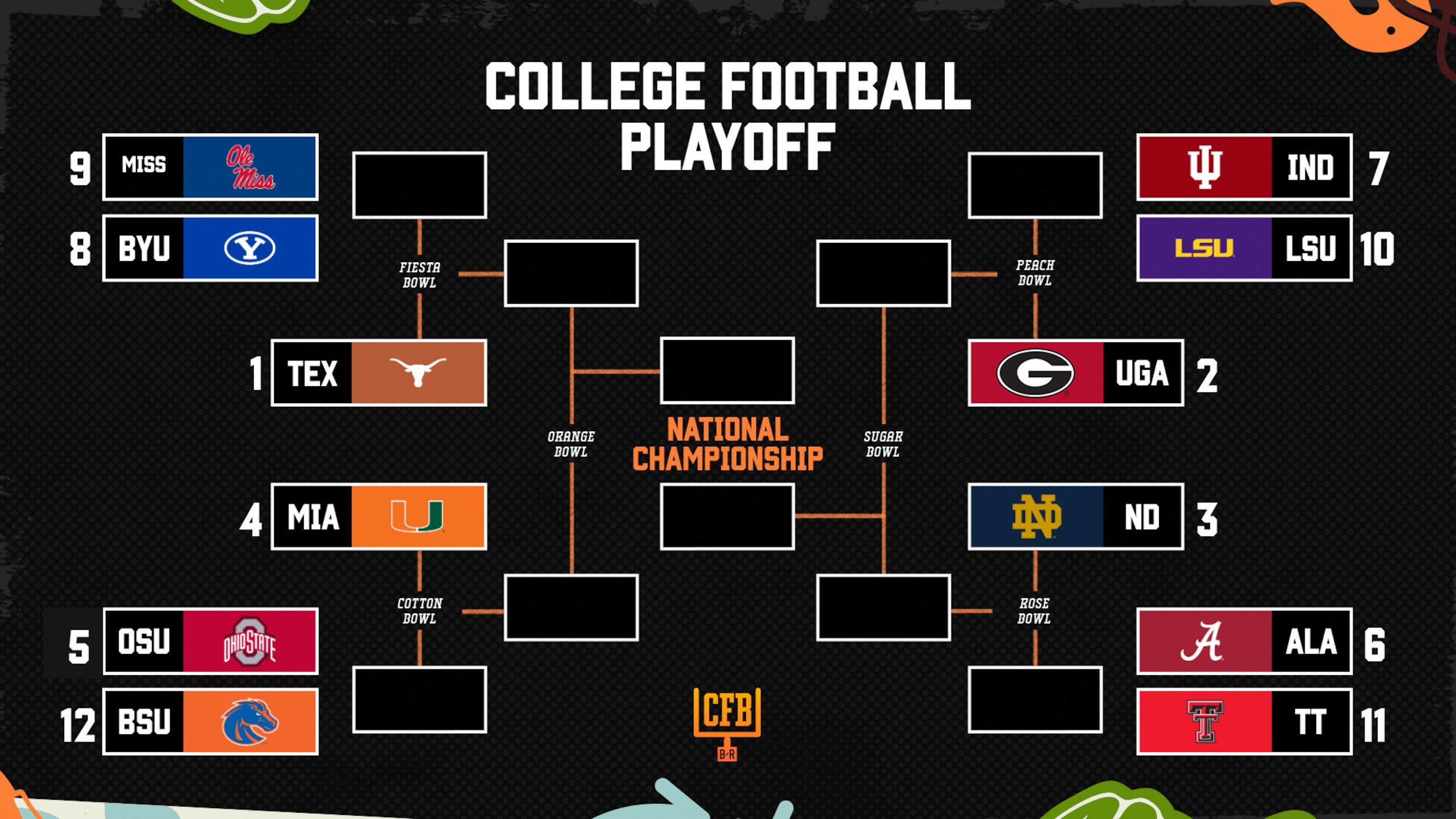
Playoffs
10 of 12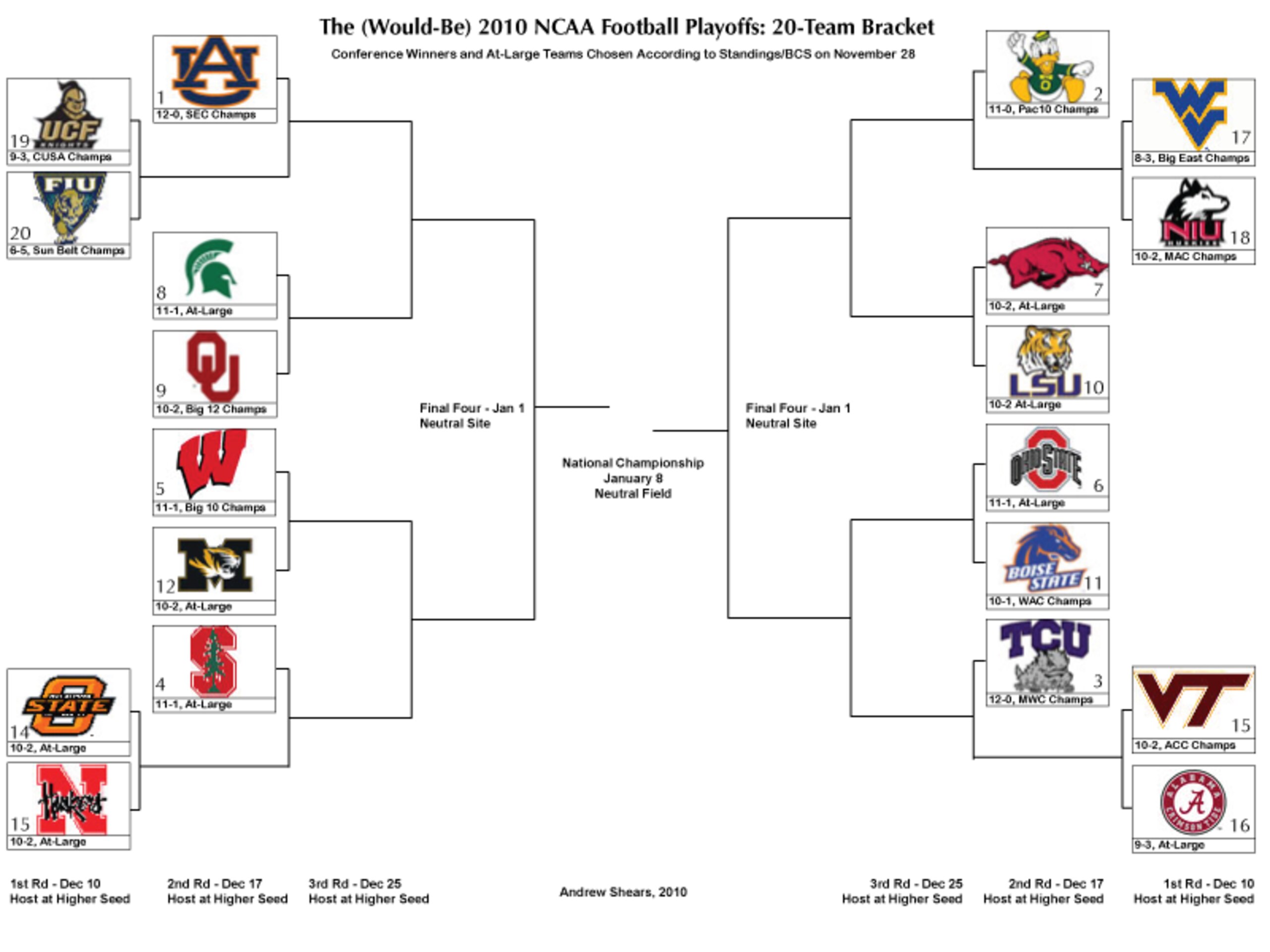
Now for the headliner - playoffs.
The BCS system was a step in the right direction from the previous system, but it's not the end solution. That can only come on the field in a playoff format.
The FCS Division (formerly the I-AA) now fields a 20-team playoff that spans five weeks. The long running excuse of the NCAA that it doesn't want the players to miss so much school has long been exposed as a cheap cover in order to protect the financial windfall of the BCS.
The number of actual teams to qualify for this new playoff field could vary. It could be eight, with each of the division winners within the four conferences getting in. Perhaps it could be double that number, with the addition of eight wild card entries.
This new system would certainly generate as much and likely greater interest than the current system. The prolonged television coverage would line the NCAA's coffers as much as ever, and whatever the number of teams, a bracket can be formed, the games played and most importantly, a true champion will be crowned.
Competing Organization
11 of 12
Like the AFL to the NFL or the Carthaginians to the Romans, competition has always forced people and organizations to grow, adapt and improve in order to survive. The NCAA would be no different.
Since they have a monopoly on major college athletics, their words and decrees are the unquestioned law of the land. But what if that were to change?
As mentioned earlier, suppose the BCS conferences merged into several superconferences, leaving the remainder of the nation out in the cold. What if they were to break away from the NCAA and form their own collegiate athletic body?
It's not that preposterous a notion. Some enterprising individual like Mark Cuban could see the potential of creating an alternative to the NCAA.
They could immediately institute a system that addresses the major complaints of the current NCAA system - playoffs, payment of players, etc. - and begin to cut into the previously held monopoly.
While improbable, it's certainly not impossible. After all, not many gave the AFL a chance of competing with the NFL in the 1960s. Perhaps this gridiron civil war and reconstruction is the kind of drastic action needed for the long term betterment of the sport.
Your Suggestions
12 of 12
These ten ideas run the gamut from the mild to the earth shattering, from the practical to the borderline crazy. With as many issues that the NCAA must deal with, there surely are no shortage of possible solutions.
What do you think are the chief problems of the NCAA? How would you fix them? Post your comment below and let us know.
Follow me on Twitter @ASU_Examiner for the latest updates and analysis on college football and ASU athletics
.jpg?w=2560 "NFL investigating 2 referees for separate viral exchanges")
.jpg?w=2560 "Report: Chiefs Contact Hill's Agent")

.jpg?w=2560 "OBJ Calls Out Giants After Release")
.jpg?w=2560 "Tyreek makes another cryptic post amid Chiefs rumors")