
College Football 2011: 10 Recruits USC Trojans Are Counting On to Contribute
In the wake of an elite recruiting class, the USC Trojans are still on thin competitive ice. A top-five recruiting class for 2011 isn't enough to reduce the anxiety and urgency that Coach Lane Kiffin and his team feel in light of their program sanctions, which are currently under appeal.
With 24 committed players on or before Signing Day, Kiffin's haul was among the best in the country, and he wasted no time in gerrymandering the sanctions to apply several of those players to 2010's unsanctioned scholarship total.
In a time when USC's competitive ability is involuntarily hampered, Kiffin and the Trojans are working overtime to speed the learning curve of all new talent, due to thin ranks at most positions.
Last year, the lack of depth killed USC in attrition as the season wore on, and the reduced roster size will not suffice as an excuse for losing in 2011.
The Trojans, more than ever before, have glaring weaknesses and were actually over-matched by opponents at several positions last year.
Many of the 2011 incoming freshmen will go a long way in plugging the biggest of USC's holes, which gives the class even more strength than the numbers and rankings tell; adding talent at stacked positions is always a plus, but those talented players mean so much more when they strengthen a shortcoming.
Here are 10 incoming Trojans that will need to develop quickly at thin positions to allow USC to return to the throne of the Pac-12.
Kicker: Andre Heidari
1 of 11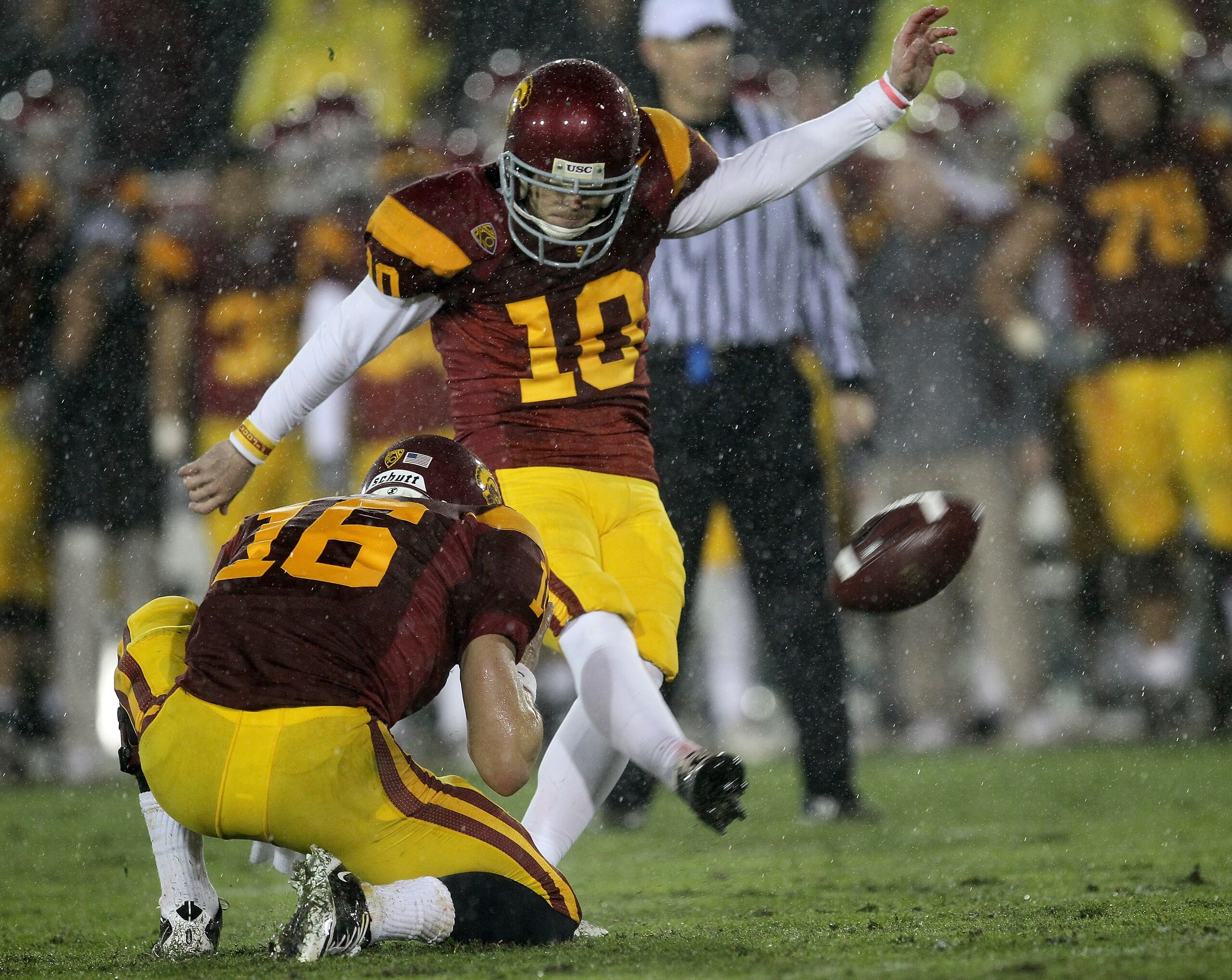
Kiffin sensed such a weakness in the kicking game after last season that he spent two of his precious few scholarships on a new punter and kicker.
The kicker, Andre Heidari, is the top-ranked player at the position, and will likely jump in right away to bring stability to the position.
Joe Houston, the outgoing kicker, made only 10 of 16 field goals last year, and hit just one out of four from more than 40 yards. One of those misses cost the Trojans a win against Washington, and others kept USC from pulling away from visiting doormat Virginia and Arizona State.
The kicking game used to be a major strength for the Trojans in the years of the late Mario Danelo and David Buehler after him.
Heidari will attempt to bring stability and consistency back to an overlooked, but very important, position.
Defensive End: Greg Townsend Jr.
2 of 11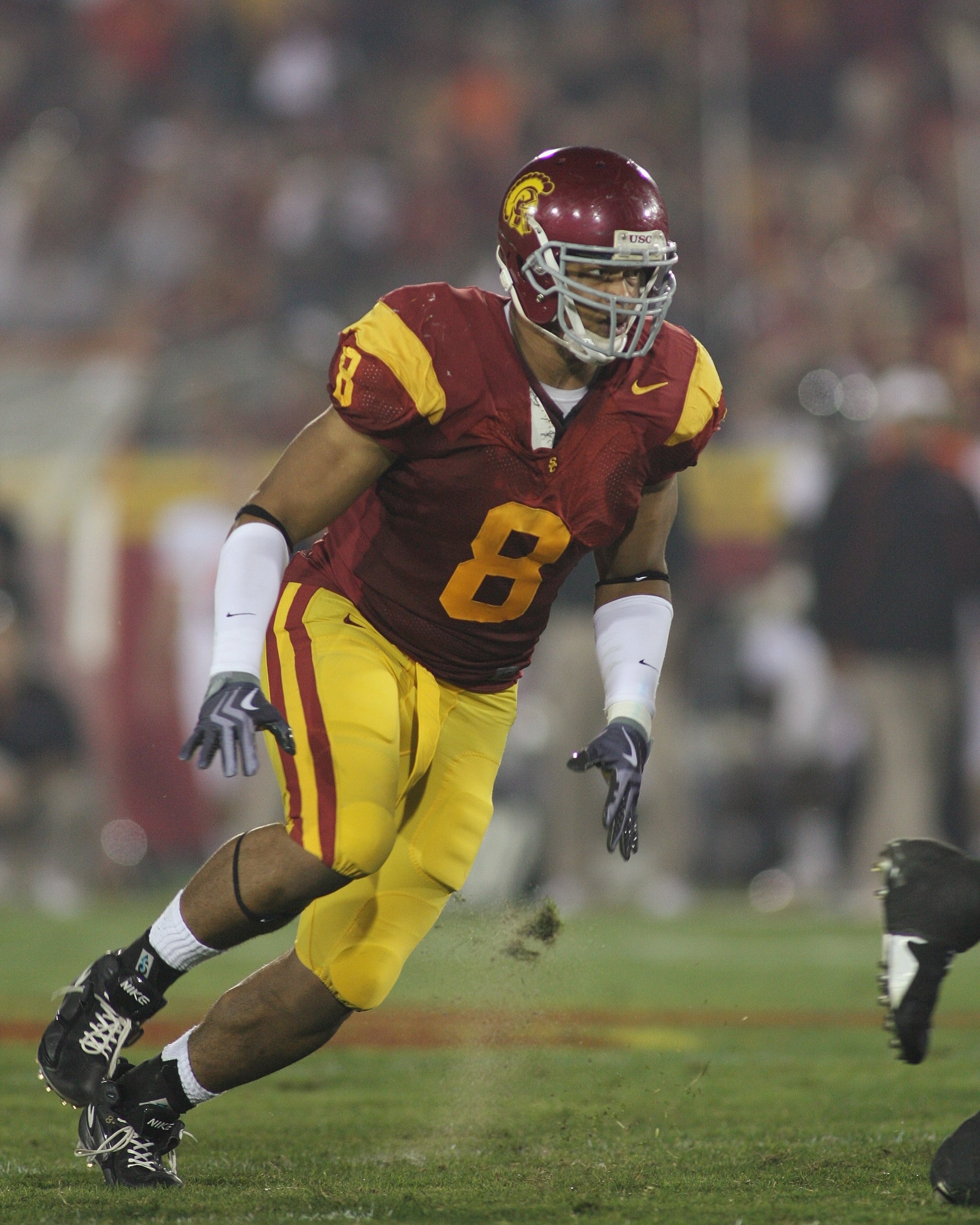
Nick Perry, Armond Armstead and Wes Horton return to the Trojans, but are coming off somewhat disappointing years.
They were just parts of an underachieving defensive line that fell off in sacks from second in the Pac-10 to sixth last year. Neither of the returners had more than four sacks last season in a curious reversal of past USC tradition.
Enter Greg Townsend from Beverly Hills. Townsend is a top-five defensive end in his class who wasn't certain to come to USC because of the decent depth at the position.
Indeed, he likely won't get on the field for his first year in cardinal and gold, but that doesn't mean he can't have an impact immediately. By virtue of his ability and prize recruitment, Townsend can motivate Horton and Perry to live up to their NFL-caliber talent in 2011, or else be overtaken by a freshman.
Either way, USC has to be better at getting pressure on the quarterback to protect the paltry secondary and to keep scoring down.
While pushing them to be better, Townsend will himself learn from two experienced and high-quality players, so that when the time comes for him to make an impact on the field, he'll be ready.
Defensive Tackle: Christian Heyward
3 of 11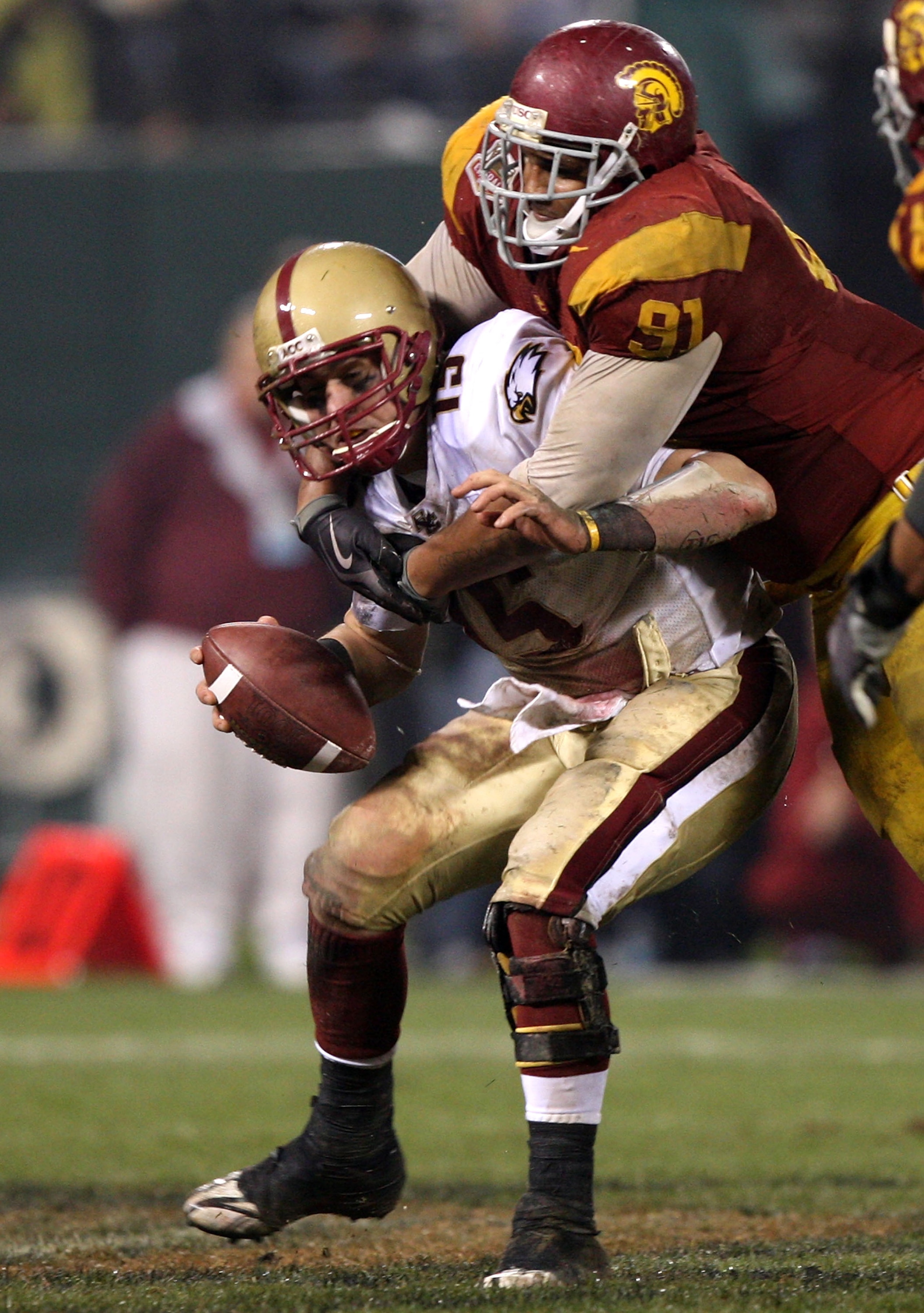
The Trojans are decimated at another of their signature dominant positions, defensive tackle, after losing Jurrell Casey (above) to NFL early entry.
Casey alone wreaked havoc on opposing offensive lines, much like Sedrick Ellis and Mike Patterson before him. DaJohn Harris looked promising in Casey's shadow, but it remains to be seen whether he can step up and shoulder the load in the trenches.
USC unexpectedly gains No. 6 DT Christian Heyward while losing Hebron Fangupo via transfer. The Trojans do have freshman George Uko to partner with Harris, but overall, this is a position that is dangerously thin on proven players.
Heyward might get a chance to play right away if he impresses in the summer, and the chance to make an immediate impact might spur him to develop more quickly.


Linebacker: Lamar Dawson
4 of 11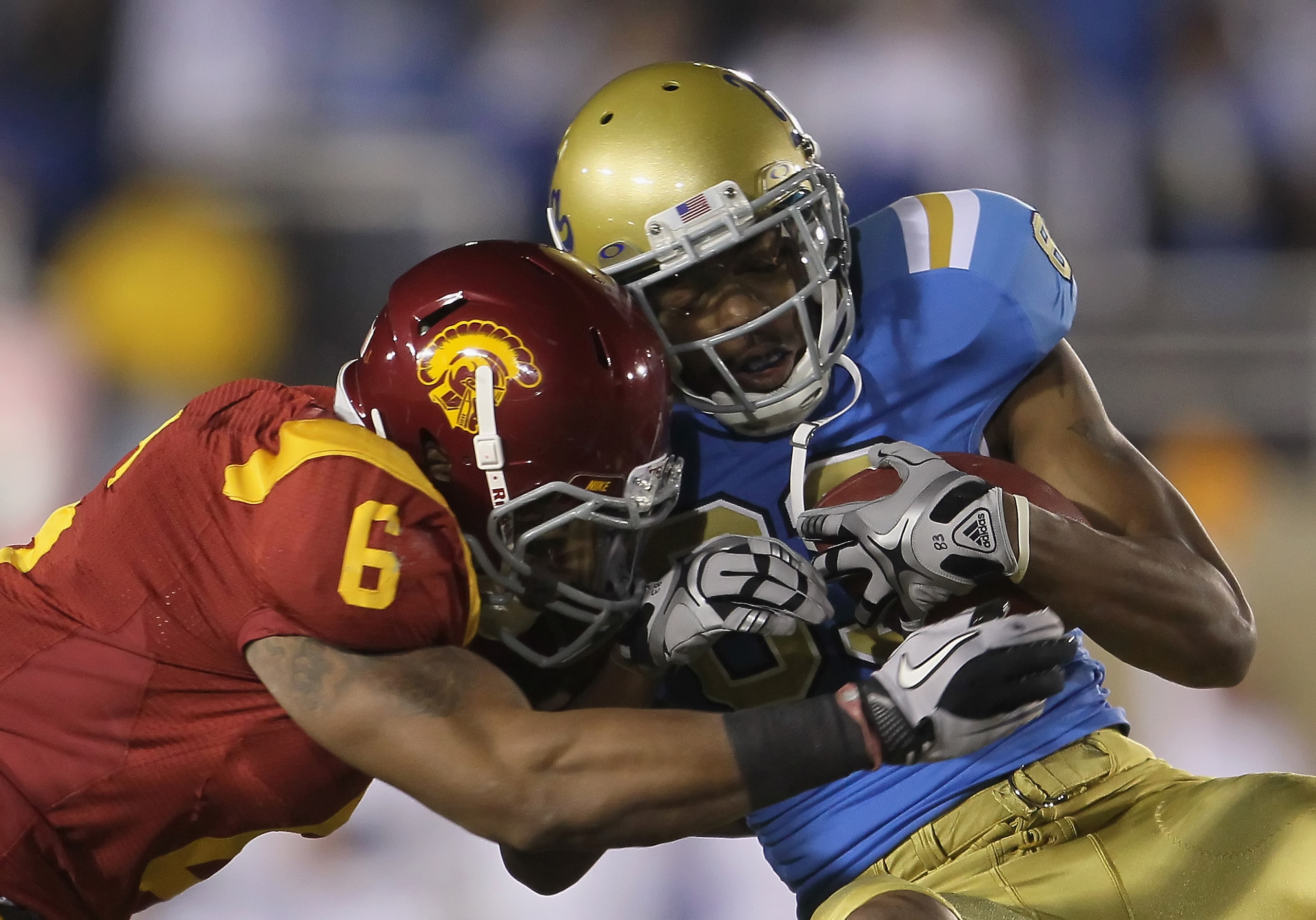
The returners at linebacker, Chris Galippo and Devon Kennard, both play in the middle of USC's 4-3 defensive attack.
At least one of the outside positions will be up for grabs, and that's only if defensive coordinator Monte Kiffin plans to get Galippo and Kennard on the field at the same time. Whoever fills the outside spots won't have a lot to live up to, because Malcolm Smith (above) and Michael Morgan left a lot to be desired.
This is where Lamar Dawson, the top player from the state of Kentucky and third best inside linebacker in the nation, can really be a huge help. What the Trojans need is size and physicality at the line against the run.
Dawson loves to hit, and his superior athleticism will allow him to temporarily make up for his tackling shortcoming to make plays against runners LaMichael James from Oregon, Chris Polk from Washington, and Stepfan Taylor from Stanford.
Linebacker has arguably been the Trojans' biggest weakness in the two-year decline they are in, and Dawson's athleticism and dedication to improve his tackling could go a long way immediately.
Offensive Guard: Aundrey Walker
5 of 11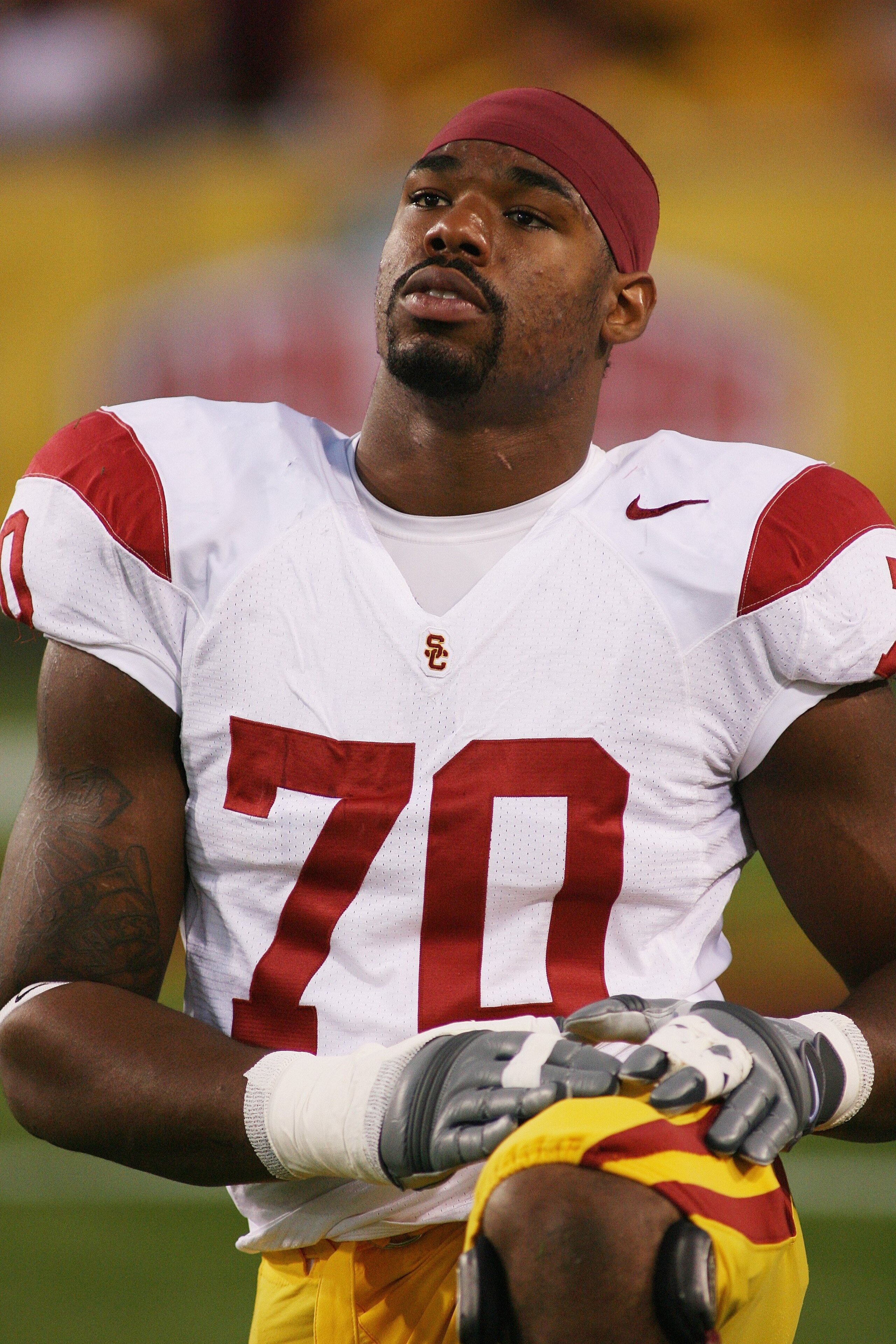
A huge problem for the Trojans has been the offensive line, which will only have eight healthy scholarship players for spring practice. Only two starters return, Matt Kalil at tackle and Khaled Holmes, to a line that loses stars Tyron Smith (pictured) and Kris O'Dowd to the NFL.
Last year's group wasn't under-talented; it was overworked. Due to the implications of the scholarship reduction, the Trojans were thin across the line and injuries bred inconsistency in protection.
Next year will probably be more of the same, although the additions of Aundrey Walker and Cyrus Hobbi will significantly help to shore up the depth problems at guard.
Assuming that Khaled Holmes moves over to center and Kevin Graf steps in to start at guard, Walker, the top guard in 2011, could start right away on the other side. He has the size (6'5", 355) to play in the NFL right now, and will probably get a chance to showcase himself early because of that size.
Offensive Guard: Cyrus Hobbi
6 of 11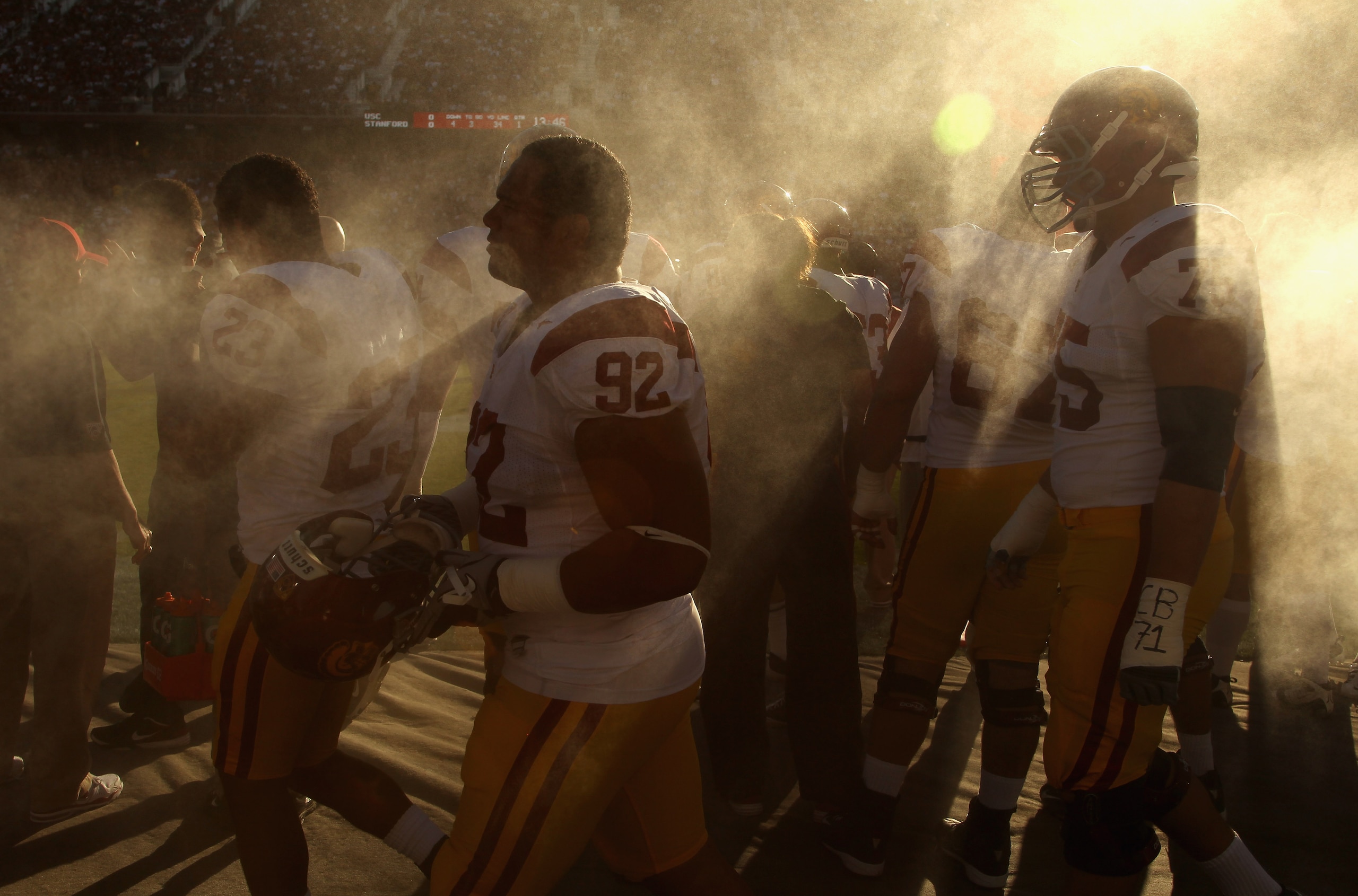
Hobbi, the fourth-ranked guard from Arizona, could plug in wherever needed in the short term, and star at one position beyond. His versatility at a lean 285 pounds means that he can fill in anywhere the Trojans might have an injury or ineffectiveness. His style is similar to that of current starter at guard, Matt Kalil (pictured, far right), with a few inches less on his frame.
With so much turnover on the line this year, it's not out of the question that both Walker and Hobbi will start right away.
Defensive Back: Marqise Lee
7 of 11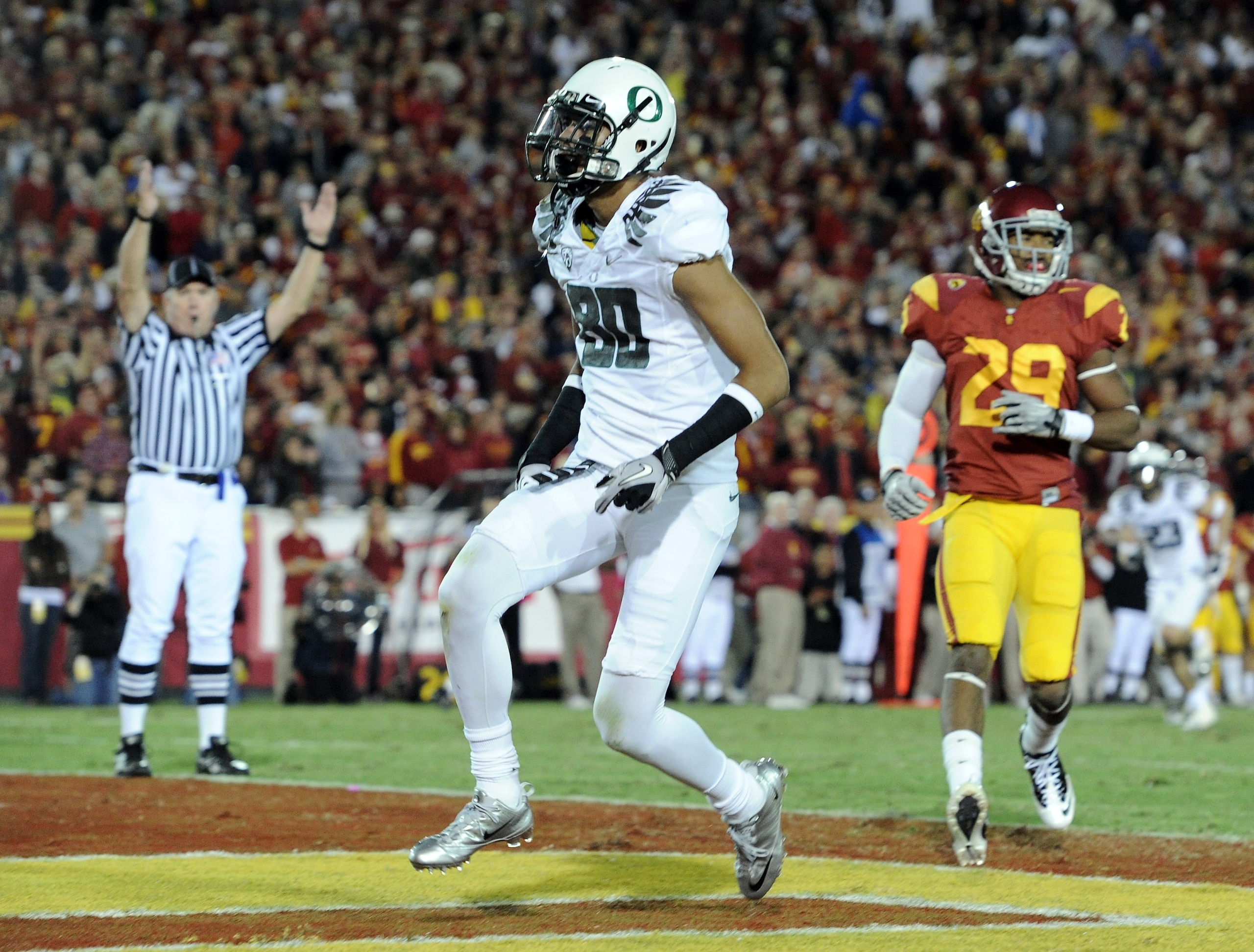
The run was a huge issue for the Trojans last season, but the pass defense was downright abhorrent. Only 11 teams gave up more passing yards than USC's green defensive back field, and only three gave up more passing touchdowns than the Trojans.
Sophomore Jawanza Starling (pictured) was routinely abused by opposing quarterbacks who preferred to not throw toward senior corner Shareece Wright. Nickell Robey, a freshman, experienced a little more success than Starling when he had the chance, but doesn't scare any quarterbacks yet.
This is why Marqise Lee, a top-40 player in the class and classified as an athlete, is needed with the DBs more than at any other position. The haul of DBs this year is subpar for Kiffin, so he might as well use an undefined player with a ton of impact potential at cornerback, right?
How can the corners be any worse than they were last year? Kiffin doesn't need another receiver, where the Trojans are absolutely loaded, so there's no use in wasting him or limiting him by sticking him at running back.
Cornerback is the best option to get the most out of Lee and define his role early on before he starts forming habits.
Lee's size at 6'1" makes him a nice counter to the speedy Robey, who will most likely start at corner on the other side.
Lee's playmaking ability makes him a good fit at corner, while the more experience Starling could develop better at his natural strong safety position.
Wide Receiver: George Farmer
8 of 11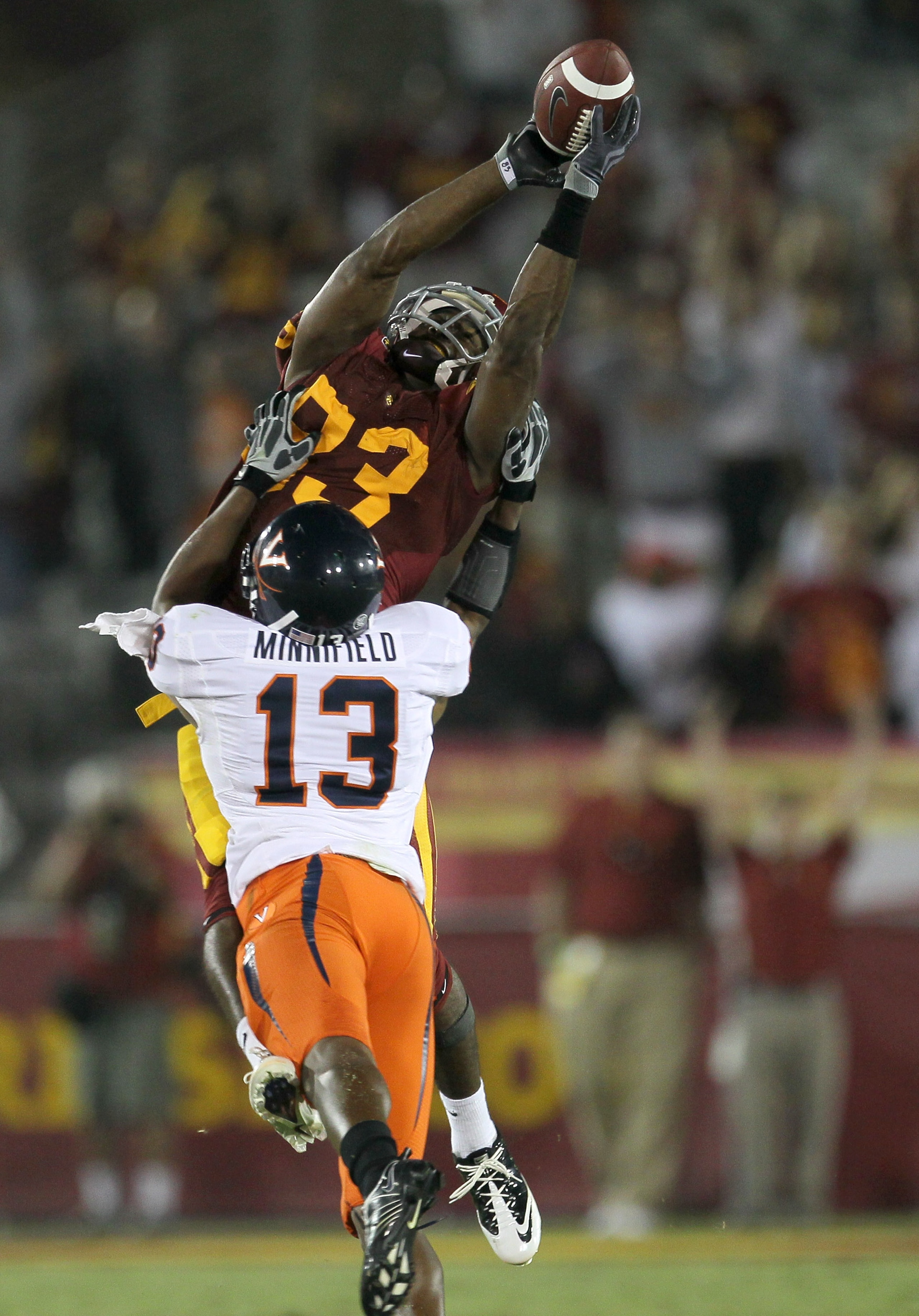
Quarterback Matt Barkley is certainly sad to see go-to guy Ronald Johnson graduate.
However, his coach doesn't leave him empty-handed in the passing game going forward—far from it, in fact.
The Trojans added the top receiver in the class, George Farmer from local Serra High, to an already loaded group. Farmer is expected to walk onto Howard Jones Field as the starter opposite his high school teammate, sophomore Robert Woods.
That would mean a jump over highly touted receivers from last season, 2010 No. 1 redshirt Kyle Prater and No. 3-ranked Markeith Ambles, for the majority of playing time. That's a lot to ask for a freshman, but Farmer is the No. 3 overall player in his class for a reason, which is to step on the field, no matter who else he's playing with, and make a splash.
Barkley will miss Johnson, but Farmer (and Prater) might make him forget pretty quickly.
Tight End: Xavier Grimble (Redshirt) and Christian Thomas
9 of 11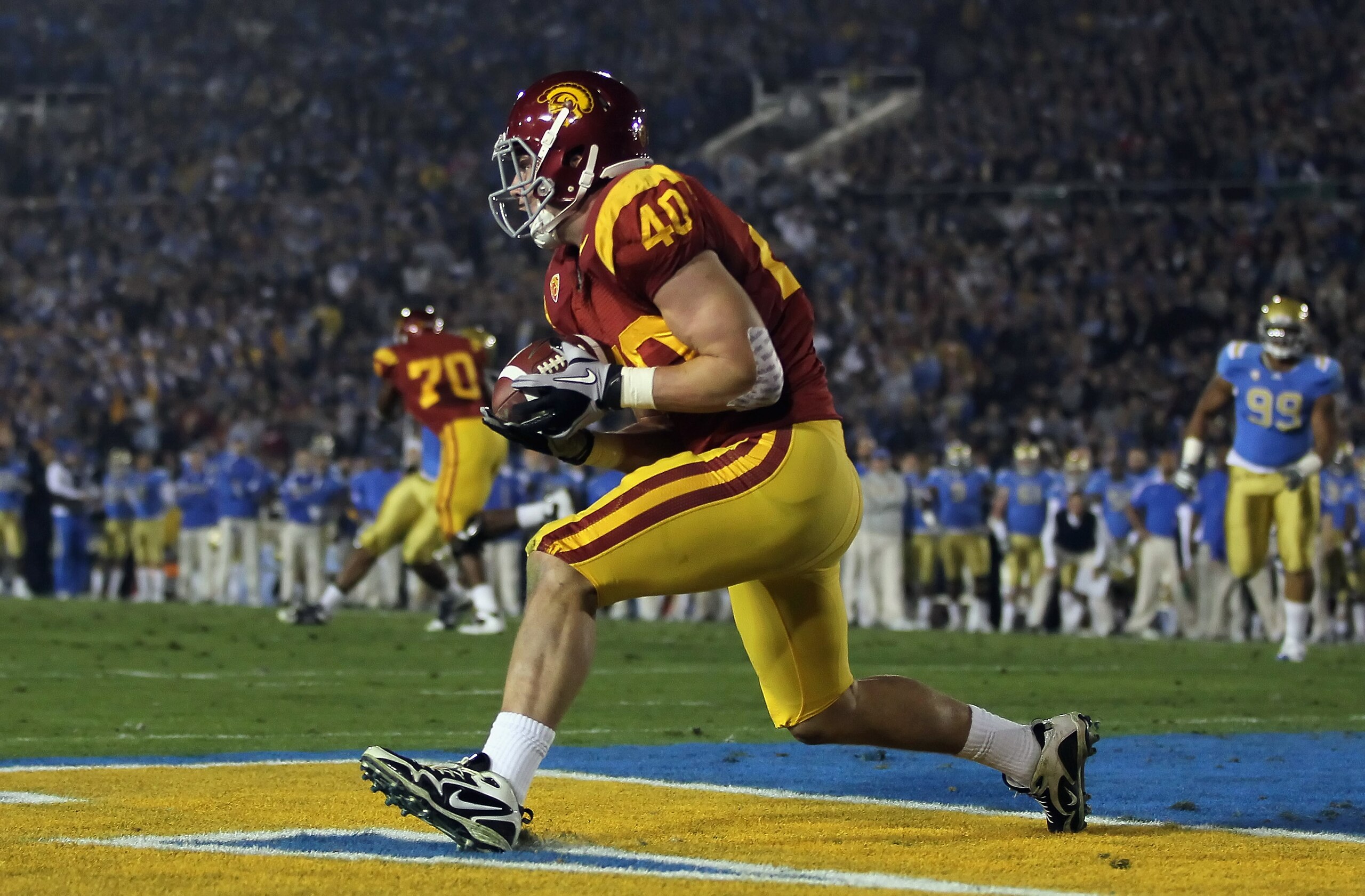
Rhett Ellison (above) is a very useful tight end for the Trojans, but he's the only serviceable player at the position.
Until now.
USC's 2010 class brought three tight ends to Heritage Hall, and two of them should get lots of playing time along with Ellison this season.
Xavier Grimble, a hulking blocker, Christian Thomas, a skilled receiver, and Randall Telfer will compete for playing time. The breakdown will depend a lot on Lane Kiffin's decision on how much to include his tight ends in the passing games.
If Kiffin returns to USC's penchant for throwing to them, Thomas will get a lot of work and will need to flourish.
If Kiffin wants to concentrate on the run game, Grimble will get a lot of work. Ellison is mainly a blocker, so Grimble might be disadvantaged from the start as a similar player.
Regardless of the logjam of young tight ends, there will be a lot of opportunity since senior Blake Ayles recently transferred to Miami.
Historically, the Trojans prominently feature the tight end in their passing game, so look for Kiffin to get back to his old offensive coordinator ways from several years ago.
Kick Returning, Then Running Back: Amir Carlisle
10 of 11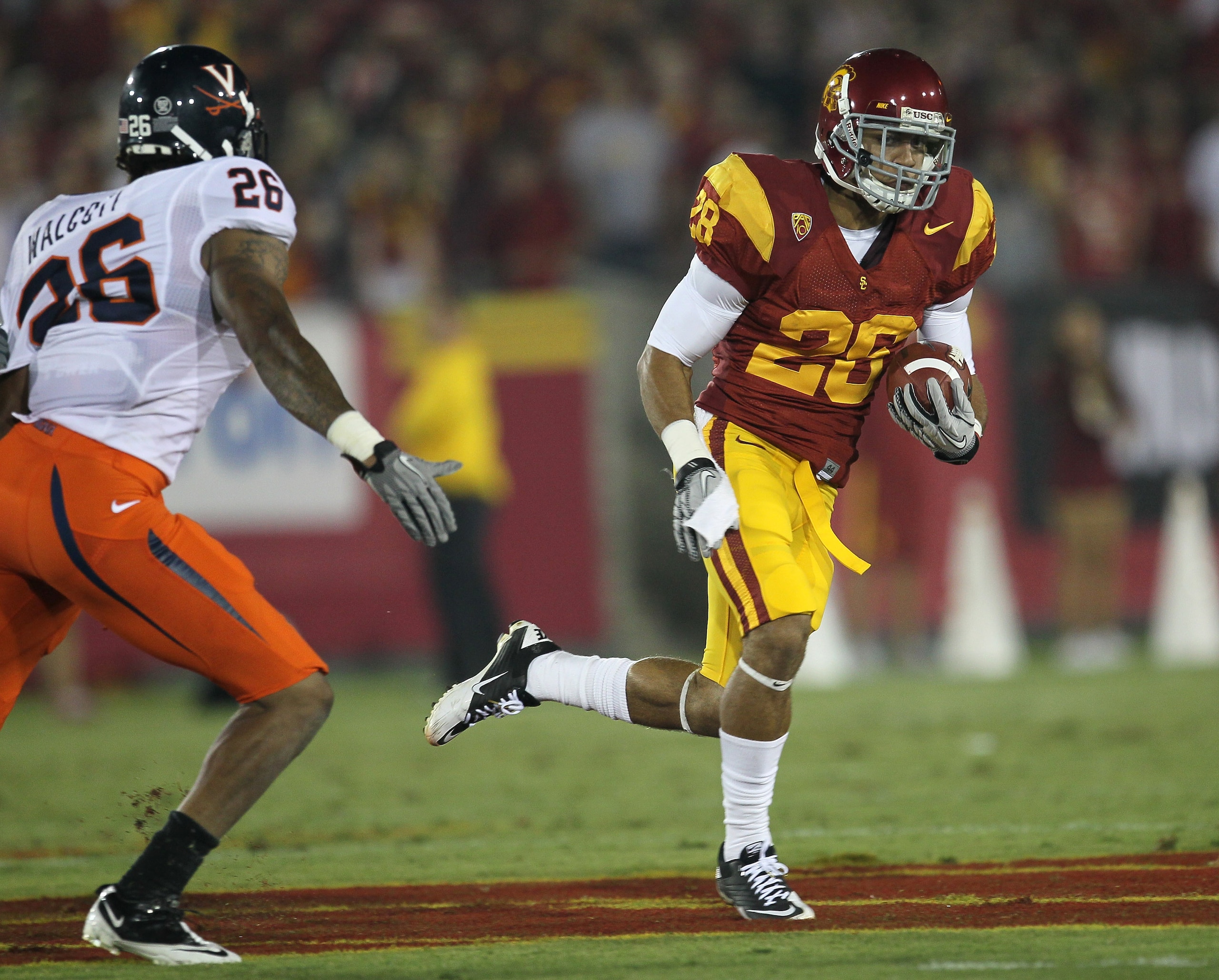
The antics and immaturity of prodigy Dillon Baxter are the only reasons that Carlisle has hope at running back.
Baxter, only a sophomore, severely disappointed last season, and has almost worn out his welcome in Lane Kiffin's good graces.
Carlisle, a 5'10", 181-pound speeder, has an optimistic future because after 2011, USC will have lost all its contributors at running back—Marc Tyler, C.J. Gable and Allen Bradford—in two graduating classes.
With Tyler and Baxter (and possibly Curtis McNeal) ahead of him on the depth chart, Carlisle could be asked to handle the return duties.
Kiffin will want to get him on the field because of his speed and elusiveness, and the kicking game might be the place where he can make an immediate impact in succession of Ronald Johnson.
After getting some experience with the ball under his belt in 2011, Carlisle will have the opportunity to compete for touches in the run game with Baxter in 2012, but probably not before that.
The Stopgap Class
11 of 11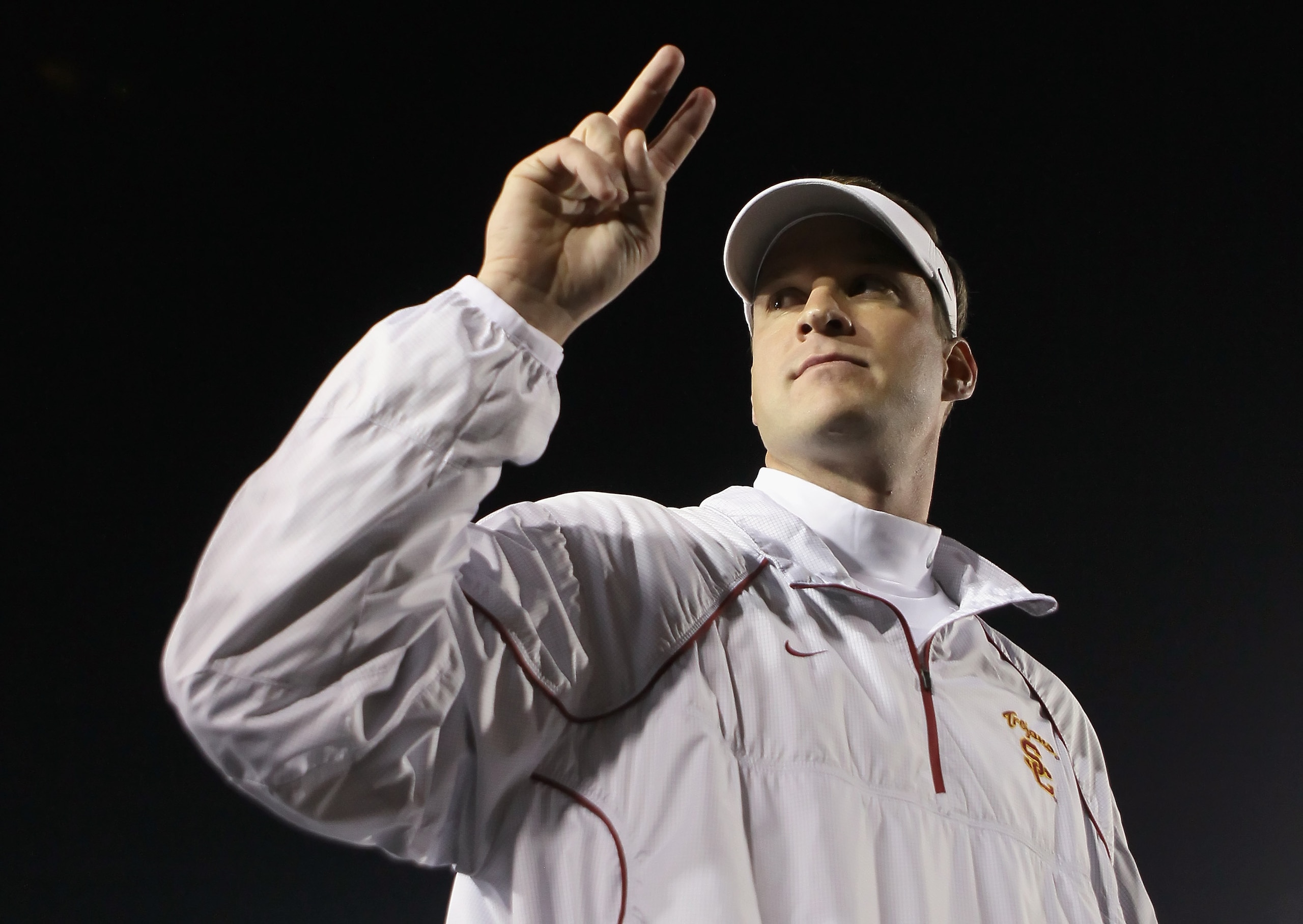
If USC bounces back in 2011, Lane Kiffin will have earned his salary and more. He has tirelessly gone after it on the recruiting trail since arriving back in Los Angeles, and his hard work will begin to show soon, even under the oppressive NCAA sanctions.
The ultimate litmus test for Kiffin's recruiting success is twofold:
a) How many freshmen step into sizable contributions and are ready to play right away?
b) How much does USC improve in pass defense, linebacking, pressuring the quarterback and protecting Barkley as a result of this year's Stopgap Class?
The immediate returns for the strong 2011 class will be fleshed out in the answers to these questions, and the long-term returns will be seen in how the Trojan freshmen use their first year to develop into star players for the rest of their time at SC.
The Trojans—coaches and players—have their work cut out for them.
_0.png?w=2560)


.jpg?w=2560 "Injury-stricken Seahawks signing veteran RB")
.jpg?w=2560 "2 NFL Officials Suspended")


.jpg?w=2560 "Mahomes' Wife Trolls Kubiak 💀")
.jpg?w=2560 "Viral Rams Coach Vid 🖕")