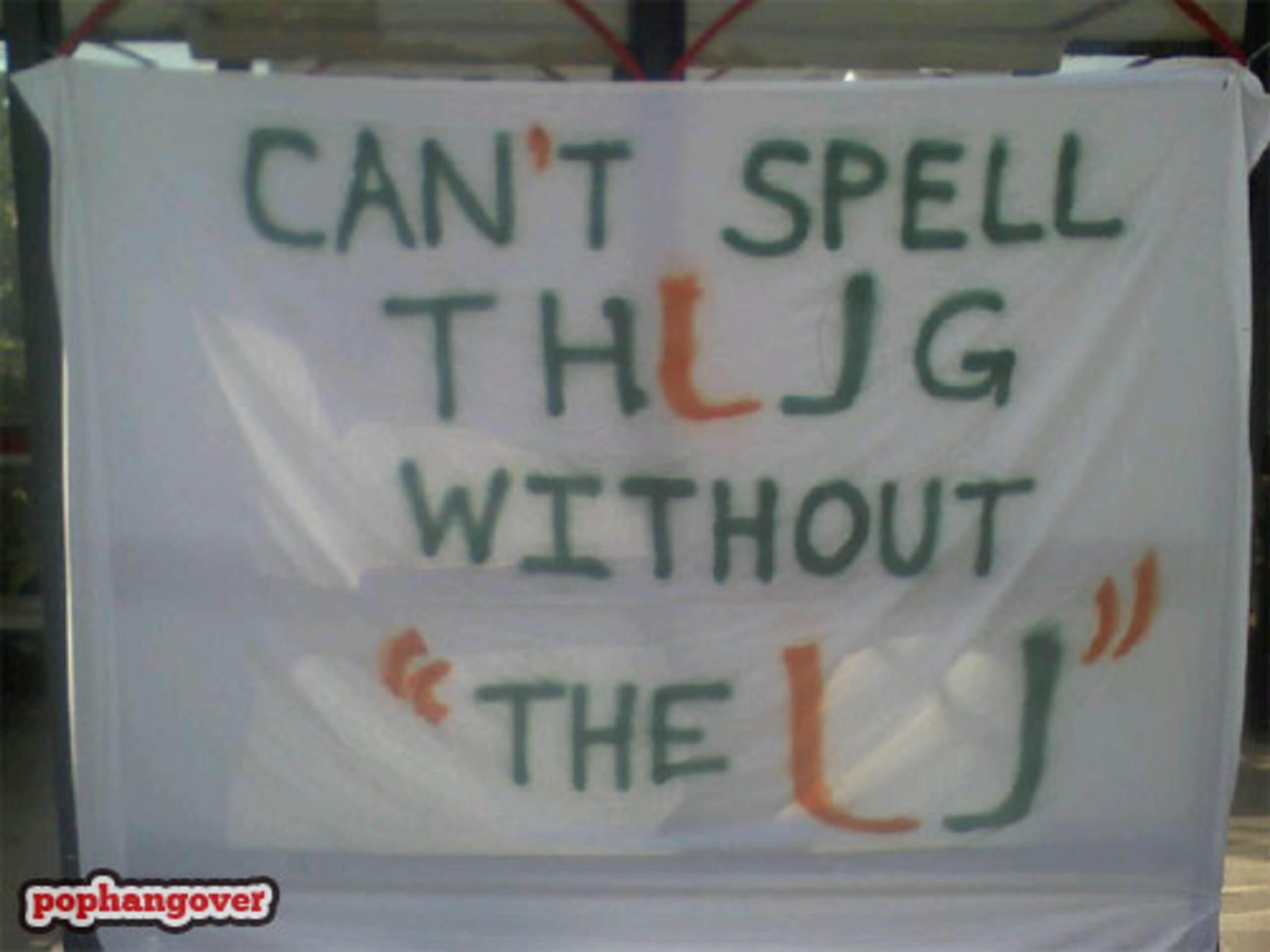

America's Most Wanted: Power Ranking the Top 10 Problem Child Programs in CFB
College football is a business. But since it is also a sport, it is a business where winning means everything, since wins eventually translate to dollars.
With over 100 schools competing for the 10 spots in BCS bowl games, and the millions of dollars in revenue that they generate, corruption runs deep in the blood of college football.
Among violations schools have committed:
-Ignoring crimes by players
-Paying off recruits or coaches of recruits to influence decision of college choice
-Recruiting student-athletes with severely questionable character (players that wouldn't get into the school if they were a normal student) because they are talented football players
-Paying players for good on-field performance
-Illegal benefits and gifts provided to players
And all that's just scratching the surface.
The dynamics of college football change yearly as new sets of players move into the national spotlight. Some teams have a tradition of winning. Others have a tradition of getting into trouble.
A few fall into both categories, because once you start winning, its hard not to lie, cheat and steal to get yourself back to the top when times are tough.
What follows is a list of the 10 college football programs that have been in the spotlight the most for their transgressions—both on and off the field.
10. North Carolina Tar Heels
1 of 10
The North Carolina Tar Heels defense was supposed to be among the best in the country in 2010. Heading into the season, they featured five potential first-round NFL draft picks on defense.
An NCAA investigation was launched at the beginning of the season which alleged illegal ties between Tar Heel players and NFL agents. North Carolina was forced to suspend 12 players, including six starters, for their opening game against LSU.
Among the players was Marvin Austin, a defensive tackle who may still be a high pick, who received illegal benefits totaling between $13,000 and $15,000 from agents while attending a party in Miami.
His teammates, wide receiver Greg Little and defensive end Robert Quinn, were also part of the group and received money, compensation for vacation travel and gifts like diamond earrings, among other things.
All three players were essentially kicked off the team, leading to UNC having a disappointing year in 2010. The university still doesn't plan on self-imposing sanctions since they say the players acted on their own merits and thus are responsible for their mistakes.
The NCAA investigation is still ongoing. We will soon see whether or not Butch Davis and his staff are hit with any severe penalties.
9. Florida Gators
2 of 10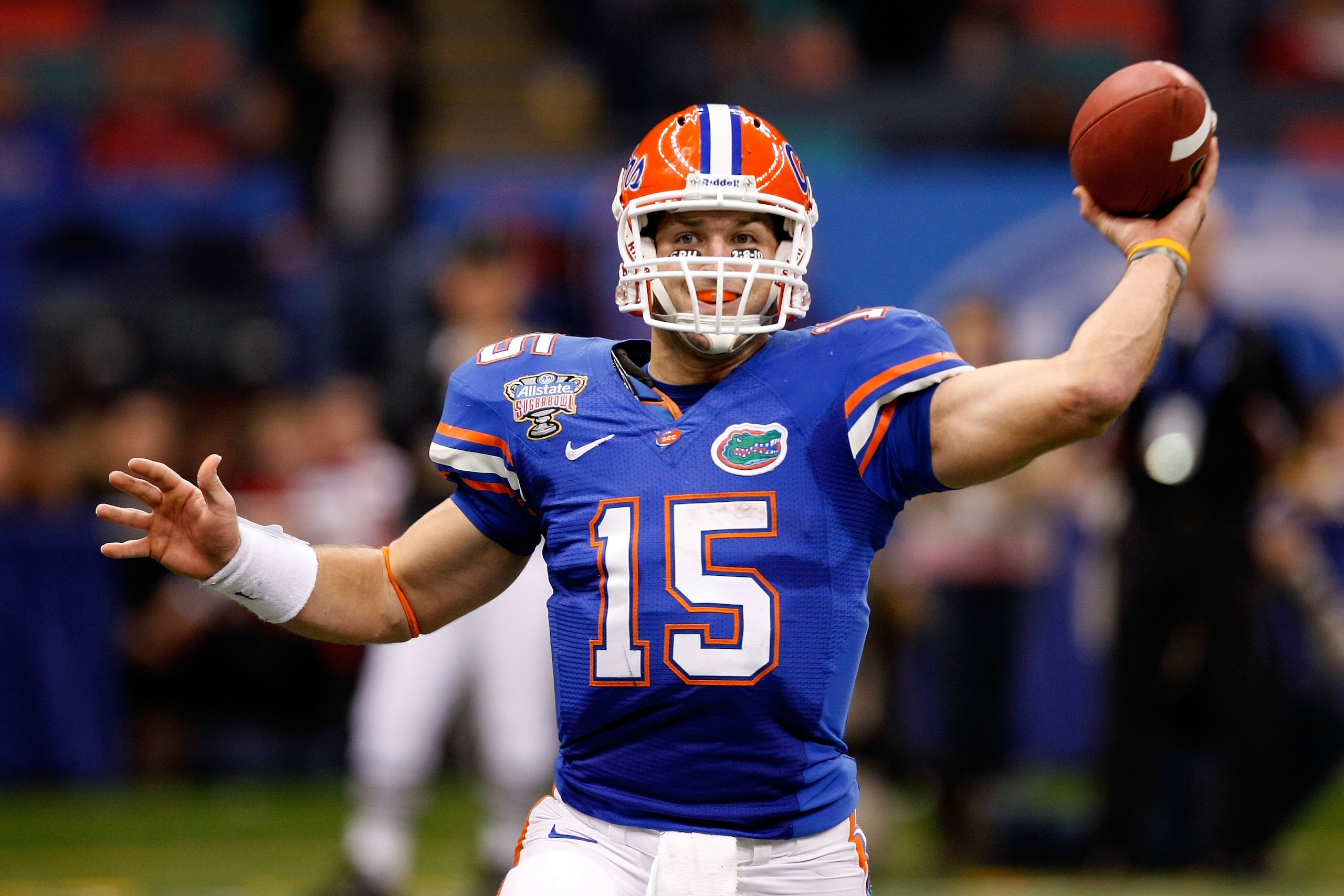
From 2005 through September 2010, the Florida Gators had 31 players arrested. Although some were for relatively trivial things for which even the most common of college students face charges, at least a dozen were for felonies or violent misdemeanors.
Running back Chris Rainey became perhaps the most infamous among all the offenders after receiving a charge of aggravated stalking for texting an ex-girlfriend "Time to Die." Rainey was initially kicked off the team but was later reinstated.
Lineman Ronnie Wilson was also allowed back at Florida following a 2007 incident, where, following a dispute at a nightclub with a local man, he pulled an AK-47 out of his truck and threateningly fired it in the air. He was given two years probation.
Wilson was arrested again for possession of marijuana. He was eventually reinstated but never played. Wilson was arrested for a third time, this time for assault and battery, after striking two people at a party. Finally, he was kicked off the team for good.
The Gators do not have a history of accusations of corruption or serious NCAA sanctions. But their recent arrest tally is horrifying. Had Urban Meyer never been graced with the PR angel that Tim Tebow seemingly is, it's likely that his career at Florida wouldn't have lasted very long.
Thirty-one arrests in five years is embarrassing. And a fireable offense by itself. With Meyer gone, Will Muschamp needs to make sure things don't spiral out of control in Gator country.
Due to their recent record, The Gators are currently one of the most troublesome programs in college football.
8. USC Trojans
3 of 10
Citing lack of institutional control, the NCAA hit the University of Southern California with a two-year postseason ban, a loss of 10 scholarships per year over three years and a vacating of all wins from their 2005 season when they lost to Vince Young and Texas in the national title game.
Reggie Bush had apparently, while a sophomore, taken payment in a verbal agreement to sign with a certain agent upon entering the NFL draft. Bush eventually signed elsewhere, and his story was outed.
USC was punished, and Reggie Bush was basically forced into returning his Heisman Trophy. The Trojans, however, did not have to forfeit their 2004 national championship.
At the end of last season, Pete Carroll obviously knew what was about to go down and fled for the Seattle Seahawks. Some may say it's unfair that his successor, Lane Kiffin, had to be hit with the sanctions Carroll had "earned" during his time at USC.
Tennesee fans, who saw Kiffin use the Volunteers to find greener pastures and eventually flee after one season in Knoxville, would call it karma. Lane Kiffin represents everything that is wrong with college sports. During his time at Tennessee, he lied to potential recruits about long-term stability and his intention to stay with the program.
There's nothing in the rules, however, that prevents a coach from leaving and accepting another job whenever he so desires. Despite the fact that he was under contract with the Volunteers, Kiffin was allowed to sign a new deal with the Trojans.
The real loser in this situation is Matt Barkley, USC's prized rising junior quarterback. Should he choose to leave after this season, Barkley will have never have had the legitimate chance to compete for a national title. The same thing goes for the current seniors on the team.
.jpg?w=2560 "AP Poll Top Five Week 9")
.jpg?w=2560)
7. Georgia Bulldogs
4 of 10
Over the past few seasons, few teams have been in the news for arrests as often as the Georgia Bulldogs.
The most alarming part is that most of the charges have been directly related to alcohol. In 2008, Georgia players famously celebrated their No. 1 preseason ranking by getting into a fight at a bar. Two players had to be treated for injuries stemming from thrown beer bottles, while two others were arrested for public intoxication.
In the past three years, there have been at least eight DUI's, the most notable of which came from former Georgia Athletic Director Damon Evans, whose job title wasn't able to save him from spending a night in jail (despite his best efforts) and eventually getting canned.
Running back Washaun Ealey was among 11 Bulldogs arrested in 2010 alone. The sophomore tailback committed a misdemeanor hit-and-run and was driving with a suspended license.
With a declining win/loss record and increasing arrest statistics, Mark Richt's job is in serious jeopardy at Georgia. He was able to pull in a top-five recruiting class for 2011, but his efforts need to pay off elsewhere, especially with wins.
Richt also needs to do a better job of keeping his players in line. Otherwise, his control of the locker room and the security of his job may both be in doubt.
6. Alabama Crimson Tide
5 of 10
Alabama doesn't just spend the most money on its college football program of any school in the country (an astounding $31.8 million). They have also had their share of scandals regarding illegal spending by boosters on potential recruits.
During the 2000 season, Logan Young, a former Alabama booster, paid high school coach Lynn Lang $150,000 to encourage his star defensive lineman Albert Means to sign with Alabama. The scandal was outed by Lang's assistant at Trezevant High School, and in 2002, Alabama received five years probation, a two-year bowl ban and reduced scholarships to 21 per year over three years.
Young was sentenced to six months in prison for racketeering and had his entire relationship with the University of Alabama dissolved. He was eventually killed in his home in 2006 in what was originally thought to be a homicide but was later ruled an accident.
Alabama is currently on probation following a 2009 investigation that discovered student-athletes, including seven football players, had been charging textbooks and other expenses for their friends and girlfriends to the school.
The program was stripped of all wins from 2005-2006 and five wins from Nick Saban's first year in 2007.
Since Saban has arrived, there has been little negative attention around the Alabama football program, with the exception of a few rogue personalities.
Despite the issues early in his tenure, Saban has kept his players in check and has done a great job of turning around the storied program after their sketchy run in the early 2000s.
5. SMU Mustangs
6 of 10Still the only team in the history of college sports to receive the full "death penalty" from the NCAA, the Southern Methodist Mustangs of the 1970s and 1980s were about as corrupt as they came.
The program was slapped with probation five times between 1974 and 1985. The last, in 1985, stemmed from recruiting violations by boosters and assistant coaches.
Reports began circulating in 1986 that SMU had been paying recruits up to $25,000 in signing bonuses to attend the school. Tight end Albert Reese was found to be living rent-free in a Dallas apartment, with the payments being taken care of by a Mustangs booster.
Slush funds were also kept, and money was distributed to players for various expenses. Thirteen players were paid a total of $61,000 from 1985-1986 in amounts varying between $50 to $725 a month. The slush fund was kept by booster Sherwood Blount Jr., and the payments were made with full knowledge of the staff of the athletic department.
Since it was their second major violation in a three-year period, the NCAA decided to cancel SMU's entire 1987 schedule. They were also barred from playing home games in 1988, and their probation was extended until 1990.
They also faced a bowl and national television ban until 1989 and lost 55 scholarships over a four-year period. All previous boosters were forced to end their relationship with the school. Since recruiting became so difficult, the football team's situation soon became destitute.
Since 1989, the Mustangs are 66-169-3. They have only recently made it back to relevance under former Hawaii coach June Jones, who has gone 1-1 in bowl appearances in his three years in Dallas.
There is a wonderful 30 for 30 documentary about the SMU scandal titled Pony Excess.
4. Colorado Buffaloes
7 of 10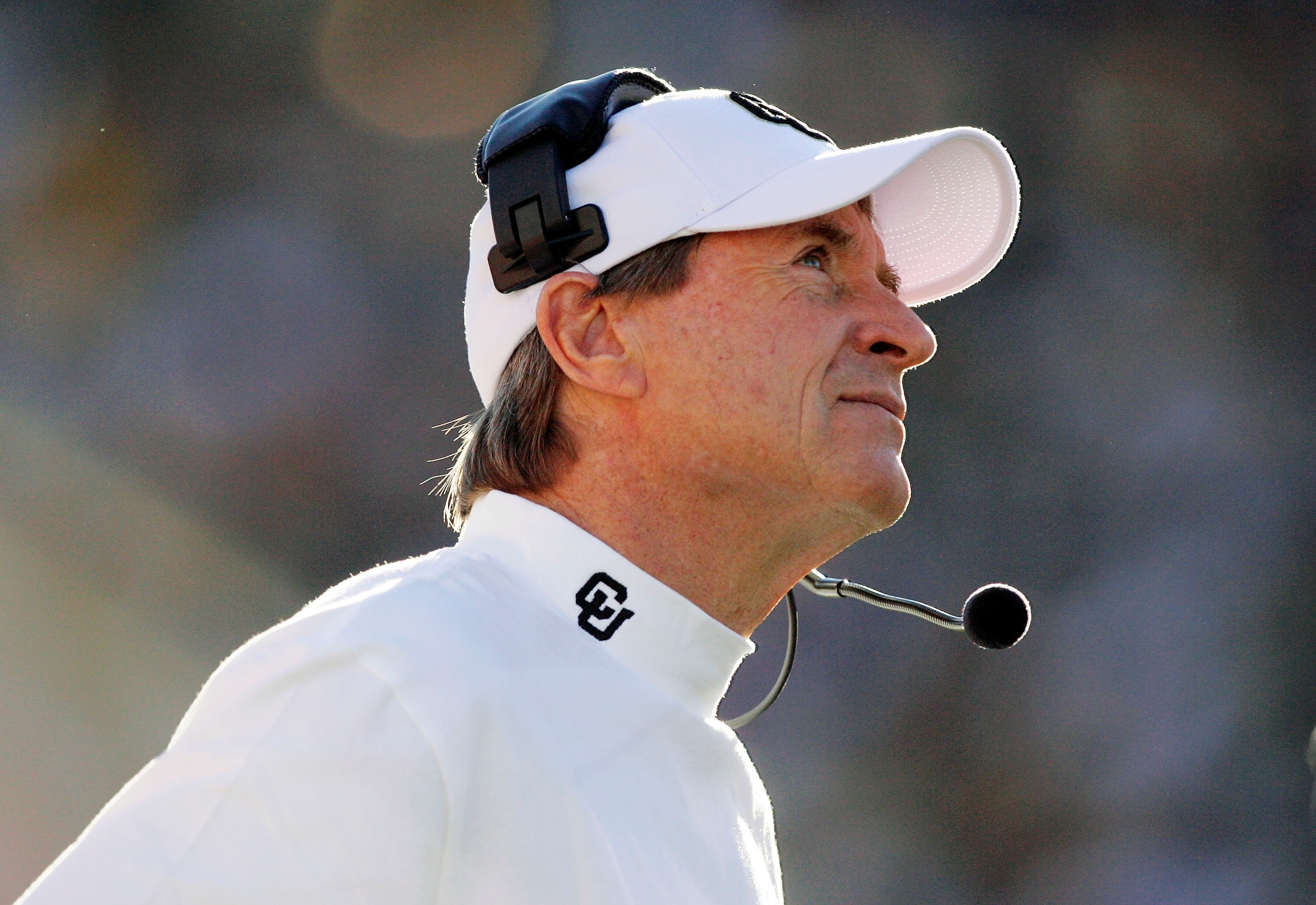
As the Buffaloes had the only female football player in the country on their team, news that there were major sex scandals involving University of Colorado football players was pretty disturbing for a nation to digest.
Kicker Katie Hnida alleged that she was sexually assaulted by teammates of hers at UC-Boulder, but her claims were dismissed by football coach Dan Hawkins.
Strippers were hired by the athletic department to entice recruits. Alcohol and drugs were offered at parties to make sure the players had a good time. These are the type of things the common man assumes happen behind the scenes on all recruiting visits.
But then women started coming forward claiming they had been raped by football players. Others were alleging they had been pimped out by the athletic department as a means of enticing recruits to play for the Buffaloes.
By February of 2004, there were six different rape cases pending against Colorado football players. By 2005, Barnett was forced to resign and took a nice $3 million buyout—not a bad bonus for ignoring wrongdoings by your players.
In June 2007, Colorado was hit with two years of probation and fined $100,000 for undercharging 133 student-athletes on meals (86 football players). They also lost one scholarship a year over a three-year period.
The rape charges were eventually dismissed in court, and the scandal went seemingly untouched by the NCAA.
3. Florida State Seminoles
8 of 10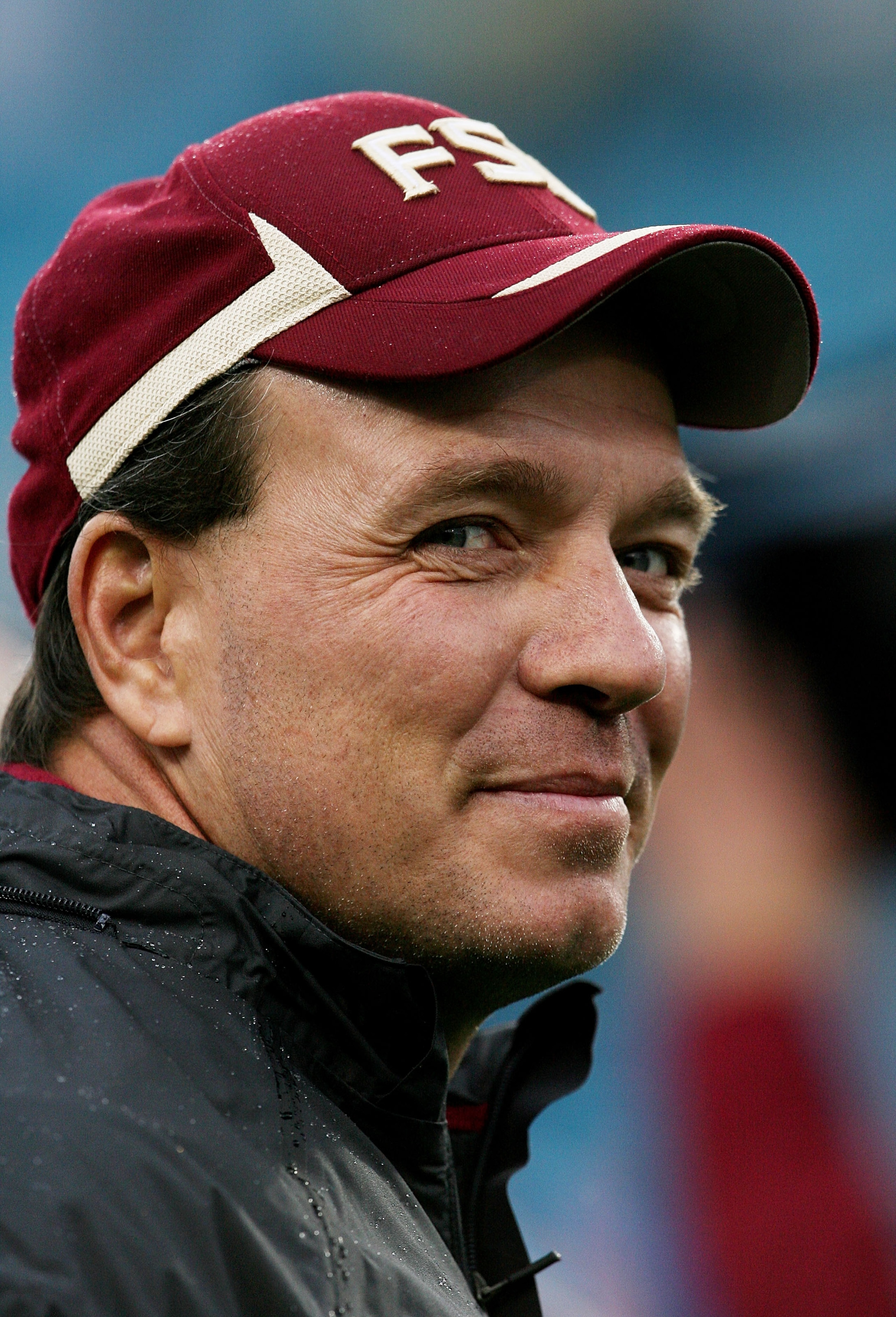
Much like their in-state rivals the Miami Hurricanes, the Florida State Seminoles have a long history of success on the field and trouble off it.
Their more recent past is particularly troubled, however.
In 2007, the entire university was sanctioned by the NCAA following an elaborate cheating scandal involving 61 university athletes, including football players. Scholarships were reduced in 10 sports, the university was placed on probation for four years, and it was forced to vacate all wins in football (and other sports) from the 2006 and 2007 seasons.
The Seminoles also traditionally have one of the highest arrest records. Nigel Carr was the star in 2010, racking up three felonies and three misdemeanors—among them credit card theft, auto burglary and fraud.
Several of Florida State's receivers have been arrested on various charges in the past few years as well, leading to a never-ending rotation of new talent for Christian Ponder and EJ Manuel to throw to. Cameron Wade and Preston Parker, who was arrested three times and found in possession of a .45 caliber handgun, have been among the offenders.
Jimbo Fisher and Florida State pulled in a 2011 recruiting class that is considered to be among the best in the country. ESPN currently has it ranked as No. 1 overall. Nigel Carr and the other current troublemakers on the Seminoles were recruited by Bobby Bowden.
Now that Fisher is in charge, the content of the new Seminoles' character remains to be seen.
2. Auburn Tigers
9 of 10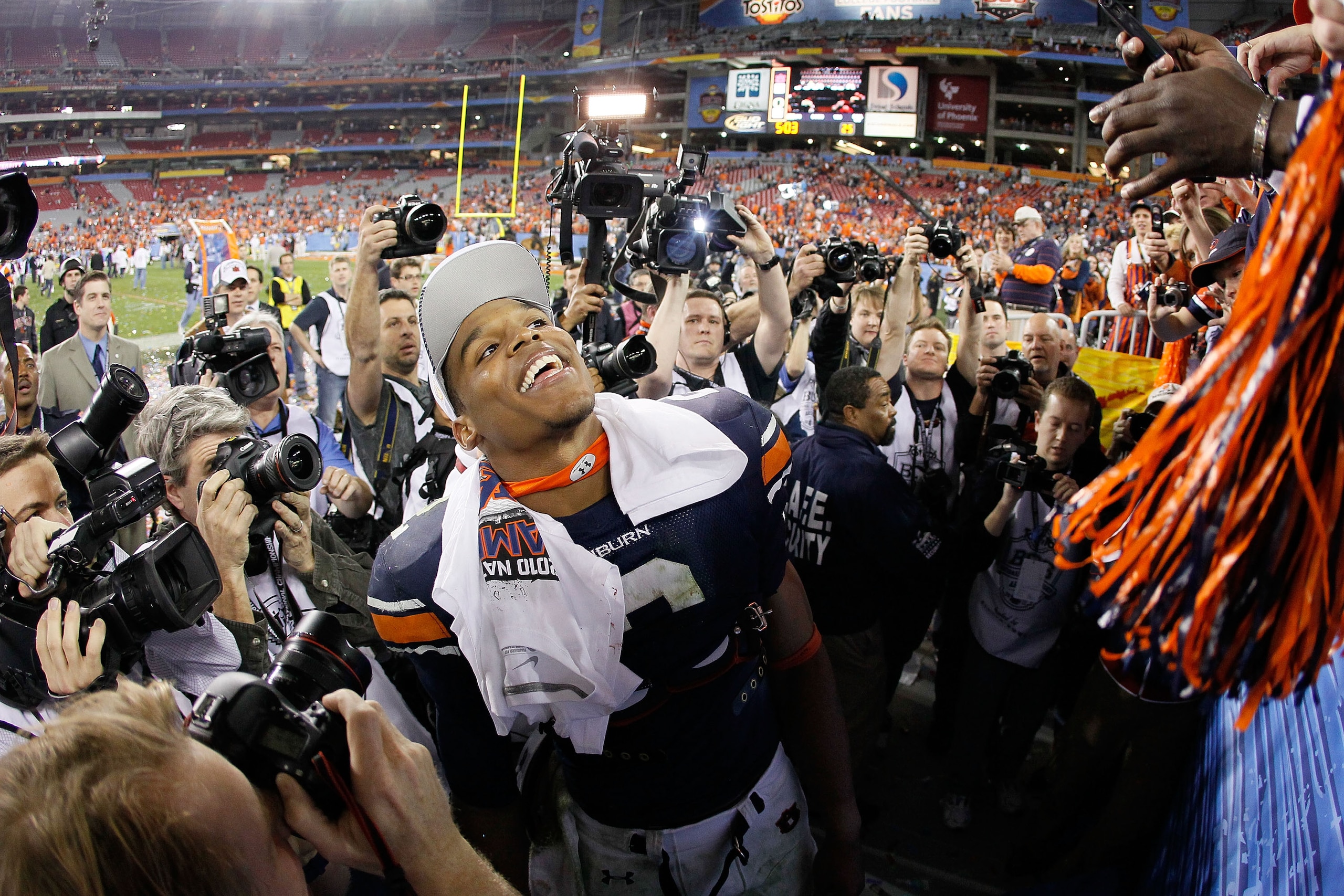
These are the (alleged) facts:
Cecil Newton needed money to rebuild his church. He offered the services of his son, Cameron, a former Gator and then current national champion quarterback at Blinn Junior College, in exchange for payment—anywhere between $100,000 and $180,000.
It appeared as if Cecil was all set to accept an offer of $150,000 from Mississippi State. Cam then signed with Auburn. Next was the Heisman Trophy, then the BCS title game victory over Oregon. Cecil's church manged to get the money for its necessary renovations anyway.
How?
The FBI is supposedly investigating and has made arrests in connection to Auburn booster Milton McGregor's alleged payment of $250,000 to Cam Newton's uncle. This money is believed to have been dispersed throughout the Newton family.
It looks like the Newtons got their payout-for-play after all.
In addition to the Cam Newton controversy, the Auburn Tigers have other sketchy tie-ins and going-ons. Over the last 10 years, at least five members of Auburn's board of trustees have also been members for Colonial BancGroup’s board of directors. Colonial has serious ties with the university and its boosters and is a very powerful bank in the state of Alabama.
The connection to Colonial has (allegedly) allowed Auburn to launder players' money by providing them with unmarked debit cards, unnecessary loans and guaranteed winnings at rigged slot machines in Milton McGregor's casino.
Dirty doings indeed.
There's no way of knowing if anything is true right now, but if the FBI is investigating, eventually the truth will come out.
Both Cam Newton's Heisman and Auburn's national title are at stake.
1. Miami Hurricanes
10 of 10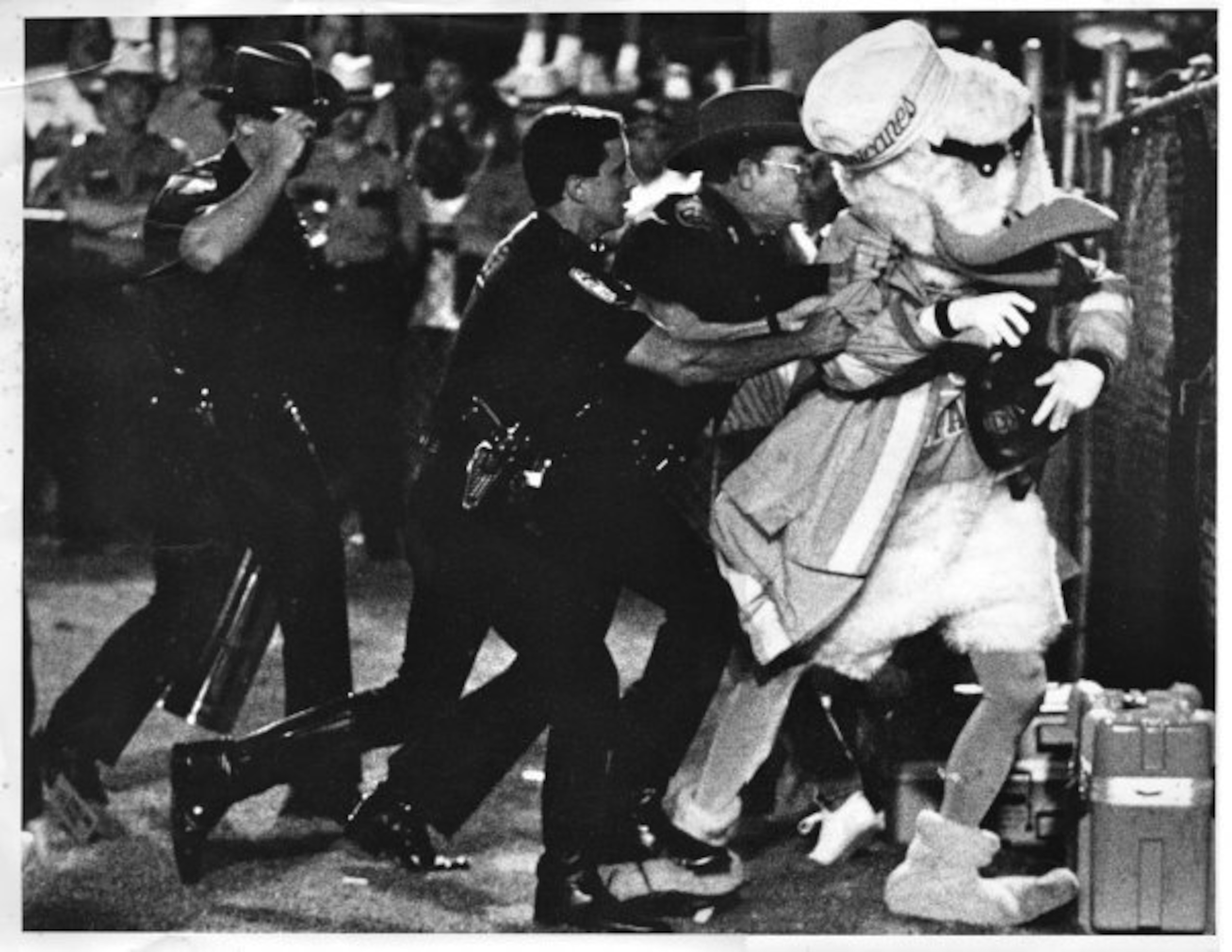
The Miami Hurricanes teams of the 1980s forever changed college football. Their rough and tumble, in-your-face style exuded an ultimate form of confidence. This, which became known as swagger, helped take a troubled team from a small private school in South Florida from doormat to superpower seemingly overnight.
On their climb to the top, the Canes' players developed into a family and created a culture that became "The U Family" vs. the World. They believed in themselves and played for one another. The Hurricanes played with raw emotion and intensity and were encouraged by their coaches, particularly Jimmy Johnson, to be themselves at all times.
Problems arose, however, as players began to stretch the limits of what it meant to "be yourselves." Some seemed to take the advice to mean players were free to do whatever they wished—when they wished.
Throughout the late '80s, arrests began accumulating. Then there were accusations that Luther Campell (a.k.a. Uncle Luke of 2 Live Crew), a friend of the program, was organizing a pool that paid out to players for things like scoring touchdowns and recording sacks. Campbell has all but admitted he took a part in this.
There were rumors that bounties were placed on players from opposing teams. "Hit pools" were organized and money was collected from current and former players to be dished out to whoever laid the biggest hit in a given game. Former Hurricanes linebacker and head coach Randy Shannon is alleged to have held the money for the hit pool.
The Canes also became famous for their post-play celebration. However, following a 46-3 beatdown of Texas in the 1991 Cotton Bowl (where the Canes racked up over 200 yards worth of penalties), the "Miami Rules" were instituted, which essentially banned players from having fun while playing a game.
The program was hit with major sanctions in the mid 1990s. The NCAA forced the Canes to reduce football scholarships and sit out two bowl seasons after an employee in Miami's athletic department scammed the United State government by fraudulently filling out Pell Grant loan forms for players and taking a commission in the process.
There have been several shootings involving what were former and current Hurricane players. The most notable are the murder of Canes defensive tackle Bryan Pata and the murder/robbery of former Cane and Redskins safety Sean Taylor. Whether or not these incidences have anything to do with football, they cast a bad light because of the reputation that Miami has built over time.
The brawl with FIU in 2006 was a major black eye for the Hurricanes program. What was suppossed to be a friendly game between local teams turned ugly, leading to the suspension of 31 players (18 for FIU, 13 for Miami). President Donna Shalala looked on in horror as safety Anthony Reddick swung his helmet and current Patriots safety Brandon Meriweather attempted to stomp FIU players.
The brawl led to the firing of Larry Coker and the hiring of Randy Shannon, who proceeded to completely clean up the program. Since 2007, Miami has had only one player arrested. That dubious honor belongs to Robert Marve, who has since been kicked off the team and transferred to Purdue.
A negative reputation is hard to shed. The Miami Hurricanes have been, at the same time, good and bad for college football. Randy Shannon did a great job of cleaning up the program's image. Al Golden's mission is to continute instilling discipline both in the classroom and on the field.
But sometimes, it's cool to be bad. And the bad boy image is something that Miami's student body absolutely loves to embrace.
For now, they're still Thug U. As long as the players aren't getting arrested, it's not necessarily a bad thing. It's a respect thing. Because there is no badder team in the history of college football than the Canes.
They just need to get back to playing like it on the field.



.jpg?w=2560 "Raiders Could Start Mendoza")


.jpg?w=2560 "Rodgers Iced Out on Plane 💎")

.jpg?w=2560 "Packers Safety Slams Refs 🤬")
.jpg?w=2560 "Fantasy Waiver Wire Stars 🤩")
