

10 Things I Learned From the 2010 College Football Season
Another season is in the books, and we all are 'patiently' waiting for the coming season. While most fans are looking forward to next season, following recruiting, preparing for the draft, and counting down the days, I take a look back at the top 10 things I learned from the 2010 season.
From a season that included the SEC taking home another BCS National Championship, crazy comebacks, and off the field controversy like no season before, I narrowed the lessons down to 10.
10. No Lead Is Safe
1 of 10
How much does a team have to be up by before a coach can call off the dogs? Does it depend on the opponent? What exactly is running up the score?
The two games that come to mind first when I think of crazy comebacks are the Iron Bowl and the Ole Miss-Jacksonville State game.
As for the Iron Bowl, one might say that no lead is safe against Cam Newton and the Auburn Tigers. But who would have expected them to come back from being down 24-0 with 5 minutes left in the first half? Surely the way Bama had been playing, Auburn didn't stand a chance, right?
Dead wrong. Auburn proved that even a 24 point lead isn't enough to count them out.
Questions abounded after that game. Mainly, what if the fumble had simply bounced out of bounds and Bama had scored one more time? Would 31 points be too much for the Tigers to overcome? We will never know, but many Tide fans would believe it.
Now, my Ole Miss Rebels had a pretty tough season. Most 'experts' predicted them to start the season 5-0. And it certainly looked possible at halftime of the season opener against Jacksonville State. Ole Miss was beating the FCS opponent 31-10 at the half. Both Rebel quarterbacks were playing well, and the oft-under appreciated offense was clicking. Then came the second half, or should I say just the fourth quarter. The JSU Gamecocks would go on to outscore Ole Miss 24-3 in the second half with 21 points coming in the final quarter to force OT.
Surely an SEC school could put away an FCS program even if it did take a scare called OT. Oops, wrong. The Gamecocks would go for two in the second OT and convert to win 49-48. Granted, it was against the worst team in the SEC this season, but it just goes to show that no lead is safe.
9. Officiating Is Too Subjective
2 of 10
How many times a game does the average fan disagree with a ref's call? How many times a game does a die-hard—stubbornly over-supportive of his team to the point that he can't agree with any call against his team—disagree with a ref's call?
Most of the time, I can find myself understanding an official's call against my team. Doesn't mean I am okay with it, but I know the rules. However, I believe that there should be no gray area in the rules (not possible, I know).
Let's start with the Kansas State player that gave a salute after a good catch and run for a touchdown. Should he have done it? Absolutely not. Does it warrant 15 yards? Absolutely not.
But to add to the pain of it for Kansas State fans, that 15 yards cost them a potential game tying two-point conversion. Let's add even more to the pain and mention Tennessee Quarterback Tyler Bray throat slashing in the Music City Bowl that didn't get a flag.
Next, we have the touchdown by Arkansas TE DJ Williams that was brought back because his "wrist" touched, thus, ruling him down by contact. He rolled over the Ohio State player, maintained his footing, and raced to the endzone. After further review however, the official decided that since he touched the back of his hand (which would include the wrist) to the ground that he was down.
I just don't see how the wrist is enough to rule a player down. I know that the official wording of the rule book says that only the feet and hands can contact the ground, but where exactly does the hand end and the wrist begin? After all, he was wearing a glove that covers well below his wrist. Also, I've seen plenty of times that the ankle contacts the ground, but the runner is not ruled down. How is that any different than the wrist?
But perhaps worst of all, is the fact that the 'taunting' or 'excessive celebration' rule applies to diving into the endzone (next year this will negate the TD). Obviously, the rule is in effect to prevent showboating. But where is the line drawn between effort to score and showboating? It isn't. It is completely up to the official's judgment. Meaning that if a player dives into the endzone because he is able to see another color jersey in his peripheral, but the official decides that that other color jersey wasn't close enough, then the official can throw a flag.
Personally, I think calls such as these allow too much subjectivity to enter.
8. Preseason Rankings Are Pointless
3 of 10
Preseason polls are absolutely pointless. So much changes from one season to the next, but Preseason polls insist on voting based on the previous season as well as a little consideration for returning starters (which itself doesn't mean much either).
This season, the pollsters nailed top five teams like Texas and Florida. But even beyond those flukes, the preseason poll was pretty awful.
12 teams that were ranked in the Preseason AP Top 25 finished the season unranked. That is half of the teams. Meanwhile, of the five teams that received first place votes in the Preseason poll, only Ohio State finished in the top five (at number five).
The two teams that played for the BCS National Championship started at #11 (Oregon) and #22 (Auburn).
Three teams that finished in the top 10 were not in the preseason top 20. (Auburn at 22, Stanford UR, LSU at 21)
Ten teams that started the year ranked finished with at least five losses.
I could keep going, but I don't feel the need to. I think you get my point.
_0.png?w=2560 "CFB Top 25")
.png?w=2560)

7. the BCS Has Its Flaws
4 of 10
1. Four-loss UConn gets a BCS berth, but 10-2 LSU does not (granted LSU wouldn't have anyway because of the two-team limit per conference).
2. There is a two-team limit per conference.
3. Human voting matters too much. The differential between humans and computers for many teams can be four or five spots, either up or down.
For instance, in the final BCS Rankings: (team - position - human ranks - computer rank)
Wisconsin: 5 - 4, 4 - 8
Ohio State: 6 - 6, 6 - 9
Oklahoma: 7 - 9, 8 - 4
Michigan State: 9 - 7, 7 - 11
LSU: 11 - 11, 12 - 7
Virginia Tech: 13 - 12, 11 - 18
There shouldn't be that much discrepancy. For the record, those that were rated too high by the humans (minus Ohio State) lost their bowl game. The two that were rated too low by the humans (LSU and Oklahoma) won their bowl games.
4. The BCS bowl games are too late. Teams shouldn't have to worry about 30+ days off between games. Even 14 is pushing it.
6. the BCS Is Better Than the Alternatives
5 of 10
1. A +1 System
Now, the reason I don't like this method is primarily based off the 2009 season, but was reinforced after this season. In 2009, five teams finished undefeated and one with one loss. Alabama, Texas, Cincinnati, TCU, Boise State, and Florida.
The final BCS was in this order:
Alabama
Texas
Cincinnati
TCU
Florida
Boise State
A +1 system would completely leave out two of those. And after all, the major reason for the hatred of the BCS stems from teams being left out of the BCS National Championship game. Thus, a +1 solves nothing because it too excludes worthy teams.
Also, what two teams should be excluded? The bottom two in the BCS Standings (Florida and Boise State)? Well, both of them beat higher standing teams in the bowl game (Cincy and TCU, respectively). At the end, three teams stood (Bama, Florida, and Boise). So if a +1 were to take place after this, who gets left out? Does Florida not get a second shot at Bama, or is Boise left out yet again?
A +1 just created more problems than it solves.
2. An Eight-Team Playoff
Since the BCS gets ragged for exclusions, then I'll harp the other systems for it as well. What about team number nine? If we go based off the final BCS rankings for 2010, Michigan State is the number nine team, who after their bowl game showed they didn't belong, but they did have an argument beforehand. Boise State was at number 10. Aren't they the ones that complain the most about being left out? So, again this doesn't really solve anything.
All it does is leave number nine and number 10 griping.
Now, if you don't use the BCS rankings, then what do you use? Automatic bid for certain conferences? Well, there comes the UConn fiasco into a playoff.
3. A 16-Team Playoff
I actually favored this until this season. The main reason is because by using the BCS rankings (which like I said above are really all that could be used), then number one Auburn's first game would be against number 16 Alabama. That is obviously unfair to both teams, since they had just played such a tough rivalry game with each other. Plus, as above, what about the number 17 team? In this case, Texas A&M gets excluded.
No matter what, someone is going to get left out.
5. Straight Stats Don't Tell The Whole Story
6 of 10
What do I mean by "straight stats" might you ask? Simple, "straight stats" refers to stats that are not adjusted for quality of opposition.
For instance, Oregon had the number one offense in the country by the points for stat before the BCS National Championship. Now, while they have a very good offense, that stat is skewed as a result of the quality of defense that they faced throughout the season. Their schedule looked like this: (team: avg points allowed per game - FBS rank for that category out of 120 - points allowed to Oregon)
New Mexico: 44.3 - 120th - 72
Tennessee: 25.1 - 56th - 48
Portland State: FCS - 69
Arizona State: 25.0 - 55th - 42
Stanford: 17.4 - 10th - 52
Washington State: 35.8 - 110th - 43
UCLA: 30.3 - 86th - 60
USC: 26.7 - 63rd - 53
Washington: 29.3 - 80th - 53
Cal: 22.6 - 40th - 15
Arizona: 22.7 - 41st - 48
Oregon State: 26.8 - 64th - 37
First, let me point out that Oregon scored higher than the average in every game except Cal. Next, let me point out that two teams are above 100th, four are above 80th, six are above 60th (half of FBS), eight are above 50th, and only one is below 25th.
This is just one example, I could also do TCU's defensive stats compared to the quality of offenses, but I believe you get the picture. I am not taking away from either of these two teams, but I am simply pointing out that the stats are higher due to lower opposition.
4. AQ Status Means More at the Conference Level Than Team Level
7 of 10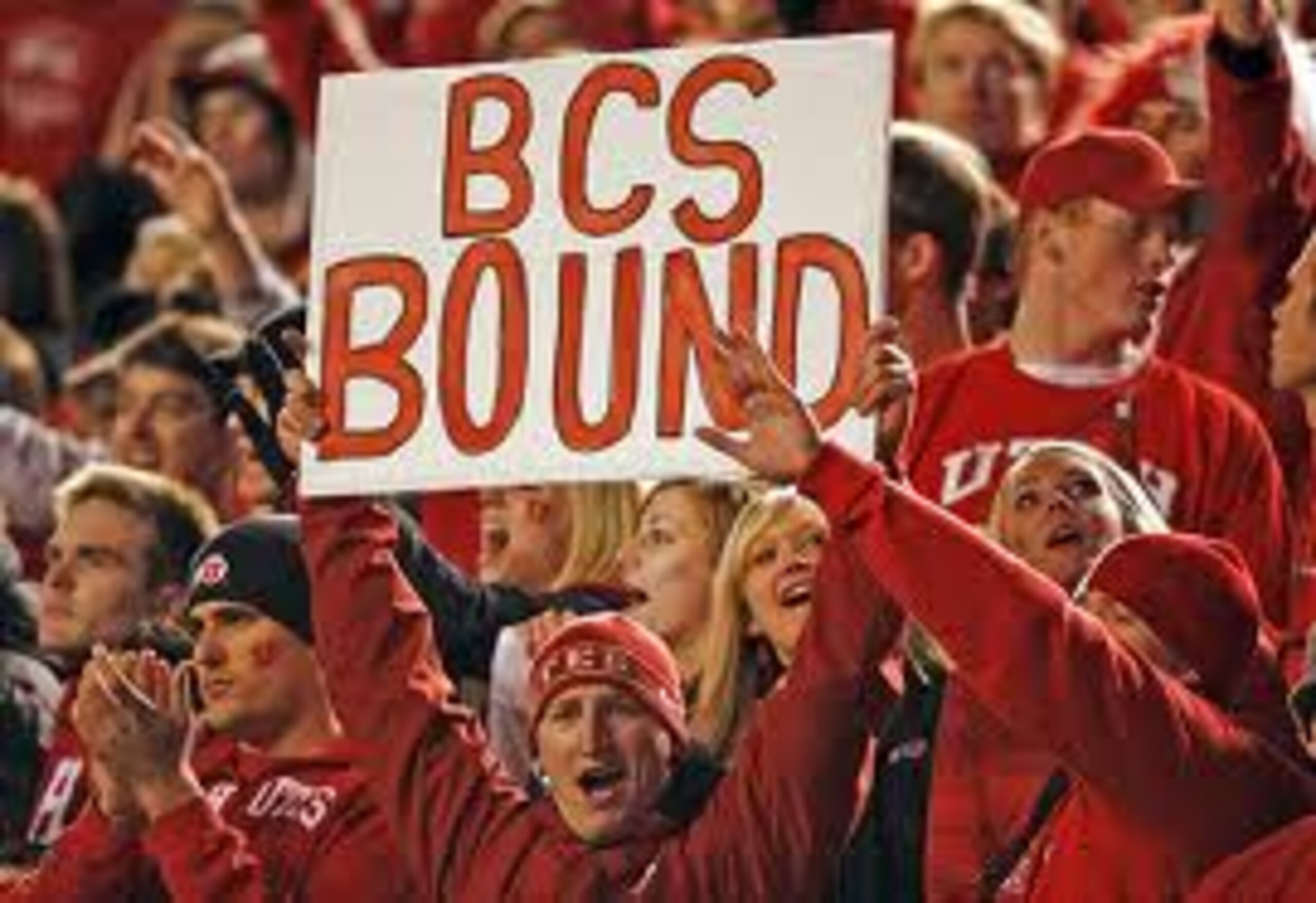
As we have seen over the past few seasons, individual non-AQ teams can play with and beat AQ teams in a single game. However, most people argue that those teams wouldn't be able to handle a schedule like an SEC or Big Ten (to name a few) team faces.
I am inclined to agree, and here are some reasons why:
1. SEC number 12 Ole Miss easily handled WAC number four Fresno State who very nearly beat Nevada.
2. That same Ole Miss team faced @Alabama, @Arkansas, and Auburn in three straight weeks then finished the season against rivals @LSU and MSU. I honestly don't think that TCU or Boise or Nevada could handle a stretch like that. Could they beat those five teams? It's very likely (I argue that any team can beat any other on any day, welcome to the world of sports), but I don't think that they could survive those five teams in seven week period.
3. Notre Dame (8-5) easily handled MWC number two Utah.
4. Inept SEC number nine Georgia barely lost to CUSA number one UCF
Basically, what I am trying to say is that on a team-by-team basis, a non-AQ can be just as good or better than a top AQ team. However, I honestly don't think any sane person would make the argument that non-AQ conferences AS A WHOLE compare to AQ conferences (except maybe the Big East, but that still is a stretch).
The reason I chose the games above is because it matched some of the bottom tier AQ teams against teams that are near the top of non-AQ conferences. I realize that Boise State and TCU both beat Oregon State and that Utah beat Pitt, but those are more comparative for the team-by-team basis than the conferences as a whole.
3. Talent Alone Does Not Win Games
8 of 10
Over the past four recruiting years (2007-2010), Texas ranked: (Rivals - Scouts)
2007: 5 - 3
2008: 14 - 16
2009: 5 - 7
2010: 3 - 3
And Florida:
2007: 1 - 1
2008: 3 - 12
2009: 11 - 21
2010: 2 - 1
It would be hard to argue that Texas and Florida were not two of the most talented teams in the nation for the 2010 season. However, raw talent obviously does not translate to success by itself.
Texas finished 5-7.
Florida finished 8-5.
2. the Quarterback Position Is Not What It Used To Be
9 of 10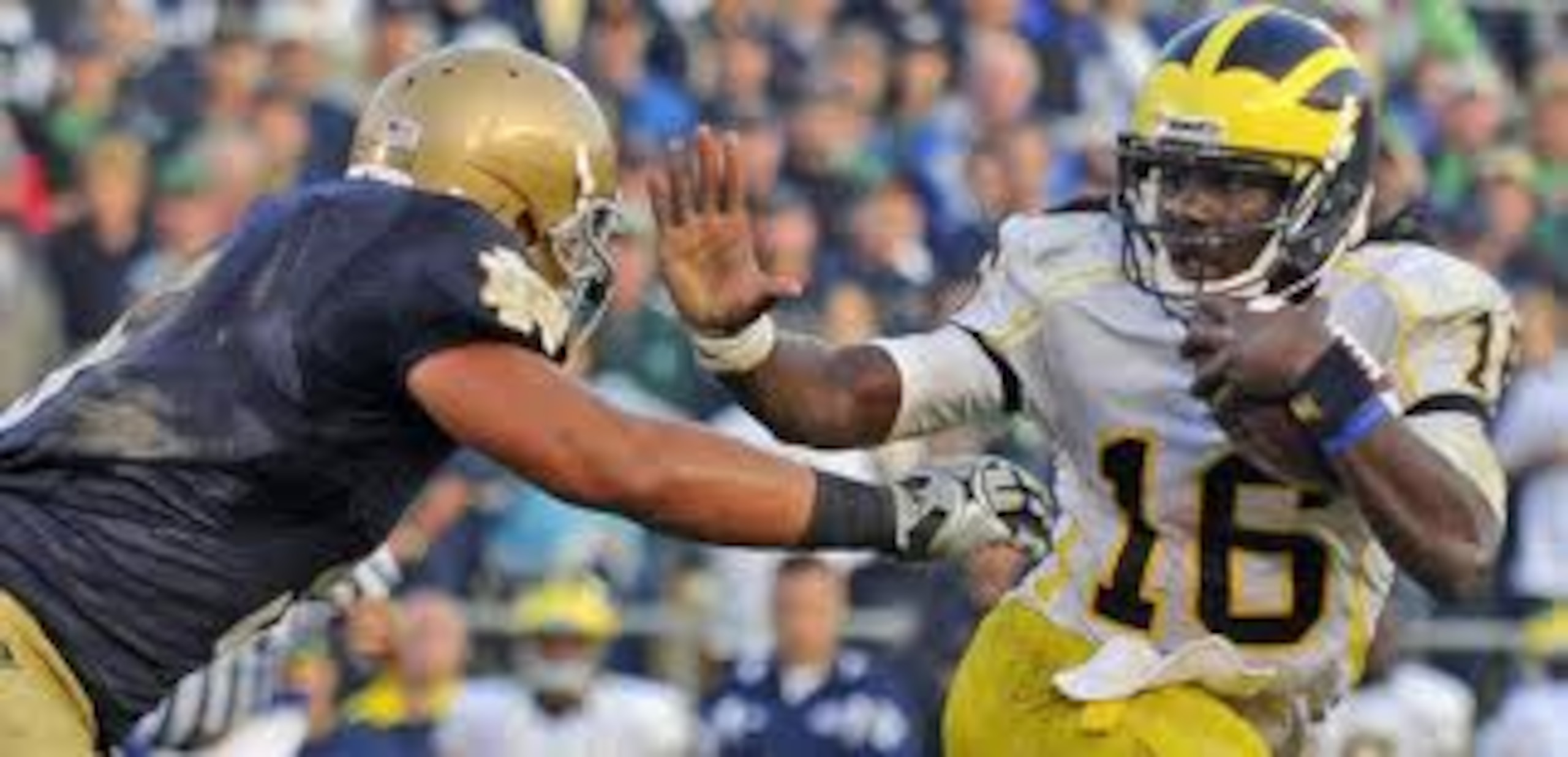
Whatever happened to the quarterback that was a pure passer? One that could throw a dart, thread the needle, toss a fade, all from inside the pocket. When did QB/RB appear on the roster? When did it become that a QB was expected to gain as many yards on the ground as he did through the air?
Drew Brees at Purdue, Senior Year:
Passing Yards: 3668
Passing Attempts: 512
Rushing Yards: 521
Rushing Attempts: 95
Dernard Robinson at Michigan, Sophomore Year:
Passing Yards: 2570
Passing Attempts: 291
Rushing Yards: 1702
Rushing Attempts: 256
I could go on and on comparing the likes of Peyton or Eli Manning to Cam Newton or Brett Farve to Terrelle Pryor, etc.
Personally, I favor QBs that are drop back passers rather than dual-threat. While an OC would most likely prefer a guy that can get the job done either way, as a fan, I prefer a QB that passes and a RB that runs. Call me a traditionalist, but that's just my preference.
Now, I'm not saying that there are no longer drop back passers, nor that there weren't dual-threat QBs before. What I am saying though, is that the tendency is moving from drop back passer to dual threat.
1. the SEC Truly Is the Best Conference
10 of 10
At the risk of being called a homer (someone will say it), I just can't put this anywhere else. No, it is not because Auburn won the BCS National Championship.
It's because Auburn won in 2010, Alabama won in 2009, Florida won in 2008, LSU won in 2007, and Florida won in 2006. As everyone knows, that is five in a row. But what is most impressive is that it was done by four DIFFERENT schools.
When you extend it to the 7-0 since '98, then it is five total schools claiming over half of the BCS Titles.
The next conference is the Big 12 with two (Texas and Oklahoma).
Big Ten has one (Ohio State).
PAC 10 has one (USC).
ACC has one (Florida State)
Big East has one (Miami)*.
All others have 0.
Also, no team has won the SEC two years in a row during the BCS era. Now that means either:
1. The conference as a whole is relatively weak so anyone can win it.
2. The conference as a whole is relatively strong so anyone can win it.
If it were number one, then the SEC teams would lose on the big stage and be proven weak. If it were number two, then well he we are currently.
Now, this doesn't mean that every SEC team is amazing. I'm an Ole Miss fan, so trust me I know that isn't true. However, I honestly don't think anyone could make an argument that the SEC is not the best conference.
* Miami was in the Big East at the time they won the Championship, so it is credited to the Big East not the ACC.



.jpg?w=2560 "Jonathan Taylor Landing Spots 📍")


