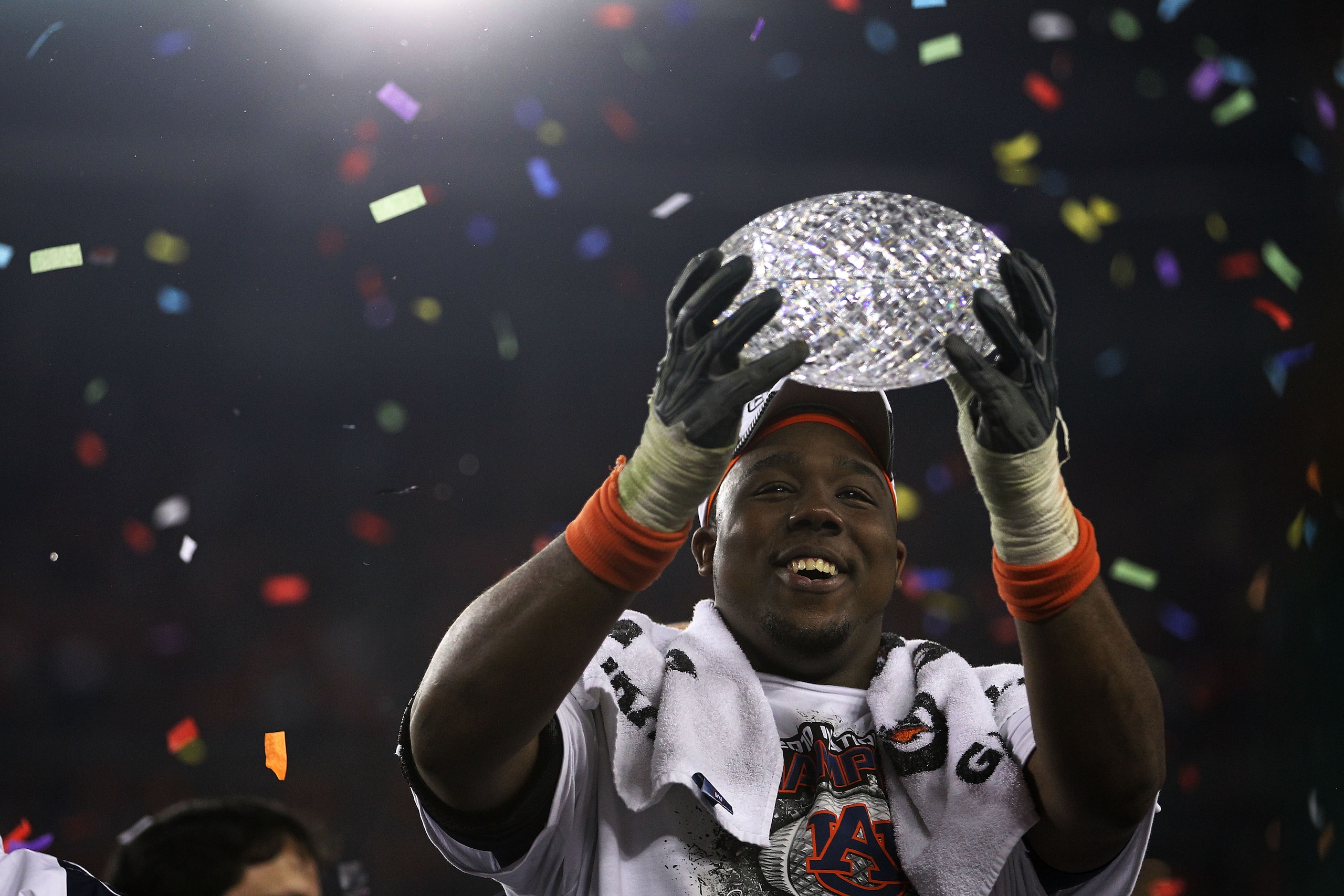

BCS Championship Game: 10 Reasons To Believe TCU Would Have Beaten Auburn
The college football season is officially over.
Auburn beat Oregon in a thrilling BCS National Championship that ended on a game-winning field goal by the Tigers as time expired.
But even though the season has come to an end—and I will have boring Saturdays for the next eight months—it's not against the rules to look at what could have happened if the Ducks and the Tigers didn't meet in the national title game.
What if Auburn had faced another team instead?
Someone like a non-automatic qualifying school that wears purple and black?
Someone like TCU?
Here are 10 reasons why the Horned Frogs would have beaten Auburn in the BCS National Championship game.
10. TCU Is Undefeated
1 of 10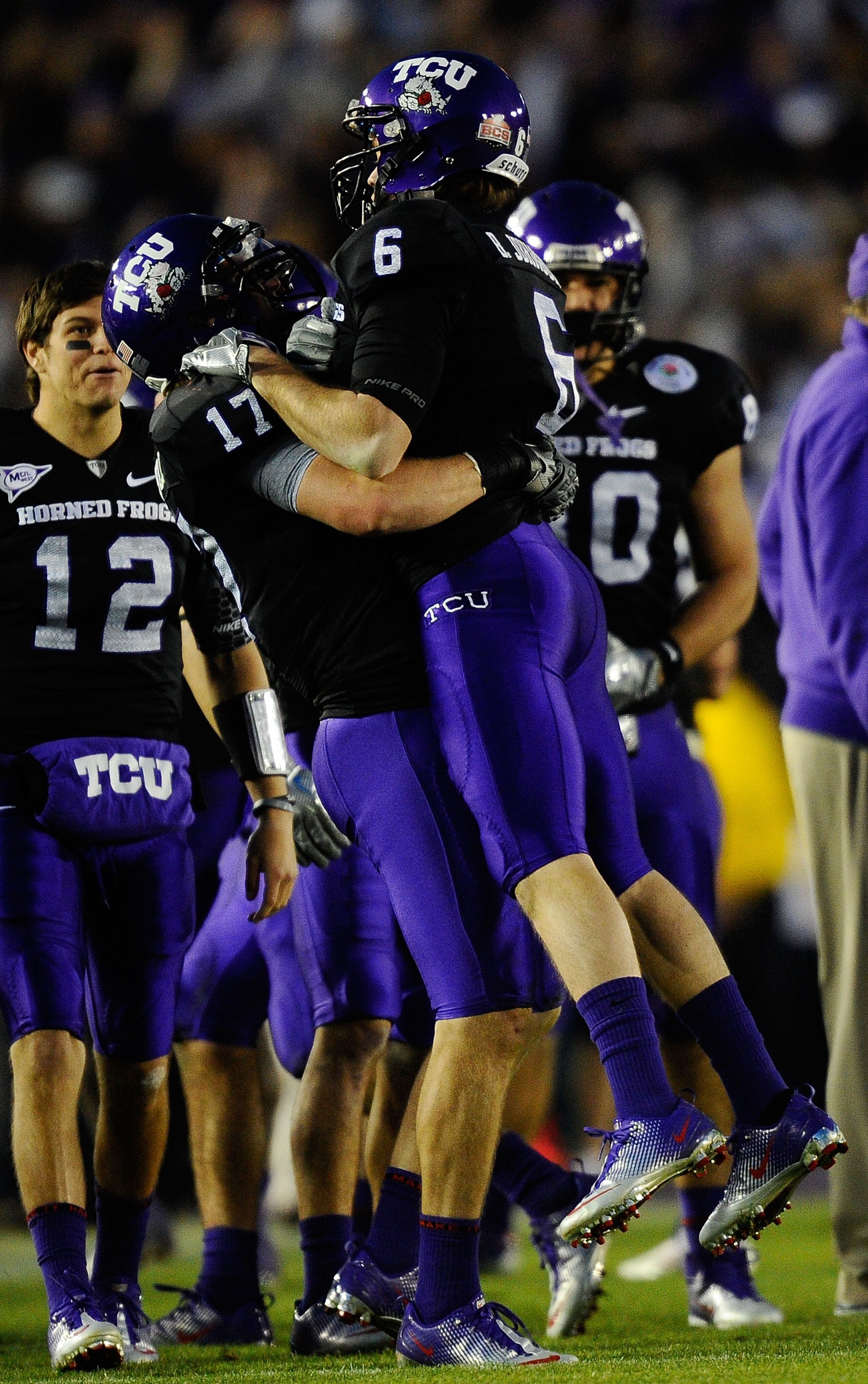
Let's just get this one out of the way: TCU is undefeated.
Yeah, they play in the Mountain West. But no one beat the Horned Frogs in the 13 games they played this season.
The lack of a playoff system will never allow us to actually see Auburn and TCU battle on the football field, but you have to wonder just how good the Horned Frogs really are.
Because it doesn't matter what conference you play in—an unblemished season is still just that, unblemished.
9. Cam Newton Looked Average Against Oregon
2 of 10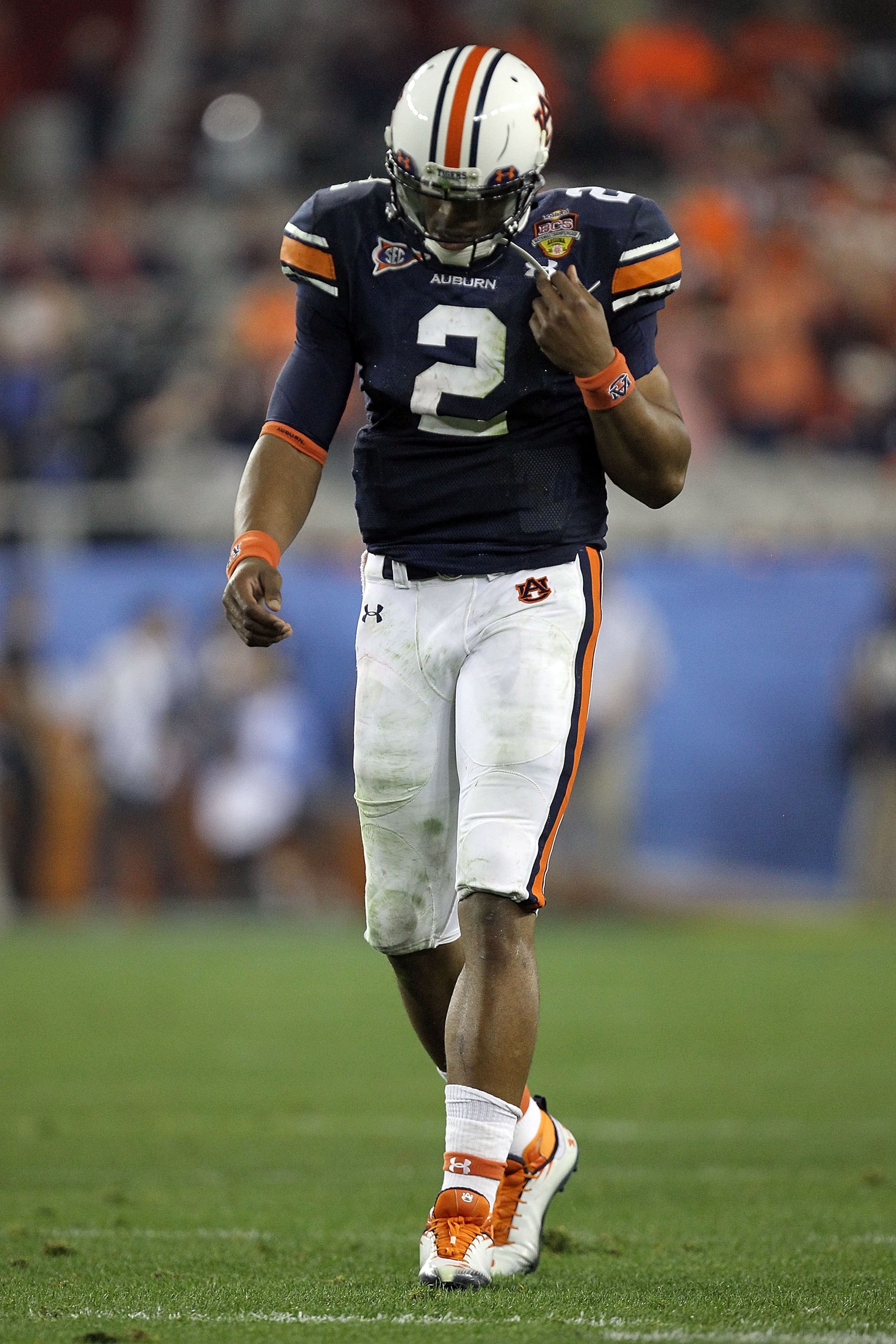
In the national championship game, Cam Newton looked like an average college quarterback.
He completed just 20 of 34 passes (58.8 percent), threw an interception and rushed 22 times for just 64 yards (2.9 yards per carry).
Newton wasn't the unstoppable dual-threat quarterback who led Auburn to big wins over LSU and Alabama.
And those struggles came against Oregon.
How would he have performed against TCU, which has arguably the best defense in the country?
8. TCU Is Dominant
3 of 10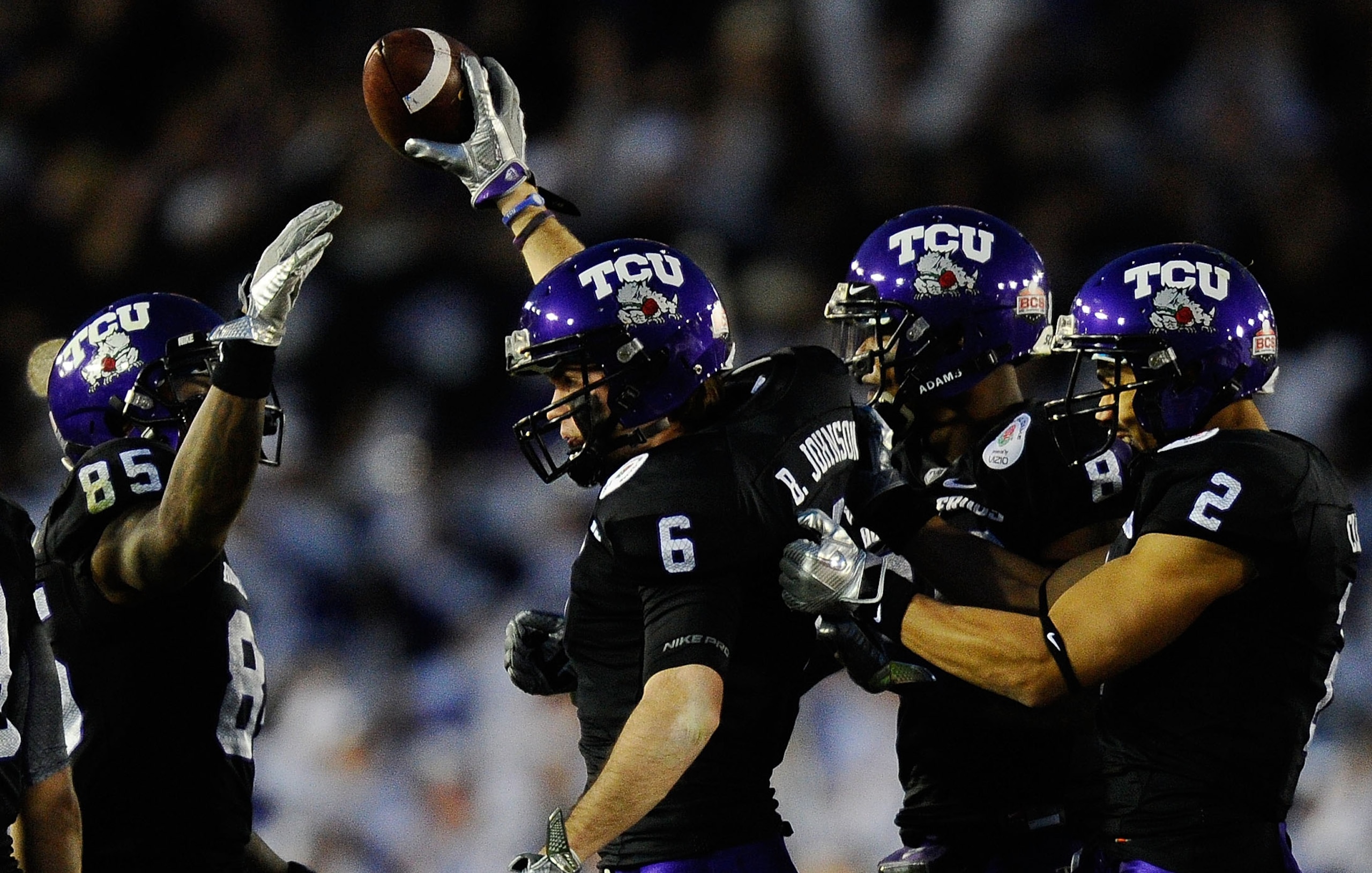
TCU's average margin of victory during the regular season was 25.5 points per game.
The Horned Frogs won eight games by at least 27 points and held their opponents to 10 points or fewer a staggering eight times.
You could make the case that TCU was more dominant than both Auburn and Oregon this season.
I mean, they manhandled all of their opponents, with the exception of San Diego State.
Only once did TCU give up more than 24 points.
Oregon gave up more than 24 points four times and Auburn gave up 24 or more nine times.
Obviously, the conferences come into play, but that's still pretty damn impressive.
_0.png?w=2560 "CFB Top 25")
.png?w=2560)

7. TCU Beat Wisconsin
4 of 10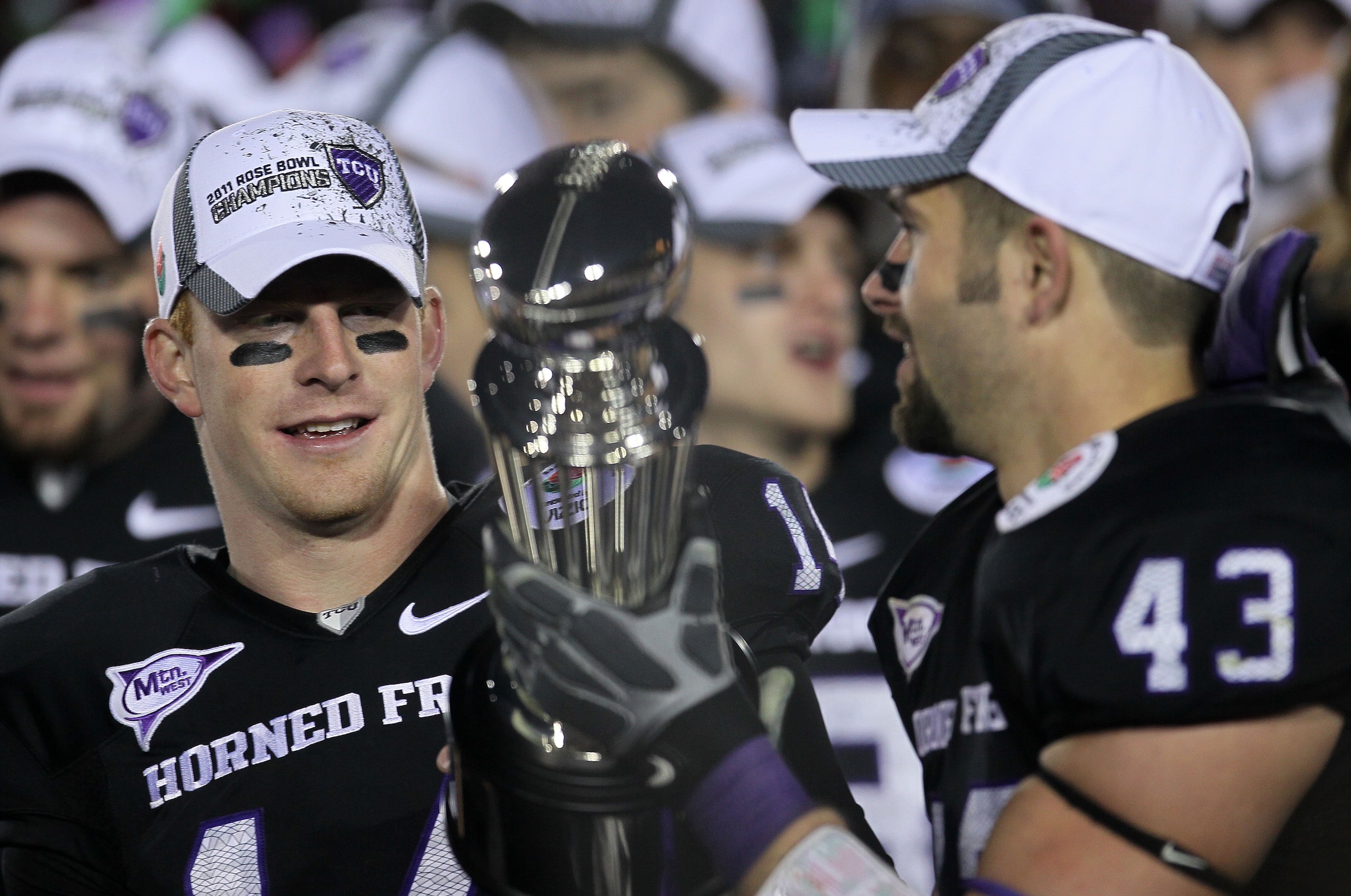
In the 2011 Rose Bowl Game, TCU took down Wisconsin, 21-19.
The Badgers entered the game as one of the hottest teams in the nation, having won seven straight games and scored 201 points in their last three games (an average of 67 points per game during that stretch).
But the Horned Frogs stepped up in one of college football's biggest bowl games, holding Wisconsin to only 19 points and just nine points in the final three quarters.
TCU proved that the Horned Frogs can hang with, and beat, the big boys.
6. Josh Boyce And Jeremy Kerley
5 of 10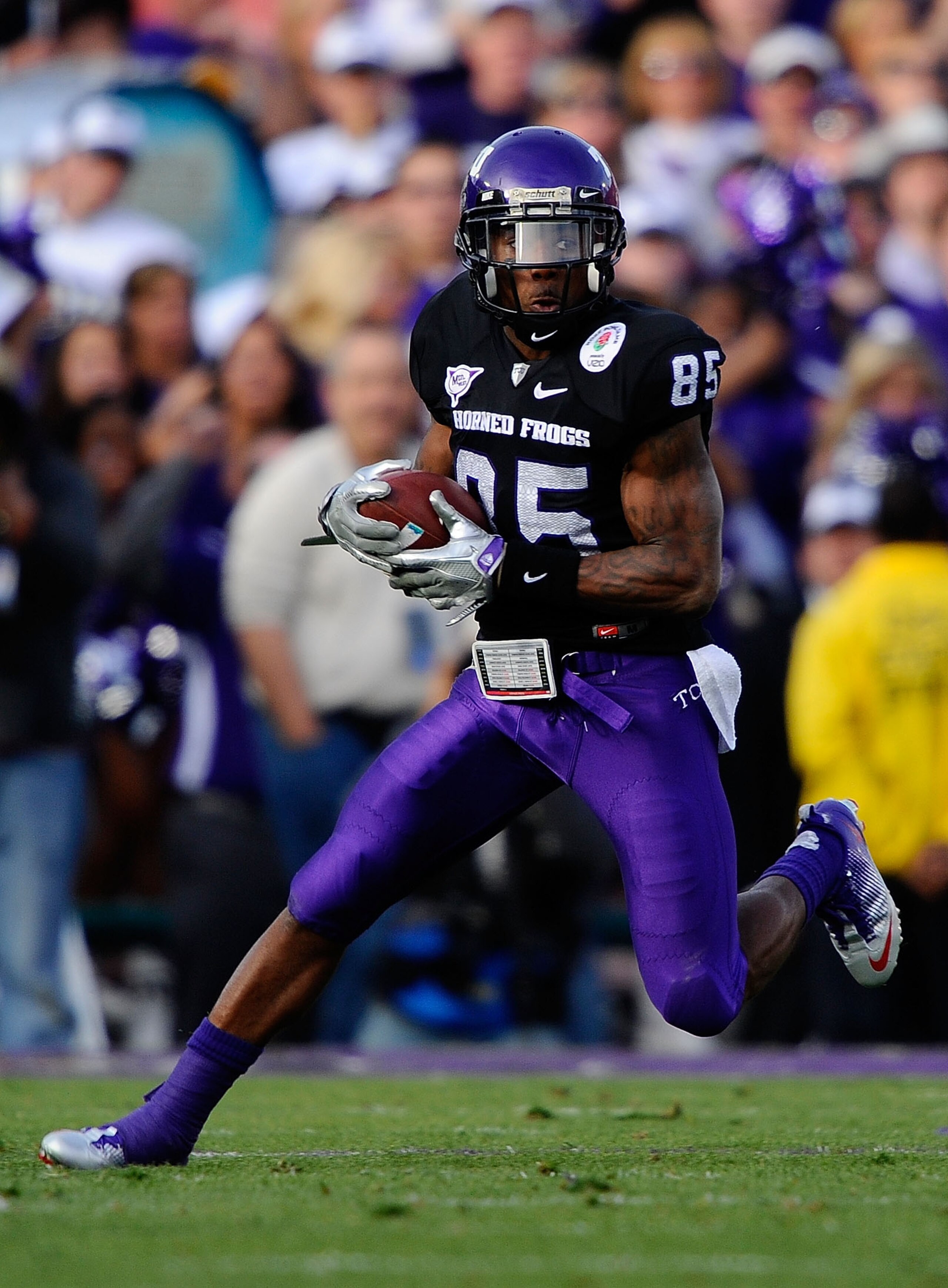
In the title game, Oregon wide receiver Jeff Meahl torched Auburn with nine catches for 133 yards, including that clutch two-point conversion near the end of regulation.
It's pretty obvious that Auburn struggles against top-notch receivers—A.J. Green and Alshon Jeffery being good examples.
And TCU wide receivers Jeremy Kerley and Josh Boyce combined for 90 catches for 1,221 yards and 18 total touchdowns this season.
The Tigers secondary would have a hard time matching up with the sure-handed Kerley and the speedster Boyce (19 yards per catch).
5. Andy Dalton > Darron Thomas
6 of 10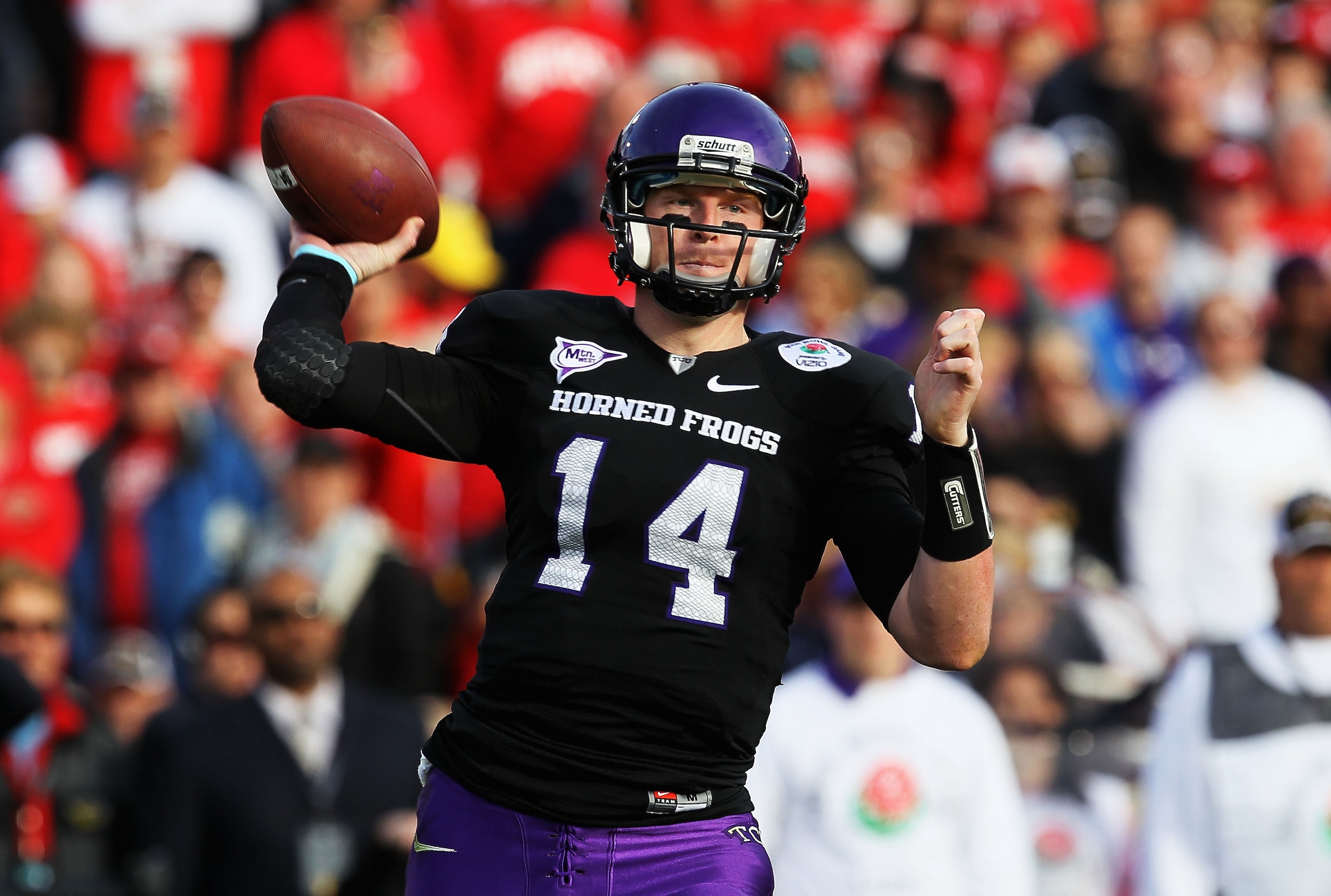
Oregon quarterback Darron Thomas finished the season with 2,800 passing yards, 486 rushing yards, 35 total touchdowns, nine interceptions, a 61.5 completion percentage and a bowl loss.
TCU quarterback Andy Dalton finished with 2,800 passing yards, 435 rushing yards, 33 total touchdowns, six interceptions, a 66.1 percentage and a Rose Bowl win.
Thomas and Dalton are pretty even across the board, except where it matters most: accuracy.
Dalton has thrown three fewer picks, completed 4.6 percent more of his passes and is an underrated runner that teams don't really gameplan for.
Advantage: Dalton.
4. TCU's Rush Defense Could Limit Michael Dyer
7 of 10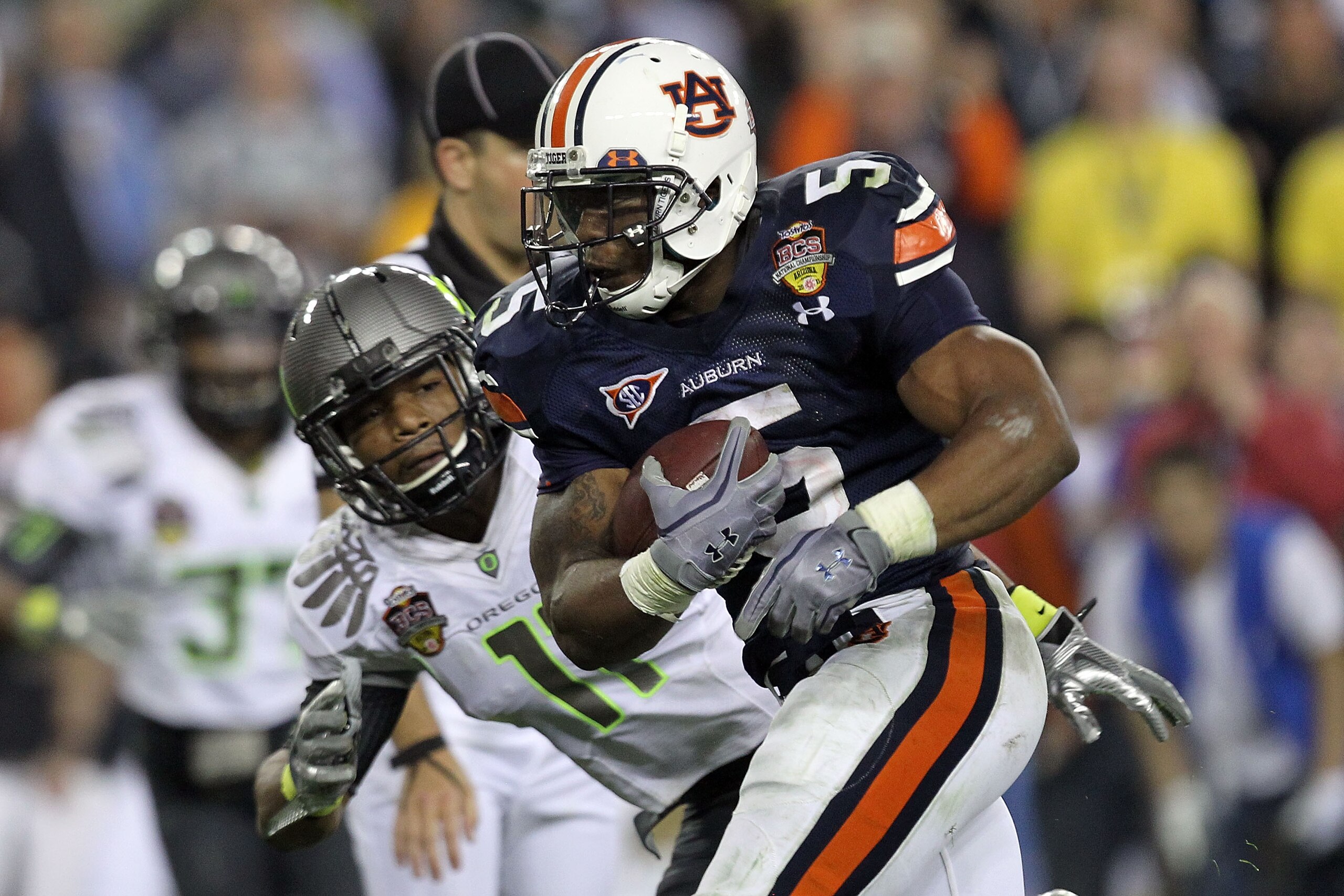
The biggest star for Auburn in the National Title Game was freshman running back Michael Dyer, who ran for 143 yards on just 22 carries against Oregon's struggling run defense.
But TCU might not have had the same problems stopping the running game of the Tigers.
The Horned Frogs ranked fourth in the nation in rushing yards allowed at only 99.7 yards per game and they also gave up just 3.3 yards per rush.
Would Dyer have had a tougher time running against TCU's defensive front?
Probably so. But I guess we'll never know, huh?
3. Auburn Struggles Against The Pass
8 of 10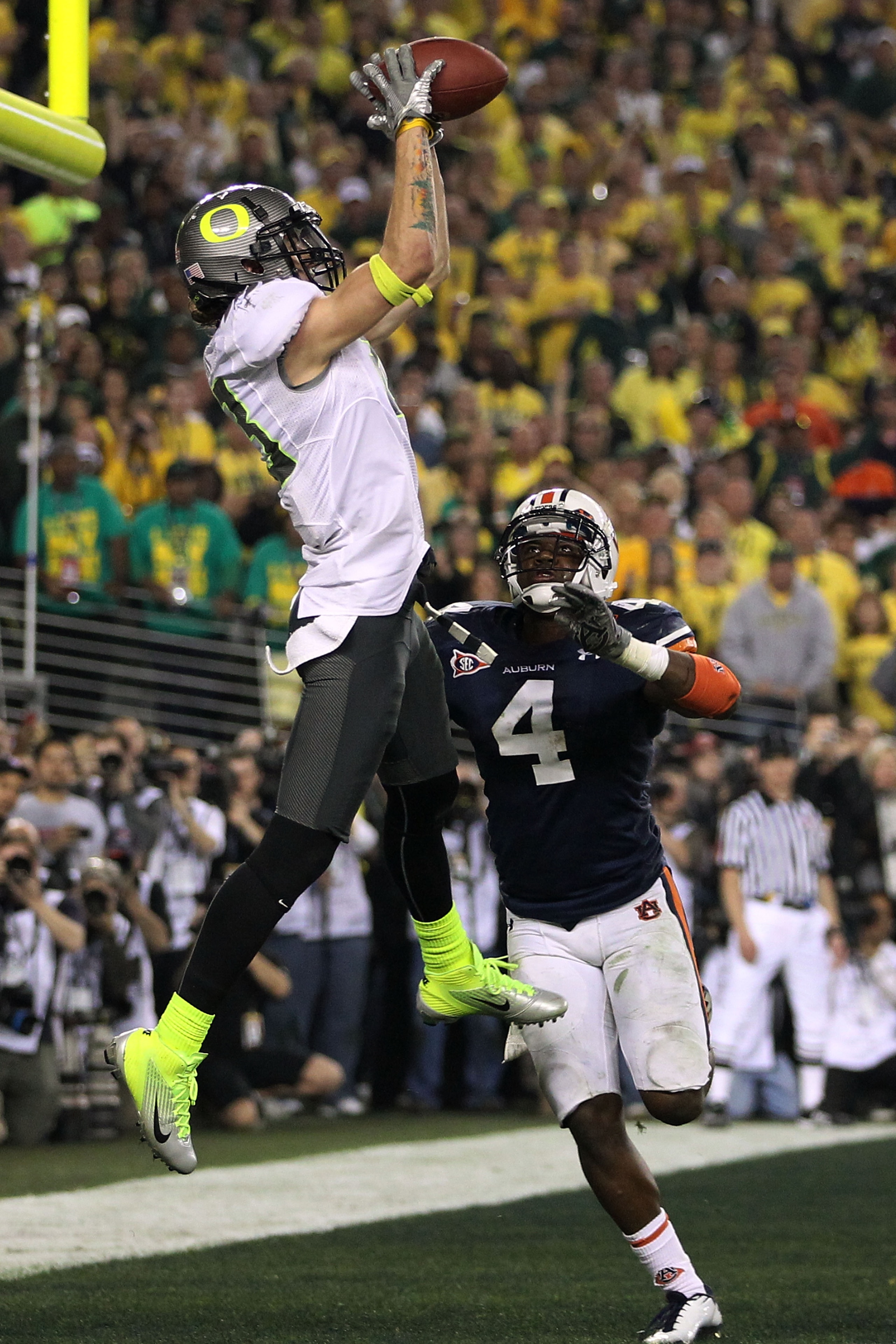
Oregon is obviously a run-oriented team, which played right into Auburn's hands in the title game.
But the Tigers have struggled mightily against the pass all season.
During the regular season, Auburn allowed 250.5 passing yards per game (ranked 105th nationally), 23 touchdown passes (83rd nationally), a 62.7 completion percentage (97th) and had just 10 interceptions (77th).
The Tigers also gave up 374 passing yards and two touchdowns against Oregon in the national championship.
If history is any indication, then Andy Dalton could have had a field day on Auburn's secondary.
2. TCU's Defense
9 of 10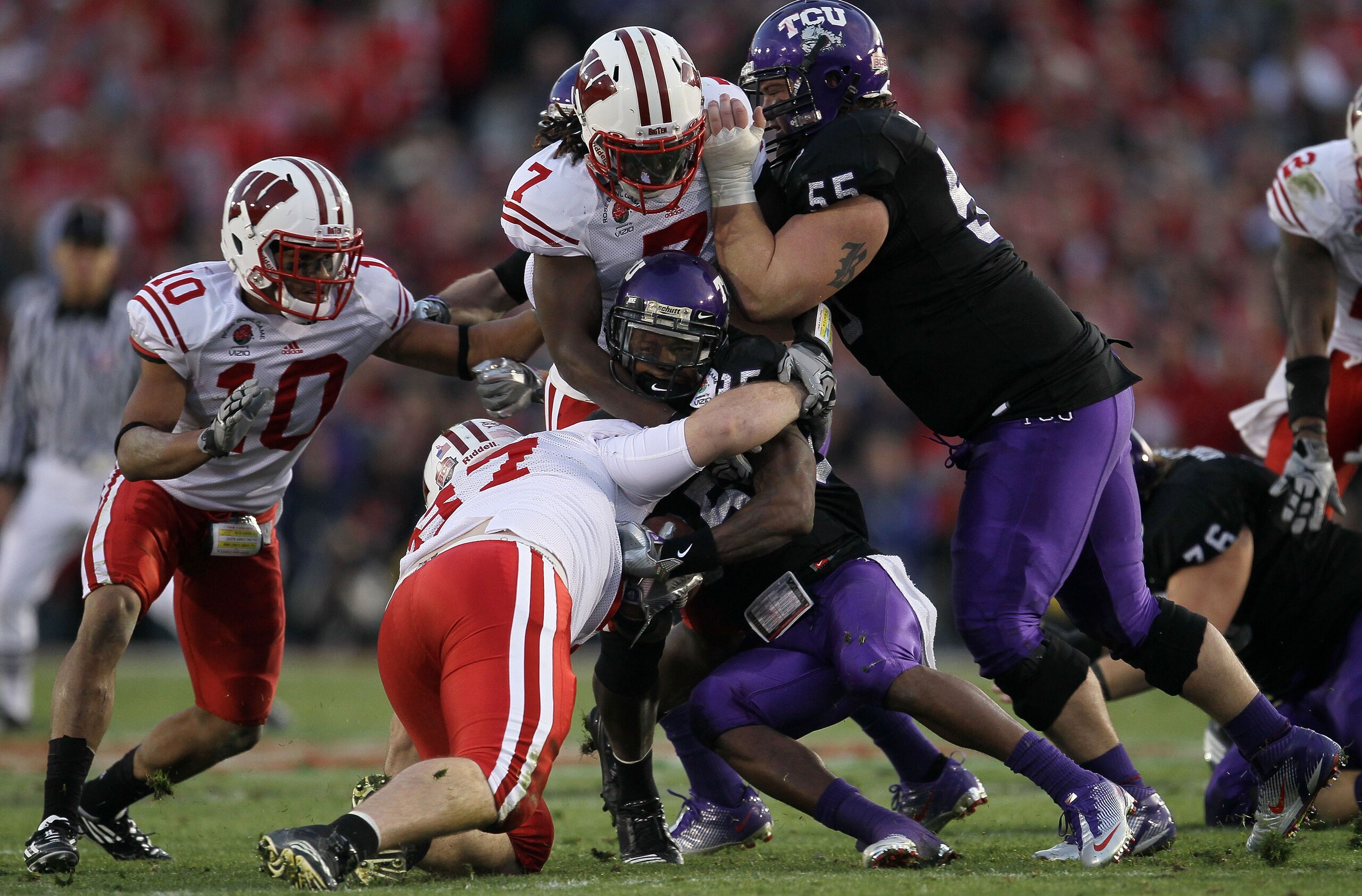
TCU's defense ranked first in the nation in both total yards allowed (228.5 per game) and points allowed (11.4 per game).
The Horned Frogs also had the nation's No. 1 pass defense (128.8 yards per game), the No. 4 rush defense (99.7 yards per game) and the No. 1 pass efficiency defense (94.9).
The numbers speak for themselves—TCU has a stellar defense that, statistically-speaking, is the best in the country.
1. TCU's Balance
10 of 10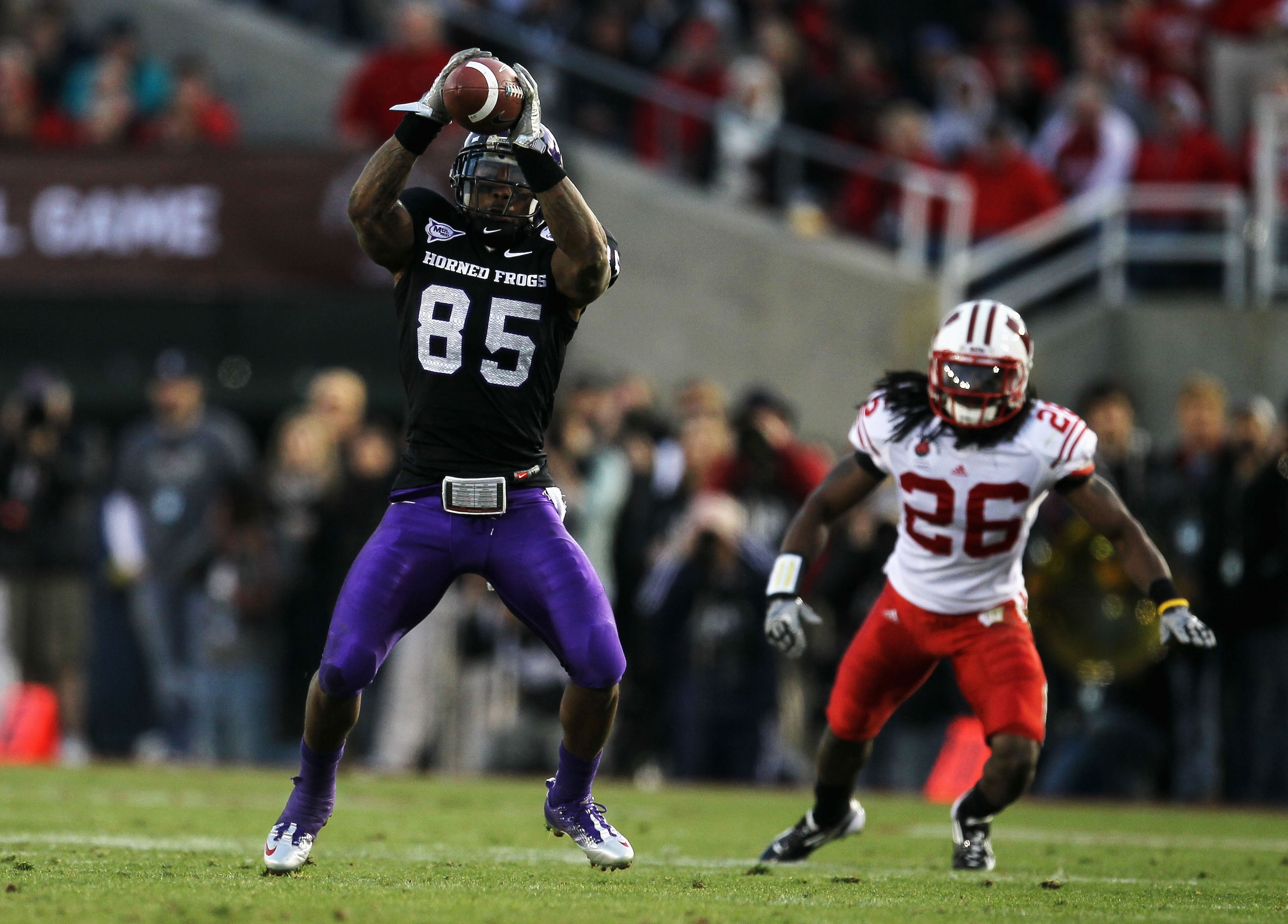
TCU is no one-trick pony.
The Horned Frogs had an incredibly balanced offensive attack this season, which averaged 217.2 passing yards and 239.5 rushing yards per game.
You can't stack the box against them, but you can't just play the pass either.
TCU's offense would have kept Auburn on its toes, giving them a lot of problems in the process.




.jpg?w=2560 "Jonathan Taylor Landing Spots 📍")

