

Oregon Ducks: Why Chip Kelly Will Lead Oregon To a BCS Title in 2012
Oregon Ducks have been flying high all season and are one victory away from winning the BCS National Championship.
Win or lose, it's undoubtedly been a magical season for one of college football's up-and-coming programs.
And win or lose, Oregon will be a top national title contender once again next season.
But just how good will the Ducks be in 2011?
Good enough to play in the BCS title game in 2012? Good enough to win it?
I think so.
Here are 10 reasons why, no matter what happens tonight, Chip Kelly will lead Oregon to a BCS National Championship next season.
Honorable Mention: The Rule of 3
1 of 11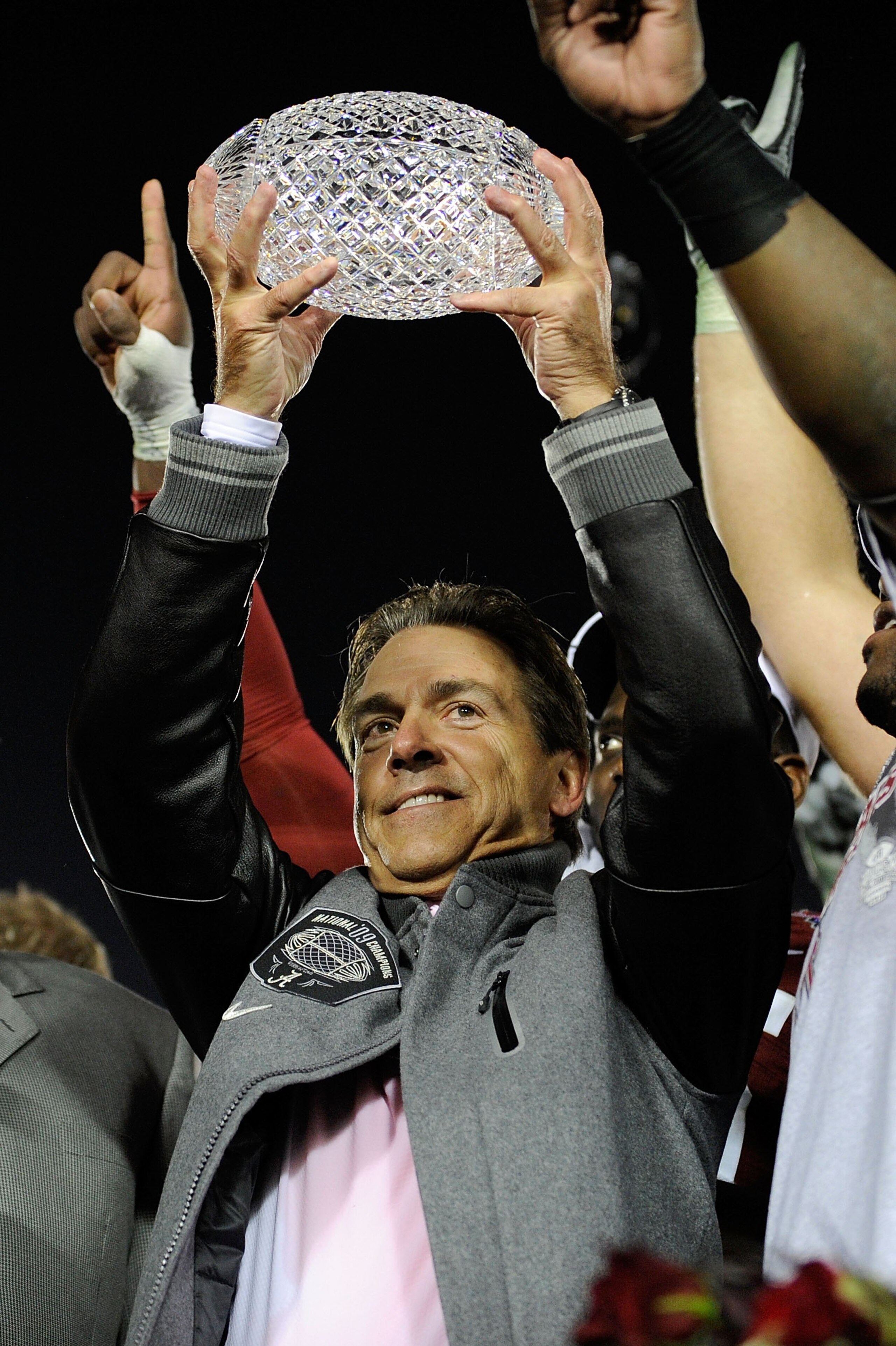
The last three coaches of the BCS National Champion won a title within three years of being at their respective schools.
Nick Saban won his first national title at Alabama—and his second overall—in his third year as the head coach of the Crimson Tide.
Les Miles won the BCS title in his third year at LSU.
Urban Meyer won a national championship in just his second year at Florida.
And whether it's Gene Chizik or Chip Kelly, both second-year coaches, that trend will continue in 2011.
If Kelly misses out this year, he could be in the running to keep the "rule of three" going in 2012.
10. Pass Efficiency Defense
2 of 11
In 2010, Oregon ranked sixth in the country in pass efficiency, which takes into account several different factors to come up with a rating (basically a defense's quarterback rating).
The Ducks did give up 2,568 passing yards, which was their weakest aspect in the formula, but that can probably be attributed to teams playing catch-up all season long.
Oregon allowed opposing quarterbacks to complete just 53.5 percent of their passes, which was right on line with some of the country's best defenses, like Ohio State (54.1) and Alabama (52.7).
Oregon's defense also had 20 interceptions—only Ohio State and Virginia Tech had more—and gave up just 13 touchdowns through the air all season.
The Ducks will only lose Talmadge Jackson among secondary starters, and sophomore cornerback Cliff Harris—30 tackles and five interceptions—is one of the nation's best.
9. The Talented Players We Haven't Seen Yet
3 of 11
On offense, Oregon will lose three key linemen—Bo Thran, Jordan Holmes and C.E. Kaiser—who helped lead the team's prolific rushing attack, as well as the team's top wide receiver, Jeff Maehl.
On defense, the Ducks will lose its top two tacklers—Casey Matthews and Spencer Paysinger—as well as cornerback Talmadge Jackson and sacks-leader Kenny Rowe.
Huge losses? Yes.
But waiting in the wings are several players who could step in and immediately fill their shoes.
Marcus Davis, Terrance Mitchell and Dior Mathis (a big-time recruit) will help ease the loss of Jackson.
Eric Dungy and Keanon Lowe will be nice additions to the wide receiver corps.
Oregon had four ESPN 150 commits in the class of 2010 and had the No. 22 recruiting class in 2010.
There's gotta be some talent just itching to get on the field as starters, right?
_0.png?w=2560 "CFB Top 25")
.png?w=2560)

8. The Turnover Game
4 of 11
Turnovers are often a sign of team discipline.
And Chip Kelly must be doing his job.
This season the Ducks ranked No. 3 in the country with 35 turnovers gained—they forced 20 interceptions and had 15 fumble recoveries.
Oregon also ranked seventh in the nation in turnover margin at +13.
Though the Ducks won't have all the same players—and maybe even the same amount of success—the trend is there.
Nick Aliotti's defense is in constant attack mode, Darron Thomas doesn't throw many picks (eight for his career), and LaMichael James literally hasn't fumbled the ball since he's been at Oregon.
The Ducks don't hurt themselves in the turnover battle, which is often the most important aspect of the game.
7. A Weak Conference
5 of 11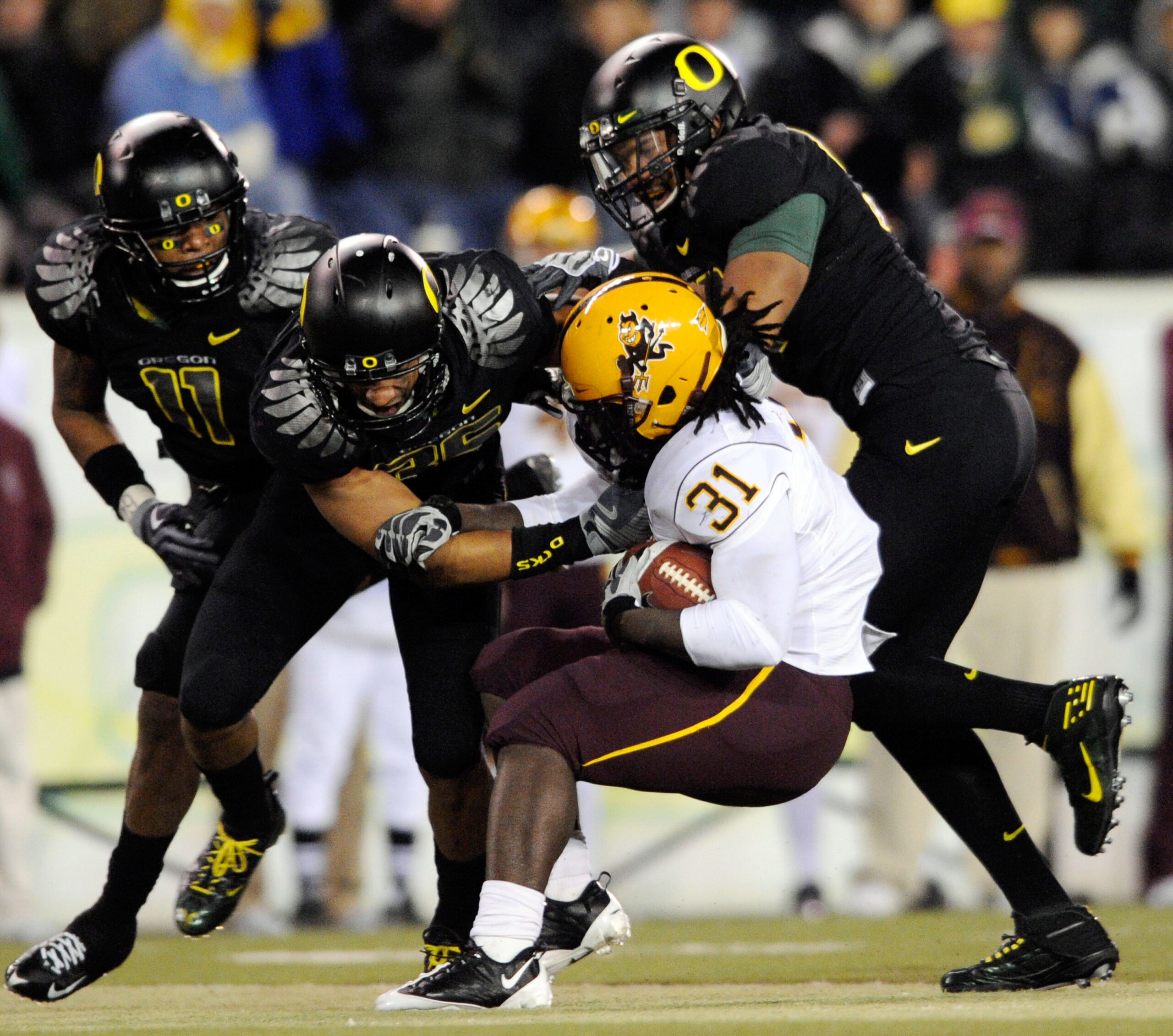
Take a look at Oregon's 2011 regular season schedule.
The Ducks' nine Pac-10 opponents for next season had a combined record of 57-55 in 2010, and four of those teams finished at or below .500 overall.
In fact, five of Oregon's 2011 conference opponents finished 4-5 or worse in conference play.
Translation: the Pac-10 wasn't very good last season, partly because they beat up on each other every week.
Barring a drastic turnaround in 2011, there won't be very many Pac-10 bowl teams again next season.
But Oregon could once again run the table in conference play, with only one road game (at Stanford) that should give the Ducks any problems.
6. Strong Non-Conference Schedule
6 of 11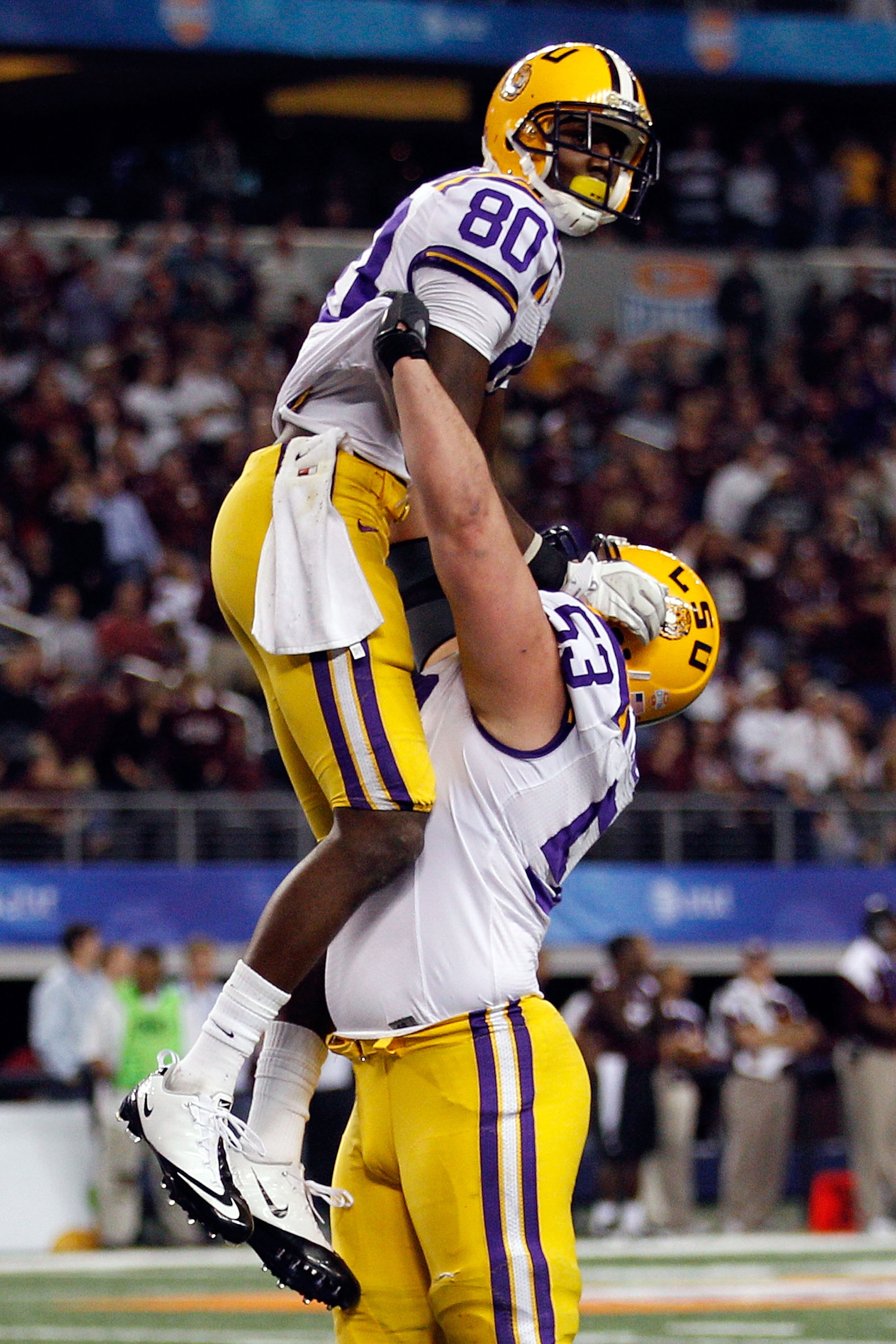
Aside from the Missouri State game—which the Ducks will probably win by 60 points—Oregon has a tough non-conference schedule that should definitely help it's resume.
The Ducks kick off the season with a neutral site game at Cowboys Stadium against LSU, who will likely be a preseason top-10 team.
The following week, Oregon will host Nevada, who took down mighty Boise State this season and finished the 2010 campaign at 12-1.
Two tough wins early in the season would be a huge statement for the Ducks and could set the course for another national championship season.
5. Offense
7 of 11
This season Oregon has had one of the most impressive offensive performances in recent college football history.
The Ducks rank first in the nation in scoring (49.3 points per game), second in total yards (537.4 per game), fourth in rushing yards (303.5 per game) and 18th in pass efficiency offense (quarterback rating of 151.8 for Darron Thomas).
Oregon has only scored less than 37 points once this season—which is absolutely ridiculous—and the Ducks have scored at least 48 points in eight of 12 games.
The up-tempo style of the Ducks offense is incredibly difficult to stop no matter who's running it.
Oregon had 48 scoring drives of less than two minutes this year and 24 scoring drives of less than one minute.
With most of the team's weapons coming back, the Quack Attack will be tough to deal with again in 2011.
4. Blowouts
8 of 11
When the Ducks play football, they don't just play to win—they play to destroy and embarrass their opponents.
On the season, Oregon is beating its opponents by an average of 30.9 points per game.
The Ducks have won five games by at least 35 points, two games by at least 69 points, and have only won one game by less than 11 points (at California).
Although the team will be missing three key offensive linemen next year, the rest of the offense will be in tact.
And it's hard to see how an Oregon offense that has been that good can fall off considerably next season.
3. The 2011 Recruiting Class
9 of 11It's a whole lot easier to deal with losing several key players when you've got some big-time recruits coming in.
And according to ESPN's rankings, Oregon has the No. 14 recruiting class for 2011.
The Ducks have 21 commits, including nine-four star players, five of which are ranked in the ESPNU150.
Top athlete prospect Devon Blackmon and wide receiver Tacoi Sumler should step in right away and contribute to Oregon's high octane offense.
Offensive tackle Andre Yruretagoyena is a stud, and linebackers Anthony Wallace and Tyson Coleman could make huge impacts sooner rather than later.
To use the cliche, Oregon isn't rebuilding—they're reloading.
2. Darron Thomas
10 of 11
Darron Thomas is playing in the BCS National Championship game, yet he still somehow goes relatively unnoticed among the college football media.
I just don't understand why.
Oregon's sophomore quarterback has completed 60.7 percent of his passes, and thrown for more than 2,700 yards and 28 touchdowns (the same number as Cam Newton) to just seven interceptions (just one more than Newton).
Thomas has also averaged 5.7 yards per carry on his way to racking up 488 rushing yards and another five touchdowns on the ground.
He has four games this season with at least four total touchdowns, and he's only been picked off twice in the team's last seven games.
Thomas is a heck of a college quarterback, just not one that gets a lot of publicity.
1. LaMichael James and The Oregon Rushing Attack
11 of 11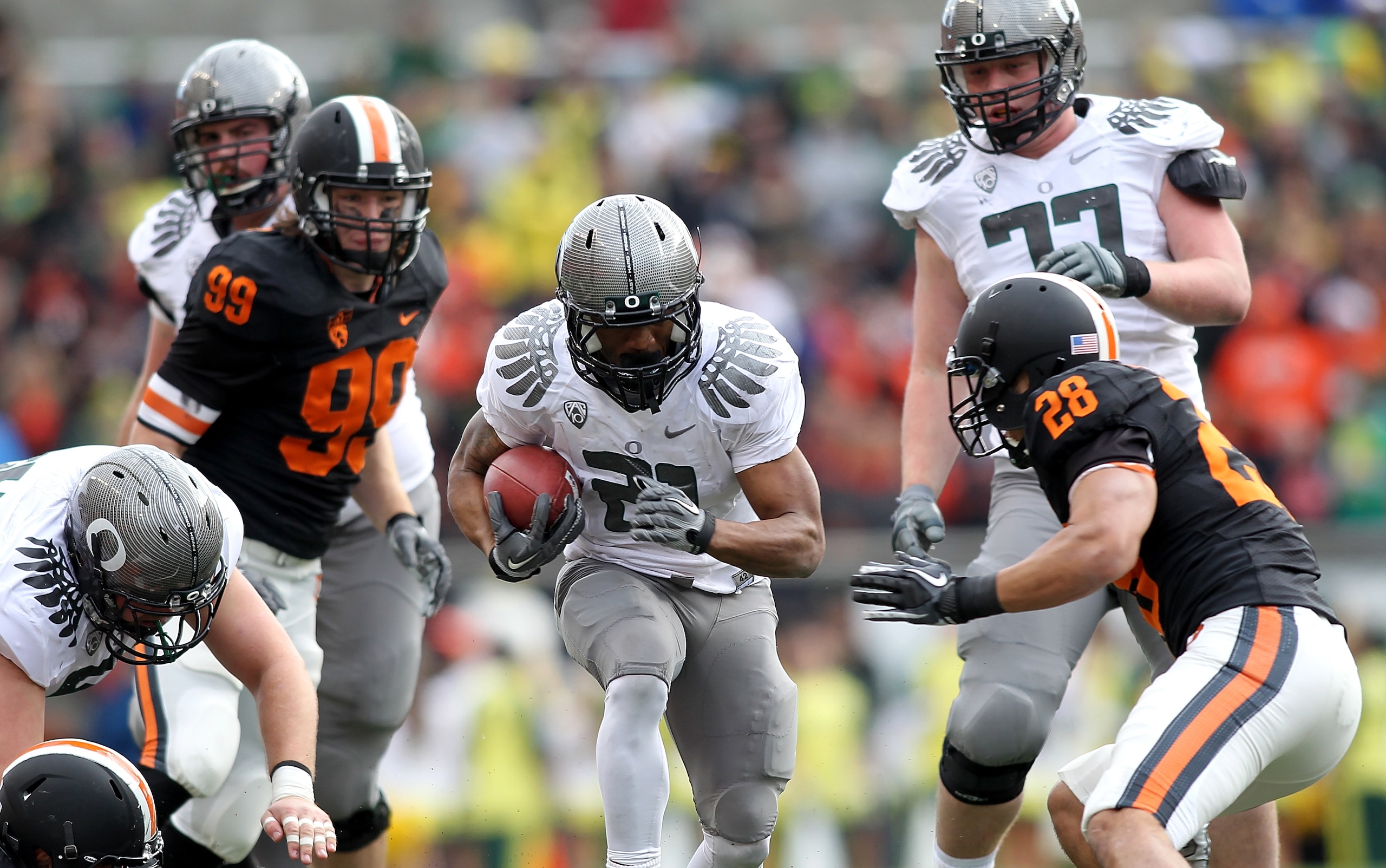
They say that Ducks usually fly, but not if you're Oregon.
These Ducks have the nation's No. 4 rushing attack at 303.5 yards per game and are led by sophomore running back LaMichael James.
The Heisman Trophy finalist has racked up 1,681 yards and 21 touchdowns on the ground this season.
James averages six yards per carry, has a season-long run of 76 yards, and has already racked up more than 3,200 rushing yards and 35 touchdowns in just two years at Oregon.
He's also got very good backups in Kenjon Barner (519 yards and six touchdowns in 2010) and Remene Alston (356 yards and five touchdowns).
Not to mention the Ducks have a coveted prospect in Lache Seastrunk who redshirted this season.
That Oregon rushing attack might not miss a beat in 2011.



.jpg?w=2560 "Jonathan Taylor Landing Spots 📍")


