

Bowl Matchups 2010-11: Ranking the Defenses of the BCS Bowl Teams
The belief that defense wins championships may be true most of the time.
In this year's BCS Championship Game it will be the offenses of No. 1 Auburn and No. 2 Oregon on display most of the evening. Neither program is noted for stout defensive play this season...but have at times come up with a big play or two.
Still, the best defenses in the BCS bowl games have some of the best talent and many of the players will go on to star in the NFL.
Strong defense will make a difference during the bowl games, but which of the BCS teams has the best unit?
10. Connecticut (8-4)
1 of 10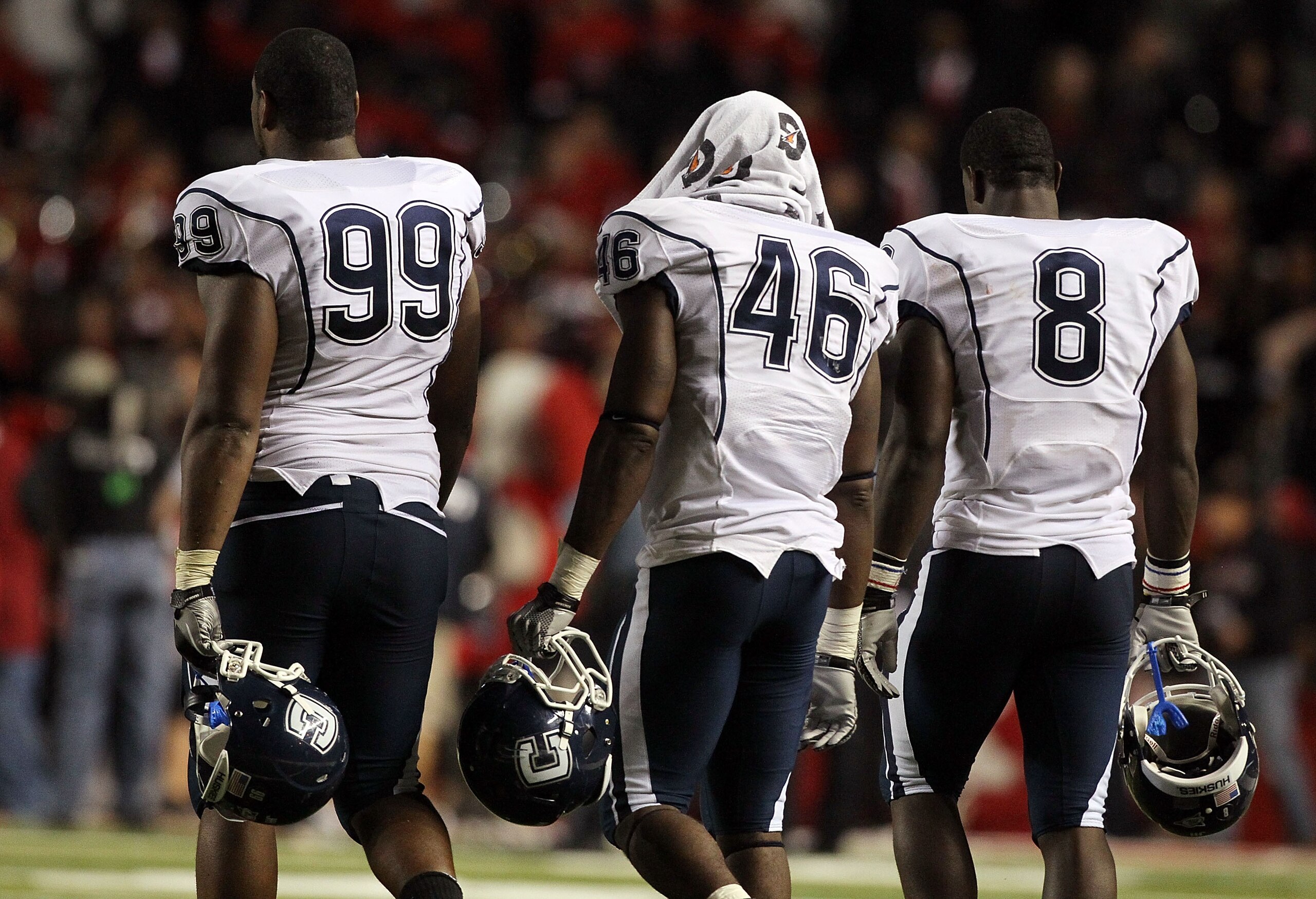
Passing Yards Allowed: 206.4 YPG (42nd nationally)
Rushing Yards Allowed: 147.3 YPG (57th nationally)
Points Allowed: 19.8 PPG (22nd nationally)
Maybe you could argue the Huskies don't deserve to be ranked last in defense, but when you look at who they played and the simple fact UConn gave up 30 to Temple—can you really put them anywhere else?
However, the defense is a big reason the Huskies won five straight to earn the Big East championship.
After embarrassing losses to Rutgers (27-24) and Louisville (26-0), Connecticut's defense responded in a big way and shut down a potent West Virginia offense in a 16-13 overtime win.
Senior linebacker Lawrence Wilson led the Huskies with 115 tackles, while sophomore linebacker Sio Moore added 104 stops.
9. Auburn (13-0)
2 of 10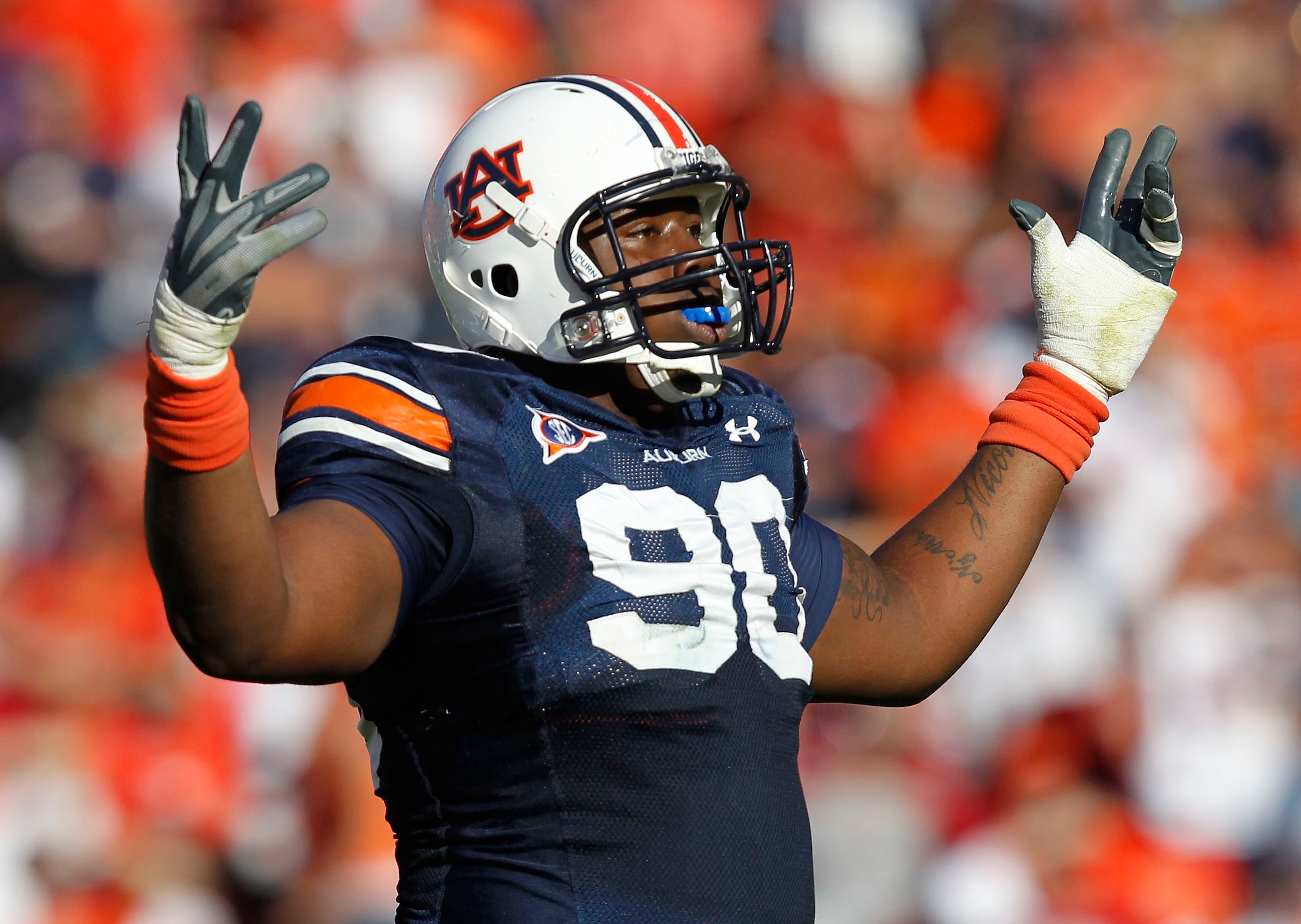
Passing Yards Allowed: 250.5 YPG (105th nationally)
Rushing Yards Allowed: 111.7 YPG (11th nationally)
Points Allowed: 24.5 PPG (54th nationally)
Auburn has one of the nation's best defensive players in tackle Nick Fairley, who has 55 tackles and 10.5 sacks.
But the Tigers have given up a lot of big plays and points during their perfect run in 2010.
Auburn allowed 43 to Arkansas, 34 to Kentucky, 31 to Mississippi and Georgia, 27 to South Carolina and Alabama and 26 to Arkansas State.
SEC fans will argue those are all quality opponents and that's what you get going through the conference gauntlet.
All you need to do is look at Alabama's championship run last season and you'll notice the Tide never allowed more than 24 points in a game.
8. Arkansas (10-2)
3 of 10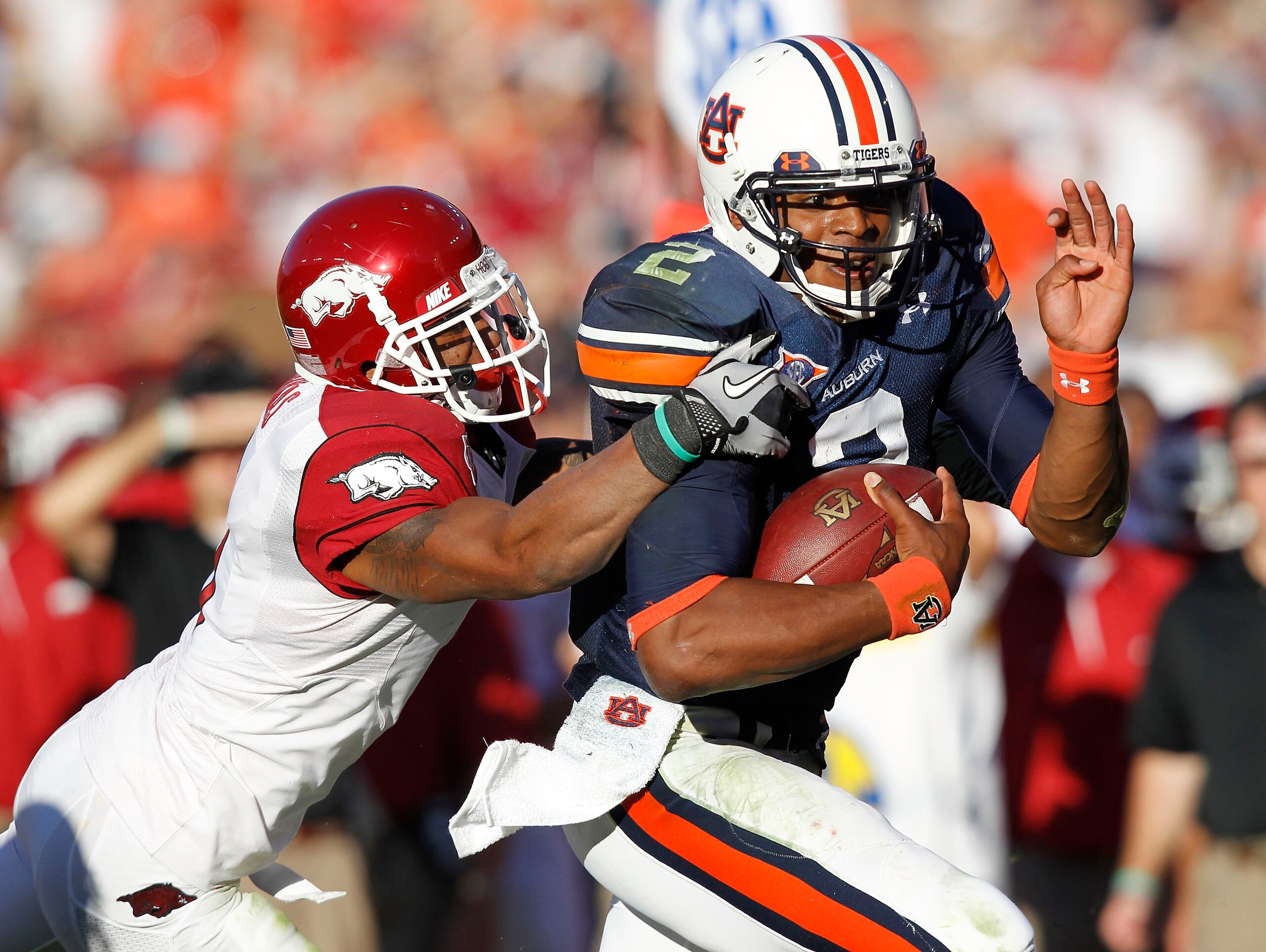
Passing Yards Allowed: 182.3 YPG (16th nationally)
Rushing Yards Allowed: 157.4 YPG (68th nationally)
Points Allowed: 22.8 PPG (43rd nationally)
Arkansas' defense was a major upgrade over the past two seasons under Bobby Petrino, most notably the Razorbacks rush defense.
It started with a big game against South Carolina's all-everything freshman back Marcus Lattimore. The Razorbacks held him to just 30 yards on 11 carries and since then it has been tough to run against Arkansas—especially any big runs.
The Razorbacks are an aggressive group that also does a great job of holding opponents on third down—32 percent conversion rate, which is tops in the SEC.
Junior linebacker Jerry Franklin leads the team in tackles with 88, while junior defensive back Tramain Thomas leads Arkansas with four interceptions.


7. Oklahoma (11-2)
4 of 10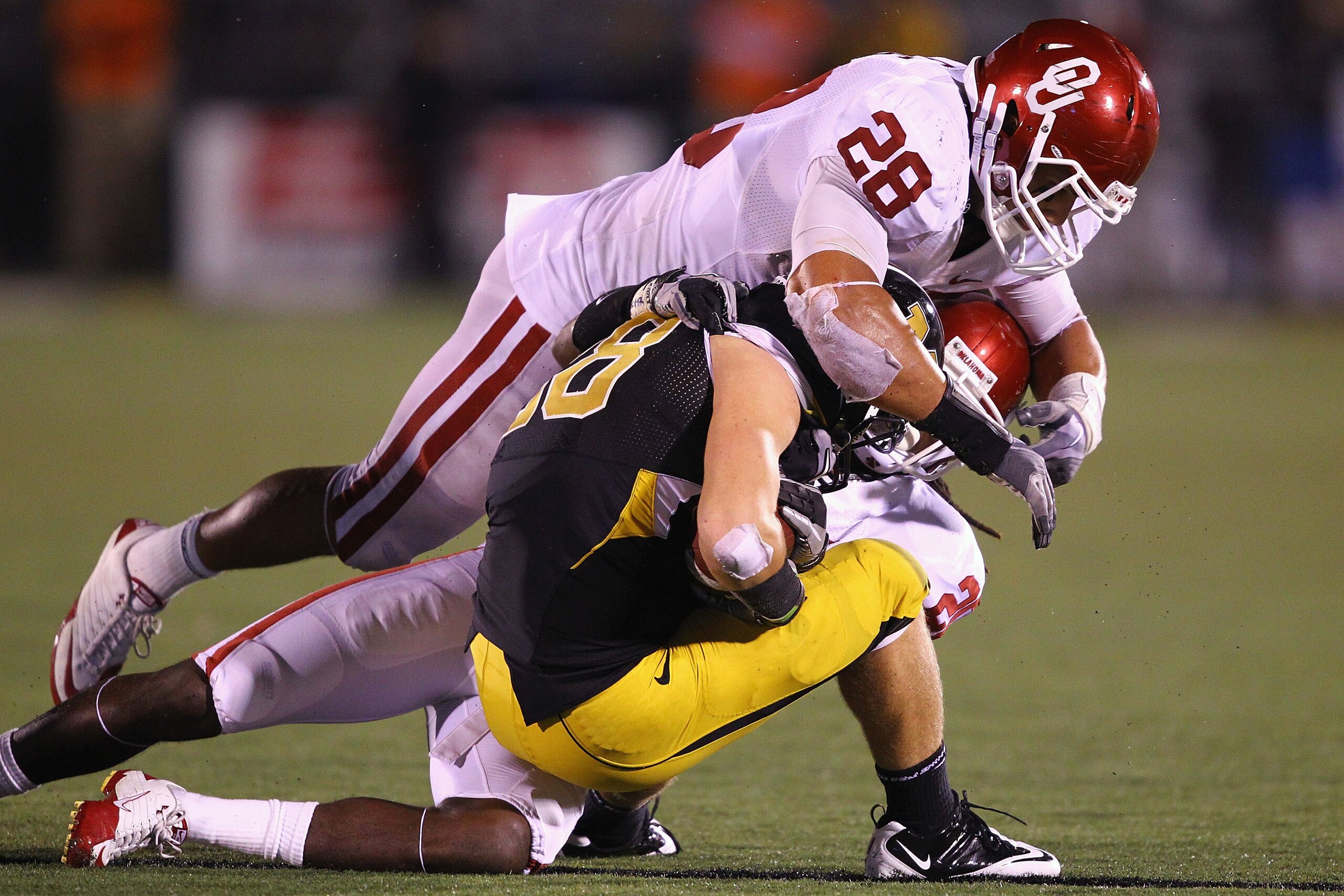
Passing Yards Allowed: 212.2 YPG (51st nationally)
Rushing Yards Allowed: 151.8 YPG (62nd nationally)
Points Allowed: 21.9 PPG (34th nationally)
There have been plenty of reasons to be critical of defensive coordinator Brent Venables' defense this season. But when the Sooners needed to come up big, they did, especially in the Big 12 Championship Game.
The defense has carried Oklahoma down the stretch run of the season.
In the Big 12 Championship Game, OU's defense sacked Nebraska quarterback Taylor Martinez seven times and forced four turnovers in the 23-20 come-from-behind win.
Junior linebacker Travis Lewis leads the team with 99 tackles, while senior defensive back Jonathan Nelson has 97.
6. Oregon (12-0)
5 of 10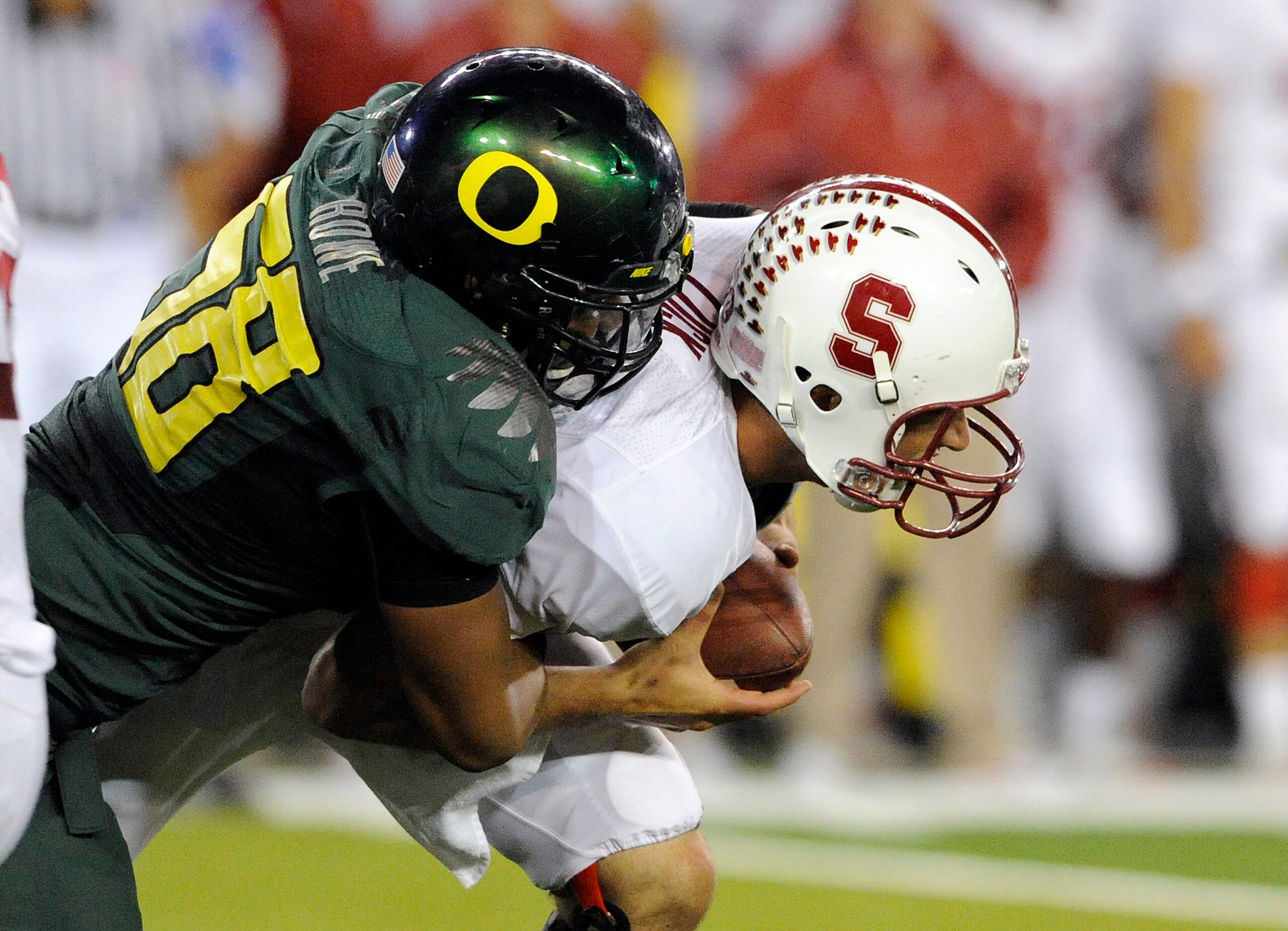
Passing Yards Allowed: 214.0 YPG (56th nationally)
Rushing Yards Allowed: 117.6 YPG (15th nationally)
Points Allowed: 18.4 PPG (14th nationally)
At times, Oregon's defense has been torched this season.
The Ducks gave up 20 or more points six times this season, including 32 to USC. But Oregon defensive coordinator Nick Aliotti will confuse an offense with his multiple schemes.
Oregon loves to come at a quarterback from all over the field and mix up its coverages. While the Ducks will give up yards they also find a way to make big plays.
The Ducks are ranked seventh nationally in turnover margin at plus-13 and they have 35 takeaways.
That success has a lot to do with a talented unit that includes defensive end Kenny Rowe, defensive tackle Brandon Bair, linebacker Casey Matthews and defensive backs Cliff Harris and John Boyett.
Can this group handle Cam Newton? It's going to be interesting.
5. Virginia Tech (11-2)
6 of 10
Passing Yards Allowed: 199.3 YPG (31st nationally)
Rushing Yards Allowed: 148.9 YPG (59th nationally)
Points Allowed: 19.1 PPG (17th nationally)
Under defensive coordinator Bud Foster, Virginia Tech fans have become accustomed to stifling defenses.
The 2010 unit was young and inexperienced, but has come together under Foster since opening the season 0-2. They are particularly adept at creating turnovers, including 22 interceptions—which is second best in the nation.
The Hokies run defense has been a concern most of the season and will get tested by Stanford, even though Andrew Luck is one of college football's most-polished throwing quarterbacks.
Sophomore cornerback Jayron Hosley had a breakout season, leading the nation with eight interceptions. He also has 37 tackles and broke up seven passes.
4. Wisconsin (11-1)
7 of 10
Passing Yards Allowed: 191.8 YPG (25th nationally)
Rushing Yards Allowed: 131.7 YPG (31st nationally)
Points Allowed: 20.5 PPG (29th nationally)
The Badgers defense is really an overlooked group because of the way the offense played this season.
Wisconsin still isn't a dominant defense that will shut down an opponent. Instead, the Badgers are opportunistic.
In Wisconsin's first eight games, the Badgers had just seven turnovers. Over the final four games, they had 16 takeaways.
It's also important to note that Wisconsin's defense played well against four spread teams to close the regular season. Turnovers played a key role in that as well and if that trend continues against TCU it should bode well for the Badgers.
Senior linebacker Blake Sorensen leads the team with 61 tackles and also has two interceptions.
3. Stanford (11-1)
8 of 10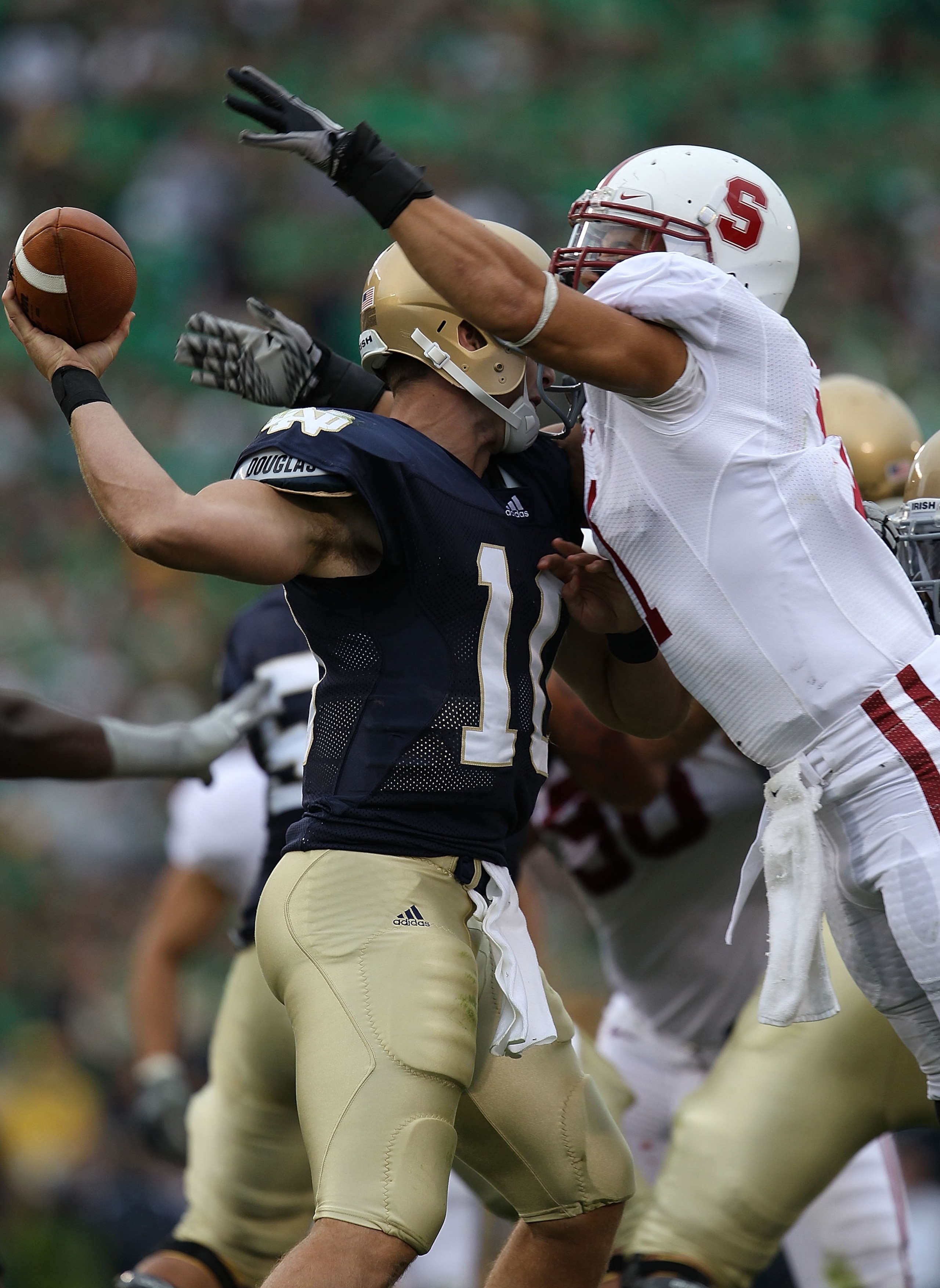
Passing Yards Allowed: 200.3 YPG (32nd nationally)
Rushing Yards Allowed: 125.4 YPG (24th nationally)
Points Allowed: 17.8 PPG (ninth nationally)
In just one season under defensive coordinator Vic Fangio, the Cardinal defense has improved greatly.
Stanford's defense is physical and loves to hit, creating 29 turnovers and totaling 28 sacks.
Despite missing the first two games of the season because of an injury, linebacker Shayne Skov leads the Cardinal defense with 72 tackles. He also has 4.5 sacks.
This unit showed some weaknesses in the second half of the Oregon game, but since then they've been as stout as anyone. In its last five games, Stanford has allowed only 8.5 points per game.
2. TCU (12-0)
9 of 10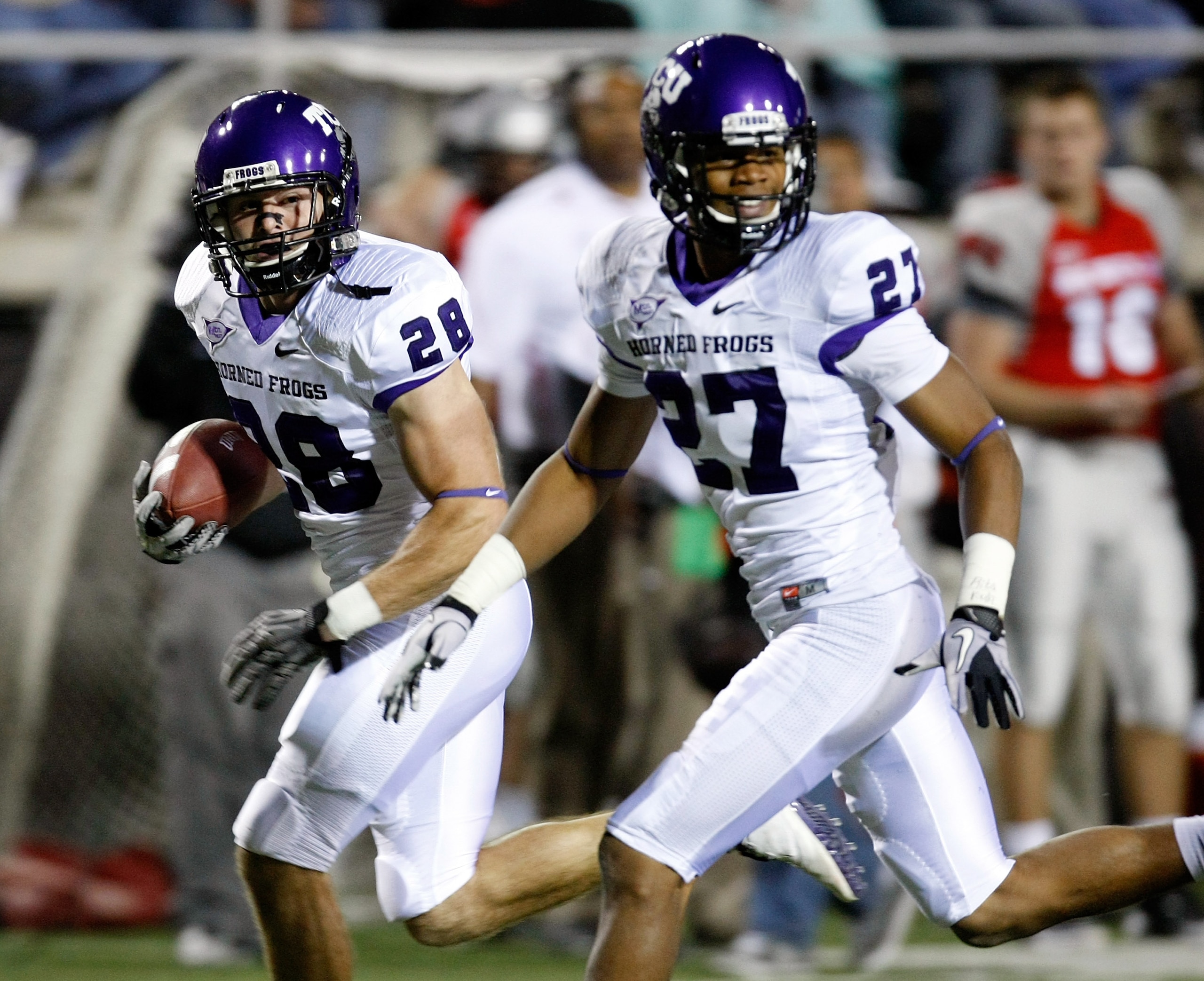
Passing Yards Allowed:126.3 YPG (first nationally)
Rushing Yards Allowed: 89.2 YPG (third nationally)
Points Allowed: 11.4 PPG (first nationally)
The Horned Frogs may rank No. 1 in overall defense, but factor in their opponents and they slip to No. 2 among BCS defenses. Shutting out Colorado State and Wyoming is fine, but not impressive.
What is impressive about TCU's defense is their sheer athleticism. The Horned Frogs feature a 4-2-5 defense and Patterson loves to stack it with quick, hard-hitting players.
Senior strong safety Colin Jones leads the team with 10.5 tackles for a loss, while seven TCU defenders have at least two sacks, led by senior Wayne Daniels with six.
Potentially the best player is linebacker Tank Carder, who has 55 tackles and was the Defensive Player of the Year in the Mountain West.
1. Ohio State (11-1)
10 of 10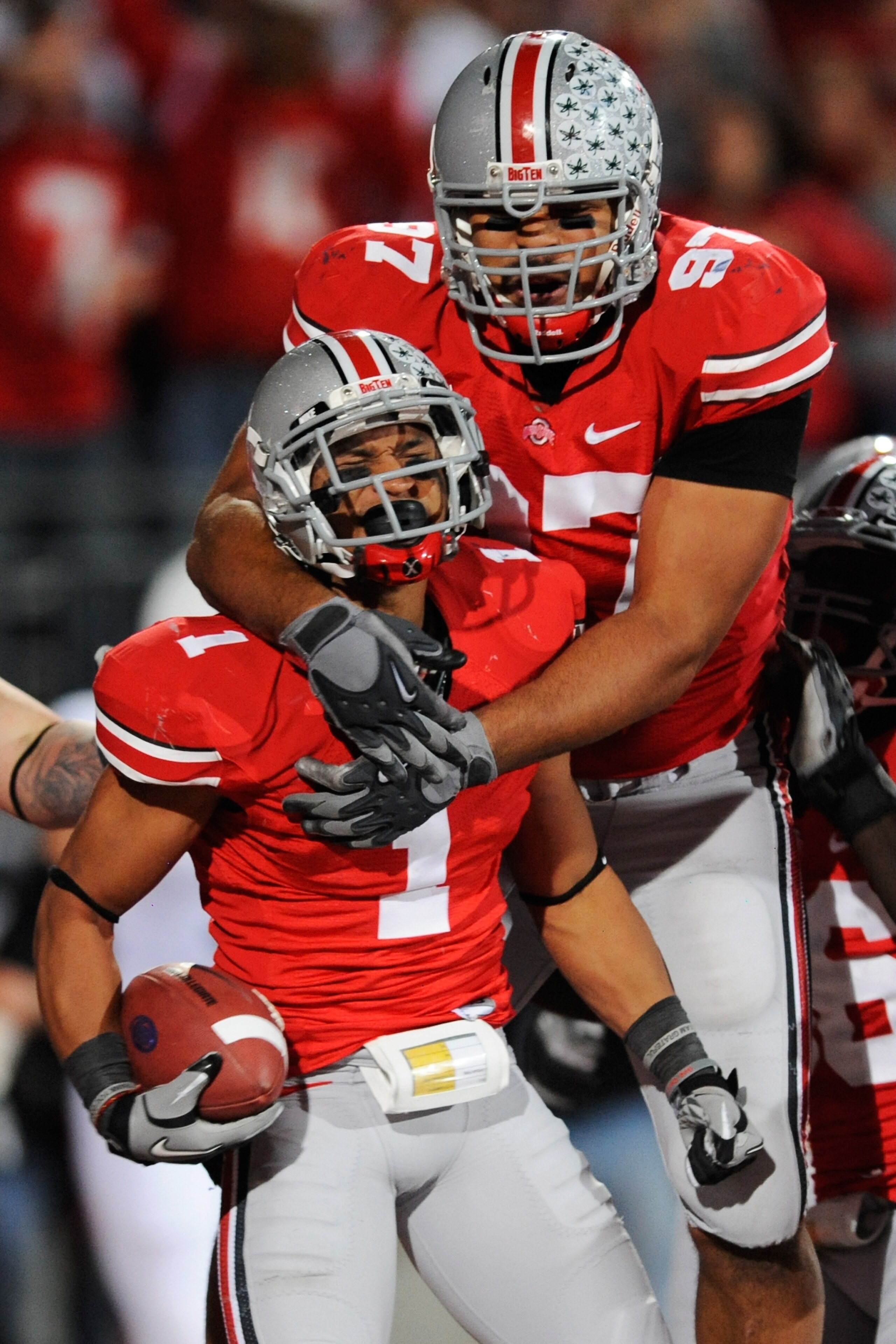
Passing Yards Allowed: 156.3 YPG (fourth nationally)
Rushing Yards Allowed: 94.0 YPG (fourth nationally)
Points Allowed: 13.3 PPG (third nationally)
The Buckeyes are the last team to defeat No. 2 Oregon—in last season's Rose Bowl—and Ohio State did that mainly because of a great defensive performance.
OSU's defense has been just as good this season, if not better, despite just an average season from tackle Cameron Heyward.
Given the time to prepare for Arkansas' offense and star quarterback Ryan Mallett, the Buckeyes will likely have a great game plan.
However, the Buckeyes haven't recorded a lot of sacks this season, so the pressure could be on the defensive backfield. If they are forced to play the nickel a lot it will be up to Travis Howard, Chimdi Chekwa and Devon Torrence (and possibly Christian Bryant if he's healthy) to shut down Arkansas' big and fast receivers.
Ohio State's defense is arguably the best unit in the nation and just edges out TCU for the top spot among the BCS teams.

.jpg?w=2560 "Report: Darnold Could Miss 3-6 Weeks")
.jpg?w=2560 "Grading WWE NXT 🔠")