
Michigan Football: How Have the Wolverines Done in Bowls against the SEC?
Michigan has a 20-5-1 record against the SEC's current membership, but this could be extrapolated to around 35-9-1 depending on what years you are looking at, and whether the school was a member of the SWC at the time (and is now a member of the SEC).
Case in point: Despite recent struggles by the Big Ten as a whole, Michigan has owned the SEC.
Michigan has a 7-3 record against the SEC in bowl games.
1984 Sugar Bowl: Michigan and Auburn (Loss)
1 of 10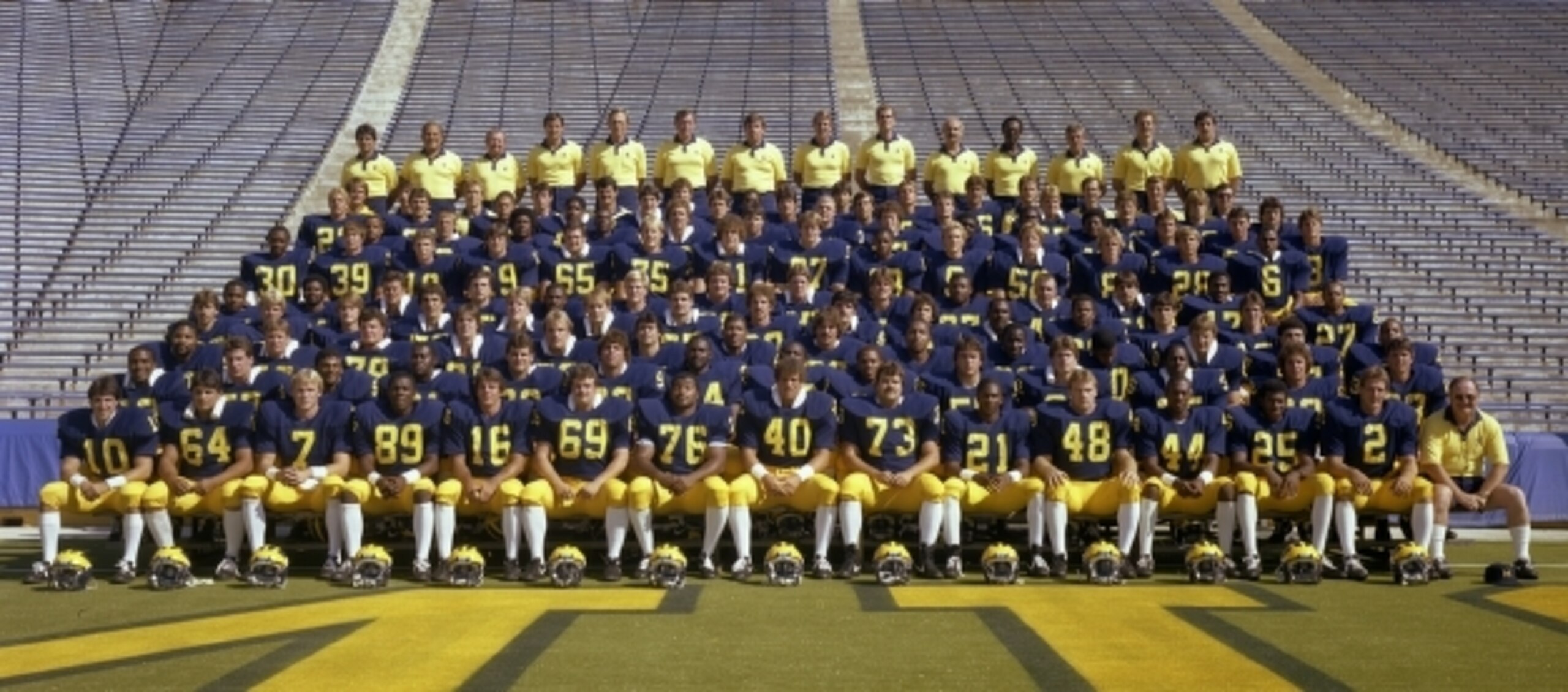
The first time the Wolverines met the SEC in the postseason was in 1984, taking on the Auburn Tigers.
Steve Smith led the Wolverines to a powerful first quarter, holding the ball for nine minutes and gaining 116 yards to Auburn's 61. This was highlighted by Michigan's second drive, which featured a 19-yard Smith to Triando Markray completion and four carries for a total of 38 yards by Rich Rogers. Midway through the first quarter, Smith's four-yard keeper put the Wolverines up 7-0, a lead they would hold for 52 minutes of the 60-minute contest.
Michigan took their 7-0 lead to the locker room after stellar performances by both defenses.
Auburn came out with intensity. They wore down a tired Michigan defense and thwarted Michigan's offense time and time again.
A 26-yard Don Bracken punt was one of a season-high eight punts for Michigan. Auburn marched 68 yards down the field (only on the ground) to set up a 31-yard Al DelGreco field goal to come within 7-3. The Tigers got a break when Smith took a hit while releasing the ball and Auburn's Gregg Carr snatched it at the Michigan 41-yard line. A few plays later, DelGreco added a second field goal, now within 7-6.
Another (!!) Michigan punt allowed Auburn to take over on their own 39-yard line. The Tigers controlled the clock with 15 rushing plays to drain 7:21 of time. Michigan called a timeout when Auburn reached Michigan's 1-yard line with 27 seconds left to play, but DelGreco nailed his third field goal to send the Wolverines back to Ann Arbor with a taste of New Orleans, but no sugar.
The Tigers never found the end zone that day, but Michigan's offense couldn't get it done.
Auburn wins, 9-7 (0-1)
1998 Hall of Fame Bowl: Michigan and Alabama (Win)
2 of 10
In the first ever meeting between the Michigan Wolverines and the Alabama Crimson Tide, Michigan prevailed 28-24.
Alabama struck first with a 51-yard field goal by Phillip Doyle to lead 3-0 at the end of the first. In the second quarter, Jamie Morris scored on touchdown runs of 25 and 14 yards to give Michigan a 14-3 halftime advantage.
At the start of the third quarter, Morris broke a 77-yard run for a touchdown to put the Wolverines up 21-3, but Alabama responded with a 16-yard TD pass from Jeff Dunn to TE Howard Cross to make it 21-9 at the start of the fourth.
In the fourth quarter, Bobby Humphrey scored on runs of one and 17 yards to give the Crimson Tide their second lead of the game, 24-21. Facing 4th-and-3 from the 20-yard line late in the fourth, Demetrius Brown lofted a 20-yard pass that John Kolesar pulled down in the corner of the end zone for the touchdown and ended Michigan's most exciting scoring drive of the season. As time waned, Alabama's desperation pass was intercepted by CB David Arnold to seal a Michigan victory.
Morris' 234 rushing yards set a Hall of Fame Bowl and Michigan bowl record. He broke the Wolverines single-season rushing record with a total of 1,703 yards and ended his career with Michigan at 4,393 rushing yards, third best in Big Ten history.
1991 Gator Bowl: Michigan and Mississippi (Win)
3 of 10
Gary Moeller won a share of the Big Ten title when Michigan met Mississippi in the Gator Bowl.
After exchanging early turnovers, Michigan got on the board first with a deep pass from Elvis Grbac to the right side into Desmond Howard for a career-long touchdown reception. With the extra point, Michigan took a 7-0 lead with 1:04 remaining in the first quarter.
Mississippi scored its only points of the game when Brian Lee kicked a career-long and Gator Bowl record 51-yard field goal to pull within four of Michigan at 7-3.
After a 32-yard kick return and a John Vaughn run to the left for a 37-yard gain, Michigan was on the Rebel 31-yard line. Five players later, Grbac threw seven yards to Jarrod Bunch for a 14-3 halftime lead. Grbac's touchdown pass, his 19th of the year, broke Jim Harbaugh's single-season record for touchdown passes (18) in 1985. Michigan had a 14-3 lead at the half.
Early in the third, Grbac threw a screen to Howard who evaded the Rebel defense for a 50-yard TD reception and a 21-3 Michigan lead with 10:53 remaining in the third.
Later, Ole Miss QB Tom Luke was intercepted by Todd Plate at the Michigan 37. A few plays later, Michigan was on the Rebel 49-yard line when Ricky Powers broke out a 44-yard run for a first down on the Rebel 5-yard line. The ball was blasted through the middle into the end zone giving Michigan a very comfortable 28-3 advantage.
As the third period was ending, Grbac found Derrick Alexander over the middle for a 33-yard touchdown pass—his fourth touchdown pass of the game. The scoring ended, and Michigan downed the Rebels 35-3.
Offensive linemen Dean Dingman, Tom Dohring, Greg Skrepenak, Matt Elliot and Steve Everitt were named the game's MVPs for leading on offense to a Michigan single-game record 715 yards.
This was also the last SEC-Big Ten matchup for 20 years. Starting in 2011, the Gator Bowl has renewed their commitment to the two conferences, setting the stage for January 1, 2011, when the Michigan Wolverines face the Mississippi State Bulldogs.
Michigan won 35-3 (2-1)


1997 Outback Bowl: Michigan and Alabama (Loss)
4 of 10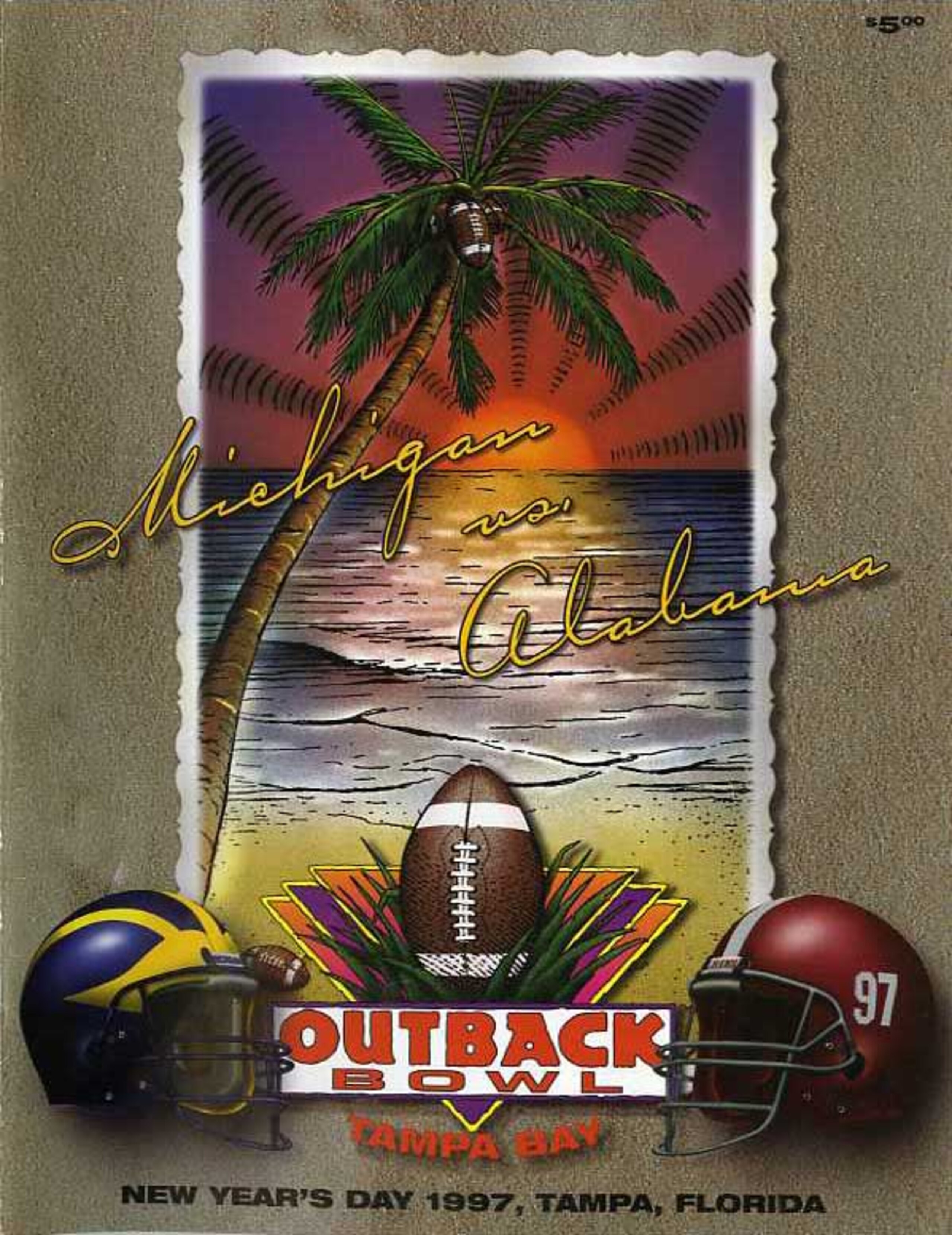
Alabama scored first, a 43-yard field goal to take an early 3-0 lead. Remy Hamilton answered with two field goals to take a 6-3 advantage into the locker room.
The turning point of the game came as Michigan, leading 6-3 early in the fourth, was driving deep into Alabama territory. On a 3rd-and-5, Brian Griese, starting his first game of the season, threw over the middle. The ball was deflected and intercepted by Alabama linebacker Dwayne Rudd on the Alabama 12-yard line. Rudd ran up the side for an 88-yard interception return, an Outback Bowl record. With 12:13 left in the game, Alabama had a 10-6 advantage and would never relinquish the lead.
The game was all but over when Alabama pulled away 17-6 behind Shaun Alexander's 46-yard TD run with only 2:15 remaining.
Michigan didn't give up, though. Griese hit Russel Shaw for a nine-yard TD pass to end an 80-yard drive that took one minute. After a pass interference call, Chris Floyd ran the ball in for a two-point conversion to bring Michigan within three, 17-14. Alabama recovered the onside kick and ran out the clock.
Michigan finished the day with 415 yards of offense, but couldn't find the end zone often. Michigan failed to score while moving within the Alabama 35-yard line an astounding three times.
Alabama wins (2-2)
1999 Citrus Bowl: Michigan and Arkansas (Win)
5 of 10
Michigan became the first Big Ten team to win the Citrus Bowl in five years, and 1999 would start the year in which Michigan faced the SEC five consecutive times in the postseason.
Trailing 31-24 with just 5:49 left, Michigan exploded for 21 points in just over four minutes to win their 15th bowl game all time.
Anthony Thomas led Michigan with three rushing touchdowns and 139 yards, and earned the Citrus Bowl's MVP award. Linebacker Sam Sword was named defensive MVP by the media for his 11-tackle performance.
Arkansas scored three consecutive touchdowns to take a 31-24 advantage, the first time Michigan trailed since an early 7-3 deficit.
Michigan responded with three touchdowns of its own. Anthony Thomas tied the game at 31 on a one-yard rush. Michigan's defense forced Arkansas to punt on its next possession and QB Tom Brady found DiAllo Johnson from 21 yards out for the eventual game-winning score with 2:25 remaining.
Michigan CB James Whitley sealed the deal for Michigan when he intercepted Arkansas' pass and returned it 26 yards for a touchdown.
Michigan wins, (3-2)
2000 Orange Bowl: Michigan and Alabama (Win)
6 of 10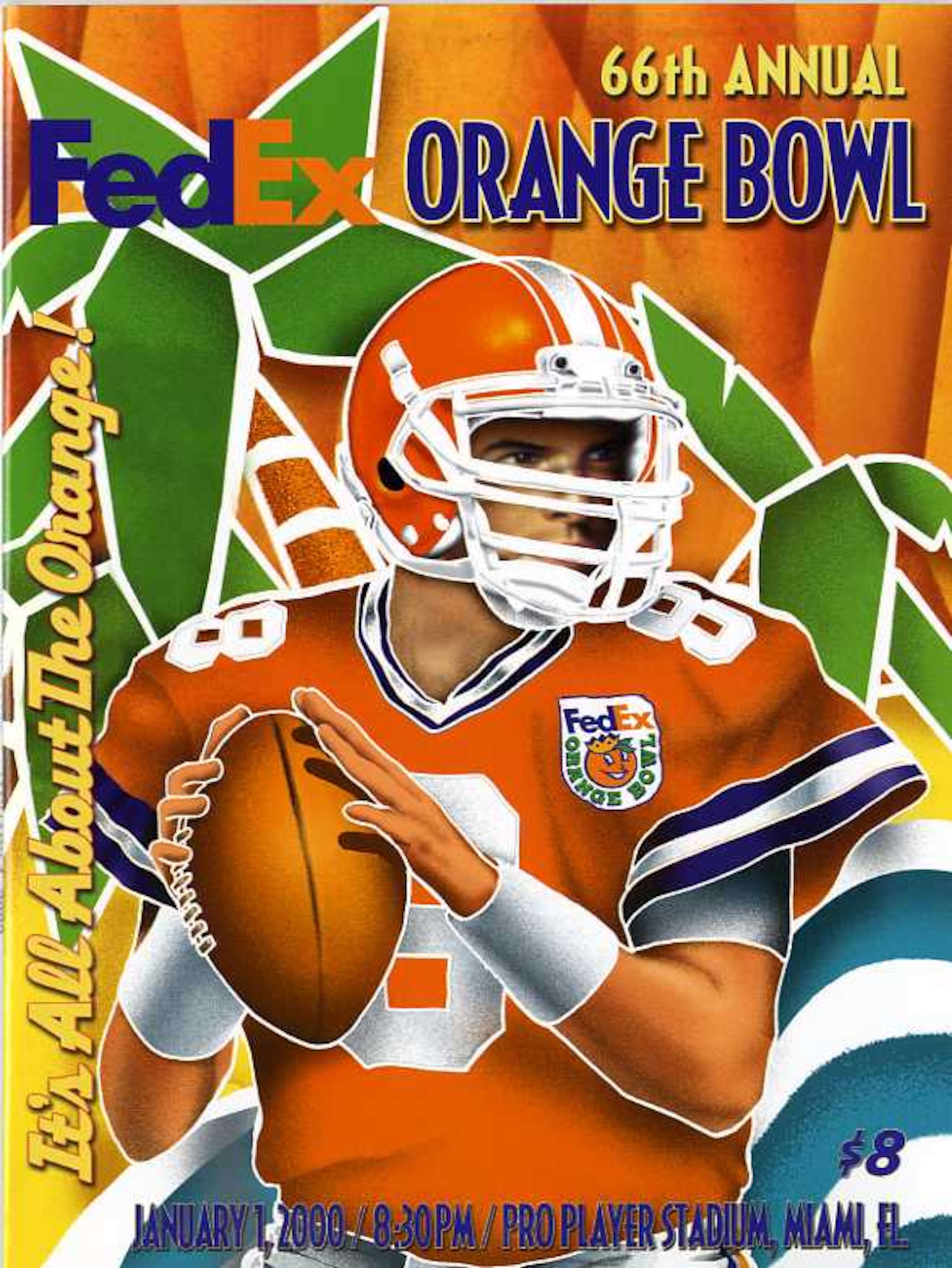
Michigan erased a pair of 14-point deficits to win in a thrilling 35-34 overtime game against the Crimson Tide in the 2000 FedEx Orange Bowl. This was the first overtime BCS bowl game and Michigan's first overtime contest in school history.
The game was knotted at 28 at the end of regulation. Michigan scored initially in OT when QB Tom Brady found tight end Shawn Thompson for a 25-yard TD pass (their first play of OT).
On Alabama's turn, QB Andrew Zow hit Antonio Carter for a 21-yard TD pass on the second play of the drive. Alabama's kicker Ryan Pflugner missed the extra point attempt wide right to give Michigan the victory.
Sophomore wide receiver David Terrell was named Orange Bowl MVP after setting career bests in receiving yards (150) and receiving touchdowns (three) as well as equaling his career high in receptions (10). Brady capped his career with a career-best four TD passes on 34-of-46 passing for a UM bowl record 369 yards.
Michigan came back from 14-0 to tie it at 14-14 and then came back from 28-14 to tie it at 28-28 to force the overtime.
Michigan wins, (4-2)
2001 Citrus Bowl: Michigan and Auburn (Win)
7 of 10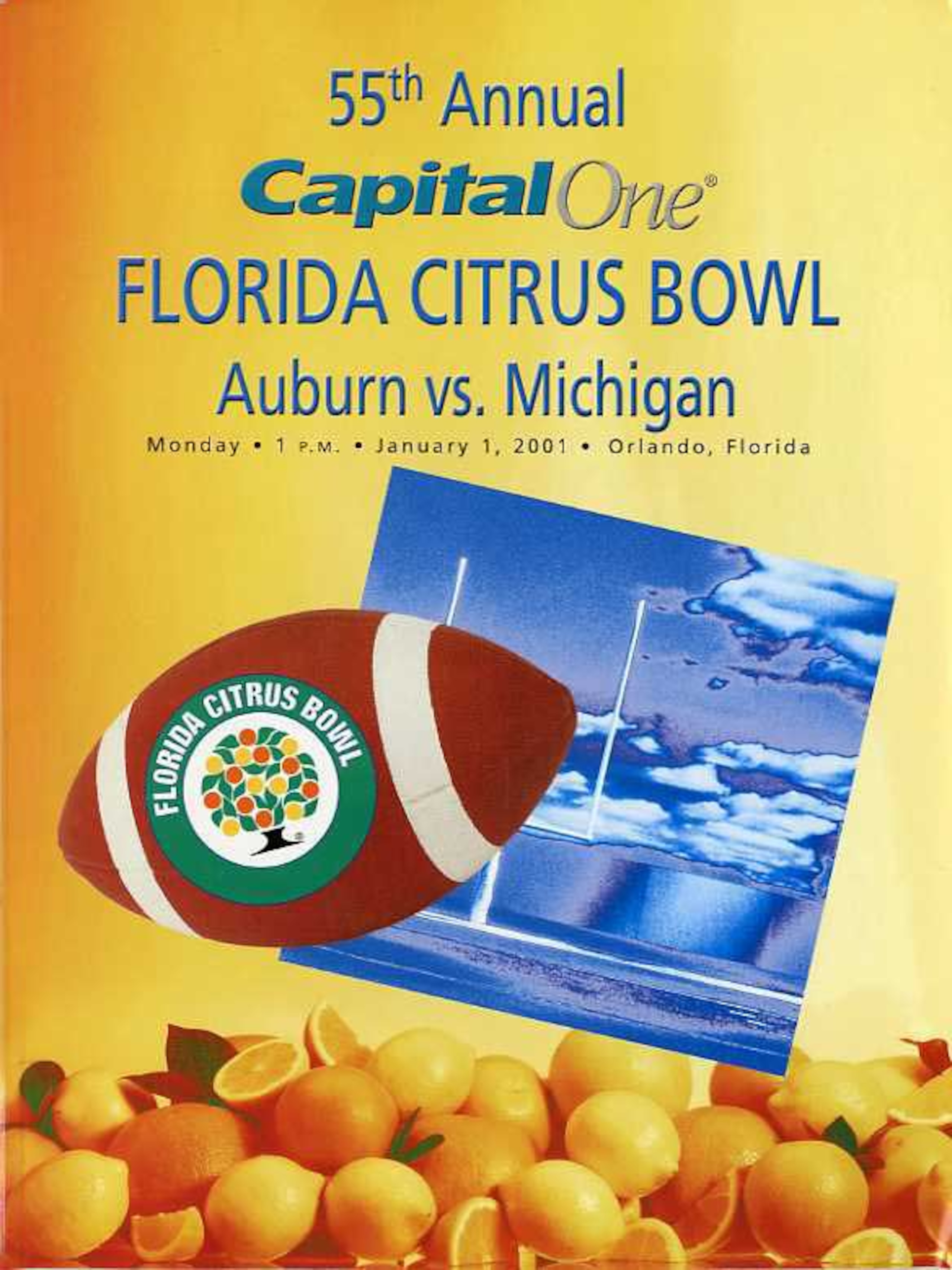
Michigan used efficient passing and a relentless ground attack to down the Auburn Tigers 31-28 in the 2001 Citrus Bowl.
Drew Henson was 15-for-20 for 294 yards and a pair of TDs, and tailback Anthony Thomas carried the ball 32 times for 182 yards and two TDs.
Michigan used a flea-flicker trick play to fool the Tigers defense and score on a 31-yard TD pass from Henson to Terrell. The 76-yard drive took only 70 seconds to complete and set the tempo for the rest of the game.
Auburn scored a late TD to pull within three, but Michigan recovered the onside kick with 2:22 remaining and held on for the win.
Michigan wins, 31-28 (5-2)
2002 Citrus Bowl: Michigan and Tennessee (Loss)
8 of 10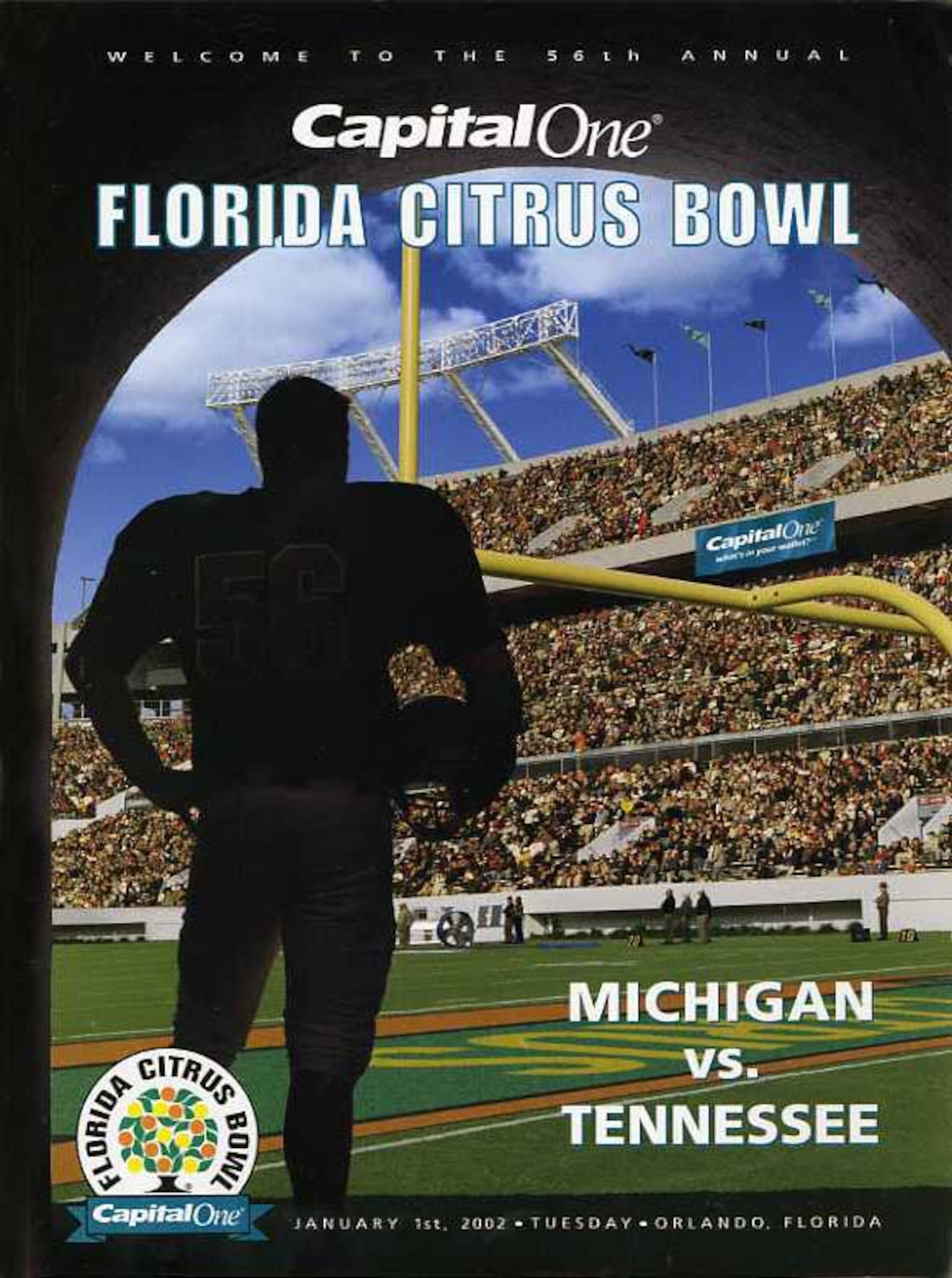
No. 8 Tennessee won the first-ever meeting between the two schools, ending Michigan's four straight January 1st bowl victories in convincing fashion—45-17.
The Volunteers scored the first 17 of the game, and then tacked on 21 unanswered points before Michigan scored a late TD on a Navarre to Bell connection. Unfortunately for the Wolverines, the game was far out of reach.
Tennessee's QB Casey Clausen was named the game's MVP, and it was behind his arm that the Volunteer offense found success. At the beginning of the third quarter, Clausen connected to Witten for a 64-yard TD pass that put the Vols up 31-10, effectively icing the game.
Tennessee wins, 45-17 (5-3)
2003 Outback Bowl: Michigan and Florida (Win)
9 of 10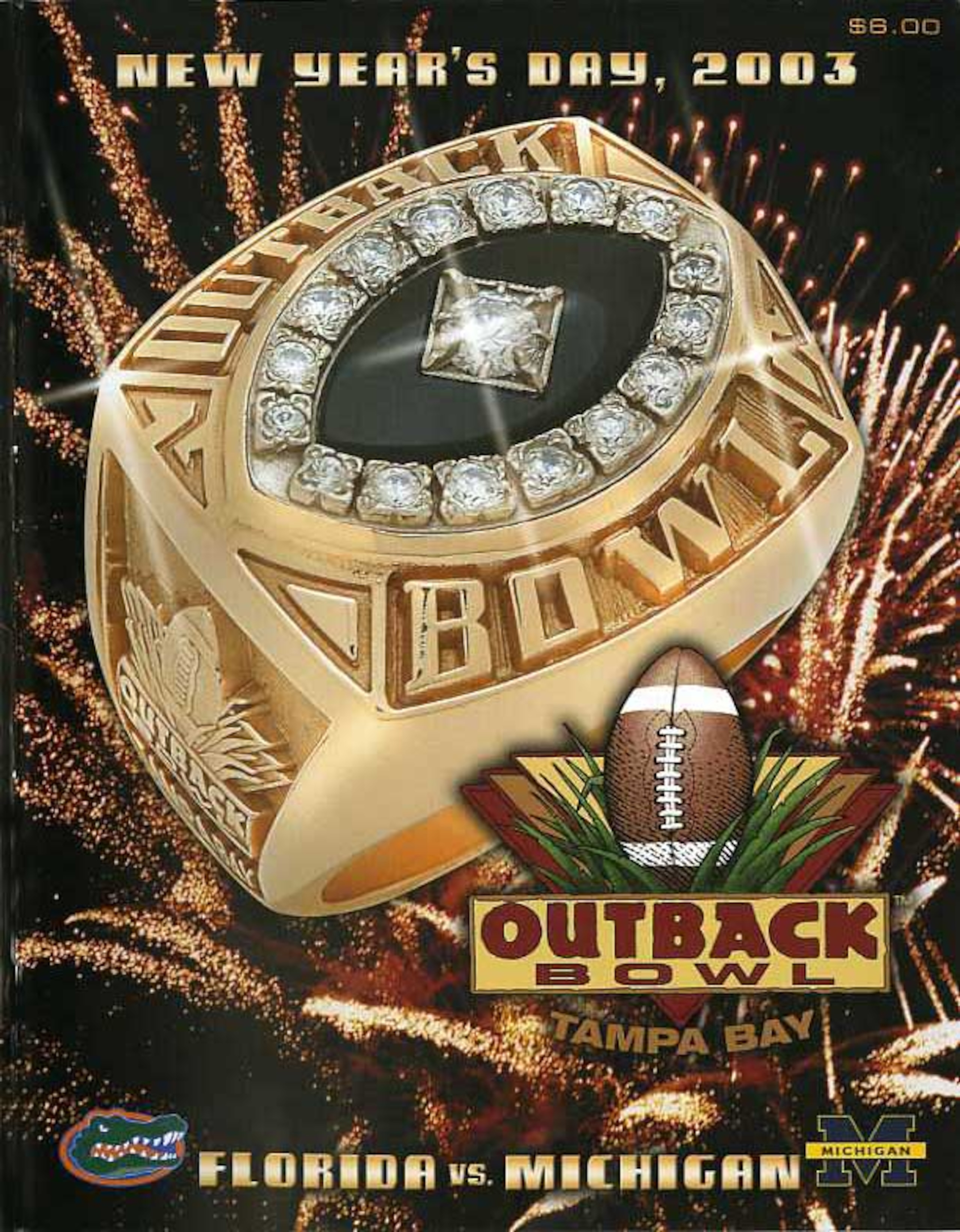
Michigan prevailed 38-30 in a game that seesawed back and forth against No. 22 Florida in the 2003 edition of the Outback Bowl.
Tailback Chris Perry earned Outback Bowl MVP honors following a modern era record-setting performance with four TDs. He compiled nearly 200 all-purpose yards. QB John Navarre completed 21-of-36 passes for a career-high 319 yards and one TD.
Victor Hobson sealed the victory for the Wolverines when he intercepted Florida's pass on their final drive. He compiled a career-best 12 tackles, and two TFL.
Michigan wins, 38-30 (6-3)
2008 Capital One Bowl: Michigan and Florida (Win)
10 of 10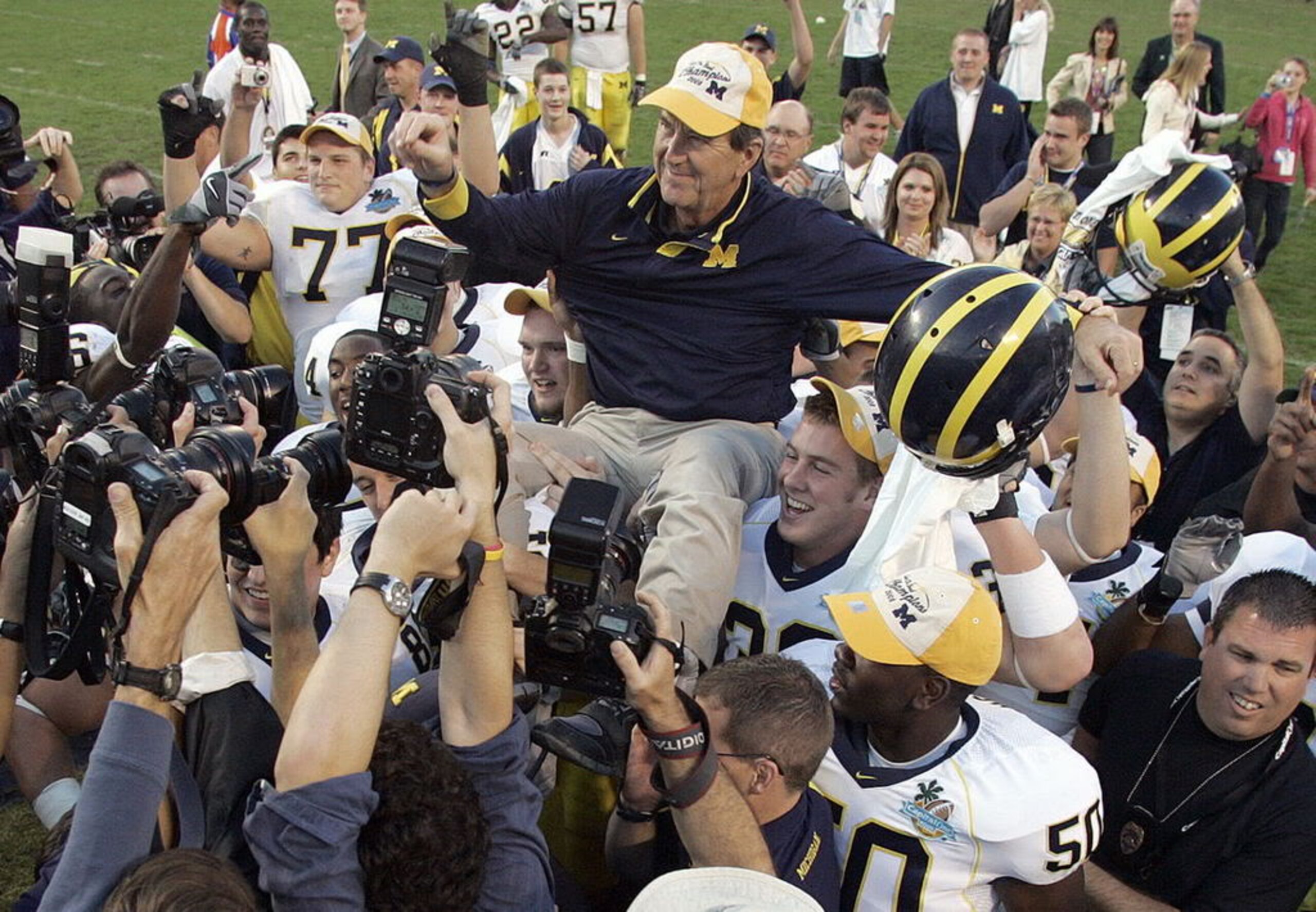
Michigan's most recent bowl appearance was head coach Lloyd Carr's final game. The seniors and Carr were sent into retirement on a happy note—getting an emotional victory over No. 9 Florida.
The Wolverines (9-4) posted 524 yards of total offense, including 373 yards through the air to seven different receivers. The game was Carr's 162nd game and he finished with a 122-40 overall record, going 6-7 in bowl games.
Chad Henne, the senior QB and Capital One Bowl MVP, led the Wolverines as they opened the playbook and threw everything at the Gators.
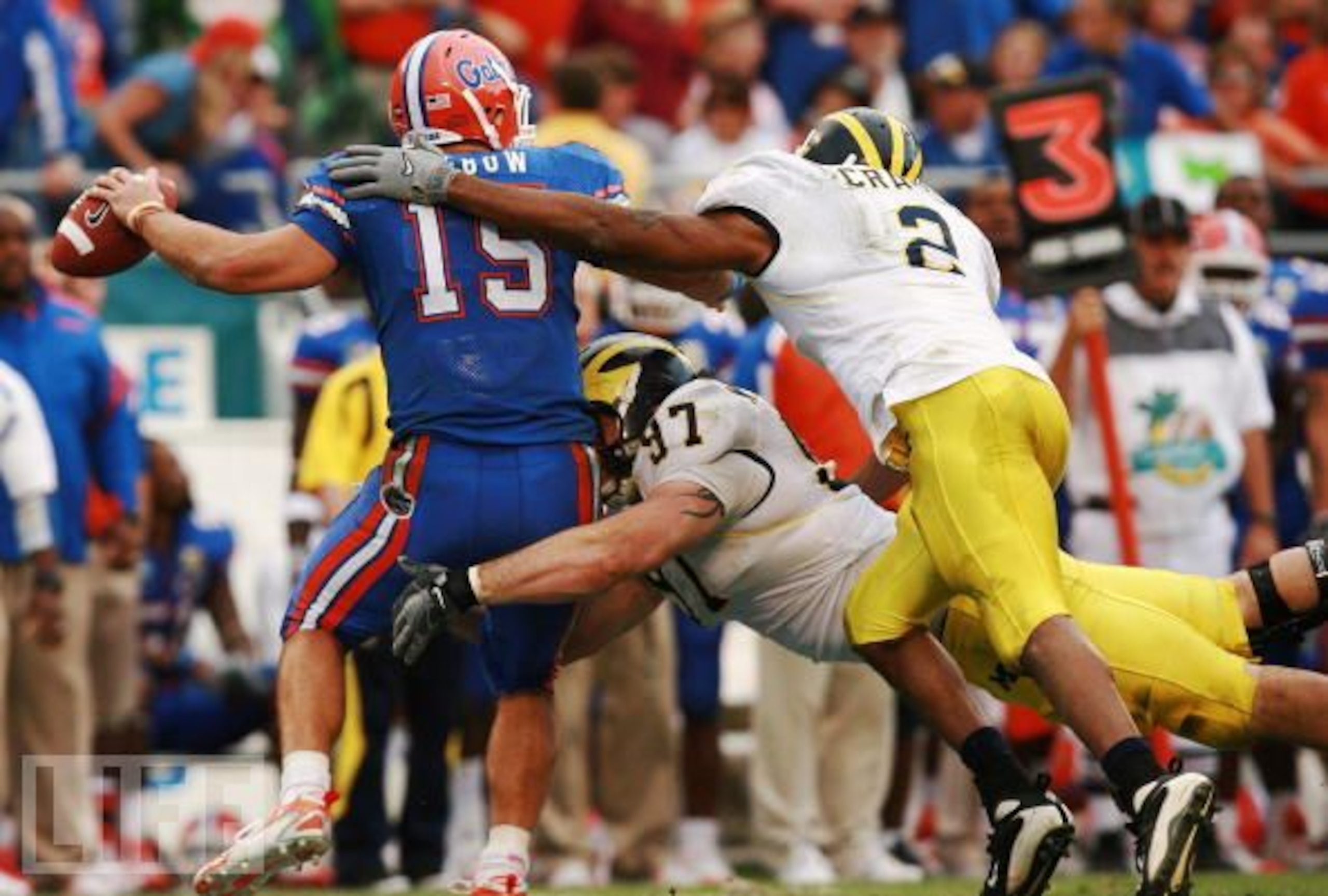
Defensively, Michigan held larger-than-life QB Tim Tebow in check for most of the game, limiting him to 17-of-33 passing for 154 yards and three TDs.
Overcoming four turnovers, Michigan prevailed and pulled off the upset.
Michigan wins, 41-35 (7-3)
_0.png?w=2560)



.jpg?w=2560 "2 NFL Officials Suspended")

.jpg?w=2560 "Mahomes' Wife Trolls Kubiak 💀")


.jpg?w=2560 "Love's Body Already 'Tired'")

