

Cam Newton FAQ: Everything You Don't Want to Know and Why You Need to Know It
There are a lot of questions about Cam Newton, but one question no one asks is if he's an amazing football player. That combination of legs and arm is reminiscent of Michael Vick, except that he's a lot bigger and stronger. His future in the NFL probably has Bills fans cheering for their opponents every week.
His NFL future and his NCAA future are in stark contrast, however. The more that comes out, the less likely it appears that even if he wins the Heisman, he will be able to hold on to it. This is, of course, with the proviso that all that's coming out is true. This begs a few questions. What is coming out? Should we believe it? What happens if it is true?
Following is a slideshow that is a one stop guide to everything you need to know about the Cam Newton saga, and why it's important.
What Supposedly Happened?
1 of 7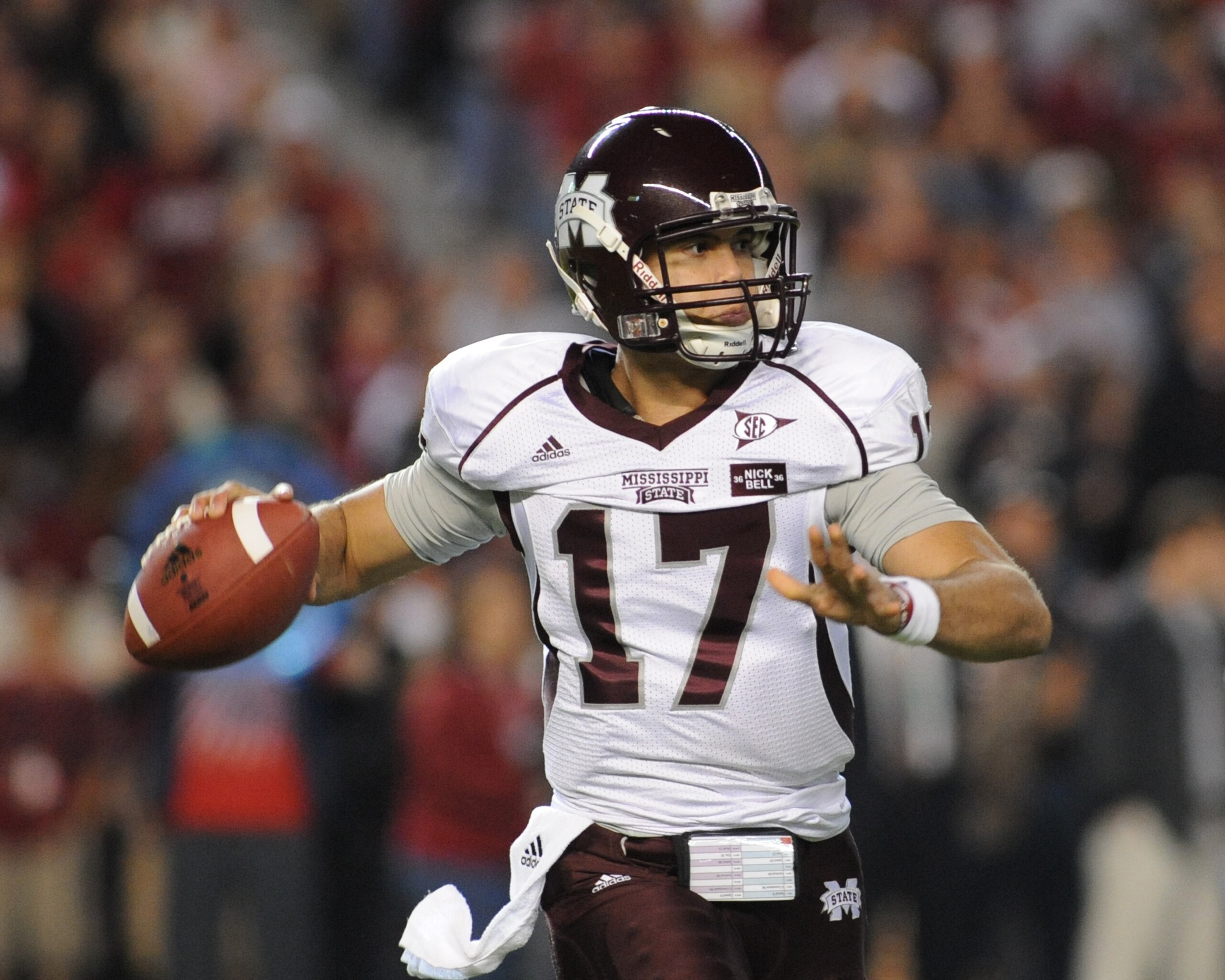
Basically, what supposedly happened is that Cam's dad, Cecil Newton, asked former Mississippi State players for money in exchange for Cam playing there. In essence, if the charges are true, if the Bulldogs had been willing to pony up 180K, it would be Cam in that picture.
It of course gets a little more complicated than that, but that's the essence of it. Here's a list with a little more detail. Bear in mind that as of right now, it's all allegations. Calling them allegations doesn't mean they are true, nor does it mean they are untrue. It just means that people are stating this is what happened.
It started when John Bond, a former MSU quarterback, claimed that a former teammate had contacted him stating that he represented Cecil Newton Sr., and that it "would take some cash" to get Cam. At least initially Cecil Newton denied the charges.
Kenny Rogers stated that when Cecil met with two assistant coaches at a hotel in Starksville on Nov. 27, Cecil Newton brought up how much it would cost to bring Newton to MSU, and the coach responded, "No, no, I don't want to hear it."
Mississippi State claims they reported an "issue involving the recruitment of Cam Newton" to the SEC. The SEC claims that when they had follow up questions, MSU was slow to respond.
Two other MSU recruiters said that they had been separately told by Cecil that Cam's services would only come as part of a "pay for play" plan.
After Newton committed to Auburn, another source said an emotional Cam Newton phoned another recruiter to express regret that he wouldn't be going to Mississippi State, stating that his father, Cecil, had chosen Auburn for him because "the money was too much."
According to reports, Rogers was referred to Bill Bell, another former MSU player, as well as a booster. Bell claims he received text messages outlining a payment plan to Rogers. Per Rogers' lawyer, Doug Zeit, it was a "stupid decision" to send the texts.
Cam Newton's lawyer, who also represents Cecil Newton states, "No money has been offered to Cam Newton." Lawson told WSB-TV, "Cam Newton [hasn't] asked for any money." It is interesting that he makes no such claim regarding Cecil.
Per a Georgia TV station, a source close to the situation stated that Cecil Newton had admitted to conversations with a Mississippi State player about money in exchange for play.
What Happened to Innocent Until Proven Guilty?
2 of 7
There are those who claim, what happened to innocent until proven guilty? It is a somewhat valid point. I'd like to add a couple of caveats to that, though.
First, this is a legal right, reserved for a court room. It is not a "media" right where the media is restricted from reporting on an allegation until there is proof beyond a reasonable doubt. If that were the case, there wouldn't have been all that OJ Simpson coverage.
Secondly, a person is not actually innocent until proven guilty, he is presumed innocent until proven guilty. This is not a mere parsing of words, it's a distinction in how the actual story is handled. As more evidence comes to light it is in part because of the story that has gone before. As it unfolds, more pieces start falling place.
As far as the evidence itself, a large part off the evidence is what people are saying happened. There are those who claim that "hearsay" evidence is not admissible and is therefore not valid. This is a misunderstanding of what hearsay is. It is not hearsay to say, "Cecil Newton asked me for money." It is hearsay to say, "Bob told me Cecil Newton asked for the money." In other words, it's not hearsay if the person being quoted was actually present for the conversation.
Still, there is a matter of whom do you believe. On the one hand, you have two former MSU players, two MSU coaches, at least three MSU recruiters and one other "source" that either heard Cecil directly ask for money or admit to having asked for money. On the other hand there, there are a couple of statements by Cecil or his lawyer.
In other words, it's not a case of "He said vs. he said."
It's more of a case of "He said, or he said, he said, he said, he said, he said, he said, he said, he said and he said." And then, oh yeah those text messages said too.
What Does This Have to do with Auburn or Cam?
3 of 7
If you're reading carefully, you've noticed that none of the allegations have anything to do with Auburn University or Cam Newton. So you might be wondering, why do they even matter? Why should Cam Newton and Auburn be punished for actions they may not have even had anything to do with?
Well, there are two questions regarding this. Is it true that Cam Newton and Auburn are really innocent? The second is whether, even if they are completely innocent, they should be punished for it.
There is some reason to believe that Auburn is paying Cecil and that Cam is aware of that. One source has claimed that an MSU recruiter received a phone call from "an emotional Cam Newton" who expressed "regret that he wouldn't be going to Mississippi State, stating that his father, Cecil, had chosen Auburn for him because "the money was too much."
While assuredly this doesn't constitute evidence that is provable beyond a reasonable doubt in a court of law, it does establish a reason to think twice about whether Auburn and/or Cam is completely innocent.
Furthermore, the notion that Cecil would suddenly give up on the idea of getting money in return for Cam's services, in spite of apparent offers elsewhere, is a bit far-fetched.
Additionally, there is the fact that Cecil's church, which was previously condemned and on the verge of being demolished because of building violations, had a sudden influx of money for the much needed repairs within days of Cam's signing. Factor in that Auburn has a history of pay for play, and it's not impossible to believe there's something here.
There may not yet be any evidence of Auburn or Cam's involvement, but that doesn't mean it's not there. The next slide addresses if they aren't in any way involved.



What Rules Were Allegedly Broken?
4 of 7
Previous guilt doesn't mean present guilt though, and there's always the possibility that both Auburn and Cam are completely innocent of anything. Plus, we live in a society where presumption of innocence is a fundamental right. While there may be plenty to suspect Auburn, there certainly isn't anything like evidence, so why fault them or Cam?
According to NCAA spokesperson Stacey Osburn, "The solicitation of cash or benefits by a prospective student-athlete or another individual on his or her behalf is not allowed under NCAA rules, In other words, the moment Cecil asked Mississippi State for money, Cam became an ineligible athlete. Now you may think, and you won't be alone in doing so, that that's completely unfair to both the University and the player. It's been a long while since the NCAA was accused of being fair in matters involving recruitment, though.
The question is not about whether the rules are fair or not though. The rules are there, and they are what they are, which is as follows:
"10.1 Unethical Conduct
Unethical conduct by a prospective or enrolled student-athlete or a current or former institutional staff member (e.g., coach, professor, tutor, teaching assistant, student manager, student trainer) may include, but is not limited to, the following:
(c) Knowing involvement in offering or providing a prospective or an enrolled student-athlete an improper inducement or extra benefit or improper financial aid;
Violations of 10.1 are enforced as follows:
10.4 Disciplinary Action
Prospective or enrolled student-athletes found in violation of the provisions of this regulation shall be ineligible for further intercollegiate competition, subject to appeal to the Committee on Student-Athlete Reinstatement for restoration of eligibility."
When you put this together with Osburn's statement, you get this: If a player or his representative seeks improper incentives, he's ineligible. Period. End of story.
The moment Cecil Newton asked for money, he made his son ineligible. It doesn't matter that Cam didn't know. It doesn't matter that Auburn didn't know. This may not be fair, but it's the rules, or at least, it's what most people agree are the rules.
There are some who have suggested that there's a distinction between the player asking for and/or receiving benefits, and his parents doing so. I'd like to point out that benefits received by Reggie Bush's parents were actual violations. The question isn't a hypothetical one, it's a historical one, and the answer is no, there is no distinction.
There is a little, tiny bit of wiggle room, which the Newton's and Auburn are clinging to though, and I'll address those next.
What Miracle Are Cam and Auburn Praying For?
5 of 7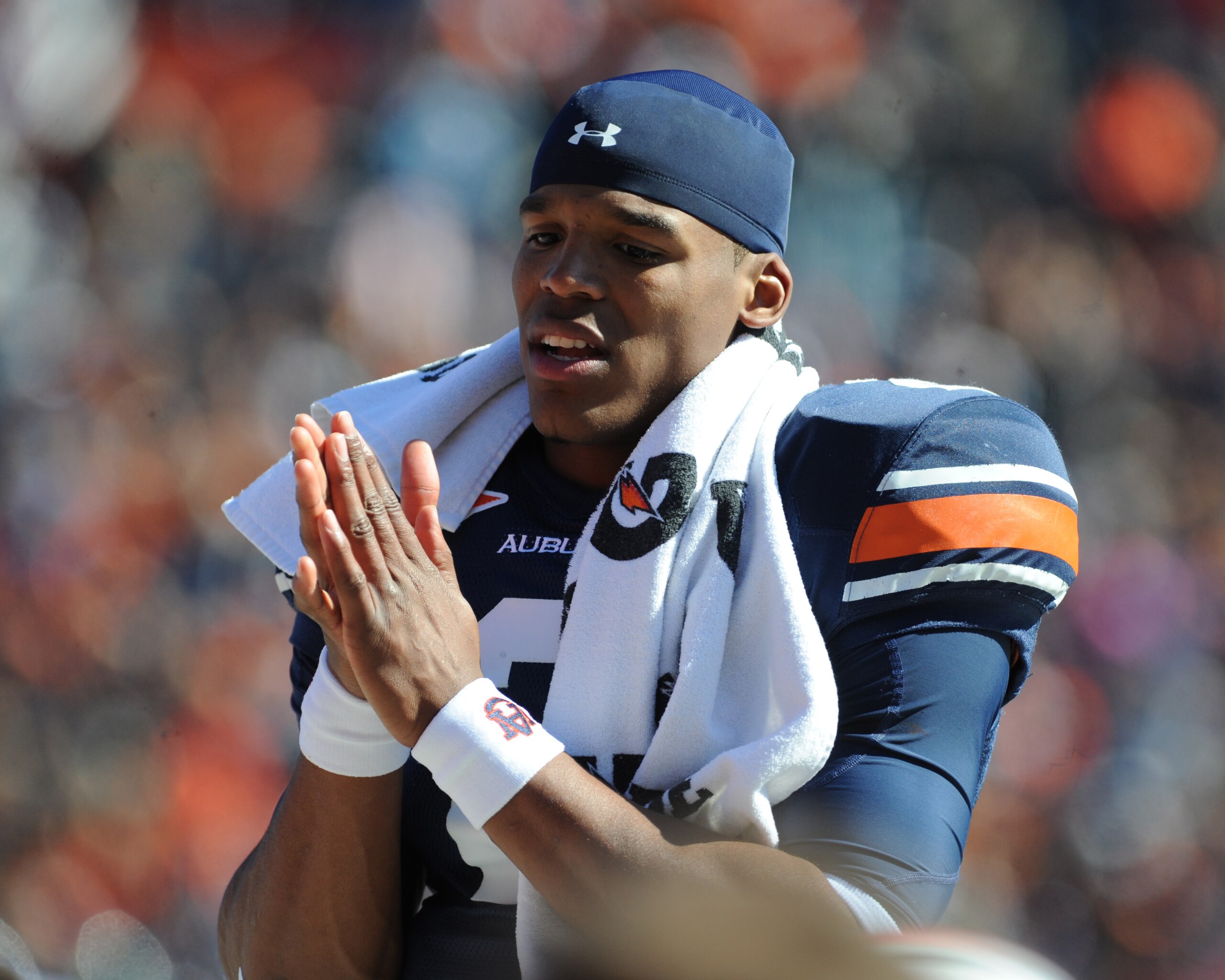
Auburn and Cam are praying for a miracle, though.
They're hoping that parsing a few words will help them to wriggle off the hook. Those words are "acting on the players' behalf."
The thing they want to argue, as seems to be what the Newtons' lawyer is already alluding to is that Cecil was working on his own behalf, not his son's. As such, Cam did not break any NCAA rules and is eligible. At least that's what the Newtons are hoping for.
Will the NCAA buy it?
It's highly unlikely.
The reason is that there are far reaching ramifications of such a decision. It would essentially give parents permission to shop around their children to the highest paying university as long as they didn't tell their kids they were doing it.
The NCAA has been, if anything, overly aggressive in terms of closing any potential loopholes in amateur stats. It's hard to believe that they are going to provide for such a carte blanche blatant abuse of it.
Why Would Auburn Still Be Letting Cam Newton Play?
6 of 7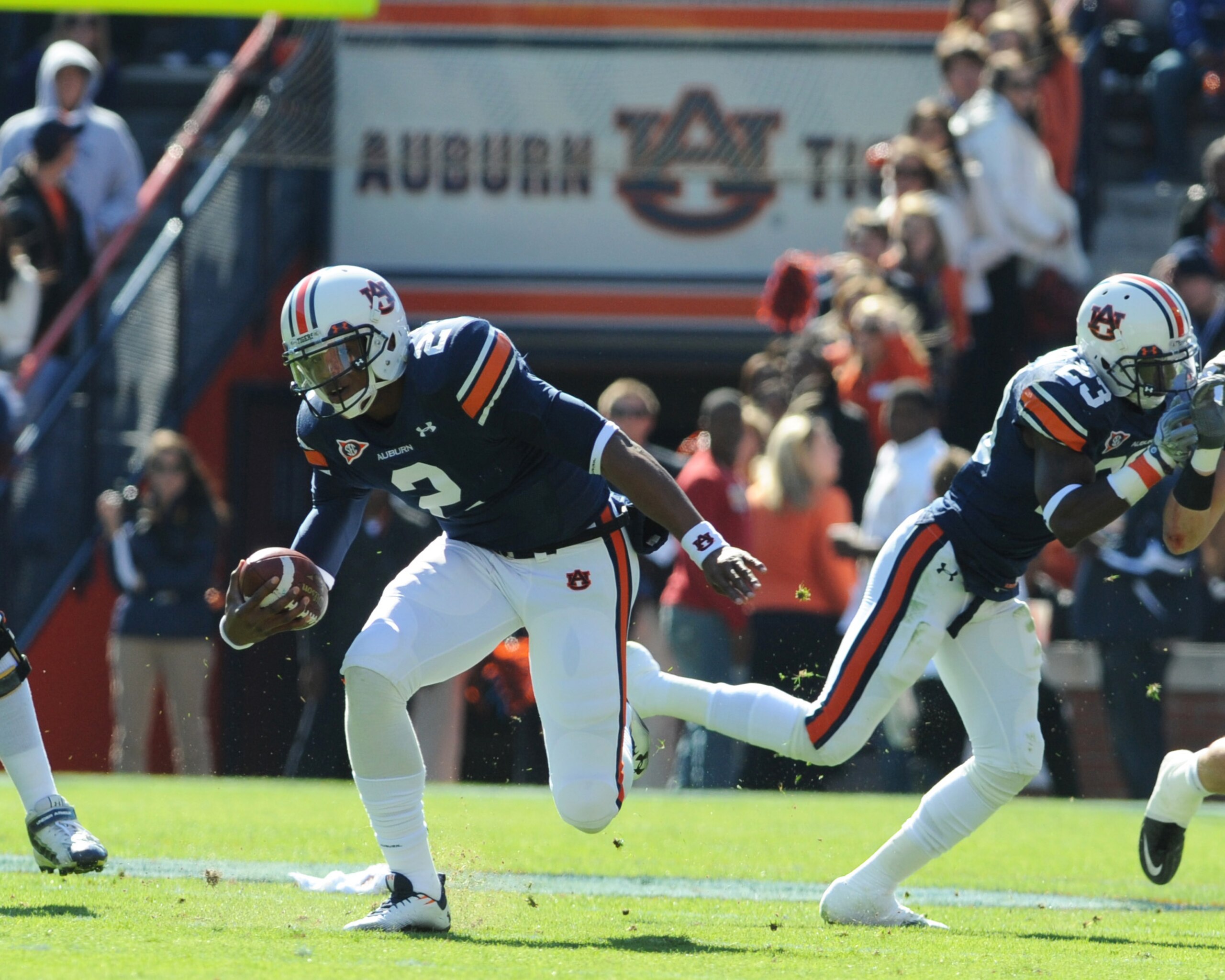
Some would ask, "If Auburn can read the writing on the wall, why would they still be letting Cam Newton play?" It's a reasonable question. The answer is, have you ever heard the expression "In for a penny, in for a dollar?"
If Cam is ineligible and because of it, Auburn is forced to forfeit it's previous games, Auburn's season is essentially over. They have nothing to lose and a Heisman and a National Championship to gain by continuing to play him.
There are some who speculate that the NCAA could come down with a ruling that Newton is ineligible but not force Auburn to forfeit their previous games. Furthermore, then Auburn could apply for immediate reinstatement and be granted it. It's a bit far fetched, but it's not absolutely impossible.
Since Auburn has everything to lose and absolutely nothing to gain by sitting Newton, the real question should be "If he's ineligible, why wouldn't they keep playing him?" If they're going to do the time, they might as well keep committing the crime.
Of course, there's also the possibility that Auburn did pay him, and that is the reason they are playing him too. It's almost impossible to believe that the NCAA isn't even looking at that as a possibility. If Auburn wins, they still get the championship, and they still get the money that comes with it.
They may be worrying about tomorrow, tomorrow. In short nothing should be read into Auburn continuing to play Cam. It's in their best interest to play him either way.
How Is This Even Remotely Fair?
7 of 7
The fairness of the issue is a matter of whom you are referring to in regards to fairness. Ironically, Auburn is a good case in point. USC was forced to vacate their National Championship win in 2004-05. That same season Auburn went undefeated and was ranked third in the nation. Most Auburn fans are still miffed that they were not provided the opportunity to play for the BCS Championship.
Imagine if the allegations of Reggie Bush had been investigated in a more timely manner. There would not be a vacated national championship. Instead, there would have been an Auburn game against Oklahoma. The winner of that game would be the National Champions.
Presently, there are three teams other than Auburn who are undefeated and very much in the hunt for the National Championship. There is a distinct possibility, if not probability, that there will be another "Auburn" victim here if Auburn plays for the national championship.
If Newton is ineligible, all of Auburn's wins with him playing are forfeited, in which case they are not eligible for the SEC Championship, much less the National Championship.
Is it fair to Boise State or TCU to not allow them the chance to play for the national championship when they played by the rules?
Admittedly, it's a difficult situation with conflicting answers. In short, it almost seems that someone is going to be treated unfairly. The NCAA should not act hastily, but in fairness they should act quickly.
Rushing the investigation could cost Auburn the National Championship. Prolonging the investigation could cost someone other than Auburn the National Championship.




.jpg?w=2560 "Jonathan Taylor Landing Spots 📍")

.jpg?w=2560 "Why Josh Simmons Was Told to Leave Meeting by Mahomes, Reid Revealed in New Chiefs Rumors")
