
College Football Rankings: Breaking Down an Auburn-TCU National Championship
As the end of the season approaches and the BCS Championship Game picture gets a little clearer, everyone begins to look at the potential matchups for the big game.
The current top four teams in the BCS (Oregon, Auburn, TCU, Boise State) give us six possible matchups (Auburn-Oregon, Auburn-TCU, Auburn-Boise State, Oregon-TCU, Oregon-Boise State, TCU-Boise State).
All of these matchups are being broken down this week on B/R. Here we present the breakdown of a possible matchup between the Auburn Tigers and the Texas Christian Horned Frogs.
Quarterbacks
1 of 10
He's 6'6", 205 pounds, already has over 1,500 yards passing and 15 touchdowns, has a QB rating of 172.61 and completes two of every three passes he throws. Add in his 1,122 yards and 14 touchdowns on the ground, and it only spells one thing: N-E-W-T-O-N.
Okay, maybe it spells H-E-I-S-M-A-N, too.
If Cam Newton is not at the top of someone's Heisman list, that person has no business making a Heisman list.
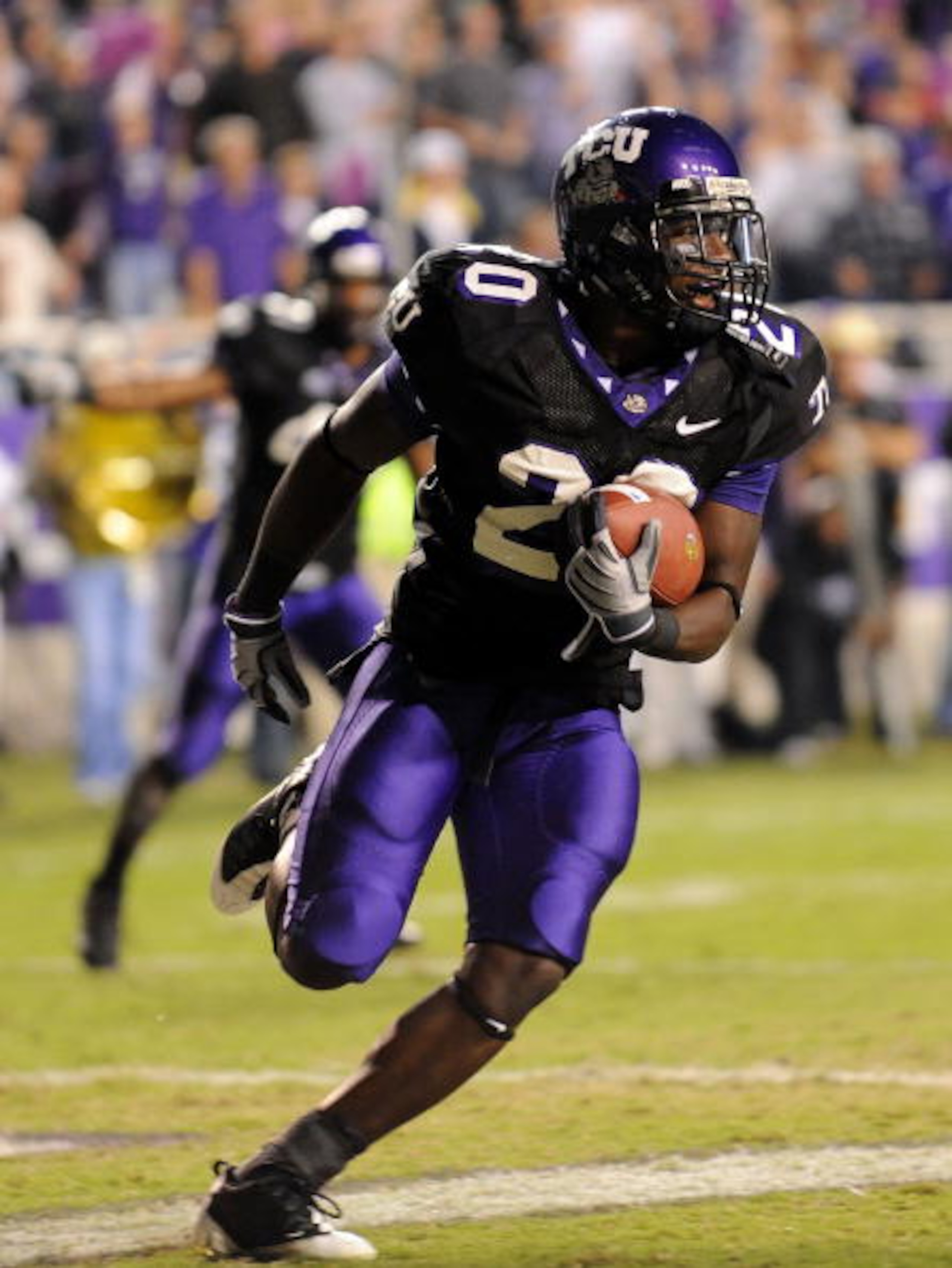
But before everyone assumes TCU is woefully inferior to AU at the quarterback position, take a brief look at Andy Dalton.
Dalton has nearly 1,900 yards passing and 16 touchdowns thus far in 2010 and boasts a 158.67 QB rating. The senior from Katy, Texas also has something Newton doesn't: four years of experience starting at quarterback.
Nothing to scoff at.
However, the real difference between these two players comes on the ground. Newton's pure playmaking ability is better than anyone in the nation. While Dalton certainly can run if the need arises, he "only" has 404 yards on the ground this year and has yet to breach the 100-yard mark (although he came close with 93 against Air Force). That's something Newton has done five times this season (including a 217-yard showing against LSU).
Newton's ability to single-handedly take over a game is unmatched in the FBS. Could that be AU's Achilles heel? Newton is without question an extraordinary player. But how good would Auburn be without him?
ADVANTAGE: AUBURN UNIVERSITY
Running Backs
2 of 10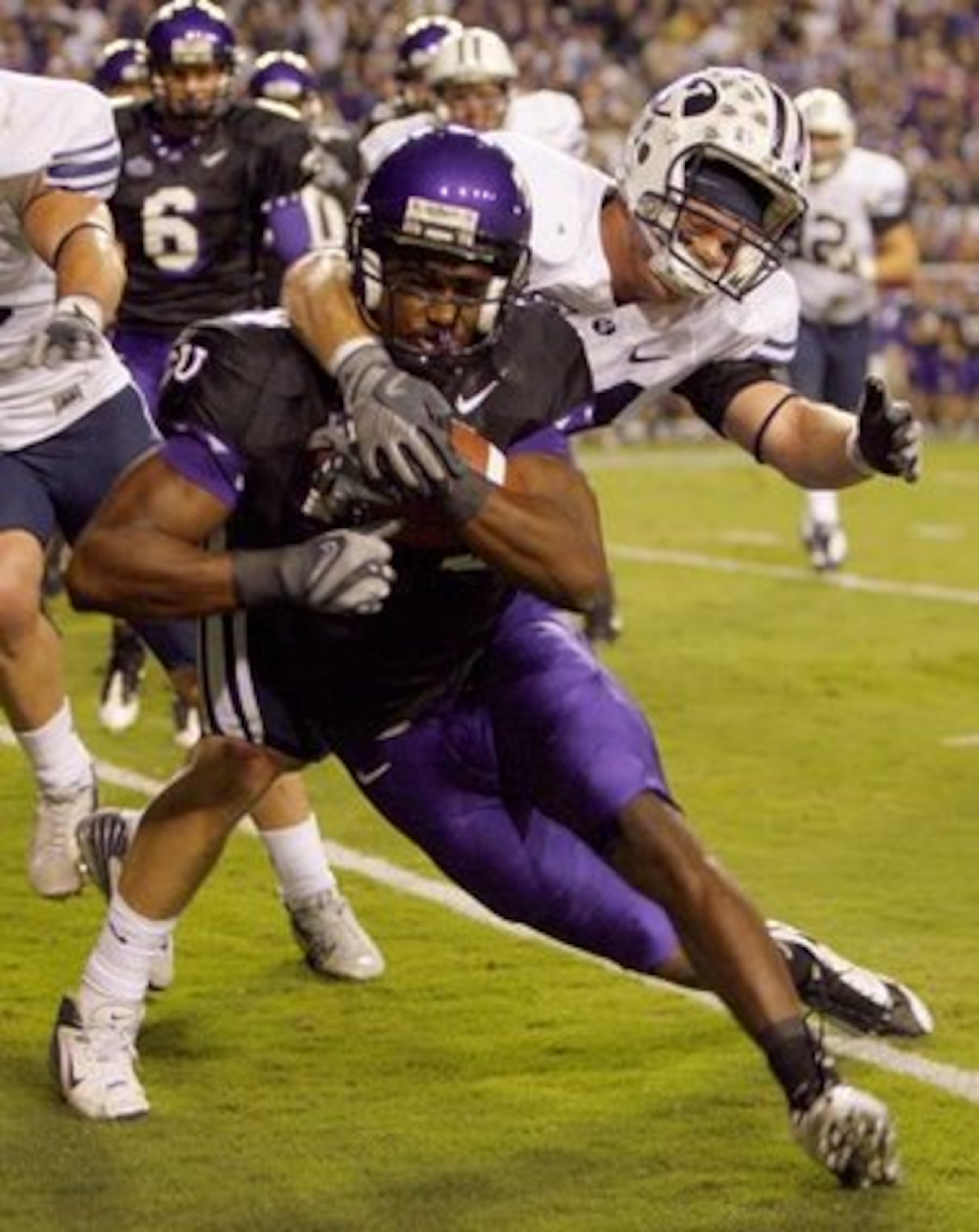
TCU has one of the top rushing offenses in the nation, ranked ninth in total rushing through nine games.
The Horned Frogs average 270 yards per game on the ground and have amassed 31 rushing touchdowns this season. Without question, TCU's running game is a strength this season.
But yet again, the name Cam Newton comes into the equation.
Auburn sports the nation's No. 4 rushing offense with 307.7 yards per game rushing and a total of 27 touchdowns. Newton accounts for 14 of those touchdowns and 124.6 yards per game on the ground. Put simply, Cam Newton is more than 40 percent of the Tigers' ground game.
Again, the point should be raised: How good is the rest of Auburn?
Still, an Auburn team led by Newton (even if he's not technically a running back) is hard to pick against, even if the opponent is pretty good in its own right.
ADVANTAGE: AUBURN UNIVERSITY
Receivers
3 of 10
One facet of the game where Auburn doesn't seem to burn up stat sheets is the passing game. Through nine games, Auburn is ranked 83rd in the FBS in passing offense with an anemic 188.6 passing yards per game.
One statistic makes this tolerable for Auburn fans, however. AU's passing offense (with the vast majority from Cam Newton) has a combined QB rating of 173.61—something to which most teams in the bottom two-thirds (in terms of passing offense) aren't even close.
TCU fares a bit better in the passing game...but not by much.
The nation's 60th-ranked passing game averages only 214.8 yards per game.
Both TCU and AU rely on their running game to put them in a position to win. For TCU, throwing the ball is done when it has been set up by the running game. AU, on the other hand, seems to mix the run and pass in nicely—either way, Cam Newton has the ball in his hands.
ADVANTAGE: TOSS-UP



Offensive Line
4 of 10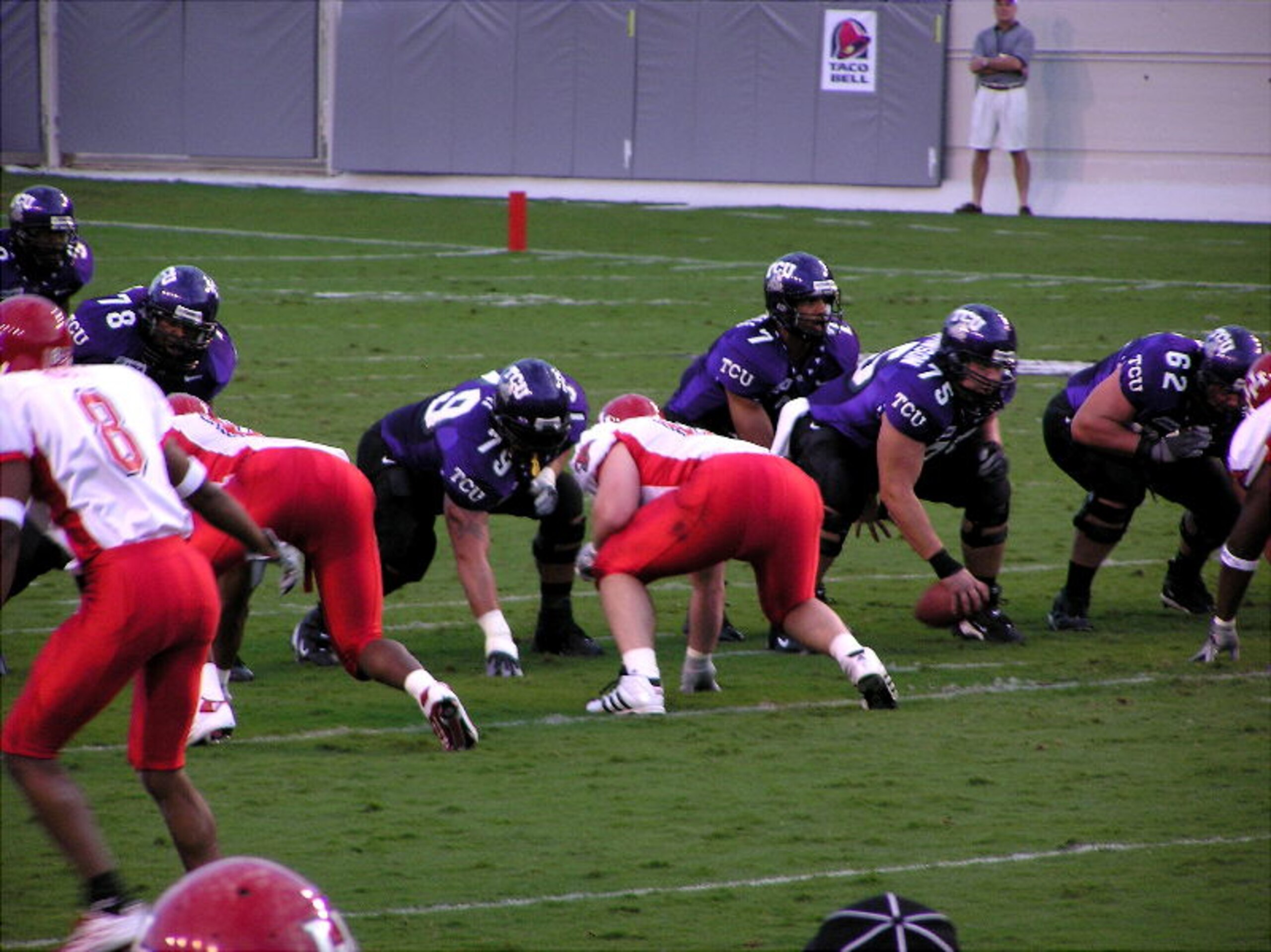
Perhaps the most important part of a successful running game is the offensive line. Not only is it a requirement for these players to be big and strong, but they must also have the smarts to make the appropriate blocks and open the correct lanes for the ball carrier.
Led by four seniors, Auburn's O-line has been giving Cam Newton time and protection when he drops back to throw and has opened huge holes when he runs. The O-line is a big reason Newton's numbers on the ground are as eye-popping as they are.
Gone are the days when the non-BCS AQ teams relied on smaller, quick, smart linemen. TCU's big boys are as big, quick and smart as they come. TCU's line averages over 310 pounds, led by 6'6", 350-pound LT Marcus Cannon. While TCU's size up front may not seem shockingly large to fans used to 315-pound-plus O-linemen, it's relatively new to the "smaller" programs like TCU.
The size of TCU's front five is a big reason they're in the top 10 in terms of rushing offense in the FBS.
ADVANTAGE: TOSS-UP
Defensive Line
5 of 10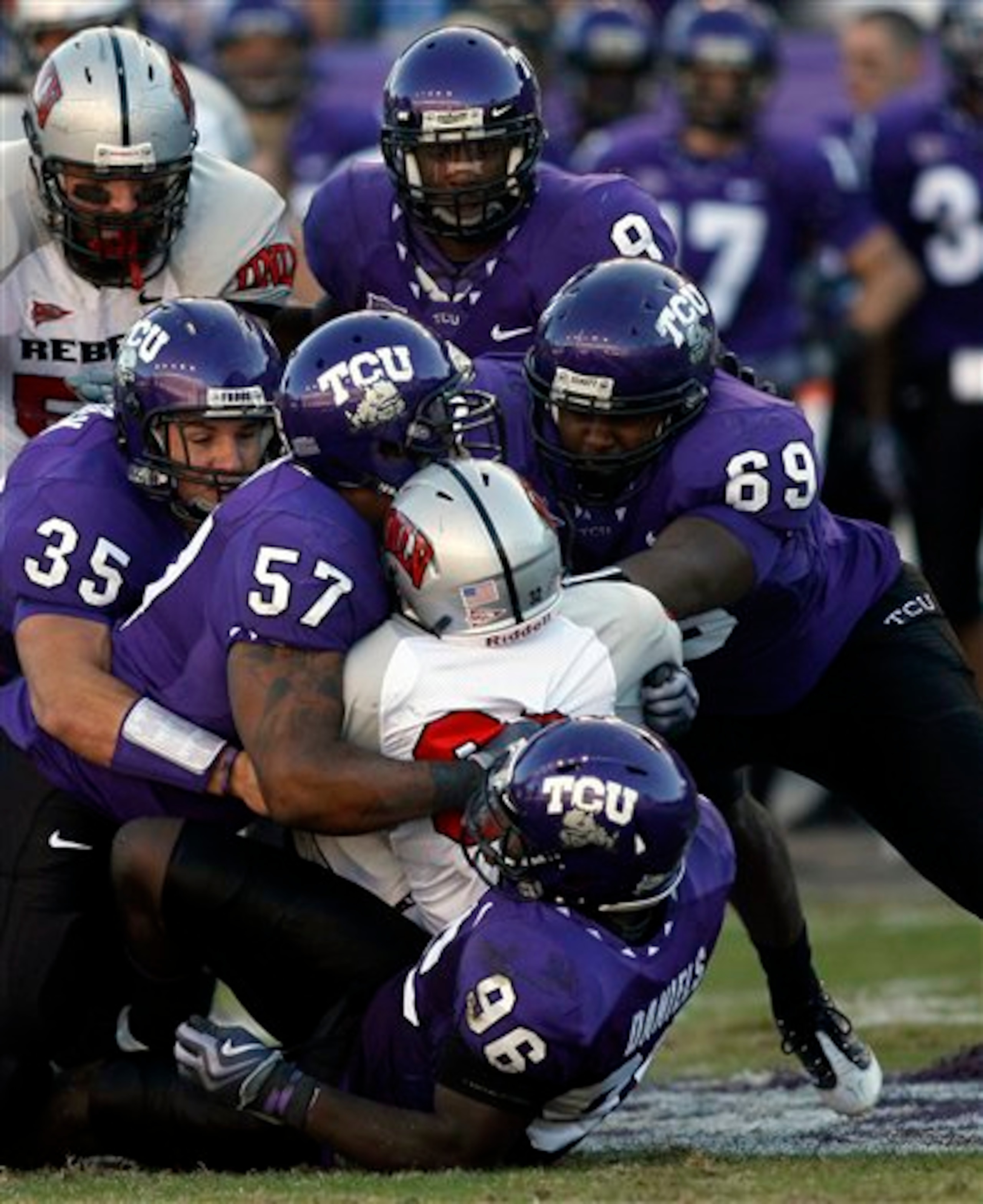
The D-line lives and dies with one stat: rushing yards against.
At the start of the year, Auburn's defense was a pretty big question mark. Many people thought that AU's D would be their downfall in 2010. We're still waiting for that downfall, at least up front.
Auburn has played well enough up front to find itself ranked 24th in the FBS in rush defense. The Tigers give up only 116.1 yards per game on the ground. While 24th in the nation looks pretty good (and it is), it should also be noted that Auburn is fifth in the SEC (behind SC, Alabama, Mississippi State and Georgia).
TCU, for its part, has been able to limit its opposition to less than 100 yards per game (98.3), which is good enough for ninth in the FBS and tops in the MWC. The Frogs have given up only three rushing touchdowns all season, compared to Auburn's 13. Plus, Auburn hasn't played the SEC's dynamic duo, Alabama's Mark Ingram and Trent Richardson.
Similarly, TCU still has Utah and its 191.5 rushing yards per game on its schedule.
Those two games (AU-Bama, TCU-Utah) will tell us a lot about the defense of these two squads (and probably a lot more), but for now, the Frogs have a slight advantage.
ADVANTAGE: TEXAS CHRISTIAN
Linebackers/Secondary
6 of 10
This one isn't even close. Texas Christian has the nation's top pass defense, and with good reason.
TCU's secondary swarms to the ball like few teams in recent memory. Even if the receiver catches the ball (which happens less often than it doesn't against the Frogs), there are typically very few yards after the catch.
Opposing QBs also have to take care when putting the ball in the air. Many times an incomplete pass is the least of the opposition's problems. TCU's defense has snagged as many interceptions as they've given up touchdowns through the air (seven).
Opposing QBs have a combined 94.58 QB rating, and a woeful 4.9 yards per attempt. This is why TCU is tops in the FBS with 119.0 passing yards surrendered per game.
Auburn sits 93 positions to the rear of TCU in 94th. That means only 26 teams in the entire FBS are worse at defending the pass.
As previously mentioned, Auburn's defense was a question mark to start the year. Up front, they play pretty well. But behind the D-line, one may possibly find Auburn's weakness. The Tigers have given up a whopping 15 touchdowns through the air while only coming away with eight picks. Opposing QBs are also averaging a QB rating of 130.28 against the Tigers. AU gives up 6.6 yards per attempt for a whopping 242.2 yards per game with 64.4 percent of passes completed.
If Auburn can improve these numbers, they may be very hard to beat. If they don't, and opposing quarterbacks aren't afraid to throw against the Tigers, they remain a very beatable team.
ADVANTAGE: TEXAS CHRISTIAN
Special Teams
7 of 10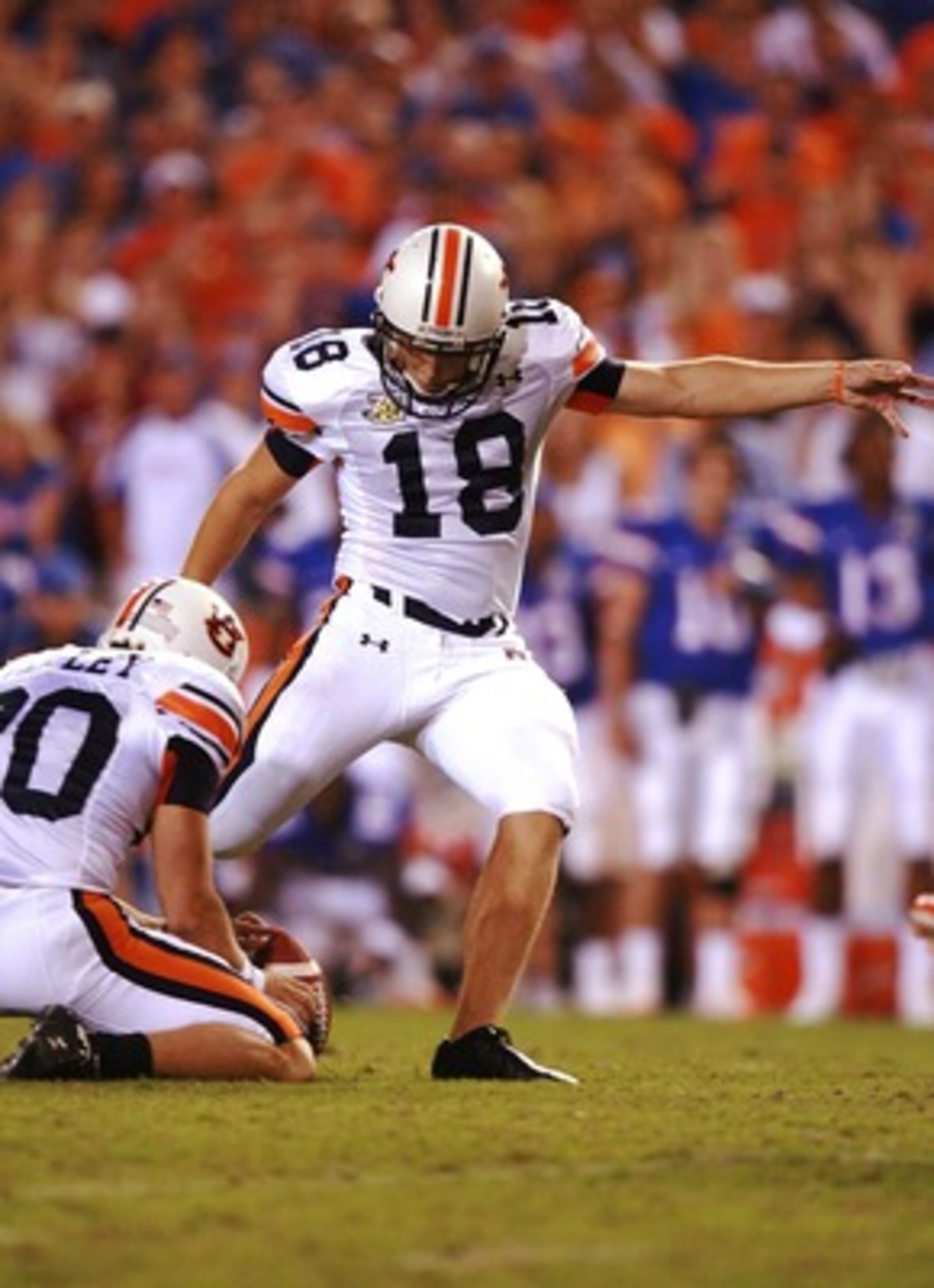
Special teams are typically very hard to predict, as they can have wild swings from one game to the next.
TCU, however, has had some good consistency on special teams. TCU rarely needs to kick field goals, but when they do in 2010, they're perfect. Only two other teams, Oklahoma State and Notre Dame, have perfect field goal records thus far. Auburn is 15-for-19 on the year.
Auburn has struggled at times this year with its punting game. The Tigers' punt game averages only 37.6 yards per punt, which ranks 110th in the FBS. Luckily, they don't have to punt very often. TCU isn't exactly punting the lights out either, averaging only 41.0 yards per punt (64th in the FBS).
What has helped both teams so far has been the return game. Both TCU and Auburn rank in the top 10 in the FBS in kickoff returns, which essentially means that the Tigers and Frogs have comparatively short fields on offense. TCU fares quite a bit better on punt returns, averaging 13.5 yards per return to Auburn's 6.25.
But because of Auburn's kick return game and its decent kicking game, it's hard to pick an admittedly good TCU special teams unit.
ADVANTAGE: AUBURN UNIVERSITY
Coaching
8 of 10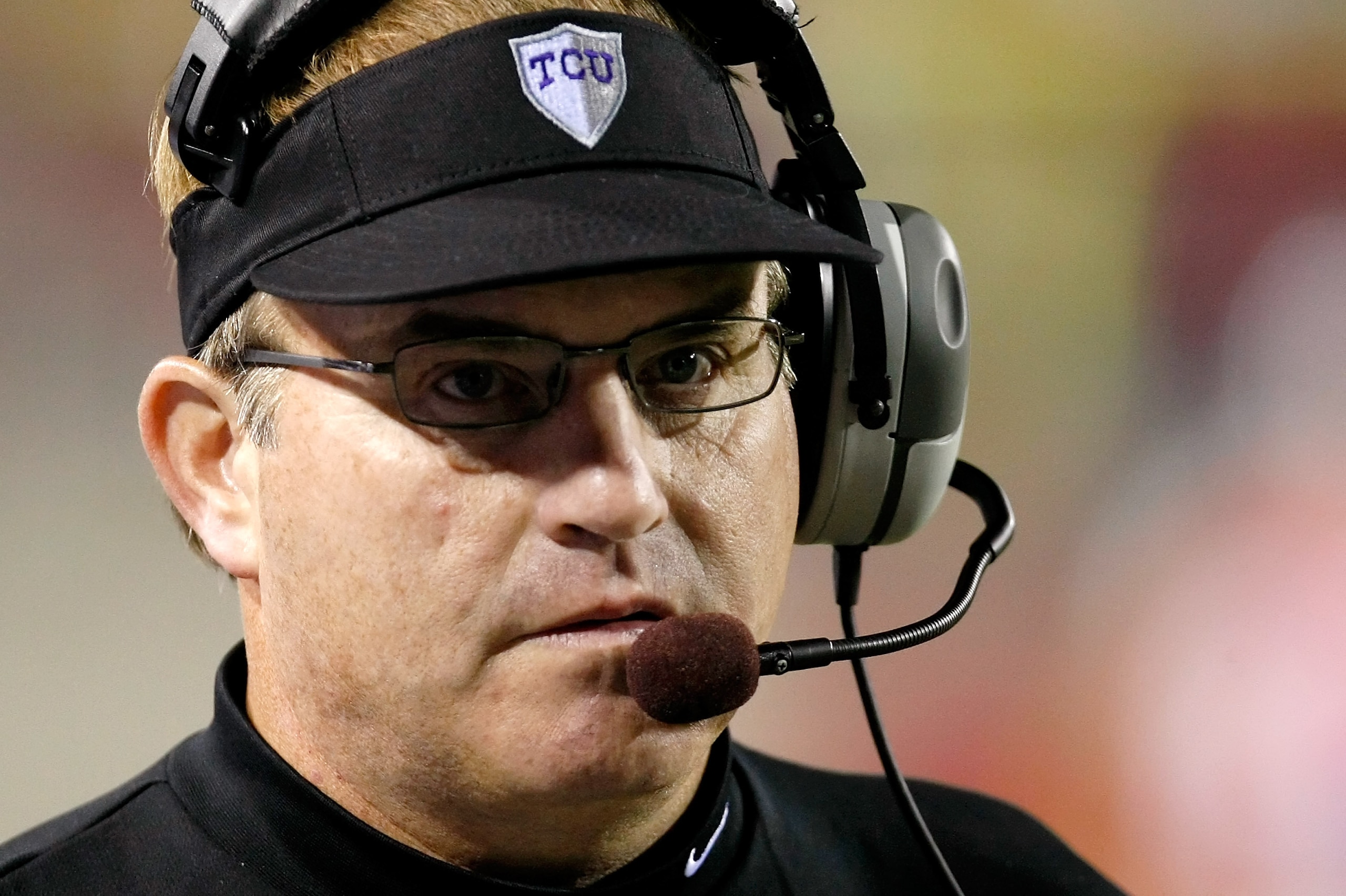
A lot of SEC-philes are going to hate this part.
What Gary Patterson has accomplished at TCU is downright impressive.
Patterson has been able to attract some of the best high school football talent to Fort Worth, and the result looks to be another undefeated regular season and BCS bid.
In fact, since his first full season as TCU head coach (2001), Patterson has only had one losing season and missed a bowl game once (2004). He's also guided TCU to three conference championships over that span (2002 C-USA, 2005 and 2009 MWC). Overall, he's 94-28.
Gene Chizik is doing great things at Auburn. His second season as the head Tiger has him on the cusp of returning a proud program to the heights of national prominence.
But Chizik is still overall a losing coach at 22-24. While it's hard to fault any coach for not winning at a school like Iowa State, one would similarly not blame Patterson if he didn't bring home BCS accolades to Fort Worth.
Chizik may yet emerge as the next great coach in the SEC, but it's too soon to tell. After all, most of his recruits are still in their redshirt year. While no one should doubt that winning in the MWC is different than winning in the SEC or Big 12, winning is still winning.
TCU also has the added recruitment pressure of pulling from the same talent pool as the Big 12 and then having to convince those athletes to come to a program that doesn't get its fair shake in the BCS. Patterson has, somehow, been able to do just that.
ADVANTAGE: TEXAS CHRISTIAN
Intangibles
9 of 10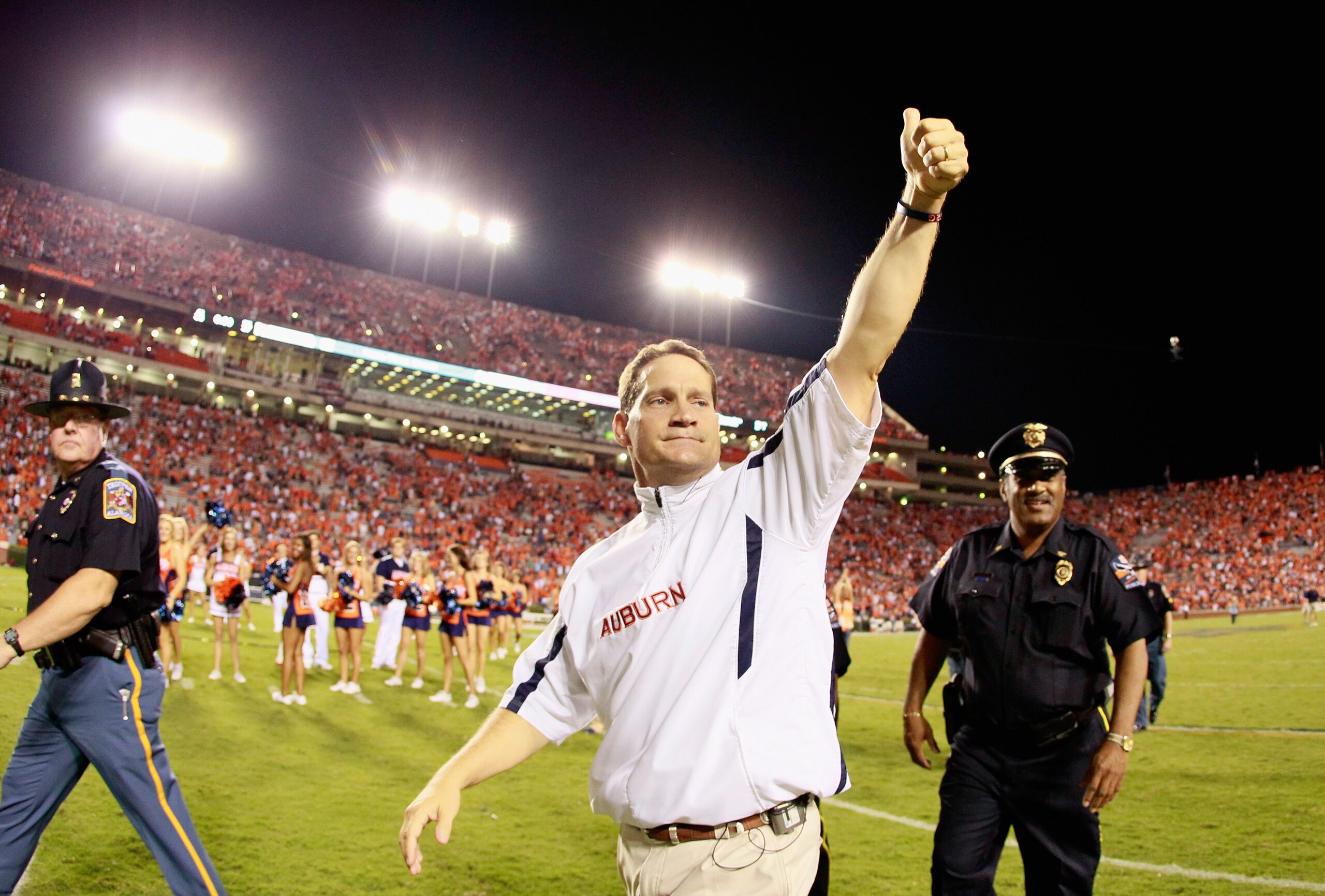
Auburn is fighting to recapture glory. TCU is fighting to prove that it, along with all the other non-BCS AQ programs, belongs at the top.
The intangibles are difficult to predict under most circumstances—which is why they're called intangibles. But Auburn playing TCU has a single overwhelming story line, like any similar AQ vs. non-AQ matchup: Do the non-AQ schools really belong?
Sooner or later, we'll find out.
ADVANTAGE: TOSS-UP
Conclusion
10 of 10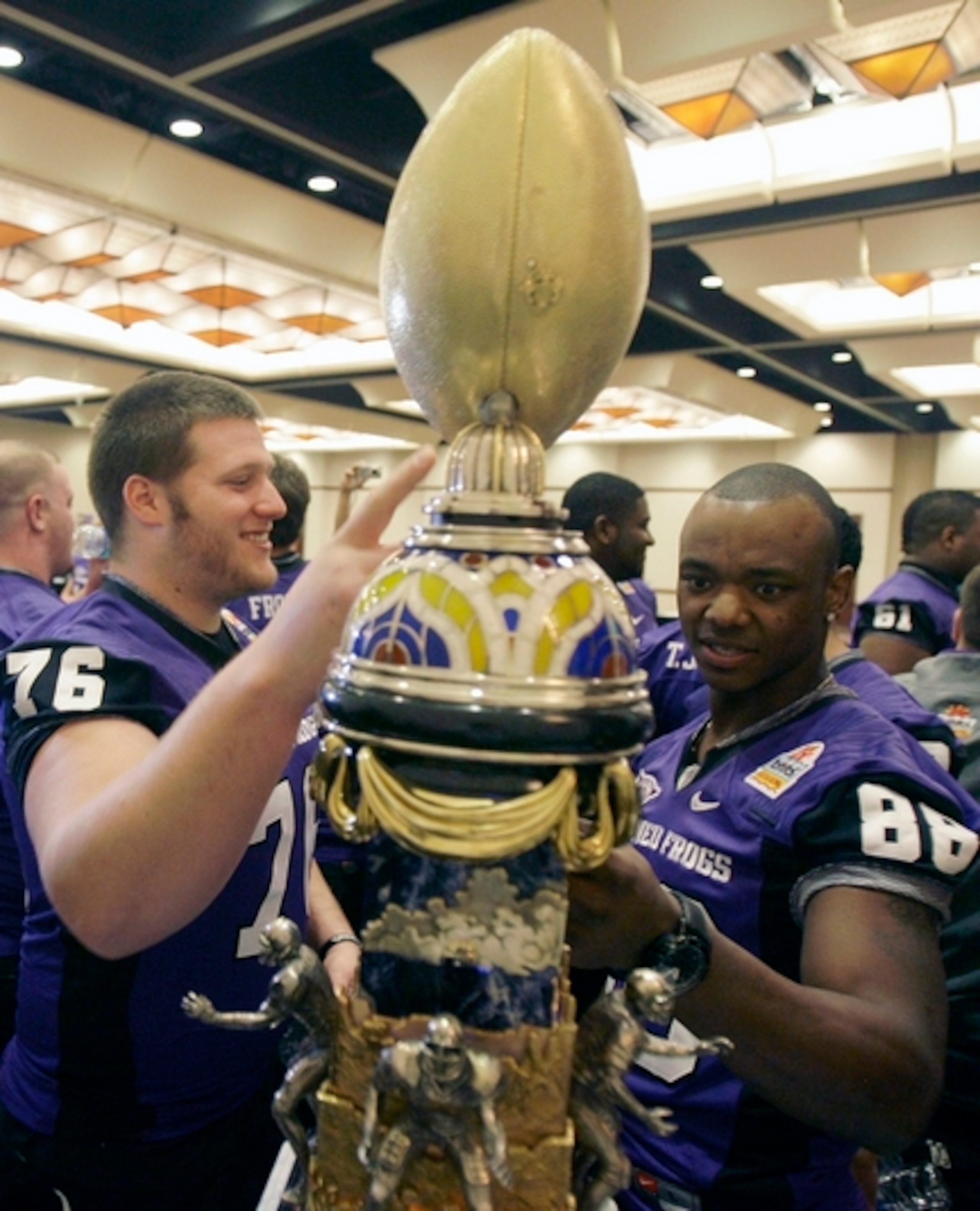
On paper, this game looks like it truly could be won by either team.
But as any coach, player, pundit or fan will tell you, games are not won and lost on paper. It's why we play the game in the first place.
Does TCU play an SEC-caliber schedule? No.
Is the SEC the gold standard of football? No, and it's about time the SEC lovers start coming around to that fact.
Can TCU beat an SEC team? Yes.
Can TCU beat a Cam Newton-led Auburn team?
THEORETICAL PREDICTION: TEXAS CHRISTIAN 28, AUBURN UNIVERSITY 31




.jpg?w=2560 "Jonathan Taylor Landing Spots 📍")

.jpg?w=2560 "Why Josh Simmons Was Told to Leave Meeting by Mahomes, Reid Revealed in New Chiefs Rumors")
