Big Ten Trench Warfare: 10 Key Battles When Iowa Plays Wisconsin
This year will mark the end of the annual meeting of border rivals Iowa and Wisconsin.
Since the beginning of the 20th century, the two teams have met 84 times, with the Hawkeyes posting a record of 42-40-2.
No other Big Ten rivalry has that level of parity.
Nevertheless, the powers-that-be have decreed that the Heartland Trophy—an admittedly contrived trophy for a real rivalry—will be sacrificed, so that Iowa can keep its...uh...traditional hated rivalry with the Purdue Boilermakers.
Oh well, the Big Ten expansion has its sacrifices and drawbacks.
Unless the Big Ten expands to nine conference games, from here on out, the Badgers and Hawkeyes will meet exactly four times every 10 years.
Regardless, it could be argued that no meeting between these two teams ever had as much riding on it. Obviously, I haven't been around that long, but it seems that every time Iowa has been up, Wisconsin has been down, and vice versa.
Certainly, both have been competitive over the last decade, but this game could be integral in deciding who will win the Big Ten title; a championship that both teams are very much in the hunt for. Moreover, this may be the best team Kirk Ferentz has fielded, and it is certainly the best team Bret Bielema has fielded, at least on paper.
In the end, it should be the low scoring, back-and-forth game that these teams specialize in. Lots of ball control, lots of punts, and first down plays that see off-tackles and stretch plays over the left side.
However, this being the Big Ten, I wouldn't have it any other way.
Iowa Vs Wisconsin's Momentum
1 of 10
Last week, Wisconsin enjoyed arguably the biggest win in the Bret Bielema era. At the very least, it was unquestionably the biggest regular season win of the Bielema era.
They beat their first top 10 foe since 2004, when they knocked off No. 5 Purdue. They beat their first top-ranked team since 1981, when they knocked off No. 1 Michigan.
Since Bret Bielema took over as the the head coach in 2006, the knock on him has been his team's tendency to fall apart in big conference games. Heading into the 2010 season, Bielema's Badgers had a record of 2-7 against ranked Big Ten teams.
Throw in their loss earlier in the season to then-No. 24 Michigan State, and Bielema was 2-8 against ranked Big Ten teams before last week's win.
Well, I don't know if Bielema has quite erased all that history, but he has certainly taken a huge step towards redemption.
Perhaps all that Bielema needed to do was get the monkey off his back. Perhaps, going forward, this will be a different coach and a different program.
Whether that is the case or not, the Badgers' momentum and morale must be at an all-time high.
On the other hand, while Iowa got a nice win last week over a dangerous Michigan team, they can't feel good about the way they let the Wolverines back in the game.
Their game against UW will be at home, which will be a huge help. Nevertheless, it will be imperative that Iowa come right out and hit Wisconsin hard. If the Badgers get on a roll, their confidence and momentum might be impossible to overcome.
Iowa Vs Wisconsin's Bye Week
2 of 10
Wisconsin has had a tough three-game stretch.
They began the Big Ten season against a resurgent Michigan State; a game they lost. Then they played Minnesota in college football's most-played rivalry. True, Minnesota is a terrible team this year, but rivalry games are unpredictable, and always, in their way, intense.
Obviously, they followed the Gopher game with last week's contest against then-No. 1-ranked Ohio State. Now, they will end this stretch against No. 13-ranked Iowa.
After the Iowa game, their toughest stretch of the year will be over. They finish the year with games at Purdue, Indiana, at Michigan, and Northwestern.
Moreover, after they play the Hawks, the Badgers get a bye week.
In effect, they can throw everything into their game against Iowa without fear of leaving themselves with an empty tank the following week.
Meanwhile, after the Badger game, No. 8- ranked MSU will be coming to town to play the Hawks. I'm not saying Iowa will be looking ahead, but the coaching staff has to be wary of spending their team's energy and resources.
After all, a college football season is a marathon, not a sprint. Moreover, unlike UW, the Hawks have exhausted all their breaks.
Jeremiah Hunter and Tyler Nielsen Vs Lance Kendricks
3 of 10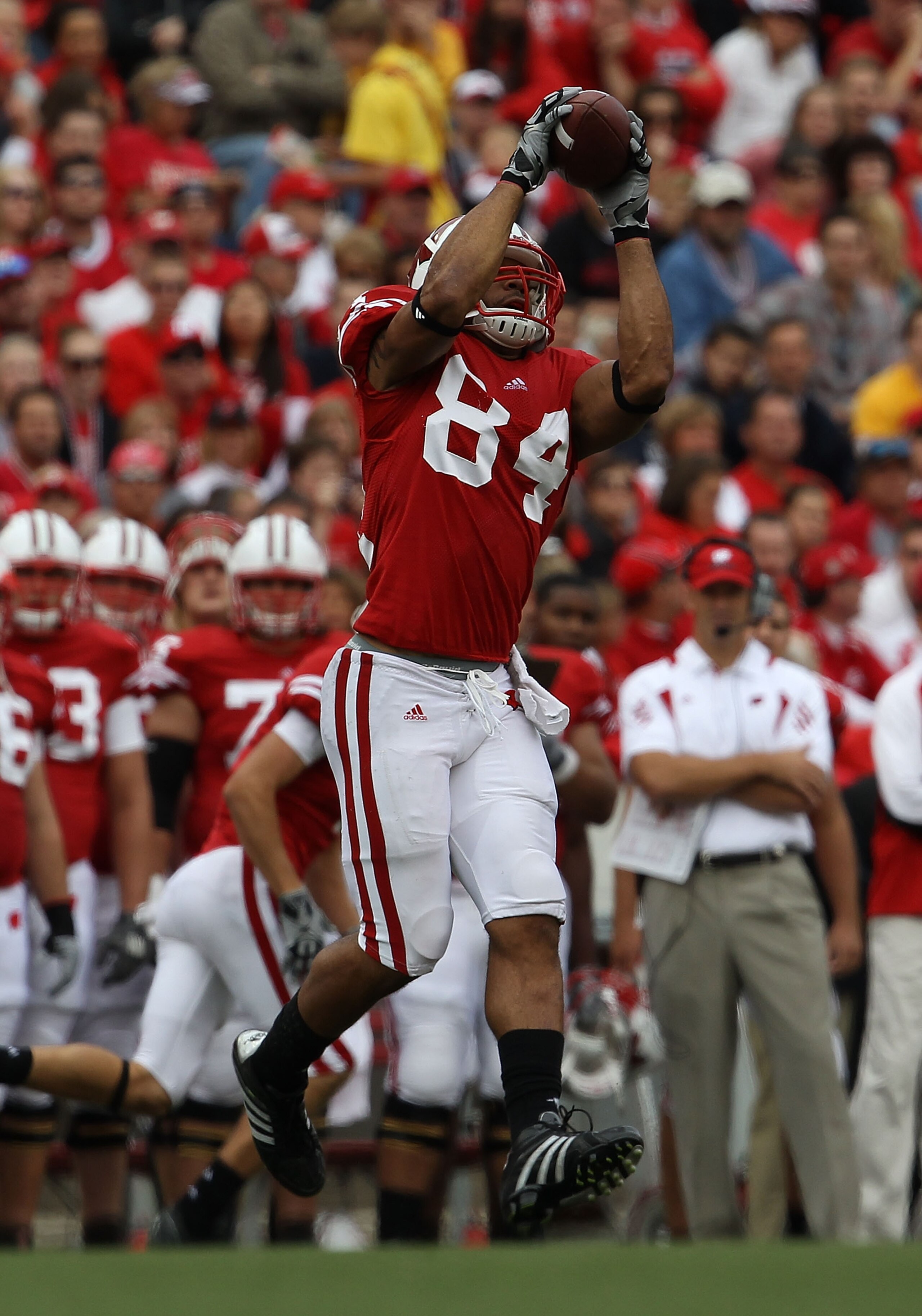
As Iowa fans are well aware, tight ends pose matchup nightmares for opposing defenses.
They can line up in a traditional tight end position. They can also go into the slot. They can line up as a fullback. They can flex out behind the line of scrimmage.
A good tight end is too big and strong for most defensive backs to cover, yet most linebackers are ill-equipped to man up against a good, fast tight end.
On top of that, they can run out of passing or running formations. In effect, with a tight end on the field, the opposing defensive coordinator doesn't know what's coming at him.
Right now, Wisconsin tight end Lance Kendricks is without peer in the Big Ten. Michigan State's Blake Linthicum is solid, as is Northwestern's Drake Dunsmore. For that matter, Iowa's Allen Reisner is putting together a very respectable season, and will likely hear his name called in next year's draft.
However, none of them compare to Kendricks.
After seven games, the 6'4" senior from Milwaukee is tied for 11th in the conference in receptions. He is also 10th in yards, and he leads the Badgers with three touchdown catches.
If all that wasn't enough, he is a tremendous blocker. Basically, think Tony Moeaki last year, only healthy.
Likely charged with the task of covering Kendricks will be linebackers Tyler Nielsen or Jeremiah Hunter, depending on what sort of formation Wisconsin comes out in.
Pay particular attention to Kendricks on the first down play action, as that is when UW most likes to use him. Of Kendricks' 25 catches, 13 have been on first down. Furthermore, he has averaged over 18 yards per catch on those first down grabs.


Iowa's Secondary Vs Wisconsin's Receivers
4 of 10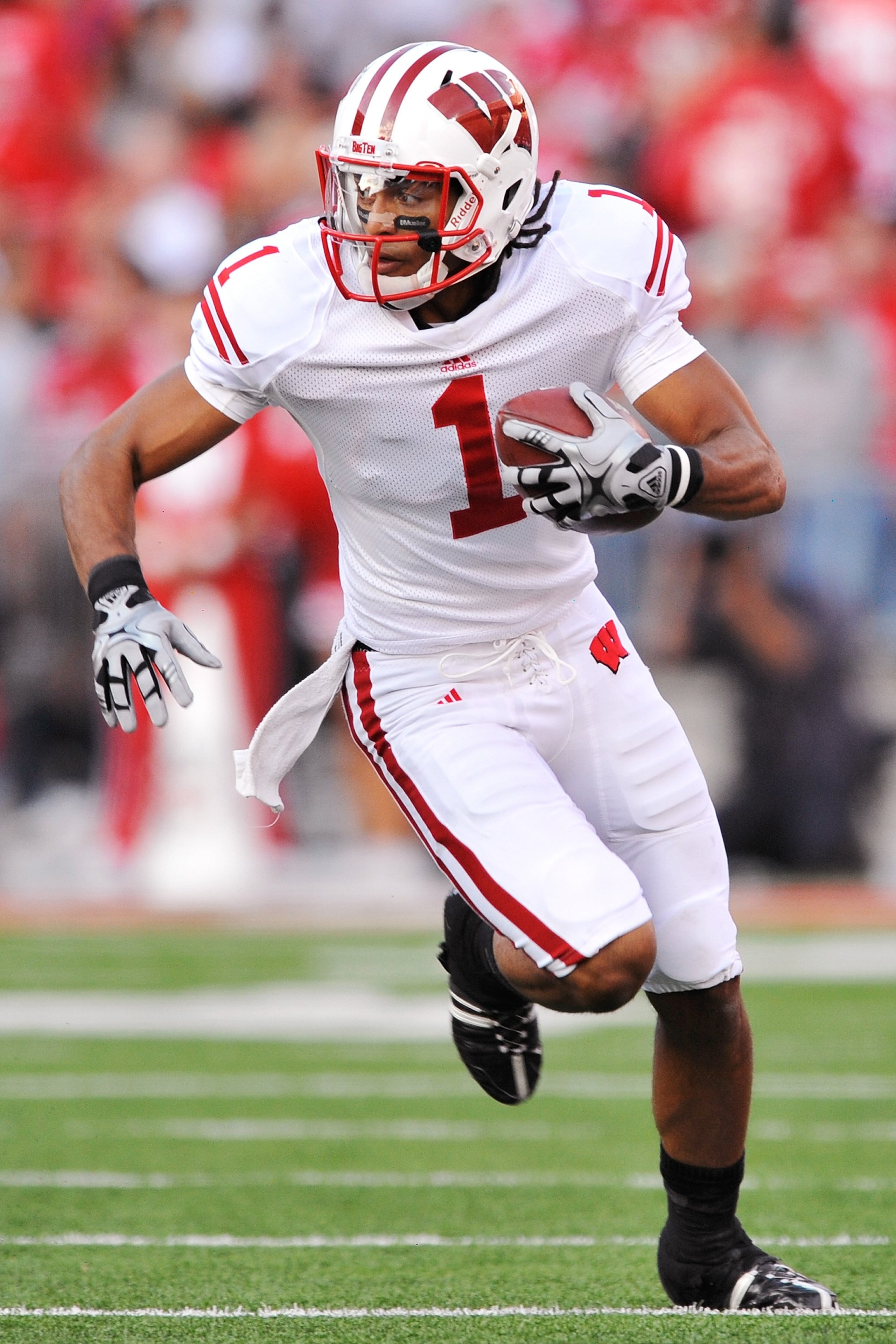
Iowa is tied for sixth in the Big Ten in letting up passes longer than 30 yards. They are tied for fourth in passes longer than 40 yards.
All things considered, those aren't terrible numbers. While I don't have past years' stats for Iowa in those categories, I'd guess they usually rank closer to the bottom of the conference. At the very least, the fact that these are respectable numbers, yet they are a cause for concern should give one a window into just how effective Iowa's bend-don't-break defense typically is.
As we are well aware, the bend-don't-break defense means they'll give a little, but they won't give up the big—i.e. 30 yards and over—plays.
Nevertheless, over the course of the season, Iowa has had multiple breakdowns in the secondary that have led to those 30+plus yard plays. This is a bit disturbing, particularly when you consider that three of Iowa's defensive backs are multi-year starters.
It remains to be seen how much of a concern this is, but one would think that Wisconsin—which has a talented group of receivers and a senior quarterback—will look to take advantage of it.
Of course, to do so would be against UW's tendencies, as the Badgers rank next-to-last in offensive pass plays over 30 yards and last in pass plays over 40 yards.
Ricky Stanzi Vs Wisconsin's Secondary
5 of 10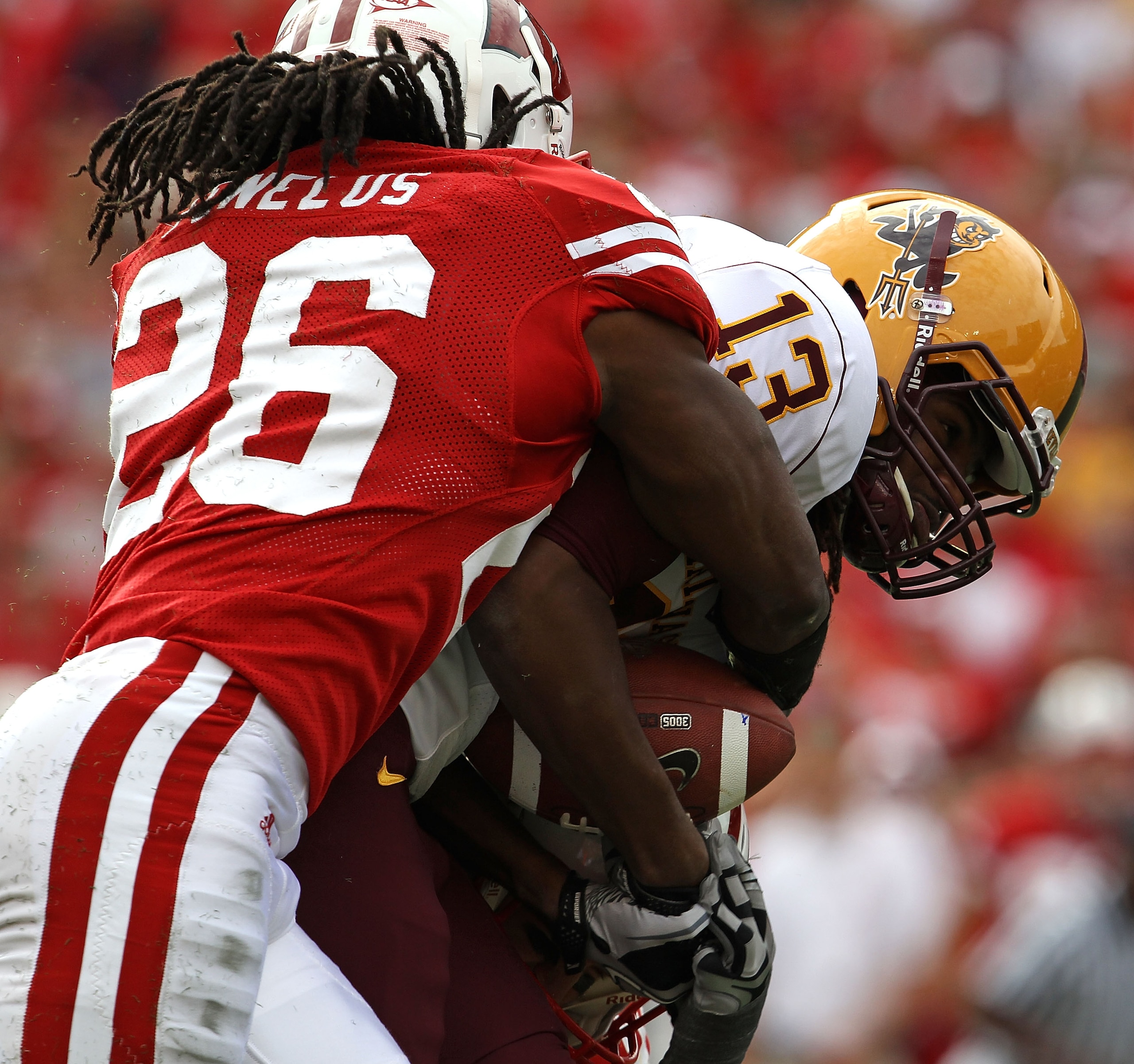
Meanwhile, Wisconsin has got secondary issues of its own.
UW is fourth in the conference in 20+plus yard passing plays allowed, and third in passing plays over 30. They are also eighth in interceptions and seventh in opponents' passer efficiency rating.
Meanwhile, Iowa quarterback Ricky Stanzi is third in the country in passer efficiency rating, as well as third in the country in yards-per-attempt. Moreover, Iowa's passing offense ranks third in the conference in yards-per-game, despite the fact that unlike the first and second teams—Indiana and Northwestern—Iowa is not a pass-first team.
With all of that in mind, it is not surprising that Iowa is also fourth in the conference in 30+plus yard pass plays, and third in both 40+plus and 50+yard passes.
In short, if the opportunity is there, and Kirk Ferentz allows it, it could be bombs away for the Hawkeyes.
Conditioning And Second Half Adjustments Vs Bret Bielema
6 of 10
Since 2001—the year that it could fairly be said that Kirk Ferentz had his program in place—Iowa is 6-3 against Wisconsin. One of those losses was in 2001, and the other two were in 2006 and 2007. Those 06 and 07 teams were arguably Ferentz's worst teams outside of the team from his first year at the helm, 1999.
Nevertheless, the most glaring stat from the six Iowa wins comes from the second half. In the wins, the cumulative second half score is 94-13.
Furthermore, during those wins, Iowa has outgained the Badgers in the second half by an average of 104 yards.
This was no more apparent than last year when Wisconsin went into the half up 10-3. They got the ball to start the second half, yet only managed to eek out 59 yards on six drives. Meanwhile, Iowa also had six drives and they scored 17 points and put up 222 yards.
Even in the losses in 2006 and 2001, Iowa managed to maintain this trend. In 06, Iowa tied UW 7-7 in the second half, and outgained them, 166-80. In 2001, the second half score was 14-7, with Iowa holding a marginal advantage in yards gained.
Over a sustained period of time and with a full body of data, one has to draw some conclusions from those numbers. Specifically, that Iowa has consistently beaten Wisconsin as regards half-time adjustments and conditioning.
Needless to say, these are rather substantial factors for two Big Ten teams that depend on winning the battle in the trenches.
The Unstoppable Force Vs The Immovable Object
7 of 10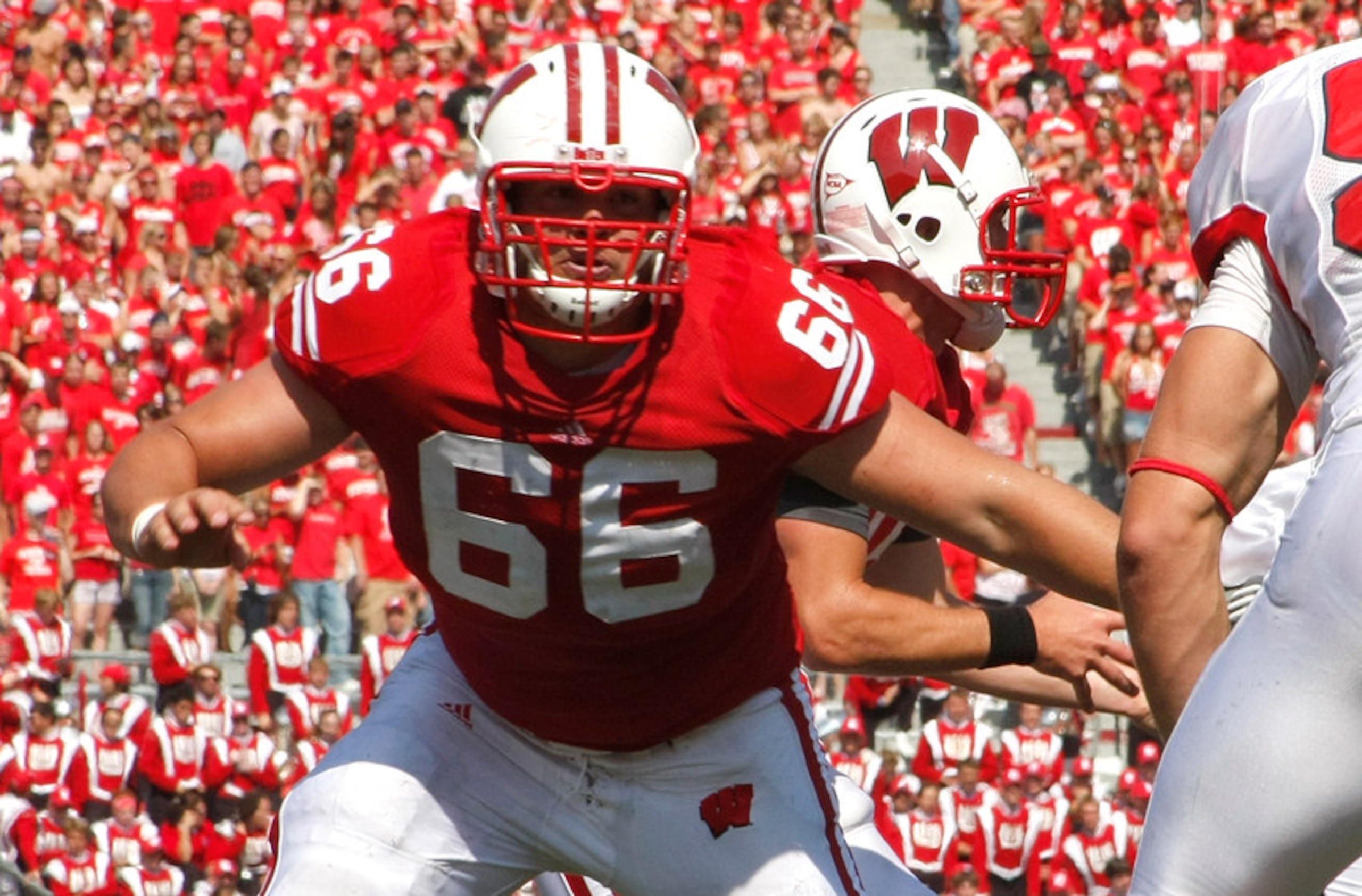
Speaking of winning the battle in the trenches, that is exactly where this contest is going to take place. The team that controls the line of scrimmage, and the quarterback that takes care of the ball, will undoubtedly come away carrying the Heartland Trophy.
With that in mind, there may not be a bigger matchup all year than Iowa's defensive line against Wisconsin's offensive line.
Coming into the year, both units were ranked the top position group by numerous preseason publications. At the very least, both units were in the top five of their position groups by every preseason publication.
It is hard to really say if they've lived up to the hype, but here are some telling numbers.
Iowa's defense is ranked No. 7 nationally against the run. Iowa's defense is the sixth best scoring defense and the 13th best total defense in the country.
Meanwhile, Wisconsin has the 13th best rushing offense in the country. They also have the 16th best scoring offense. On top of that, Wisconsin ranks 12th nationally in sacks allowed, and unlike the vast majority of the other teams at the top of that category, the goal of UW's passing offense is not to get the ball out of the quarterback's hands as quickly as possible.
In short, whenever Wisconsin meets Iowa, it is no less than trench warfare. However, this year, arguably the best defensive line Kirk Ferentz has fielded will be taking on the best Wisconsin offensive line since the UW Rose Bowl years in the late 90's.
Iowa's Offensive Line Vs Wisconsin's Defensive Line
8 of 10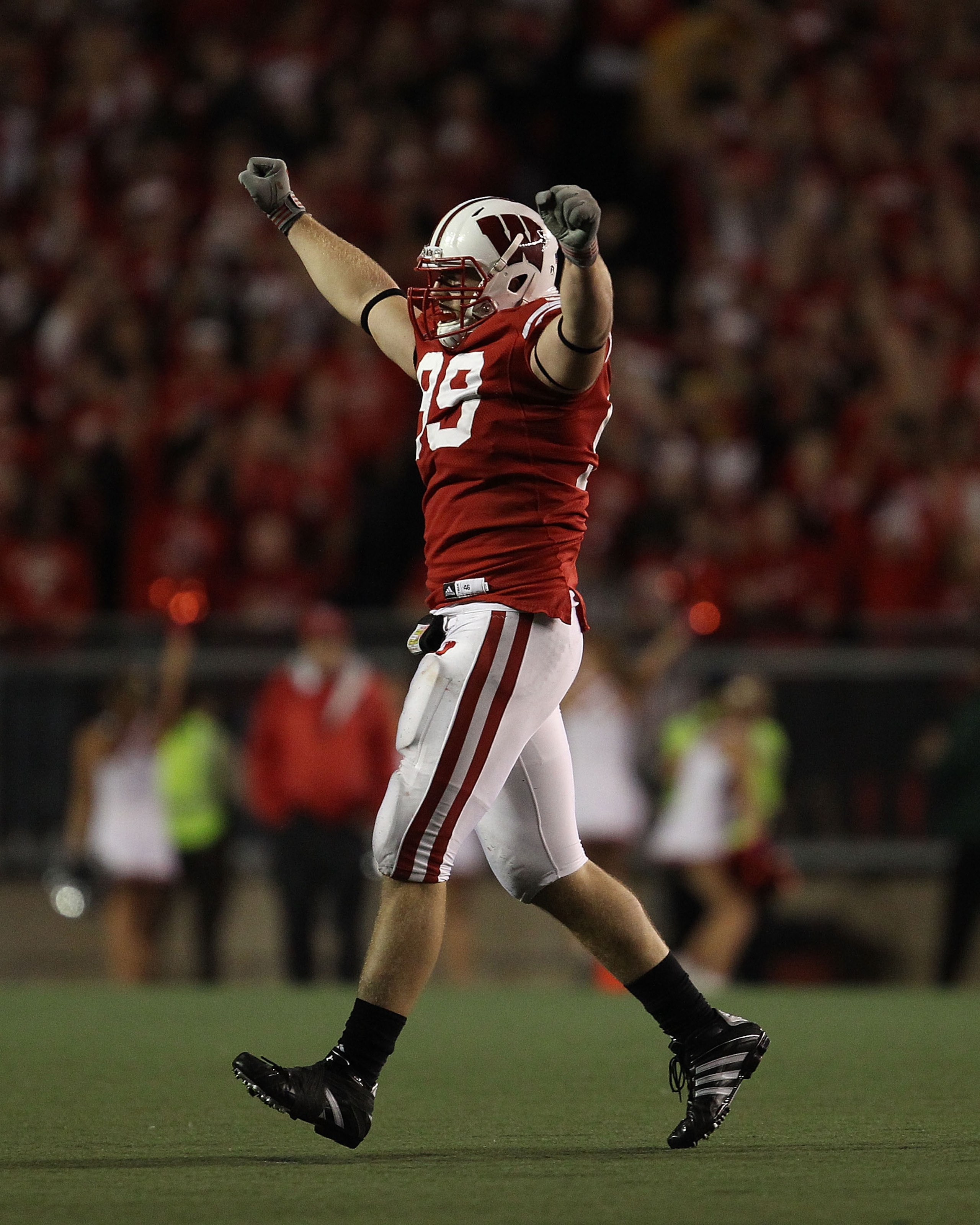
On the flip side, the battle between Iowa's O-line and Wisconsin's D-line is just as integral to the outcome of this game.
Of course, neither unit came into the season with the accolades of their partners on the other side of the line. Wisconsin had to replace three starters, including All-Big Ten defensive end O'Brien Schofield and his Big Ten leading 12 sacks.
On the other hand, Iowa had the fewest returning offensive line starts in the Big Ten.
I think it's fair to say that neither unit has been world beaters, but both have developed, and shown signs of big things down the road. Moreover, both units have developed players that are competing at an All-Big Ten level.
In the Badgers' case, junior J.J. Watt has been a force that opposing offensive coordinators have to gameplan against. After seven games, Watt has 34 tackles, 11.5 tackles-for-loss, four sacks, one forced fumble, and five passes broken up.
Meanwhile, Iowa has sophomore Riley Reiff lining up at left tackle. Reiff has also been playing at an all-conference level and is without question, the anchor on the Hawks' offensive line.
As it happens, the two probably won't line up against each other, as Watt usually lines up on the strong side. In effect, he will face junior Markus Zusevics, while Reiff faces down burgeoning pass rushing specialist Louis Nzegwu.
The Return Game Vs Wisconsin
9 of 10
Iowa's kickoff return defense has certainly left a lot to be desired, but their punt return D has been solid. In fact, more than solid, as their punt return defense ranks third in the conference.
Meanwhile, both of Wisconsin's return defenses have been fairly terrible.
They currently rank dead last in the Big Ten in punt return defense, having let up one punt return touchdown to MSU.
They also rank eighth in kickoff return defense. They let up one touchdown to ASU.
On the other other hand, at 12.90 yards-per-return, Iowa ranks second in the conference in punt return average. At 25.09, they also rank fourth in kick return average.
In a rivalry game that always seems to come down to factors of traditional Big Ten football —ball control, time-of-possession, field position—the special teams are sure to be a huge element in determining who the winner is.
Iowa's Linebackers Vs John Clay and James White
10 of 10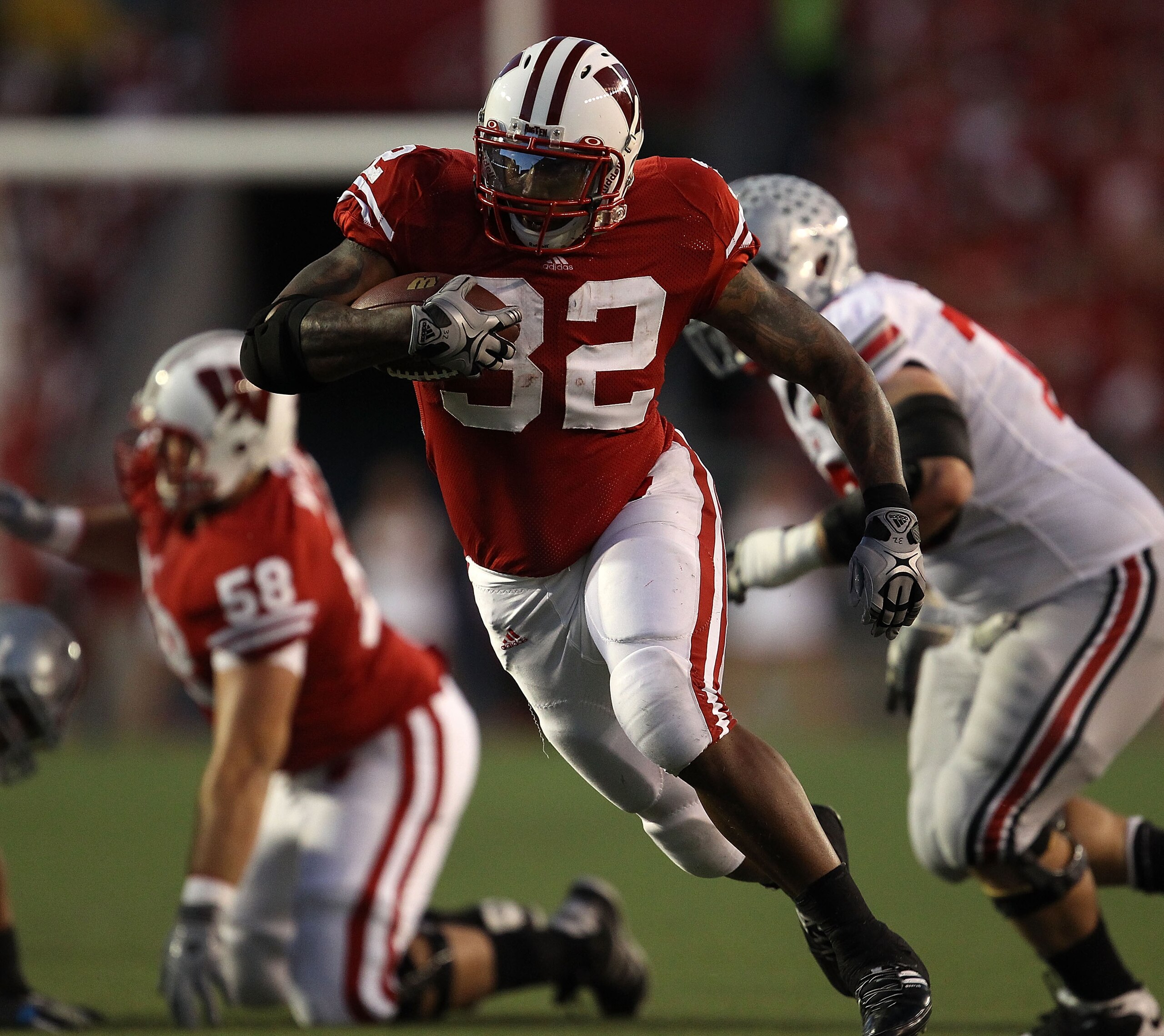
As previously mentioned, Wisconsin has the 13th best rushing offense in the country. The vast majority of those yards have come on the backs of junior John Clay and true freshman James White.
Clay is a bull rushing type. His current listed weight is 255 pounds, which is more typical of a small defensive end than a running back.
He is not going to outrace most teams. He is going to go right through the middle, bounce off tackles, and run over people. His longest rush this year is 40 yards.
Meanwhile, James White is a speedster and a home run hitter. At only 198 pounds, White is not typical of a traditional Wisconsin back, who might not be as big as Clay, but usually tips the scales at a solid 230 pounds.
While Clay has already logged 796 yards and a 5.85 yards per carry average, White has 560 yards and seven yards per carry.
Preparing for and playing against the both of them will be no small task. It will be much like last week's game against Michigan. Iowa prepared for Denard Robinson. Yet, when he went out Tate Forcier—a decidedly different quarterback than Robinson—came in and proceeded to shred Iowa's secondary.
Part of the reason for this was because Iowa was ready for Robinson.
Clay and White will be similarly difficult to adjust and readjust to. Of course, in this case, Iowa is expecting it. It will be up to all of Iowa's defenders, but particularly their linebackers, to swarm to the ball carrier before he does any real damage.
.jpg?w=2560)

.jpg?w=2560 "Jonathan Taylor Landing Spots")
.jpg?w=2560 "Malik Beasley Negotiating Plea Deal (AP)")

.jpg?w=2560 "NFL House in Paris Closes for Protests (AP)")