
'Roid Rage Reality: The Mitchell Report
 From San Francisco to San Juan, from St. Louis to Sapporo, keyboards, classrooms, barrooms, and water coolers are abuzz with the news that the names of 80-odd major league players—among them Eric Gagne, Andy Pettitte, Roger Clemens, and Kevin Brown—were mentioned in the report on performance-enhancing drug usage filed by former Senator George Mitchell.
Some have noted that players such as Gagne, Jose Guillen, and Miguel Tejada found new teams right before the report was released. A few columnists asked why the media had not scrutinized Clemens with the same suspicion of his 40-something feats as Bonds—to which some message board commenters replied: Bonds perjured himself before a grand jury, Clemens was not subpoenaed.
TOP NEWS

Brewers Closer Blasts Tropicana Field Roof

Latest MLB Trade Rumors 👂
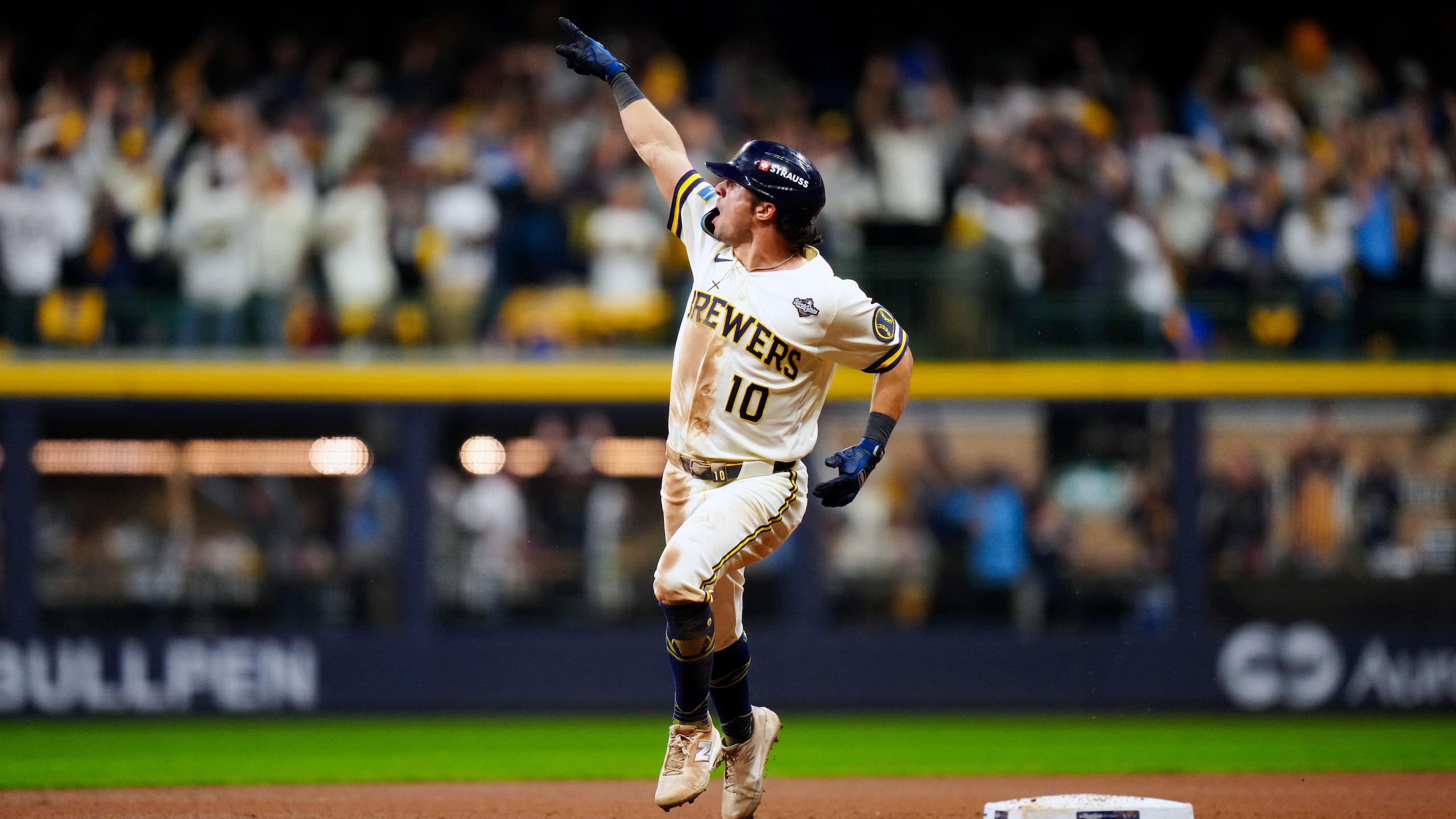
Tying HR Had Bauers Emotional
After all the sturm und drang, several realties will emerge. There will be no drop in attendance due to the cloud of suspicion, or bitterness toward past cheaters.
Washington, which just signed Mitchell-mentioned catcher Paul LoDuca, moves into a new ballpark in April. Boston, where Brendan Donnelly and Mo Vaughn used to play, is defending a world championship. All those former Yankees and Mets named? Tickets will still be tough to acquire in New York when the better teams visit.
In the long haul, Americans demand no more integrity from the national pastime than they do from their political leadership.
Commissioner Bud Selig—who brushed off a reporter's question yesterday about Mitchell's statement that there was enough blame to spread equally amongst owners, GMs, players, and the commissioner's offic—is not claiming accountability. The Mark McGwire/Sammy Sosa chase of Roger Maris' single-season home run mark filled seats. So did Barry Bonds' assault on McGwire's new standard.
But the owners will not punish their non-commissioner, the former Brewers proprietor, for enabling the runaway statistics and health risks that resulted from the use of anabolic steroids and HGH. "The Rocket" may have lost some of his red glare in the public eye, but there will be no asterisks placed next to his last three Cy Young awards, or his strikeouts since 1998.
Who would have ever thought a document heavy enough to be used as a doorstop would make Barry Bonds, Jose Canseco, Dan Duquette, and the late Ken Caminiti look better? Duquettte, the former Red Sox GM, was right—Clemens was finished when the Sox gave up in him. He was revived by the wonders of science. The Mitchell Report isn't going to reinstate Hank Aaron as the all-time home run king, however.
Northern fans will flock to spring training in two months, weary of the cold and full of new hope. Tigers fans will buy tickets to see whether Dontrelle Willis and Miguel Cabrera can bring them a pennant. Dodger faithful will welcome center fielder Andruw Jones. L.A.'s Angels are not pumped by steroids, but by the acquisitions of CF Torii Hunter and P Jon Garland.
If one doubts this, when was the last time we heard basketball announcers or fans during this current NBA season express concern about "the integrity of the game" in the wake of the Tim Donaghy referee scandal? Fans' memories are short, and so are those of sports talk-show hosts and journalists.
Much has been made of the fact that the presence of names such as Clemens, Pettitte, Rondell White, Chuck Knoblauch, Mike Stanton, and Kevin Brown casts aspersions of illegitimacy on the late-1990s and early-2000s Yankee juggernaut. Perhaps the hated Bronx Bombers had an unfair advantage on the rest of the baseball world, particularly on the mound.
Yet, there are plenty of Orioles listed by the Mitchell Report, and performance-enhancing drugs didn't ensure Baltimore a Word Series berth. The Mets are pretty well-represented, too. Besides, if juice aided the Yanks, it also hurt them—their best pitchers broke down after the 2000 campaign.
As Mitchell stated, this is a problem shared by all 30 ballclubs, both the weak and the strong. Who knows how many players were juicing whose names did not show up due to uncooperative trainers, lack of subpoena power, or the untestable nature of human growth hormone?
One interesting aspect of the list (which is all most of us have seen from the report—even Selig owned up he hasn't read it in its entirety) is the number of names who bowed out of the game at relatively young ages due to nagging injuries: Todd Hundley, Andy Pettitte , Mo Vaughn, Denny Neagle, Chuck Knoblauch (who mysteriously lost the ability to throw accurately from second to first), Kent Mercker, Jose Canseco, John Rocker, Rick Ankiel (who lost the ability to throw accurately from the pitcher's mound), and Ken Caminiti.
While we cannot know if steroid or HGH usage led to tendon damage in each or any of the cases, quite a few of the aforementioned juicers experienced sudden statistical dives.
For sure, the era of 1996-2002 has been clouded. Perhaps a few players who were leadpipe-cinch Hall of Famers even before they used steriods will not be voted into Cooperstown when eligible.
But neither of those things will affect gate receipts or TV revenue in 2008.
 Mitchell and Selig are right on one count—baseball is moving on. That was the whole point of having an investigation and producing a report, to pat themselves on the back and put the syringes behind. Not so much to bury Barry, but to silence critics. Not so much to save lives, but fans.
The team that will probably experience the largest dip in attendance is the San Francisco Giants—because their meal ticket Bonds is gone.


.jpg?w=2560 "Rodgers Iced Out on Plane 💎")
.jpg?w=2560 "Raiders Could Start Mendoza")
.jpg?w=2560 "🚨 Week 8 AP Top 25 Poll")
.jpg?w=2560 "Mahomes Told Teammate to Leave Meeting")
.jpg?w=2560 "Lamar Being Out Shocked Ravens")

.jpg?w=2560 "Packers Safety Slams Refs 🤬")
